Reddog, Blues Guitarist

Reddog’s soul is intact, even after decades of playing blues in clubs and bars across the South… even after 35 years of spending nights in front of tipsy party people, and true-blue music fans, never diverging from his passion to play and sing, remaining a gentle, quiet, observant man.

PensacolaBeach
                                                Reddog playing for an appreciative Florida crowd.

Although I’ve known Reddog since the late 80s, he still appears a little fuzzy around the edges, his origins and family, even his age, are vague. But recently Reddog opened up about his love of music and how he managed to make a living heading up his Band, Reddog and Friends.

ChrisLongDonnieMacBluesHarbor
Reddog with Chris Long on bass and Donnie McCormick on drums at Blues Harbor, Underground, Atlanta (c. 1990s)

The first mystery about Reddog is the origin of his stage name. “I spotted an advertisement for a vintage clothing store named Reddog, and the ad had beautiful, long, lean, red dogs,” Reddog explains. “I thought it would be a good band name. As band personnel changed over the years, everyone just started calling me Reddog.”

The second mystery we encounter is how he was able to make a living as a musician. Having to build his own career, and lacking 401Ks and employee-sponsored pension plans, means Reddog had to be financially creative and astute. Brave souls like Reddog who attempt making a living doing what they love are investing in their self-expression and way of life, not just earning to pay for shelter and food. Sometimes saving for the future takes a backseat, but not with Reddog.

Reddog tells the story of how a very well-dressed gentleman approached him years ago between sets at Fuzzy’s Place, a bar/restaurant in Atlanta. The man had seen the joy and fun Reddog and Friends were having on stage.

“I’ve amassed a sizable fortune,” the man said to Reddog, “and I would trade my fortune with you any day to be able to do what you do.”

“The conversation made me see how fortunate I was to do what I love in life,” Reddog says. “I felt thankful. Work has always been pure pleasure.”
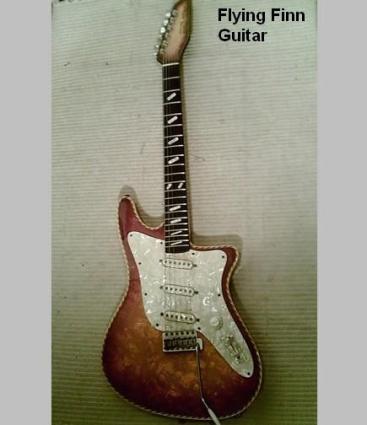
Flying Finn Guitar

Reddog learned to play the guitar after high school. His step Dad noticed how much time he was spending playing guitar and suggested he take lessons… or not play so much.

“Within a couple weeks,” Reddog says, “I had packed a bag and caught a bus to a guitar workshop outside of New York City that I had seen advertised in Guitar Player magazine.”

His teacher was an excellent young guitarist who recognized Reddog’s talent and interest in music and gave him special attention.

“I got off the bus in Planting Fields Arboretum, Long Island,” Reddog says, “with no place to stay, a rather broken-down guitar, a suitcase and little money. Believe me, I stood out. My fellow students arrived each day in shiny new Cadillacs carrying expensive Martin acoustics.”

Reddog originally owned an inexpensive Japanese acoustic for about a year, but he soon acquired a Gold Top Gibson Les Paul Deluxe and a Fender Twin Reverb amp.

Early on, Reddog noticed all the great British guitar players like Clapton, Beck and Page had blues roots. “Duane Allman, Freddie King, B.B. King, Ray Charles… that was what was moving me!,” Reddog says. “Duane Allman is the reason I picked up the guitar. He created a new musical style and was just a burnin’ guitar player!”

Reddog’s blues destiny was set.

Although Reddog has written, performed and recorded original songs, he has always performed blues standards in his sets.

“Many blues clubs have kept me working through the years,” Reddog says, “because they know I revere the original artists who made the music, like Howlin’ Wolf, Freddie King and Muddy Waters.”
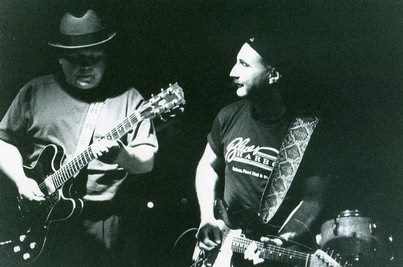
Little Brother & Reddog Atlanta
Reddog (right) with Little Brother at Blues Harbor, Underground Atlanta (c. 1990s)

Much of Reddog’s childhood was spent in Virginia and coastal North Carolina where his mother dabbled with the piano and continues to play out of the Methodist hymnal.

“The South just makes me feel like I’m home. That’s why I headed for the great state of Georgia as soon as the time was right. ”

The Allman Brothers, headquartered in Macon, Georgia, influenced Reddog a great deal, with Duane Allman, Freddie King and Otis Rush standing out as his biggest guitar influences.

Reddog attributes his successful musical career to being in the right place at the right time.

“I moved to the vibrant big city of Atlanta, a city with a strong economy and lots of live music venues. The norm for clubs was to hire a band for one night a month. Instead, I convinced club owners to book me one day a week (like every Thursday) and if their Thursday business picked up, my band remained the Thursday night house band. If business went down, they could fire me. Business usually picked up so we had lots of steady work. My trio had four or five steady gigs; Sunday on the North side of Atlanta, Monday in Underground Atlanta, etc. Many of our Atlanta gigs lasted years.”

Reddog kept his overhead low with a simple trio of guitar, bass and drums. All three players also sang.

Chris-RedDog-Spider-Webb
Chris Long, Reddog, Spider Webb (1986)

Current Reddog and Friends band members are Michael D on bass and TJ Jackson on drums. Infamous musicians who have been a part of Reddog’s trio over the decades include the late, great Donnie McCormick on drums from the Capricorn Record band, Eric Quincy Tate and Chris Long on bass, formerly with the King Johnson Band. Steve Hawkins, a powerful, talented drummer and vocalist, performed with Reddog in the late 90s and currently plays with Daryle Singletary. Bill Stewart, session drummer from the Capricorn Rhythm Section, recorded and performed live with Reddog in the late 80’s.

Selecting the right mix of musicians is essential to a good sound and future gigs. Equally important, Reddog paid close attention to where his money went while managing the band and growing his career,

“If you are a creative soul,” Reddog advises, “it is so important to save and invest for your future. Being a creative soul means you’ll likely have less, so you have to invest! It makes me sad to see elderly musicians in need. So many classic blues artists live in poverty, it pains me. I have influenced many around me to invest, especially in well-diversified, low cost index mutual funds, Vanguard, Fidelity, etc.”

Reddog’s Creative Space

Reddog’s favorite place to create is a perch in his hallway, where he has stacks of CD’s to choose from, a good sounding CD player, an electric keyboard and a guitar close at hand. He thinks it’s nothing fancy, but finds it peaceful. Like playing in a club, Reddog has a hard time telling if it’s night or day in his hallway perch, making it easier to shut out the world and focus on his music.
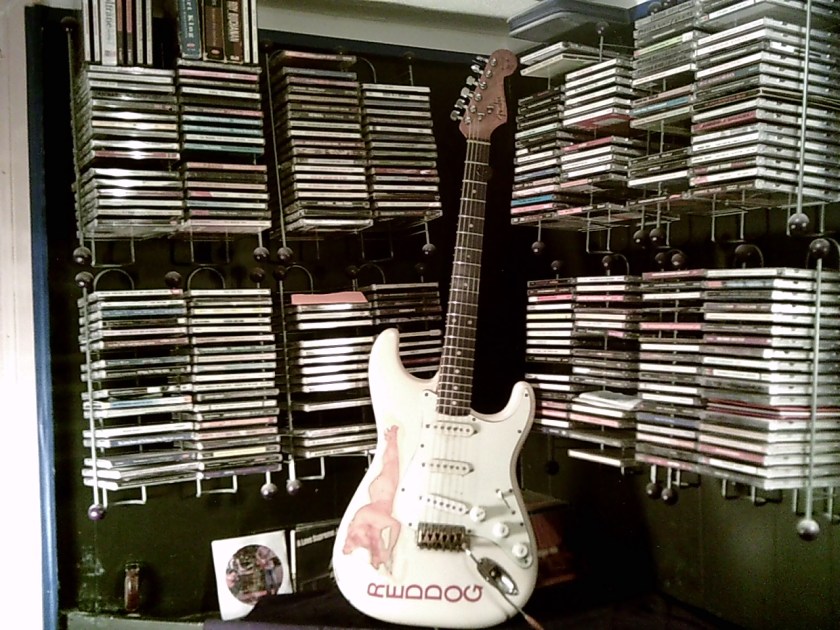
020 (1)

“Music still burns in my veins,” Reddog says, “and I practice singing and playing guitar every day.”

Reddog’s discipline comes from his teenage years when he trained in Chinese Martial Arts, and he hasn’t just managed to preserve his voice, it has actually improved over the years.

In his prime, Reddog played nonstop. Reddog and Friends loved to perform and they often laughed about how many nights they were booked back-to-back. These days, in retirement, Reddog performs once every month or two at the local blues society.

“I love to sing and am so moved by that big, airy gospel sound of Reverend James Cleveland, Lee Williams and James Bignon,” Reddog says. “Practicing singing is so important to me. I practice ear training with a piano almost daily and sing along with some of my favorite gospel artists on CD. Just constantly in search of a bigger, warmer vocal tone! When you are singing, you are telling a story, trying to make every word believable and full of emotion. It takes work on my part.”

039 (1)

Reddog and I became friends in Atlanta when he was the house band at Fuzzy’s Place and Blues Harbor at Underground Atlanta. I wrote for the hudspeth report, a local entertainment newspaper, and caught Reddog and Friends as often as possible, no matter the venue. I even recall seeing him play on an outdoor stage in Buckhead one St. Patrick’s Day. Listening to live music was a passion for me and looking back, I can see how how vital Atlanta’s music scene was to the city’s culture.

I once traveled with Reddog and Friends to a music festival in Tennessee and enjoyed the backstage/insider view of what it took to build a reputation and career, and learned that active bands who perform regularly eventually see just about every kind of human behavior, whether driven by physical, mental, emotional, sexual or spiritual needs.
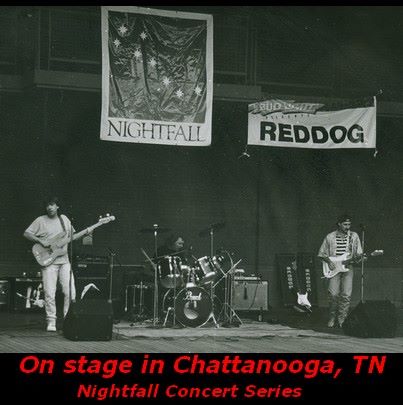
Nightfall Chattanooga

“The night after the Centennial Olympic Park bombing in Atlanta in 1996,” Reddog says, “we performed on a House of Blues Buckhead stage to a sea of people. There was some tension in the air, people hoping it would be a safe evening. It was hot and humid and the audience was just incredible.”

Another memorable gig was in 1991 when Reddog opened for Garth Hudson and Rick Danko from “The Band” in Stone Mountain Park. “Rick Danko could not have been any nicer! He made sure we joined him on stage.”

One of Reddog’s favorite gigs was at Fuzzy’s Place in Atlanta on North Druid Hills. Fuzzy’s is now closed, but it had a reputation as the place to go for live blues and jazz. Fuzzy was a nice guy who cooked up fine Southern fare (Rib eye steak with green beans and mashed potatoes) but more than a restaurant, Fuzzy’s Place was a magical music venue.

Fuzzys Place

“We were the Tuesday night house band at Fuzzy’s,” says Reddog, “and because many musicians were off that night, they would come sit in. When I saw Gatemouth Brown’s tour bus pull into the parking lot one night while we were playing, I thought, ‘We’re going to have a great night.’ Billy Preston was in the audience on another night. That was one fun gig!”

Early on, Reddog had a gig in Sandy Springs at JP’s Paradise.

“JP’s was wide open!” Reddog recalls. “We performed every Thursday, Friday and Saturday night until 3 a.m. to great crowds, including strippers, drug dealers and musicians. Warren Haynes and Allen Woody from Gov’t Mule were among the many musicians who stopped by to jam with us. Before long, though, the authorities padlocked the place.”

Many other favorite musicians would show up to perform with Reddog, including guitar greats Oliver Wood and Barry Richman. “They were both world-class musicians,” Reddog says, “and really knew when to lay back and when to step it up and be aggressive. What an honor to have them sit in with our band.”

Reddog at Fuzzys

Other gifted artists that stopped by to share the stage with Reddog include Luther “Guitar Junior” Johnson, Jimmy Thackery, Tom Principato, Tinsley Ellis, Sax Gordon Beadle, Bob Margolin, and Jai Johanny Johanson. Johnny Neel and Duke Robillard stopped by to listen. 

Now, a special note about Luther “Guitar Junior “Johnson, who jammed with Reddog on stage at Blues Harbor in Underground Atlanta and then autographed Reddog’s black Stratocaster:

“Luther is the real deal,” says Reddog. “He performed with both Magic Sam and Muddy Waters and was in the Blues Brothers Movie. Luther is still performing. A few Luther Johnsons are running around, including one from Atlanta who regularly performed at Blind Willie’s in Atlanta. Be sure to look for Luther “Guitar Junior” Johnson to avoid confusion. One night, after playing on stage at Blues Harbor with Luther, I asked if he would sign my guitar. We went into the kitchen and I handed him my guitar, which he had been playing, and went to get a marker. When I got back, Luther had carved his name into my black Fender Strat as “Luter,” misspelling “Luther.” He was a nice Cat. Anyway, that’s how you can tell the autograph is authentic, because he misspelled his name!”

Luter Johnson guitar
Luther’s carved signature shows up well in this photo

With the release of his first record in 1986, Reddog gained widespread recognition and positive press.

Music publicist Mark Pucci helped Reddog spread the word. Reddog was in good company. Pucci had worked at Capricorn records in Macon, Georgia, for most of the 70s working to promote Southern hitmakers of the day, including The Allman Brothers Band, The Marshall Tucker Band, Sea Level, Wet Willie, Delbert McClinton, Dickey Betts, Elvin Bishop, Bonnie Bramlett, Percy Sledge, Dixie Dregs and Martin Mull. In the 90s, Pucci was back with Capricorn in Nashville working with the likes of Hank Williams, Jr., Lynyrd Skynyrd and Kenny Chesney.

“The press coverage of my first album release was unexpected and earth shattering for me,” says Reddog. “Tower Pulse Magazine from Sacramento was the first publication to give me an incredibly nice write up.”

Tower Pulse wrote, “At his worst Reddog sounds like a pre-pop-star Clapton filtered through southern sensibilities. At his best, he sounds purely like himself.”
Guitar World2

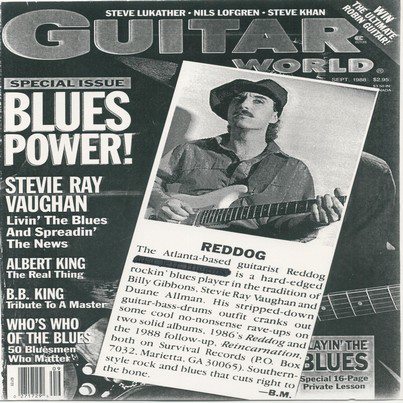
“I was also honored to be featured in a cover article in Guitar World, in 1988, entitled Who’s Who of the Blues/50 Bluesmen Who Matter. Stevie Ray Vaughan was on the cover with a headline reading, Special Issue Blues Power. That was a big deal for me! It was funny, guitar players would come into Atlanta for a gig and would ask about me. You know, it’s ironic because I’ve always been a musician who pays homage, respect to the originators like Albert Collins, Muddy Waters, Elmore James, etc.”

Jim Trageser, syndicated music critic, described Reddog’s guitar works when he wrote, “His playing is impassioned; his deftness at picking quickly is matched only by the smoldering intensity of his playing. In short, Reddog is one of the absolute best blues guitarists in the country today.” 

Over the years, as his reputation grew, Reddog was featured in a 1993 Guitar School article entitled, The Next Generation of Guitar Heroes. During that time, he also worked hard to win an 18-month Anheuser-Busch corporate sponsorship which helped update his band’s equipment.

Guitar School

In 2009, Reddog and Friends won “Best Blues Band” from the Blues Society of Northwest Florida. “We went on to participate in the International Blues Challenge in Memphis, Tennessee,” Reddog says.

Reddog’s favorite song to perform is Freddie King’s Yonder Wall. “It’s a powerful groove and I love delivering the verse: ‘I hear your old man has been to Vietnam, I heard he had it kind of rough, I don’t know how many men he’s killed, but I think he’s done killed enough.’”

Watch Reddog and Friends perform Yonder Wall:

https://www.facebook.com/pg/Reddog-Friends-203906956445/videos/?ref=page_internal

Reddog’s dream is to record in the legendary Muscle Shoals area of Alabama. He came close in 1998 when he recorded for a CD produced at Johnny Sandlin’s Duck Tape Studios in Decatur, Alabama.

Guitar World

“What an honor to work with Johnny,” Reddog says. “He was so gifted and generous to work with me. He brought some of my favorite players to the session, including Bill Stewart on drums, David Hood on bass and Clayton Ivey on keyboards. Gregg Allman, Bonnie Bramlett, and Jimmy Hall are among the gifted artists to record with Johnny at his Duck Tape Studios.”

Sadly, Johnny passed away in September 2017, before the CD was finished.

Reddog recorded at other Atlanta studios, including:

  • Studio One in Doraville, Georgia (where Lynyrd Skynyrd and the Atlanta Rhythm Section recorded)
  • Web IV (also where Lynyrd Skynyrd and Irma Thomas recorded)

Memories

As a musician, Reddog has many experiences and lots of stories to tell, not all of them pretty.

“I performed in a lot of biker bars, truck stops, country music halls and some seedy Southside Atlanta bars. One night after a gig in Tennessee, I was about to walk half a mile up the road to get some late night fast food. The club owner said, “Reddog, it’s not safe to walk late at night. Here, take this 9 mm handgun with you.” I listened, but didn’t take the handgun. I walked up the road and as I approached the fast food restaurant two police cars came speeding toward me, threw me on the hood of the car and yelled, “where’s the gun?” The police told me they just received a call that someone had a gun and was going to rob the restaurant. Like I said, it’s not always pretty.”

A sweeter story:

“We performed in Gray, Georgia, quite a bit. On one of our gigs there, Derek Trucks and his band were hanging out on the front porch listening to us play between their rehearsals in another building on the property. Later, the club owner suggested I go with Derek to see where they were rehearsing. It was just Derek and me in their rehearsal hall. Derek, in his late teens at the time, strapped on his guitar and played some slide for me. Let me tell you, the world shook. Derek had a big, big tone when he played slide. He played just a few notes, but what an earth shaking, incredible tone he had, even as a teenager.”

reddog-strat

Support

Club owners gave Reddog the boost his career needed and he gives them credit for being some of his biggest supporters over the years.

“Man, I’ve had quite a few club owners who said, ‘Reddog, I own a club, the stage is yours, I got faith in you. Come play my room, do your thing, pack the house, you’re in charge!’ As I was slowing down and semi-retired, I got to meet and work with music industry people and club owners who took an interest in my music. That meant the world to me.”

Reddog may be retired, but he still has some things he’d like to accomplish musically. He performs intermittently at the Blues Society of NWFL (and an occasional wedding, when asked by friends), and hopes to complete the CD started with Sandlin in 1998. 

“During a recent set at the Society,” Reddog says, “I worked up an arrangement of Will the Circle Be Unbroken in tribute to Gregg Allman, and performed it for the first time on stage. Gregg sang it on his moving Laid Back CD. Love that song and his version. My old drummer and bass player were with me so we could just closed our eyes and let it flow. It felt so good.”

When he’s not practicing or performing, Reddog has fun tending to the grapefruit, orange and lemon trees in his yard, and harvesting his blueberry bushes. He also relishes beautiful weather, the art, people, food and, of course, live music in his Florida neighborhood!

Another pastime that kept him going was tooling around on his motorcycle.

Reddog on bike

“I’ve had the motorcycle jones forever and am so relaxed on two wheels. A late night ride in the deep South when it is hot and humid is indescribable. I had a thunderous, head-turning, black and chrome V twin for 17 years. Unfortunately, my motorcycle days ended about a year ago.”

Reddog is still a big believer in the stock market and investing to provide additional income, even something as simple as the Vanguard Total Stock Market Index Fund. His knack for investing will carry him securely through his retirement years. So will the knowledge that he’ll continue to perform and give back to his community.

“Someone once said the Blues are a Healing Power,” Reddog says. “I believe it’s true. To be creative, and get on stage with your band mates to entertain, have fun and get paid is incredible! But the music does heal. I lost count of the times someone in the audience had lost a wife or child, or was lonely, depressed, and somehow they found relief through the band and the music. It floors me. To see a listener leave a venue feeling better, even smiling, after you’ve performed makes it all worthwhile.”
Germany with Chris Long Spider Webb
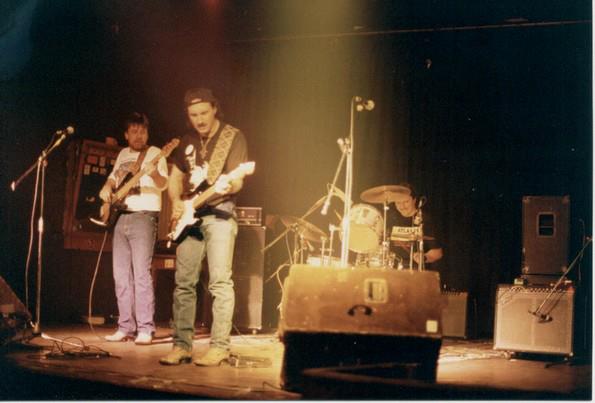
Reddog playing in Germany with Chris Long and Spider Webb (c. 1990s)

References

Reddog’s Eight Guitars

  • Fender Stratocaster Black 1962 reissue: My main guitar. The strat is my instrument of choice. Sold to me as a parts guitar because a band threw it through a window and broke the neck. I had it repaired and brought back to life. It is a workhorse.
  • Fender Stratocaster 1960 White: I talked my brother into buying this guitar and he was nice enough to let me have it; he knew it should be with me. Holding a Fender Strat just feels natural and the Strat can make so many different tones.
  • Flying Finn Electric Guitar: A prototype guitar from Finland. We did a tour of Scandinavia which included a blues festival at the Arctic Circle in Finland. The Flying Finn guitar made it to me in that tour. A beautiful instrument!
  • Gibson Hummingbird 1968 acoustic: My acoustic guitar that’s been with me for years is beautiful and has a big, warm tone.
  • Sunburst Gibson 1959 ES-175: My jazz guitar. Easy to play while sitting and reading a chord chart.
  • Gibson SG Jr.: My guitar for playing electric slide.
  • Guild 12 string acoustic: Guild makes great acoustics!
  • Dobro: Old wooden body, great for acoustic slide guitar.

Reddog’s Five All-Time Favorite Albums

  • John Coltrane, A Love Supreme
  • Allman Brothers, Eat a Peach and Mountain Jam
  • Jeff Beck, Blow by Blow
  • Stevie Wonder, Songs in the Key of Life
  • Robert Johnson, The Complete Recordings

Reddog’s Albums

  • Reddog, 1986
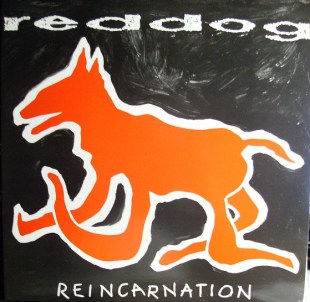
  • Reincarnation, 1988
  • Standing in the Shadows, 1989
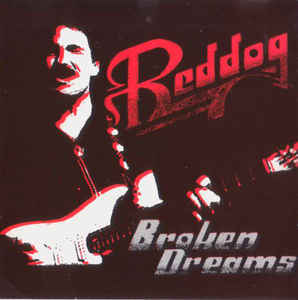
  • Broken Dreams, 1992
  • After the Rain, 1993

Album cover1

Reincarnation

IMG_3256
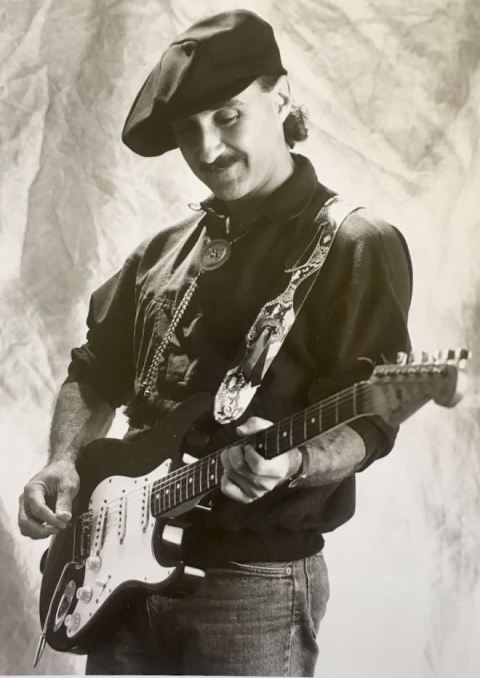
I’ve kept this publicity photo since Reddog gave it to me in the early 90s

Resources

Twitter: https://x.com/ReddogFriends/

Band Website: https://reddogandfriends.com/

Discography: https://www.discogs.com/label/256405-Survival-Records-4

One of Reddog’s favorite Duane Allman stories: http://swampland.com/articles/view/title:duane_allman_at_fame_studios_a_jd_wyker_cat_tale

Yves Saint Laurent, Fashion Designer

Well-designed clothing can be a work of art with lines so true and exquisite they make grown women and men weep.

From Exquisite to Tears

Well-designed clothing can be a work of art with lines so true and embellishments so exquisite they cause grown women and men to weep. I hope everyone has, at least once, the grand experience of being so moved by a couture gown or suit that they’re overcome with emotion, as though witnessing at Michelangelo’s Sistine Chapel masterpiece. 

IMG_4015

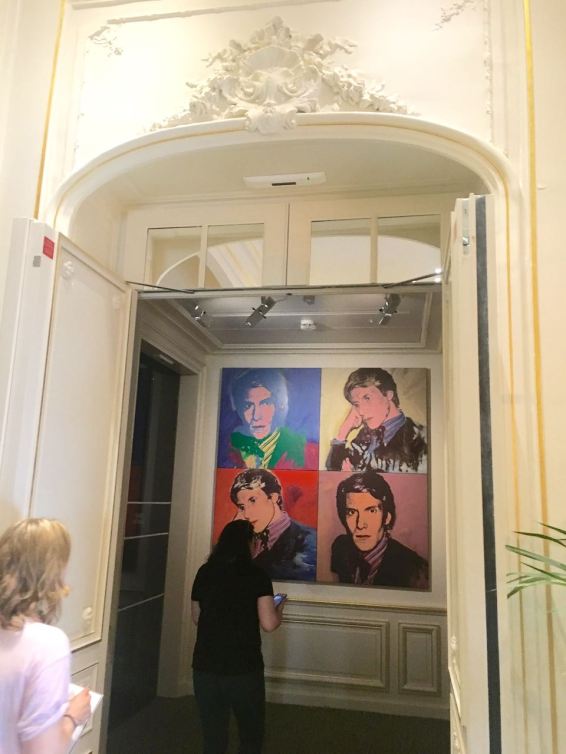
Even people like me who have no sense of style and never learn what cut and shape best fits their physique can be drawn to the art of fashion like they’re drawn to study a Matisse or Van Gogh. Particularly when the designer is Hubert Givenchy, Cristobal Balenciaga, Christian Dior or Yves Saint Laurent (YSL), a few of my favorites.

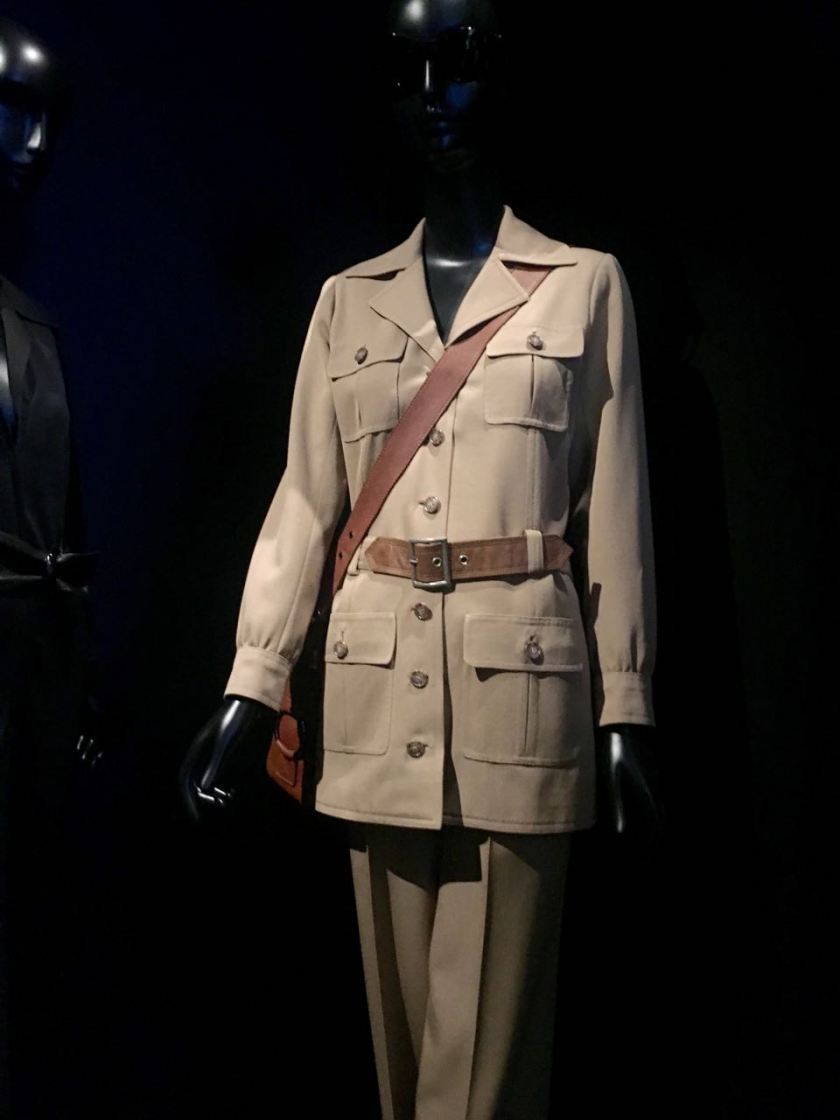
YSL (1936 – 2008) ran his own haute couture design house for 40 years, after being head designer at Dior in his early 20s. He was known for adapting tuxedoes to the female form and designing comfortable clothing for women. He also changed the fashion world when he used models from African countries.
IMG_3997

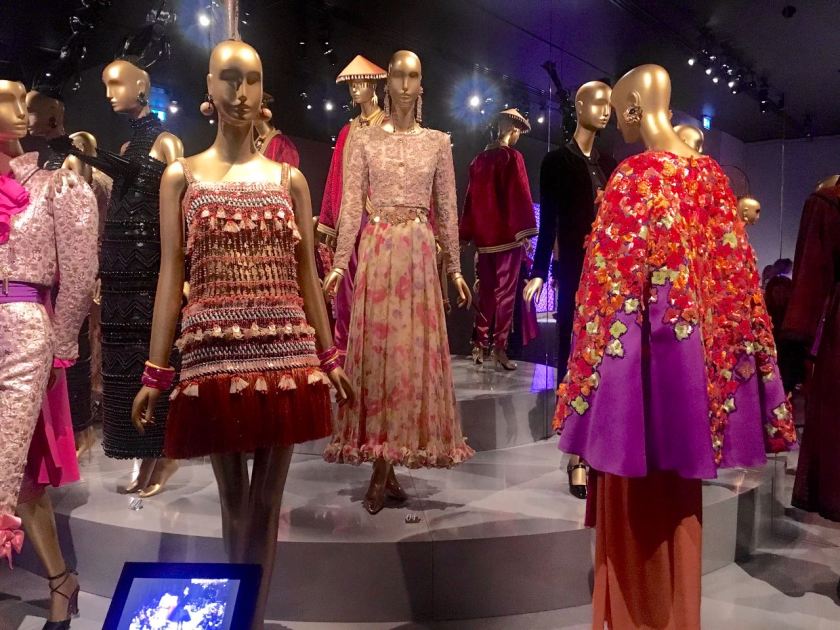
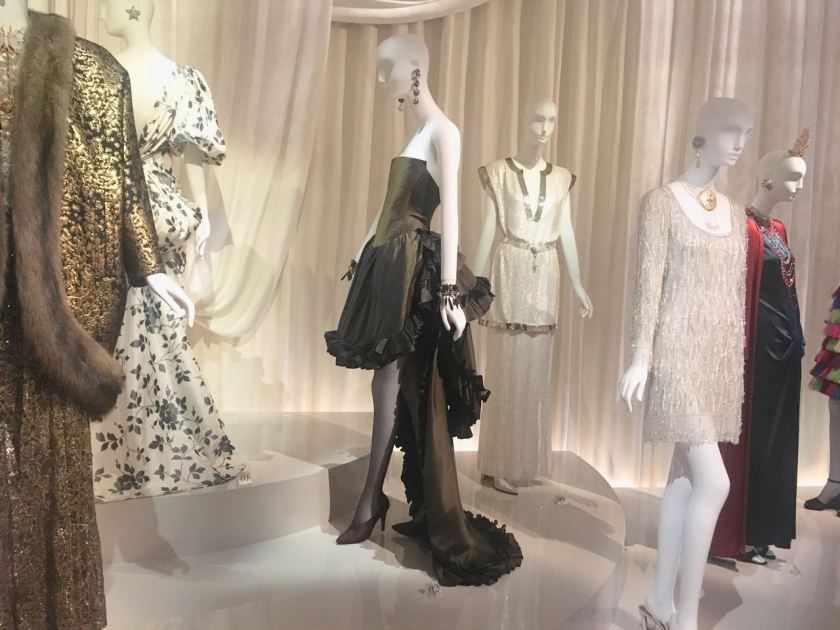
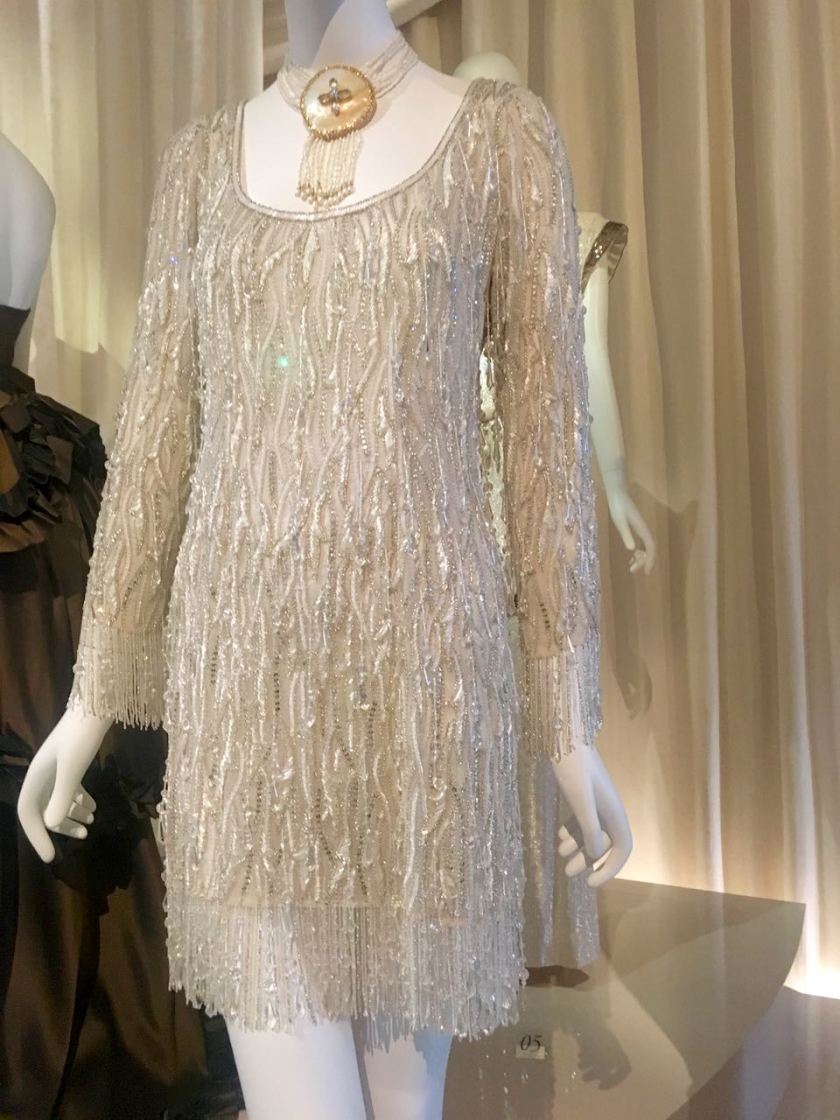
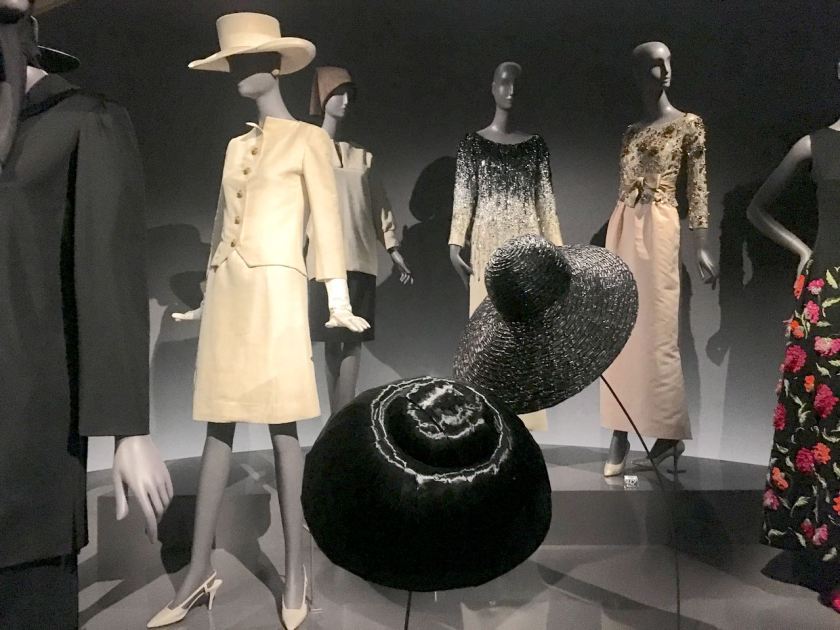
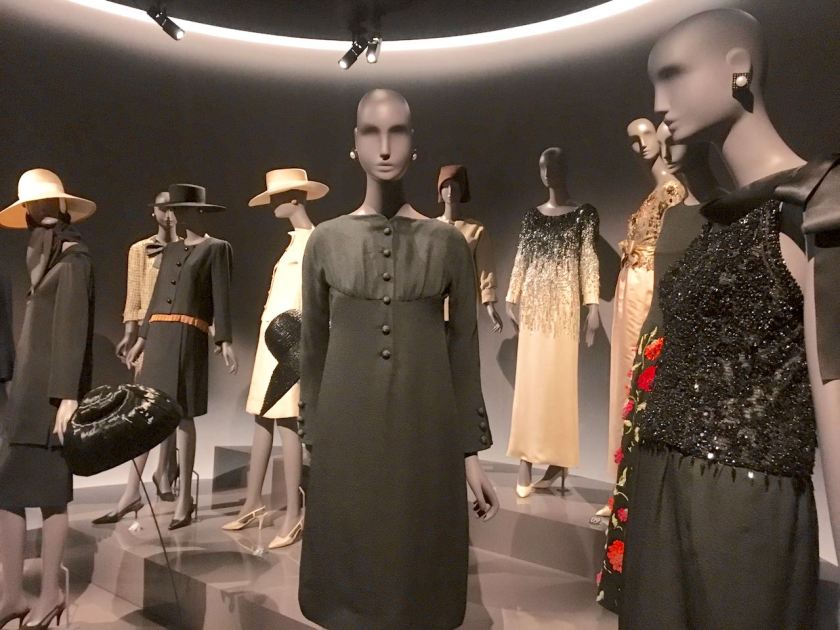
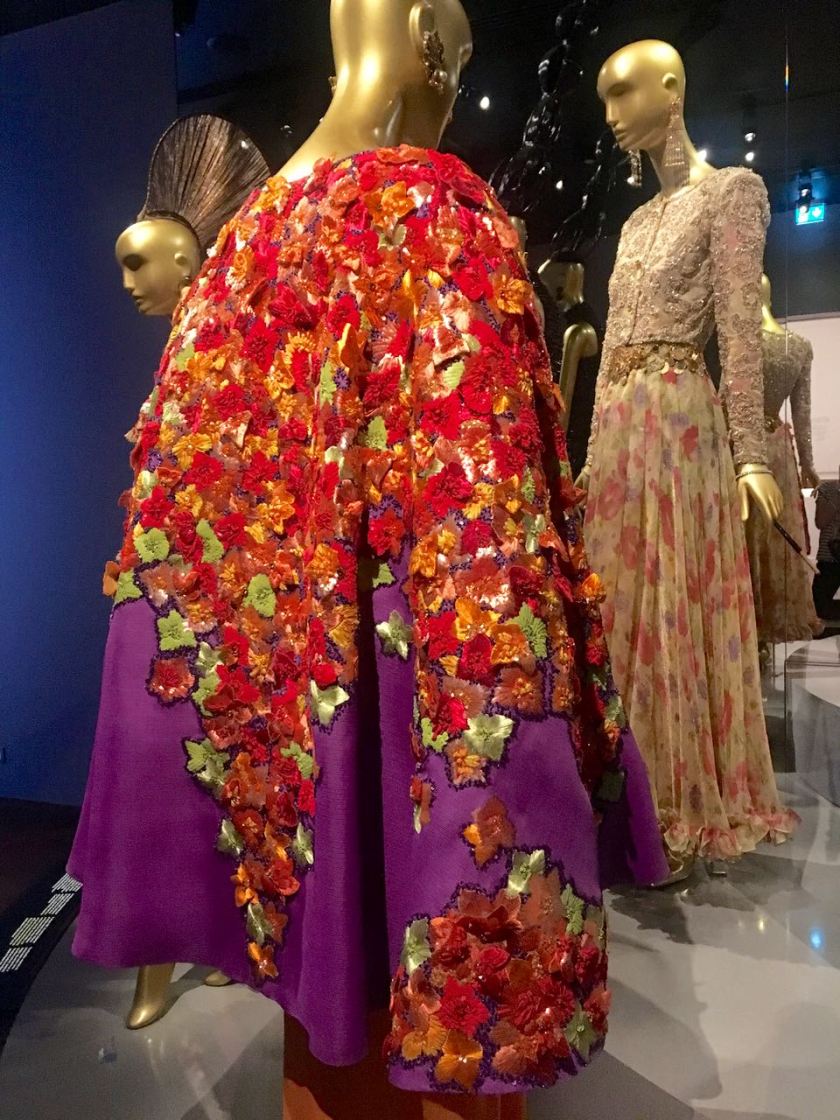
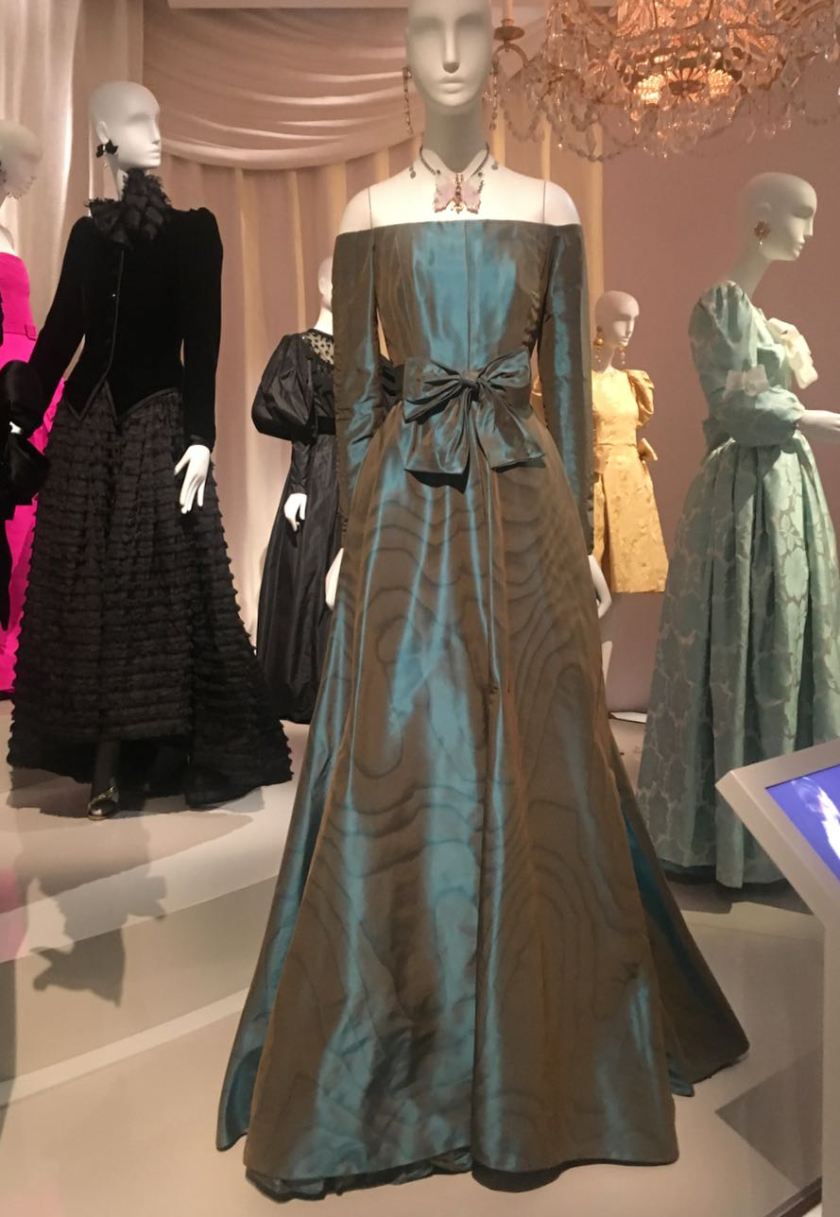
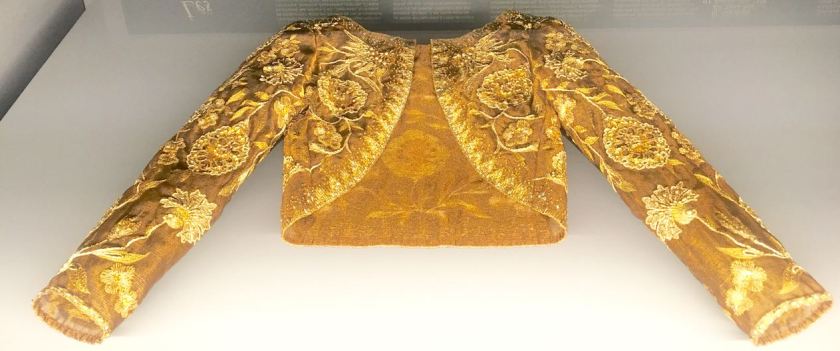
My daughter Jaime and I recently visited Musee Yves Saint Laurent Paris, housed in his former couture salon at 5 Avenue Marceau in the 11th arrondissement. Lucky for fashion fans, beginning in 1964 YSL began setting aside specific designs after each show, with an eye toward eventually building a museum. The actual garments and all documents related to their creation were stored away.

The museum officially opened in 2016.

The interior of the museum is gorgeous, and how exciting to be in the unchanged salons where Yves held his fashions shows until 1976, and where patrons, including famous French actress Catherine Deneuve, were fitted for their couture pieces.

IMG_4049

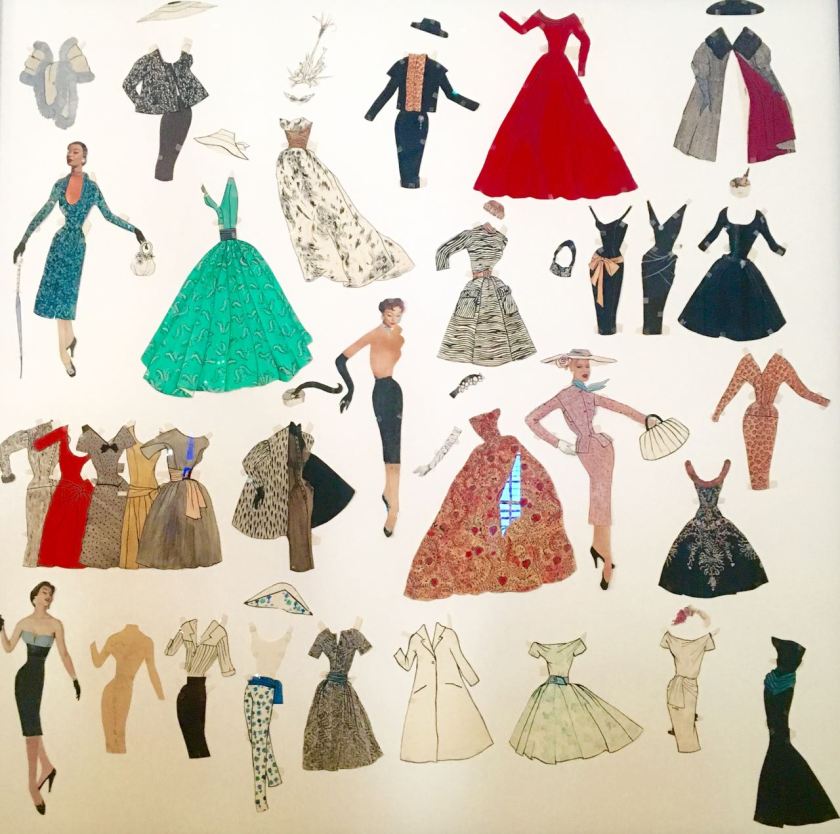
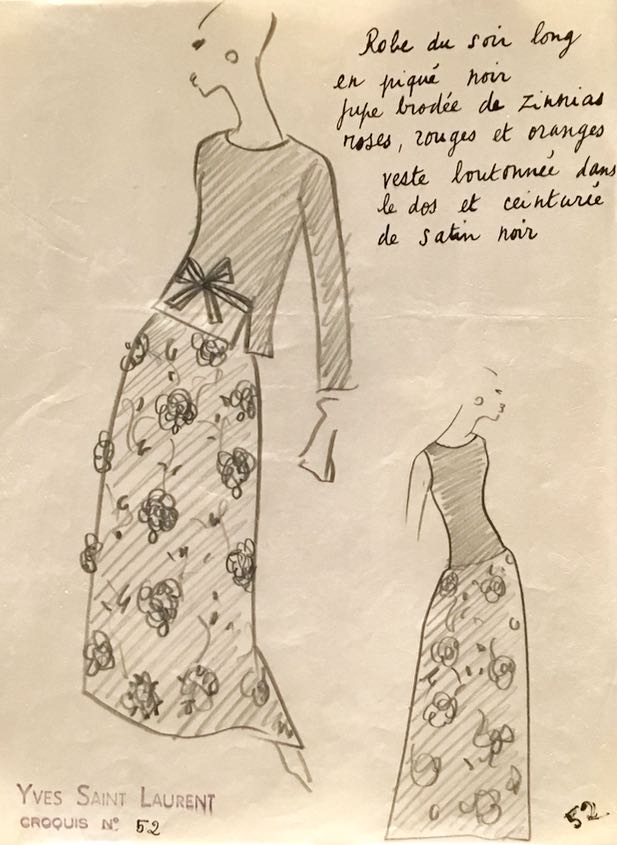
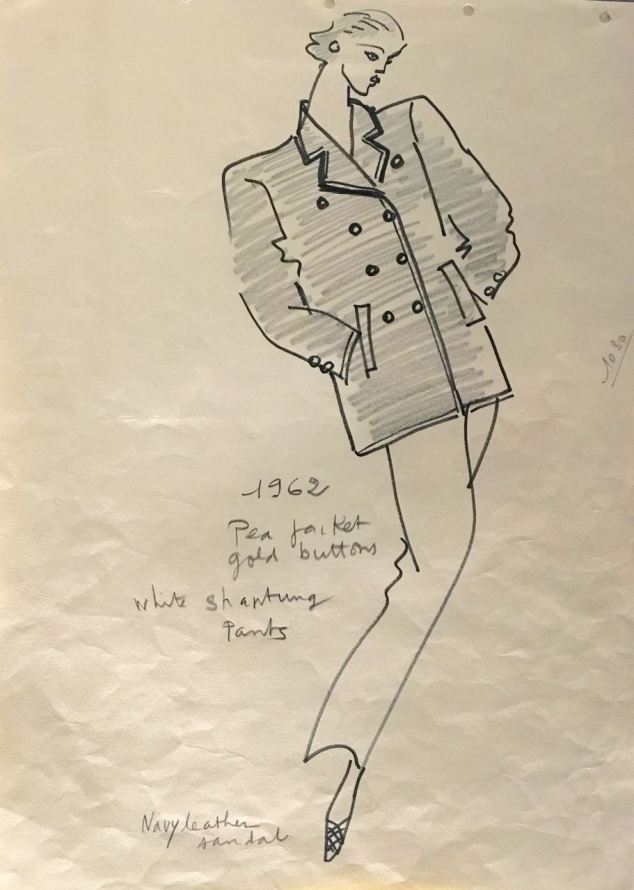
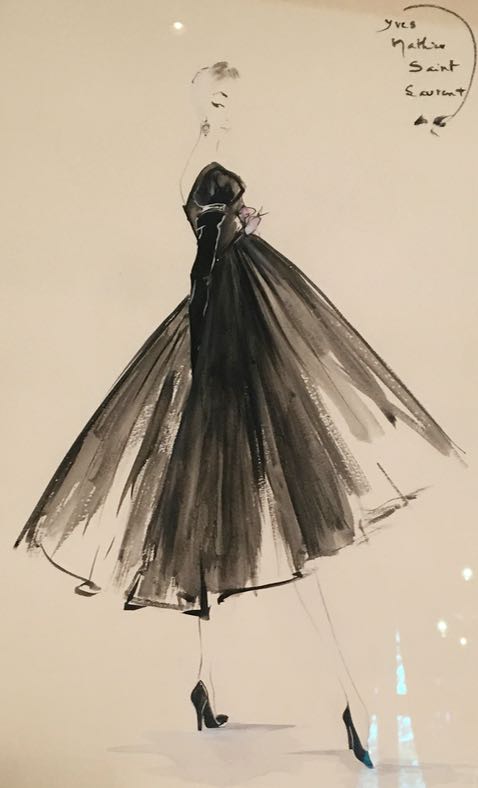
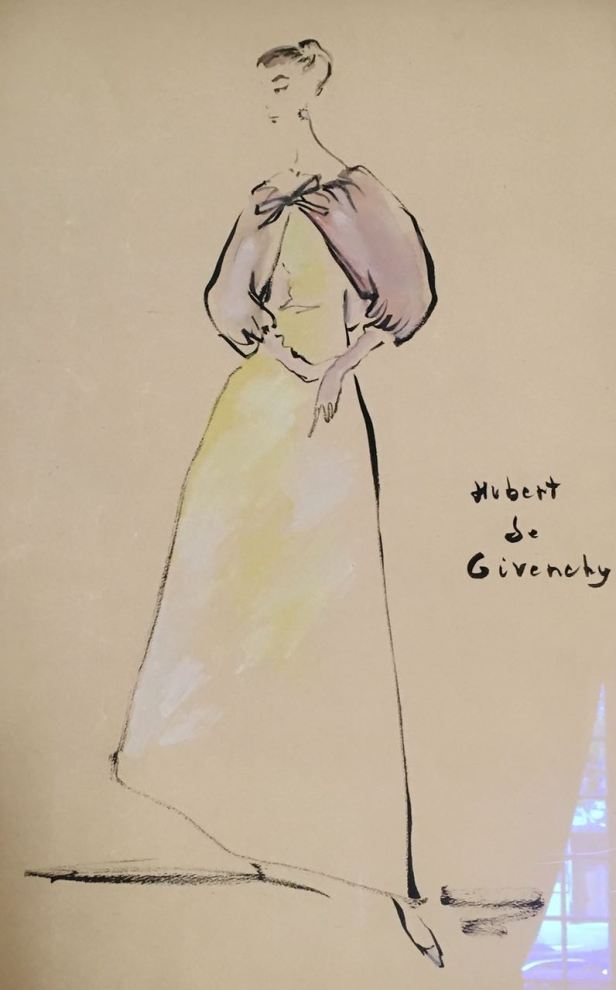
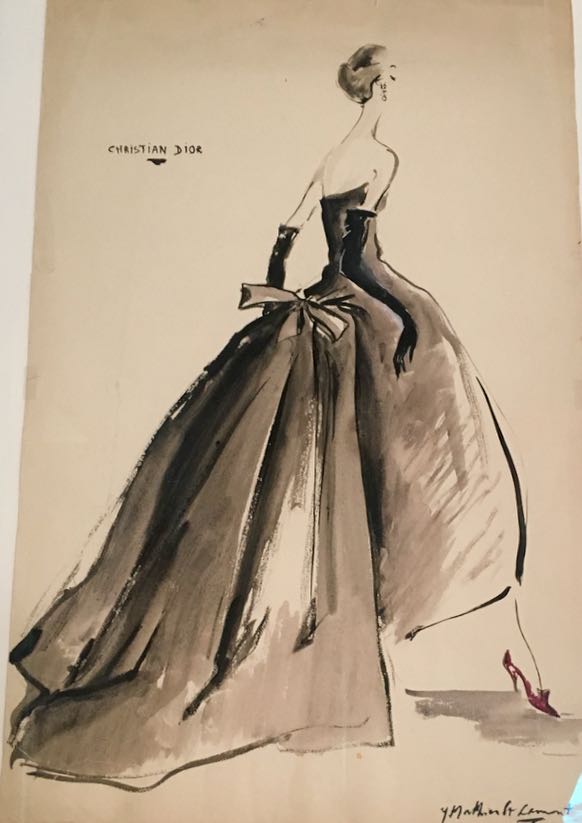
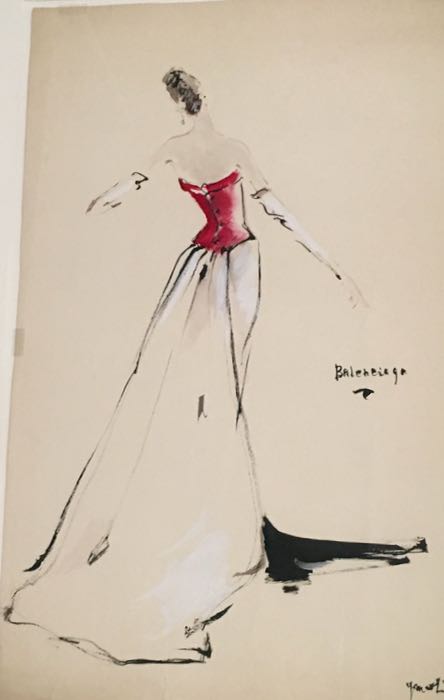
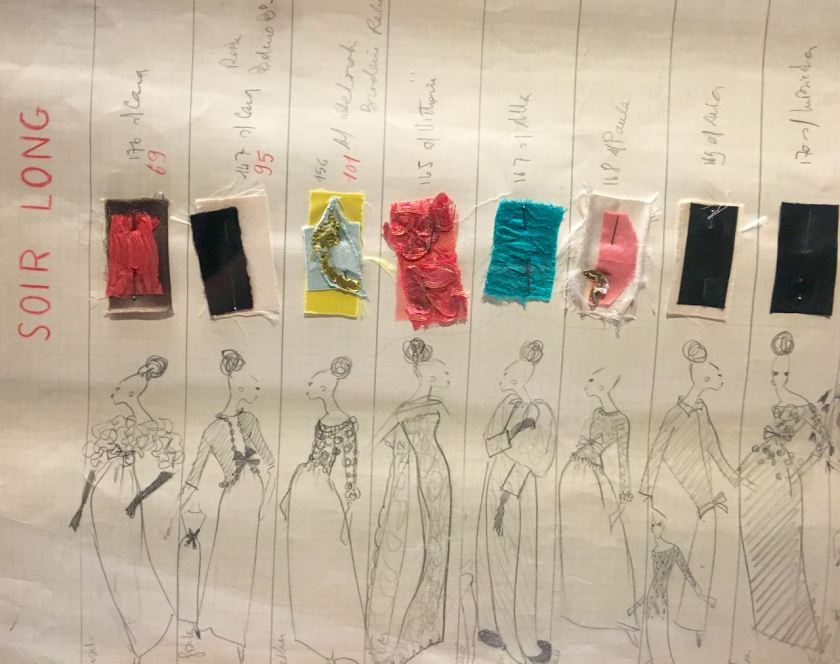
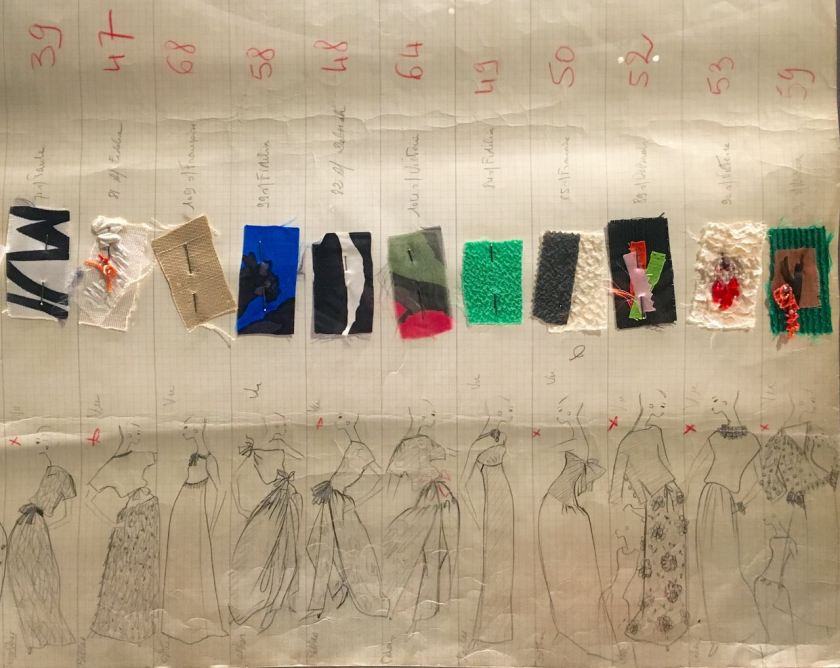
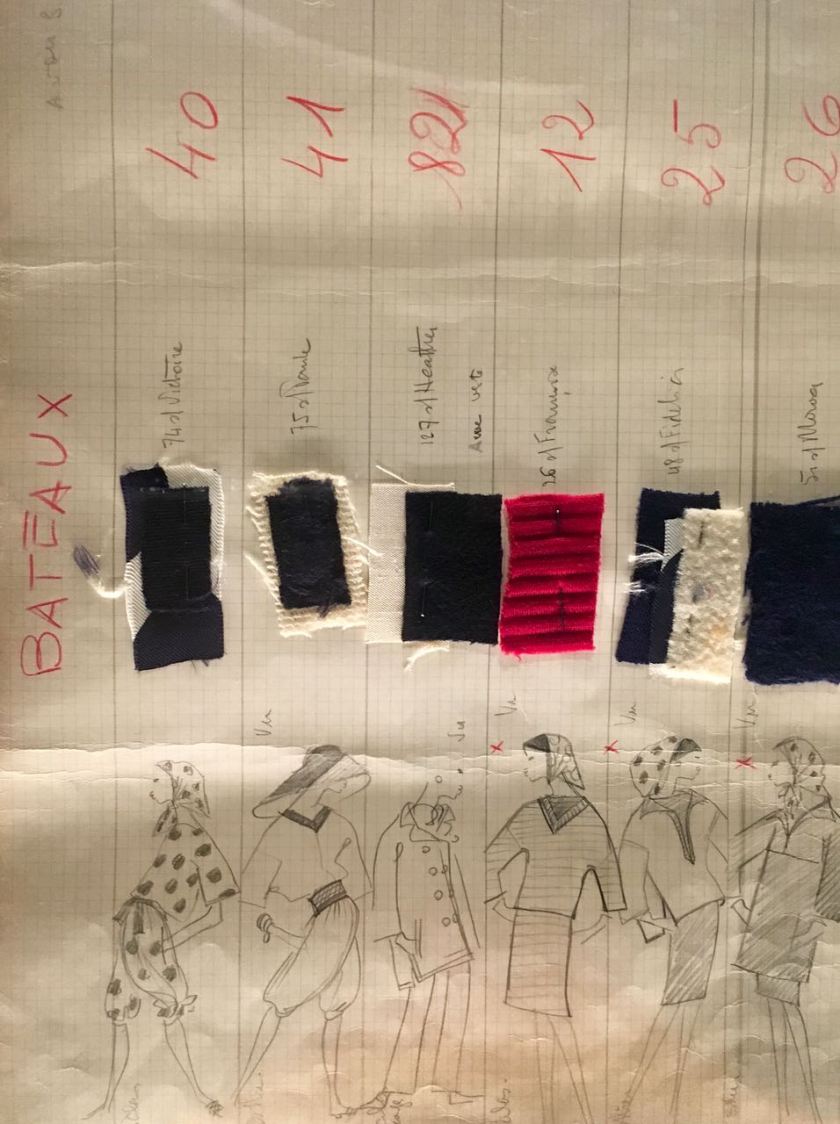
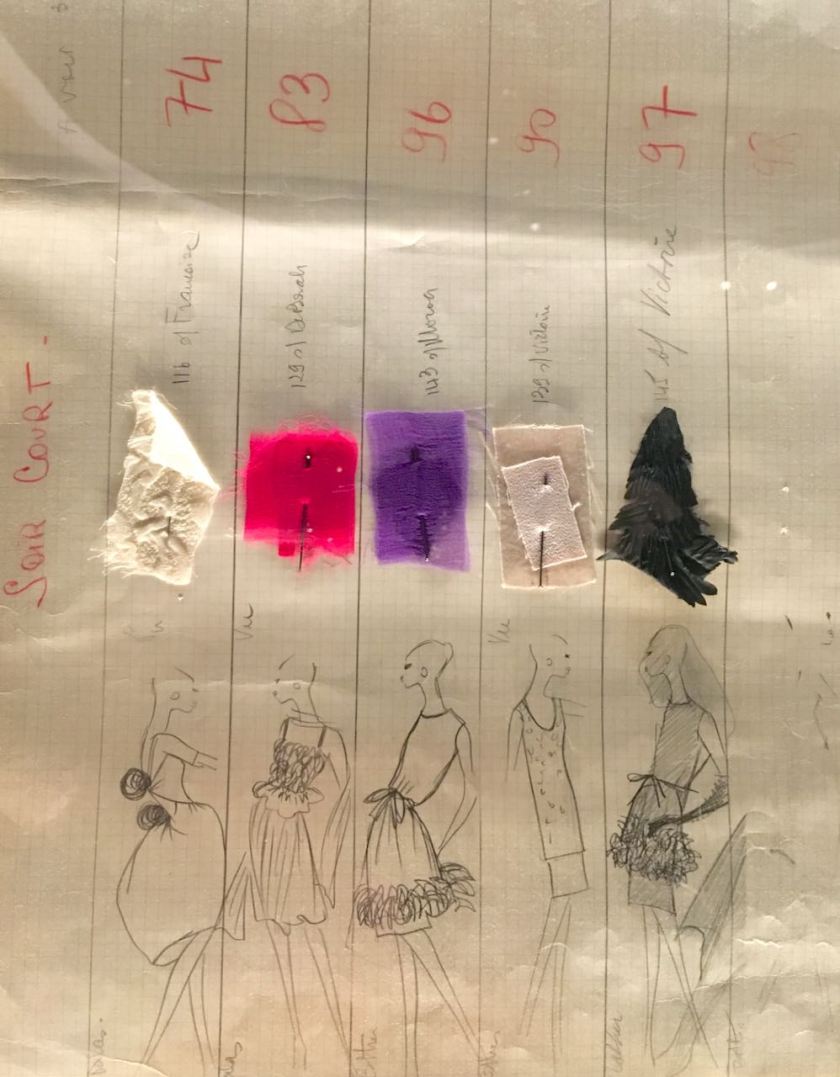
YSL’s design sketches are works of art. He could draw beautifully and was pulled toward theatre stage design and costumes, in addition to fashion. While young, he even created 11 paper dolls and more than 500 designs for them, including accessories, for two full fashion collections. He mocked up a program for each collection that listed names of the models, each piece, the location of the haute couture house and various suppliers.

IMG_3989 (1).jpg
YSL’s paper dolls

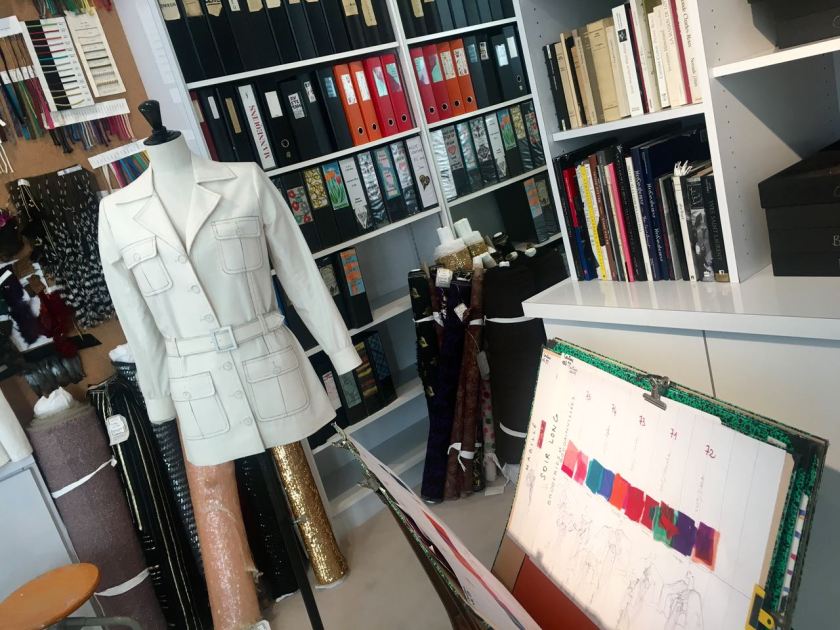
Most of YSL’s designs were sketched in his Moroccan home and their prototypes were crafted by his team working in collaboration with artisanal houses back in Paris.

Haute Couture has strict rules that could drain dry any creative person. Two collections are required each year; the spring-summer season presented in January and the autumn-winter season shown in July. Each collection contains about 100 designs, including accessories.

IMG_3998

His designs were inspired by African, Russian, Spanish and Asian cultures. He often drew upon the history of fashion and yet was adept at reflecting societal changes in his designs, such as the feminist movement in the 70s.

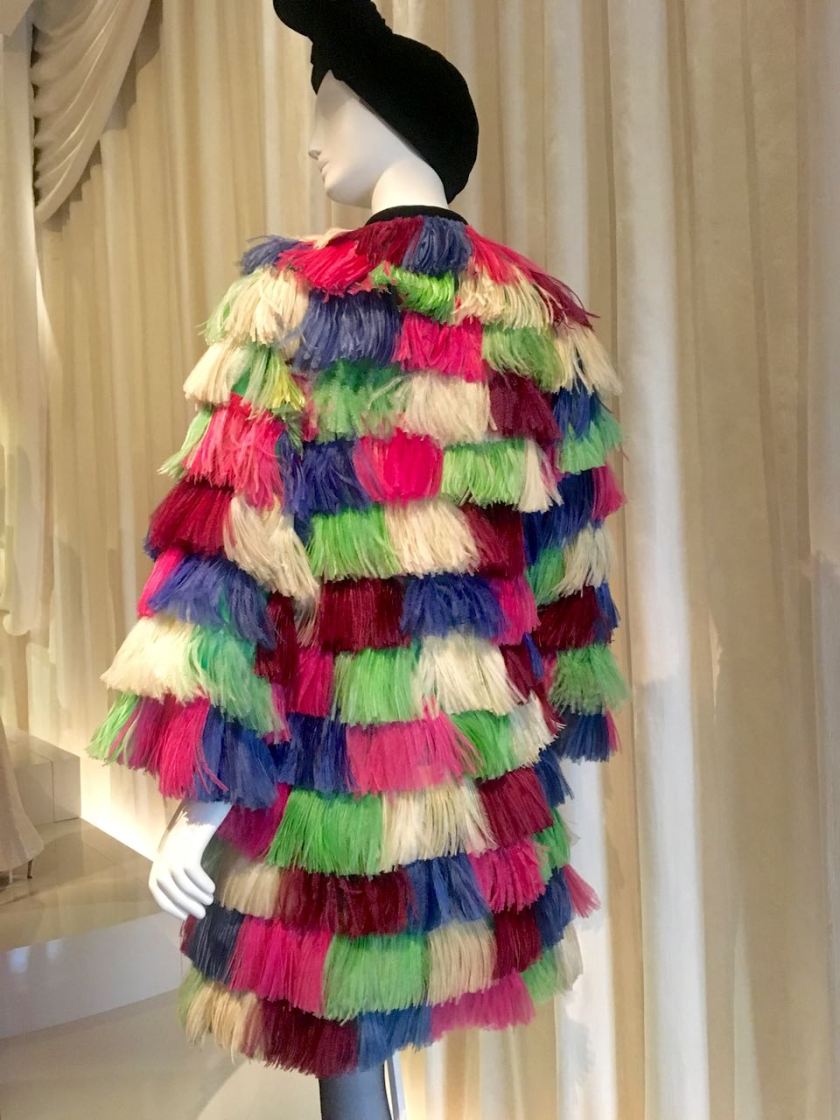
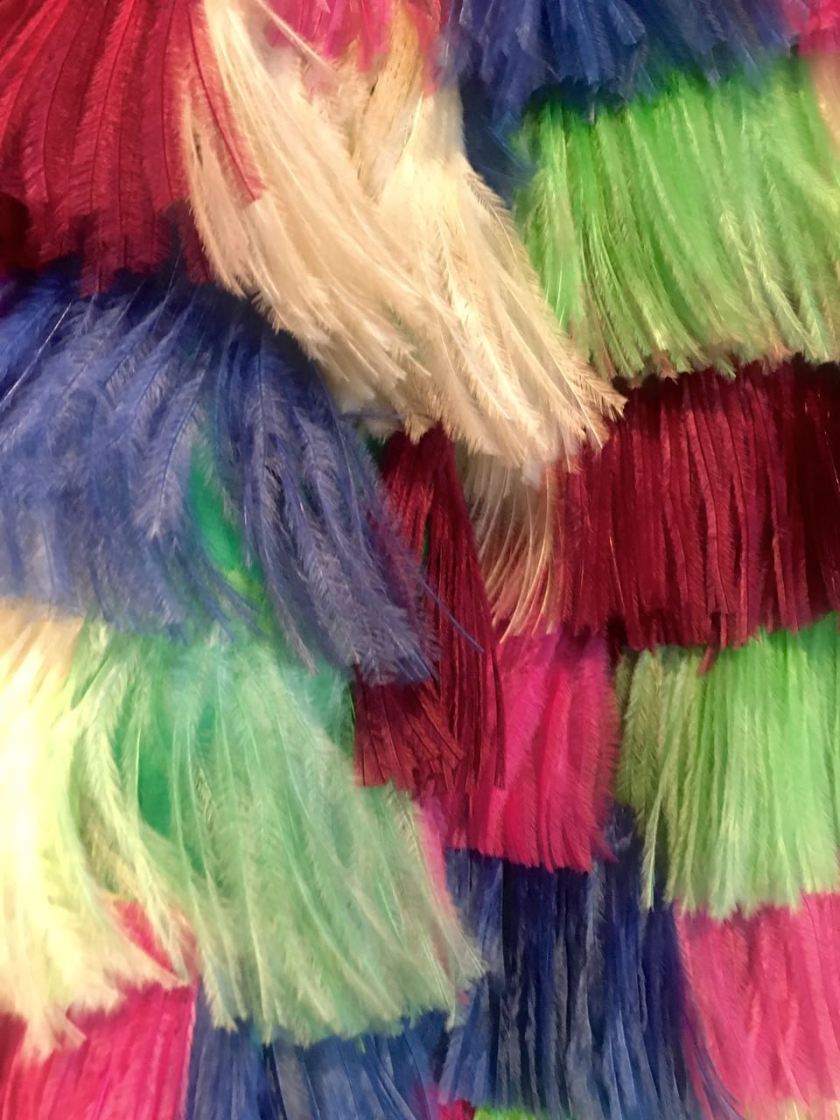
YSL’s design house employed 200 people and, like most haute couture designers, he collaborated with skilled craftspeople at French artisanal houses who used their own techniques and style to create various aspects of the clothing, including weavers, dyers, printers, embroiderers, plumassiers (deal with ornamental plumes or feathers), goldsmiths and silversmiths. One garment could take hundreds of hours to embellish. Ateliers producing high-quality commissioned work for YSL using skills handed down generation after generation included:

  • Jewelry: Goossens
  • Featherwork: Lemarie
  • Textiles & Embroidered appliqués: Brossin de Mere
  • Printed Textiles: Abraham
  • Embroidery: Rebe, Mesrine, Lesage and Lanel

IMG_4021

IMG_4022
Close-up of feather jacket above

YSL said, “I like a dress to be simple and an accessory to be crazy.” Designing costume jewelry, rather than working with gemstones and precious metals, gave him more freedom in putting together wood, metal, rhinestones, beads, feathers, ceramics and passementerie (tassels, braids, fringing) in “crazy” necklaces, earrings and bracelets.

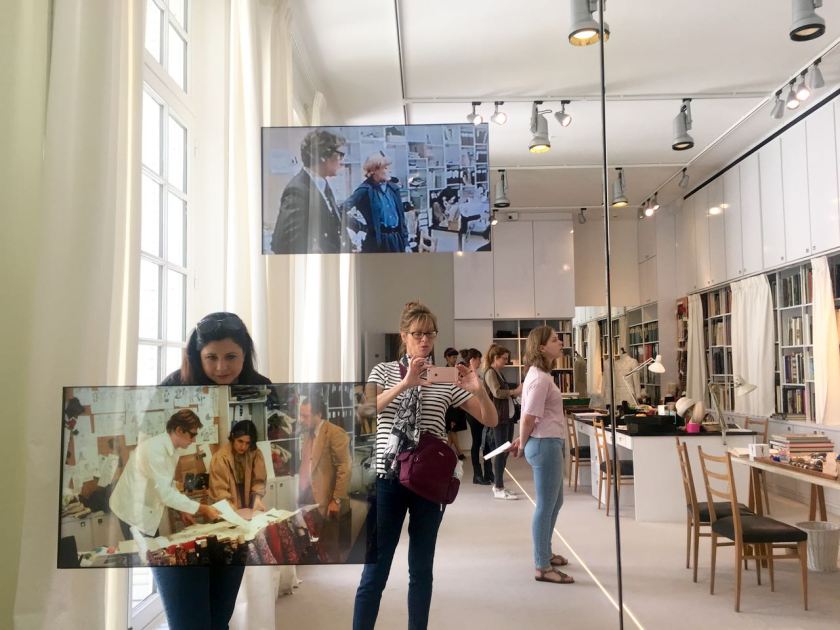
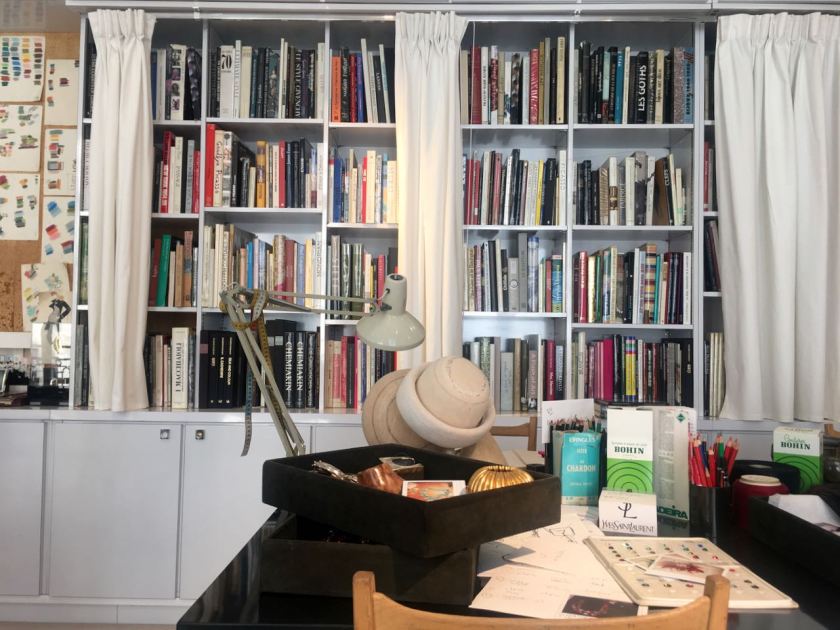
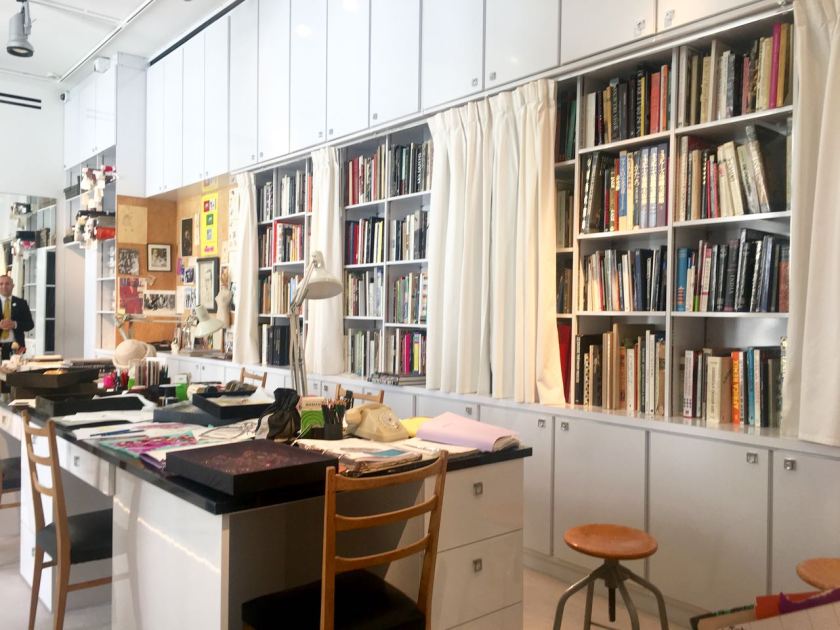
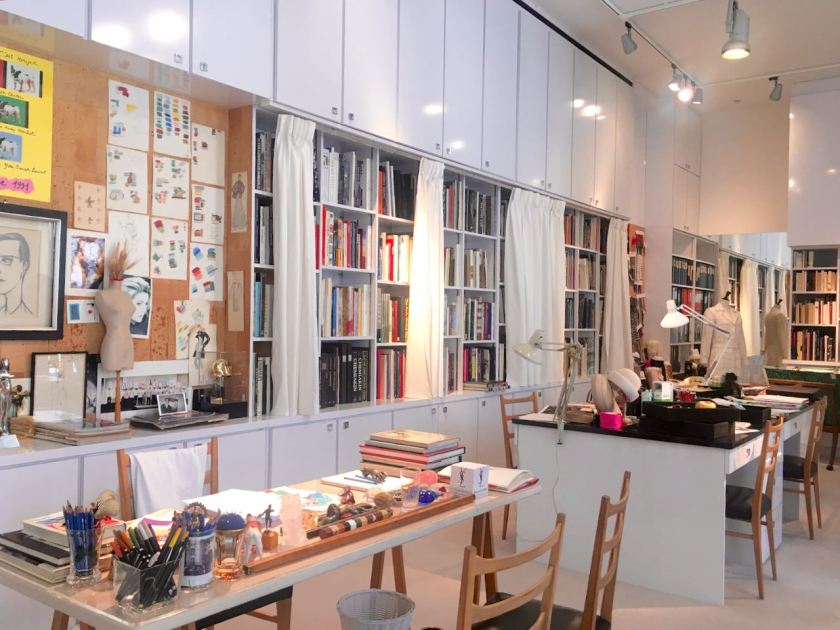
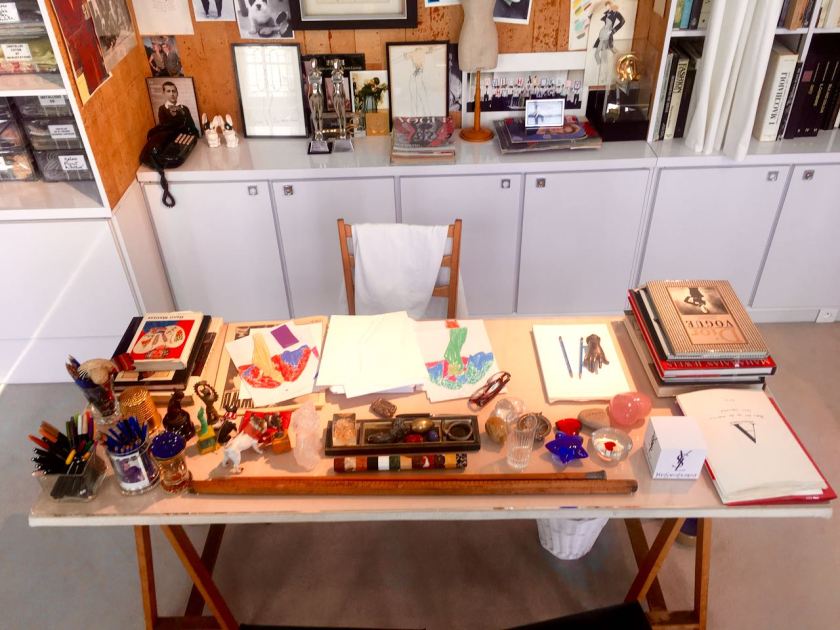
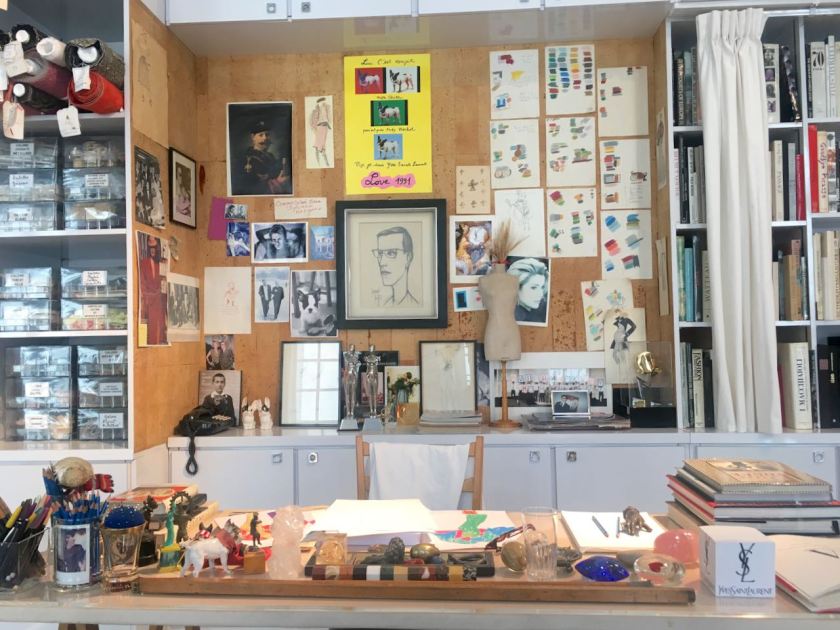
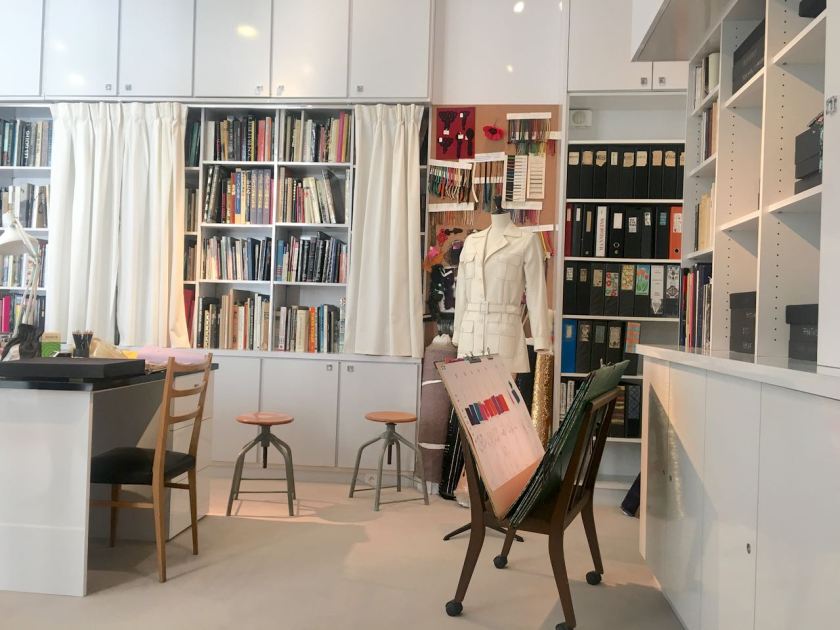
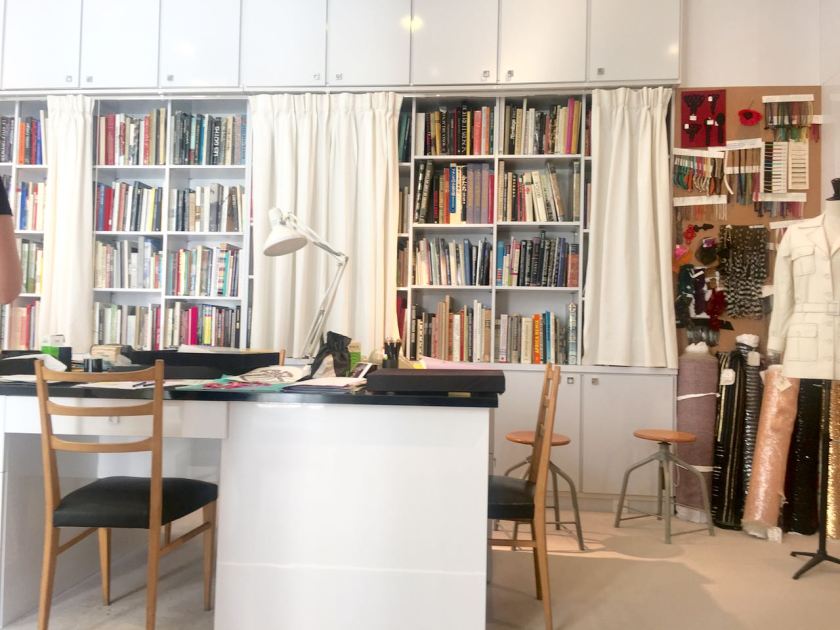
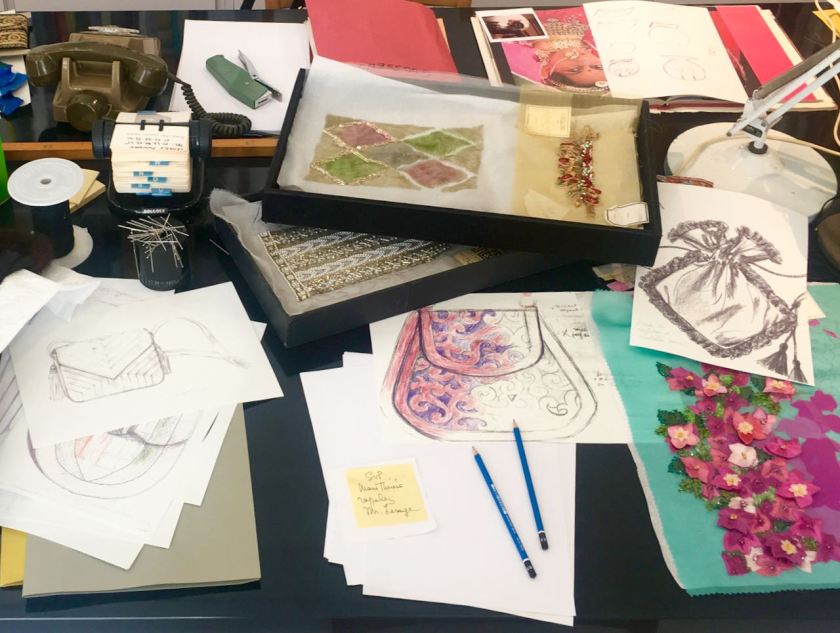
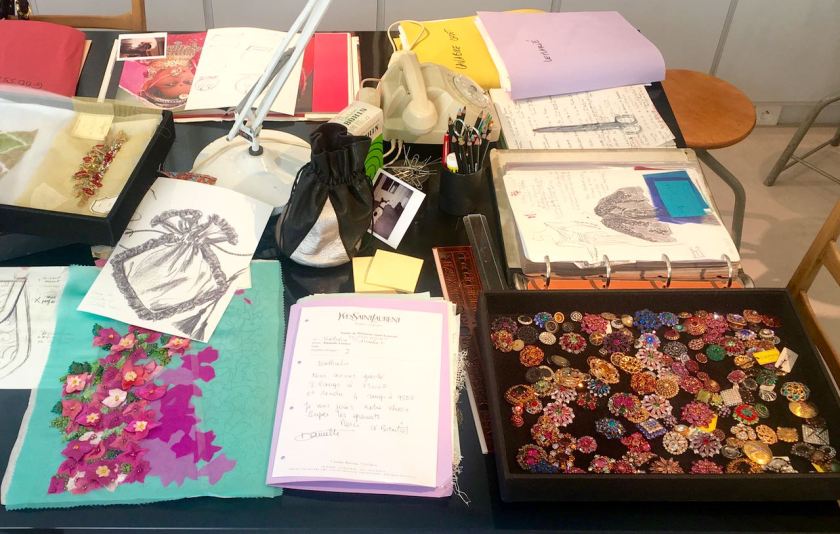
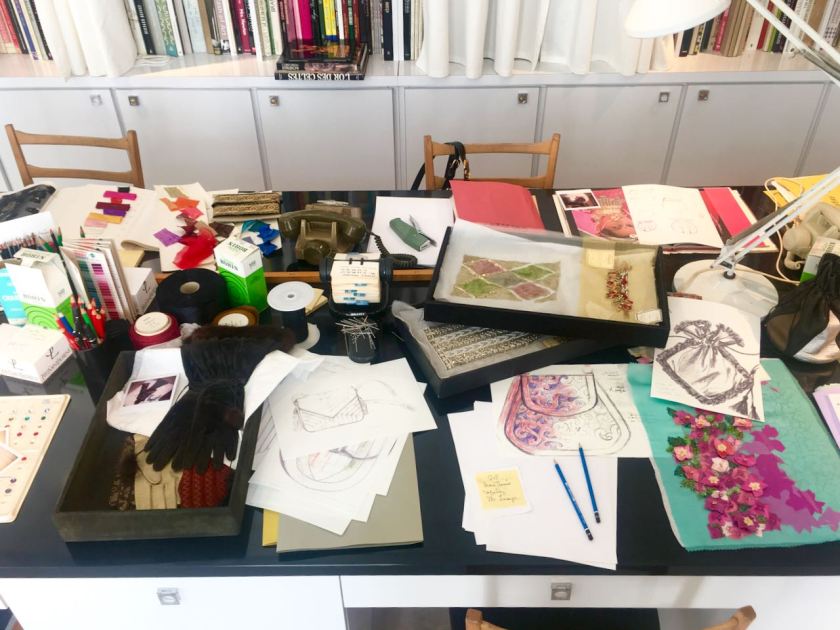
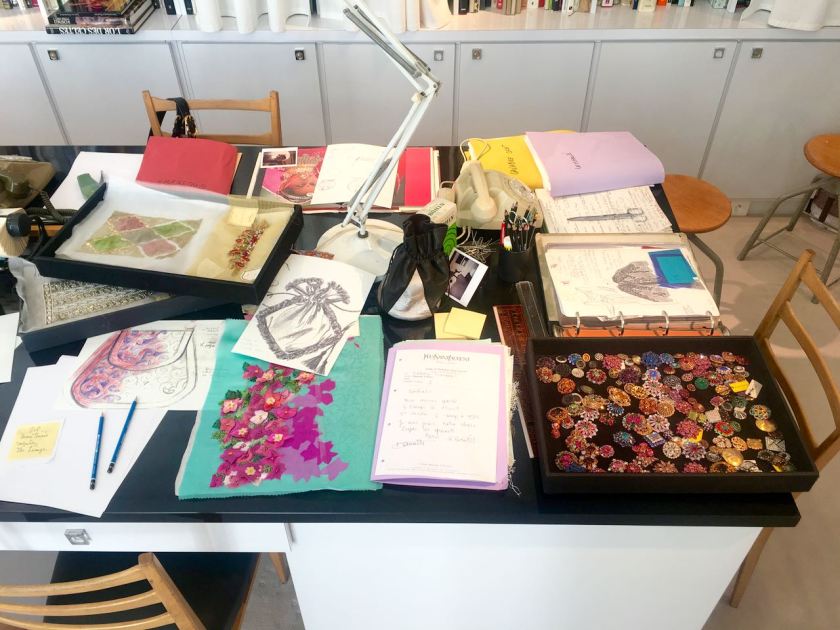
My favorite part of the museum was YSL’s studio on the top floor with windows to the ceiling, a wall of mirrors, Yves’ simple desk and work tables strewn with bobbles, sketches, embroidered pieces, Polaroid photos, feathers, etc.

IMG_4032

Different from the fancy salons downstairs, YSL’s studio was bright and quiet and the perfect place to view models in prototype garments. He found that looking at the models and garments in the mirrored wall gave him the distance needed to evaluate each piece.

Oh, and shelves of books! Fashion, art books of other topics inspired Yves. “The most beautiful trips I took were through books,” YSL said.

IMG_4029

There are six short films showing the entire couture process from sketch to purchase. Another film shows YSL’s long-term business and personal partnership with Pierre Berge, a relationship that lasted until YSL’s death from brain cancer in 2008.

The museum rotates the pieces on display, so it’s possible to visit the Musee again and again and not see the same things.

Sounds like a plan!

Photo Galleries

The Studio

IMG_4036

IMG_4035

IMG_4031

IMG_4030

IMG_4025

IMG_4023

IMG_4024

The Desktop

Version 2

Version 2

IMG_4027

IMG_4026

The Sketches

IMG_4001

IMG_4004

IMG_3995

IMG_3994
YSL sketched this Givenchy gown
IMG_3992
YSL sketched this Dior gown
IMG_3991
YSL sketched this Balenciaga gown

IMG_4007

IMG_4005

IMG_4003

IMG_4002

The Clothes

IMG_4019

IMG_4020

IMG_4016

IMG_4018

IMG_4012

IMG_4011

IMG_4008


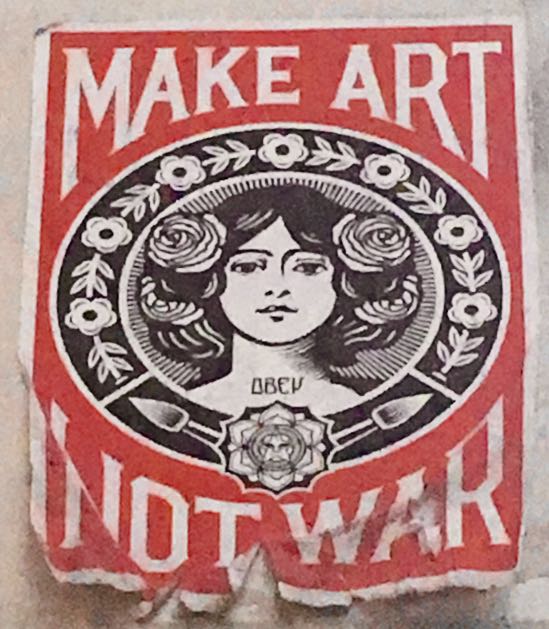
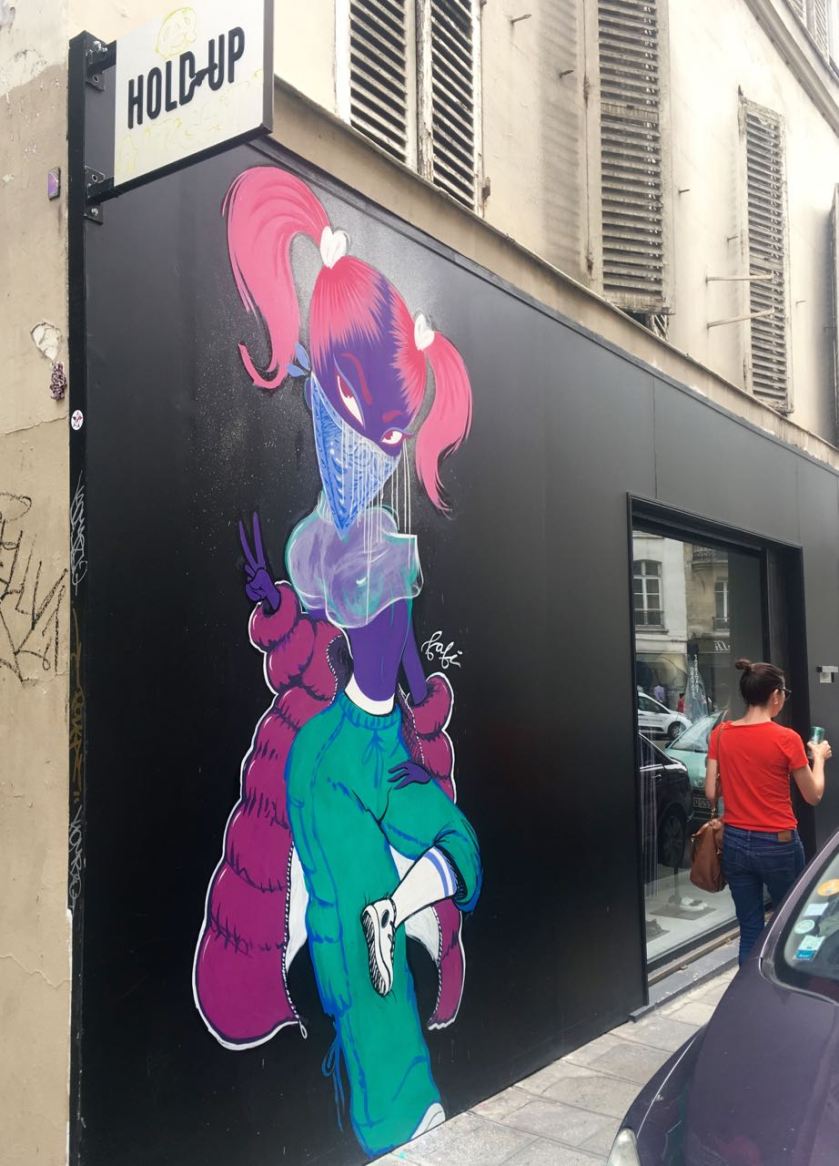
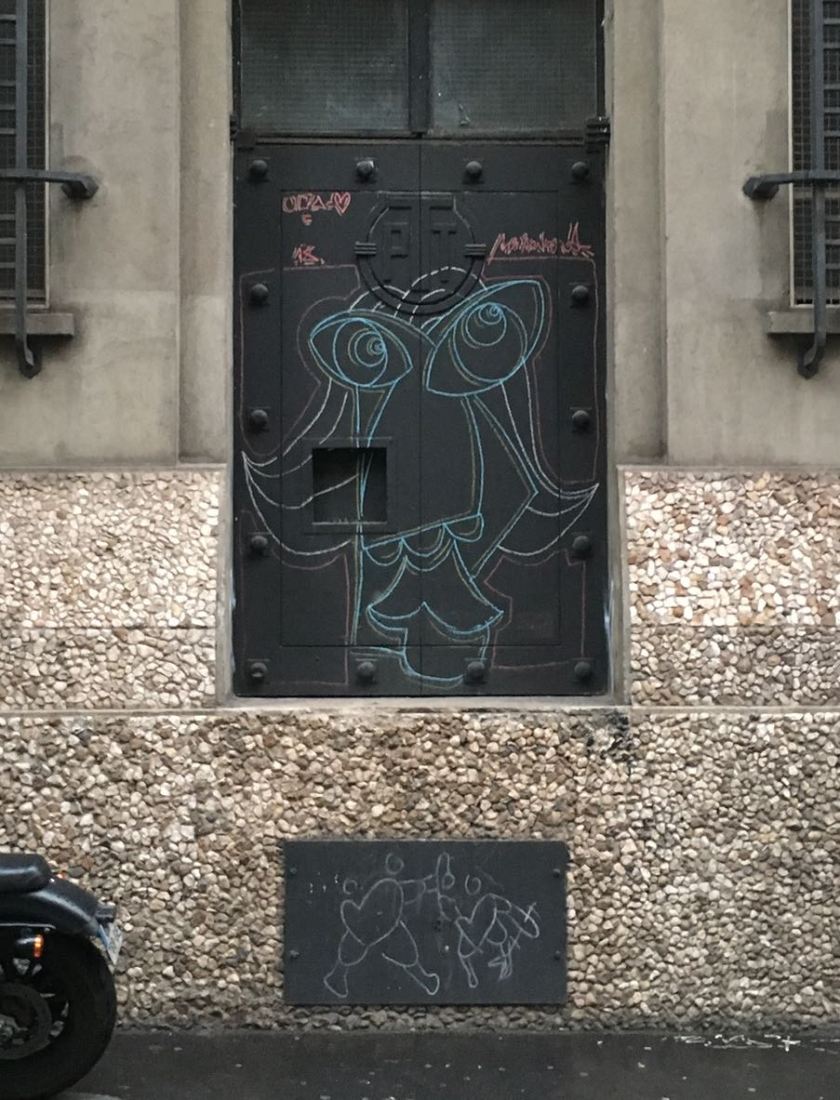
Paris Street Art

Street art ain’t just stencils anymore… but we still love stencils.

The Bright and The Beautiful

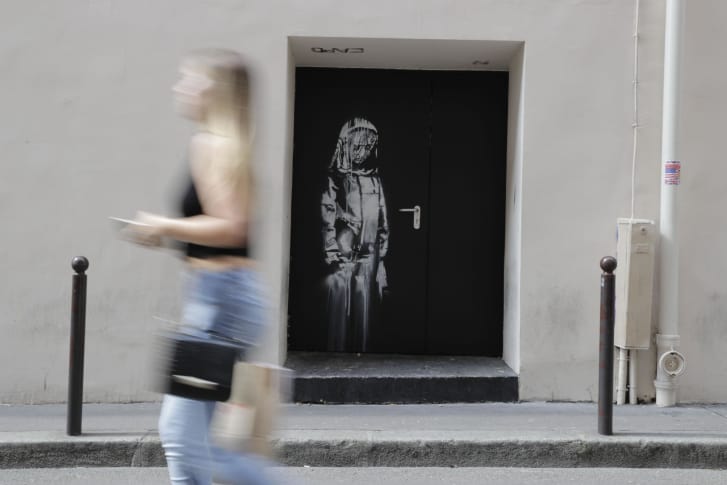
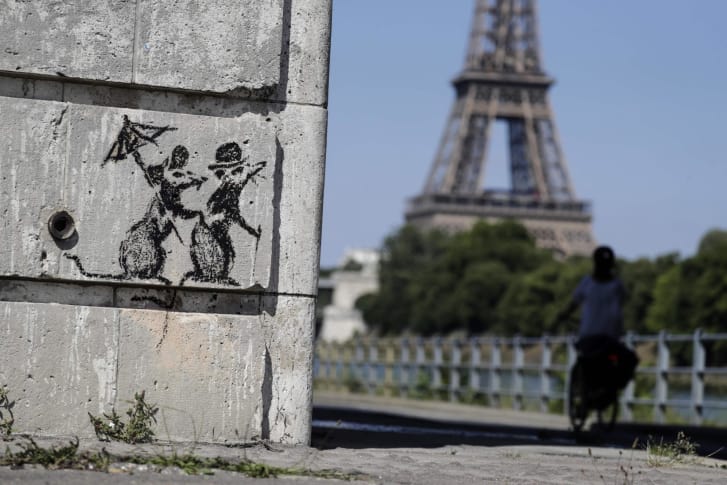
My only disappointment about Paris was missing Banksy by one day. The famous British street artist has been in the City of Love lately posting art that mostly jabs at the French government’s treatment of immigrants.

Before Banksy arrived, my daughter and I enjoyed photographing graffiti in Paris, mostly in Le Marais, and the third and fourth arrondissements.  I was intrigued to see not just paint, but also paper collages and plaques used on walls.

Here’s what we found (including a few of Banksy’s latest works captured by photojournalists).

IMG_3465

IMG_3557

IMG_3558

IMG_3560
Giant paper collage, perhaps my favorite
Do not dream, fly with your wings
Translation: Don’t dream, fly with your wings
Version 2
Close-up of plaque from previous photo

IMG_3578 (1)

IMG_3576
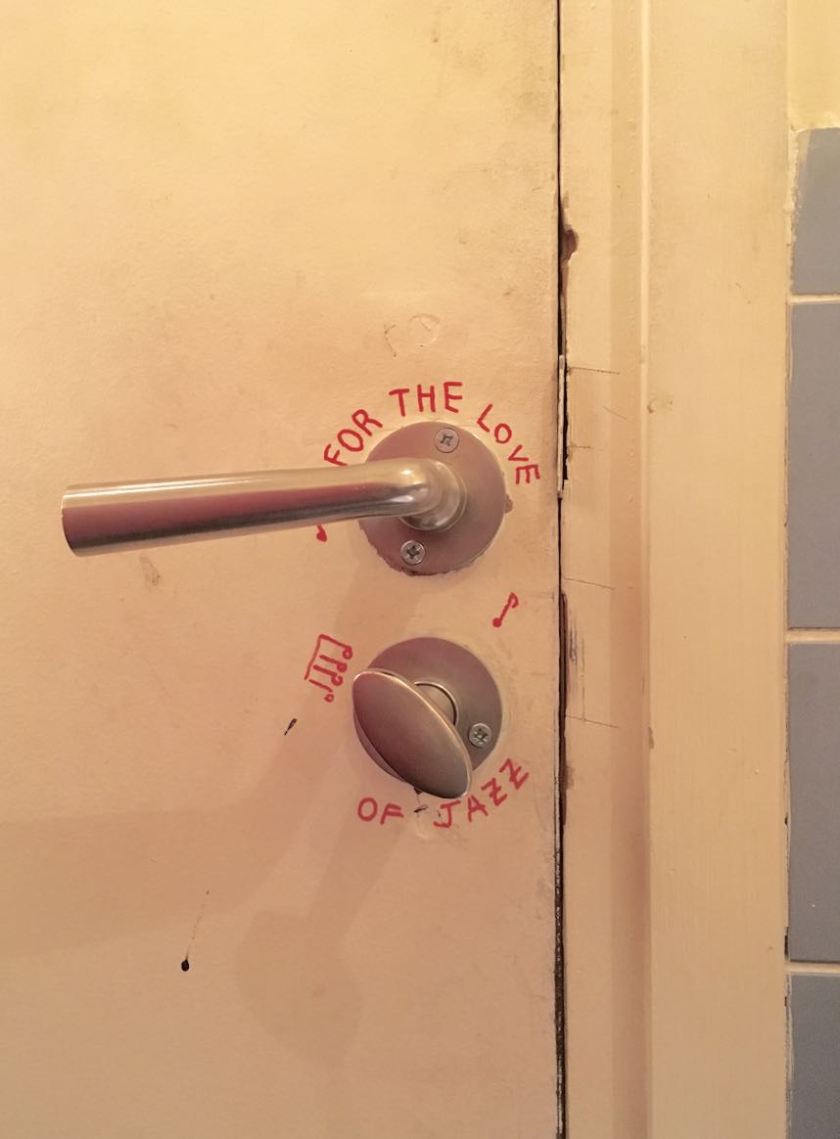
Okay, this isn’t street art, but it was on the bathroom door at Duc des Lombard Jazz Club and the French love American Jazz. Plus, it’s written in English

IMG_3579

IMG_3569


IMG_3841
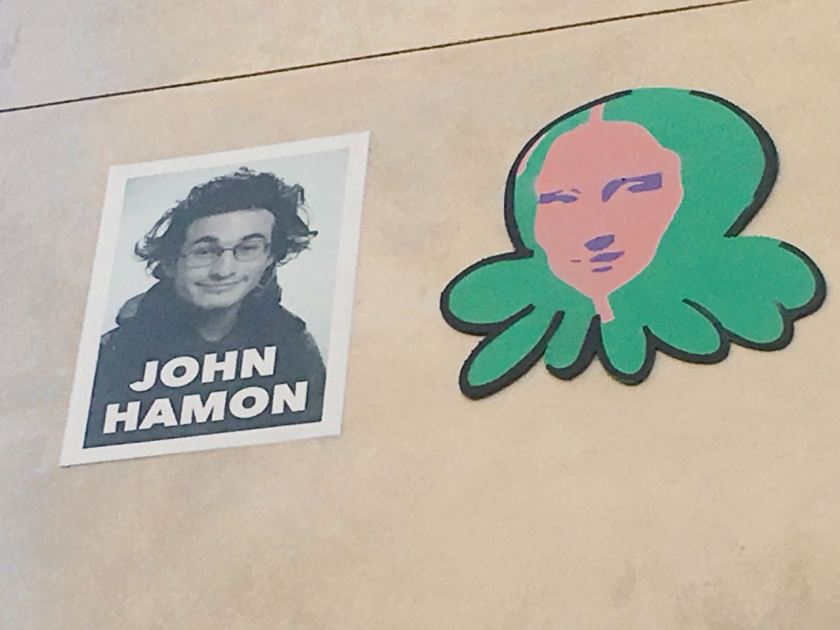
For 18 years, this portrait of John Hamon has been plastered around Paris. It’s the guy’s actual name and his actual photo, taken when he was 19. A bit of a mystery, his portrait has been projected onto the Eiffel tower, Arche de Triomphe and other famous facades. Essentially, he’s playing around with the idea of art being about promotion, rather than skill. His portrait has found its way around the world, so exposure versus talent is definitely a concept to ponder. The octopus is another common graffiti subject in Paris, but with Mona Lisa’s face, it’s irresistible. Notice any resemblance between John Hamon and Mona Lisa?
IMG_3581
Not street art, but interesting theatrical notices
Look at you, you are beautiful
Randomly-placed mirror. Translation: Look at you, you are beautiful. Yes, I’m talking to you!

IMG_3582

Banksy Paris - Thomas Samson
Banksy’s tender reminder of last year’s terrorist bombing in Paris. Photographer: Thomas Samson/AFP
Banksy Paris - Thomas Samson 2
Whimsical Banksy. Photographer: Thomas Samson/AFP
180627-banksy-paris-mc-Philippe Lopez
Heart-breaking Banksy. Photographer: Philippe Lopez/AFP
180626-banksy-paris-Philippe Lopez-AFP
Ringing-the-alarm Banksy. Photographer: Philippe Lopez/AFP

Monet’s Garden

The Ultimate Creative Space

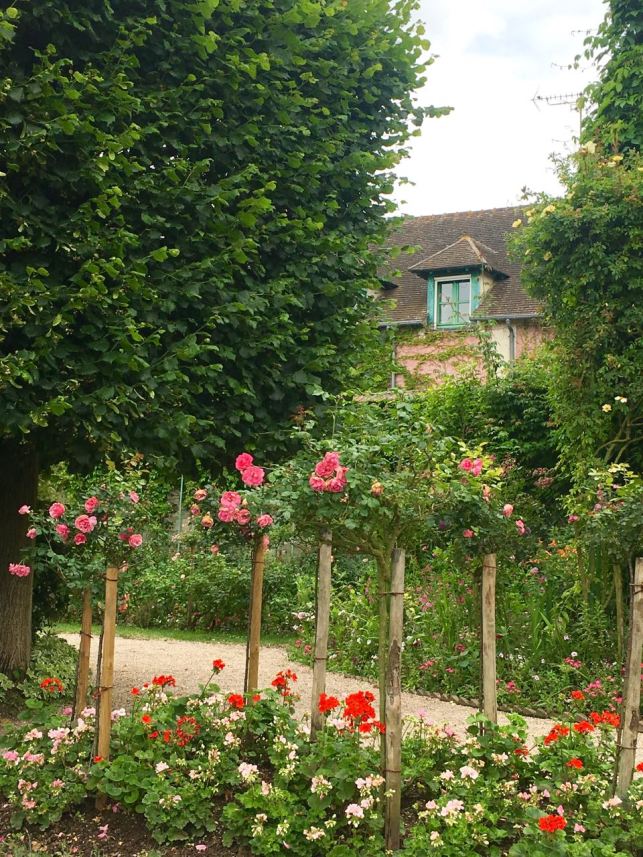
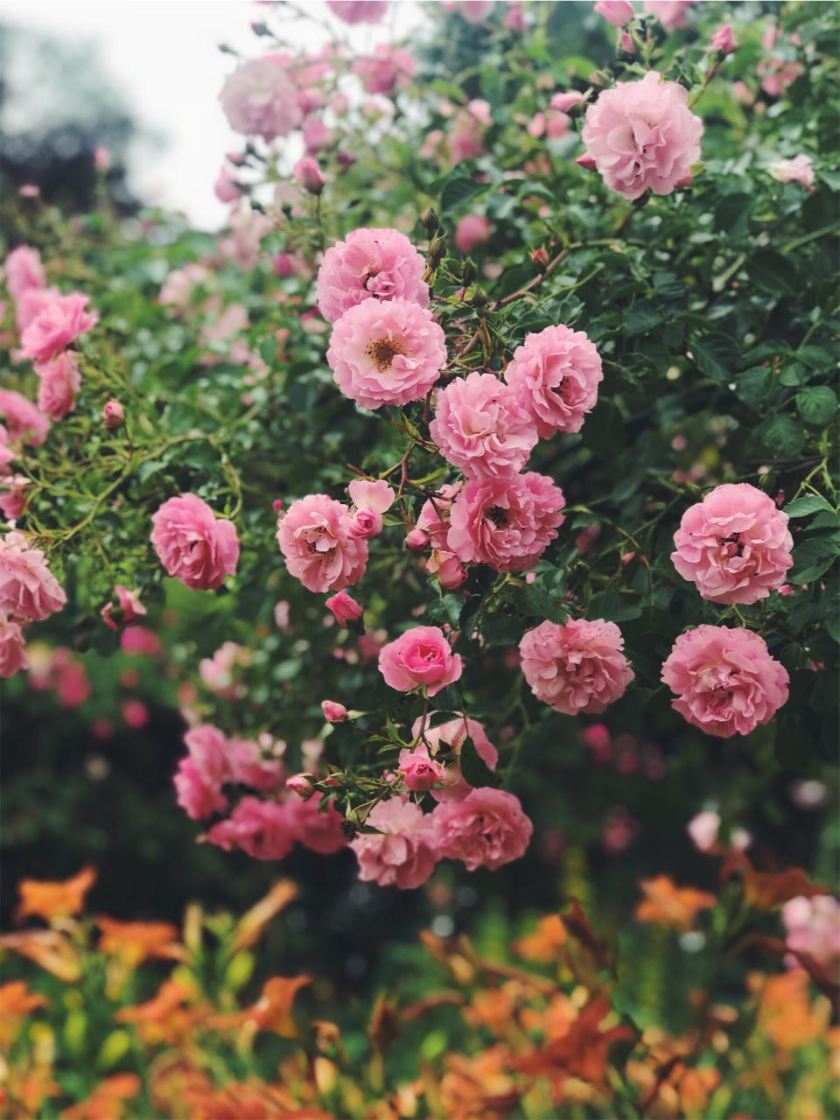
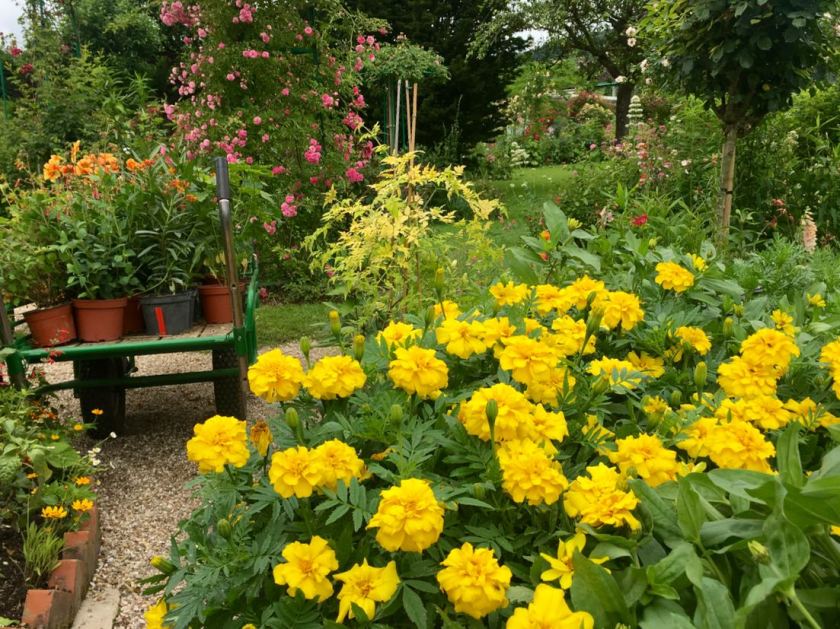
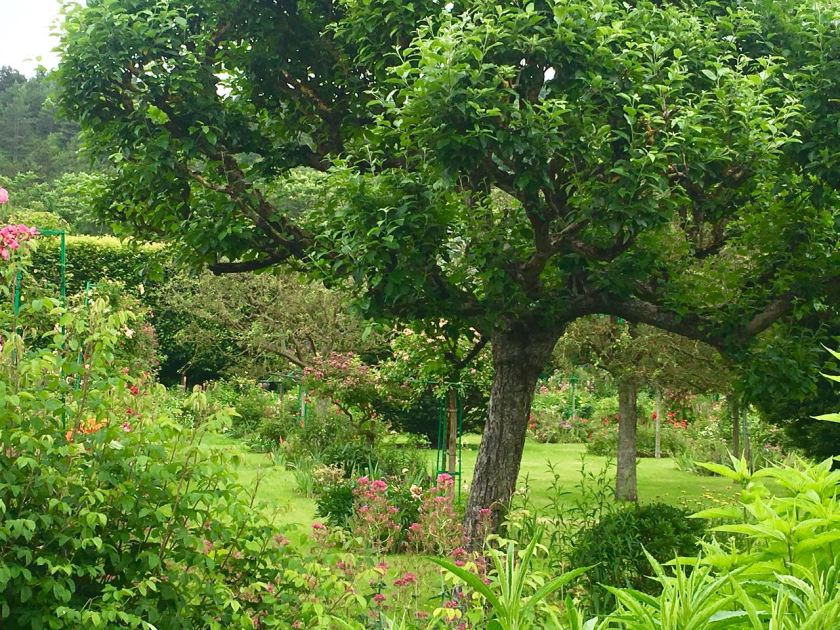
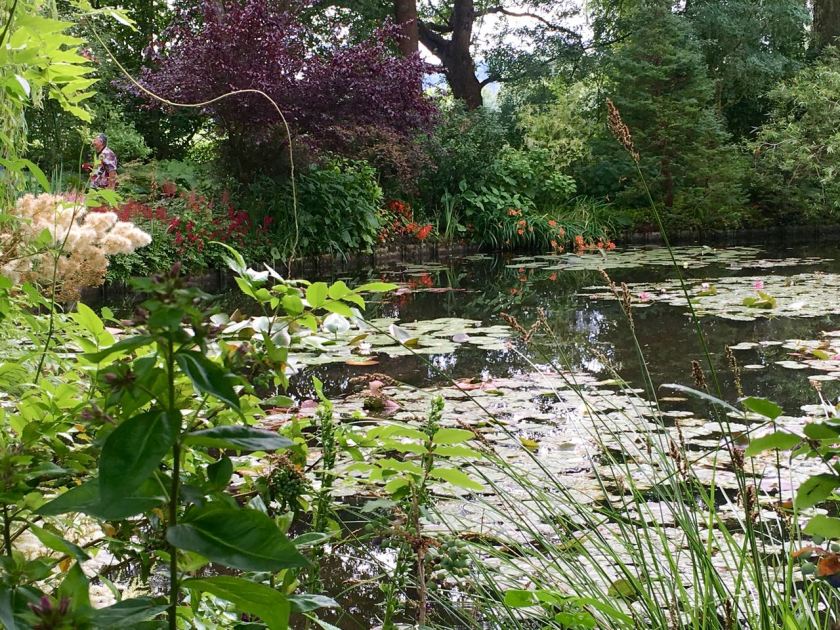
Claude Monet (1840 -1926) is known around the world for his impressionist paintings, especially of his garden and waterlily pond, but he also strategically planted specific-colored flowers in his gardens, essentially “painting” the landscape in front of his home in the tiny village of Giverny, France, about an hour’s drive northwest of Paris.

IMG_3634

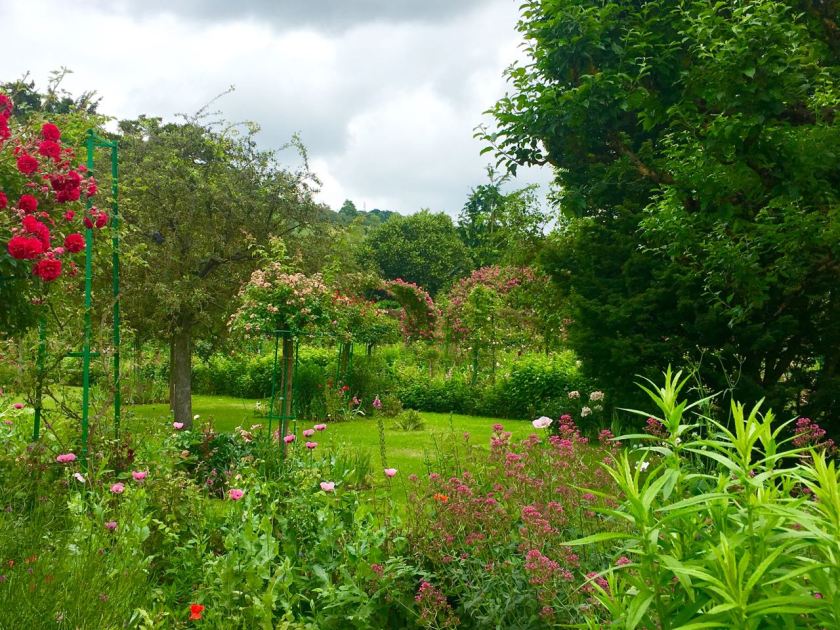
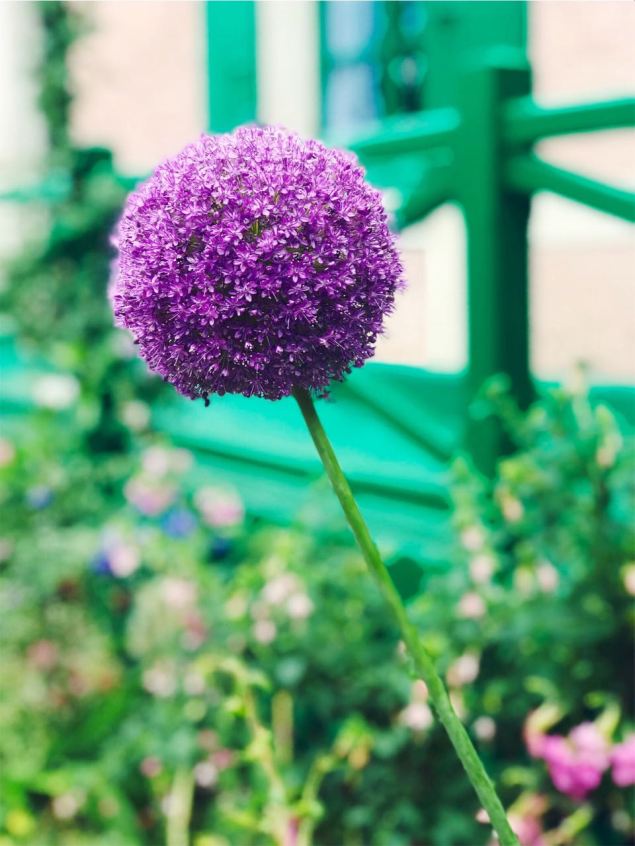
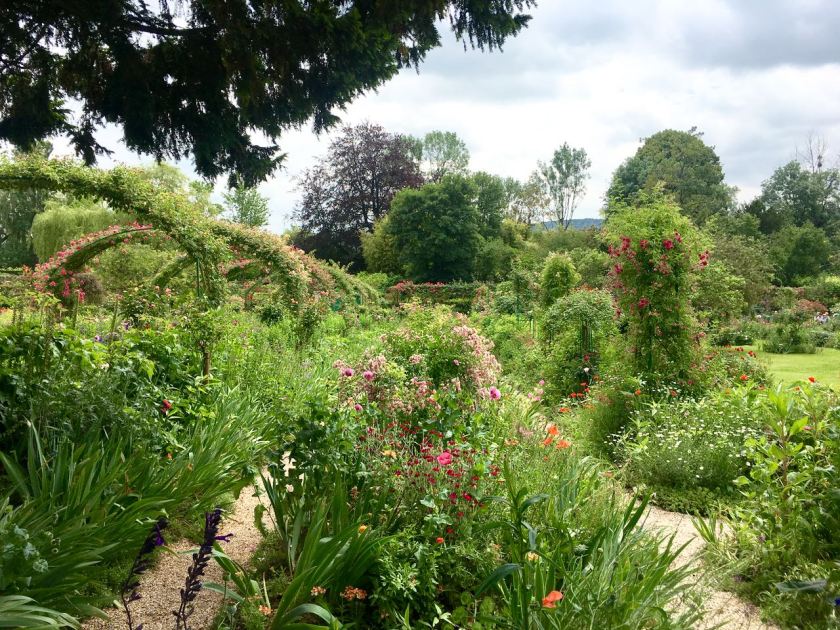
Monet grew his flower garden like a florist arranges a vase of flowers, based on colors and shapes, carefully choosing flowers for spring, summer and autumn. For winter, he got his fill of flowers by visiting  orchids in his greenhouse. 

IMG_3753
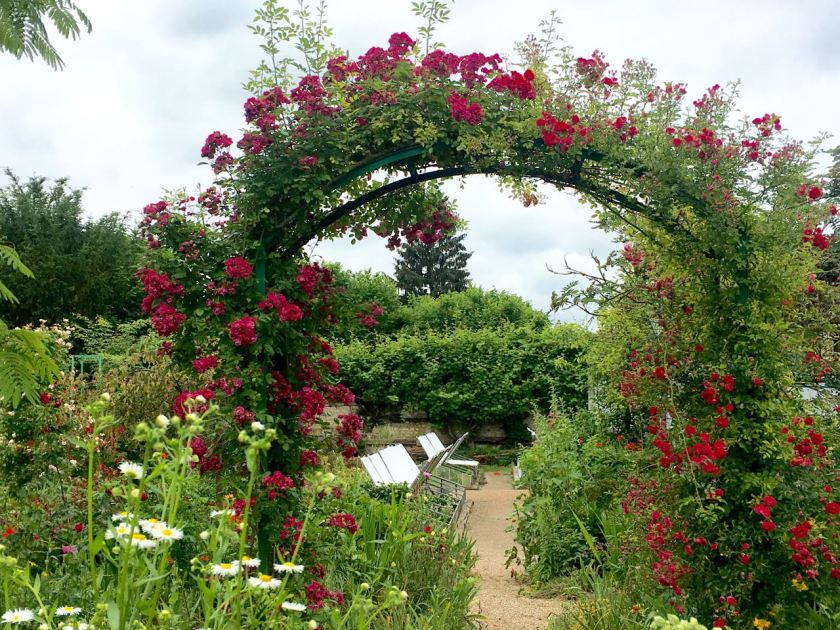
The Grande Allee flower tunnel with rambling roses
IMG_4070
Monet in the Grande Allee

From the age of 43 until his death 40 years later, Monet obsessed over the garden and pond which, combined, comprised nearly five acres of common and exotic plants from around the world. (Monet favored single flowers and his favorite of all was the single-flowered “mermaid” rose in yellow, which he grew under his bedroom window.)

IMG_3622

Eventually six gardeners would be on hand to help Monet “paint” his landscape with flowers. His gardens became his living studio, so he no longer had to trek into the countryside to paint plein air, which is what made the Impressionist painters and their paintings unique.

Monet's Garden at Giverny
Monet’s Garden at Giverny, 1900, oil on canvas, 31 5/8 x 35 7/8 inches; Musee d’Orsay, Paris

“Impressionist paintings take a fleeting moment and wrap it in light and mood and emotion,” writes Matt Brown in Everything You Know about Art is Wrong. The fuzzy paintings of early French Impressionists like Monet, Degas (1834-1917), Pissarro (1830-1903), Renoir (1841-1919) and Sisley (1839-99) were roundly criticized and mocked with descriptions of “intolerable monstrosities,” “ridiculous and horrible” and “victims of an unlucky disease.”

IMG_3930 (1)
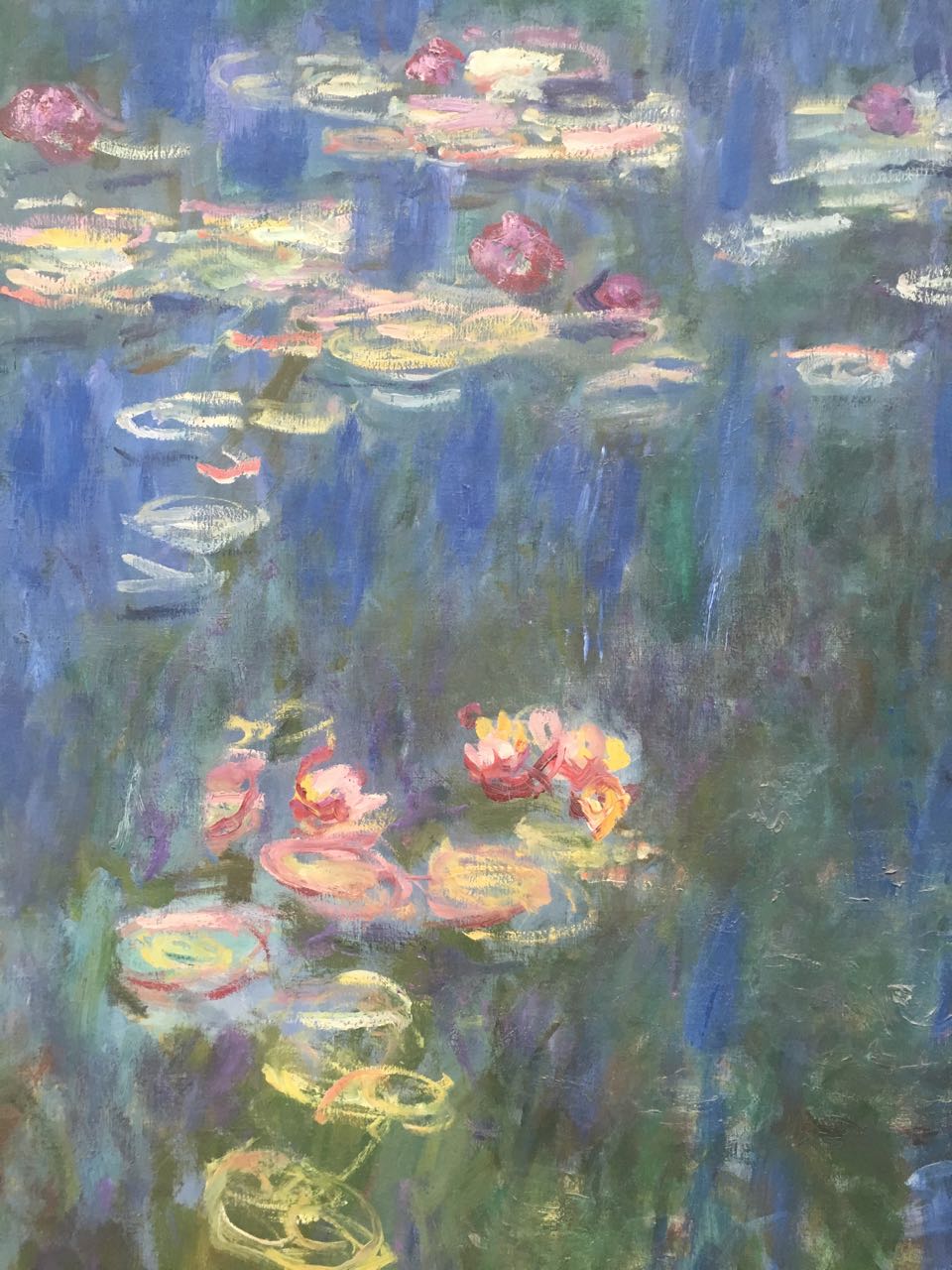
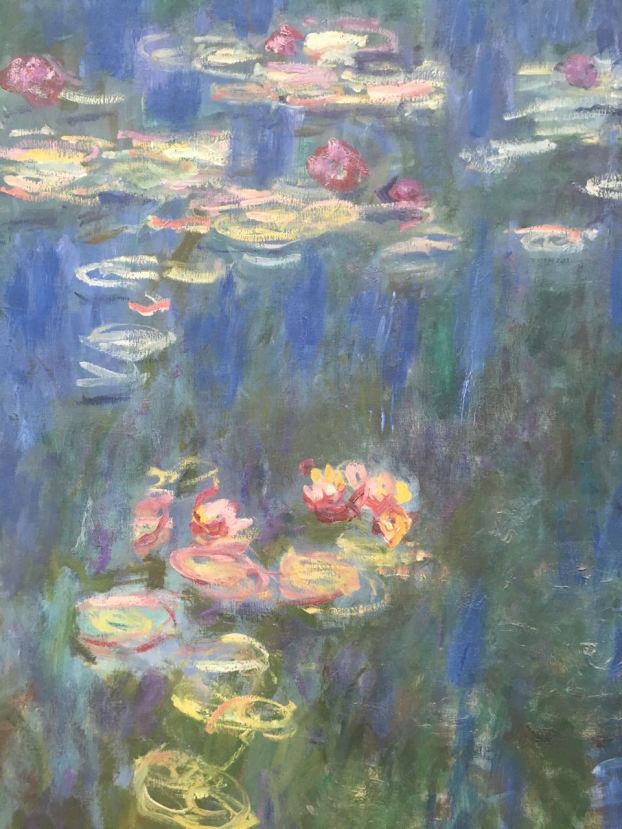
A detailed close-up of one of Monet’s giant waterlily paintings at Musee de L’Orangerie

Matt Brown believes impressionist paintings are now so respected and loved “they might even be considered among the finest achievements of our species.”

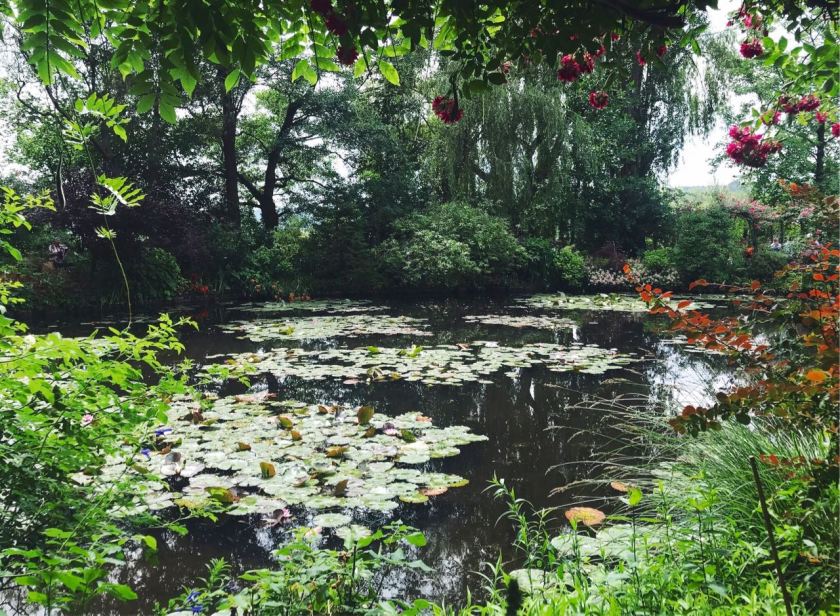
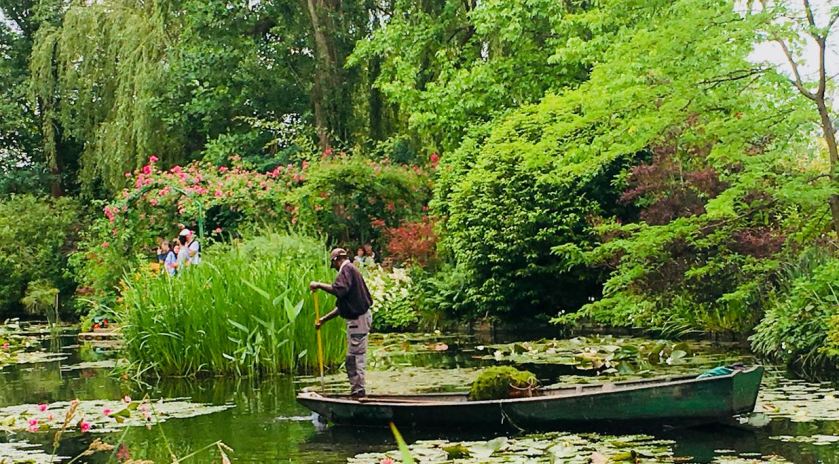
As for the pond, Monet hired a special gardener who would row a little boat around early in the morning (before Monet started painting) to clean up algae and groom the lily pads to grow in visually-pleasing circular clumps.

His waterlily paintings blew the minds of folks in his day. They were used to tranquil pastoral settings composed as seen; land and sky. Monet’s waterlily paintings had no setting, no pond’s edge or sky to compose a nature scene. He simply put his pond border to border and rocked the art world.

IMG_4060

Monet considered his gardens his greatest masterpiece. In 1907, Marcel Proust wrote:

“If I can someday see M. Claude Monet’s garden, I feel sure that I shall see something that is not so much a garden of flowers as of colors or tones, less an old-fashioned flower garden than a color garden, so to speak, one that achieves an effect not entirely nature’s, but it was planted so that only the flowers with matching colors will bloom at the same time, harmonized in an infinite stretch of blue or pink.”

That’s exactly what Proust would have seen.

IMG_3762

These days, the little country road that separates the front yard from the pond has a tunnel underneath so guests can easily and safely move between the two distinct gardens.

On the June 2018 day we visited, a gardener was quietly rowing around the pond, skimming debris and making the surface of the water like a mirror, just as Monet would have liked. In front of the house, men and women were putting out plants and grooming others in a never-ending homage to Monet for visitors from all over the world to enjoy.

IMG_3809


People speaking many languages mingled around the garden and pond paths, posing on the arched, green Japanese bridge. Groups of school children, some as young as four or five, were led through the house, garden and around the pond. Perhaps one day these little ones will be inspired to become gardeners, landscape architect or even artists. After all, culture and the arts are France’s most prized possessions.

IMG_3745
Gardeners at work in Monet’s garden; the house roof is in the distance

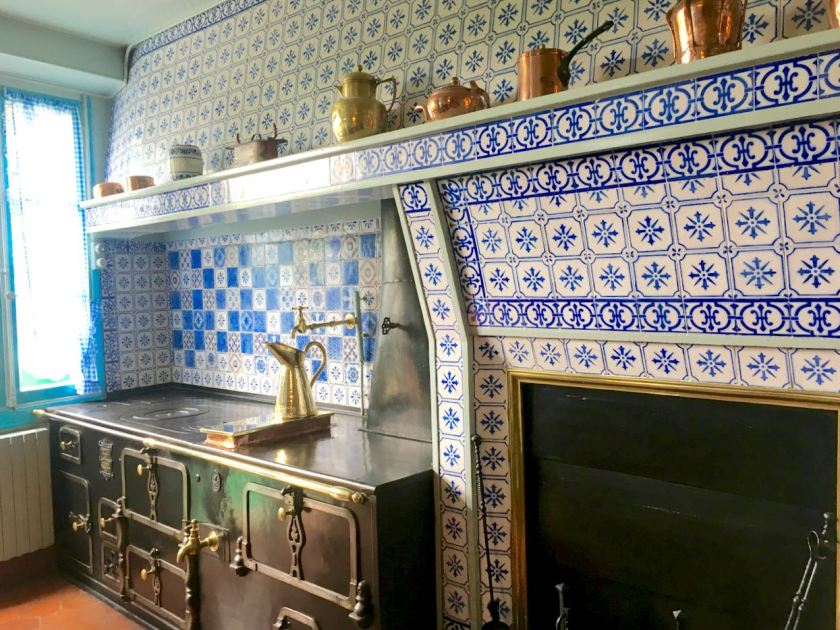
The house, with a verdant hill sloping up behind, is very wide, but only one room deep, and Monet’s use of color throughout seems whimsical, which is why photos of the home’s interior are included below.

IMG_3831 (1)
The Village of Giverny

Musee de L’Orangerie

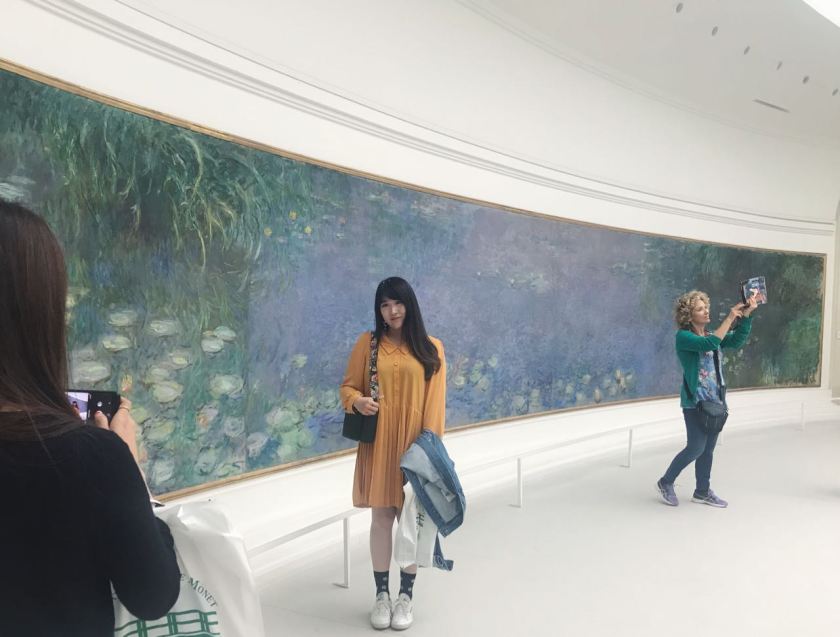
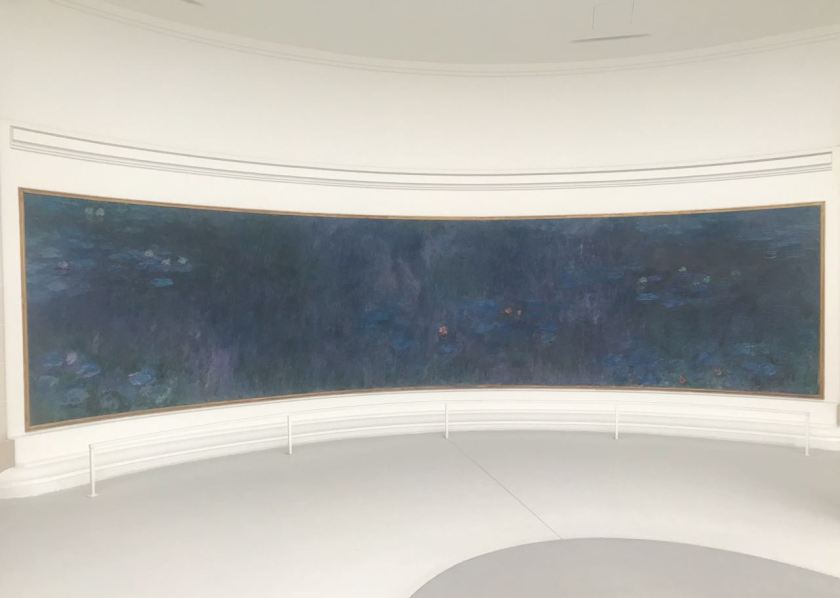
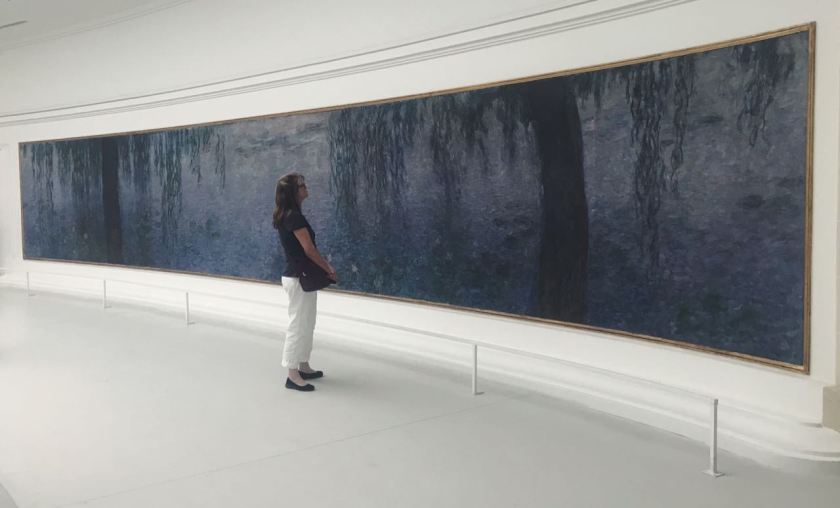
Before his death, Monet worked with the Musee de L’Organgerie in Paris, very close to the Louvre, to create the perfect display for eight of Monet’s massive waterlily paintings. He finally decided on elliptical walls. Here are a few excellent photos taken by my daughter Jaime of the giant paintings on display in two elliptical-shaped rooms at Musee de L’Orangerie.

Processed with VSCO with f2 preset

Processed with VSCO with f2 preset

Processed with VSCO with f2 preset
That’s me, contemplating the pond we had just seen the day before

Monet in Motion

Watch Monet at age 74 painting at his lily pond. The only known footage of Monet, the film was shot in the summer of 1915 by French activist and dramatist Sacha Guitry.

Monet paints by the pond.

The Garden

IMG_4067
Photo by Jaime
IMG_4066
Photo by Jaime
IMG_4065
Photo by Jaime

IMG_3821

IMG_3626

IMG_3721

IMG_3630

IMG_3632

IMG_3754

IMG_3757

IMG_3760

IMG_3761

The Pond

Waterlilies and Japanese Bridge
Waterlilies and Japanese Bridge, Claude Monet, oil on canvas, 31 5/ x 31 5/16

IMG_3810

IMG_3807
Jaime on the Japanese bridge

IMG_3784

IMG_3790

IMG_3804

The House

IMG_3649
Monet’s in-home studio/office
IMG_3658
Monet in his in-home studio/office

IMG_3641

IMG_3701

IMG_3697

Claude Monet in Studio at Giverny
Monet in his third and final studio at his home in Giverny; with his large waterlily paintings
J&C
We couldn’t resist taking a photo in Monet’s bedroom

JoAnne Meeker, Painter

JoAnne Meeker returns to painting 50 years later!

From Painter to Illustrator to Photographer and back to Painter

JoAnne Meeker, at 60, has the fresh-scrubbed face of a teenager, complete with a freckle-splashed nose and enough youthful ambition to take on oil painting after a professional career as a photographer and advertising agency owner.

IMG_3141

JoAnne proves we can reinvent ourselves at any time, as long as we’re willing to study, work hard and make mistakes. She began her training as a painter at the age of 11 in Destin, Florida, with private lessons and her mother’s encouragement.

“I always knew I’d be an artist,” JoAnne says. “And more specifically, a painter.”

Now, she’s picked up brushes again and is seeking her groove.

arizona-tags 9 x 12
Arizona Tags, 9 x 12 inches, oil on canvas

“Learning to paint is like learning a new language,” JoAnne says. “I’m trying different techniques, which often feel awkward, just like learning new words and pronouncing them wrong. People might laugh, but I keep going.”

After attending the University of Kansas School of Fine Art, the Kansas City Art Institute and the Art Institute of Southern California, JoAnne started her career in advertising as an illustrator in her 20s. She moved to California to be in the movie business. When that didn’t pan out, she started her own design agency at the age of 26 and called it “Kaos & Harmony.” Her firm specialized in marketing for the retirement industry.

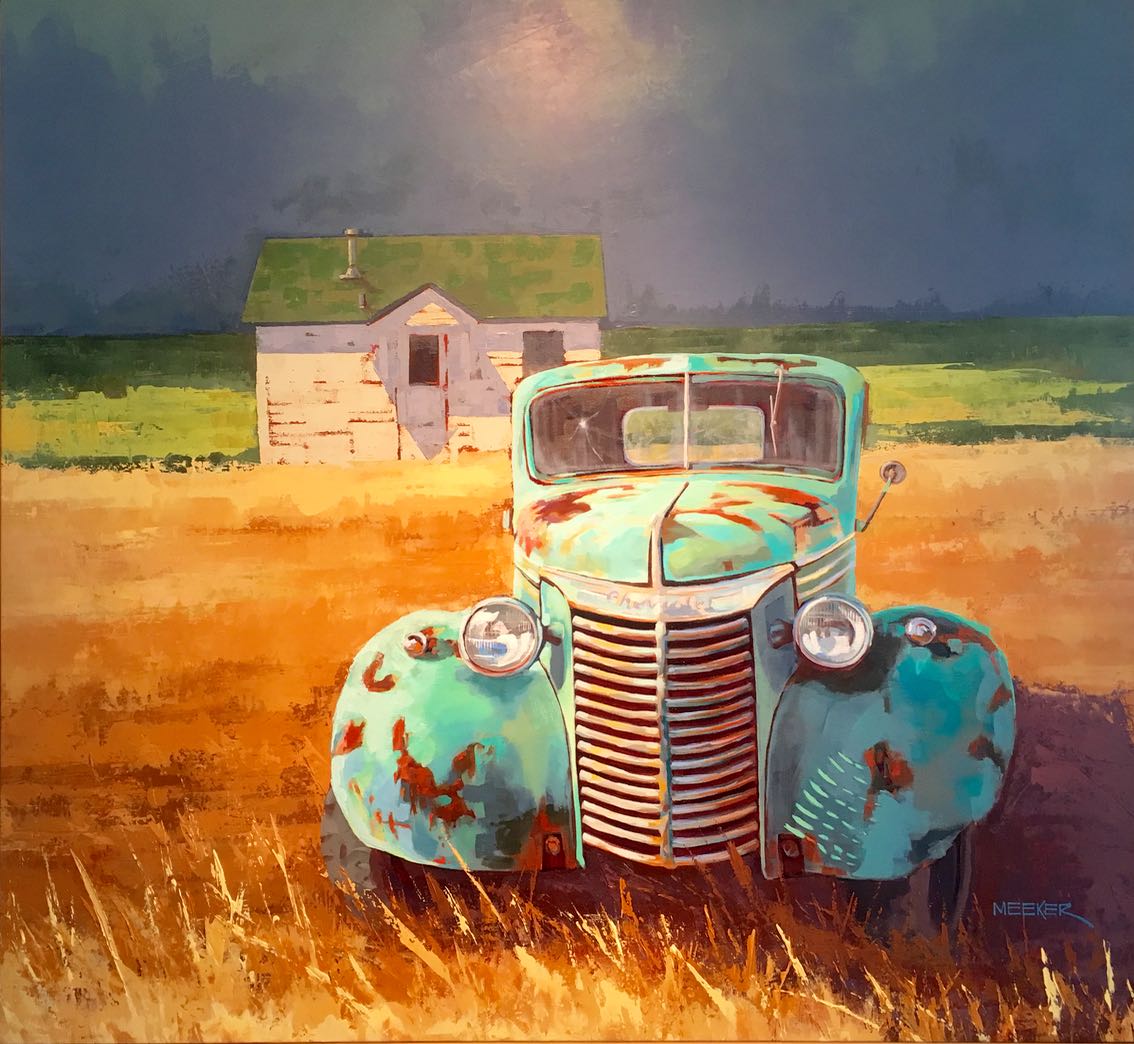
Turquoise Beauty
Turquoise Beauty, 35 x 38 inches, oil on canvas

As Art Director, JoAnne would visit retirement communities and scout out photographic locations and angles in advance, so the real photographer could step right in and get to work. Her photographs, shot as prototypes, were actually good enough to be the real thing, so she began photographing more projects for her clients.

In 2001, JoAnne transitioned back into the arts as a fine art photographer. For 15 years, her cutting-edge photography broke new ground in capturing the western lifestyle… because she saw the world through the “eye of a painter.”

Established Western photographers began copying her style!

sparky
Sparky

In 2015, JoAnne transitioned back to her roots as a full-time oil painter. She is studying with renowned Wildlife painter Greg Beecham, Landscape painter Phil Starke and Equine painter Adeline Halvorson.

“When I wanted to get back into painting,” JoAnne says, “an old man told me I’d be miserable and frustrated. He was right. When I started painting again two years ago, it was frustrating. I tried to draw and it was awful. I had to regain eye-hand coordination after doing illustrations with a mouse on a computer my entire career. During my first workshop, I was embarrassed. It’s taken a lot of work and time to find my own style.”

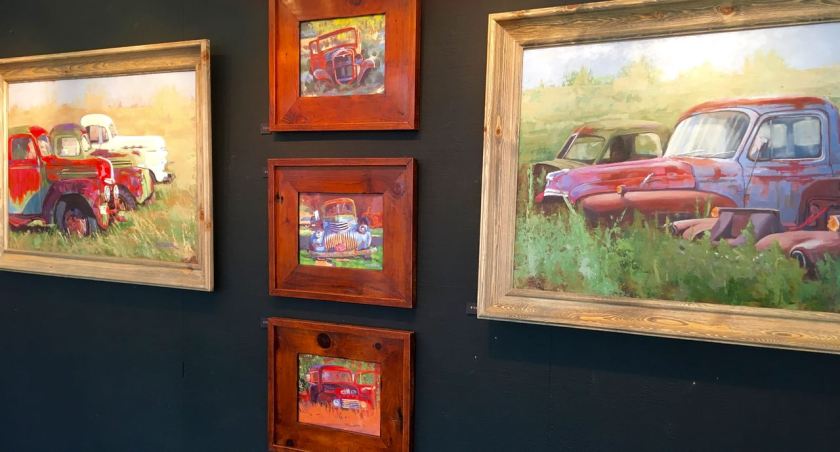
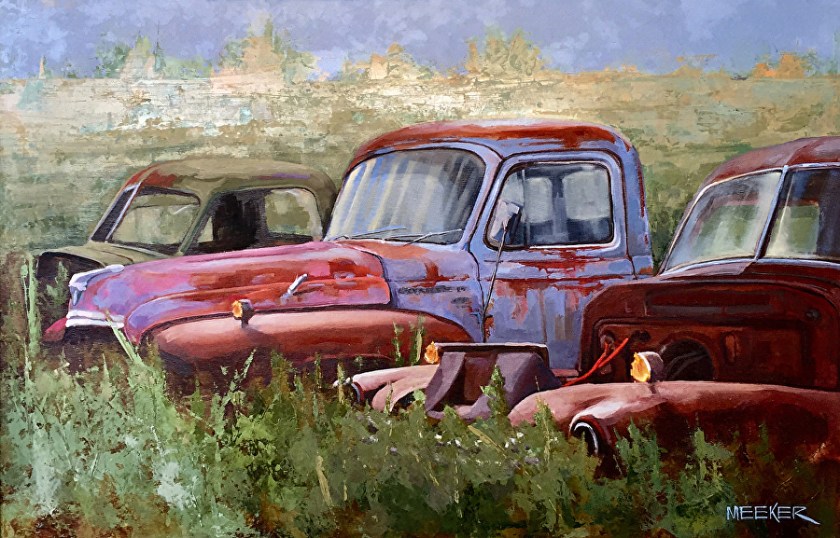
As a natural cartoonist and animator, JoAnne loves to create characters. Her favorite subjects these days, however, are dilapidated trucks left rusting in fields all across the west.

stolen-car 8 x 10
Stolen Car, 8 x 10 inches, oil on canvas

“I used to paint portraits of people and animals,” JoAnne says. “Now I paint portraits of trucks. They’re classics with a life of their own and a unique story to tell. I like to imagine who owned each truck, where they lived and how they ended up abandoning the truck.”

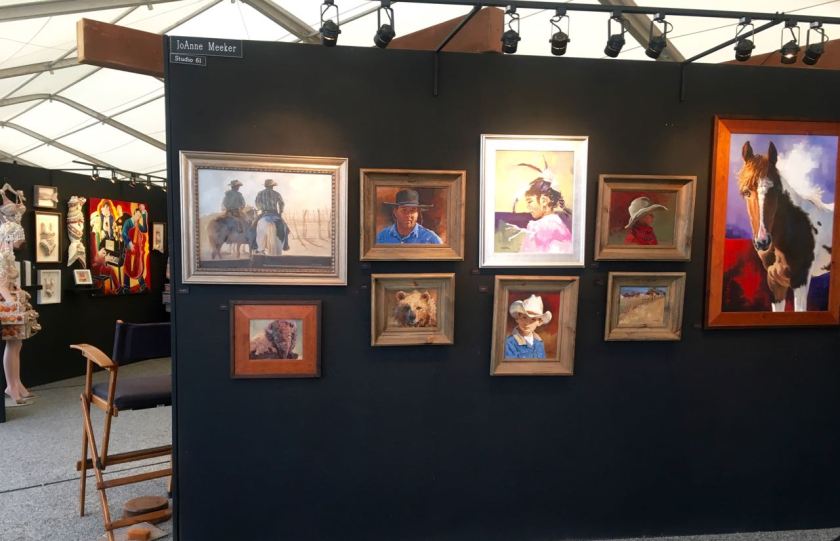
JoAnne finds most of the trucks she paints on the road. She divides her time between Dubois, Wyoming, near Yellowstone, and Scottsdale, Arizona. She spent the winter of 2018 in Scottsdale, Arizona, as an artist exhibiting at the Arizona Fine Arts Expo, which runs from mid-January to the end of March every year. This was JoAnne’s first year at the Expo and she hopes to return next year.


IMG_3134

IMG_3136


In Wyoming, JoAnne’s art studio is on the second floor of her house with north-facing windows. She also has a workspace downstairs and a Giclee printer that produces works up to 44 x 90 inches.

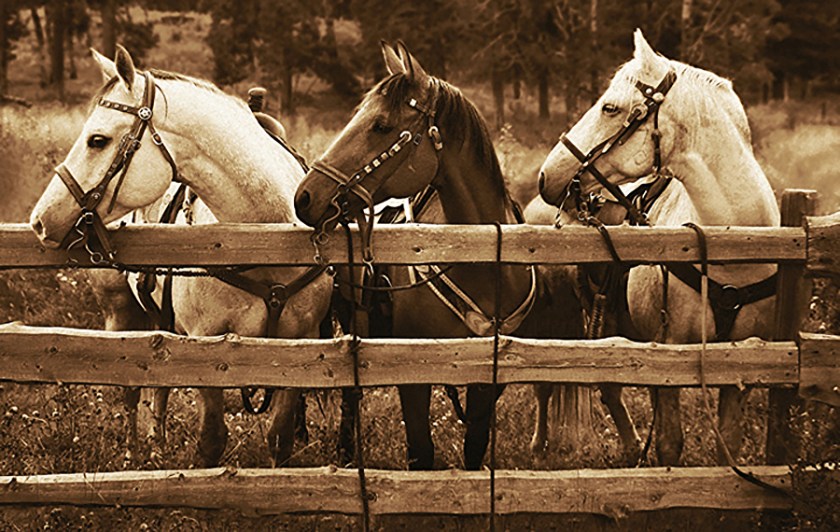
When JoAnne retired in the late 90s from her design agency at the age of 40, she went to Europe. In Italy, she rode a horse through a marble mine, the first time she had ever ridden a horse and she was instantly hooked, though her love of horses actually started when she was a child.

simon-says
Simon Says

A Cape Cod city girl with an air force pilot as a father, JoAnne wanted to be a country girl living on a ranch. Every Christmas she asked for a horse but it just wasn’t practical to own a horse and move so regularly; JoAnne attended 15 elementary schools between the first and sixth grades.

“After riding the horse in Italy, I began wondering how I could make a living riding a horse,” JoAnne laughs.

She eventually owned a horse and bought her own house in the wild country of Wyoming.

On a trip to a ranch in New Mexico, JoAnne spent a day photographing the branding of the ranch’s cattle. She printed the photos on really big canvases, when folks weren’t doing that yet. Her printed photographs sold well.

blue-bonnet-longhorn
Blue Bonnet Longhorn

That’s when she knew the Western lifestyle would be her photographic genre. At art shows in Calgary and Texas, where the oil industry was strong, her work was in high demand. Between 2012 and 2014, oil was doing so great, overnight millionaires were building big houses with lots of wall space to fill with original artwork.

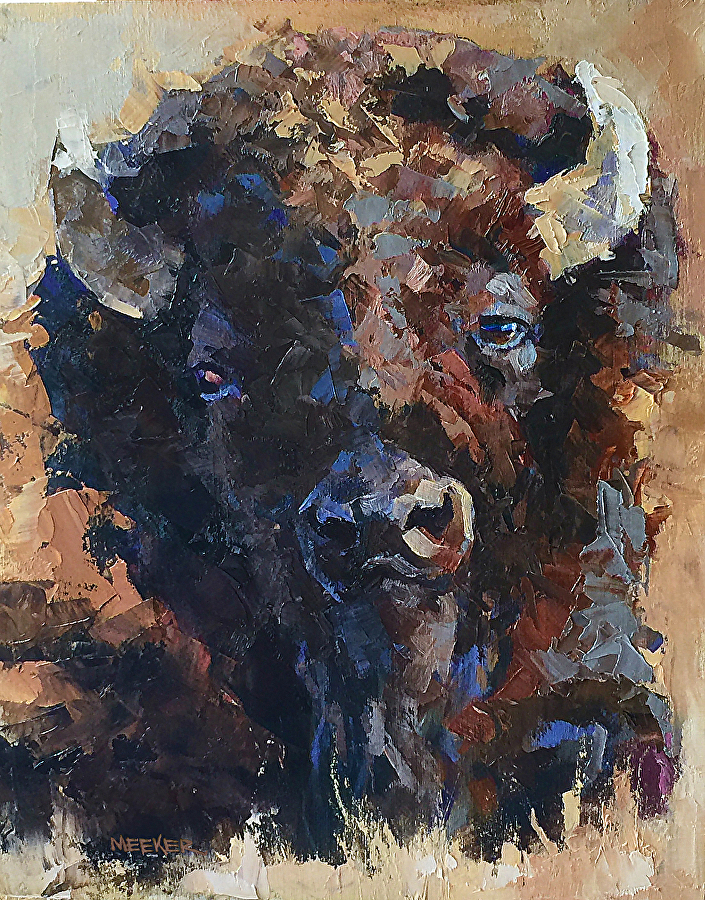
bison 8 x 10
Bison, 8 x 10 inches, oil on canvas

FORMAL ART STUDIES

JoAnne received a scholarship at 16 to attend art school. Back then, they used live models, and on her first day, a live male model was on display. She could barely look at him. Later, when she went to art school in 1976-77, she learned about the Law of Chance, as depicted in Jackson Pollack’s method of slinging paint.
“The instructors had students shredding brown paper for two weeks. It was monotonous and didn’t teach us art. When the shredding was done, the fragments were dropped from a high spot and left where they randomly fell. That wasn’t art! I wish they had taught me to paint instead.”

in-the-pen 18 x 24
In the Pen, 18 x 24 inches, oil on canvas

JoAnne believes painting can be taught. Some people may have a natural ability, but it takes practice for everyone.

For aspiring artists in the Phoenix, Arizona, area, JoAnne recommends the Scottsdale Artist School. Students can study with specific artists, according to their preferred genre. Additionally, twice a week they hold an open studio with a hired model and students can sit in and paint or draw.

JoAnne has successfully reinvented her art persona several times. But she also learned that reinvention doesn’t mean reinventing techniques. Learning from others is key.

“During the Expo, I was inspired by the creative environment, and being surrounded by artists of every medium. I welcomed their coaching. And painting every single day helped me advance my skills. Anyone wanting to improve as an artist can’t go wrong by painting every day, being open to suggestions from other artists and actually seeking out the company of other artists.”

reliable - 11 x 14
Reliable, 11 x 14 inches, oil on canvas

JoAnne’s next reinvention of herself? She wants to get into plein air painting, and in a big way. She wants to go to France and Italy and paint plein air like the impressionists.

“I love it when I try to do something and it turns out exactly like I wanted,” JoAnne says.

Awards & Recognition

  • 2016 Feature Poster Artist, San Antonio Stock Show and Rodeo
  • 2015 Feature Poster Artist, San Antonio Stock Show and Rodeo
  • 2014 Feature Poster Artist, San Antonio Stock Show and Rodeo
  • 2014 Best of Show, San Antonio Stock Show and Rodeo
  • 2013 Feature Poster Artist, San Antonio Stock Show and Rodeo
  • 2013 Commission, 100-page book “The Life is Art – A Photographic Journey of Ranching in Western Alberta”
  • 2012 Feature Poster Artist, San Antonio Stock Show and Rodeo
  • 2010 Feature Artist, Rodeo Austin, Texas
  • 2009 Best of Show Artisan, Western Showcase – Calgary Stampede, Alberta Canada

Resources

Website: http://jmeeker.com/

Photo Gallery

IMG_3159

sadie-commission 9 x 12
Commission, 9 x 12 inches, oil on canvas
OLYMPUS DIGITAL CAMERA
Classical Gas
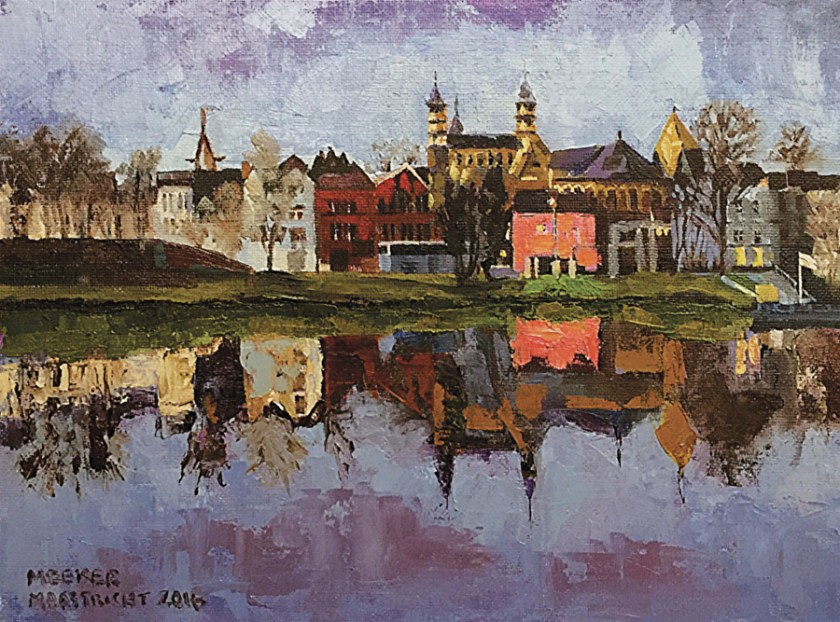
maastricht 9 x 12
Maastricht, 9 x 12 inches, oil on canvas
brownie-hawkeye 8 x 8
Brownie Hawkeye, 8 x 8 inches, oil on canvas
prickly-pear 8 x 10
Prickly Pear, 8 x 10 inches, oil on canvas
moving-cows 8 x 10
Moving Cows, 8 x 10, oil on canvas
domesticated 24 x 36
Domesticated, 24 x 26 inches, oil on canvas


New Orleans Artistry

New Orleans is celebrating its 300th birthday this year and the entire city continues to be the ultimate creative space. Dripping with history, NOLA is often thought of as a party town, especially along Bourbon Street in the French Quarter. But there is much, much more to New Orlean’s culture than alcohol.

Foremost, it’s the birthplace of Jazz and hometown of Louis Armstrong and Fats Domino… and Harry Connick, Jr., … and many other amazing musicians from the right and left banks of the Mississippi River.

Though it’s a strong one, Jazz isn’t the only draw to the Crescent City. There’s the food, cajun and creole and stuffed with fresh seafood. And beignets anytime of the day. Yes, BEIGNETS!

Like most grown-up cities, New Orleans also appreciates visual artists. On a recent trip to NOLA, I couldn’t resist visiting the Ogden Museum of Southern Art and the New Orleans Museum of Art (NOMA), both of which allow patrons to photograph their art!

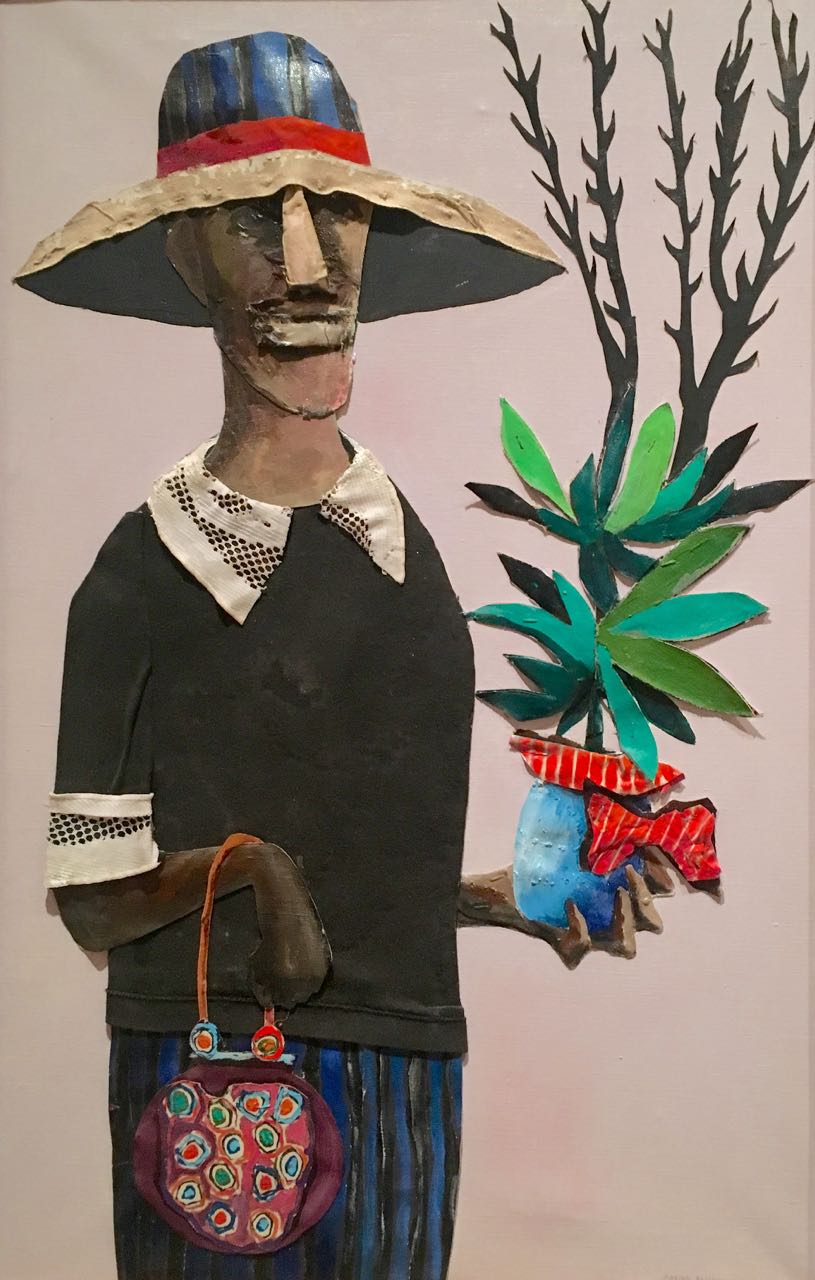
At the Ogden, I was thrilled to find a wing of “Southern Vernacular Art” featuring many oil and collage works by Benny Andrews. I can’t recall where I first saw a painting by Benny Andrews, but I liked his style and subjects and was hooked. When I researched Benny, not only did I find out Benny was from Georgia (like me), but he also attended Fort Valley State College (like me)! While I didn’t graduate from Fort Valley State College, I’m proud to have spent the academic year 1983-1984 at this remarkable historically black college in the heart of Georgia.

Benny was born in Plainview, Georgia, in 1930, and his father, George Andrews, was a sharecropper and a self-taught artist. (Both of my maternal grandparents, and their parents, were sharecroppers in South Georgia). After graduating high school, the first in his family to do so, Benny joined the service and later used his G.I. Bill to study at the the Art Institute of Chicago (the article “240 Minutes at the The Art Institute of Chicago” features a Benny Andrews painting!).

Benny was an activist and advocate for African-American artists. To my delight, the Ogden had several of his collages made using fabric and wallpaper. Some of the collage features are so 3-D, they cast shadows, as do some of the deep frames.

Following are Benny’s collages, plus other works that caught my eye at the Ogden and NOMA. Enjoy!!


Alice, 1966
Benny Andrews, Alice, 1966, oil and collage (Ogden)
Death of the Crow, 1965
Benny Andrews, Death of the Crow, 1965, oil and collage (Ogden)
Dottie, 1981
Benny Andrews, Dottie, 1981, oil and collage (Ogden)
Eudora, 1978
Benny Andrews, Eudora, 1978, oil and collage (Ogden)
Mannerisms, 1961
Benny Andrews, Mannerisms, 1962, oil and collage (Ogden)
Mother Death, 1992
Benny Andrews, Mother Death, 1992, oil and collage (Ogden)
Plower, 1989
Benny Andrews, 1989, Plower, oil and collage (Ogden)
IMG_3301
Benny Andrews (title and date unknown), oil and collage (Ogden)
IMG_3300
Painted by either George or Benny Andrews (title and date unknown) (Ogden)
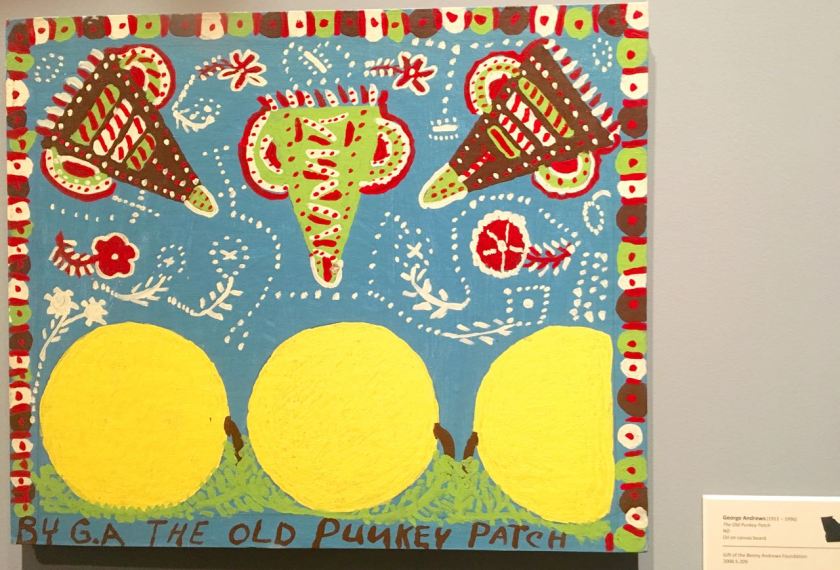
The Old Punkey Patch
George Andrews, The Old Punkey Patch, date unknown, oil on canvas board (Ogden)
Portrait of Benny Andrews, 1976
John Hardy, Portrait of Benny Andrews, 1976, oil on canvas (Ogden)
Acolytes, 1935
Caroline Durieux (1896-1989), Acolytes, 1935 (Ogden)
Abstraction of Chair and Mirror, 1943.
Hans Hofmann, Abstraction of Chair and Mirror, 1943, oil on canvas (NOMA)
Asleep at the Table, 1945
Robert Gwathmey, Asleep at the Table, 1945, oil on Canvas (Ogden)
Dogwood Display II, 1972
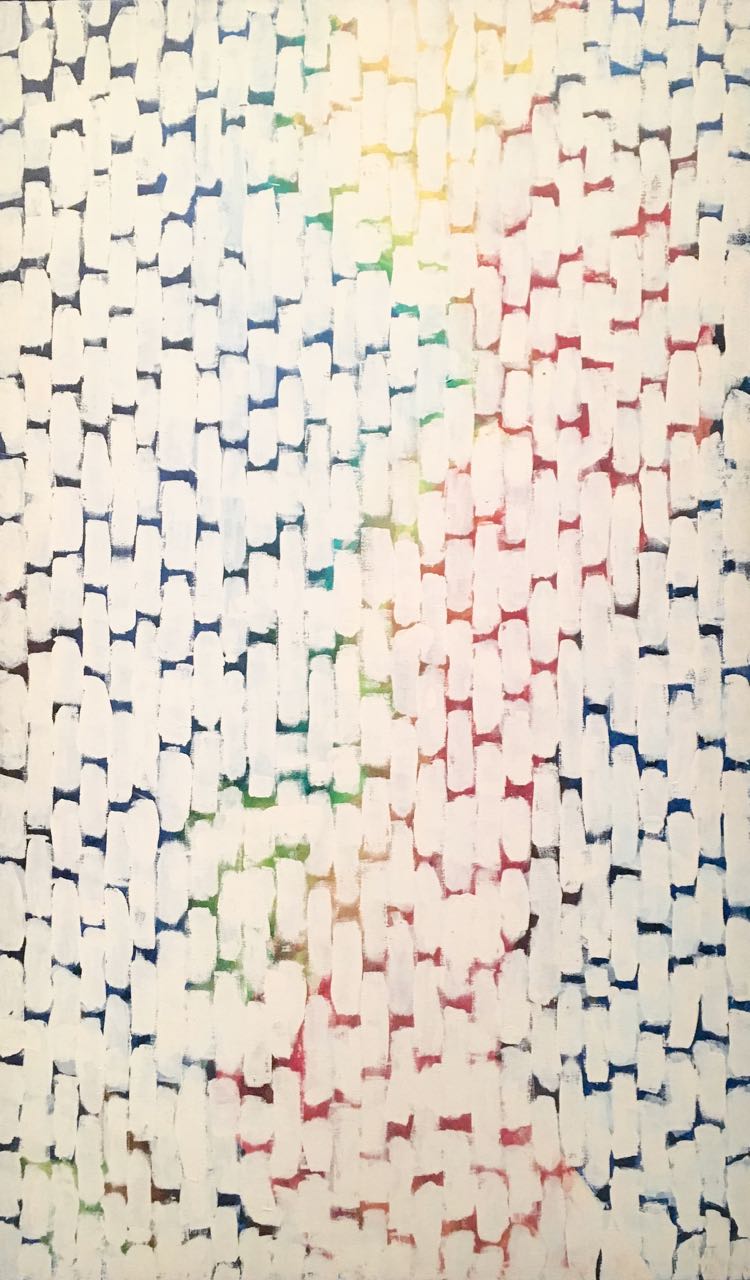
Alma Thomas, Dogwood Display II, 1972, acrylic on canvas. Alma is one of my favorites and her painting Starry Nights and the Astronauts is featured in the Chicago Institute of Art article. (NOMA)
Breath, 1959
Lee Krasner, Breath, 1959, oil on Canvas. Lee, a fine artist in her own right, was married to Jackson Pollock from 1945-1956. (NOMA)
Eating Cake
Shawne Major, Eating Cake, Quilt detail (Ogden)
Far Away Thought, 1892
John William Godward, Far Away Thoughts, 1892, oil on canvas (NOMA)
French Bouquet of China Asters and Sunflowers in Vase, c. 1887
Gustavo Caillebotte, French Bouquet of China Asters and Sunflowers in Vase, c. 1887, oil on canvas (NOMA)
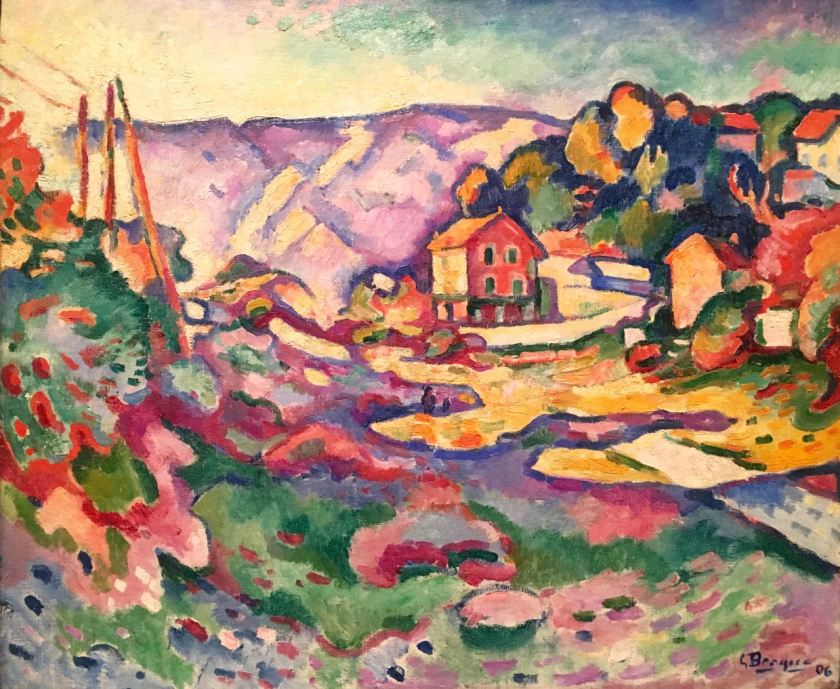
French Landscape at L'Estaque, 1906
Georges Braque, French Landscape at L’ Estaque, 1906, oil on canvas, 20 x 23 1/4 in. (NOMA)
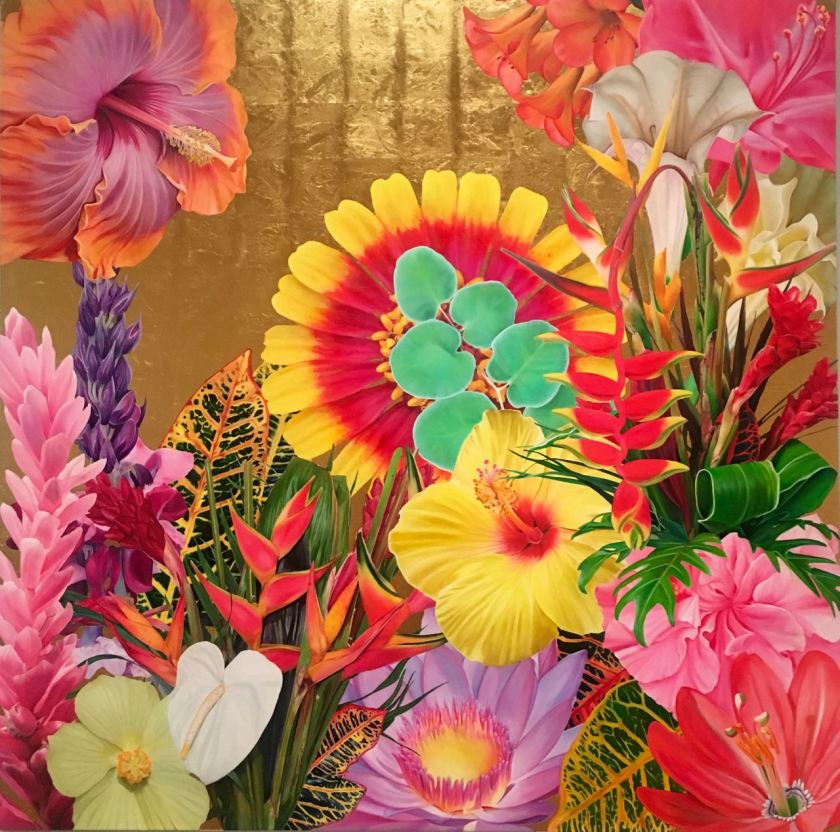
Gild the Lily (Decadence Upon Decadence IX), 2018
Carlos Rolon, Gild the Lily: Decadence Upon Decadence, oil, ink and 24-karat gold leaf on canvas (NOMA)
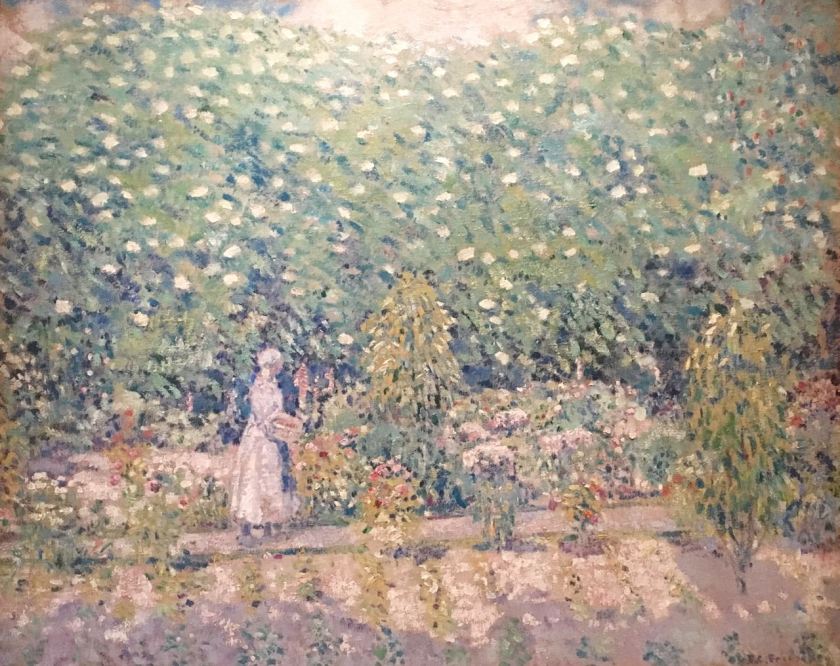
in the Garden, Giverny
Frederick Frieseke (1900-1995), In the Garden, Giverny, oil on canvas
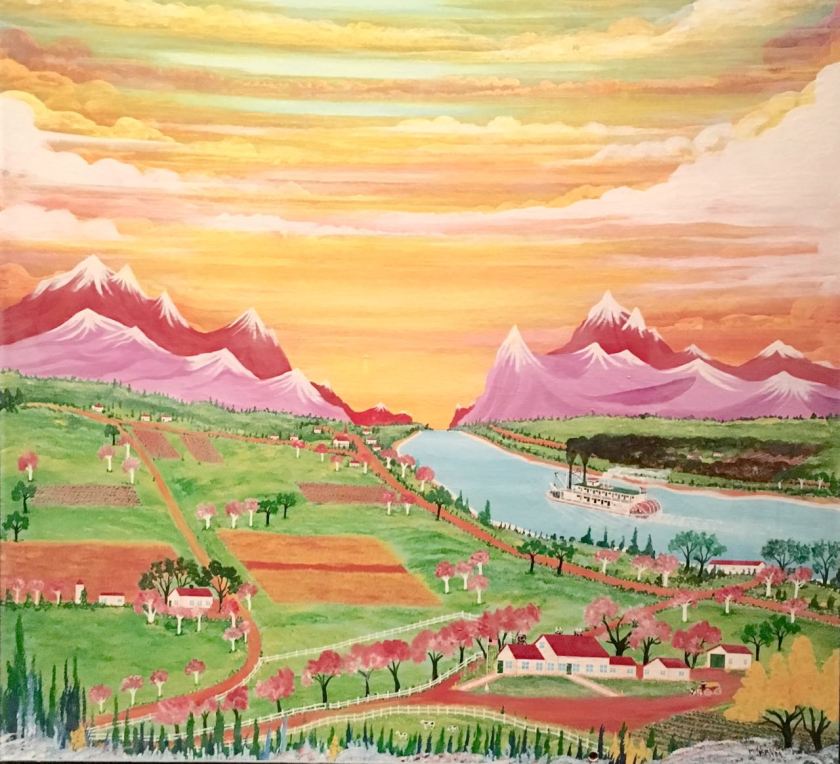
Panarama  of baptism on Cane River, 1945
Clementine Hunter (1886-1988), Panarama of Baptistm on Cane River, oil on window shade,  36″x67″ inches (Ogden)
Persons in the presence of metamorphosis, 1963
Joan Miro, Persons in the Presence of Metamorphosis, 1963, egg tempura on masonite, 19 3/4 x 22 5/8 inches (NOMA)
Portait of a Young Girl, 1935
Joan Miro, Portrait of a Young Girl, 1935, oil with sand on canvas, 41 3/8 x 29 3/8 inches; 49 x 37 inches (framed) (NOMA)
The Red Disk, 1960
Joan Miro, The Red Disk, 1960, oil on canvas (NOMA)
Portrait of a Young Woman in Profile, c. 1895.
Giovanni Boldini, Portrait of a Young Woman in Profile, c. 1895, oil on canvas (NOMA). The blurred brushstrokes and aqua accents in the lower left quadrant caught my eye and drew me to this large painting. 
Portrait of a Young Woman, 1918
Amadeus Modigliani, Portrait of a Young Woman, 1918, oil on canvas. 24 x 18 inches; 33 x 27 x 3 inches (framed with acrylic glass) (NOMA). Modigliani is one of my all-time favorites!!
Salmon Rose, 1966
Wayne Thiebaud, Salmon Rose, 1966 (NOMA)
Steamer New York, Steaming Upriver, 1989.
Michael Frolich, Steamer New York, STeaming Upriver, 1989, oil on masonite (Ogden)
Untitled c. 1978-1986
Eddy Mumma, Untitled c. 1978-1986, oil on board (Ogden)
Struggling Tiger in Hard Times, 1991
Thornton Dial (1928-2016), Struggling Tiger in Hard Times, 1991, oil, tin, carpet and industrial sealing compound on canvas mounted on wood.
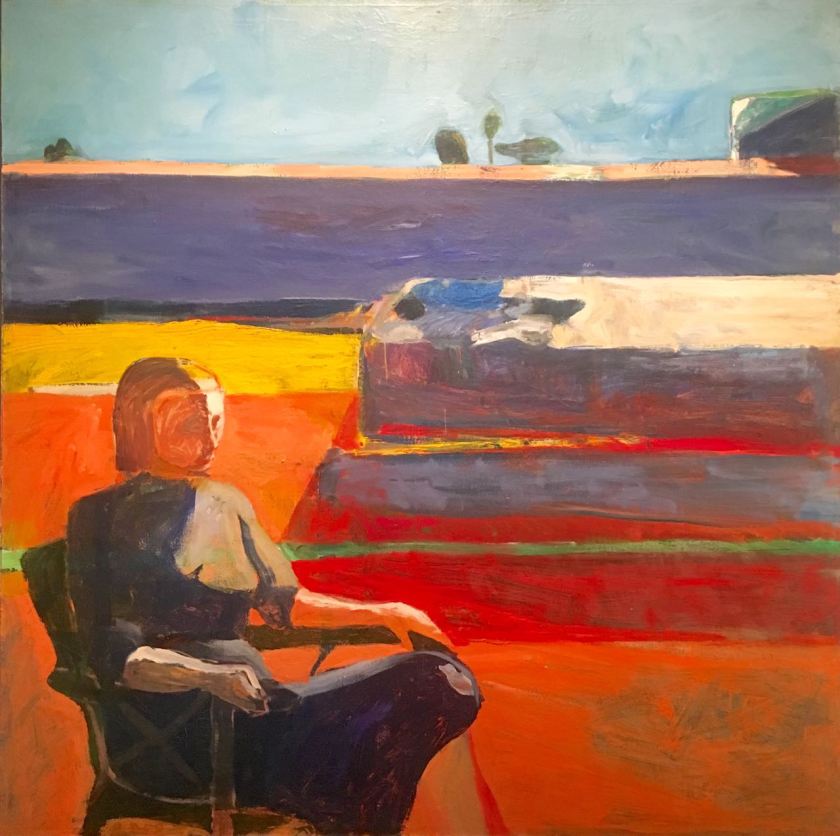
Woman on Porch, 1958
Richard Diebenkorn, Woman on Porch, 1958, oil on canvas, 72 x 72 inches (NOMA)
Scrap House,
I ran across this art installation on the street, not in a museum. Artist Sally Heller, Scrap House. One of 20 “Art in Public Places” commissioned by the Art Council of New Orleans. An homage to Hurricane Katrina’s damage.
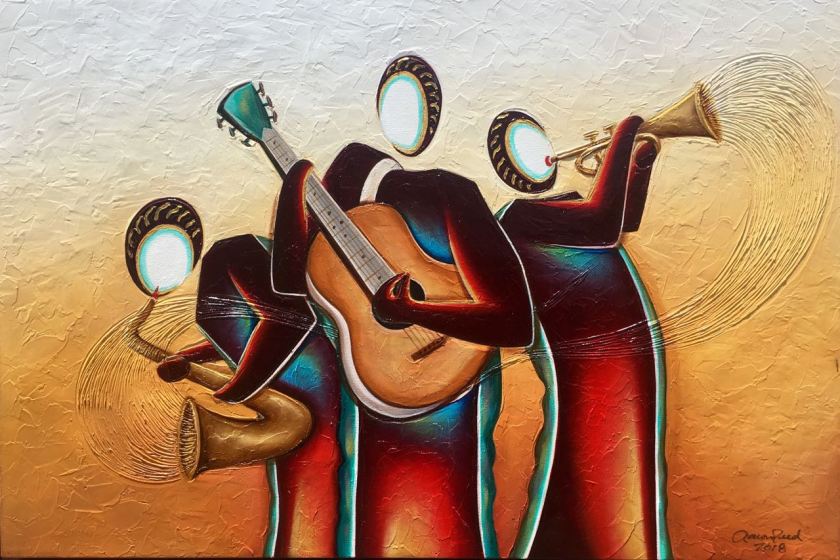
Artist Aaron Reed
Saw this artist, Aaron Reed from Albany, Georgia, at his booth at this year’s New Orleans Jazz & Heritage Festival. 


Dominic Bourbeau, Painter

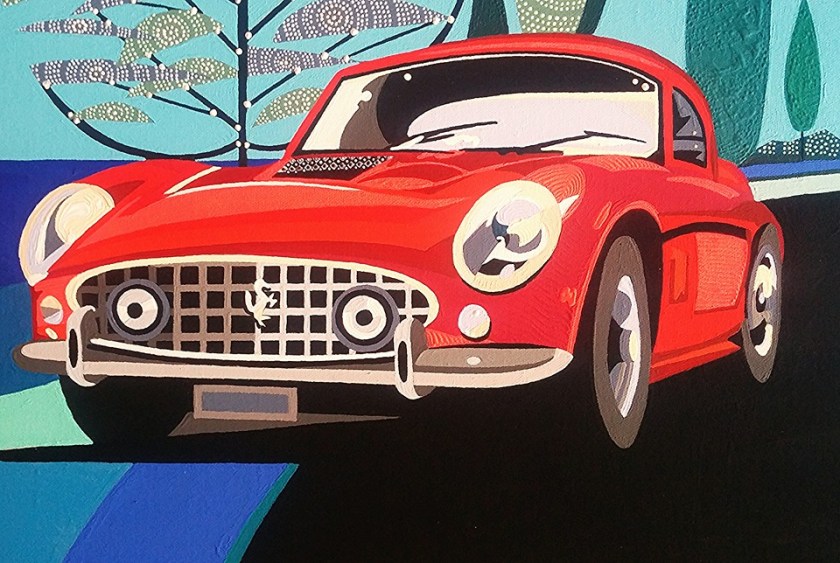
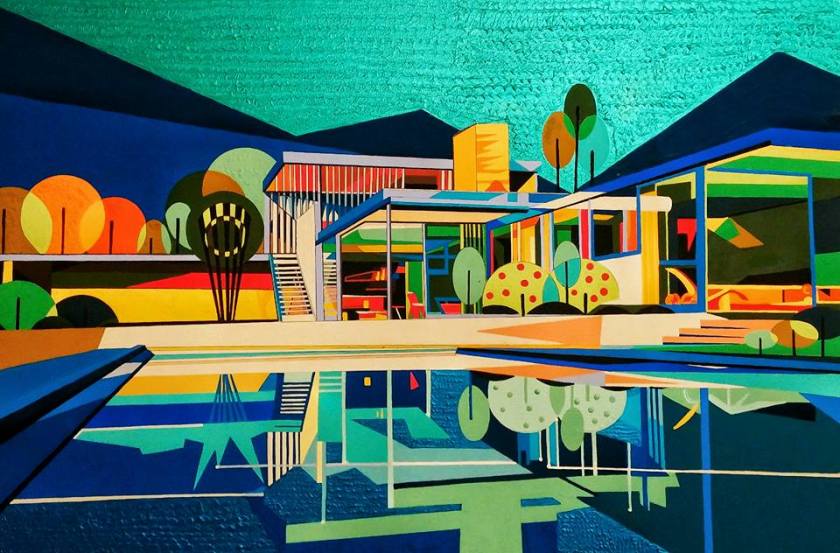
Dominic car

Mid-Century Madness

Dominic Bourbeau doesn’t realize what a great painter he is.

Soft-spoken, Dominic is Minnesota nicer-than-nice. His unassuming nature shows up in his humble view of his work, which is colorfully geometric and stunning.

During last year’s Arizona Fine Art Expo in Scottsdale, Dominic’s artwork was tucked into a corner with little traffic flow, but I saw his work and was stopped cold by it.

Dominic+Bourbeau2

In fact, his mid-century modern-style paintings intimidated me. How do you approach a genius? Especially one who is always painting, canvas lying flat on the table, head down? But it turned out that Dominic is highly approachable and generous with his time in explaining his supplies and techniques.


IMG_3099


At this year’s Expo (January to March 2018), Dominic’s booth was in a high-traffic area near the cafe so his wall of art could be seen from the main hallway. Again this winter, Dominic kept his head down and painted constantly, but was as approachable and responsive to visitors as ever.

Dominic+Bourbeau+4

Hopefully, after hearing so many folks see his art for the first time and say “Wow!,” Dominic will realize how special his painting is.

Dominic’s Aubrey Hepburn-esque painting ran on the December 2017 cover of Modern Luxury Scottsdale magazine, and his sassy mid-century portrait of a well-dressed woman in red was used on all the Expo passes.

Scottsdale mag cover

During the Expo, Dominic had to paint all day, every day, seven days a week, because everything he hung on his booth wall sold. Instantly.

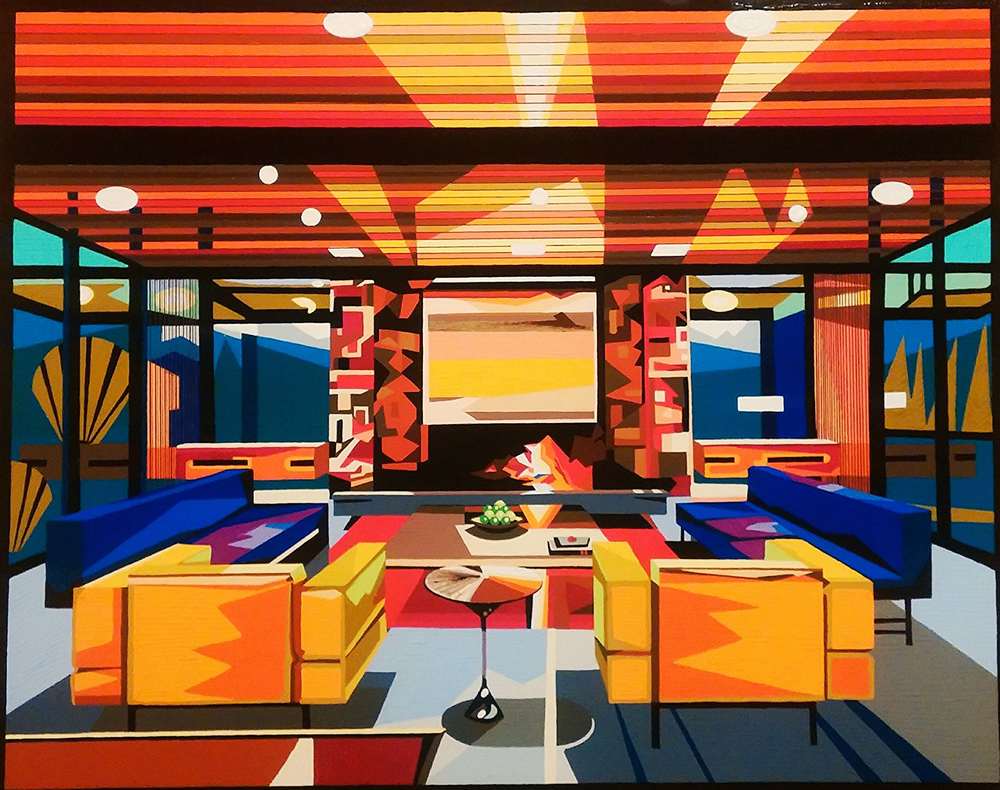
Or, he was asked to paint one of his classics, like Frank Sinatra’s Living Room, five times. Maybe six. Maybe seven.

“This was the year of commissions,” Dominic says, laughing. “I finally lost count.”

Luckily, not every client wanted to take possession of their painting before the Expo closed on March 25, allowing Dominic to return to Minneapolis and complete all his unfinished commissions.

One day at Kinko’s in Scottsdale, Dominic was scanning his painting of Frank Sinatra’s Living Room when an architect from Palm Springs saw the painting and asked about it. Dominic told the guy he painted it and the man instantly pulled out his check book and commissioned the painting for his home.

“That was unbelievable,” Dominic says to me the day it happened, and he’s shaking his head, like it shouldn’t have happened.

But it’s totally believable that someone saw his artwork and instantly wanted it. Dominic’s style is infectious.

IMG_3103 (1)

His brother, Martin Bourbeau, is also an artist at the Expo. Martin uses cake frosting tubes to pipe paint onto magnificent landscapes on huge canvases, layering and layering the lines of paint to create 3-D art. They’re gorgeous and impressive and expensive.

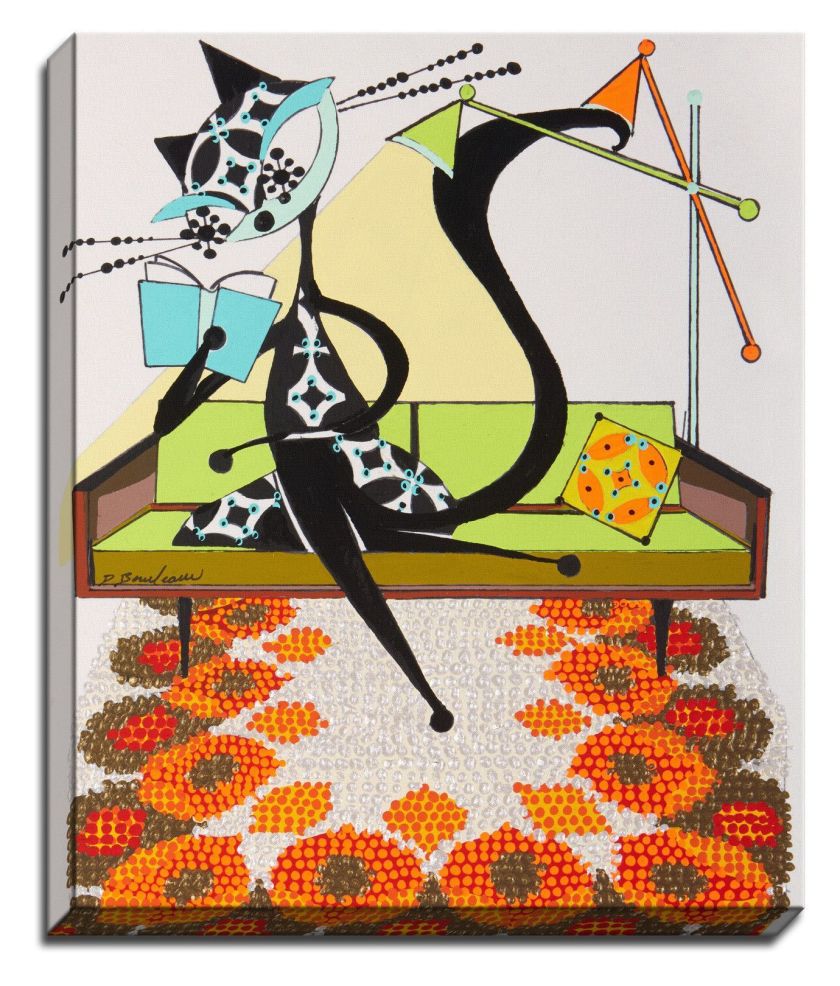
Domnic women cats

“I originally struggled with how to price my paintings,” Dominic says, echoing every other artist. Pricing is always tricky. With advice from his fellow artists, Dominic has charged slightly more for his work lately, particularly when a subject is selling well, but psychologically it’s still hard for him to increase his prices.

Dominic House

This winter, he began to paint cityscapes depicting well-known landmarks, making them smaller than his usual paintings, and they all sold.

He painted a cat, then more cats, and the paintings sold before he could even hang them on the wall.

IMG_3101 (1)

Gouache is Dominic’s medium of choice. Pronounced “gwash,” the medium is another type of watercolor, though it remains opaque rather than translucent and it dries matte. It’s fitting that Dominic uses Gouache because the medium was first used in creating Medieval Illuminated manuscripts and then became popular with French and Italian painters in the 18th century.

Also, before digital design, gouache was commonly used by Mid-20th century commercial artists because the medium made crisp images and letters possible, and it photographed well.

“I draw out the design in pencil, sketch over it in pen,” Dominic says, “and when all the details are done, I’ll start painting, which is the fun part.”

He smiles big.


11781756_882802348465594_5254602029413689313_n

Blue House complete


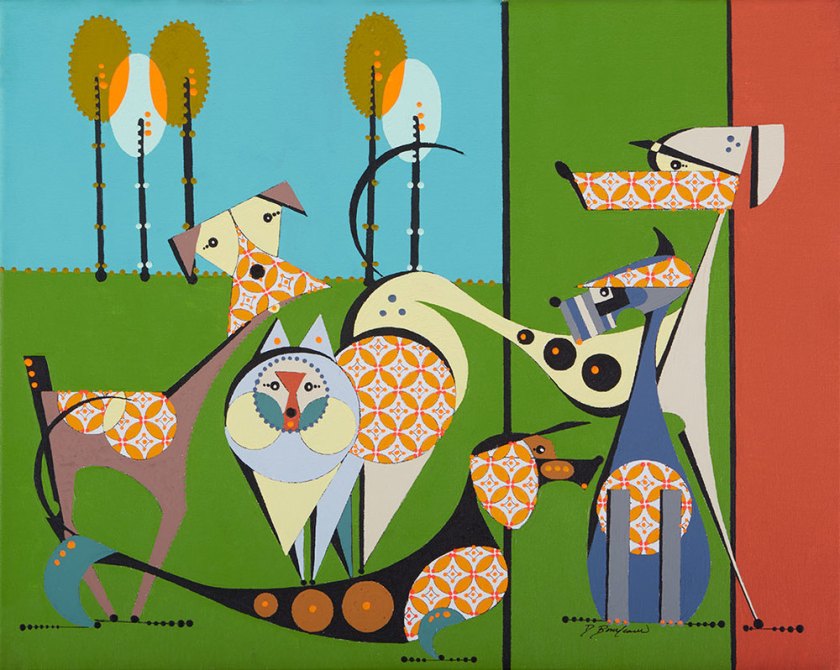
His technique is to texture different blocks of color by adding wavy or squiggly lines, or dots. His dots are amazing and appear to be machine-made, but he produces each one with absolute focus and precision.

While attending a boarding school in Michigan, Dominic studied iconology and followed the tradition of mixing his own tempura paints, including using a beetle to produce red.

IMG_3057

In Iconology, every line has a purpose, nothing is used simply for the sake of being ornate. The strong geometry and symbolism of iconology are present in Dominic’s style.

Rat PackDominic’s artistic experiences also include throwing pottery, drawing portraits and painting murals for Shakespearean stage sets. He greatly admires artists such as Eames, Frank Lloyd Wright and Charley Harper, and is captivated by their use of simple, yet bold, design based on sophisticated, yet minimalist, geometry.
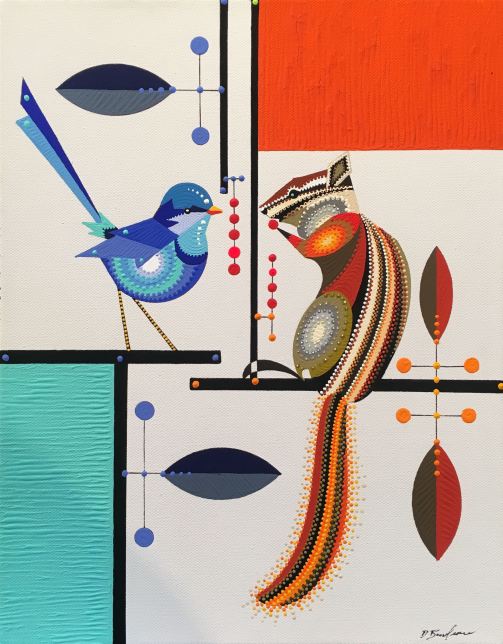
“I was able to pull from each of my past artistic experiences a segment of its beauty and technique,” Dominic says. “The geometry of iconography, the simple shapes of pottery, the puzzle-like composition of stained glass windows, the details of a portrait drawing, and the intensity especially in color of a mural painting.”

Dominic+Bourbeau+6

Frank Sinatra’s Living Room

Dominic, at 38, is the oldest of 11 children.

“All eight boys are artistic,” Dominic says. “My three sisters are not artistic. One brother, Peter, has a Master’s in Art and teaches art in a boarding school.”

Their mother, a school teacher, always brought art projects home for the kids to play with.


IMG_3104 (1)


Dominic almost completed his Master’s in Art, so he could teach, but decided against teaching when he noticed students were using it as an elective and weren’t serious about learning.

Instead he got a degree to be a Surgical Technician and for 12 years now has specialized in assisting orthopedic surgeons in mostly hip and knee replacements.


98c07f21b72aea6e97cb6c1db641ac1d


With his “casual” employment, Dominic is hired to be the personal assistant of a physician and can work when he wants. That’s how he’s been able to take off three months for the last three winters to exhibit at the Expo in Scottsdale. Being a surgical assistant is a great gig; as long as Dominic is attached to a surgeon and keeps his medical qualifications current, he gains seniority in his position with the hospital.

Fours years ago, Dominic’s artistry was discovered by his hospital co-workers when he was drawing on sterile paper towels in the operating room. He then received commissions to create pen and ink portraits of his colleagues’ kids and families, or portraits of pets wearing sunglasses. Dr. Santos, a co-worker, asked Dominic to create anatomy illustrations for a book, including sketches of a spine and spinal implant.

At home in Minneapolis, Dominic paints in his kitchen, which does double-duty as his art studio.

Dominic is on his careful way to ultimately making a living solely as an artist.

In the meantime, he keeps his head down and paints for hours every day, in addition to doing all his own marketing and accounting… when he isn’t assisting in surgeries or exhibiting in Scottsdale.

I predict he’ll hit it big one day.

Maybe then he’ll realize just what a great artist he is.

Resources

Facebook: http://www.facebook.com/colbyandfriends/

Photo Gallery

IMG_3123
Detail of painting showing gouache textures

IMG_3113 (1)


Dominic cat couch

Dominic car

IMG_3097

Domini car 2

IMG_3122

IMG_3121

Caroline Kwas, Painter

Caroline Kwas lives in her RV full-time and pursues her art wherever she lands, connecting with her little families everywhere.

Feisty & Focused

With her high intelligence and private school education, Caroline’s family expected her to be a medical doctor. However, while working on her bio-chem major, she added an elective drawing class and, soon, med school dropped from her horizon.  

Caroline’s father didn’t respond favorably to her new artistic aspirations. She was feisty, though, and found a work-around; moving in with her sister and sticking to her vision of pursuing art.

IMG_0483

Three decades later, Caroline is still just as feisty and still sticking to her vision.

Back then, the father of her childhood friend, Nancy, talked with Caroline’s father and helped him see his way to supporting Caroline’s art studies. She then went to the Fashion Institute of Technology and earned an undergraduate degree in Illustration. She went on to earn a graduate degree in Literacy Education. 

For a while on Long Island, Caroline catered food for fishing boats that would go out for weeks at a time. With four or five boats to cook for, she was gainfully employed and poured her creativity into food preparation.

Eventually, she put her degrees to use teaching Reading and English in New York before moving to Florida to teach corrective reading to seventh and eighth graders.  

“They ate me alive,” Caroline says of the middle schoolers. She was an excellent guide and champion for the students who appreciated her attention and encouragement. Otherwise, she hated the job. Hated it. And she was terribly homesick, so she went back home to Montauk, New York, to teach.

“Unfortunately, I never took any time off,” Caroline says, “and, basically, was committing psychological suicide.” Even painting and exhibiting in weekend art shows wasn’t enough to compensate for the stress. Something had to change. 

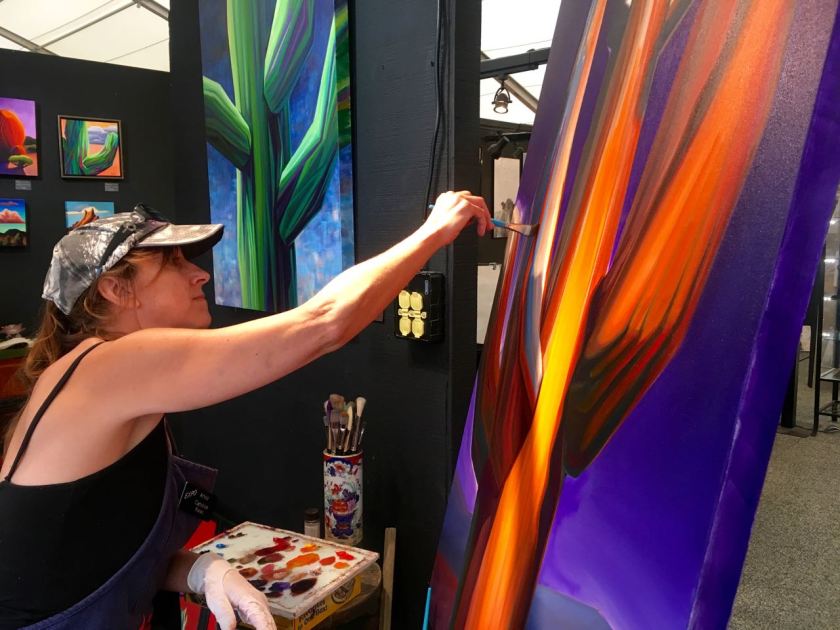
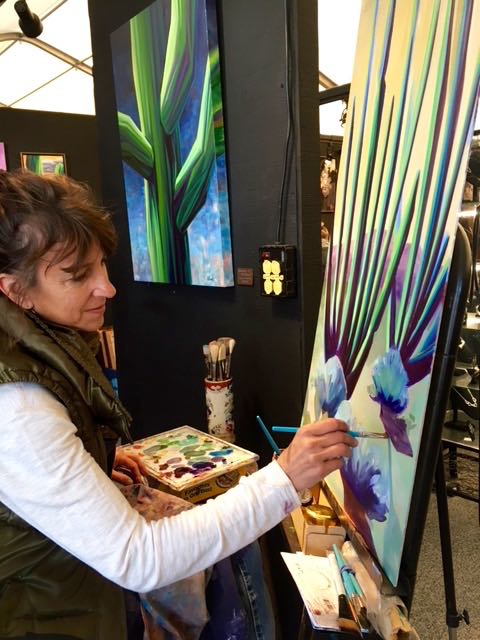
IMG_3126 (1)
Caroline painting in her booth at the Arizona Fine Art Expo

In 2010, while she was still teaching, Caroline researched art shows for the following spring and found the Arizona Fine Art Expo, an annual juried artist show held in Scottsdale, Arizona, from mid-January through March. She applied, was accepted and resigned from her teaching job around Christmas 2010. The next month, Caroline was in Scottsdale exhibiting in the 2011 Arizona Fine Art Expo. 

By the time she returned to the show in 2012, Caroline had bought a fifth wheel toy-hauler RV pulled by a Chevy diesel dually.

“My boyfriend at the time said I needed a big rig,” Caroline says, making it clear the RV and truck were too much for her handle. In fact, her partner never allowed her to drive her own rig.

When she got rid of the boyfriend, she got rid of the big rig and bought a 29-foot C class Winnebago and a cargo trailer. Now comfortable and perfectly mobile, Caroline began crafting a nomadic lifestyle, spending winters in Arizona and then heading to wherever she chose for the summer.

Caroline & Bubbles
Caroline and Bubbles

For six years, Caroline has lived out of her RV and pursued art. 

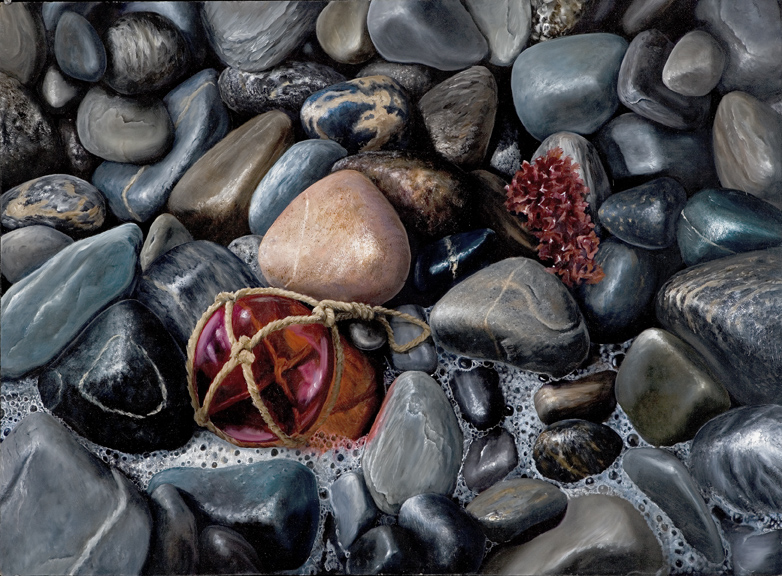
In 2012 and 2013, she returned east to work out of her own gallery in the Rocky Neck Art Colony located in Gloucester, Massachusetts. Rocky Neck is the oldest working art colony in the country, having brought artists together for more than 150 years. Her photorealism paintings from that time were influenced by the rocky shores, shells and fallen leaves of New England. 

OnTheRocks-8x11-72dpi-web
On the Rocks, a photorealism painting by Caroline

“The gallery had a loft and that’s where I slept,” Caroline says. “Three times a year we had very high tides and the water would come up to within a foot of my gallery door.”

Every winter, she returned to Scottsdale and the Expo.

Caroline’s nomadic life allows her to be where she wants to be, when she wants to be there and with the people of her choosing. 

“I have little families everywhere,” Caroline smiles.

Her blog posts show her mastery of living full-time in Bubbles, her RV. Friends tease Caroline for only washing her hair in rain water. But why wouldn’t she? It’s free. Yet rain is scarce in the desert. When it does rain, Caroline has her 5-gallon buckets ready. She sets them against the big white tent that covers the Expo and catches the silty water. When the dirt settles, Caroline has rain-fresh hair. 

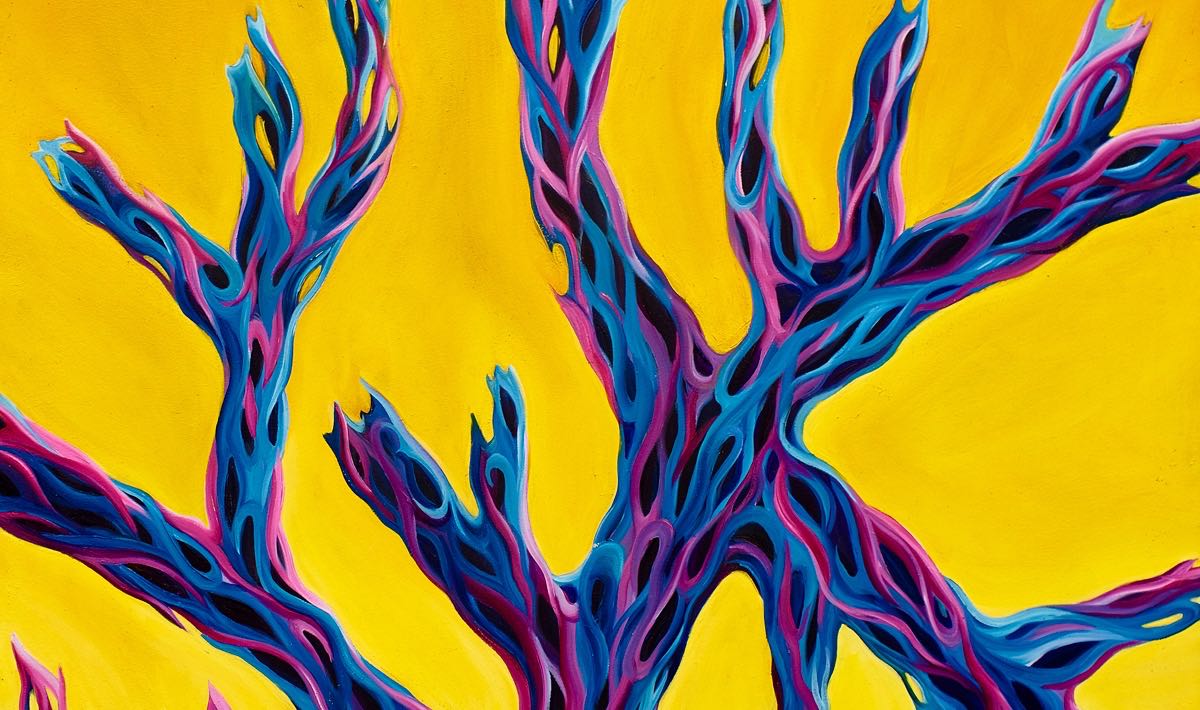
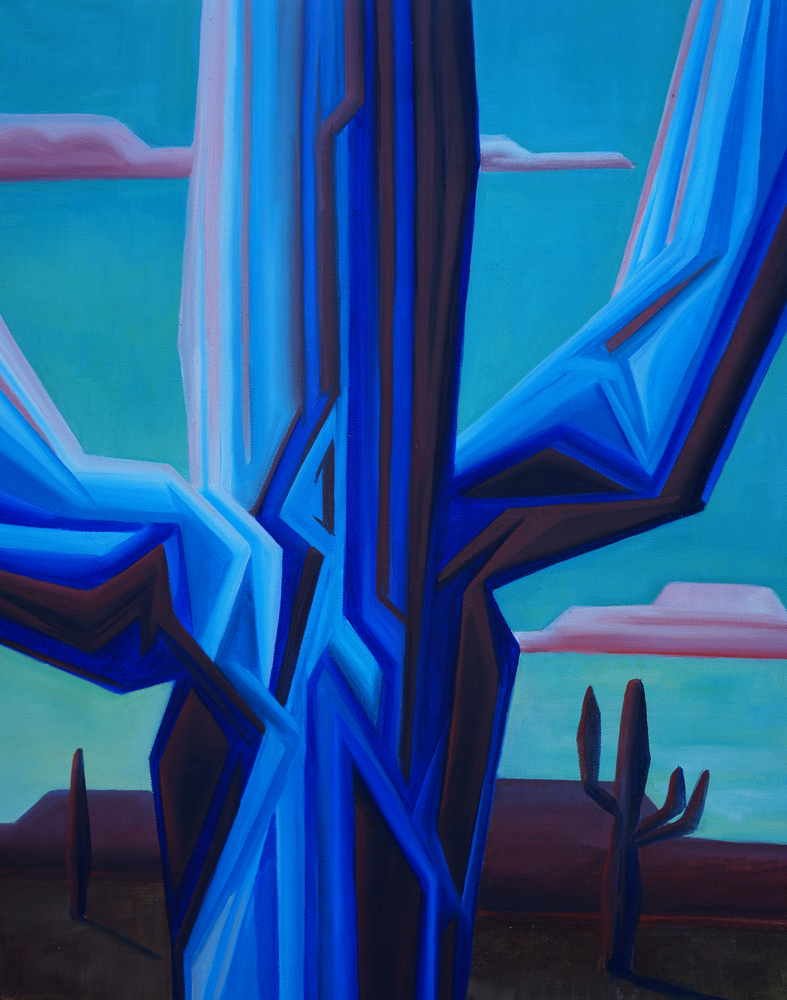
Sonoran-Sentinel
Sonoran Sentinel

Beyond posting about her life as an RVer, Caroline writes poignant blog posts about her perceptions, seen through the eyes of an artist. A perfect example is her blog post titled Why is the Sky Purple? where she answers the question asked by a bored male patron:

Because when I stood at the base of this giant saguaro two weeks ago and it was lit up by the rising orange full moon, there was more to that scene than a blue-black night sky and a dimly lit cactus. There was a gentle majestic giant in front of me, soaring into a velvet sky, and he deserved to be lit up in gold and crimson like the king of the Sonoran Desert that he is. He needed that deep royal violet sky to complement him, to surround him, and most of all, he deserved a lot of color.

Be sure to read her post about Harry, a magnificent saguaro friend. I won’t give away Harry’s fate, but will share the post’s opening:

Like many people, the saguaro cactus was always the first thing I thought of when I thought about the desert. It’s the epitome of the desert, proud, distinct, and vaguely humanoid. But have you ever thought about the life of a cactus? Go up to a big one around midnight in the desert, and the hair on your arm just might rise a little. They loom there, stark dark silhouettes against a speckled sky, full of silent stories. Consider: for almost a century, it huddled in the shade of an ironwood nurse against the harsh desert summers as it began its life. An inch a year. It began growing arms; it grew into its role as the giver of life in the desert. Quiet centuries are spent keeping sentry over a forbidding landscape, the long shadows of its arms the last to unfold its embrace each sunset. Spend some time walking in the Arizona sun, and you’ll appreciate water. Spend some time walking in the Arizona moonlight, and you’ll understand mysticism.

“Little Girl” is the van Caroline pulls to drive on local errands. Recently, she launched a Facebook page and Instagram account for Little Girl, who narrates the blog and describes life on the road with Caroline from her unique vehicular perspective. Little Girl’s popularity is growing fast. 

14322314_10208761270882576_775431505315879823_n (1)
Caroline and Little Girl

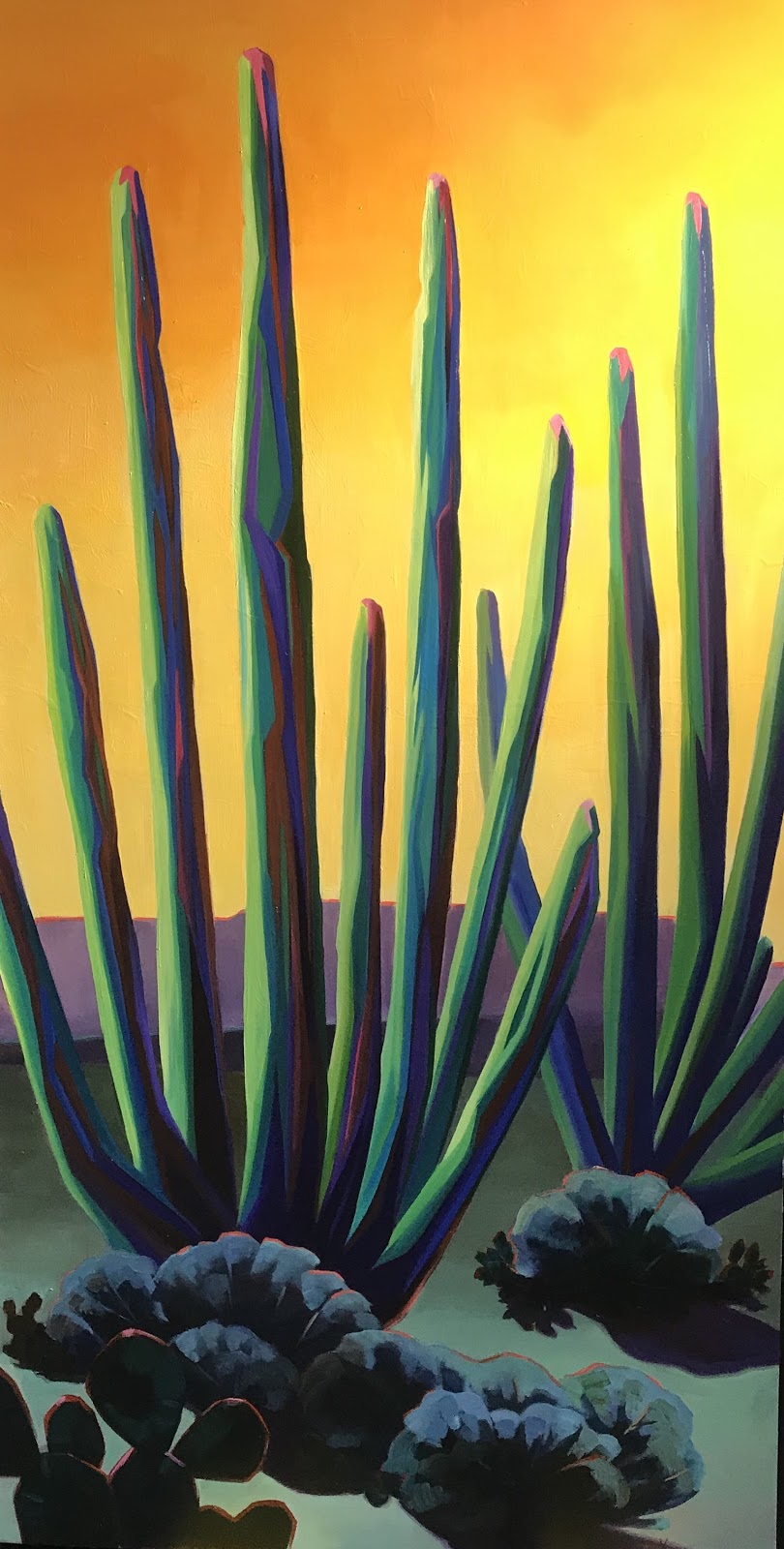
Leaving photorealism behind, Caroline has been painting cacti in a contemporary abstract style for a few years. She’s still an avid art student and laments not learning about color patterns and paint mixing when in college.

Caroline took matters into her own hands (as usual) and sought out a mentor. At the Expo, she approached Sam Thiewes, a fellow artist who lives in Prescott Valley and also exhibits his western paintings at the Arizona Fine Art Expo. He readily agreed to be Caroline’s coach and guide. 

IMG_3148
Caroline with Sam, her mentor, in his booth at the Expo

Each day during the Expo, they would regularly check in with each other. Sam would study Caroline’s latest painting to advise on composition, perspective or color. She listened to his wise counsel. 

“I’ve learned so much from Sam,” Caroline says. “And from watching other artists for the last two months at this show.” This temporary artist colony in the desert grows into a tight community of creatives who naturally learn from each other, whether by observation or conversations. 

Not having a house or apartment payment eases financial burdens. With her catering background and enjoyment of cooking, Caroline also works at the Expo Cafe while in Scottsdale and at the Great American Fish Company while in California, her usual summer place.

I’ve seen Caroline hustling during lunch at the Expo Cafe, running between the indoor counter and outdoor patio where she grills burgers and cooks soup on a two-burner gas-powered stove. Between preparing wholesome, locally-sourced breakfasts and lunches in the cafe and manning her Expo booth during the show, Caroline’s tenacity kept her going until she could finally put brush to canvas in the afternoons.

me working

In 2016, Caroline received a much-needed validation for her artistic aspirations when she was selected as Artist-in-Residence at the Mojave National Preserve. Along with a boost to her national reputation, she also found a spiritual home in the vast, silent expanses of the Mojave Desert and takes every opportunity to return there for a few days and recharge.

“There’s nothing like the absolute silence of the desert at night,” Caroline says. “Feels like the universe is close at hand when viewing more stars than I ever knew existed. I unplug from civilization and am forced to live in the moment. It’s utterly head cleaning.”

During the Expo, in her spare time, Caroline would paint, paint, paint on her mission to get better and better, whether in her booth or in Bubbles. She’s completed plenty of paintings sitting at her compact dining table and admits to being at peace living with paints smears on her counter, table and even bed sheets.

When Caroline moves her RV to a new place, she’ll wake-up in her familiar, paint-dappled home, but often temporarily forgets where she is. But that’s okay. She figures it out quickly.

Waiting-for-the-Monsoon
Waiting for the Monsoon

“Change has always been my life,” Caroline says. 

That’s true. The view from her front door changes, her painting style may change and the people she’s surrounded by change with the seasons, but Caroline will always find time to paint, paint, paint. Nothing gets in the way of her artistic vision.

She’s feisty and tenaciously focused that way.

Resources

Website – https://www.carolinekwas.com

Facebook – https://www.facebook.com/caroline.kwas

Instagram – https://www.instagram.com/carokwas/

Little Girl Instagram – https://www.instagram.com/littlegirlvan/

Photo Gallery

IMG_0492

IMG_3108

IMG_3105