Featured

Willie Perkins, Road Manager

Willie Perkins, in his role as road manager, was a creative force behind The Allman Brothers Band’s early success. We look at his work and life as a central figure in Macon, Georgia’s musical past and present.

A Payphone and a Briefcase

On a hot Friday, July 3, 1970, Willie Perkins is pacing back and forth in front of the performer’s entrance to a raceway in middle Georgia. Willie just turned 30 in April and he’s now the new Road Manager for The Allman Brothers Band (ABB), the unofficial headlining act of the second annual Atlanta International Pop Festival being held at the raceway in Byron, Georgia.

The ABB is a relatively unknown, unproven band and this gig opening a festival where B.B. King, Jimi Hendrix, Grand Funk Railroad, and others will perform could be the break the band needs.

Yes, Byron isn’t Atlanta, despite the festival’s name. Instead, Byron is a small town straddling I-75 about 90 miles south of Atlanta, in the exact heart of Georgia, and only minutes from Macon where the ABB records at Capricorn Records and eventually lives in a Tudor mansion called The Big House (currently a museum of all things ABB).

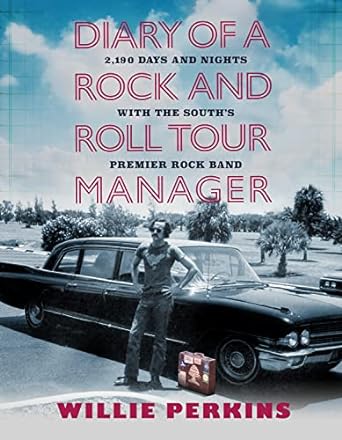
As Willie continues to pace, the band will be going on stage soon, the crowd is growing quickly, and there’s no way to communicate with Duane Allman, the band’s founder and incredibly talented guitarist who hasn’t shown up. As Willie would later note in his book Diary of a Rock and Roll Tour Manager, “Remember, there were no laptops, internet, or cell phones.”

Willie’s only option is to pace and watch nervously, knowing Duane is driving up from a recording session in Miami after assuring Willie he’d be there. But I-75 is a parking lot for miles and miles as hundreds of thousands of music fans make their way to the festival.

Since taking on his new job with the ABB in May, Willie has been on a crash course of on-the-job training, self-taught no less, and he’s determined to do an excellent job. They’ve started a betting pool at Capricorn records based on Willie’s ability (or not) to keep his job for 100 days.

Originally, Willie wasn’t even sure what the road manager role entailed. He wanted the job, though, and he knew his most important task was ensuring all band members showed up, and showed up on time.

Willie is feeling the pressure of missing bandmate Duane, the guy who started the entire ABB adventure, the guy who plays like no other and inspires countless people, then and now, to pick up the guitar and learn to play.

Duane wanted this rock career; he’d been playing guitar, informally studying music, and expanding his musical connections, along with his brother Gregg, since he was 11 and Gregg was 10 years old! Those two brothers practiced, experimented, and learned from each other with a rare dedicated passion.

Heck, Duane is only 23 years old as he’s making his way to Byron, Georgia, on I-75. 23! That’s impossibly young for someone so talented. Before forming the ABB in 1969, Duane was a session guitarist for Rick Hall of Fame Recording Studios in Muscles Shoals, Alabama, recording with many great artists of the time, such as Clarence Carter, Wilson Pickett, and Aretha Franklin.

Duane’s youth makes him resourceful; through his early struggles he’s learned that taking risks can sometimes be rewarding. As traffic is standing still on I-75, Duane abandons his Ford Galaxy at a truck stop and hops on a motorcycle driven by a stranger, now a new friend, who is committed to getting Duane to Byron, Georgia, and to the Atlanta International Pop Festival on time. Willie’s gate-side vigilance pays off when he sees Duane dismount the motorcycle just in time to get on stage for the festival’s opening. Huge relief!

Today, Willie is rightfully proud that the ABB never missed a performance, unless someone was severely ill.
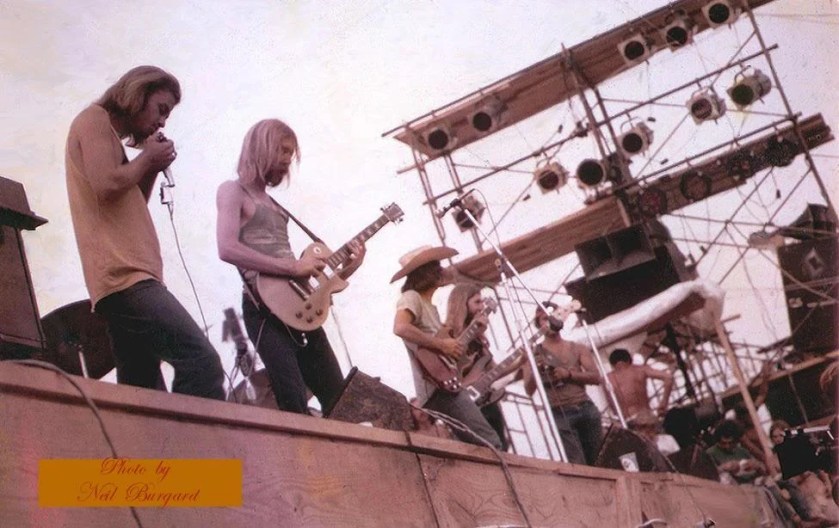
The Allman Brothers Band at 1970 Atlanta International Pop Festival (Photo: Neil Burgard)

The original ABB members included:

  • Duane Allman – Lead and Slide Guitars
  • Gregg Allman – Piano/B3 Hammond Organ, Vocals
  • Butch Trucks – Drums
  • Jaimoe – Drums
  • Dickey Betts – Lead Guitar, Vocals
  • Berry Oakley – Bass Guitar

Crew Members included:

  • Kim Payne
  • Red Dog
  • Mike Callahan
  • Joe Dan Petty
1970 Ticket for the 2nd Annual Atlanta International Pop Festival
From Jack Weston’s Collection

The band’s members and crew may have been typical models of young, male rock groups caught up in the novelty and allures of fame, drugs, and sex, but professionally they were reliable and sometimes performed gratuitously, even saving a music promoter’s tush every now and then, like they had done at the Cosmic Carnival in Atlanta a month before the pop festival. Many of the scheduled performers had dropped out because of low ticket sales at the Atlanta stadium. But the ABB knew they couldn’t disappoint an Atlanta crowd so Willie renegotiated their fee and they performed, with Duane spontaneously deciding and announcing from the stage that the band would play for free in Piedmont Park the next day, which they did.

The ABB’s involvement with free concerts at Piedmont Park started with an invitation from Colonel Bruce Hampton, a unique musician at the center of the Atlanta music scene when live music was nil in Atlanta bars and venues. Colonel Bruce Hampton never really gained widespread fame or fortune but he found deep loyalty and admiration from the people who knew him. He was Atlanta’s center of gravity for all things musical and he was a friend to the ABB in their beginning.

Scott Freeman, author of the Midnight Riders: The Story of the Allman Brothers Band (the 1995 seminal publication about the band and “Southern Rock” roots), wrote a 2007 Creative Loafing article about the Colonel that’s a must-read for music enthusiasts of all genres.

The ABB had support from people like the Colonel and Phil Walden, owner and producer at Capricorn Records, as well as encouragement from their early fans. However, much of the credit for the ABB’s reliability and rise to massive stardom goes to Willie Perkins, while the spirit of community and giving back to fans started with Duane and Gregg, permeating the group over time and drawing more fans into their orbit.

How Willie became the ABB’s road manger is a wild tale, like much of what transpires with the ABB over the next few decades. The short version: Willie’s friend and the ABB’s original road manager, Twiggs Lyndon, stabbed and killed a club owner in New York for shorting the band on their fee, and while in jail awaiting trial Twiggs recommended Willie as his own replacement. Willie had long wanted to work on the road crew and Twiggs had promised him the next open spot on the road crew, but Willie never dreamed Twiggs would lose his job, and a man would lose his life, so Willie could join the ABB.

Thus, in 1970, began Willie’s wild-ride career in the music industry as a vital part of a band of hippies who would make history, something he had dreamed about as a boy growing up in Augusta, Georgia, in the 1940s, while watching weekly Westerns in the theater, and as a teen listening to soul music broadcast late-night by WLAC from Nashville.

The ABB’s magical mix of six stellar musicians (plus psychedelic drugs, according to Dickey Betts) brought the new bluesy rock sound while Willie brought his business acumen, banking knowledge, and love of R&B. Together, they changed music, and themselves, while bringing the South to the world.

Influences

What drew Willie, an Atlanta banking auditor with a bachelor’s degree in business administration and seven years’ of bank audit/fraud experience, to the ABB? He was on a fast track to success with the Trust Company of Georgia Bank; upper management had him in their sights for continued advancement. But Willie gave it up, much to his family’s befuddlement, for a chance to spread the ABB’s music to the masses. 

In his book Diary of a Rock and Roll Manager, Willie writes about his reaction to hearing the ABB play for the first time at Piedmont Park in 1969:

“I had a feeling their amazing talent would propel them to the pinnacle of success and wanted to help them in any way possible.” (pg. x)

In his first book No Saints, No Saviors, Willie writes:

“I simply had a feeling that this would be one of the biggest bands in America. America just didn’t know it yet.” (pg. 11)

Willie had heard plenty of good music in his life up until hearing the Brothers. His favorite music throughout his teens in the 1950s was R&B, the hits of Little Richard, Chuck Berry, Muddy Waters, Howlin’ Wolf and many others coming to Augusta, Georgia, through the nighttime airwaves at 50,000 watts all the way from WLAC in Nashville, Tennessee, 1510 on the AM dial. WLAC was started by, and named for, the Life & Casualty Insurance Company in the 1920s.

“WLAC was broadcasting to an audience of rural blacks,” Willie recently tells me while he and I enjoy lunch at H&H Cafeteria in Macon, Georgia, the restaurant where founders Mama Louise Hudson and Mama Inez Hill fed the ABB before they were famous (sometimes for free). Willie has been eating at H&H for more than 50 years now, and their soul food is still good, and still good for the soul. Between bites of his salmon croquette, Willie continues, “And along with the blacks in the rural south, a lot of us white boys were listening.”

Willie can still hear the voices and quote the words of his favorite white DJs: John R., Gene Nobles, the “Jivin’ Hoss Man,” and sometimes even Wolfman Jack coming in from Del Rio, Texas. 

In a Nashville Tennessean article titled WLAC: The Powerhouse Nashville Station That Helped Introduce R&B to the World, writer Matthew Leimkuehler quotes Michael Gray of the Country Music Hall of Fame: “The influence that WLAC wielded in the R&B world, it just can hardly be overstated. It provided a shared cultural experience for millions of African Americans while also transforming the lives of millions of white teenagers.” 

“Stores like Ernie’s Record Mart and Randy’s Records would advertise on WLAC,” Willies says, “selling sets of 45s and 78s of the R&B music being played. I bought those records back then.” 

By selling those packaged records in the late 40s, Randy’s Records and WLAC inadvertently started the music mail order business. And Willie was part of that!

Sampson on Spontaneous Lunacy’s website tells the story of WLAC’s rise and fall in an article titled WLAC, Randy’s Record Shop and the Birth of the Mail Order Record.

Willie has a juke box in his basement that doesn’t work, but it possibly contains some of those records he bought from WLAC advertisers in the 50s.

“Some of those records may have gone in the divorce, too,” Willie says. “Being on the road so much was rough on marriages. All of us got a divorce at least once, except for Chuck Leavell.”

Willie felt so strongly about WLAC and its impact on his life, and the lives of his contemporaries, that he began crafting an article for Rolling Stone magazine expressing how the late-night R&B programming had influenced teens throughout the south. 

“I went back and forth with Rolling Stone on a couple of iterations of the article, getting feedback,” Willie says, “but then I got the job with the band and had to tell the magazine I didn’t have time to finish the article.”

Willie listened to WLAC regularly even though the programming didn’t start until 10pm. Listening to R&B was his religion. His field of study. Maybe, at Piedmont Park in 1969, he recognized the underlying blues and soul in the ABB’s sound, and that’s what drew him in.

Or, maybe Willie recognized in Duane and Gregg fellow children of military officers who had served in WWII. And fellow children of military men who were killed while on active duty. Willie’s father, Army Captain William Hardwick Perkins, Sr., was wounded in the Battle of the Bulge in late 1944 at age 32, taken prisoner by the Germans, died from his wounds in January 1945, and was buried in the Netherlands American Cemetery, posthumously receiving a Purple Heart medal. Willie was five years old when his father died. 

Duane and Gregg’s father, Second Lieutenant Willis T. Allman, served with his brother Howard Duane Allman in the army during WWII. They stormed the beaches of Normandy together, and miraculously returned home safely to Norfolk, Virginia, together, becoming Army recruiters after the war ended. However, the day after Christmas in 1949, when Duane and Gregg were three- and two-years old respectively, Willis Allman and a fellow officer, Second Lieutenant Robert Buchanan, were robbed of less than $5 total by a fellow war veteran, 28-year-old Michael Robert Green, who had asked for a ride and was kindly accommodated by the officers. 

In a remote, freshly plowed field, Green held the two men at gun point. When Buchanan said, “Don’t shoot us, Buddy,” using a casual term for a friend to de-escalate the tension, he had no idea that Green’s nickname was Buddy. “Too bad for you because you know my name,” Green said. “I have to shoot you.” As Allman resisted, Green shot him point blank in the chest with a German pistol. 

Buchanan was able to escape and get help but 31-year-old Allman had died in the interim. Green was apprehended the next day as he slept with a pistol.

Suddenly, as toddlers, Duane and Gregg were fatherless, and their mother Geraldine was a single mother. Although Willie, Duane and Gregg were five or younger when they lost their fathers, completely unaware of the ramifications, growing up without a father is known to have an impact on boys. Did Duane, Gregg and Willie unconsciously recognize each other as fellow members of such a tragic club?

The tragedy of Green’s impact on the Allman family continued for years. Green, who had fought in Italy during WWII as a mine sweeper and bomb de-fuser, was found guilty of murdering Willis T. Allman and sentenced to die in the electric chair. Before his execution date, Green hit a guard over the head with a metal pipe and escaped from jail, but was soon recaptured. 

The day before Green was to be executed, Virginia governor Battle commuted his sentence to life behind bars, saying Green had been under psychological stress after serving in the war. 

Scott Freeman, in Midnight Riders, writes that Willis’ brother, Howard, contacted the parole board every year to make sure Green was still in jail, but then in 1975 he learned that Green had been set free —a major disappointment for a devoted brother. Green wasn’t executed and he didn’t serve a life sentence. As a free man, he remained in Norfolk, Virginia, until his death in January 2024 at age 100!

Duane, Gregg and Willie, with their mothers’ guidance, did the best they could growing up fatherless in the 50s and 60s. All three of them attended military school. 

From a very young age, Duane and Gregg went to Castle Heights Military Academy in Lebanon, Tennessee, enabling Geraldine to attend college and become a certified public accountant. Geraldine went to college on her deceased husband’s military benefits and the family received reduced tuition at the academy because their father had died while on active military duty. 

Both Duane and Gregg very much disliked the experience of being in a military school with its rigid schedule, demanding routines and constant fights amongst the students. And, being so young, they naturally missed their parents in a heartbreaking way. It was like being orphaned twice.

In 1957, when Duane was 11 and Gregg was 10, Geraldine completed her college degree, took the boys out of the academy and moved down to Daytona Beach, Florida. 

Willie attended high school in the same public military school in Augusta, Georgia, that his father, William H. Perkins, Sr. had attended. He writes about his time at Richmond Academy in No Saints, No Saviors, saying “My dad had been a cadet lieutenant colonel of the school battalion, but I was a lowly buck sergeant squad leader… I tried to be a good soldier but military life was not for me.” (pg. 3-4)

Attending Military School was one more commonality that possibly drew Duane, Gregg and Willie to each other.

In their musical efforts, they were bonded as brothers in getting the ABB’s music out to the world, despite their life circumstances. In fact, the band members and their road crew spent a great deal of time together, sometimes bringing their small families under the roof of The Big House, forming “the brotherhood.” As they built their lives in Macon, the band created a circle that widened over time, comprised of musicians, industry folks and fans. Seems that Gregg might have alluded to the brotherhood (and his Southern raising) when he sang a favorite — May the Circle Be Unbroken — anytime the band jammed.

Living together and hanging together at The Big House allowed the band members to jam spontaneously. “They kept instruments set up so they could just step in and start playing,” Willie says. And when they started playing, they riffed. They improvised and went places with the music they didn’t know they were going. They were on an odyssey to find their sound and their groove… and themselves.

On stage, with each musician a master of his instrument and with their mystical ability to follow each other, the ABB became known as one of the greatest jamming bands of all-time. 

Band members could safely afford to lose themselves in the music because Willie Perkins was just offstage, managing the thousands of logistical details that led to the band’s reliability and its ability to be economically creative. Pennies had to be watched. But soon their earnings would go from meager to staggering. And Willie knew just how to manage it. 

Willie made a great road manager from the get-go. With his mind for numbers and his skill at managing details, he was just what the band needed. And they all knew it. 

“They never understood money,” Willie says, laughing. But Willie understood money and he used his budgeting skills in the early, lean years to ensure the group had what they needed to get by. 
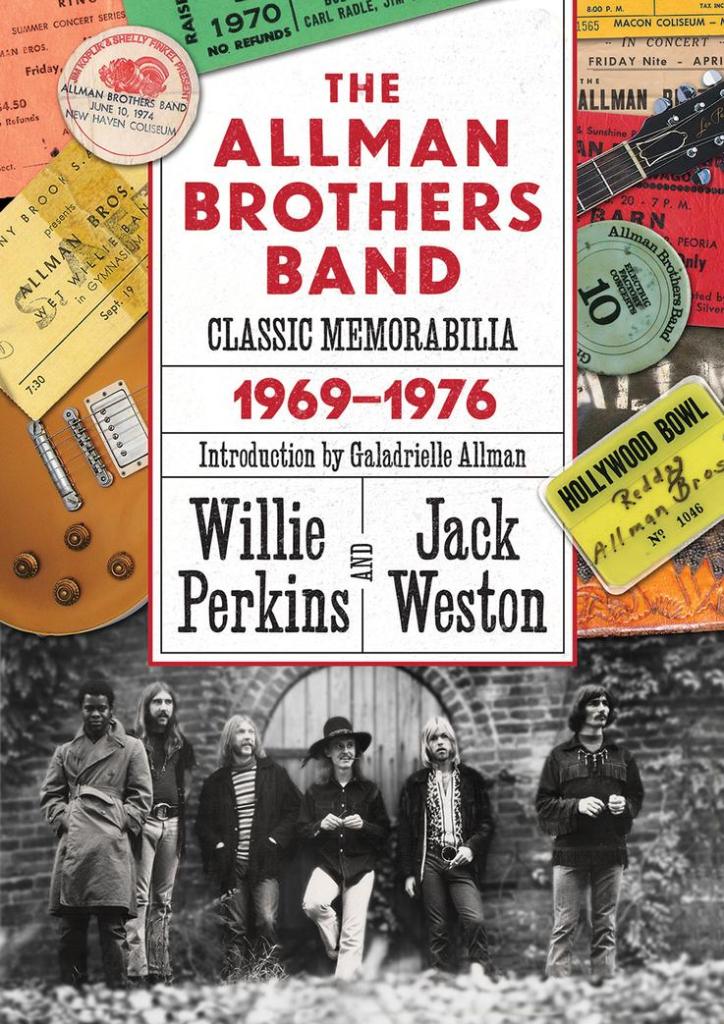
Willie kept meticulous records. He had to for tax purposes. But he is naturally a curator and organizer. If you go to The Big House Museum today and look at the pool table on the ground floor, it’s covered in ABB memorabilia; tickets, programs, travel docs, etc. 

In 2015, Willie got together with Jack Weston, another ABB collector, and they combined their mass of collectibles into Willie’s second book, The Allman Brothers Band Classic Memorabilia, 200 pages filled with photomontages of autographs, apparel, band instruments, concert posters, passes, etc. Some of their stuff is in the museum, but much of it remains in their private collections.

What is a Road Manager?

Plenty has been written about the ABB and its individual members, including in Gregg Allman’s own words in his autobiography My Cross to Bear, which he wrote with Alan Light. 

Here, we’re focusing on Willie Perkins and his unique abilities that contributed to the ABB’s tremendous success. It helped that Willie was slightly older than the brotherhood members, had earned a college degree and had business experience in a white-collar job. He also loved music, and loved the ABB’s music, and believed in them. 

During his interview for the road manager job, which took place in the band’s camper outside a gig at Georgia Tech stadium, Duane pointedly told Willie how difficult the job would be, especially managing the combined team of nine band members and road crew.  

Willie had dealt with fraudsters and bank robbers in his bank job so maybe the brotherhood wouldn’t be as shrewd or cunning. And he really wanted to be part of the band’s success, which he had envisioned from the first time he heard them. So, Willie brought vision and tenacity — some might even say a doggedness — that created stability where stability hadn’t existed amongst the group. There’s even a Facebook group devoted to Willie Perkins with these words in its name: “Solid, Stable Force behind the Original Allman Brothers Band.”

Here is a list of band members and crew, and their ages, when Willie joined in May 1970:

Band Members 

  • Duane Allman, 23
  • Gregg Allman, 22
  • Butch Trucks, 23 
  • Jaimoe (Jai Johanny Johanson), 26  
  • Dickey Betts, 26
  • Berry Oakley, 21

Crew Members

  • Kim Payne, 26
  • Joseph “Red Dog” Campbell, 28
  • Mike Callahan, 26

“They were just babies when they started out,” I say to Willie in awe. “When fame started happening.”

“They were just babies,” Willie repeats.

In 1970, Willie would need his vision and doggedness to do his job without cell phones or even beepers. Managing a touring band took lots of brain power. On the road, all Willie had were pay phones (or hotel phones) and a briefcase, an instrument as important for the band as Duane’s guitar. 
In both his books Diary and No Saints, Willie gives descriptions of what he did as a road manager making $140 per week:

  • Pre-plan all travel and lodging
  • Plan and execute all logistical coordination necessary to transport, house, and supervise and setup of sound, light, and equipment
  • Get the band on and off stage at the proper time
  • Compute and collect all contractual performance monies due
  • Pay all expenses related to the performance, including payroll
  • Collect and retain all records and receipts for bookkeeping, auditing, and tax purposes
  • Be on call as diplomat, logistician, amateur psychologist, disciplinarian, accountant, liaison with management, etc.
  • Get to the next town and do it all again the next day
  • Day after day

He also had to keep club owners honest in making payments. They could be shady and sometimes resorted to robbing managers for the very monies they had just paid. Wisely, Willie always insisted on cash BEFORE the band played, and he pulled from his banking experience by telling club owners, “We have a deal with banks. They don’t play rock and roll and we don’t take checks.” (No Saints, No Saviors, pg.  20).

He learned a good bit from Earl “Speedo” Simms, Otis Redding’s road manager who accompanied Willie to his first official gig on Georgia’s Jekyll Island, to show Willie the ropes. 

One day of training. That’s all Willie got, but it helped. 

Speedo impressed upon Willie the importance of keeping his briefcase, which he had inherited from Twiggs, safe. Speedo even suggested that Willie handcuff the briefcase to water pipes in hotel rooms, which Willie did.

The briefcase was a roaming file cabinet and vault containing records, receipts, contracts and cash. When Willie originally took over as road manager, he spent weeks going through and organizing Twigg’s bookkeeping system and balancing the books. He learned the band was broke and in debt to their record label. 

How in the world would he get them out of that hole?

Solid Stable Force

Willie didn’t just get the ABB members out of debt, he eventually coached them on how to put their monies into retirement investments. Financial advisement wasn’t part of his road manager role, but he did it anyway. 

“Duane wasn’t around when the band hit it big, but he knew it was coming,” Willie says of Duane’s death in a motorcycle accident in Macon on October 29, 1971. The group was inching toward stardom when their double LP At Fillmore East sold 500,000 copies in three months that summer. But then, just four days after the album was certified gold, Duane died. 
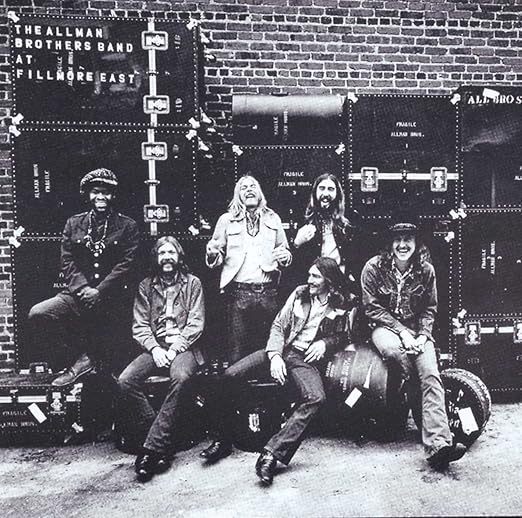
At Fillmore East Album Cover

Grayson Haver Currin’s review of At Fillmore East gives an excellent background into the technology used onsite to record the group’s sessions, how much thought and hard work went into each night’s performance and the importance of the Fillmore album (and subsequently the Eat a Peach album, which contains some of those 28 live songs recorded during their final concert at Fillmore East Theater in Manhattan).

At Fillmore East Album Back Cover: Crew with Twiggs Lyndon’s photo (Willie on right).

Saying the band was devastated by Duane’s death is an understatement. 

Just one month shy of turning 25, Duane was already considered by many to be one of the greatest guitar players in the world. As a founding brother of the band who provided the group’s unique sound, continuing the band without Duane’s natural leadership wasn’t a certainty. The brotherhood could have easily dispersed in their grief. No one could replace Duane, and no one did. But then a year later a second tragedy threatened the group’s cohesiveness when bassist Berry Oakley died in a motorcycle accident not far from where Duane had died in Macon.

How much tragedy can one group of young people absorb?

Eventually the group invited pianist Chuck Leavell to join them; his keyboard skills added an element to their sound that had been missing since Duane’s death. Chuck went on to form his own band, called Sea Level, which Willie managed for a while, and then, in the early 80s, Chuck became the keyboardist and musical director of the Rolling Stones, a role he continues to this day. They also invited Lamar Williams to replace Berry on bass guitar. 

Through it all — the shows on the road, the recording at Fillmore East, the tragic death of two band members — Willie Perkins was there, offering steadfast support and a guiding hand while going through his own grieving process.

Not only did the band not fold, but it soon experienced super-stardom, along with the money and fame that comes from inspiring people the world over. They were bringing in hundreds of thousands of dollars for one show. Willie kept a tight hold on that briefcase and the checking account.

Brothers and Sisters 1973 album liner (Willie circled in red)

Eventually, though, the ABB did disband in 1976, followed by Capricorn Records closing in 1979. There were lawsuits and hard feelings between band members and Phil Walden that took years to resolve and get over.  The band came back together again and again. Phil Walden took Capricorn Records to Nashville, but that venture eventually failed. 

Willie had resigned from the band just before its dissolution in 1976, and he moved up to Atlanta with plans to retire. Soon he realized how much he missed the excitement of managing a band. When Gregg Allman called Willie in the early 80s and asked if he would manage Gregg, Willie instantly said Yes and jumped up and down while on the phone. 

Willie’s first book, No Saints, No Saviors, about his road managing days with the ABB, was published in 2006 by Mercer University Press. He got the call from the press, telling him the book was a go. 

“Did you jump up and down,” I ask, “like you did when Gregg called you?”

“No,” Willie says, “I was used to good things happening by then.”

And there it is. Proof of the power of magical thinking. Willie wanted to work with the ABB and it happened. He remained with the group until just before they disbanded and then he worked with Gregg, Chuck Leavell’s Sea Level group and other artists, eventually “retiring” in the early 90s to start Republic Artist Management, his own talent management company, and Atlas Records in Macon. Today he runs his businesses out of his den and manages artist Sonny Moorman. 

“I’m mostly hawking my books these days,” Willie says of his three books published by Mercer University Press.

His last book, Diary, sprang from remembrances Willie would post to his Atlas Records Facebook page, such as this gentle reminiscence from November 1, 2021:

“50 years ago today November 1, 1971, a memorial service was held for Duane Allman at Snow’s Memorial Chapel in Macon, GA. The casket was closed, but Duane was neatly dressed in a long-sleeved shirt and trousers. A joint, a slide bottle and perhaps a silver dollar joined him on his journey. The remaining band members, guests Dr. John, Delaney Bramlett, Thom Doucette, and others joined in playing. Gregg Allman played and sang a solo version of Melissa. Jerry Wexler of Atlantic Records delivered a deeply moving eulogy. Like so many geniuses, Duane’s star burned briefly and brightly, yet remains eternal. I still dream of him often. 

After several people suggested Willie’s posts could be compiled into a book, he agreed and crafted chronological vignettes in Diary, describing each of the band’s shows, highlighting the venue and other key facts.

Through all of his roles and his career, until today, Willie is known for his generous support of musical artists, both up-and-comers and established musicians, both clients and non-clients alike. For instance, he made a huge impression on Reddog, a blues guitarist who played with his band around Atlanta starting in the 80s. (Reddog the guitarist is not to be confused with Red Dog, aka Joesph Campbell, who was an original member of the ABB’s road crew.) 

Reddog met Willie through Epic records in 1999 when Willie was running Strike Force Management’s east coast office and representing Stevie Ray Vaughn and Gregg Allman. 

“Willie was kind and respectful from our first meeting,” Reddog says, “and he continues to be kind today. Through the years when I had a question about the business end of music Willie was always willing to share his thoughts and wisdom. Although he represented some very famous artists, he treated up-and-coming musicians very kindly.”
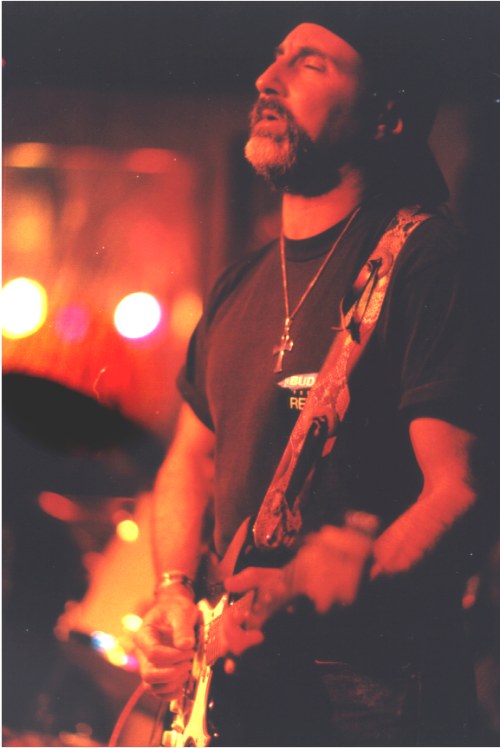
Reddog, Blues Guitarist

Reddog, a singer/songwriter who also covers blue standards, remembers being on the road with Reddog & Friends and Willie reaching out to offer the group tickets to see a Gregg Allman or Stevie Ray Vaughn show on their night off. For Reddog, who as a teen was inspired by Duane Allman to play the guitar, being nurtured as an artist by Willie was a waking dream.

“Willie has great insight into the way a creative musician thinks,” Reddog says. “He doesn’t try to change the musician but encourages and points out the path that could lead to an artist finding greater success. Every time I speak with Willie I thank him for taking an interest in my musical career as it has meant so much to me.”

Reddog was included in a 1988 GUITAR WORLD magazine article entitled Who’s Who of the Blues: 50 Bluesmen that Matter. Now a resident of Florida, Reddog has produced several albums, the last one, recorded in Muscle Shoals, Alabama, and released in 2022, was titled Booze, Blues & Southern Grooves. Reddog plans to return to Muscle Shoals in the fall of 2024 to record another CD of original tunes, knowing he can reach out to Willie any time and get a thoughtful response. 

You can learn more about Reddog’s music and career here. He’s just one example of hundreds of artists over the decades who have been touched by Willie’s kind interest and guidance. 

While Willie continues to encourage musicians at all stages of their careers, he also spends time at The Allman Brothers Band Museum at the Big House, helping to preserve the ABB legacy. 

In No Saints, No Saviors, Willie writes about his first day on the job as the ABB’s road manager: 

“As I made my way up the walkway at 2321 Vineville Avenue, I realized I was about to embark on a great adventure. This was the “Big House,” the rented home of Duane Allman, Gregg Allman, and Berry Oakley and the official band headquarters. It would also become my home for the next several months. (Pg. 1)”
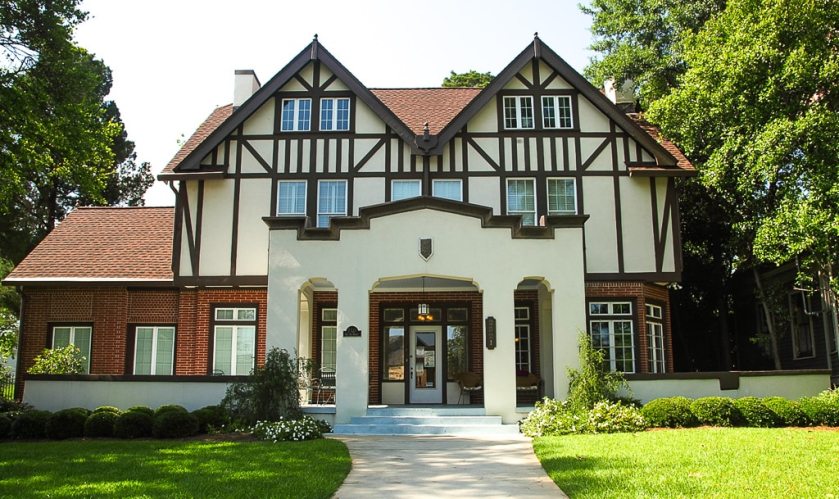
The Allman Brothers Band Museum at The Big House

Richard Brent, Executive Director of The Big House Foundation, lives in Perry with his wife, Megan, but he might sometimes feel like he lives at 2321 Vineville Avenue with everything the museum has going on. The couple moved down from Virginia in 2008 for Richard to work as a construction manager. In 2011, Megan opened a popular eatery/catering service in Perry called The Perfect Pear and she’s also a blues singer with her own group, the Megan Brent Blues Band. That ABB musical circle keeps expanding beyond Macon, even today.

Being a huge music fan, Richard decided to volunteer at The Big House when his construction job was furloughed during the recession. Soon, Richard took a part-time job at the museum and then a full-time job, eventually accepting his current Executive Director role. 

 “I’m just doing whatever’s needed,” Richard says about his role, being humble about his work and showing that saying Yes to the museum opportunities has changed his life. “This job isn’t something I thought I’d be, but it’s the way things worked out. I do the best I can every day.”

Richard has known Willie for ten years.

“Willie is family,” Richard says. “We’re here for him and any time we have a band-related event, Willie comes on over. On other days he’ll sit in the gift shop and kindly autograph his books for fans.”

The Big House Museum opened in December 2009, and sees nearly 20,000 annual visitors from all over the world. In addition to Willie, other band employees like Tuffy Phillips, former roadie, and Kirk West, Big House founder, photographer and former ABB road manager, spend time at the museum, often surprising die-hard fans who know and recognize them.

“We’re lucky,” Richard says, “to have these family members still here with us and still local to join in and enhance our visitors’ experiences.”

Willie might also show up to attend music performances in the outside pavilion where artists play various genres, not just rock. This year’s Big House concert series is the first since Covid interrupted their original program. The series schedule can be found on the museum’s website and social media accounts.

Future expansion of the Big House grounds will include an events center expected to open in 2025. The museum is also revamping their children’s program, Reach for the Sky, to be held in the new building. The program will offer instruction on various musical instruments, including piano, guitar, and bass. There’s a possibility the program will also be offered to local Macon schools, just like they did with the original “African Drum” program.

“That’s how you spread the word,” Richard says of Reach for The Sky and its promotion of the ABB’s legacy. “Our fan base has gotten older. We enjoy exposing new generations to music and to the museum.”

Fans can also tune into 100.9 The Creek, broadcast from Cherry Street in downtown Macon, to catch Richard and his co-hosts John Lynskey and Kyler Mosely for their Whipping Post Big House Radio Hour every Friday at 7pm EST. They play ABB music — albums and live performances — and discuss the context of the recordings through stories and sharing insider information.  

The Big House Museum wouldn’t exist without Kirk West, the ABB’s former road manager and current owner of Gallery West in downtown Macon where Kirk sells his photographs. For 50 years, Kirk photographed the most iconic musical groups and blues artists from all over the nation and then in 1989 he dropped his photography work to become the ABB’s tour manager… for 20 years. 

Kirk and his wife Kirsten bought The Big House in 1993 and lived there until selling it to The Big House Foundation in 2006. “When we bought the Big House,” Kirk says, “we wanted to turn it into a rock-n-roll Bed & Breakfast. It was in bad shape, the roof was rotting. After we moved in we learned the city of Macon would require the B&B to have a fire escape and restaurant kitchen installed. Our solution was to not charge folks for staying there. We just put out a collection box so they could pay whatever they felt was warranted.”

Kirsten, who had previously renovated two homes, managed the renovations of the Big House while Kirk was on the road with the ABB. The couple lived in the Big House for 14 years and when Kirsten was ready to move out, Kirk had the idea to turn the house into a museum. He included his personal collection of ABB Memorabilia in the sale of the house, kick-starting the museum’s exhibition content.  

Kirk has led an interesting life. Just as Richard said Yes to opportunities at the Big House, Kirk credits his own “Yes” attitude to his many successes. “My whole life, I just kept saying ‘Sure, I’ll try that. I think I can do that. Yeah, I’ll give it a shot.’ I never said no.”

Kirk West at Gallery West

Kirk said Yes to photography as a career, to road managing the ABB, to producing music box sets, to renovating the Big House, to turning it into a museum, to making the documentary Please Call Home, to doing a radio show,  to scanning and curating thousands of his photographs taken during five decades, to opening his photo gallery, to hosting monthly music events, etc. The list of his artistic accomplishments is long. All the while, Kirsten has been his biggest support. 

Naturally, Kirk and Willie run in the same circles. Heck, they did the same job of road managing the ABB at different times.

“Willie comes to all our various events,” Kirk says. “He’s a solid cat. Still kicking. Neither one of us moves as fast as we once did. But Willie is like the wise old man here in town, and he’s always involved with Gallery West, coming by to enjoy the music on First Fridays in downtown Macon and sometimes to sign his books. ” 

Kirk even helped Willie with photographs for his book No Saints, No Saviors, and also for Willie’s ABB memorabilia book. 

Thank goodness Kirk is an excellent communicator; we get to hear about his eventful life and what’s currently on his mind through his gallery website and his radio show, Into the Mystic, broadcast on The Creek.

Kirk records his radio show at Capricorn Studios. In each session he tells personal stories as he plays the music that has moved and changed him from one life stage to the next. He’s learned some difficult life lessons and shares it all beautifully, imparting valuable, hard-earned wisdom. Listening to Kirk every Monday evening at 7pm EST is therapeutic. His archived shows are worth listening to, and his photographs are worth visiting on his gallery’s website, in his brick-and-mortar gallery and through his books:

Les Brers: Kirk West’s Photographic Journey with the Brothers

The Blues in Black and White The Photography of Kirk West

With the support and hard work of Kirk, Kirsten and hundreds of other people dedicated to starting the Big House, the foundation was set up as a non-profit and these days appreciates support in all its forms, including visitors, donations, gift shop purchases and volunteers. As a reminder from Richard, anyone interested in being a Big House volunteer is welcome to stop by and fill out a form. 

You might just luck up and meet Richard… or Kirk… or Willie.

Music & Movies

From a young age, Willie was inspired by music, movies and fast cars. 

For years he attended NASCAR races around the South and was familiar with the Middle Georgia Raceway in Byron, where the 1970 pop festival was held, before he arrived there to organize The ABB performances. 

During those early years of his road management career, Willie collected classic cars, at one time accumulating 14, which had to be housed in a storage unit. 

“As you know, cars need to be driven,” Willie says, “And being on the road so much with the band for so long, I just couldn’t drive them all.” Before selling off his cars, Willie would manage minor mechanical work himself, but never any body work or engine overhauls. 

Today, he drives a black convertible 1995 Camaro Z28. 

Present day Willie Perkins and his Z28 in the H&H parking lot

He’s always liked cars, and he still likes fast cars even better. 

As a kid in the 40s, though, Willie grew up watching men on horseback in the movies. After visiting his doctor for childhood asthma and allergy treatments, Willie would spend at least three afternoons a week at the movie theatre in Augusta. His mother, Addie Bentley Perkins, was VP of an insurance company so while she worked, Willie watched movies until she came to pick him up. 

“Back then,” Willie says, “they would show a cartoon, and then something like the Three Stooges, and then a Western followed by a serial, which was a short action film with a cliffhanger, so you’d have to go back the next week and see what happens.” 

In that theater Willie fell in love with movies and so began his dream of working in the entertainment business, specifically Hollywood.  

As we know, Willie’s opportunity in entertainment came from the music industry, but that didn’t keep Willie from rubbing elbows with movie folks throughout his career.

In the 70s, The ABB bought a farm north of Macon where they enjoyed rehearsing, fishing and skinny-dipping. In 1975, a crew came around filming Return to Macon County, a movie set in 1958 and starring Nick Nolte and Don Johnson, both very early in their acting careers, and playing roles as friends and race car fanatics. Race cars were right up Willie’s alley. Willie and the band members befriended Nolte and Johnson and hung out with them during their filming stay.
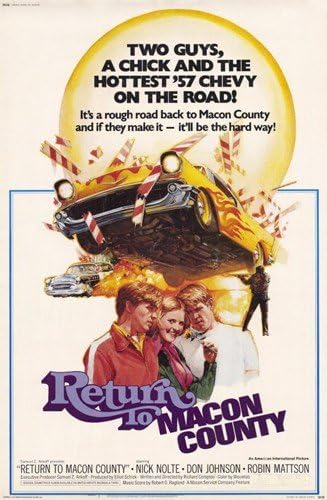
“They were young,” Willie says of Nolte and Johnson, “and they were fun as we got to know them. We’ve stayed in touch over the years.”

Another actor/filmmaker Willie admires also became a friend… and a huge Willie Perkins fan. Billy Bob Thornton is also a musician with his own touring band, the Boxmasters. Billy Bob invited Willie to attend a Boxmasters 2015 show at the Georgia theater in Athens, Georgia.

“I went out to their tour bus and met Billy Bob before the show,” Willie said, “and then when they were performing, Billy Bob told the crowd that a special guest was in the audience and he talked about me for what seemed like 20 minutes.”

Willie seems surprised that he’d warrant so much praise in public. But Willie has touched many lives over the years, even people who have never met him. 

When Willie and Jack Weston published their memorabilia book, Billy Bob Thornton provided this quote on the back cover:

“The cover of The Allman Brothers Band At Fillmore East is the Mount Rushmore of rock album covers. I own signed (by photographer Jim Marshall) prints of both the front cover and the back cover of the best live record ever made. Sometimes I just stand and stare at them — just imaging the gear those cases hauled, even if they were empty at the time of the photo shoot. I examine the bricks in the wall, the added picture of Twiggs. You think I can name the band members on the front? Of course, who couldn’t? But how about the back, the road crew? Here goes… Red Dog, Kim Payne, Joe Dan Petty, Mike Callahan, and Willie Perkins. Not something I looked up on the internet. I’ve just known since I was 15. Thank goodness for this book so I can quit thinking I’m the only one who’s crazy.”

Billy Bob ain’t crazy. Well, he’s as crazy about the ABB and Willie as all the other long-time and new fans are who appreciate the music and the players. 

Still Standing, Still Stable

Willie’s work hasn’t been easy, but it somehow came to him in a natural, almost magical way, conditioning Willie to expect good things. Like Kirk West, Richard Brent, and other successful people, Willie saw an opportunity and said Yes to it, but he didn’t take it for granted. Instead, he worked hard year after year and was flexible and creative enough to zig and zag with industry changes. 

Willie is still standing and still stable. He’s standing and representing the ABB 50+ years later while also actively involved in The Big House Museum and Macon’s music circle. 

Willie is also still standing and representing his 30-year client, Sonny Moorman, a blues artist living in Hamilton, Ohio, who, at nearly 70 years of age, still plays several gigs a week. Sonny is amazed that as a kid from Ohio who grew up loving the ABB, he’s now engaged in the Macon music scene, making trips down south to play with second- and third-generation musicians of original ABB members.

Sonny met Willie in Memphis when he was recording with 706 Records, which is owned by the same people who own Sun Records. The studio recommended Willie as Sonny’s representative and brought Willie to Memphis for their first meeting. Sonny said Yes to Willie.

“Whoever I am in regards to Macon,” Sonny tells me, “it’s all because of Willie.”

Sonny Moorman, Willie’s 30-year client

That circle in Macon binds together history and current happenings related to folks involved in the “southern rock” explosion of the 70s up until today. Sonny is firmly in that circle.

On May 19, 2024, Sonny Moorman married Lisa Waltman at The Big House. They held their reception party at Grant’s Lounge on Poplar Street downtown. Their rehearsal dinner was at H&H Cafeteria where, coincidentally, Gregg’s widow, Shannon Allman, happened to be dining that day. 

Sonny is returning to Macon in September to play an acoustic set at Gallery West on September 27th from 4-7pm. Shaun Berry Oakley, grandson of original ABB member Berry Oakley, will join in as they perform while Willie signs his books. 

Willie, Kirk, Sonny. They’ve been running in the same circles for what seems like forever.

“We started out working together,” Willie says about Sonny, “But over the decades we’ve become very close friends.”

“Willie is the remaining Allman Brothers business guy,” Sonny says, “all the others were on the music side and most are gone now. He was the youngest fraud examiner for a big Atlanta bank and he brought to the ABB more financial knowledge and expertise, far above the norm of what other tour managers brought to their bands.”

Sonny loves hearing Willie’s uncensored stories of his road management career. “One time,” Sonny says, “Willie and I were driving a Sprinter van from a festival in central Georgia back to Macon through a biblical thunderstorm and hellish rain, listening to the Pink and Black show spinning 50s music on SiriusXM radio. Hearing those golden tunes, Willie started telling stories. Man, I’ll always remember that trip and those stories.” 

Sonny’s Lucky 13 album was named 2020 Blues Album of the Year by Just Plain Folks. “We’re working on a new release now,” Sonny says, “And we’ll be doing the final recording at Capricorn.”

Willie is still bringing people into the Macon music scene, still living in the same house in Macon, and still eating at the H&H cafeteria in downtown Macon. Capricorn’s original studio, just a couple blocks from H&H, was revitalized by Mercer University and launched as a studio and museum in 2019; Famous Studio A has been preserved while a new state-of-the art Studio B records contemporary bands, like Blackberry Smoke, a modern day southern rock/country rock band and cousin to the ABB’s sound. In fact, the group produced the first major album to be recorded at the sound studio in 40 years with their 2020 Blackberry Smoke Live from Capricorn Sound Studios that includes cover songs of Macon legends like the ABB, Little Richard, Marshall Tucker Band and Wet Willie with some of those stars contributing. Gregg Allman recorded with Blackberry Smoke on the track Free on the Wing from their 2016 Like An Arrow album, before his death in 2017.

The Big House Museum is a mile from downtown. Offices at 535 Cotton Avenue, Phil Walden’s former Capricorn Records headquarters where Willie sometimes worked, is just two blocks from H&H. Willie’s Macon is one big music circle and he’s in the center of it, speeding from spot to spot in his Z28 Camaro.

Sonny standing by artist Steven Teller’s mural at H&H with Mama Louise and Mama Inez

As Willie and I are eating and talking, his astonishing music world of the 70s and 80s falls within a one-mile radius of where we’re sitting at the H&H Cafeteria. 

Artist Steven Teller’s entire 2022 mural featuring the Allman Brothers Band

“Looking around town now,” Willie says, “it likes nothing ever happened here.” 

But many people know what happened in Macon. The city is right up there with Memphis and Muscle Shoals in its deep-rooted influences on American music. The Bitter Southerner even extolls the importance of those three cities on a t-shirt that simply reads, “Macon, Memphis, Muscle Shoals.”

Starting when Macon was a muddy frontier town in central Georgia, music has been important and celebrated in the area, as described in Dr. Ben Wynne’s Something in the Water: A History of Music in Macon, Georgia 1823-1980

Dr. Wynne, a music scholar and professor of history at the University of North Georgia in Gainesville, interviewed Willie for the Something in the Water and Willie provided this blurb for the back cover:

“Meticulously researched and incredibly detailed… a fascinating read.”

“Willie Perkins,” Wynne says, “should be on the radar of anyone who is interested in the history of American popular music. His involvement with the Allman Brothers Band and the Capricorn phenomenon in Macon classifies him as a true pioneer. He was an active participant in the genesis of ‘Southern Rock,’ and as a result he has a very compelling story to tell. To say he has lived an interesting life may be a significant understatement.”

This little city of Macon, as noted in Wynne’s book, has always been a hub of music, fostered as a cultural center by Wesleyan College from its inception as the Macon Female Collage in 1838, and by the Georgia Academy for the Blind, with both of these institutions still operating today on Vineville Avenue, just down from The Big House. The Academy has traditionally trained its students in music and instrument instruction from its inception in 1852. And, of course, in more modern times, Macon’s local bars, pubs, and theaters were responsible for Little Richard, Otis Redding, and James Brown’s successful career launches. The development of talent continues to this day!

Capricorn Records, founded by Phil Walden and Frank Fenter, was responsible for attracting hundreds of bands and musicians to Macon in the 70s to not just record at Capricorn but to also live in Macon. Phil Walden once said that living in Macon actually became cool during that era. 

The bands and musicians played and hung out at Grant’s Lounge on Poplar Street. Grant’s Lounge is still in operation and still bringing great musical acts to town. Phil Walden eventually opened Uncle Sam’s, a bar and performance venue that saw tons of acts fellowshipping and playing. 

Because Willie and Phil kept a close friendship until Phil’s death, Willie recently considered writing a biography on Phil, but then he heard Wynne was working on a book about Phil Walden. 

“He’s a much better researcher than I am,” Willie said about Wynne, “so I decided he’s the best person to write about Phil.” Wynne confirmed he is working on the book about Phil Walden. “…I’m in the very early stages of working on that through Mercer University Press. Right now the work on it has barely begun.”

Wynne’s book on Phil gives us all something to look forward to. Meanwhile, he included a chapter on Capricorn Records in Something in the Water that gives a great overview of Phil’s contribution to making Macon the gushing fount of southern music that still flows to this day.

Willie is still here, part of the city’s history, willing to share his story and the band’s stories. But he’s not sitting around waiting for the phone to ring. He receives hundreds of emails a day from fans around the world who view him as a God. And at 84, he’s quite active with a regular gig as a poker dealer at a Macon pub every Thursday night, and with the AMP luncheon club. 

“AMP stands for Ancient Music People,” Willies says with a grin. “We get together once a month at different Macon restaurants and tell stories.” The group comprises former music industry folks who assist members moving through their senior years and dealing with occasional money and health challenges.

As for dealing weekly poker games, Willie finds some of that old-time rowdiness — maybe even danger. Early one evening in 2019, as reported by The Telegraph newspaper, Willie was preparing to deal poker when an angry 80-year-old man drove his truck into the pub, trapping Willie under a table. On Facebook, Willie wrote that the truck smashed into the pub “completely destroying the pool table, poker and dart area where I was. He made three passes! I was buried under the table and survived with minor cuts and bruises. Several others were more seriously hurt and sent to emergency room. A miracle no one killed.”

A miracle. 

Magic maybe.

The expectation, certainly, that good things will happen to Willie Perkins. 

When Willie took the job with the band, leaving behind a secure corporate job, he didn’t know if the ABB would see success or failure. His intuition told him they were going to be something great, but no one knew for sure, not even Willie. He took a gamble. Some might say he took a long-shot when he altered his career path.

In part two of a 2021 interview with Marshall Tucker Band lead guitarist Chris Hicks, as part of Chris’ Southern Rock Insider YouTube series, Willie discusses his thoughts on being part of the ABB:

“I wouldn’t go back and change anything from when I made the decision to go with those guys. Like I say, there were ups and downs and triumphs and tragedies, but I made friends for life. The music is going to outlive us all. It was a great time to be involved.”

“I thought Willie did one of my favorite interviews,” Chris says.

Chris is a guitarist’s guitarist, admired as much for his singing voice as for his guitar playing, which is exemplary. He grew up in Lizella, Georgia, a small community on Macon’s border and the site of Idlewild South, the Allman Brothers Bands’ farm.

At 16, Chris received a phone call from Jaimoe, ABB’s drummer who had heard about Chris’ local band and his guitar work. Jaimoe asked Chris if he wanted to jam.

“That phone call was freaky in its own right,” Chris says, laughing “not to mention how freaky it was to jam with Jaimoe again and again.”

Jaimoe’s call to jam was the beginning of Chris Hicks’ journey from playing bluegrass with his grandfather and into the world of Southern Rock, where he continues to live, on the road with Marshall Tucker for 27 years now and also working on his own music.

Chris has met or performed with every major player of the Southern Rock genre, plus many other artists in other genres. A fast thinker, Chris’ curiosity in all things drives his zest for life. It’s easy to see why people want to be part of the Chris Hicks fan club, and to jam with him.

Jaimoe, the only surviving member of the original ABB, likes to brag to folks, “I’ve been knowing Chris since before he could grow a mustache.”

Chris met Twiggs Lyndon back in the day but he only met Willie Perkins a few years ago, just before taping their interview. “I’ve always admired Willie from a distance,” Chris says. “Twiggs and Willie started the whole idea of road managing. They wrote the book on taking something abstract like touring and bringing it into the real world.”

To hear more details about Willie’s experiences of being on the road with the ABB, watch Part I and Part II of Willie’s interviews with Chris.

Calculated Risk

Willie took a chance in 1970 and worked smart and worked hard, contributing to Macon’s music scene of yesterday and today. He’s an integral part of that circle, linked to The Big House, H&H Soul Food Restaurant, Kirk’s Gallery West, Grant’s Lounge and, by extension, Capricorn Studios, 100.9 The Creek, the Otis Redding Foundation, and other active music traditions.

Macon’s motto, after all, is “Where Soul Lives.”

Willie’s gamble – or more like a calculated risk – paid big dividends. He launched his career into the music industry and into Macon’s music history. He also launched his current place in the city’s circle of supporters who are continuing its musical traditions… and creating new ones.

Here’s to Willie and to Macon.

May the circle be unbroken.


A special Thank You to my friend Reddog, the blues guitarist, for suggesting I spotlight Willie Perkins, and for connecting me with Willie. And a special Thank You to Willie for saying yes and participating! A big shout out to my neighbor Tracy S. for welcoming me to the neighborhoood (and saving me from my cantankerous push mower) by offering to cut my grass, which freed me up to write about Willie. Appreciate you, Reddog, Willie and Tracy!

I dedicate this article to my sister Cathy M., a long-time, huge ABB fan who finds great comfort in listening to their music. We grew up in Warner Robins, GA, in the 60s/70s so the ABB is in our blood.

Sending love and light out into the world. Hope you catch it!


RESOURCES

William Perkins Facebook

Chris Hicks of Southern Rock Insider Interviews Willie Perkins:

+Video: A Conversation with Willie Perkins, Part 1

+Video: A Conversation with Willie Perkins, Part 2


MACON’S MUSIC SCENE

The Big House Museum, 2321 Vineville Ave, Macon, GA 31204

The Georgia Allman Brothers Band Association (GABBA) – UPCOMING EVENT: Sept. 26-29. 2024

H&H Soul Food Restaurant, 807 Forsyth Street, Macon, GA 31201

Gallery West, 447 3rd Street, Macon, GA 31201

100.9 The Creek, Broadcasting from 543 Cherry Street, Macon, GA 31201.

OTHER MACON LEGENDS

The Otis Redding Foundation/Museum, 339 Cotton Ave, Macon, Georgia 31201.

UPCOMING EVENT: 3rd Annual King of Soul Festival, Honoring Otis Redding, September 6 -7, 2024

The Otis Redding Website

The Little Richard House Resource Center, Tour Little Richard’s childhood home. 

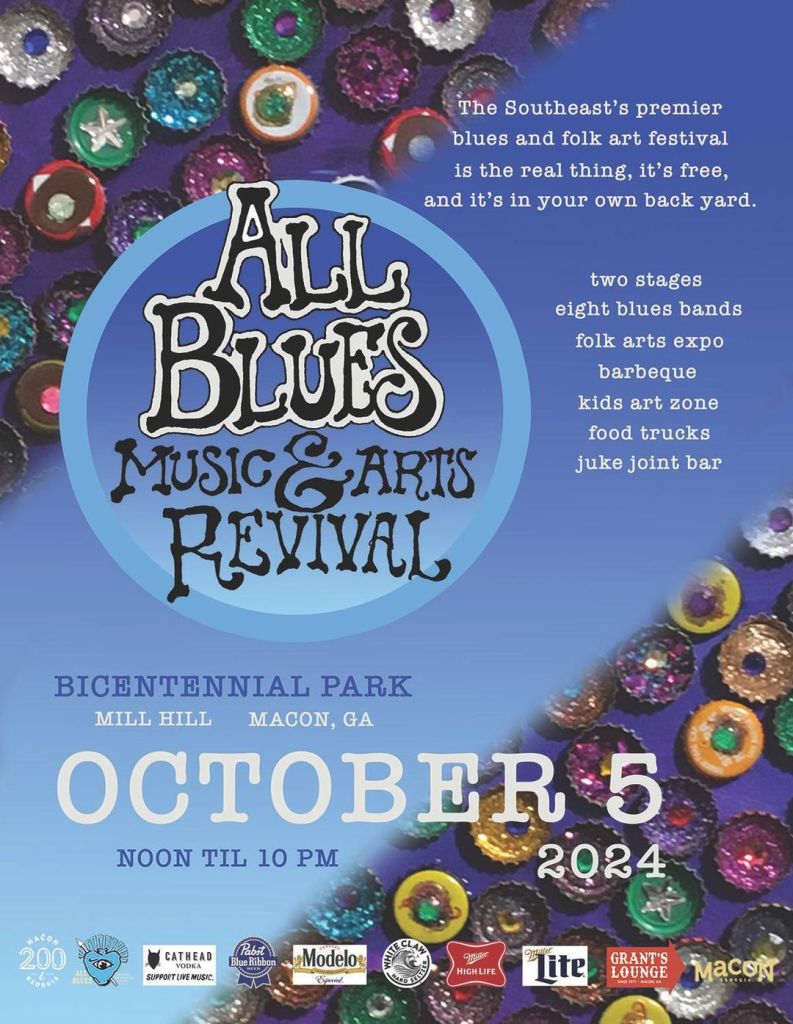
All Blues Music & Arts Festival, Oct. 5, 2024
Featured

Dominic Bourbeau, Painter

Dominic car

Mid-Century Madness

Dominic Bourbeau doesn’t realize what a great painter he is.

Soft-spoken, Dominic is Minnesota nicer-than-nice. His unassuming nature shows up in his humble view of his work, which is colorfully geometric and stunning.

During last year’s Arizona Fine Art Expo in Scottsdale, Dominic’s artwork was tucked into a corner with little traffic flow, but I saw his work and was stopped cold by it.

Dominic+Bourbeau2

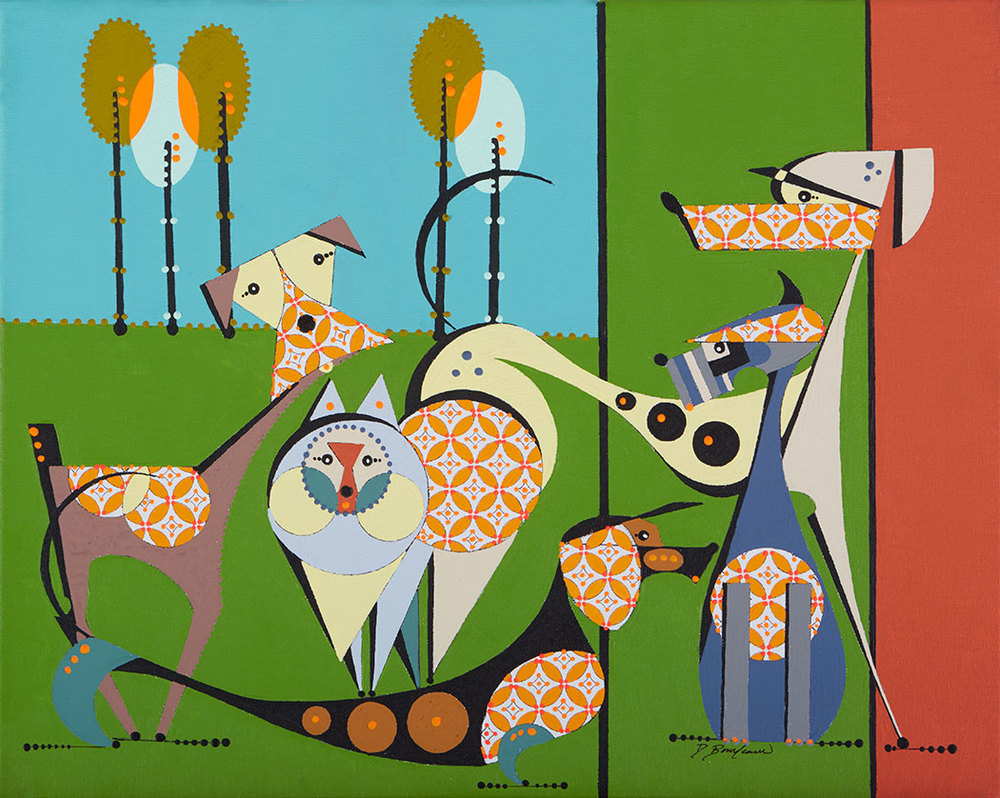
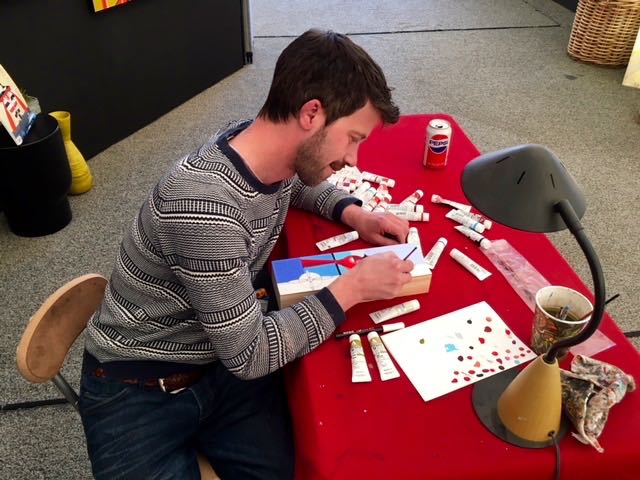
In fact, his mid-century modern-style paintings intimidated me. How do you approach a genius? Especially one who is always painting, canvas lying flat on the table, head down? But it turned out that Dominic is highly approachable and generous with his time in explaining his supplies and techniques.


IMG_3099


At this year’s Expo (January to March 2018), Dominic’s booth was in a high-traffic area near the cafe so his wall of art could be seen from the main hallway. Again this winter, Dominic kept his head down and painted constantly, but was as approachable and responsive to visitors as ever.

Dominic+Bourbeau+4

Hopefully, after hearing so many folks see his art for the first time and say “Wow!,” Dominic will realize how special his painting is.

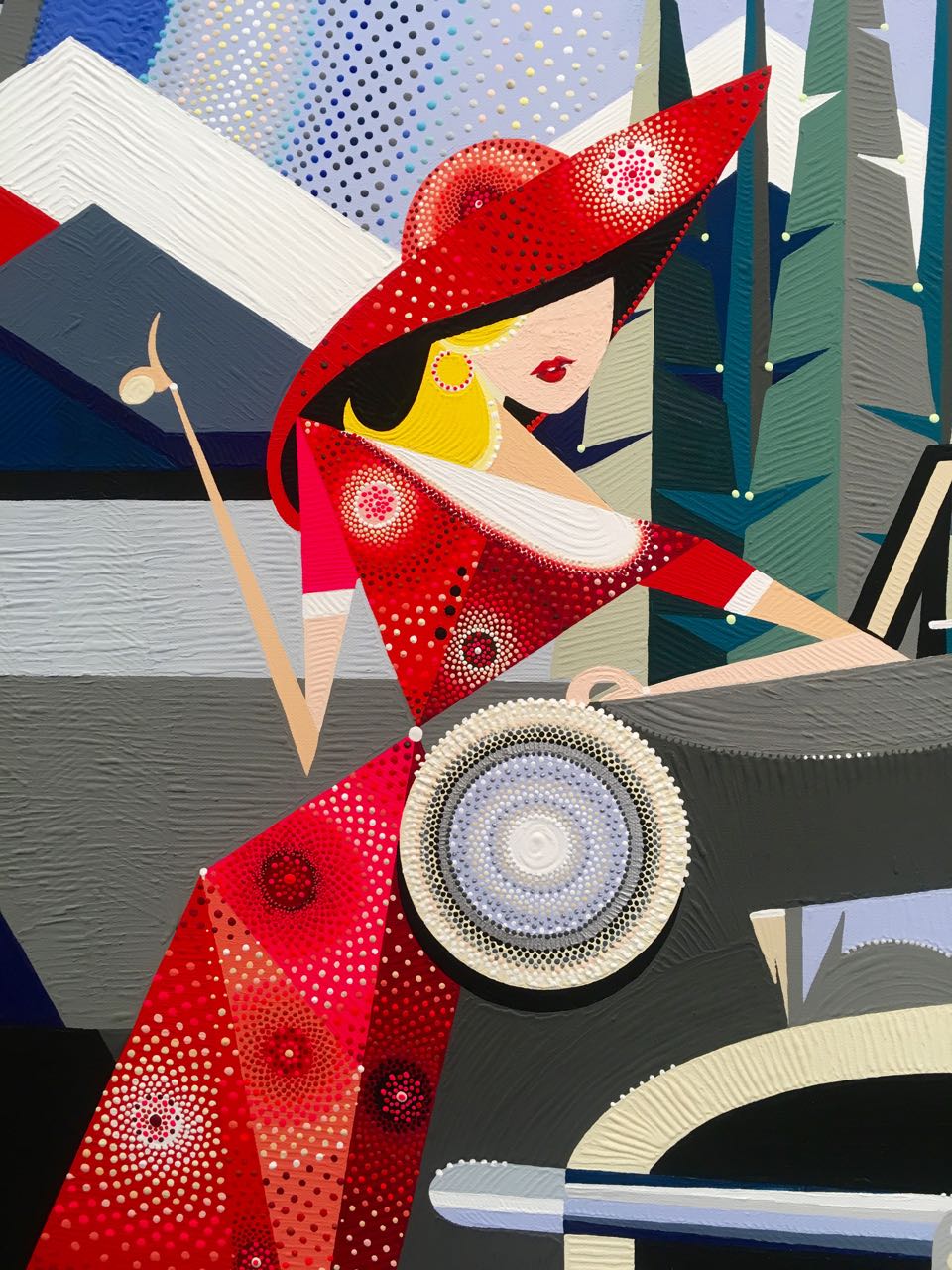
Dominic’s Aubrey Hepburn-esque painting ran on the December 2017 cover of Modern Luxury Scottsdale magazine, and his sassy mid-century portrait of a well-dressed woman in red was used on all the Expo passes.

Scottsdale mag cover

During the Expo, Dominic had to paint all day, every day, seven days a week, because everything he hung on his booth wall sold. Instantly.

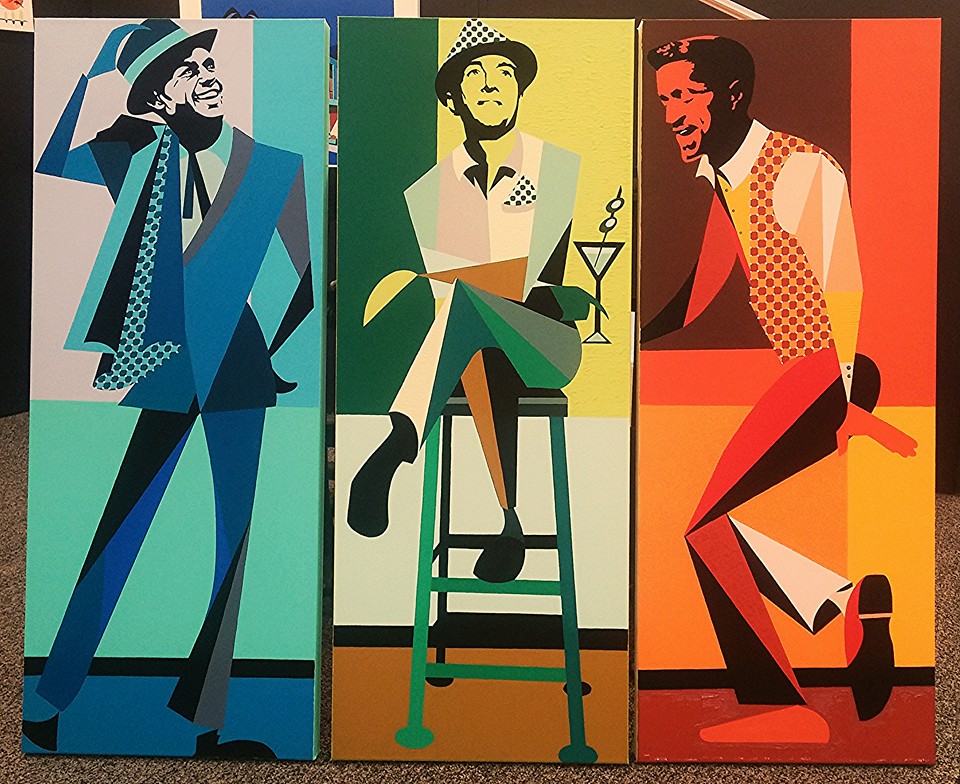
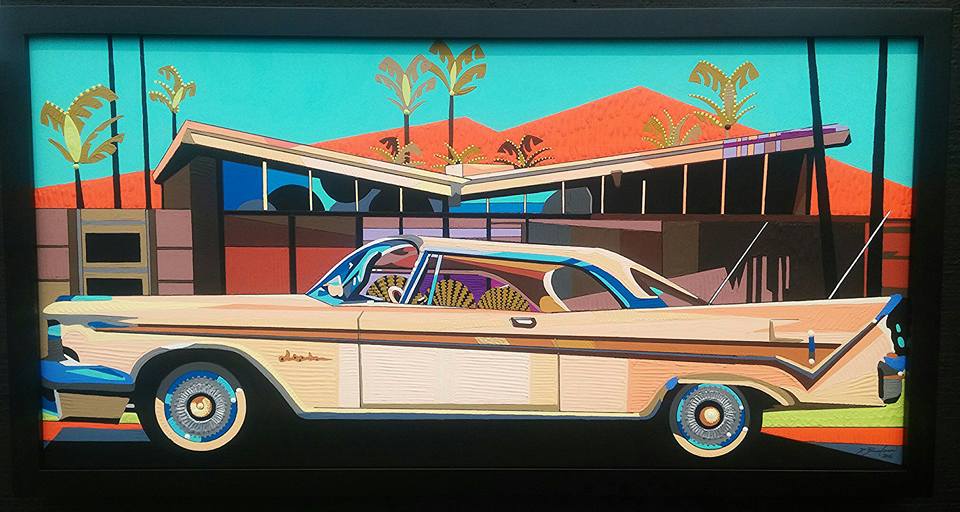
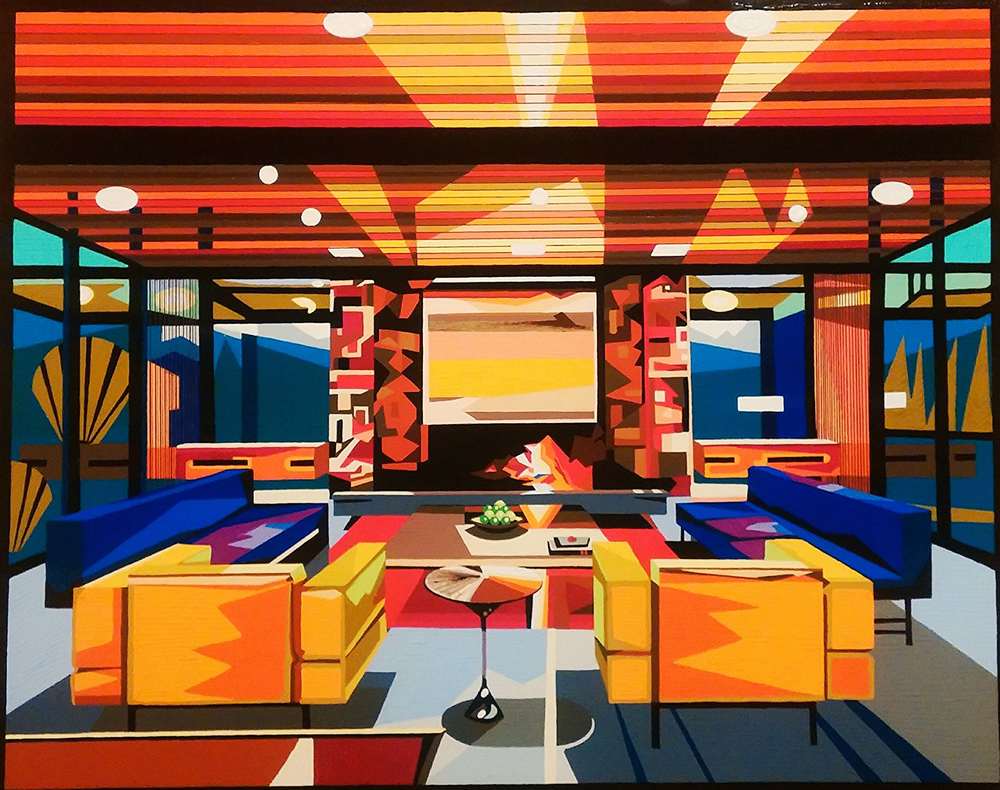
Or, he was asked to paint one of his classics, like Frank Sinatra’s Living Room, five times. Maybe six. Maybe seven.

“This was the year of commissions,” Dominic says, laughing. “I finally lost count.”

Luckily, not every client wanted to take possession of their painting before the Expo closed on March 25, allowing Dominic to return to Minneapolis and complete all his unfinished commissions.

One day at Kinko’s in Scottsdale, Dominic was scanning his painting of Frank Sinatra’s Living Room when an architect from Palm Springs saw the painting and asked about it. Dominic told the guy he painted it and the man instantly pulled out his check book and commissioned the painting for his home.

“That was unbelievable,” Dominic says to me the day it happened, and he’s shaking his head, like it shouldn’t have happened.

But it’s totally believable that someone saw his artwork and instantly wanted it. Dominic’s style is infectious.

IMG_3103 (1)

His brother, Martin Bourbeau, is also an artist at the Expo. Martin uses cake frosting tubes to pipe paint onto magnificent landscapes on huge canvases, layering and layering the lines of paint to create 3-D art. They’re gorgeous and impressive and expensive.

Domnic women cats

“I originally struggled with how to price my paintings,” Dominic says, echoing every other artist. Pricing is always tricky. With advice from his fellow artists, Dominic has charged slightly more for his work lately, particularly when a subject is selling well, but psychologically it’s still hard for him to increase his prices.

Dominic House

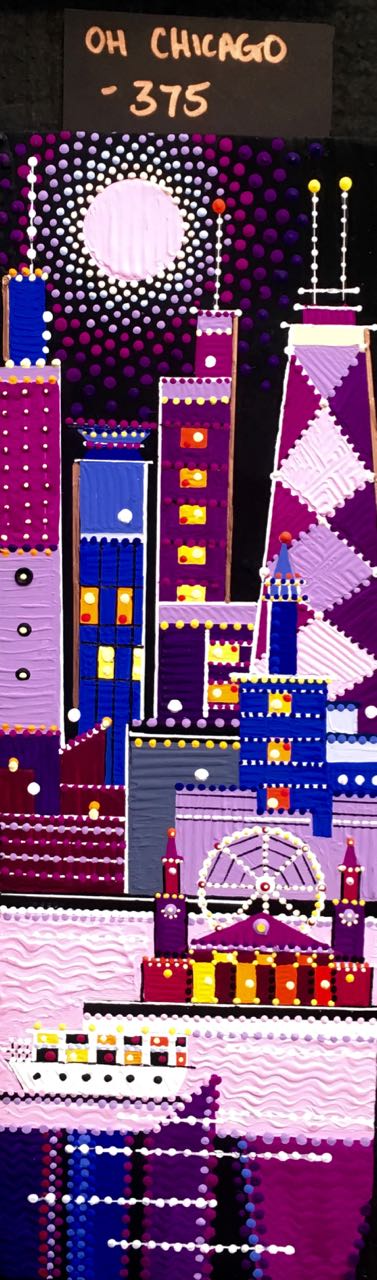
This winter, he began to paint cityscapes depicting well-known landmarks, making them smaller than his usual paintings, and they all sold.

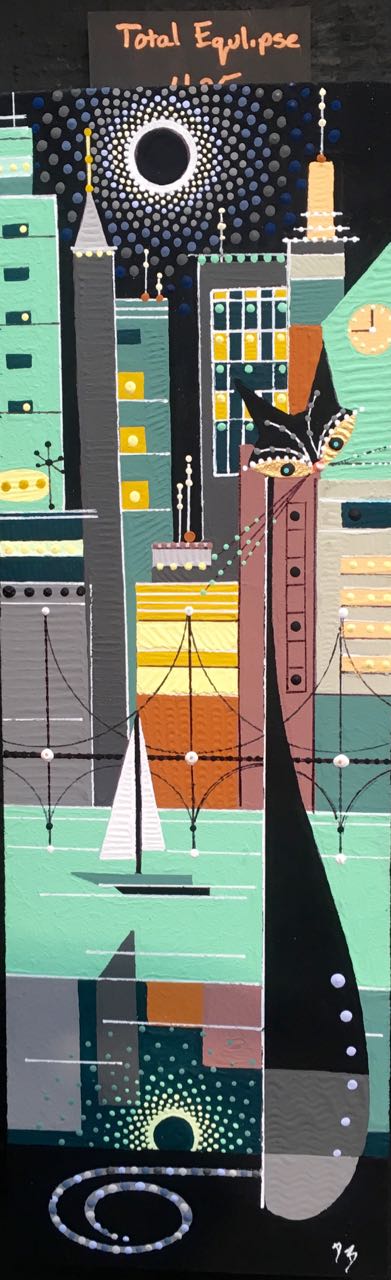
He painted a cat, then more cats, and the paintings sold before he could even hang them on the wall.

IMG_3101 (1)

Gouache is Dominic’s medium of choice. Pronounced “gwash,” the medium is another type of watercolor, though it remains opaque rather than translucent and it dries matte. It’s fitting that Dominic uses Gouache because the medium was first used in creating Medieval Illuminated manuscripts and then became popular with French and Italian painters in the 18th century.

Also, before digital design, gouache was commonly used by Mid-20th century commercial artists because the medium made crisp images and letters possible, and it photographed well.

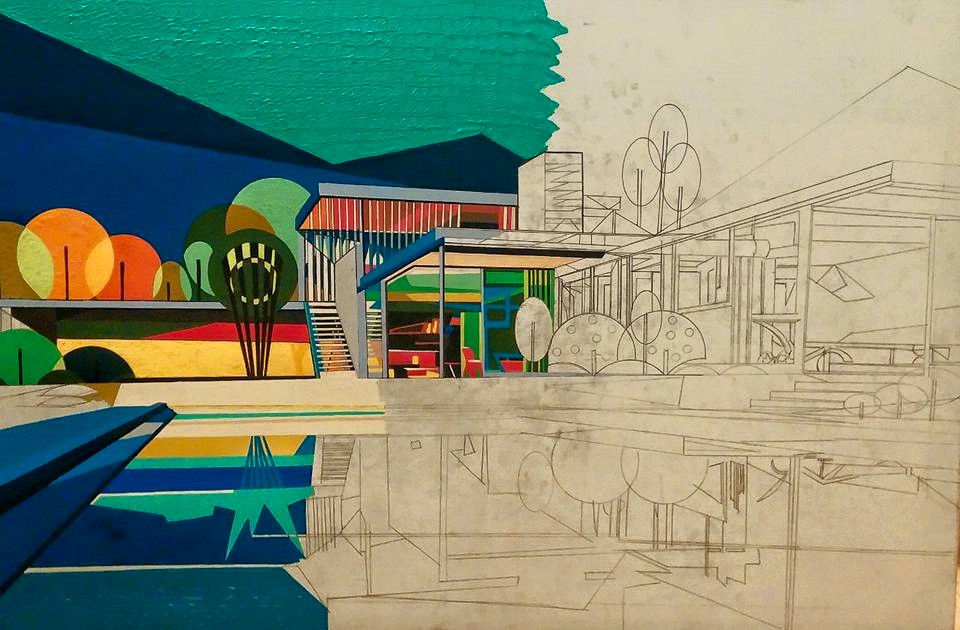
“I draw out the design in pencil, sketch over it in pen,” Dominic says, “and when all the details are done, I’ll start painting, which is the fun part.”

He smiles big.


11781756_882802348465594_5254602029413689313_n

Blue House complete


His technique is to texture different blocks of color by adding wavy or squiggly lines, or dots. His dots are amazing and appear to be machine-made, but he produces each one with absolute focus and precision.

While attending a boarding school in Michigan, Dominic studied iconology and followed the tradition of mixing his own tempura paints, including using a beetle to produce red.

IMG_3057

In Iconology, every line has a purpose, nothing is used simply for the sake of being ornate. The strong geometry and symbolism of iconology are present in Dominic’s style.

Rat PackDominic’s artistic experiences also include throwing pottery, drawing portraits and painting murals for Shakespearean stage sets. He greatly admires artists such as Eames, Frank Lloyd Wright and Charley Harper, and is captivated by their use of simple, yet bold, design based on sophisticated, yet minimalist, geometry.
“I was able to pull from each of my past artistic experiences a segment of its beauty and technique,” Dominic says. “The geometry of iconography, the simple shapes of pottery, the puzzle-like composition of stained glass windows, the details of a portrait drawing, and the intensity especially in color of a mural painting.”

Dominic+Bourbeau+6

Frank Sinatra’s Living Room

Dominic, at 38, is the oldest of 11 children.

“All eight boys are artistic,” Dominic says. “My three sisters are not artistic. One brother, Peter, has a Master’s in Art and teaches art in a boarding school.”

Their mother, a school teacher, always brought art projects home for the kids to play with.


IMG_3104 (1)


Dominic almost completed his Master’s in Art, so he could teach, but decided against teaching when he noticed students were using it as an elective and weren’t serious about learning.

Instead he got a degree to be a Surgical Technician and for 12 years now has specialized in assisting orthopedic surgeons in mostly hip and knee replacements.


98c07f21b72aea6e97cb6c1db641ac1d


With his “casual” employment, Dominic is hired to be the personal assistant of a physician and can work when he wants. That’s how he’s been able to take off three months for the last three winters to exhibit at the Expo in Scottsdale. Being a surgical assistant is a great gig; as long as Dominic is attached to a surgeon and keeps his medical qualifications current, he gains seniority in his position with the hospital.

Fours years ago, Dominic’s artistry was discovered by his hospital co-workers when he was drawing on sterile paper towels in the operating room. He then received commissions to create pen and ink portraits of his colleagues’ kids and families, or portraits of pets wearing sunglasses. Dr. Santos, a co-worker, asked Dominic to create anatomy illustrations for a book, including sketches of a spine and spinal implant.

At home in Minneapolis, Dominic paints in his kitchen, which does double-duty as his art studio.

Dominic is on his careful way to ultimately making a living solely as an artist.

In the meantime, he keeps his head down and paints for hours every day, in addition to doing all his own marketing and accounting… when he isn’t assisting in surgeries or exhibiting in Scottsdale.

I predict he’ll hit it big one day.

Maybe then he’ll realize just what a great artist he is.

Resources

Facebook: http://www.facebook.com/colbyandfriends/

Photo Gallery

IMG_3123
Detail of painting showing gouache textures

IMG_3113 (1)


Dominic cat couch

Dominic car

IMG_3097

Domini car 2

IMG_3122

IMG_3121

Featured

Evgeni Gordiets, Surrealist Painter

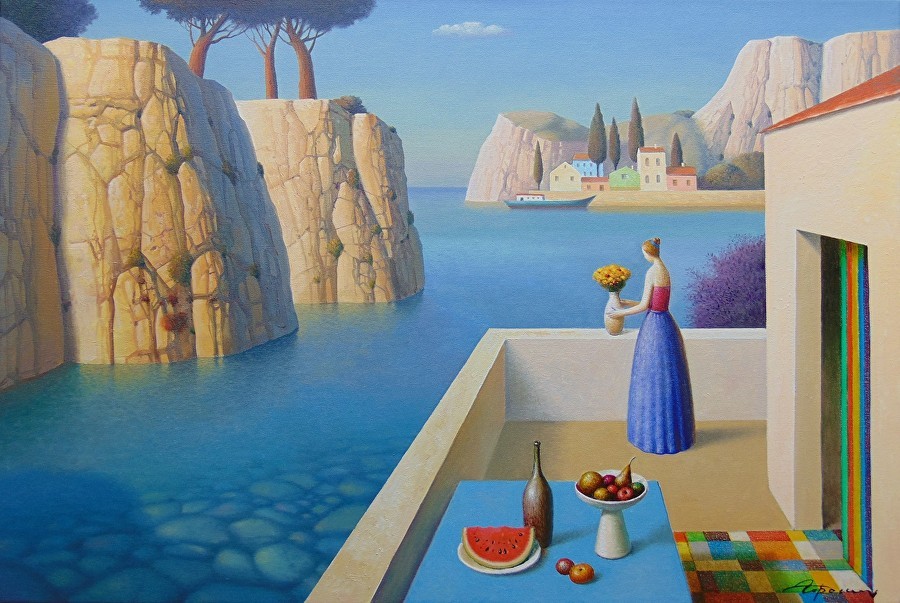
“There is nothing in this world that make more sense to me than the balance and beauty of nature,” Evgeni says on his website. “In my art, as in my life, I try to maintain this delicate process.”

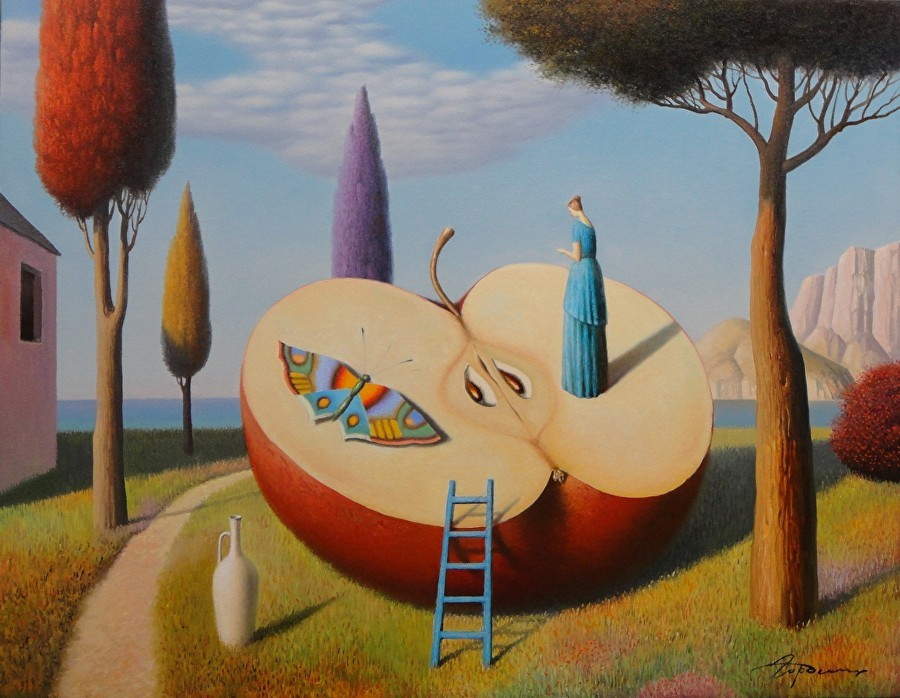
2033569w900
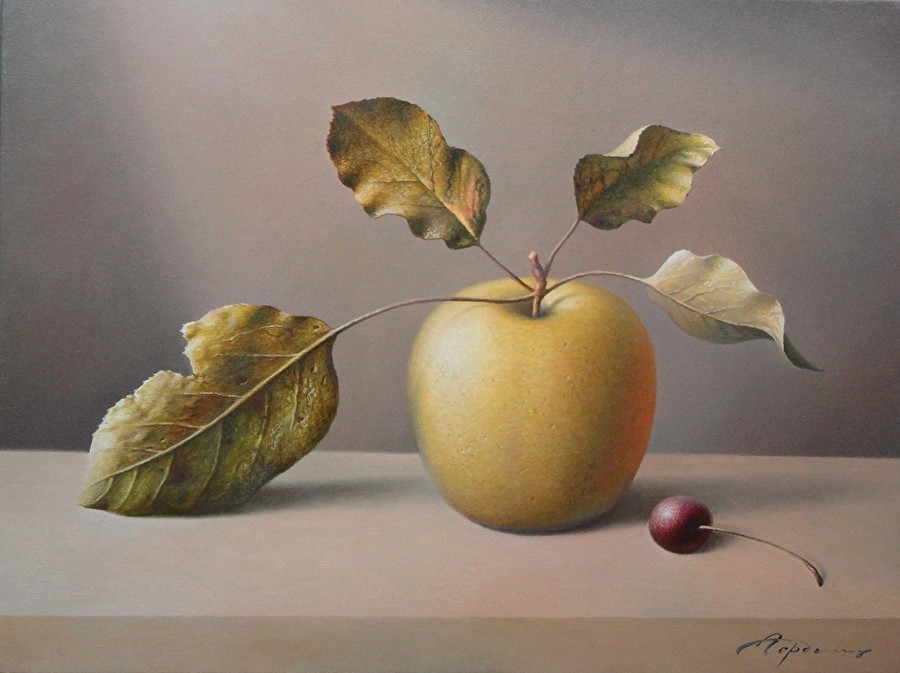
Apple and Cherry, 18″ x 24″.

Paintings to Live In

Ordinarily, I meet an artist whose work speaks to me, and I click with them on some level before writing them about them. However, Evgeni Gordiets is at home in Pennsylvania while his art is on exhibit at the Arizona Fine Art Expo through the end of this month. He may show up in Scottsdale for the last two weeks of the Expo. If he does, I will crawl across the desert to meet him. Meanwhile,  his artwork is much, much too good to not show here… NOW!

“There is nothing in this world that makes more sense to me than the balance and beauty of nature,” Evgeni says on his website. “In my art, as in my life, I try to maintain this delicate process.”

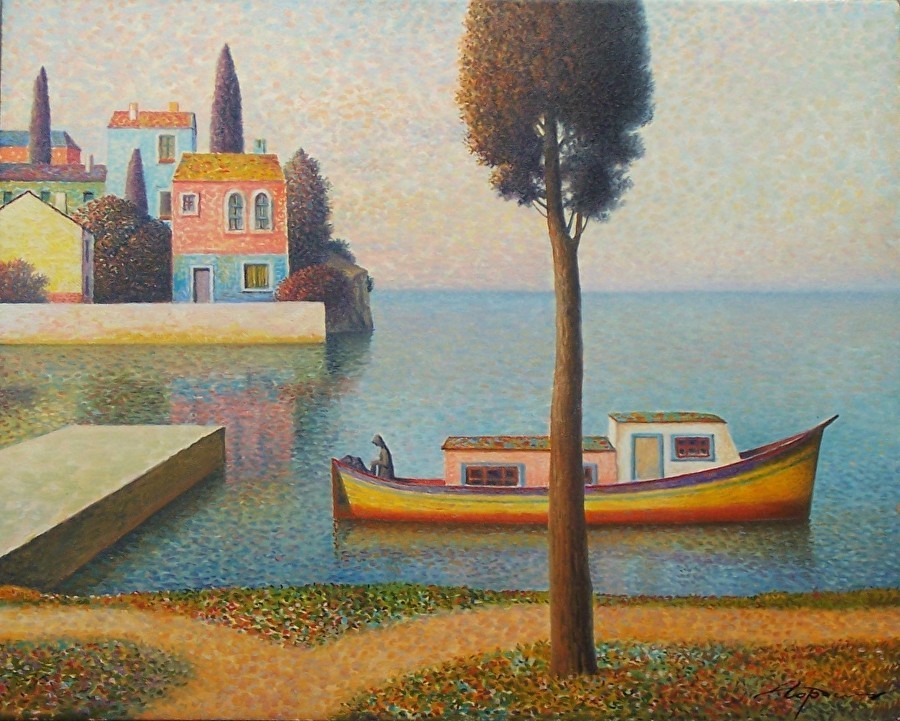
Graceful. Elegant. Serene. Pure. In some of his works, Evgeni uses pointillism to create his sometimes soft, sometimes vibrant scenes… layering tiny dots on top of tiny dots.

Looking at his still life paintings brings about a peaceful feeling, as though our daily worries are wiped away by ruminating on Evgeni’s images. Seeing one painting is not enough. Having another and another to contemplate brings contentment, like the meditative trance of watching water flow easily over river rocks.

Scouted as child prodigy at the age of five, Evgeni grew up in Ukraine and earned a Master’s of Fine Art degree from the State University of Fine Arts and his PhD in fine Arts from the State academy of Fine Art, both in Kiev. He was then a Professor of Art at the National Art University of  Ukraine.

His work has been compared to Monet, Magritte and Dali, but it has a magical tranquility and sunniness unique to Evgeni. His artwork has won many awards and can be found in museums and private collections worldwide. His marketing flyer says, “In 1991, his work was chosen for the cover of Christie’s Evening Auction catalog.”

IMG_3094 (1)

“Today, for me,” Evgeni says (on his marketing flyer), “life and painting are one. I have no desire to follow fashion; it has no value to me. In my art, the sea, the sky, woman and child are subjects of importance, eternity. In nature, I find a never-ending source of inspiration.”

Aksana and Paul, a local couple also originally from Ukraine, are working in Evgeni’s booth at the Expo while he’s in Pennsylvania. Paul tells me they own several pieces of his artwork (lucky them!!!!) and are helping out in hopes of Evgeni and his art gaining recognition in Scottsdale.

He sure has my attention!!

Paul was kind enough to allow me to take a few photos, and I pulled others from Evgeni’s website, which is definitely worth a visit: http://www.EvgeniGordietsArt.com

Gallery

IMG_3096
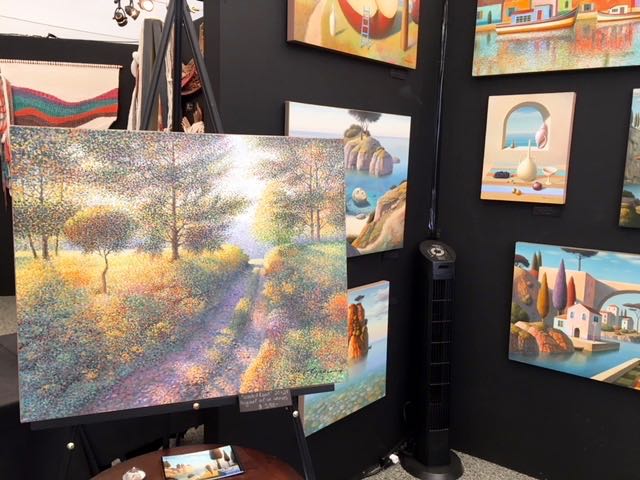
Evgeni Gordiet’s booth at the Arizona Fine Art Expo in Scottsdale.

IMG_3094 (2)
Detail of the landscape photo above.

1458096w900
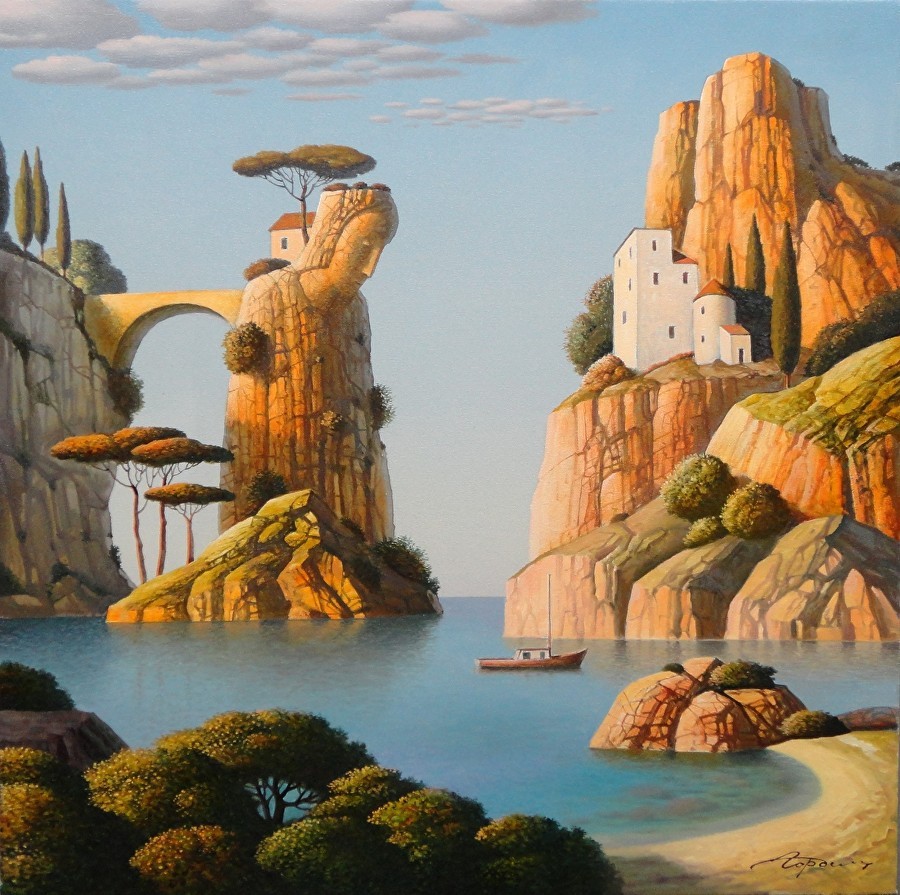
Bay of Silence, 20″ x 20″.

IMG_3095
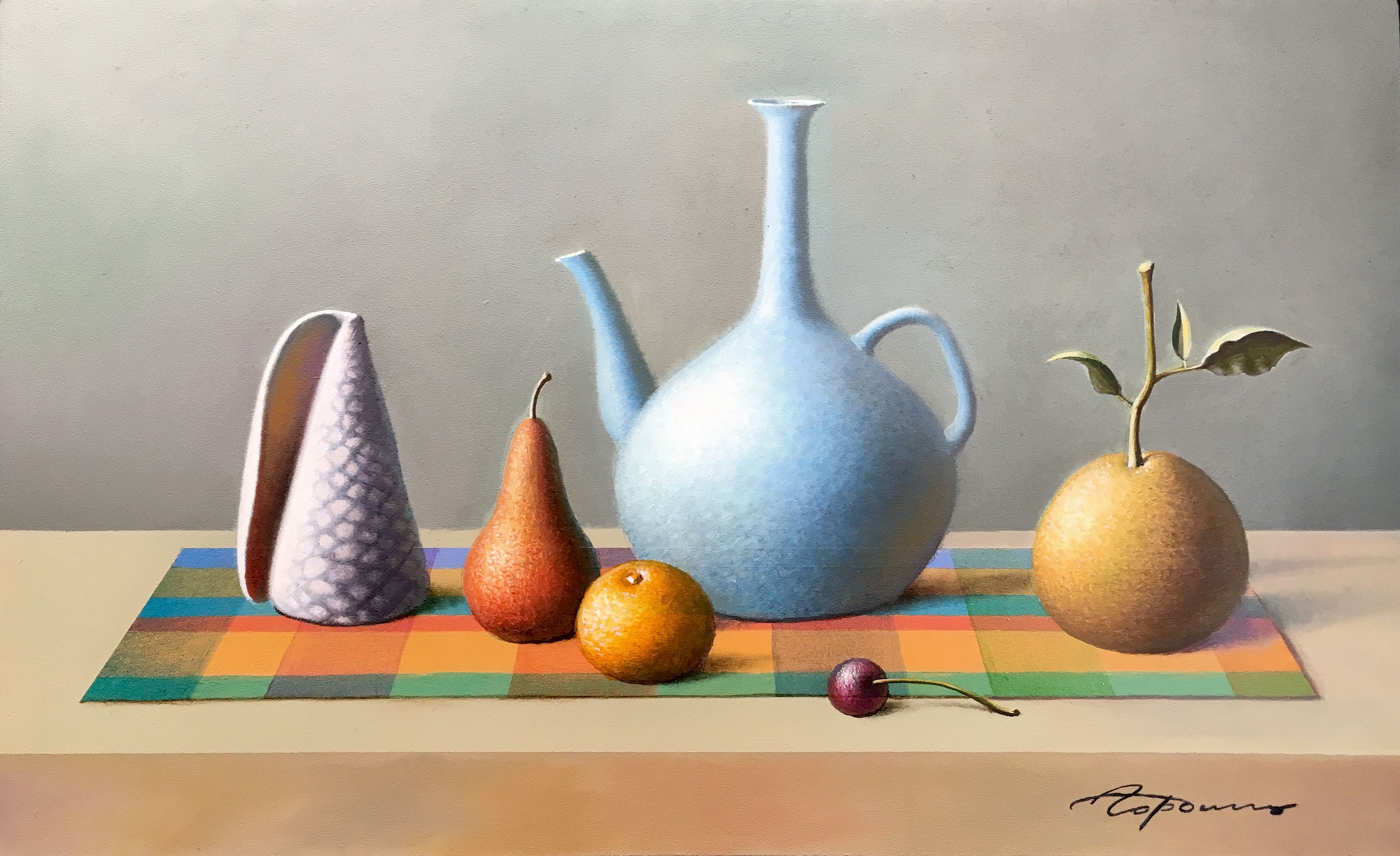
Seashell and Fruits, 10″ x 16″.

IMG_3092
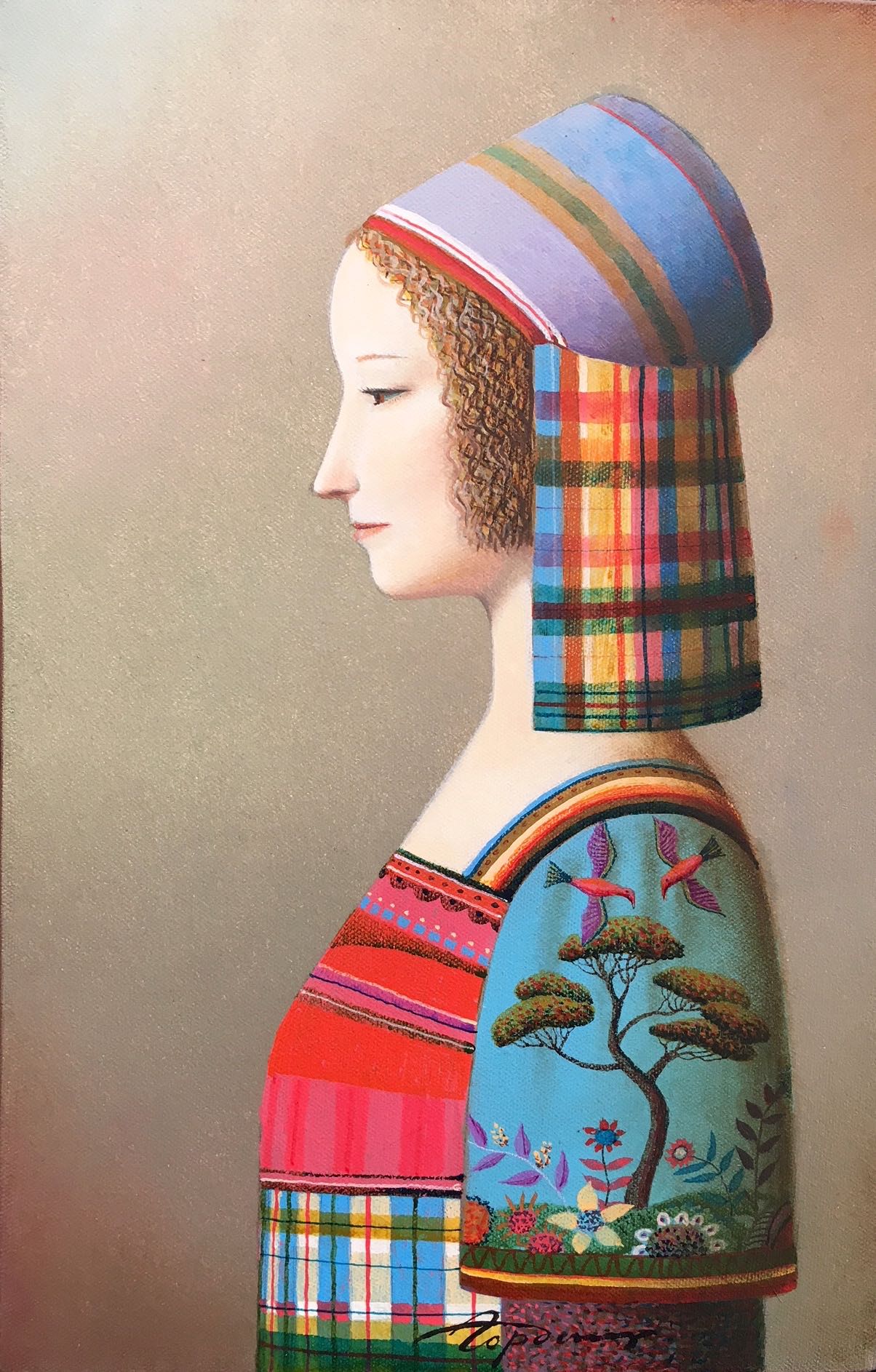
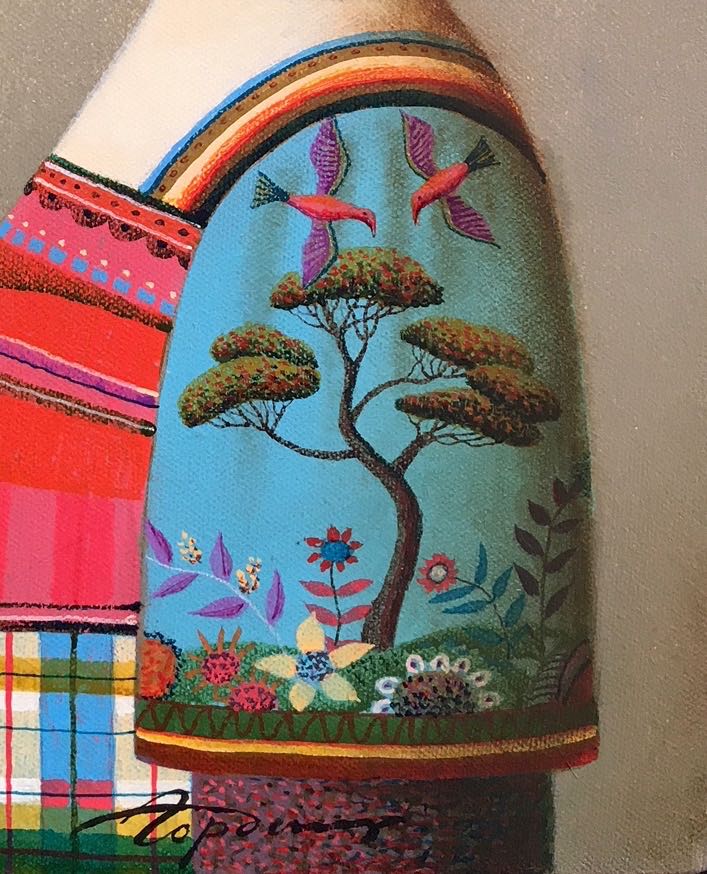
Woman and Red Birds, 15″ x 10″.

Version 2
Detail of the sleeve in the above portrait.

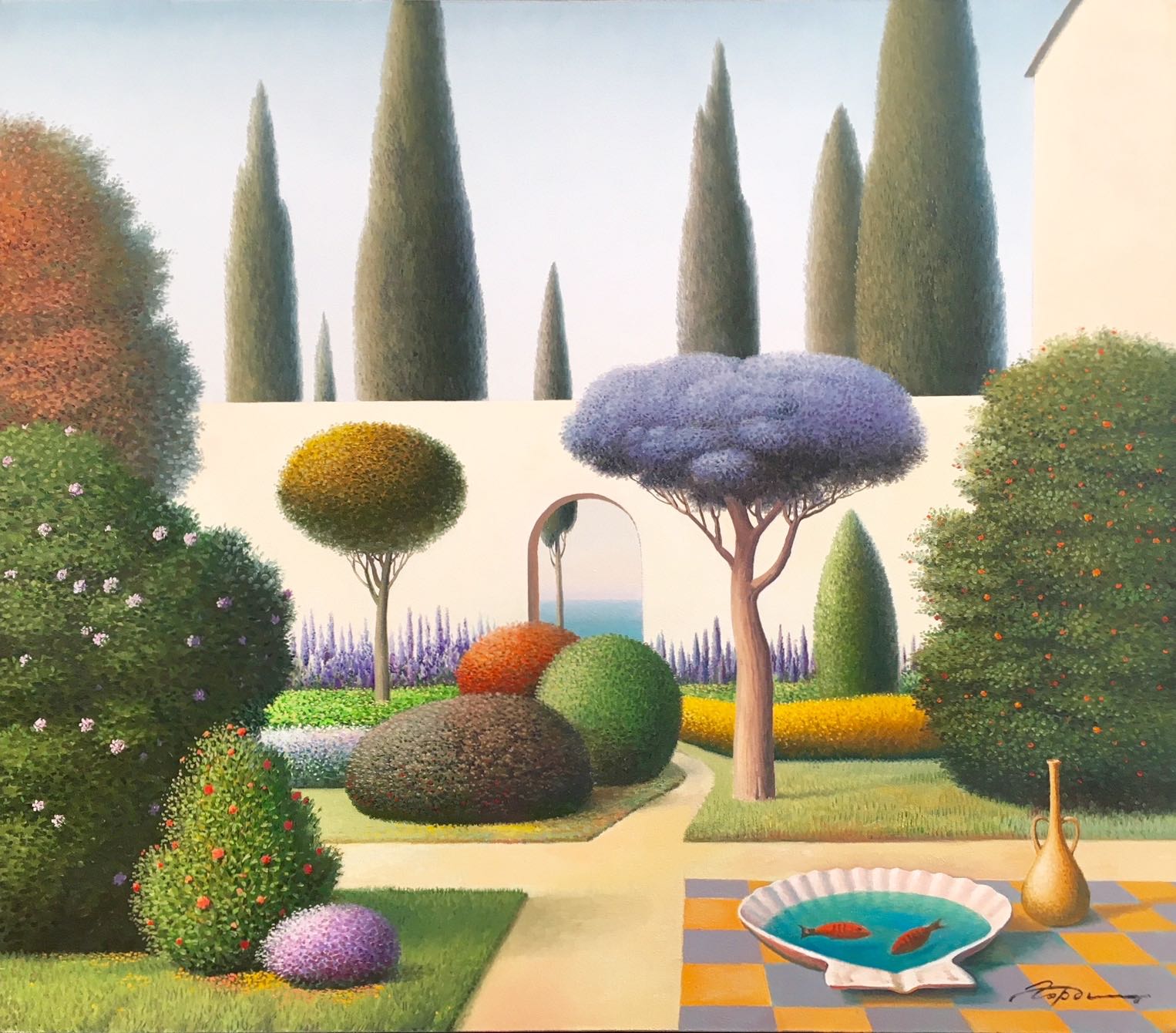
IMG_3091
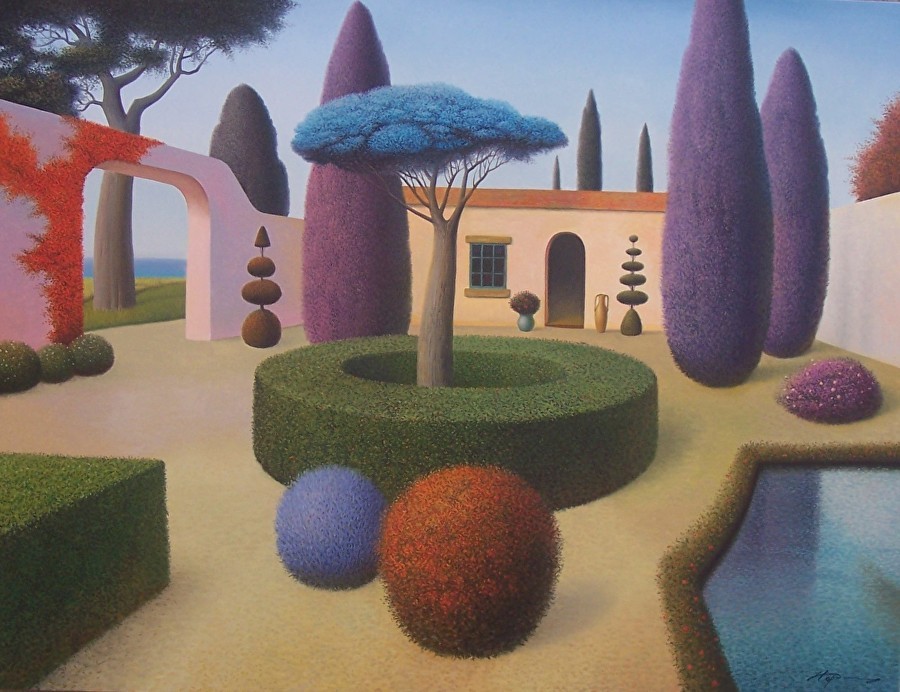
Garden with Blooming Tree, 24″ x 28″.

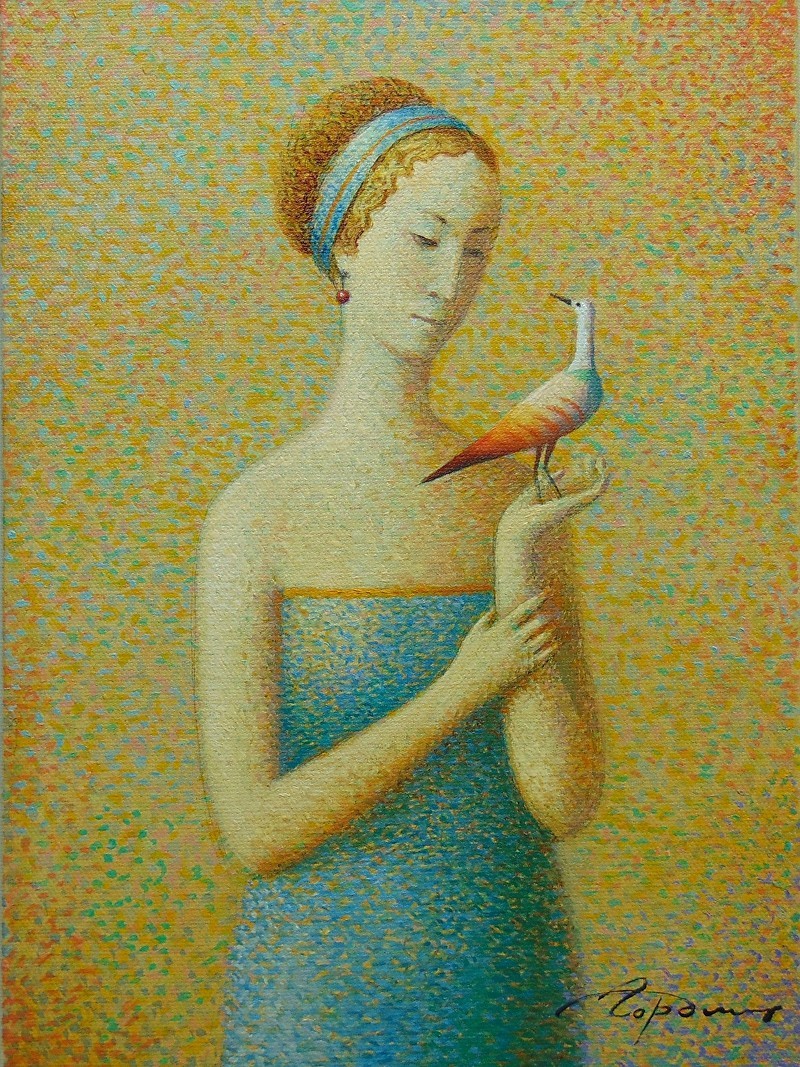
2511223w800
Woman in Blue, 12″ x 9″.

2156547w900
Summer and Butterfly, 22″ x 28″.

1921688w900
Old Village with Red Cypress, 12″ x 15″.

2570399w900
By the Red Tree, 20″ x 26″.

1922328w900
Woman with Orange, 16″ x 12″.

1921629w900
Improvisation with Yellow, 10″ x 8″.

2511257w900
Lonely Cloud in the Afternoon, 20″ x 30″.

1922302w900
Fishing Boat by the Old Village, 16″ x 20″.

1921612w900
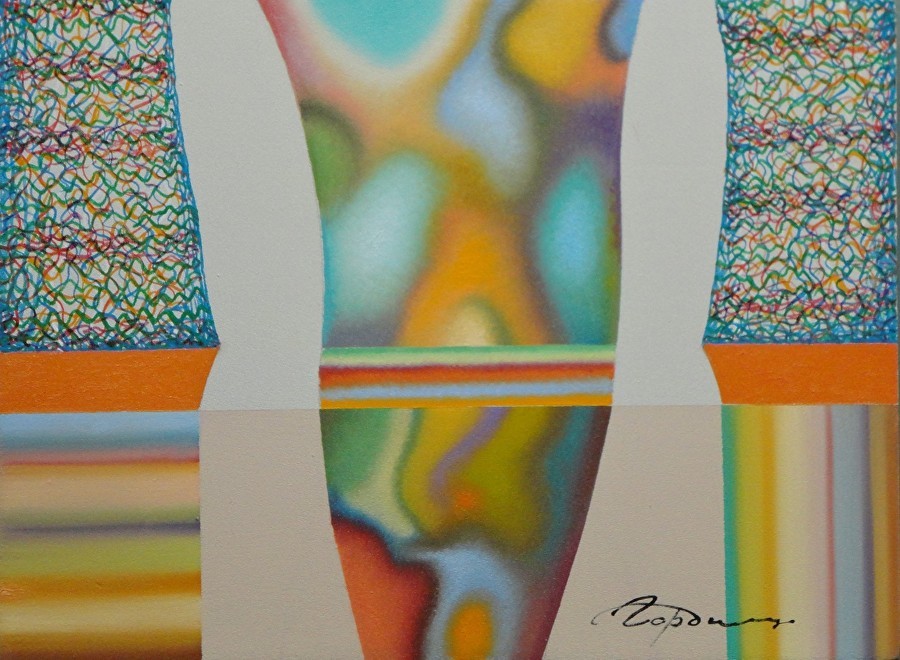
Rainbow, 8″ x 10.5.

1458112w900
Garden with Blue Tree, 40″ x 52″.

Featured

Jeff Carol Davenport, Sculptor

One of Jeff’s earliest impulses to sculpt happened at Riazzi’s Italian Garden restaurant in Mesa, Arizona, circa 1964, when she was six years old. 

Sculptress-in-Demand

One of Jeff’s earliest impulses to sculpt happened at Riazzi’s Italian Garden restaurant in Mesa, Arizona, circa 1964, when she was six years old. 

“Our table had white candles,” Jeff said, “and I remember using my thumbnails to press the warm wax into shapes. Every time we ate there, I looked forward to playing with the wax. I always loved playing in the mud, too, because I could squeeze forms from the muck.” Sadly, Riazzi’s closed in August 2017 after 72 years in business, but Jeff continues to sculpt professionally and for fun. 


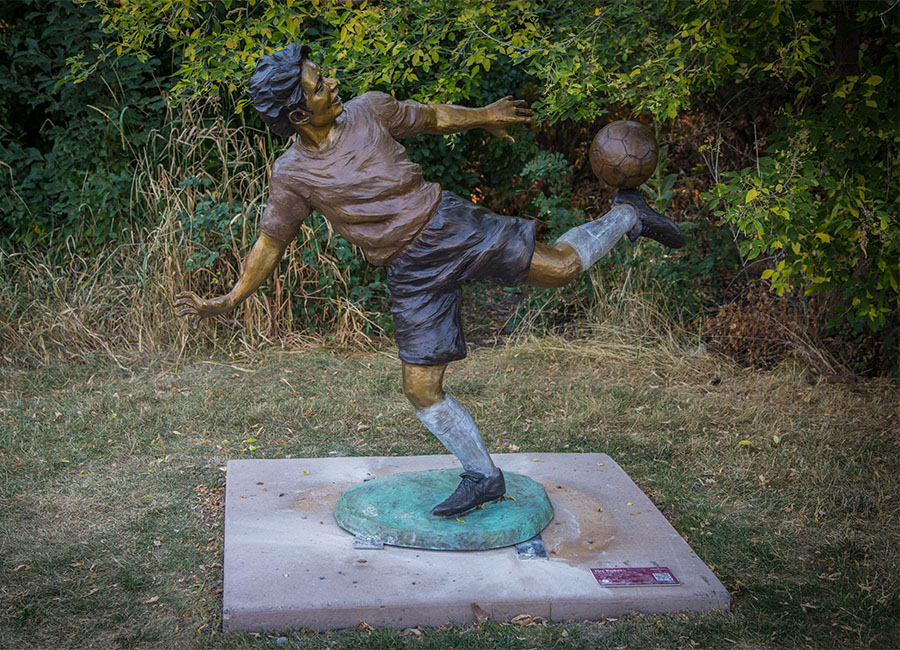
JeffDavenport_OverTheRainbow
“Over the Rainbow”

Growing up, Jeff stayed outdoors as much as possible, and claims to have been a Tom boy. “I was the perfect son for my father,” she laughs. Her father, Wade Hoffman, hailed from Gastonia, North Carolina. He’s the reason she has a masculine name. “I think he really, really wanted a son after they had my older sister, Patricia,” Jeff said. “And sometimes he says he named me after the actor Jeff Chandler. Then why didn’t he name me ‘Chandler?'” she laughs.

Wade started his career in the U.S. Secret service. Eventually, he was sent to Japan where he met Shizuko, a big-city girl brought up on the Ginza strip in Tokyo, what Manhattan is to NYC, with all the big-city accoutrements, including a fine education and an impeccable fashion sense. 

When they married in the late 50s, Wade could no longer be in the secret service, so he brought Shizuko and Patricia to Rock Hill, South Carolina, where Jeff was born in 1958. Three years later, Shizuoka could no longer stand the injustice of a segregated south and insisted they move. After traveling throughout the U.S., Wade and Shizuko chose Phoenix to make a home for their family.

Jeff has spirit. She’s gentle and energetic, witty and considerate, and always creating something with her hands. 

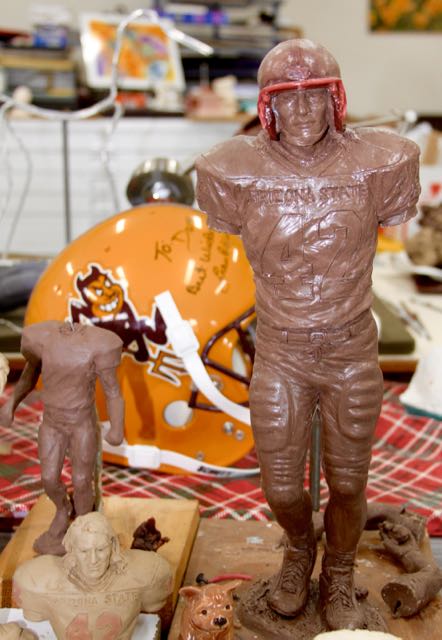
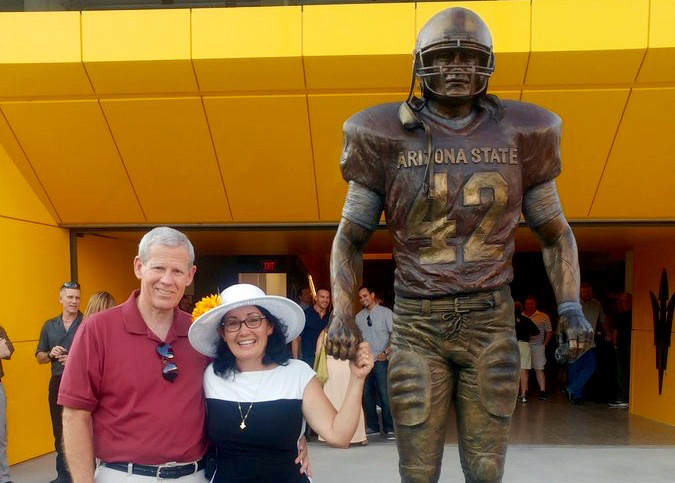
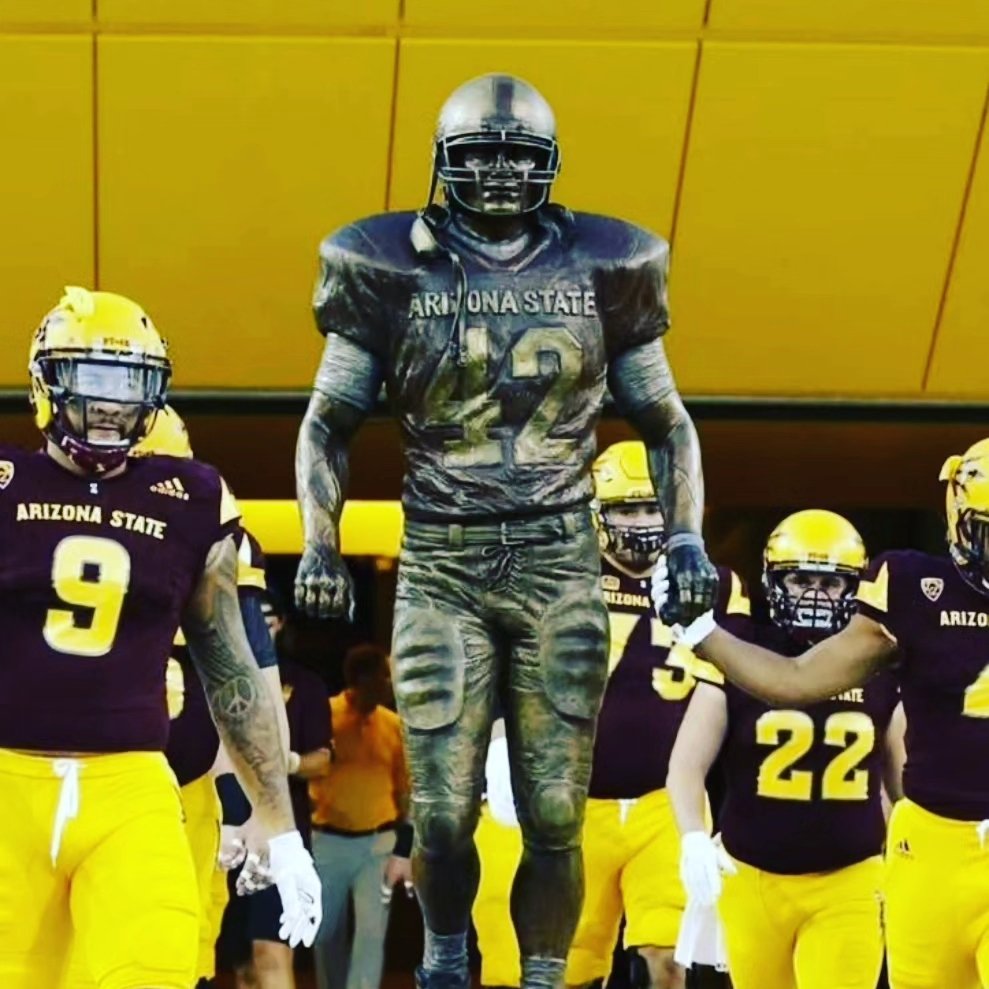
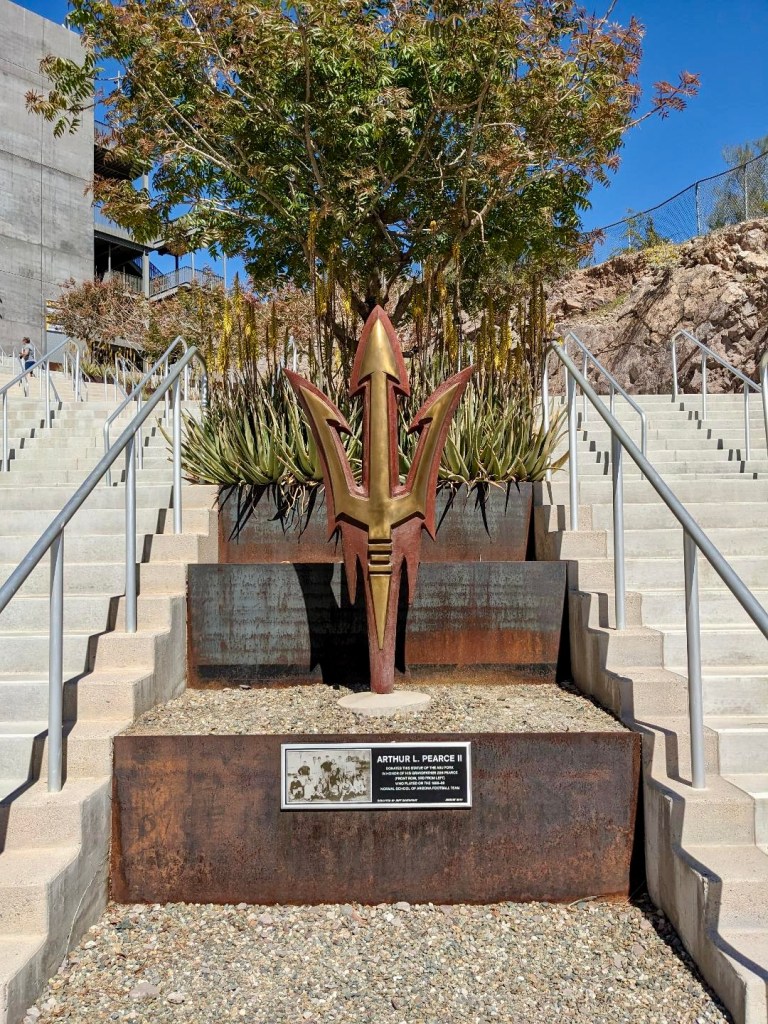
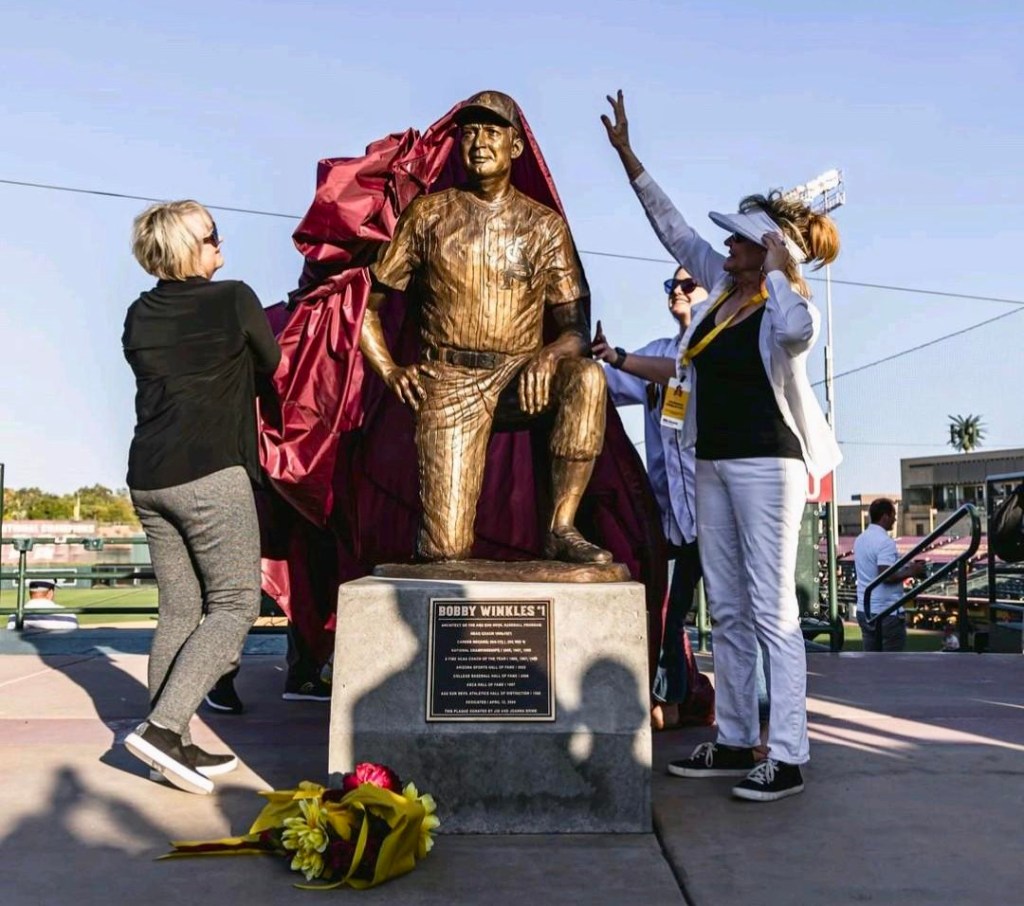
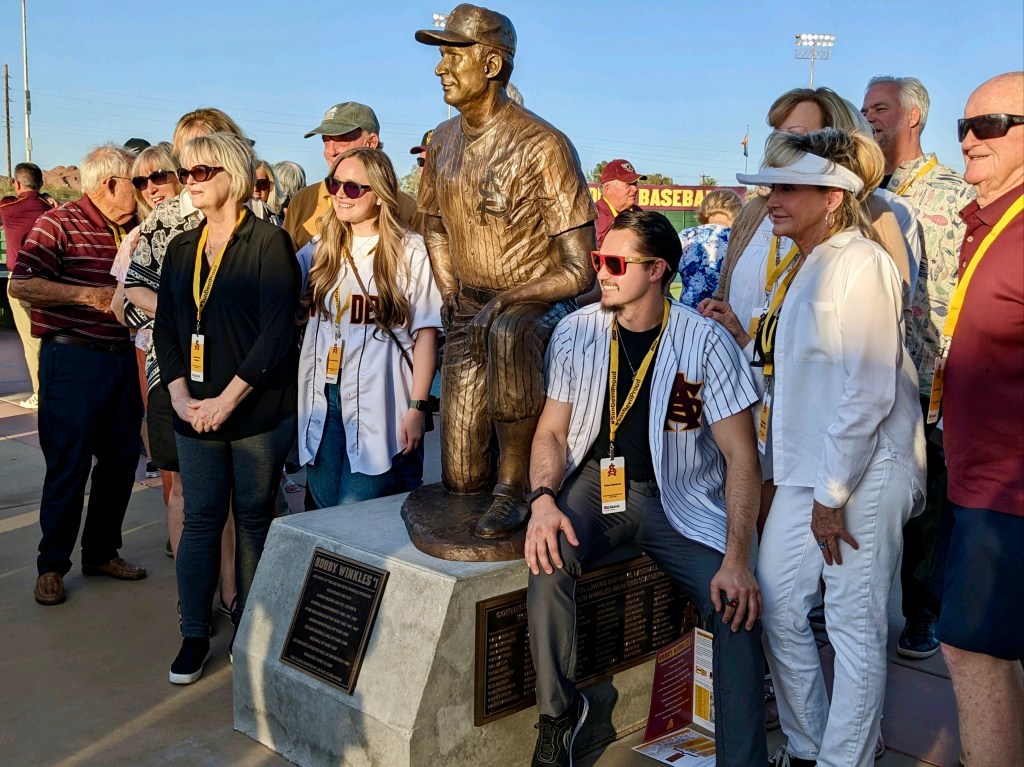
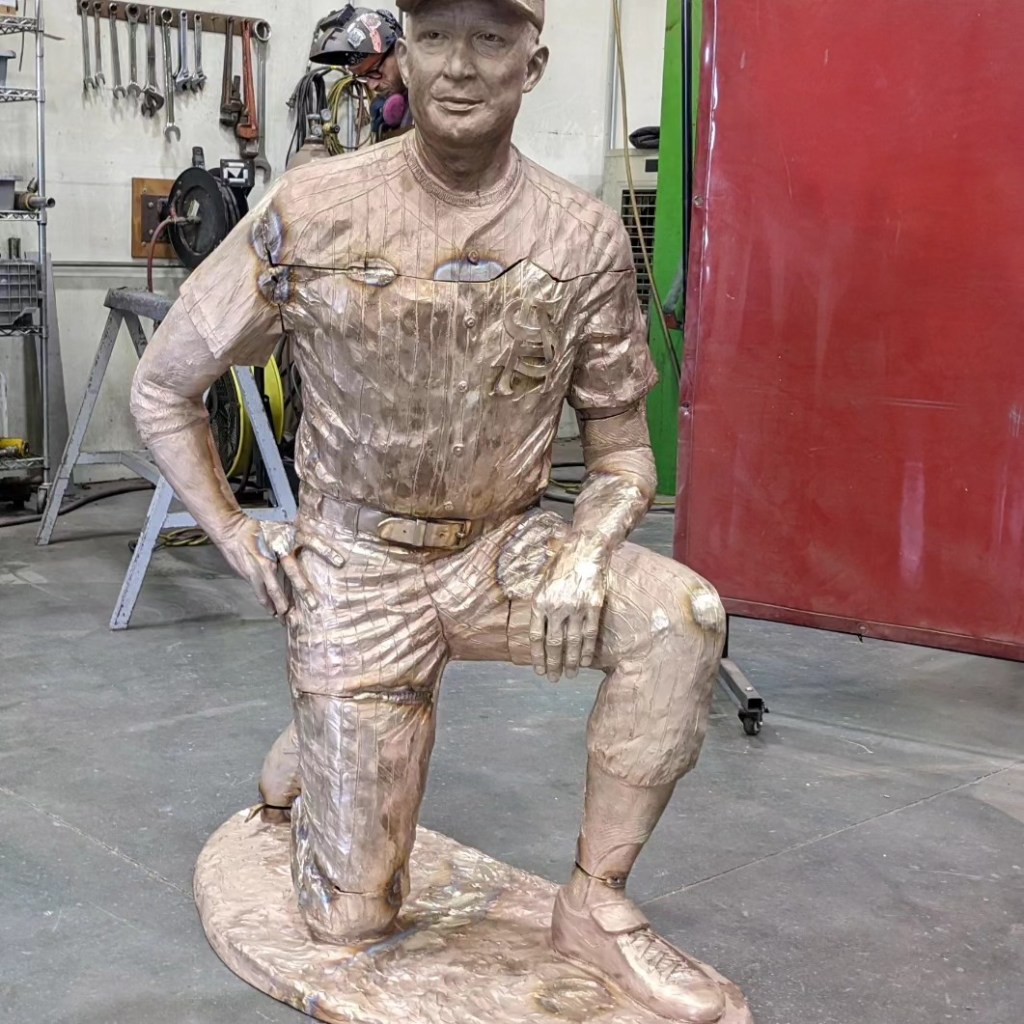
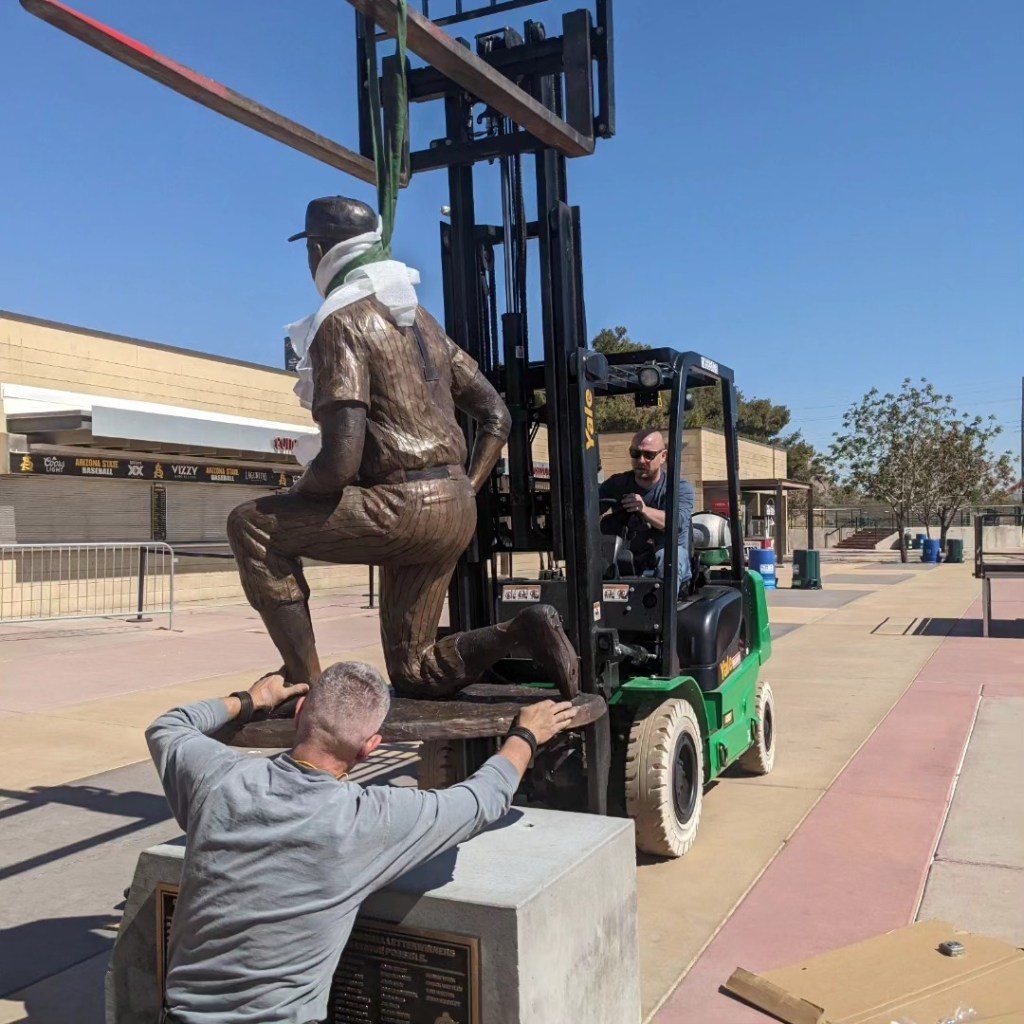
Jeff’s latest creation made the newspaper! She sculpted a life-size bronze statue of Pat Tillman posted at ASU’s Sun Devil stadium near the entrance of Tillman Tunnel. Arthur Pearce II provided funds for the statue and commissioned Jeff to do the piece.


TillmanUveiling
Left: Jeff & Art Pearce at the Pat Tillman statue reveal, ASU Sun Devil Stadium, August ’17.

Tillman is remembered as a former Arizona Cardinals and ASU football player who enlisted in the U.S. Army in June 2002 in the aftermath of 9/11, and who, as an Army Ranger, was tragically killed in Afghanistan in 2004 by friendly fire.


JeffTillmanModel
Jeff sculpting the Pat Tillman maquette, or model.


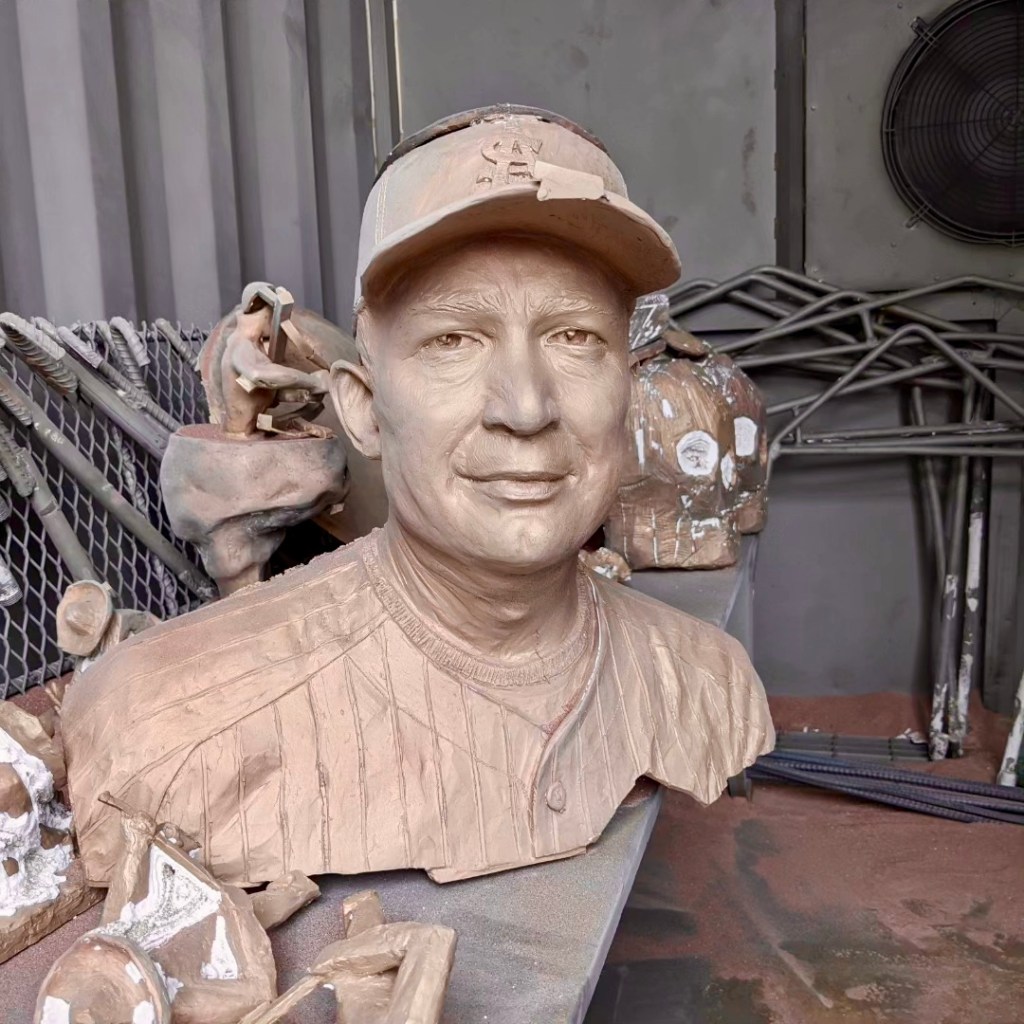
Jeff sculpted the 16-inch maquette, or model, in clay from a photo of Pat with his long hair flowing and his ASU helmet in his hand. Officials at ASU however, asked to have Pat’s likeness crafted from photo of him wearing a helmet. She revised the model and re-submitted it to ASU.

IMG_0846
In progress: Jeff’s maquette of Pat Tillman.

They approved the revised maquette and Jeff proceeded to work with local foundry Bollinger Atelier to digitize the model into a 3-D image, which was then enlarged to 1.1 times life size and cut out of foam to form the core of the statue. The foundry layered the foam with clay between 1/4 and 1/2 inch thickness all over.

Jeff later crafted the letters “ARIZONA” AND “TILLMAN” and laid them on the life-size clay sculpture. When she made the 16-inch maquette, it was too small to place raised lettering on the jersey.

The 6-foot, 400-pound statue was revealed in a dedication ceremony on Wednesday, August 30, 2017, and Jeff, her mother and husband Mike attended as special guests. With the statue’s unveiling, ASU’s new pre-game ritual involves players touching the statue as they run onto the field.

IMG_0839
Jeff with the clay-covered core sculpture after the mold was made.

The entire process of producing the statue was emotional for Jeff, who, as an ASU graduate, followed Pat’s career and story.

How did a young Amer-Asian woman become a bronze sculptor?

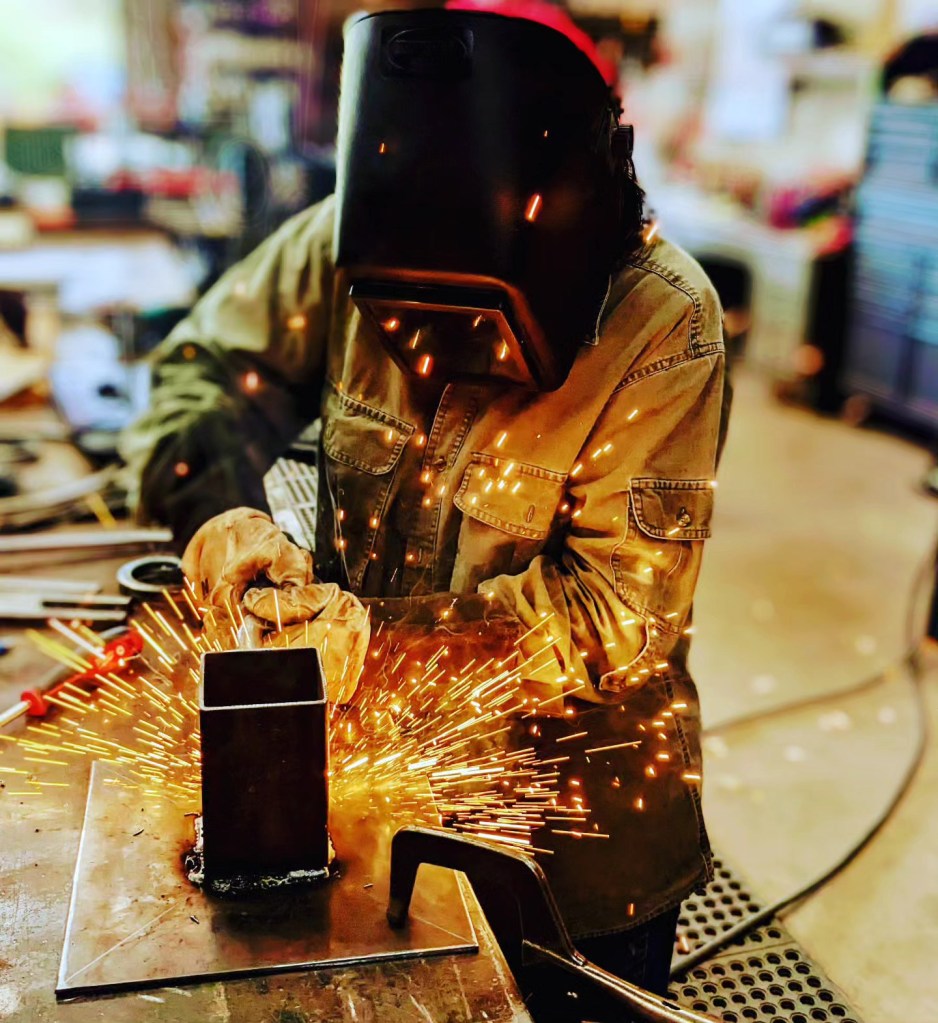
After studying fine arts at Northern Arizona University (NAU) in Flagstaff, Jeff worked as a metal chaser at Beyond Bronze Foundry in Colorado, where she welded parts together, ground down metal to clean seams and other surface imperfections to make just-poured pieces look like one complete piece.

Back in Tempe, though, her parents had opened a Japanese restaurant and asked Jeff to come help out, which she did. Next, she began her 25-year stint at Arizona Bronze (now Bollinger Atelier), a foundry in Tempe, Arizona, where she worked as a metal chaser, then switched to wax works when the pneumatic tools caused her hands to hurt. Jeff used dental tools to take down wax seams and design the gating system that feeds the bronze into a mold. She also learned the art of mold making.

IMG_0848
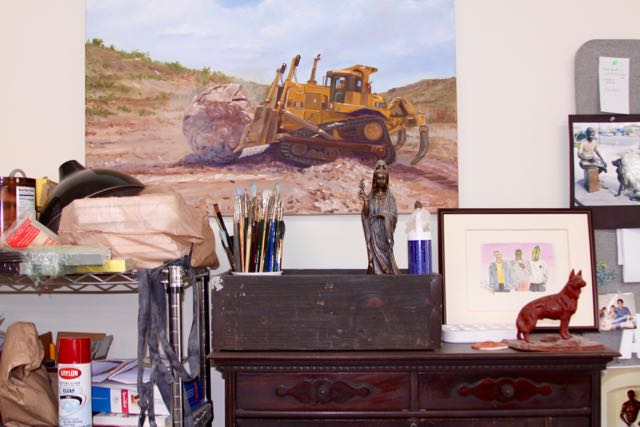
Miscellaneous pieces Jeff crafts as demos at school for her students.

“I love making molds!” Jeff said. “You must be methodical and plan everything out. It’s an engineering feat in mixing the rubber, brushing it on and them pulling the rubber as it sets.”

The one thing Jeff has never done at either foundry was pour the bronze. She also did not work on patinas for foundry clients, however, she occasionally adds patinas to her own works.

“To add a red patina to Pat Tillman’s ASU jersey, and a hint of gold to his pants,” Jeff said, “I brought in Aiya Jordan from San Francisco. Aiya is also an ASU grad and one of the best patina artists I know.”


There are at least 12 steps to producing a bronze sculpture and Jeff became intimate with them all during those 25 years. Here’s a five-minute video of a “How It’s Made” episode showing the lost-wax casting technique.

“I did the fine detail work on projects,” Jeff said. “If a piece required detailed precision, I’d have the stamina and small motor skills to make it right.”

IMG_0224
Jeff with Zebulon Pearce statue in Mesa, Arizona.

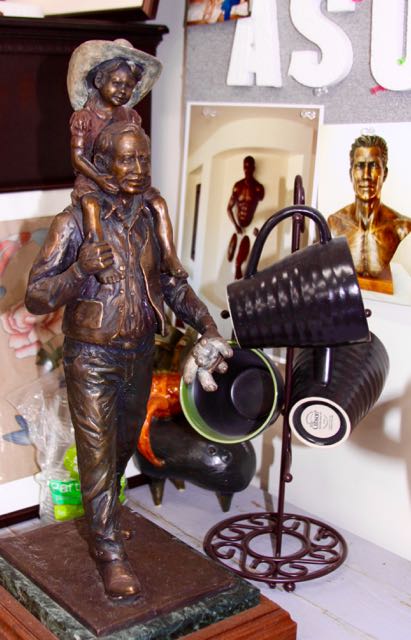
Having Art Pearce as a client means Jeff went from being a long-time employee of the foundry to being their valued customer. Before Pearce commissioned the Tillman statue from Jeff, he had asked her to create a bronze statue of his grandfather, Zebulon Pearce, a former Mesa mayor who owned the local Feed & Grain store on Main Street located at 155 W. Main Street. Zeb Pearce is also known for bringing Coors beer to the valley.

Like most folks, Jeff’s life hasn’t been all work. She married, had two sons Jeff and Cori, divorced and then married Mike, a retired NAU police officer, 21 years ago. Mike also has adult children; Michael, Lisa and Kyla. 

During her annual performance review 11 years ago, the foundry owner told Jeff her salary had topped out; if she wanted more money, she needed to work elsewhere.

“Like many people who hit a dead-end in their job,” Jeff said, “I considered going back to school to learn new skills.”


IMG_0860
Art Studio inspiration.

A Friend suggested Jeff teach art; the pay is okay and benefits are really good, especially having summers off! Jeff applied to an education program offered by the Deer Valley Unified school district and Arizona State University. Having a bachelors degree was a pre-requisite. Of the 22 students accepted into the program, Jeff was one of 11 who made it all the way through. 

IMG_0862

She started teaching 10 years ago, initially instructing 4th graders. Four years ago, she went to Sandra Day O’Connor High school to teach art and ceramics.

“I enjoy building relationships with the kids, and I learn so much from them, Jeff said.”

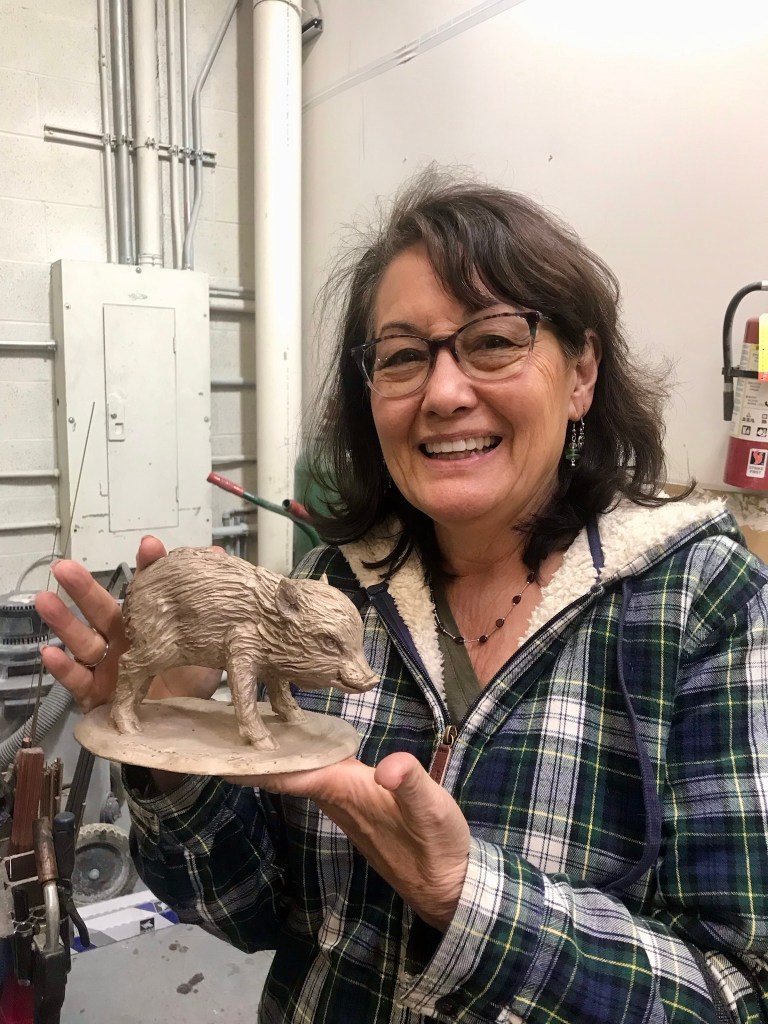
Jeff challenges herself to make something every day. In class, as the kids work on their sculptures, Jeff molds earthenware clay into small animals or abstracts. 

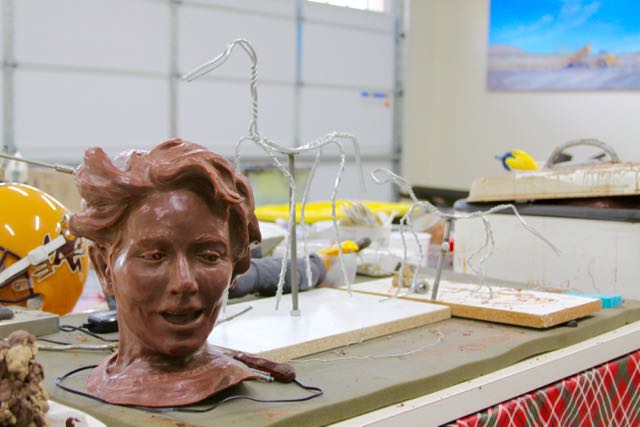
“Sometimes, the little thing I’m sculpting becomes the inspiration for a statue, like the boy playing soccer, called ‘Over the Rainbow.'” 

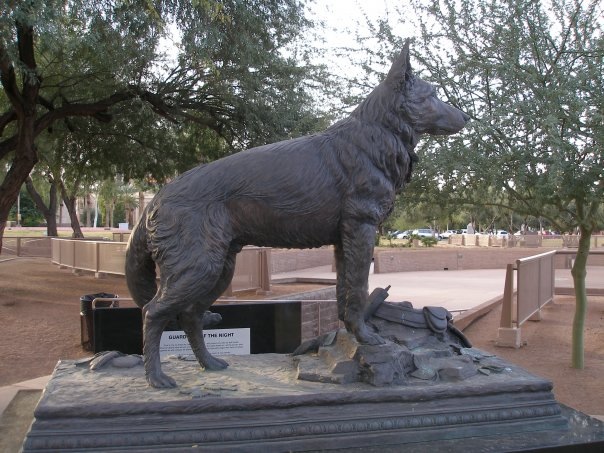
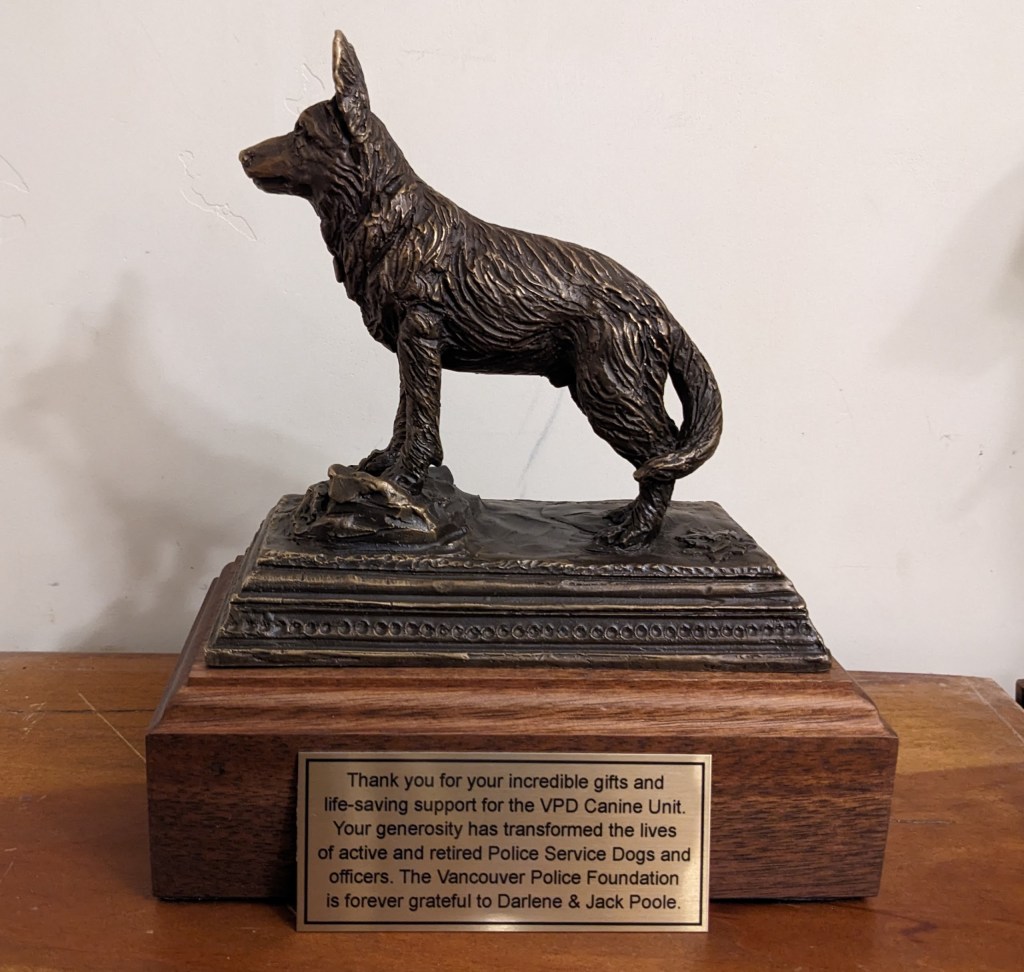
“Learning Together” won first place in the Prescott Valley art show and now sits in public spaces of Prescott Valley, Mesa, and Oro Valley. Jeff has other public sculptures, including the “K9 Police Memorial” at Wesley Bolin Plaza in Phoenix and Vancouver, Canada, “Charlie” at Wickenburg Ranch, and the “Scottsdale Police Memorial.”


IMG_0843
Boy’s head from “Over the Rainbow” sculpture, plus forms for making animals.

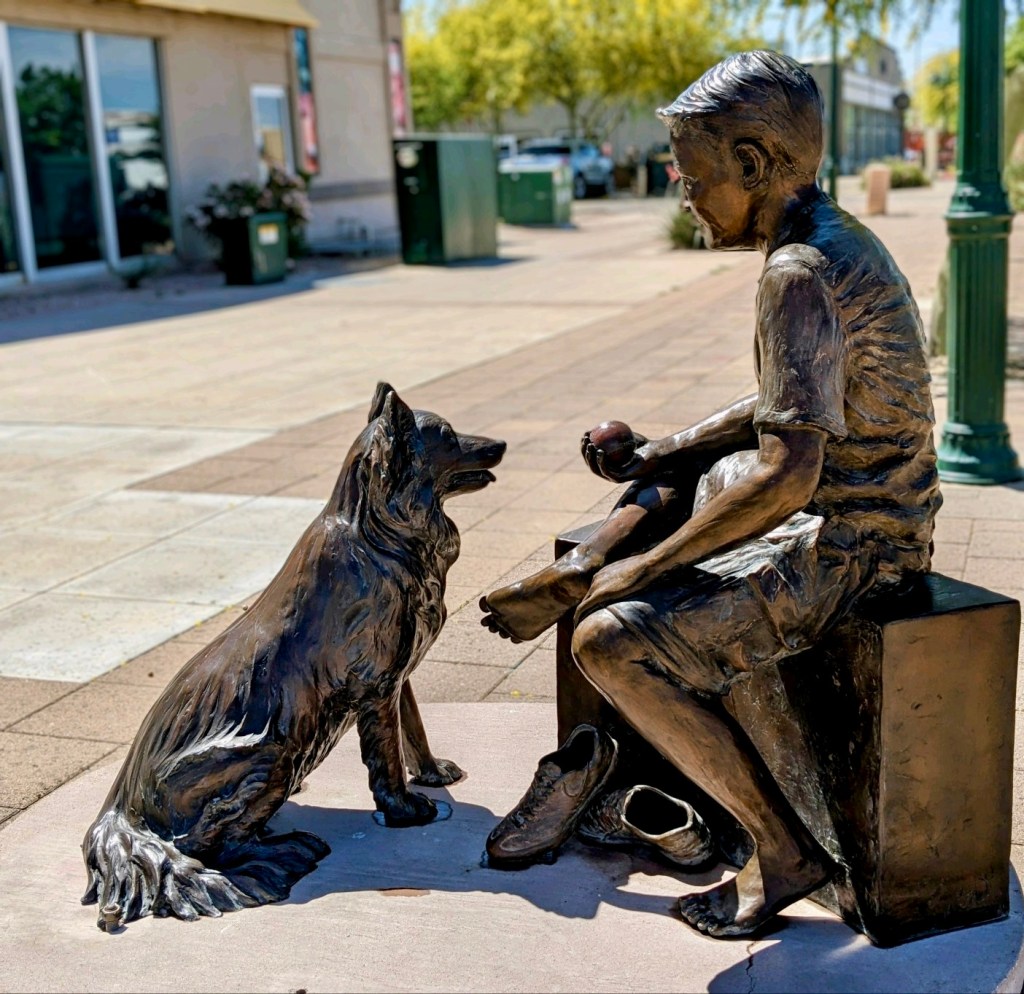
“Learning Together” won the people’s choice award and features a boy with a ball and a dog ready to fetch. Jeff has a knack for making her subjects appear weightless and buoyant, even though they’re cast in bronze. And her style touches hearts, as evidenced by the connection between the boy and his dog while playing catch.

Learning Together
“Learning Together”

Charlie was Merv Griffin’s dog, and Merv donated the land in Wickenburg that became the Dog Park where Charlie watches over the visitors. 

“When my students see my sculptures in a public place,” says Jeff, “they come up to me with eyes wide, asking for my autograph, and I remind them I’m still the teacher they’ve always known. I’m me.”

Even on the days when Jeff sculpts at work, she still arrives home and sculpts or paints. Usually, she works in her detached art studio, which she and Mike built in 2016. Their house in New River sits on a hill and their backyard looks out toward hills and into a valley. 

“I look around and am amazed at how much I’ve produced,” Jeff said. “I was in a local gallery one day and admired a little bronze piece, an alligator bag on the back of a horse sculpture, and I said, ‘how would they do that?’ The gallery owner said, ‘Don’t you remember, you made that?’”

Jeff laughs at having made so many tiny bronze items and not being able to remember them all. If an artist needed a small item for their sculpture, they would ask her if she would create it. She’s made everything from that small alligator bag for a horse, to guns, holsters, rabbits, cats, and even a cowboy riding an armadillo. The last item was for an artist from Texas.

IMG_0851
Musical instruments called ocarinas made by Jeff.

When Jeff’s students complain about not being creative, she asks them if, when they play video games, do they go through all levels the first day. “Of course not,” Jeff said, “the more you play, the better you get. It’s the same with sculpting, or anything you do. I’ve been sculpting for 40 years, which is why my students think it looks easy.”

Her advice for anyone who wants to make a living doing the creative work they love is to “keep with it. That’s what I was told by my professor. The artists who make it are the ones who don’t quit. Work, work, work. You get a little bit better each time.”


GALLERY OF STUDIO AND PUBLIC ART PIECES

IMG_0869

IMG_0871

IMG_0870

IMG_0859

IMG_0855

MikeJeffTillman (1)

k9
K9 Police Memorial

Scottsdale Police
Scottsdale Police Statue

IMG_0849
Jeff playing her handmade ocarina.

CharlieatWickenbergRanch
Charlie, Merv Griffin’s dog, at Wickenburg Ranch Dog Park.

Featured

Kit Carson, Jewelry Artist

Kit Carson is Alive and Well and Living in New River, AZ (at least for a couple more weeks)

Last night, Brent told me about a yard sale in our neighborhood where he spent two hours going through jewelry-making tools and supplies, including precious stones and gems.

“The house belongs to an artist named Kit Carson,” Brent said. “That’s really his name.”

Kit Carson is a well-known Arizona artist who sketches, paints, makes large sculptures out of rusted metal, and handcrafts jewelry. He moved to New River 25 years ago onto a 2-acre plot where he designed and built his stone house, complete with metal framing around interior windows and doors.

Brent, thrilled with his haul from yesterday (particularly the price) spreads his treasures over our dining room table. Some are pieces of Kit’s jewelry in various stages of completion which Brent plans to use in his own jewelry one day. His jewelry-making supplies are in his office closet and eventually he’ll bring them out, set them up and cast silver and gold pieces with inlaid stones.

“He’s having the yard sale all weekend,” Brent says. The way he describes Kit’s house and yard makes me want to go.

When we turn onto 20th Street, the big yard sale sign from yesterday is gone. We park at a trail head in front of Kit’s house, to keep his yard open, and find him on the front porch. Kit is tall and slender, wearing sunglasses and a hat against the determined morning sun as he organizes things.

“Your sign is gone,” Brent tells Kit.

“Really?” Kit says, “Hey, I recognize you from yesterday.”

“Yeah,” Brent says, “and I brought my wife this time.”

Kit’s friend Linda is coming over to help with the sale and he says he’ll wait until she gets there before replacing the sign. The missing sign is a great opportunity for us to take a very careful look around the yard before other people begin to arrive.

Kit’s house sits on the edge of his land facing Tonto National Forest, a glorious desert valley that rises up to tall mountains and plateaus as far as the eye can see. The house sits on a rise and across his yard is a half-round metal building looking like a military barracks, with a wood shelter built over the top, and barn doors that enclose the building. His workshop is in the barracks. Three feet from the workshop is an art studio with white walls and a large table down the center, a big picture window facing Tonto. Attached to the studio, and connected by a door, is a garage. The studio and garage have items for sale, but I’m more interested in the neglected antiques scattered about the grounds.

Kit recently sold his house because his “need to be in Prescott, his hometown, right now is more important than me being in New River.” When the house sold, he told the new owner he’d clean up the yard. Thus, the yard sale.


Kit-House
The 1,200 square-foot house that Kit Carson designed and built.

Kit will continue to make art in Prescott, and so he’s taking a lot of things with him. Those items are marked NFS (Not For Sale). Of course, they’re the pieces everyone wants!

I’m looking at auto parts when he opens an old Frigidaire next to me and says, “I think I want to keep this. Put in a couple of glass shelves and a light and it will make a great cabinet for storage.” It’s a fine old fridge with curved lines and a handle that works securely. The patina is perfect. I notice a $150 price tag. Not only does Kit keep finding things he wants to keep, he tells me he actually took a couple of things out of a customer’s hands the day before, refusing to sell them.

Obviously, even though he’s made the mental decision to move to Prescott, it’s emotionally hard to leave his custom-built home of 25 years.

In his 67 years, Kit collected metal pieces from everywhere he traveled. “Every piece you see out here,” Kit says, “I loaded into my Nissan truck from somewhere and hauled it here.” All over the yard, Kit has organized the pieces, mostly metal, into his “Library of Visual Solutions,” which includes gears of every size from every type of machine; automotive parts; discs from tractors; aluminum serving dishes; hubcaps; scrap metal; chunks of colored glass; drill bits; lighting fixtures, ceiling tiles; mid-century lawn chairs; oil cans and on and on.

Everything is old and covered in rust. I carefully go through boxes on the porch of the workshop then wander out back and spend the next two-and-a-half hours sifting through the Library of Visual Solutions. A nearby blooming Palo Verde has attracted so many bees, they provide a steady buzz as the sun warms the surrounding metal.

The weather is ideal for being outside on a Saturday morning. High of 78 and a breeze. I find a white box and stick in a tiny, old porcelain heater used for target practice. Then I find another tiny, porcelain heater, turquoise and not as beaten up. It still has the little door on hinges, though the door is rusted. Into the box it goes.


LibraryofVisualSolutions
The Library of Visual Solutions.

Here’s a wire light cover, and here’s a rusted oil can with no bottom. What about this metal dashboard with speedometer? Wonder what kind of car it’s from. Into the white box. Metal drawer pulls go in. A piece of rusted wood stove, two rusted ceiling tiles and a railroad lantern (unfortunately without the glass globe) go in.

‘These items, very farmhouse chic as popularized by Joanna and Chip Gaines, would sell so well on Etsy,’ I think. Maybe I should start an Etsy store as my cousin Sonua suggested. She thinks people would go crazy for photos of my cat in my miniature dollhouse. She’s probably right. Who doesn’t love a damn grown cat trying to fit into a miniature dollhouse? I could sell cats in dollhouses and rusted stuff.

“This is the light area,” Kit says, indicating the ground around him as he picks up a section of a mid-century modern floor lamp, the kind with cone-shaped light fixtures that can point up or down. “I used one of these fixtures on my outdoor shower. Go look in my backyard and check it out.”

Clearly, Kit has a sense of humor that comes across in his art. A toaster sculpture has a butter knife wedged into one slot. A giant tractor, at least 20 feet long and 7 feet wide, sitting in his front yard was bought by a client who lives in Cave Creek. She plans to place it between two large Saguaros in her yard. “There’s a tricycle on the very back,” I point out to Kit, “in case it’s not supposed to be there.”

“The tricycle goes on the very front of the rig,” Kit says, “to act as the new power source.”

I walk up to his house as suggested and admire the stone work. The deep porch faces Tonto National Forest and features old lantern lighting fixtures. He’s topped off his side banister rail with chunks of colored glass and laid tiles into the concrete walkway.


Kit-FrontPorch
The front porch entrance embellished with metal, colorful tiles and glass chunks.

At the back door, which has a decorative, one-of-a-kind metal screen door, a vertical window is filled with colorful glass pieces. underneath the window, Kit randomly placed colored pieces of glass in the mortar between stones so it looks like they’re tumbling out of the window and onto the ground.

Next to the window is the outdoor shower with the lamp fixture over the shower head. In the back, over his patio, he’s welded gears and hubcaps and bicycle wheels to make an interesting eave. His house is his art. And his art is inspired by Spain’s Antoni Gaudi (that great architect of the La Sagrada Familia, Park Guell, Casa Vincens, etc., who believed in making things by hand, and using mosiacs) and Art Nouveau imagery.

As the white box fills up, I find a metal wire container that’s a prize in itself and begin filling it: six Japanese glass floats that Kit picked up on the beach near Homer, Alaska; a deep silver platter weighing a couple of pounds and tarnished black; a large brass bed knob; an acrylic drawer pull with brass fittings; a white enamel light fixture; two child’s chairs, rusted, which will make great plant stands once I replace the seat with mosaic tiles; several car taillights with real glass and metal casings; an antique refrigerator handle; a mid-century modern lamp once painted, now rusted but ready for re-wiring; and my favorite find, two cast aluminum sconces with scroll work fronts.


Kit-Sconces
The aluminum sconces are my favorite things (and need cleaning) but I also love the little round turquoise heater with it’s rusted door, and the mid-century modern lamp for its shape, even though the paint has rusted away. Someone used the little green enamel heater for shooting practice, but it will make a unique planter or vase by placing a glass cylinder inside. The antique boat handles all speak to me.

Etsy buyers would go nuts!

Linda arrives and begins helping. She’s very thin, a retired school teacher and friend of Kit who once rented Kit’s art studio for two years just to sit on the porch and gaze at theTonto National Forest. “He’s a very famous artist, you know,” Linda tells me. She points to a rust-covered lighting fixture Kit welded together with scroll work and a fleur de lis as centerpiece. The price is $575. “That’s a deal,” she says. “Some of his clients will pay up to $10,000 for a commissioned piece like that.”

Everything needs cleaning, but Brent cautions me to not clean too much for fear it would remove the gorgeous patina. “That’s why Kit has these things outside,” he says, “so they’ll rust, and so the bronze and copper pieces will turn. If you burnish too much, you burnish away what makes them valuable.”


Kit-MoreJunk
More stuff, including the Japanese glass floats, wire basket and rusted children’s chairs that I plan to convert into mosaic plant stands.

I hold up a very heavy, rusted item that looks like a big, round microphone from the 1930s. “What’s this?” I ask. “That is a burner,” Brent says. “The gas goes in through here and the flames come out of these perforations.” It looks like a sculptural piece to me.

“Can I use your sandblaster to remove the rust? What will it look like?”

“Sandblasting will remove the rust and all you’ll see is the cast iron underneath. It’ll be gray.”

“Will this last a while or rust out?” I ask.

“That will outlast you,” Brent says. “That will out last you by five times.”

Brent and I daydream together sometimes, talking about one day building a greenhouse in the backyard with an attached She Shed for my writing space. He’s looking for fun pieces to display, and maybe even lighting fixtures to use in the greenhouse. The aluminum sconces I place in the wire basket will be perfect on either side of the She Shed door, inside or out.

After Kit runs up to 20th Street and Circle Mountain Road and re-posts his big yard sale sign, more and more people begin to stream in, heading into the art studio and garage, where Kit’s expensive art pieces are on display. Some men wonder out of doors through the Library of Visual Solutions, but most folks are inside missing the real show outside!

However, Kit is a musician, too, and his electric guitar is set up in his studio, so he turns it on and plays a little rock, the perfect background music for treasure hunting. So there really is a show inside, too!


Kit-GreenHeater
This little enamel gas heater is probably my second favorite thing, after the sconces. And it still works, though I wouldn’t enjoy the live flame or fumes.

Brent finds a gorgeous, handmade box, about 5 x 4 x 3, made with dove tail joints and pegs and solid-working brass hardware. He’s going through all the jewelry items again, which are mostly in tiny zip-lock bags, and puts his picks into the box. I see a hair barrette made of brass with a craved design and put it into Brent’s box. Then I find an intriguing brass circle and put it in there, too.

When Brent shows Kit the box, to settle on a price, Kit picks up the brass circle and says, “I cast that from a level case. Then I put the level it in, and attach the whole piece as a belt buckle. You can tell if you’re level.” He laughs. I like it, and knowing it’s his handiwork makes it more meaningful.

Brent takes the brass barrette out of the box and places it on the table, not realizing I had put it in there. Kit picks it up and says, “I made that when I was about 22 years old,” and he puts it back in Brent’s box. The barrette has a very delicate carving of twisting ribbon. Considering it a piece of art, I’m proud to have it.

As I’m taking one final look around, Kit comes over and shows me a small black plastic level, the type he used to cast the brass circle. And then he puts it into my hand and walks away.


Version 2
Kit’s custom back patio.

We load our goodies in the truck and head south on 20th, bumping along on the dirt road listening to all the metal items clanging, moaning and squealing in the jostle. I feel like Granny sitting in her rocker on top of the Beverly Hillbillies truck crammed with their rustic possessions.

“Dang, Honey,” Brent says, “sounds like The Grape of Wrath in here,” and I can’t help but burst out laughing!


RESOURCES

  • Kit Carson – Craft in America Video: http://www.craftinamerica.org/shorts/kit-carson-segment/I really like this 7-minute video because we see New River. It’s shot in his yard and the Tonto National Forest, which is basically his front yard. Kit does a great job of explaining his inspirations and process. Views of his property show his Library of Visual Solutions, his stone house and workshop.
Featured

Mary Jo Strauss, Painter

Mary Jo perfected the art of hair styling before she plunged into painting with all her heart.

Mary Jo Strauss, Artist

Her mediums: oil, acrylics, charcoal, pencil

Her website: maryjofinearts.com

img_9666
Mary Jo with her latest work-in-progress and little Topo yearning to be petted.

Human hair was Mary Jo’s artistic medium-of-choice for 30 years. She didn’t card human hair like wool and knit animal sweaters; the hair was always attached to the human. Instead, she used her design skills, color sensibilities and shears to transform the coiffure of thousands of Manhattan women for nine years, and then for hundreds of Steamboat, Colorado, women as proprietress of “The Gallery” for 20 years.

Mary Jo retired from being a hair dresser in 2013 and lives with her electrical engineer husband, Hans, in New River, Arizona, on a dirt road that climbs past their home and meanders up the base of Apache Peak. Raw desert views surround and city noises do not penetrate, just silence marked by the occasional rooster crow, propeller plane or all-terrain vehicle. Hans, originally from Norway, can often be found in the yard, spreading gravel, and building walls and botanical gardens designed by Mary Jo. Their shared vision has manifested in little niches of delight.

IMG_9687.jpg
A small zen area made peaceful by Mary Jo’s wall and colorful planters.

Mary Jo sketched and painted for most of her life. At age 8, she was invited to attend a summer program at the Art Institute in Dayton, Ohio, where she was born and raised. “I was naturally drawn to painting,” Mary Jo said, “and always gravitated toward painting models in magazines like Seventeen and Glamor. My paternal grandfather was a chemist who painted portraits and landscapes as his creative outlet. When I visited, he’d play Opera and we’d discuss the art of painting.” Mary Jo had seven brothers and sisters, so support for her passion from her parents wasn’t strong, even with a grandfather who painted.

Mary Jo bought her first paint-by-number set at age 12. She saved the paint and brushes so she could paint on paper plates or on paper her father brought home from his paper salesman job. In the 6th grade, she won a safety poster contest, beating all other entries from across Dayton, Ohio, and was awarded $15, in addition to having her poster printed. Affirmations of her artistic talents continued over the years, with the exception of an episode with a nun in her Sophomore year of high school.


rhino-maryjostrauss
Departure 48″ x 36″ oil on canvas.

The assignment was to paint a landscape picture. “I actually painted from a photograph I had taken,” Mary Jo said. “My instructor, a nun, saw the photo on my desk, took my painting up to the front of the room and ripped it up in front of the entire class. She then said, ‘Mary Jo will grow up to be a convict and will be thrown in jail because she copied from a photo.’”

“In that instant,” Mary Jo continued, “I knew I had to get out of that school. I forged the principal’s signature on some paperwork so they would expel me, which they did. When I switched to a public school, the art teacher encouraged me and I ended up winning an award in Cincinnati, Ohio, for a sculpture. He made me realize I could actually go to college even though the Catholic school insisted I wasn’t college material.”

Mary Jo studied painting at Ohio State for two years and later returned to college to study interior design. She also dreamed of becoming an architect, and a few years later found herself in jobs that used her creativity. She worked with a Denver architectural firm and was being trained in lettering and rendering. She also worked for a silk-screening company designing t-shirts. Eventually, while Mary Jo moved between Steamboat, Colorado, New York City and Scottsdale, she went to beauty school in New York.


IMG_9686.jpg
Gorgeous water feature and wall designed by Mary Jo and built by Hans.

“I was lucky to be hired at Henri Bendel,” said Mary Jo about the iconic 120-year-old women’s speciality store. “I worked at the salon of Jean Louis David in Henri Bendel. I received top-notch experience for nine years. It’s a famous store with famous clients, so working there was always interesting and fun. Also, in those days, Studio 54 was the place to be after hours in New York, and as a hairdresser we were always welcome to come right in.”

Life happened while Mary Jo was making other plans. She married, her son Tyler, and later divorced. Back in Steamboat, Colorado, she opened “The Gallery.” Why call a hair salon a gallery? “I had an art studio in the building and sold my paintings. However, within six months I was so busy with hair styling I quit doing art, except for the occasional sketch.”


greatdane-maryjostrauss
Lover Boy 48″ x 36″ mixed media.

mycontessa_600_pixels
My Countessa – 36″ x 48″ oil on canvas.

bluerhapsody_600_pixels
Blue Rhapsody – 30″ x 40″ oil on canvas.

Mary Jo may have quit doing “traditional” art during those years, yet it’s clear she simply channeled her artistic talents into being a hair designer… and many women benefitted!

There are a lucky few of us New Riverites who have the privilege of wearing Mary Jo’s artwork on our heads these days. Hans installed a professional salon sink and stool in her art studio, enabling Mary Jo to continue her hair artistry. It’s like going to a Henri Bendel’s hair dresser, but at a much lower price and only a short walk through our neighborhood.

In recent years, Mary Jo has created several large paintings, some of them multi-panels. A few pieces of her work are exhibited at Easy Street Galleria in Carefree, Arizona. In fact, one of her 8′ x 4′ foot paintings was chosen from among the gallery’s many offerings to be exhibited on the exterior of the gallery. One client commissioned a 9′ x 5′ foot painting, which Hans helped her build and install in the client’s Cayman Islands home.


IMG_9647.jpg
On left Heart of Gold 36″ x 48″ and on right Heartfelt 48″ x 36″. Both are acrylic on canvas with gold leaf and 3 layers of clear acrylic resin.

Hans is as much a creative partner to Mary Jo’s painting career as he is her life and business partner. He moved to Steamboat to help Mary Jo when she started her wholesale company, Rodeo Cosmetics, and two retail stores, Cowgirls and Angels, and Yippie-I-O.

Hans builds the framework for many of her paintings and helps coat some of them with epoxy. He even encouraged her to go to Bali for two months in 2013 to study with an abstract master painter, Carja. Mary Jo had just retired from styling hair and was ready to get serious about painting. She ended up extending her Bali trip an extra month after adopting three baby monkeys and helping to raise them until they were placed in good homes.
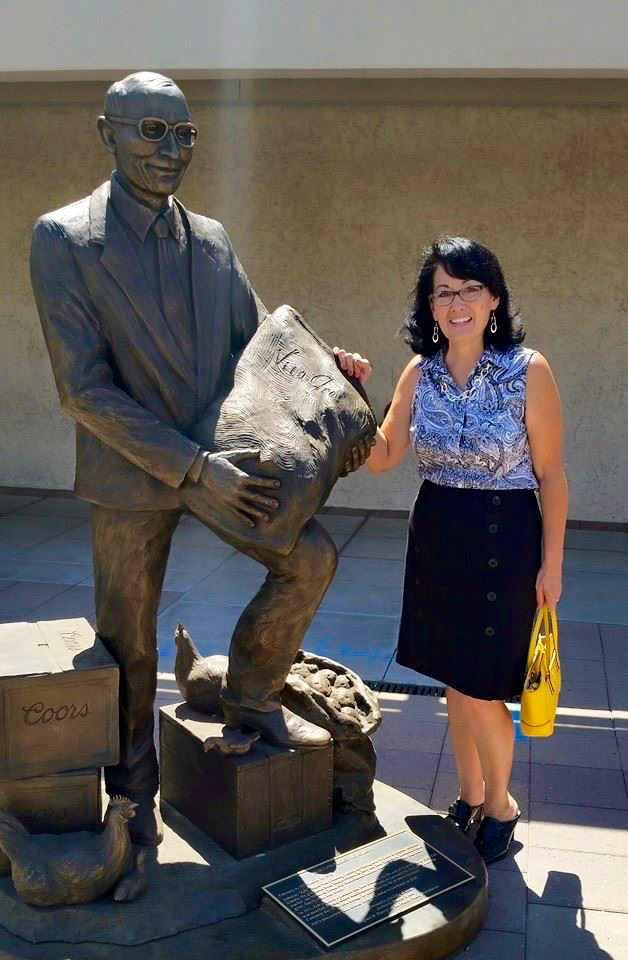
Carja is known for his huge abstract paintings. “He didn’t teach us how to paint,” Mary Jo said. “He taught us how to paint from within. He’d tell us to close our eyes and mix paint colors, and feel it. He gave me permission to let go of rules and open up to painting from my emotions. He told me to just paint, every day if possible. ‘You’re style will come,’ he told me, ‘and you’ll be selling your work within three years.’”

Mary Jo began selling her paintings soon after returning to New York.


IMG_9646.jpg
Glory of the Flower 24″ x 18″ oil on board.

Is Mary Jo a Feminist? Maybe not a politically active feminist, but her work has always centered on helping women feel good about themselves, and not just on the surface. While making and selling women’s beauty products, and styling hair, Mary Jo mastered the art of connecting with her clients on topics that matter. Topics that nurture the heart and mind, then work their way outward. People find it extremely easy to relate to Mary Jo and often feel immediately comfortable with her.

It’s no coincidence that from an early age, Mary Jo was compelled to draw women. She has three examples of early sketched portraits framed in her guest bedroom, and her latest project was inspired by the 2016 presidential election results. “I was at an appointment the day after the election and the technician, who was African-American, told me her little girls had asked at breakfast that morning, ‘Does this mean they will bring back lynching?’ She and I both cried, and I knew I had to portray in my art that emotional state of women and minorities. I went straight to my studio and started painting.”

Her focus on women has come full circle.


IMG_9662.jpg
Mary Jo poses next to her earlier women’s portraits.

Mary Jo is painting the new women’s series on textured wallpaper given to her by her brother. She leaves the side edges raw. “I didn’t realize how difficult it would be to paint over the textures, but I was drawn to the paper for this series as a representation of life’s complexity. Plus, my brother, who gave me the paper, is a member of the LGBTQ community, and I’m painting to give expression to all minorities and groups often ignored or, worse, vilified.”


IMG_9653.jpg
River of Tears 44″ x 35″ Mixed media: the first in Mary Jo’s women’s series.

IMG_9651.jpg
They Say I am a Dreamer 38″ x 28″ mixed media: the second in her women’s series.


Love is my Alibi.jpg
Love is my Alibi 38″ x 32″ mixed media: Work-in-progress.

Mary Jo’s well seems bottomless as she focuses outward, listening like the professional she is after years of bonding with her clients. But Mary Jo has a rich inner life, the source of her creativity. And that’s what we’re here to talk about!

Q&A

Q: How do you describe your creative drive?

A: There’s a special feeling I get when I’m connected to my art. Like a high, or an adrenaline rush. I like to get some good music going and just lose time and get into the space. It’s the same feeling I get when I do something for someone else. I’m inspired by photographs and live entertainment. My response to learning more about elephants as endangered species was to paint them. My current project, a series of charcoal and oil paintings of women, came from watching Trump disparage and objectify women. My portraits emphasize the humanity in women.

Q: How have your life lessons contributed to your art?

A: I started out in life being a people pleaser and wanting to be loved. I wanted to prove to myself that I could be good at something, and that I was a survivor. It made me strong and brought me to this moment where art is central to my life.

Q: What is some good advice you can give creative people trying to start their own art thing?

A: Get a sketchbook and keep it with you, place it on the night stand next to your bed. Sketch before you fall asleep and when you wake up, and any time during the day. Close your eyes and sketch. Sketch your feelings. The more you create, the more comfortable you’ll become creating.

Q: Who influences your art style the most?

A: My brother’s partner, Sylvan, was an amazing artist before he died of AIDS. He taught me how to use leafing with gold, bronze or silver, and I still use leafing today. I also appreciate Georgia O’Keefe and never fully appreciated how similar our styles are until I moved West and began painting cow skulls and flowers.

Mary Jo’s Cre8-Space


IMG_9669.jpg
The essentials.

IMG_9668.jpg
She uses the magnifying glass while painting details.
IMG_9675.jpg
Mary Jo and Topo relax in her art studio’s salon chair.

IMG_9672.jpg
More supplies easily at hand.

IMG_9700.jpg
Mementos from her life, each with a story about someone or something she loves.
IMG_9702.jpg
Mary Jo’s Cre8-space is organized!
IMG_9682.jpg
Inspirational pretties from Morocco (top shelf), Mexico (black pieces) and Bali (remaining items, including stunning beaded vessels).

IMG_9699.JPG
Family photos keep family in her thoughts; her mother’s photo is most prominent.
IMG_9681.jpg
An early work surrounded by clay vases.

IMG_9690.jpg
Succulents and other desert plants enliven Mary Jo’s dreamy back patio.

IMG_9694.jpg
Tree jewelry is a favorite!!

IMG_9696.jpg
Placing cacti in elegant pots is an art unto itself.

IMG_9695.jpg
Bright, living colors bring energy to Mary Jo’s Cre8-space.

IMG_9691.jpg
Good mix of reverence and humor in her Patio decor.

Cara Heard: Mixed Media Artist

Cara taught herself to paint, built Lush Art to teach others, and then sold her business 11 years later. She’s navigating this transition — mourning Lush Art while looking ahead to reinvent her livelihood. Find out how she’s doing. And how she does it with such wit and grace.

Self-taught artists rarely start a business where they get to teach others. But Cara Heard did. That’s how brave she is.

“I try to avoid fear,” Cara says. “Nothing good ever comes from living in a state of fear. People can get stuck in it.”

Starting a business of any kind takes courage. Cara didn’t just start a business while living amongst people who knew and loved her. Oh, no, she brought her teaching studio Lush Art from North Carolina to Warner Robins, Georgia, when her husband Jon got a job at Perdue in nearby Perry. She didn’t know a soul in middle Georgia.

Not a soul.

Cara wanted to lift souls up, though, so she created Lush Art as a safe space for creativity, experimentation, and growth, and where she enjoyed watching women blossom with confidence in their artistry. Through Lush Art, Cara built a team of instructors who taught adults and children from surrounding towns, and then a few years later moved the team to a 1920 Sears Roebuck Kit Home on Main Street in quaint Perry, Georgia — affectionately called “Perry-dise” by locals. Over the years, her the team and regular clients became family.
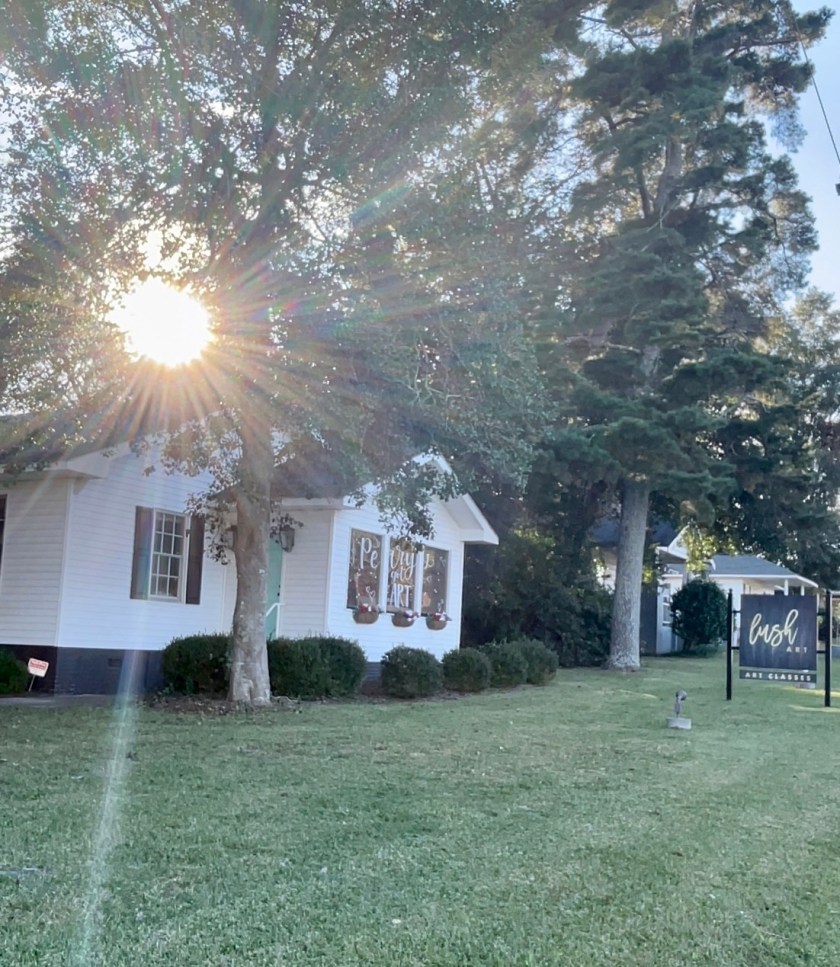
“Lush evolved into a vibrant community and a home for people to bring art into their hearts and minds,” Cara says. “While it started under the genre of ‘paint and sip,’ that term began to make me cringe just a year in because Lush Art had become so much more.”

Watching women blossom and celebrating each client was Cara’s barometer of how much her own cup was being filled through her business.

Just one class of regulars, loving their Lush Art experience with Cara (center bottom).

Cara likes change, seeks it out at times, and is resilient when change is pushed upon her. She likes trying new things and is continually learning, even from mistakes.

Running a small business requires that kind of curiosity and flexibility. As the years ticked by and Lush Art settled into class schedules for adults and summer camps for kids, the routine became… well… routine. Maybe even rut-like. The pandemic and its aftermath also seemed to change the dynamic of clients and their expectations.

“To learn something new we must be willing to be beginners again,” Cara says, “And I was seeing that people wanted to be masters right away. They didn’t have the beginner’s mind.”

Now when Cara would ask herself if her cup was being filled or drained, more often the answer was “drained.” Slowly — like the formation of an idea to divorce a spouse — Cara was feeling, but not quite seeing, a need to divorce herself from Lush Art; an acknowledgement that would take time to face fully, and one she couldn’t speak out loud for months.

“I was meeting with my Small Business Administration consultant and discussing my feelings about Lush Art, and she just said to me, ‘Sounds like you don’t want to be here anymore.’ And I repeated what she said, ‘I don’t want to be here anymore.’”

a Cara Heard original mixed media piece.

The first time Cara said those words out loud was the beginning of her current transition: putting her business up for sell, turning it over to a new owner, and figuring out how she wanted to make art and a living.

“They say selling a business is like a death,” Cara says, “And you go through the stages of grief.”

Even though Cara chose to sell her business, it’s her baby, existing because of her drive and hard work, and years tending to all the demands of a small business.

Like most people who identify with their job, Cara identified herself as being Lush Art.

“I’m still in mourning and I have to decide who I am without Lush Art,” Cara says.

Yet, the sell of her business couldn’t have been more perfect. Organic even. Cara sold it to Heather DeLoatch, a friend and long-time Lush Art instructor and manager.

Cara and Heather met years before when Heather was teaching English at Georgia Military College and bartending at Wartown Taphouse in Warner Robins. Heather was responsible for the menu art behind the bar and when Cara, a patron of the bar, saw the art she asked, “who did that?” Heather owned up, causing Cara to instantly say, “You’re going to teach art,” and Heather instantly responding, “No, I’m not.”

Guess who won? Cara convinced Heather to start working as an assistant at Lush Art… and eventually coached her to start teaching. When the manager of Lush Art moved away, Heather took on the management role while continuing to teach.

“After years of managing Lush Art, I felt comfortable doing the business side. When Cara decided to sell the business, my husband and I thought about buying it.”

Heather and her husband own Lumber & Ink, a woodworking shop, and are familiar with the ins and outs of running a small artist-based business, so they decided to buy Lush Art.

“I’ve always said my life is like an I Love Lucy episode,” Cara wrote on Instagram during the transition, “and I’m so thankful to have had Heather be my Ethel all these years. I’m so proud of who [Heather] has become and who she will go on to be.”

Lush Art Studio on Main Street in Perry, Georgia.

Now that Heather has taken over Lush Art, and added “Studio” to the business name, regulars can still find lots of fun and engaging classes at the old Sears house on Main Street. Plus, the studio instructors participate in local events held at unique venues — Main St. Bar in Perry, for example — where they share their love of art with folks from all over middle Georgia.

Over the years, using her collaborative instincts, Cara has coached people into becoming true artists and then coaxed them into becoming assistants and teachers, just as she did with Heather.

Adrianne Jones is another perfect example of Cara’s “proactive” mentoring style. An Air Force IT system Program Lead, Adrianne found painting at Lush Art to be therapeutic. As a self-described Type A personality, she felt challenged by Cara’s art classes where visual abstraction rules.

“Her classes wreaked havoc on my need for patterns, neat lines, and ordered blending,” Adrianne says. “I got into it so much Cara eventually dubbed me Blendy McBlenderson.”

Adrianne learned from Cara to let go and trust the process.

“I’m a HUGE trust-the-process fan,” says Cara. “I’m also a huge proponent of if-it-doesn’t-work, doesn’t-spark-feeling, isn’t-right… I’ll just paint over it.”

Adrianne enjoyed taking Cara’s cues to shut down her analytical brain while creating — without being concerned about the final product.

“I started working at Lush Art kind of on a whim,” Adrianne says. “Cara and I were out for drinks bemoaning the retirement of one of Lush Art’s favorite instructors. Since I’m a fixer, I was offering up a pep talk and said, ‘Cara, you have seven years worth of her paintings. Hire somebody to teach repeats.’ Well, guess who she hired to teach the repeats? Me!”

Cara creating a Mixed Media piece.

In her usual way of knowing what others need before they know themselves, Cara began giving Adrianne “assignments” that led to the creation of original artwork.

“Cara knew I loved a challenge and she dared me out of my comfort zone,” Adrianne says.

Adrianne expresses how inspired she is by Cara’s approach to living out loud, displaying emotions authentically, letting others know it’s okay “to be on the struggle bus with something,” showing her creativity by pairing wild colors and patterns in her clothing and art, and having the audacity to pursue “her big, crazy ideas,” all with “a strong dose of sarcasm and excellent sense of humor.”

Lush Art Studio has a new owner who’s building on the Lush Art family Cara started years ago, and continuing to grow the studio from the roots of courage, authenticity, and wildness planted at its inception.

“I’ve tended to meet people when they were going through some deep, dark shit,” Cara says. “And I’ve been thrilled to see people ‘trust the process’ using art to pull them out. And… perhaps a well-placed curse word or phallic joke helped, too.”

Cara, inspired by nature, with her plein air painting.

Cara, originally from Greenwood, Arkansas, spent her early career as a hair stylist, having ample opportunities to stretch her creative muscles while listening to her clients and giving them what they wanted. Styling hair may be the most difficult client-based service out there; one wrong snip and the client can be devastated.

Understanding each person’s needs and using artistic precision to cut and color hair taught Cara how to make people happy, one client at a time.

Later, as a stay-at-home Mom with her young son Griffin, Cara missed having that creative outlet and decided to learn to paint, not just to express herself but also as a way to decorate her home without spending tons of money on mass-produced art — which is still a point of contention for her to this day. (See the Appendix below for buying original art in the Macon/Middle Georgia area).

Through experimentation, Cara eventually landed on mixed media as her favorite form of expression.

One of Cara’s chairs in a series.

“I can’t just create, though,” Cara says about her creative process, clearly driven by her need to always be free to explore her way. We might even say Cara has a need to re-wild herself to find her creative groove.

“It’s like a book club,” She says. “If I’m told I have to read a specific book, my brain rebels and wants to do anything other than read that book. Sometimes I can fake it and make it happen but that’s rare and whatever I paint looks forced.”

Wanting to teach others to paint authentically from their gut makes complete sense for Cara, who uses color without hesitation to express her inner wild child. She might be an introvert, but her artwork shouts in brilliant hues.

“I spent a lot of time in my head as a child, have always had a big imagination and have always been a daydreamer. Is it manifesting? Is it a waste of time? Is it a way to relax? Who knows? Before I go to sleep I imagine things I’d like to happen.”

Cara in her element.

These days, Cara is looking for a balance between making art and making a living. Through Cara Heard Co she offers marketing consulting and content creation, and occasionally she teaches mixed media art (such as at Wesleyan College in Macon where I took her class). Cara also co-manages 478 Creatives, a group of artists, photographers, graphic designers, writers, ceramicists, etc., from all over Middle Georgia who meet monthly in Macon.

Cara and her Co-Manager of 478 Creatives, Erin Hawkins, a Macon-based muralists and graphic designer, each earn a small stipend that covers their management expenses but isn’t enough to support them. That hasn’t stopped Cara and Erin from creating a robust program for 478 Creatives members while pursuing their individual art careers.

“Cara is one of my favorite people to brainstorm with,” Erin says. “Her creative ideas are always inspiring and thought-provoking.”

Erin Hawkins and Cara Heart, Co-Managers of 478 Creatives.

Cara and Erin made a strategic move for their creative group by forming a partnership with the Macon Arts Alliance, providing the Alliance with access to the creative people they want to promote while also giving creatives a way to embed in Macon’s cultural scene.

Cara considers herself “silly and sarcastic,” but there’s nothing silly about Cara or her concern for others, including animals. Her sarcasm is light and humorous.

She doesn’t hide her emotions or thoughts, which most people appreciate as Cara being authentically Cara. She is kind, a smile at the ready behind her big blue eyes, but she’s also complex, formed of layers like the mixed media art she creates.

A Cara Heard original.

“I like layers,” Cara laughs. “The more layers the better. The reason I’ve latched on to mixed media is because there can be so many stories in the layers. I can hide things that only I know are in there. I also set an intention for each piece, or for the owner of the piece… And even after I forget what is hidden, I know the intention was good or powerful. I believe it gives the art energy.”

Not that she’s covering everything up. Cara delights in her clients finding the meaningful symbols she layers into their commissioned art pieces. After all, it was covering up “mistakes” that made Cara love mixed media.

“I started in mixed media by painting over paintings I didn’t love, a way of making lemonade with lemons. Although I’d much rather turn that into a margarita.”

She’s always layering in that humor, too.

The more time spent with Cara, the more layers are revealed:

  • She knows her values and stands firm in them
  • She’s a feminist who fiercely defends and promotes women, and imbues her art with patriarchal-busting sentiments to inspire women to change the world
  • She had the word “meraki” tattooed onto her painting arm because it means to put a little of your soul into everything you create. “I truly believe that,” Cara says. 
  • She encourages everyone to create with abandon and joy, results be damned!
  • She wants everyone around her to feel triumphant and appreciated
  • She strove to empower other women to start their own businesses by being a model of entrepreneurship
  • She’s an Enneagram Seven
  • She strongly believes we should all decorate our homes with pieces made by local artists, not pieces from chain stores
  • She knows Maya Angelou was spot on for saying,“You can’t use up creativity. The more you use it, the more you have.”
  • She believes Elizabeth Gilbert got it right in her book Big Magic by suggesting creative ideas present themselves to us and we must act on them or the ideas will move on to the next creative person
  • She is guided and inspired by nature and travel, both offering new ways of seeing light and color
  • She prefers dark roast unsweetened Starbucks Iced Coffee with a splash of milk and pure maple syrup to fuel her creative adventures
Ruth Bader Ginsberg, an example of Cara’s pro-woman artistry.
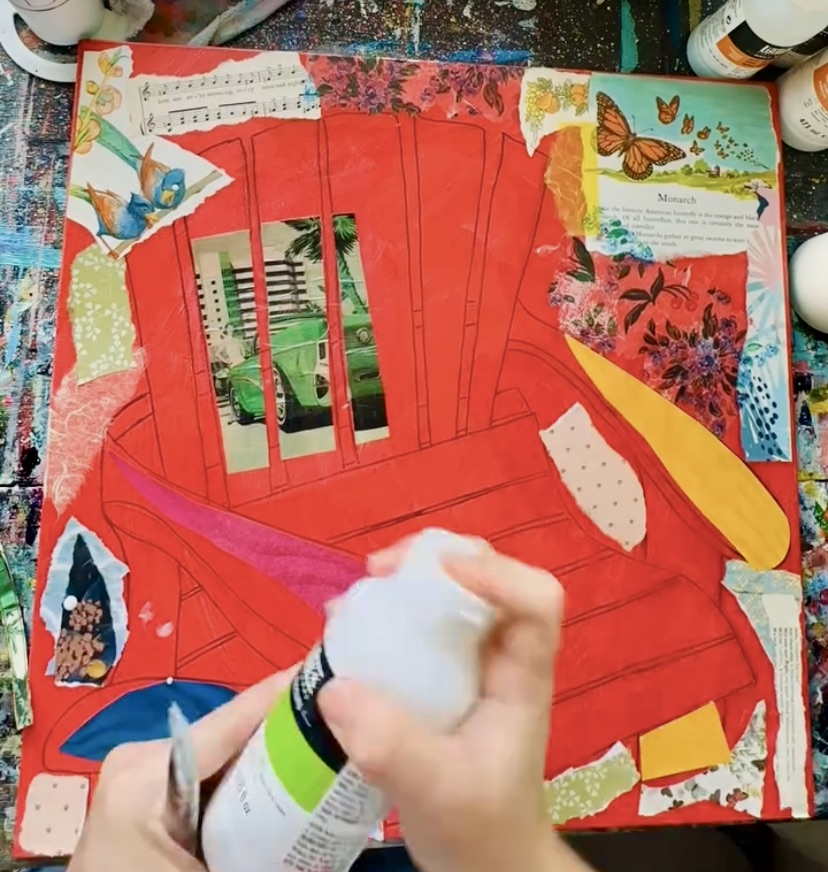
Cara promotes women in their new and established businesses, hence her membership in The Web, a Macon work-share space designed for local solo-preneurs and small business owners. Cara joined The Web when it was first launched in 2019 and her art is usually on display in the little gallery space at the The Web. (Learn more about The Web and its founders in the appendix.)

“I had to separate myself from my environment to see how I felt,” Cara says about her trip to France last year, where she attended a month-long artists’ residency at Château D’Orquevaux. She had been accepted to the residency two years before but could’t get away — she was was caring for her parents as they recovered from a serious RV accident. Luckily, the residency told her to pick an alternate date and she was able to venture to France in April 2024, when she was still running Lush Art.

Cara considers herself lucky to have been accepted into the residency from the large pool of worldwide applicants.

The countryside chateau is near the village of Orquevaux, with a population of 50 souls and no businesses; many locals are employed by the residency.

Surrounded by entrancing french countryside, far away from her life in Georgia, freed from daily concerns like managing a business, preparing meals, and cleaning, Cara was able to focus on creating art in her own private studio, working at any hour — everything she might need was accessible 24/7.
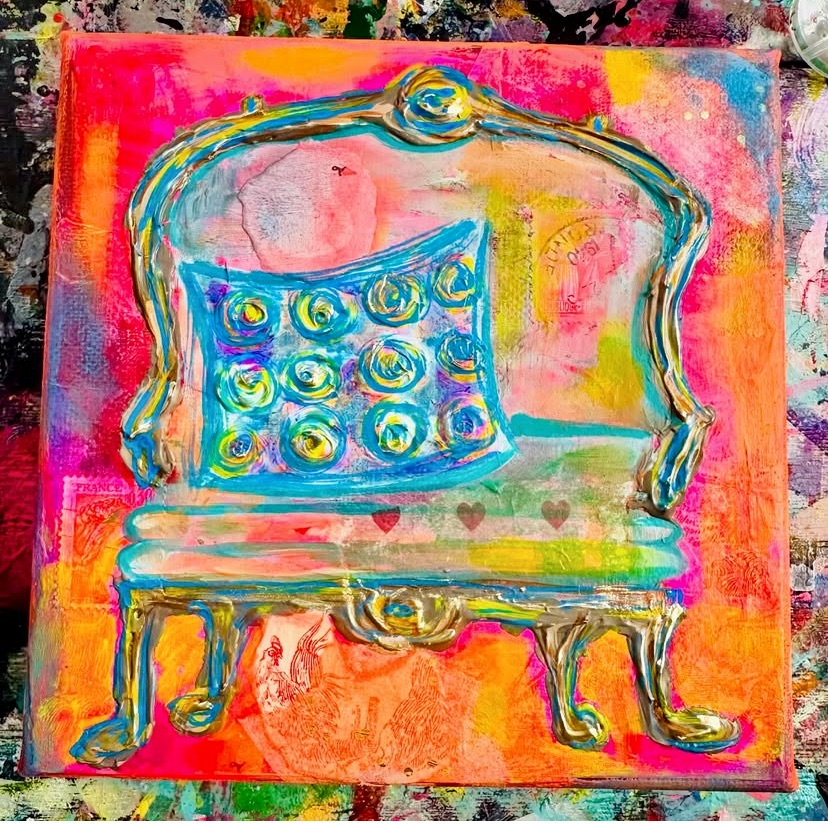
Cara in her resident studio at Château D’Orquevaux.

The beautiful countryside was a major supporting element in Cara’s experience, allowing for long, contemplative hikes.

She found the freedom from day-to-day responsibilities mind-expanding and leaned into forming bonds with her fellow artists, understanding what true collaboration feels like, and reevaluating her life in a meaningful way.

Cara is a collaborator, after all, and her experience in France showed her what would be possible back home among her fellow artists. And once back home, she could see her “daily grind” much more clearly, thus beginning her journey to selling Lush Art.

Cara, far right, with her fellow resident artists in France.

Cara then sold her business to Heather without even knowing what her next steps would be. That’s the resilient part of her spirit, the part that’s ready for new experiences and ready to pivot, like recently taking on the Marketing Strategist role for a new online community that supports the work of Dr. Jerry Lerner, a resiliency expert and author of Unraveled to Unrivaled: Embracing the Four Dimensions of Resilience.

“When Dr. Lerner asked me why I was burnt out with Lush Art,” Cara says, “my response was I felt people were harder to build up and the efforts were too draining. I hope by promoting his work, I will help people feel better in a different way than I could through Lush Art.”

Kudos to Cara for managing to fit most of her supplies from Lush Art into her creative space at home. She has organized her space to hold the things she can’t live without from her Lush Art days, and also to house her current works and past pieces.

Her two dogs, Bodhi and Hattie, visit her creative space regularly for head rubs!

Cara’s “Death” Tarot card, in progress, on the easel
(with Hattie and Bodhi visiting).

Cara recently worked on a mixed media piece representing a Tarot Death card for an art show — it has already sold. The Tarot piece dovetails perfectly with the project she worked on while in France, where she used mixed media to represent the Lenormand deck of 36 oracle cards.

Cara’s rendition of the Oracle Clover card, painted in France.

“The Lenormand deck is used for cartomancy and divination, and it differs from the more common Tarot cards,” Cara says. She plans to eventually have her 36 oracle art pieces printed as a card deck.

A sampling of Cara’s 36 Oracle cards painted during her artist residency.
Cara’s creative space always evolves: here’s a recent past rendition with helpful labels.
…and another recent rendition now altered.

Cara is passionate about facilitating the 478 Creatives group with Erin.

“Connecting people to creativity is at the core of what I do,” Cara says. “I’ve experienced the transformative power of community first hand, which is why I’m dedicated to fostering a welcoming environment for all.”

Started in 2021 by Erin, the 478 Creatives group is on a mission.

“Our mission is to cultivate a thriving ecosystem where creativity flourishes, connections deepen, and artistic endeavors thrive. We believe in the power of creativity to transcend boundaries and unite individuals from all walks of life. Welcoming creatives of every age, background, and skill level, we are committed to providing a supportive space for exploration, growth, and collaboration.”

Cara and Erin do amazing things when coordinating the monthly meetings, bringing in artists to speak and educate, hosting workshops, leading a collaborative group art piece, or just having fun, like they did by playing bingo at historic Grant’s lounge in downtown Macon. Monthly meetings are held at different venues around town, sometimes at the Macon Arts Alliance gallery on First Street or the Alliance’s Mill Hill location.

The Macon Arts Alliance is hosting a show in their gallery this month, kicking off on April 4, and will exclusively exhibit the juried works by creatives in the 478 region. Cara’s work will be on view during the show, which runs through the end of April 2025.

Some time in 2025, the group anticipates holding occasional meetings in Erin’s new studio space in Downtown Macon where she’ll house her Mama Hawk Draws business.

The best part of the meetings is mingling with artists of all mediums, sharing ideas, and collaborating on projects that arise from random conversations.

“Cara has an incredible talent for connecting with people,” Erin says, “and making everyone feel welcome to our 478 Creatives meet-ups. Her mentoring spirit encourages fellow creatives to grow, and her boundless creativity constantly inspires me and my own artwork.”

Cara’s in-progress art piece in the Wesleyan College art class she taught.

Erin and Cara are both talented with a brush and paint and also with digital illustrations. Erin designed the logo for the 478 Creatives group and Cara designs the monthly event invitations.

“After each event,” Cara says, “Erin and I ask each other if our cup is filled or drained. So far, we have both felt filled.”

“I loved it, I hated it, I lived it, I breathed it,” Cara wrote on Instagram to the people who supported her during her Lush Art years. “It allowed me to grow up, to connect with so many incredible people, to be a stronger person, to be a better artist. It’s bittersweet to say goodbye, you’ve all changed my life. It’s fitting to go out on a full moon.”

These days, Cara is refilling her well, feeling her resilience and being that brave soul who’s courageous enough to follow what she loves while fulfilling family responsibilities.

Mixed media samples of smaller pieces.

This transition has been an incubation period where Cara assesses options for her marketing consultancy business and artistic work. Recently, that included making art in anger — a rarity for her, — but essential for helping to digest everything that’s going on in our country right now.

During this transition, Cara’s openness to what the universe might bring has now manifested the largest art commission of her career! Cara is painting 18 unique art pieces to hang in the new Central Georgia Cancer Care facility, designing with powerful colors to inspire patients going through extreme health challenges and to bring a little hope and joy to their families .

“11+ years of hard work,” Cara recently wrote on Instagram, “a shift in passion, and a leap into the unknown… and then, through the power of community, connections, and referrals, my biggest art commission yet. Proof that when you pour into others, the right opportunities find their way back to you.”

Her largest commission ever is also proof that Cara is a talented artist who’s easy to work with and determined to get it right.

One of Cara’s original goals for Lush Art was to build a local creative community. She did that. After selling Lush Art, she continues to build a creative community through 478 Creatives.

As Cara navigates this life transition, using her talents to make a living while pursuing artistic adventures, a big part of her destiny is based on her tendency to gather and inspire people — especially creative people — and to cheer them on to greatness.

Her Self included.


Website: https://www.caraheardco.com/

Facebook: https://www.facebook.com/groups/1007790463184312/

Instagram: https://www.instagram.com/caraheardco

LinkedIn: https://www.linkedin.com/in/cara-heard-a2202812

478 Creatives Instagram: https://www.instagram.com/478creatives/

“There’s something special about being surrounded by original art,” Cara says. “Art that was made with love, with feeling.”

Here are a few options for finding local art made with love and feeling in the Macon/Middle Georgia area:

Macon Arts Alliance Gallery – The Gallery at 486 First Street has a retail shop in addition to the exhibition space. They sell art pieces in all mediums (pottery, paintings, jewelry, photography, sculpture, fabric arts, etc.) made by 300 artists from the Middle Georgia area. (Hours: Tuesday – Friday, 10am-5pm). You can also support the Alliance and it’s work in boosting local artist. They’re celebrating their 40th anniversary with an Art Market on May 17, from 10am to 4pm, at the Mill Hill Community Arts Center. (Tickets are $5 at the door only).

Macon365 – A complete listing of all cultural events around Macon so you know where to go to find original art. They including happenings in Music, Stage, Art & Culture. “Subscribe” on their website to receive their newsletter full of upcoming art shows and other events, large and small.

The Web Workshare – The Art Gallery at the Clubhouse in the Web’s office displays Cara’s artwork on a rotating basis along with art by other local artists — including renowned textile artist Wini McQueen. The Web workshare space is located at the same address as Macon Magazine: 1083 Washington Avenue. Cara joined The Web as a member when it was launched in December 2019 by three Macon businesswomen: Susannah Cox Maddox (Publisher/Editor in Chief of Macon Magazine, Elizabeth Schorr (ES&CO), and Jessica Walden (owner of Rock Candy Tours).

Bohemian Den – This shop at 502 Cherry Street, owned by Scott Mitchell, supports social justice issues, curates fair trade products from around the world, and sells original and prints of artwork by Macon’s best artists, such as Redefiningshe.

Rabbit Hole – This smartly curated home goods and decor shop at 811 Forsyth Street is owned by couple Autumn Van Gunten and artist Cedric Smith who sells his own artwork in the store, along with art from other local artists and creatives from around the world. They also sell some Bitter Southerner apparel. Cedric spoke at a 2024 478 Creatives meeting and is featured in the February/March 2025 issue of Macon Magazine.

First Friday – The first Friday of every month is a great time to visit downtown Macon for live music, good eats, cold brews, and local shopping. Many restaurants, stores, and galleries are open and showing off their latest acquisitions or simply celebrating Macon’s artistic and musical culture. Visit New Town Macon’s Facebook page to see who’s participating in each First Friday, or just show up and be surprised.

Gallery West – Photographer Kirk West has photographed musical artists for decades and was road manager for the Allman Brothers for 20 years. He and his wife bought The Big House that would later become the Allman Brothers Museum. Gallery West, which just celebrated its 10th anniversary, sells Kirk’s photographs and books in the 3rd Street shop in downtown Macon. The Gallery also features artwork, mostly paintings, by local artists like Johnny Mo.

Macon Magazine – The December 2024/January 2025 issue shares their annual “Local-Loving Gift Guide” to various products produced locally, including art pieces. Erin’s glass ornaments from her Mama Hawk Draws company were featured in this recent gift guide!

Artist Gift Market – Every November/December, the Artist Gift Market is held for six weeks and features all types of items made by local artists including pottery, t-shirts, scarves, books, jewelry, home decor, etc. Watch for information about the Artist Gift Market in 2025.

Triangle Arts Macon – They’re hosting an Artist Market on Saturday, April 26, from 11am to 5pm featuring original art, food trucks, a kids zone, demos and open house, and music. 206 Lower Elm Street, Macon, GA 31106.

Muscle Shoals: East Avalon Recorder

Shenanigans happen during Muscle Shoals recording sessions with Reddog, the legendary Clayton Ivey and Bob Wray, the hilarious studio owner Charles Holloman, and joy-spreading-drummer Justin Holder. Tune in and turn it up!

Clayton Ivey has sat on hundreds of recording studio couches in his 55 years of playing keyboard on thousands of songs with some of the greatest musical artists from around the world. He was also producer on some of those toe-tapping and chart-topping songs recorded in Muscle Shoals or Nashville or Memphis or NY or LA.

“I love this room,” Clayton says, sitting on a long black velvet couch facing the recording board where Charles Holloman, owner of East Avalon Recorders, focuses on the computer’s pulsing tracks.

Of all the studio rooms he’s occupied, Clayton likes this room the best.

Looking from Clayton’s favorite room into the recording booth: Clayton is at the Wurlitzer on the right, Bob Wray is on bass, and Justin Holder is on drums.

Across the room, blues guitarist Reddog faces the recording booth, swaddled by his Stratocaster. His stance and uniform — backward baseball cap, black T-shirt and cowboy boots, cinched jeans — hasn’t changed in the 35 years I’ve known him.

Reddog’s cool exterior belies his churning passion for the blues, and the hard, hard work he’s done leading up to this moment: standing in Charles’ studio with just two sessions scheduled to record his nine songs alongside some crazy-talented musicians.

Reddog plays his tunes for the rhythm section in the booth.

We can’t leave women out of Reddog’s art form. Debra, his girlfriend, is here, supporting his every effort and documenting the scene. Also, female back-up singers will record in a subsequent session. Any time Reddog mentions adding the women’s voices to a chorus or intro, his eyes light up and he smiles underneath his Deputy Dawg mustache.

In this moment, though, Reddog’s cool exterior might just crack under the pressure of guiding a team of spirited musicians in laying down the rhythm for his album of diverse songs: a lullaby, a straight blues tune, a Steely Dan throw-back, a jazzy instrumental, and a Marshall Tucker-sounding homage to the sound legacy of Macon and Muscle Shoals.

I can’t say any more about Reddog’s songs or the album right now, but I’ll definitely write about all the details when the album launches in late 2025.

“I’ve always loved this room,” Clayton continues from the couch, where he’s reclined, his long legs crossed at the ankles.

“It’s cozy,” Charles says, spinning from his computer to face Clayton.

The black walls, baffles, fairy lights, and layers of rugs create the feeling of being in a Genie’s bottle; a place you don’t mind hanging out when the Muscle Shoals magic starts to happen.

East Avalon Recorders is Clayton’s favorite place for making music. He’s the reason Reddog is recording his second album with Charles, a North Carolina native who learned music technology at Georgia State University and followed his dream of moving to Muscle Shoals and opening his studio.

Charles Holloman, owner and sound engineer of East Avalon Recorder, captures music.

Charles carved the studio out of a 60s ranch-style home on East Avalon Drive, tucked behind industrial buildings only blocks from the flashing lights of Muscle Shoals’ airport.

Adding to the coziness, sound barriers of heavy velvet curtains or glass screen doors block noise from the house’s entry and kitchen. The woolen rugs dampen the sound.

There’s a living room for chatty people to visit, so their words aren’t captured, and a bedroom for musicians to catch up on sleep. Many, many people have poured themselves onto the black velvet couch where Clayton is chilling.

Charles didn’t share any specific story about a couch-crasher — like the one about Joe Cocker at Muscle Shoals Sound Studio sleeping on their camel-colored couch in a drugged state for a week, burning cigarette holes in the leather. It’s the same couch the Rolling Stones can be seen sitting on in the Muscle Shoals documentary. That same couch is still in the renovated Muscle Shoals Sound Studio today… patched with duct tape.

When Clayton agreed to play keyboard on Reddog’s album he pulled in Bob Wray on bass (another legendary session player) and Justin Holder on drums. Clayton also chose Charles and East Avalon Recorders. After recording an album at East Avalon in 2021, Reddog was hooked on Charles, too.

“Charles is so attentive and accommodating, Man,” Reddog says. “He’s kind and does good work.”

“What do you know about this rug?,” I ask Charles, pointing to the large rug under our feet. Its intricate floral design with sleeping lambs looks authentically Turkish, indicating great value, unlike the computer stand which is propped up by two books and held together with a blue ratchet strap. This comical (and effective) rigging shows how most recording studios in Muscle Shoals are not fancy. That’s because plain, good people use plain, good sense to design their plain, good creative spaces.

After all, studio design is all about the physical properties of sound waves. Expenses are spared on the aesthetics of a studio and lavished on the equipment that captures the sound. Placement of instruments, baffles, and ceilings are more important than decor when capturing sound. For instance, walls are sometimes angled 10 degrees to properly direct sound, and baffles of burlap-covered insulation help to “deaden” an area. Those baffles may not be pretty, but they work.

Muscle Shoals, thank the good Lord, is bling-free.

“My Mom bought this rug in the early 90s,” Charles says, looking down. He’s always responsive like that, turning his full attention to others. He’s also consistently upbeat, a laugh at the ready behind his beard and glasses. He’s the one usually cracking everyone up with his sharp wit. Funny flies out of Charles as natural and unstoppable as a sneeze. “For eight years these chairs have rolled over this rug, but you don’t see any wear.”

There is absolutely no wear on that nice rug. And why does the rug matter? Because if it’s truly antique and from the middle east, its value would indicate Charles comes from a well-to-do family. Yet, he doesn’t act like it. He’s as humble as his studio’s decor.

Charles is a down-to-earth guy. Nice and hard working.

As a musician, Clayton clearly feels at home here with Charles. The kind of home where family surrounds you, so you can be your true self. No judgment. Reddog feels at home here, too, even though he’s got some nervous energy as he prepares to record with Clayton.

Looking at Clayton — kicked back on the couch in his “Cat Dad” ball cap — you’d never know his storied career included playing keyboards for Etta James, Clarence Carter, Wilson Pickett, Mac Davis, and hundreds of other artists whose music nudged societal changes and still shapes our lives.

Clayton started playing at Rick Hall’s FAME Studios after the original group of session players, The Swampers, left to form Muscle Shoals Sound Studios. Clayton later opened Wishbone, his own recording palace closer to the Tennessee River. After selling Wishbone, he continues to play at studios around town… at his pleasure. Because, after his years on a piano bench, Clayton can do what he wants when he wants.

When Debra asks Clayton how many sessions he’s played since the 60s, he says, “Probably 10,000-15,000.” We all agree the total is likely closer to 15,000.

Debra, Reddog’s girlfriend, documents the session.

Clayton is just like his buddy Bob Wray and other Muscle Shoals session musicians: even though they’ve contributed to hundreds of hit records, and spent time with the most famous of celebrities, their daily life mirrors us average folk.

Clayton’s discography will wow anyone who looks him up, but Clayton is still the same Muscle Shoals guy of his youth: humble, funny, tolerant, hard working, straight talking, excellent piano player, and proud Papa to his feline “boys,” Scooter and Ollie.

He loves those two cats to pieces.

Bob, a Wisconsin native who somewhat resembles Walter Matthau, is another guileless, long-time session player who performed on hundreds of hit records and currently enjoys his simple Muscle Shoals life.

Bob still lives in his 1947 lakeside house which he bought in 1976 and proceeded — with his own hands — to put in all new plumbing and electrical systems. He’s had nine dogs since 1976, mostly labs, and his current pet, Elke (pronounced Elkah), is the first one to live inside. Bob is discovering the joys of having a puppy underfoot in the kitchen.

Bob is cool. Maybe it’s the decades of performing with famous people… and being famous himself. He’s not easily rattled and at 77 he still carries his own bass to his car, even in the dark and rain, even when others offer to help.

When Bob and Clayton sit together on the velvet couch in Charles’ cozy studio, they argue like Matthau and Jack Lemon in the movie Grumpy Old Men. Those of us lucky enough to witness their teasing banter can’t help but snigger and relish the fake acrimony. They may be “old,” (I’m not totally convinced of that) but these men definitely aren’t grumpy.

Clayton and Bob started playing together 55 years ago when the Osmonds came to Muscle Shoals; their first song playing together was One Bad Apple.

“Donnie Osmond was 11 years old,” Clayton says from under his cap bill. “I can’t believe he’s now 66!”

Donnie Osmond turned 67 in December 2024.

And yet here these two men are, still playing sessions together (and apart) and still arguing over chord charts, which Clayton writes.

Chord Chart for “Still Crazy After All These Years” on display in the Muscle Shoals Sound Studio.

Chord charts have a long history, but a special version is used in most Muscle Shoals studios, a method popularized in Nashville by Neal Matthews, Jr., who charted songs for the Jordanaires.

Talk about super-famous and super-prolific studio musicians! The Jordanaires formed in the late 1940s as a harmony gospel group and sang as back-up on thousands of hits, including most of Elvis’ gospel and hit-movie songs, only dispersing in 2013 when the group’s leader, Gordon Stoker, died from a stroke. Because Stoker was owner of the group’s name, he took it with him in death.

Matthews’ method of charting chords became known as the Nashville Number System (NNS) and he literally wrote the book on it: The Nashville Numbering System: An Aid to Playing by Ear. The method uses numbers to designate chords and other symbols for tone and sustain, etc.

Looking at a chart is like looking at space math.

“Heeeeere’s your chart,” Charles says to Justin, the drummer, a tall wild-child with a massive heart and massive black wavy hair which makes him look a little like Weird Al Yankovic. But Justin isn’t weird, he’s 150% alive with a wit to match Charles’ quick humor. Their exchanges are entertainment anyone would pay to see. If they go through with their podcast idea of “Muscle Shoals Now” (which I pray they do!!), it’ll be the most-accessed podcast in history.

Justin, 42 and built like a wrestler, loves wrestling and is on a high in the studio because he met his childhood hero, Hulk Hogan, just two days before. Adding to his glee, Justin tells us how he and his buddy were singing while waiting in line to see the Hulk and they made it onto the local news.

Justin very kindly let’s the author play drums while he taps the Tambourine.

Justin is high on life. He’s a session drummer around town, has recently worked with Band Loula, and will tour with Shenandoah for six months as their drummer heals from shoulder surgery. Musicians like Justin don’t just get invited to sessions because of their talent, they get picked because of their cheery personality and awesome attitude.

So when Charles hands Justin the chord chart for the next Reddog song they’ll record, Justin compliments Charles by saying, “Man, NO ONE hands me a chart the way you do.”

Charles energetically replies, “It’s an art. It’s Chart Art!”

Everything these guys are doing in the studio, from playing instruments to creating a collaborative environment, is art. Of course, folks comment on how a chord chart looks like trigonometry, not art.

As the players are all listening to Clayton explain number by number how he charted this particular Reddog song, Bob shouts out, “it’s wrong” and “it doesn’t make sense,” and Charles declares, “It’s Muscle Shoals Math.”

“Chart Art” and “Muscle Shoals Math”: Charles is the Shakespeare of this hamlet, making up new word phrases.

Clayton charted all of Reddog’s songs for the drum, bass, and keyboards weeks in advance of this session. These charts are excellent for players to use instead of reading sheet music, allowing them to create their own riffs throughout the song.

Clayton can play any keyboard, any genre. He’s quite a sight sitting at the grand piano, or Wurlitzer electric piano, or the Hammond B3 organ.

I’m terribly sorry for every person in this world who hasn’t had the privilege of watching/hearing Clayton run his fingers over any keyboard while recording or just warming up those fingers.

Clayton at the Wurlitzer with Reddog on the acoustic guitar.

At the Wurlitzer, he sits with earphones on, but the right ear exposed.

“Remember this tune?” Clayton says, glancing at me and Debra. The Wurlitzer hums out the chorus of Patches, the great Clarence Carter song.

“That’s Patches!” I say, thrilled to recognize it and sing along on the chorus.

“I played piano on that tune,” Clayton says, still pushing on keys.

Just the day before, Debra and I had stood in Studio A at FAME Records where Clarence and Clayton had recorded that very song and we listened as Jordan, our tour guide, played Patches through the studio’s incredible speakers. In the Very Room it was recorded in! Standing by the Very Piano. And now here’s Clayton, the Very Player on that song. I felt dizzy.

Jordan in FAME Studio A plays hits for us; Debra is on the left.

Then FAME tour-guide Jordan, who’s also an assistant engineer, played other songs recorded in Studio A, like Etta James singing Tell Mama, and Wilson Pickett singing Hey Jude, with Duane Allman on guitar, and Aretha Franklin’s I Never Loved a Man (the way I love you), and there, in front of us, was the grand piano she sat at and sang at. [Learn more about our FAME Tour]

The story of Aretha recording just that one song at FAME involves her drunken husband and studio owner Rick Hall later confronting the couple in their hotel room. I won’t share the story because Rick Hall tells it so well in his book The Man from Muscle Shoals: My Journey from Shame to Fame.

In his book, Rick tells stories about each hit song and artists he discovered, and best of all, it comes with a CD of the documentary Muscle Shoals.

Clayton is in the documentary!

“Do you remember this one?” Clayton says from the Wurlitzer.

Debra and I are digging this name-that-tune game. As Clayton is playing a few notes, Charles calls out to him.

“Clayton, let’s get started!”

“Hang on a minute!” Clayton yells, continuing to play for us.

“Baby, Baby,” Clayton says, and I finish by singing, “Don’t get hooked on me. That’s Mac Davis!”

“That’s right, I played keyboard on so many of his albums,” Clayton says.

And now Clayton is playing keyboard on Reddog’s album, right in front of us.

“Oh, sure,” Clayton says each time Reddog asks him to play another keyboard; He’ll practically run over, put on earphones, and play a few riffs to wake up the instrument.

These session players are seeing each of Reddog’s songs for the first time in real time. Clayton listened in advance and created the chord charts, so he’s had time to think about what he’d like to play on each song. But Justin on the drums and Bob on the bass are just now hearing the songs as Reddog plays and sings each one all the way through.

As Reddog plays and sings, Clayton, Bob, and Justin reference the chord chart and discuss amongst themselves what they’ll play during intros, verses, bridges, choruses, etc.

Sometimes they’re so inspired by what they’re hearing, they’ll get off that black velvet couch and head to the studio, walking quickly, with purpose. Bob is usually the first off the couch and marching to his bass. The musicians then perform the song together as Charles captures it all.

Occasionally someone will yell out “damn” or “shit” as they flub a note and the music stops while Charles, with a click of the mouse, backs them up a measure or two and they start over.

Clayton on his way back into the studio talking with Reddog about re-recording.

When the song has been recorded, these raucous musicians return to the couch, or Justin lies on the floor behind the sound board, and they all listen to their playing.

“Oh, I can fix that,” Bob says when he hears a missed bass note or an arhythm.

I just hear a good song, but there goes Bob, headed toward the booth’s door, saying to Charles, “Let me fix that spot,” or “let me take it from the top.” Bob’ll sit alone in the recording booth with his bass and run through the entire song all by himself.

Bassist Bob Wray.

Not to be outdone, Clayton will stand up and trot toward the booth saying, “I’m gonna’ redo that bridge on the acoustic,” and Charles just clicks the mouse and they re-record.

After 55 years as professional musicians, Clayton and Bob still want their sound to be perfect, and they’ll spend the extra time and energy to get it right, not listening to anyone who disagrees. They still have their work ethic. They still care.

They still trot to their instrument to do better.

By the end of the second night, we all feel like family.

Donna, Bob’s lovely friend, heats up the the crockpot of meatballs and tins of yummy jalapeño dip and artichoke dip she made for our crowd. We have to be quiet in the kitchen for most of the night because Reddog set his amplifier in there. Something about getting a better guitar tone with greater volume. So the amp is set apart to avoid overwhelming the other sounds.

Charles, Justin (standing), Donna, Bob, Clayton, Debra, and Reddog listening.

On our tour of Muscle Shoals Sound Studio earlier in the day, Chase, our tour guide, explained how Duane Allman would stand just outside the bathroom door, with the door open and his amp blasting inside the tiny room, and Duane would crank up his amp nearly twice as loud as the other instruments, to get that better tone.

Duane played that way on Boz Skaggs’ Loan me a Dime, one of my favorite tunes of all time, of all genres. That song is perfect and when tour-guide Chase had pointed to where I was standing and said that’s where Duane had played Loan me a Dime decades ago, I got goose bumps all over.

On the Muscle Shoals Sound Studio tour, Chase also played Take a letter, Maria, the first official hit for the new studio and its founders, the Swampers: Barry Beckett, Jimmy Johnson, Roger Hawkins, and David Hood.

For nine years at Muscle Shoals Sound Studio, from 1978-1987, before they moved to a bigger studio down by the Tennessee river, the Swampers were involved in the biggest hits of the day. Barry Beckett, the piano player, was an intelligent man of few words and the only one who could read music, so he charted the songs at that studio.

The Swampers got their start at FAME as the second group of session players hired by Rick after the first group gained recognition from their many hits and struck out on their own to further their careers.

Cher and crew in front of Muscle Shoals Sound Studio, the first artist to record at the new studio.

The Muscle Shoals Sound Studio building started out as a casket showroom and continued on after the Swampers moved out, possibly as an appliance store at one point. The building eventually became run down but with the release of the Muscle Shoals documentary, a foundation was formed to restore and reconstruct the studio just like it appeared in 1978. The instruments that had gone home with musicians came back and were placed where they had originally stood.

Muscle Shoals Sound Studio is still available for recording, but three of the original Swampers are gone, leaving only David Hood to carry on their legacy.

Visitors to the Muscle Shoals Sound Studio will find their jaws dropping at stories from the studio’s glory days, as told by guides Chase and Terrell, a Muscle Shoals native who worked for record companies his entire career.

Terrell even went to Capricorn Record’s famous annual picnics back in the 70s where Dickey Betts ate off his plate and drank his cocktail while Terrell talked with Phil Walden, founder of Capricorn (with his brother Alan). Now living in Muscle Shoals and retired at 71, Terrell gives tours and tells stories.

Terrell and the author at Muscle Shoals Sound Studio with the Americana Music Triangle on the wall.

Seems you can stand anywhere in Muscle Shoals, say the name of a musician, and someone nearby will have a story about working with, playing with, fighting with, or just interacting with that person. The shoals are just as covered up in good stories as they’re covered up in good music and good musicians. And history and successes.

Rick Hall also had a linkage with Phil Walden and Capricorn Records — not just with Duane playing at FAME for a year before forming the Allman Brothers Band –but with Otis Redding recording at FAME. The studios also have a history of cooperating with other studios in Memphis and Nashville, each city only 2.5 hours from Muscle Shoals.

These cities are all part of the golden Americana Music Triangle reaching from Nashville to Memphis and on down through Muscle Shoals, Tupelo, and other hotspots, all the way to New Orleans.

The golden triangle encompasses areas where nine distinct American musical genres emerged: Blues, Jazz, Country, Rock n’ Roll, R&B/Soul, Gospel, Southern Gospel, Cajun/Zydeco, and Bluegrass. That’s a hell of a lot of artistry and history, dating back to the Paleolithic period before the arrival of Europeans, to be proud of. A hell of a lot.

Makes a person woozy to think of the musical masters and average Joes and Janes all dedicated to making music through good times and through horrible, oppressive times.

The Americana Music Triangle isn’t just a region where nine genres were formed; it’s where The Nine American Musical Genres originated.

I’m disappointed my home state of Georgia didn’t make it onto the map. We’re terribly proud of our musical history. But I’m grateful to have grown up around Macon with soul, “Southern rock,” R&B, blues, etc.

I lucked into being a Georgian by birth; Reddog chose the Deep South as his home decades ago. As a songwriter, singer, and guitarist, he was drawn to the region and performed in Atlanta for decades. Learn more about Reddog’s musical journey in this article.

Reddog’s current recording at East Avalon Recorders is a testament to his talent and fine skills and love of music. He wrote the songs at his kitchen table, just like Dickey Betts wrote Ramblin’ Man in the kitchen at the Big House, the Allman Brothers’ home located on Highway 41 in Macon and now a museum honoring the band.

Reddog was inspired as a teenager to pick up a guitar after hearing Duane Allman play. As a 70-year-old songwriter, Reddog writes his songs in his Pensacola, Florida, home and then begins more work: organizing recording dates, players, travel plans, finances, rehearsals, etc., all toward the goal of producing an album.

The rhythm section goes down in these two recording sessions, then Reddog will come back to record his vocals with final lyrics, and then his beloved female back-up singers will layer in grace and beauty, filling each song to its fullest.

As we’re recording over two days, Clayton pulls triple duty on the Wurlitzer, acoustic piano, and B3 organ, while Justin, the drummer, plays a dual role of drums and percussion, adding separate tracks for maracas, the tambourine, and a clapping tool. As with everything he does, Justin brings in the joy with his percussion playing; it’s hard not to smile when Justin is being Justin.

Come to think of it, being in the studio, watching the crew work and create, and cut up and tease each other, made my face ache from constant smiling.

Muscle Shoals hasn’t changed much since the 60s. I mean, chain restaurants and stores have moved in, but much of the old buildings/architecture remains, like a time capsule wedged in place by surrounding towns.

On our Muscle Shoals Sound Studio tour, Chase had told Debra and I that he got the tour guide job through a college friend. That evening, arriving for Reddog’s recording, we met Colin, an assistant engineer. At some point Colin mentioned having worked as a tour guide.

“Did you work at Muscle Shoals Sound Studio? I asked. “And did you get Chase his tour guide job?”

“Yes, I did,” Colin said.

“We just met him today and he told us his college friend got him the tour guide gig,” I tell Colin, laughing at the small-townness of meeting these two friends separately on the same day.

Music in Muscle Shoals is a tight industry; the studios seem to collaborate more than compete with each other. The musicians play at all the studios… and there are quite a few studios in town.

The Shoals area is about making music, playing creatively, supporting each other’s growth, and sharing opportunities. When everyone in Muscle Shoals plays to their strengths and to the community’s mystical roots, the entire area is lifted up… together.

And sustained like a note held.

The author with Clayton Ivey and Bob Wray.

Clayton and Bob walk around like the small-town guys they are, with a mountain of stellar legacy work behind them. They’re still building up that mountain. They carry the history of the Shoals sound in their blood and spread it to others like a virus people choose to catch.

Smart guitarists, singers, and songwriters like Reddog understand the value of working with and taking musical cues from Clayton and Bob.

After recording twice at East Avalon with Charles, and playing alongside Clayton, Bob, and Justin, Reddog is now woven into the musical heritage and magical mysticism of Muscle Shoals; an organic fabric that grows stronger with time.

FAME Recording Studios

You can let your guard down in Muscle Shoals, Alabama, and be your true music-loving self, geeking out on the sound of the place, its stories and history. I recently stood in FAME’s Studio A and felt washed in Soul that stuck to my hair and burrowed into my bone marrow.

Home of the Muscle Shoals Sound

Above a plain brown door at FAME Recording Studios in Muscle Shoals, Alabama, are these hand-painted words:

“Through these doors walk the finest musicians, songwriters, artists, and producers in the world.”

Just think, through that plain brown door walked the likes of:

Etta James, Wilson Pickett, Aretha Franklin, Alicia Keys, Demi Lovato, Jason Isbell, Jimmy Hughes, Buddy Killen, Clarence Carter, Candi Staton, Dan Penn, Arthur Conley and Willie Hightower, Mac Davis, Paul Anna, the Gatlin Brothers, Jerry Reed, John Michael Montgomery, Pam Tillis, Blackhawk, Tim McGraw, Reba McEntire, All-4-One and Shenandoah Drive-by-Truckers, Heartland, Duane Allman, Gregg Allman, Blind Boys of Alabama, Michael McDonald, Delbert McClinton, Alan Jackson, Aloe Blacc, Alison Krauss, Steve Tyler, the Osmond’s, Marie Osmond.

That’s just a skimming of the artists who have recorded with FAME since 1971. There’s an entirely different catalogue of songs written by writers eventually signed to FAME’s publishing subsidiary, including:

Dixie Chicks, George Strait, Joe Diffie, Martina McBride, Travis Tritt, Sara Evans, Cyndi Thomson, Aaron Tippin, Billy Ray Cyrus, Alabama, John Michael Montgomery, Chris Ledoux, Perfect Stranger, 3 of Hearts, Chad Brock, Rebecca Lynn Howard, Michael Peterson, Kristin Garner, T. Graham Brown, Wild Horses and Kenny Chesney.

Rick Hall built FAME Recording Studios on Avalon Avenue in 1970. He consulted with an expert out of Nashville on Studio A’s dimensions — wall lengths and angles, ceiling heights — to optimize the sound.

Rick Hall was a task-master when it came to capturing sound… and not just any sound, but the Muscle Shoals sound he created by racially integrating artists and his studio. For instance, when he discovered the perfect sound from an instrument’s placement within the studio, he insisted on keeping that instrument in that exact spot for all recording sessions.

We know a great deal about Rick and his music philosophy from the 2013 documentary Muscle Shoals, a film that prompted people from all over the world to visit this village on the Tennessee River, tucked into the northwest corner of Alabama, close to the borders of Mississippi and Tennessee. 

The Shoals area is made up of four communities/cities that all run together: Muscle Shoals, Tuscumbia, Florence, and Sheffield. They feel like one small town with different neighborhoods.

When you’ve traveled to Muscle Shoals, its location makes clear that visitors have a specific need to be there. Otherwise, they might not ever visit Muscle Shoals. I mean, it’s out there. But what a beautiful ride through Alabama countryside.

My friend Debra and I are in town to attend recording sessions with Reddog, her boyfriend and my long-time friend who was kind enough to invite me along as he puts together his latest blues album at East Avalon Recorders.

While in town, we also tour Helen Keller’s home, Ivy Green, built in 1820, the second home erected in Tuscumbia, and only three miles from FAME. The Keller’s house, and the pretty cottage where Helen lived with her teacher Anne Sullivan, are perfectly preserved and worth a visit.

This is the cute cottage next to the Keller’s home where Helen lived with her teacher Anne.

Rick’s FAME building looks just like it did when Rick opened the doors: wood-paneled walls, low couches, chunky brown craved end tables and desks, massive beige ceramic lamps with yellowed drum shades, pictures hanging in the same spot for decades.

Stepping into FAME’s front door is stepping back into the 70s. Usually Linda Hall, Rick’s kind widow, is sitting in the little box office to the left, selling tickets or answering phones. Linda and Rick’s oldest son, Rick, Jr., is now President and CEO of FAME. Their second son, Mark, is a songwriter, known for penning the Brooks and Dunn tune I Like it, I Love it, (and other songs) and their third son, Rodney, is a lawyer in Birmingham. 

Straight ahead, after stepping into FAME, is that doorway with the hand-painted letters.

My friend Debra and I take a minute to absorb exactly what those words mean and as we’re awwwing with our jaws dropped, the plain brown door opens and tall, lanky Will walks out. As the door slowly closes, Debra catches a glimpse of two guys chatting inside.

“Jordan!” She yells as the door clicks shut. “Is that you, Jordan?”

Will turns to us and says, “Yes, that’s Jordan,” and then the door opens and Jordan pokes his cute face in, smiling.

“Jordan,” Debra says, approaching him, “you probably don’t remember me but we met last year when I visited.”

That’s Debra, right there. She never meets a stranger and then she remains connected with her new friend for years. When Debra visited last year she also met Linda Hall, and when Linda heard Debra was from Andalusia, Alabama, Linda asked if Debra knew Brenda Gantt, a YouTube baking sensation who lives in Andalusia. 

Linda is a big Brenda Gantt fan and it turns out Debra does know Brenda, so prior to our Muscle Shoals visit and tour of FAME Studios, Debra had Brenda Gantt autograph her latest cookbook to Linda, AND Debra is arranging for Linda to have a stay at Brenda’s B&B!

That’s Debra, right there. Always thinking of others. Debra is a huge music fan like me, which explains why she’s visited Muscle Shoals and the studios in the past (and to attend her granddaughter’s softball World Series competition). Debra is the perfect companion and guide for experiencing the space where so much of the music that shaped us was created. “Crafted” might be a better word for what Rick and those musical artists did in arranging the sound coming out of their mouths and instruments. 

Music is a craft and an art and a science with notes guided by math; sound guided by physics; words guided by heart; and expression guided by soul. Deep soul. The deeper the better. And Rick’s artists knew their soul and how to send it around the studio to be captured for generations to enjoy… and emote to.

Music might just give life, and it sure makes life soar. Every singer, songwriter, engineer, and producer knows that fact. Life without music would be brutal. 

Turns out Jordan does remember Debra from last year and so as they catch up and chat (Debra never lacks for things to talk about or ways of making people feel comfortable, even with a stranger or mere acquaintance), I get our tour tickets from Will, including a lanyard that visitors get to keep. Souvenir alert!

Wouldn’t you know it, because life is so good, Jordan is our tour guide! 

Me, Jordan, and Debra under that hand-painted sign.

Like most Muscle Shoals natives, Jordan is kind and responsive, answering our many questions with patience. Certainly he’s heard it all before, but never acts like it. I can only imagine how many people he meets who think they know more about FAME and its artists than he does. 

But Debra and I are all ears, eager to learn what Jordan knows.

Here’s what we learn about Jordan: he grew up just a few blocks from Muscle Shoals.

“I remember driving by this building all the time with my grandfather and asking what it was,” Jordan says. “He told me about the studio’s history but I never considered it relevant to me.”

Jordan grew up smack-dab in the middle of the Muscle Shoals sound and didn’t think a thing about it. With music, though, you don’t really need to think to appreciate it. Just feel. Absorb. 

Proximity is a powerful thing.

The Muscle Shoals part of The Shoals looks dated. Fast food and retail chains are all over Muscle Shoals now, but the original retail spaces built along Avalon Avenue are typical of the 60s and 70s; single story buildings with funky mid-century-inspired features; smallish with low ceilings.

I grew up in Warner Robins, GA, in the 70s, just 10 miles from Macon and Capricorn Records’ mighty productions, and at that time the main drag through town was Watson Boulevard sporting smallish retail spaces and several “shopping centers” that housed clothing and shoe stories, gift shops, barbers, beauty salons, local restaurants, bakeries, furniture, etc., that stand empty today, or now house thrift shops, insurance offices, quick loans, etc. These buildings are not-so-attractive anymore. All electric and phone lines run overhead on poles. Driving down Avalon Avenue in Muscle Shoals feels like driving through the old part of my hometown; shabby, dated, and comfortable. 

Tuscumbia, where Helen Keller grew up, is much more quaint with big and small houses from all eras on genteel avenues, the yards neatly groomed and a nearby downtown area typical of the turn-of-the-century era with red brick facades and large windows to lure shoppers with merchandise displays; shoppers stroll leisurely by for the experience of discovering novel shops or hip cafes.

FAME’s building, with its mid-century cement-block patterns and odd-looking mansard-like roof, still screams 60s/70s, and it’s not attractive, but that’s part of its charm. In its own way, the building is a delight to look at; the bright sun creating interesting shadow patterns on the walls. 

Once surrounded by open fields (where Duane Allman pitched a tent and hung out until Rick finally invited him into the studio to play), the building is now surrounded by asphalt parking lots, a CVS, and other homogeneous retail spaces, leaving little room between buildings. 

So this is Jordan’s stomping grounds even though he knew very little about FAME when growing up. And then one day he was sitting at a friend’s birthday party when his friend told another guest, who worked at FAME, that Jordan had set up a recording system at home. When the FAME guy asked Jordan about his equipment, Jordan told him what he owned and why he had chosen it. 

“You know more about equipment than a lot of people in the business,” the FAME guy told Jordan at the party. “You should work as a sound engineer.”

Jordan hadn’t thought of being an engineer, but buoyed by the guy’s advice he got a job at another studio in Muscle Shoals and worked there for four years, learning engineering before going to work at FAME as an assistant engineer… and tour guide.

FAME offers a 10am tour and a 3:30pm tour. At the 10am tour, Debra and I are joined by a middle-aged couple of newly-weds who work for the government in D.C., and live in Virginia. The guy is clearly a music nut and his wife made this trip happen to make him happy. He’s happy here, for sure, and as eager to learn as me and Debra.

The four of us tourists stayed in the building for more than two hours with Jordan’s kind guidance, asking questions, taking photos, lingering in certain spots to read materials, and goofing off by standing in Studio A and singing so we could say we sang there, along with Wilson Pickett, Etta James, Aretha Franklin, and our other idols. The building isn’t that big, but it’s filled with information, images, artifacts, and people recording records to this day (if it’s okay to still call them records).

As a writer, I don’t even have the words for what it feels like to stand in Studio A and listen to the songs that were recorded there. As a huge Etta James fan, I got chills to hear Tell Mama blasting from the studio’s exceptional speakers. If you haven’t listened to Clarence Carter sing Patches in a while, do yourself that favor. 

In studio A, Clarence’s deep emotions came through in each note, not just each word. Clarence, at first, had balked at recording the song, feeling its content about being poor reflected negatively on blacks, even though Rick, a white guy, totally related to the song because it absolutely reflected his extreme-poverty childhood and reminded him of his father’s struggles to bring up two kids alone in the 30s and 40s. Thank goodness Clarence listened to Rick and recorded that song. 

Jordan also played Hey, Jude for us, Wilson Pickett’s version with Duane Allman playing guitar, which Duane had convinced them all to record. Wilson Pickett also recorded Mustang Sally in that room. And, of course, Jordan had to play Aretha singing I Have never Loved a man (The way I love you), which will bring any human to their knees, if they’ll just let go and feel Aretha feeling that song. Oh, my goodness, the glory… or the cathartic despair. 

And then…

And then…

Etta James singing I’d Rather Go Blind, one of my favorite songs ever… and recorded right here in Studio A. Jordan plays it for us because I mention it.

If you ever want to shut the world out for eight minutes and experience Etta as a natural performer bringing joy and mischief, just watch as she sings I’d Rather Go Blind for a lucky audience at the 1975 Montreaux music festival. Thank goodness her performance was filmed!

Etta is an artist in many forms and she’s cute as heck in this video with her facial expressions and long, denim patchwork overall skirt! And her shouts of “Look out!” This performance is perfection. She shows up. She’s present with the audience and her band. She’s singing out — and loudly — into the venue space without a microphone at times. Her band members smile at her. She’s covered in sweat but it ain’t no thang.  

Etta is precious. Just precious. She has the voice, but she also has the personality. The crowd is silent. As a viewer, I’m silent, watching every pixel on the screen. Etta is having a conversation with each person in the room and she’s not flashy. She’s the opposite of flashy. She’s herself. After watching her 1975 video, you must watch Etta sing I’d Rather Go Blind 12 years later, in 1987, with Dr. John and introduced by B.B. King!

I spoke with Dr. John on the phone once, when he called the hudspeth report, an entertainment newspaper in Atlanta where I worked in the 80s/90s. I distinctly remember sitting at the desk and writing down his phone number, aware of who he was, engaging in pleasant conversation and trying not to sound starstruck. Dr. John was so nice and kind. A New Orleans native, he played in Atlanta often and over the years he’d play with the Allman Brothers Band, the last time in 2014 at a Gregg Allman Tribute Concert. 

Dr. John could the piano like nobody, and he had a unique sound and a sweet spirit, but his voice didn’t quite match Etta’s in their live performance. She knew how to perform from her soul and that alone is worth watching her video with Dr. John.

A cutout of Etta James, as she recorded at FAME, stands next to the front door, greeting guests.

Standing in Studio A and hearing those songs by Etta, Wilson, Clarence, and Aretha was the best, most spiritual, experience of the whole tour. (Thanks so much, Jordan, for raising us into the rafters!)

Standing in Studio A being washed in the soulful sound.

Muscle Shoals might just be THE Mecca of music lovers, along with (or more so than) nearby Memphis and Nashville. What you get in Muscle Shoals that you don’t get in Memphis or Nashville is a feeling of being part of the music family just by being there, whether you make music or not. 

Muscle Shoals people open their arms to everyone, fans and performers alike. Everyone in town has one goal: nourish their musical heritage. Some make a living making music and helping each other out, keeping Muscle Shoals a place that embraces fans. Folks who aren’t from Muscle Shoals, but choose it as their musical home, blend in with folks like Jordan who breathed in that sound their entire life.

Nashville feels like a small town when you’re walking on music row and enjoying the Ryman Theater, but the city sprawls and sprawls for miles into the surrounding countryside, making for a large metropolis along the river and beyond. Famous folks are usually left alone when out in public living their lives. That’s nice for them. They can go about their day without concerns of being hounded for autographs. And there’s charm in the Bluebird cafe, where the famous and the up-and-comers alike play for a crowd crammed into a tiny place. But the city is geographically large, diluting the on-site, in-town music magic.

You can just walk into FAME studios and meet the charming Miss Linda Hall, take a tour with Jordan and instantly be part of the family, connected to others in the area’s musical network where they all know each other. Muscle Shoals can’t sprawl out like Nashville or Memphis. It’s locked in by its surrounding Shoals neighbors. Not stunted growth, but a concentration of the sound, pinched in and influenced by its natural surroundings, especially the Tennessee river.

Ah, the river. Something in the water. That’s what they say about music in Macon, which sits on a straightaway of the Ocmulgee River that sometimes spills over, flooding so high it might cover vintage street lights on the river park’s pathway. And “something in the water” is said about Nashville, built up around the Cumberland River that sometimes spills over, once ruining treasured musical instruments housed in nearby storage units; and it’s said about Memphis, hugging the mighty Mississippi, a natural watery border between Tennessee and Arkansas. 

Borders are funny things. They demarcate geography, but they can’t contain that geography’s influence.

Memphis has a tight downtown area, too, including the Peabody Hotel with its entertaining ducks just a block from Beale Street. But, boy oh boy, how commercialized is Beale Street? Feels almost like an adult theme park… like New Orleans’ Bourbon Street. Why adults have to drink big-ass cups of beer and liquor to listen to music is beyond me. If I have a gripe about live music, it’s that most live music starts late and is typically played in places that serve alcohol. Not that there’s anything wrong with imbibing spirits. But thank goodness for an afternoon of live music in a place where toddlers can do their first public dance down-front to the delight of a large crowd, even the artists onstage. 

Beale Street has some serious music cred, though, known for players B.B. King, Albert King, Memphis Minnie, and Howlin’ Wolf. Beale Street is the home of the blues and the birthplace of rock n’ roll. W.C. Handy, the Father of the Blues, popularized the place and it just so happens that Mr. W. C. Handy was born in the Shoals (Florence). The log cabin he lived in is now a museum.

At least B.B. King’s famous BBQ place still sits at the top of Beale street and thrills diners with blues performances akin to what B.B. and original blues artists used to play. 

I visited B.B.’s Blues Club in 2020, at the height of Covid; Beale Street was eerily empty.
Just a sampling of musicians featured on the walls of B.B.’s Beale Street bbq place.

There are plenty of stories about FAME studio, its musicians and artists; about Rick getting into a fight with Aretha Franklin’s husband in their hotel room; about songs that turned into massive hits because of one small tweak — maybe adding an instrument or moving an instrument against Rick’s wishes. 

Rick tells his stories best in his book The Man from Muscle Shoals: My Journey from Shame to Fame, so I won’t retell any of those. It’s fun to hear the stories from Jordan when you’re standing next to the actual instrument or on the parquet patch in the center of Studio A or in the sound booth favored by Gregg Allman in Studio B. 

This is Gregg’s favorite recording booth in Studio B; He’d enjoy a little smoke in there, too.

Rick tells those stories well in his book, and the FAME tour guides have other “unwritten” stories to share. 

In addition to hearing those stories, there are many reasons to visit FAME:

The chill bumps. The reminder of how significant the music still is. The knowledge gained of the recording process. The feeling of being part of the Muscle Shoals sound. The jolt your heart receives when Wilson Pickett hits the high note or Aretha soothes the low notes. Jordan. Miss Linda. The souvenir lanyard. Stickers and vinyl records and CDs of FAME music. Peering at black and white photos of black and white people from your youth who shaped your life… who made you YOU… and are no longer with us. Standing in Studio A and being washed in Soul and R&B that sticks to your hair and burrows into your bone marrow. 

Debra can talk to anyone about anything. When she’s quiet and contemplative, something significant is happening. That’s what it’s like to be at FAME; seeing people become introspective and overwhelmed with emotion, feeling waves of meaning coming at them from all directions. Perhaps that’s the most important reason to visit FAME. 

Let down your guard in a safe space, be the music lover your soul is calling out to be. 

If Rick Hall’s dream for his studio and his body of work had been for eternal fame, for his music legacy to thrive, or for his FAME studio to operate for generations to come, then his dream came true and lives, humbly, at 603 Avalon Avenue, Muscle Shoals, Alabama, 35661.

Rick did it. In the curve of the Tennessee River he changed music.

He changed lives.

Jeff Carol Davenport, Sculptor, Part 2

Jeff has done it again! After her Pat Tillman sculpture was installed at Arizona State University in 2017, Jeff’s statue of Coach Bobby Winkles was unveiled there in April 2024. Plus, she’s been creating new art pieces every single day!

Jeff Carol Davenport looked around her studio, trying to see it through new eyes as she tidies up in anticipation of hosting VIPs from Arizona State University’s baseball program.

Keeping her studio neat is a constant challenge; pottery materials, paints and sculpting tools are scattered across various work stations. But she must get her creative space looking organized and welcoming; a big sculpting project is on the line!

Will she get the commission from ASU to sculpt a life-size likeness of beloved baseball Coach Bobby Winkles? What an opportunity that would be for Jeff!

Bobby Winkles coached ASU’s Sun Devils baseball team from 1958, when the school adopted the varsity sport, until 1971, taking the team to the national championship three times. He’s considered the architect of ASU’s baseball program… and also a legend.

When she had received an email two weeks before — asking if she was interested in the sculpting job — Jeff responded with an immediate “absolutely.”

When the three baseball reps were shown into Jeff’s detached art studio filled with colorful paintings, ceramics and sculptures, they immediately saw the maquette of Coach Winkles that Jeff had been working on. She has a gift for capturing faces in clay and she had Coach Winkles looking just like he did in a photo sent by the baseball committee.

Many artists won’t even sculpt a maquette as a prototype if they haven’t secured a contract. But Jeff does. She doesn’t mind doing a little work for a potential client without receiving money or without an upfront promise of getting the job. Not many people in any field think like that.

“They walked into my studio and seemed very happy with the maquette,” Jeff says. “They liked it, and I thought ‘this is going to be a go.’”

“Thanks so much,” one man said to Jeff. “We’re looking at two other artists and will be in touch.”

“That made me feel down,” Jeff says. “I thought, ‘maybe I won’t get the commission.’”

ASU players touch Jeff’s Patt Tillman sculpture before each game.

They knew that Jeff had already sculpted Pat Tillman, former ASU football star, for a life-size bronze sculpture installed at ASU, so that would hopefully help sell her to this committee. Yet, even with creating Pat Tillman’s sculpture, Jeff didn’t take the Coach Winkles prospective job for granted.

“I don’t expect these things,” she says.

Pitchfork in ASU’s Mountain America stadium.

Jeff had also created the bronze Pitchfork sculpture placed in ASU’s Mountain America stadium.

Her mode is to keep working, no matter what, and that’s what she did until the day in early 2024 when she received word that the committee had selected her to sculpt Coach Winkles!

At the unveiling ceremony in April 2024, one of the committee members said to Jeff, “The minute we walked in and saw the maquette, we knew you were the artist for the job. We had to follow our formal selection process, though.”

“But, they knew,” Jeff says, enjoying the thought of their immediate acceptance of her skills, even if they couldn’t say anything at the time.
Those are the lows and highs for artists who put their art out into the world. The highs and lows never really stop, even for seasoned artists, but they hopefully become less intense with time and experience.

Unveiling Coach Winkles’ sculpture at entrance to Phoenix Municipal Stadium.

Jeff was on a high at the unveiling ceremony and she was honored to meet Bobby Winkles’ family, including his grandchildren.

She considers her Bobby Winkles sculpture to be her “star accomplishment.”

Coach Winkles family and friends celebrate unveiling.

“But what about Pat Tillman’s sculpture?,” I say. “That’s a star accomplishment, too.”

“Yes, but Pat’s sculpture is in an area of the ASU stadium where mainly the staff and team have access, so the general public doesn’t always see it. Coach Winkles’ sculpture is on the third-base concourse at the entrance of the Phoenix Municipal Stadium, ASU’s home park. Everyone attending a game will walk by Coach Winkles’ statute when entering and leaving the stadium.”

This news article from ASU gives a great overview of the sculpture and its unveiling celebration.

ASU plans to add more sculptures on the stadium’s walkway and they’ve indicated they want Jeff to be involved.

“Adding new sculptures may not happen for a while,” Jeff says. “These things don’t always happen fast, but I’m happy that more good things might be coming.”

Jeff Carol Davenport’s tireless creative force was on full display in my first spotlight of her in 2017. Back then she was still teaching ceramics at Sandra Day O’Connor High School in Phoenix, counting down the days until she could retire and throw herself completely into sculpting, both bronze and ceramics.

While teaching high schoolers during the day, Jeff’s time in her home studio was busy, busy, busy.

Now that she’s retired, she’s unstoppable!

Jeff might be your creative kindred spirit if you wake up wanting to get to work on a project and go to bed thinking about tomorrow’s projects… while art ideas pop into your mind night and day.

She’s usually working on several pieces of art in different mediums, spread out in her studio at designated work areas: the pottery wheel area, the glazing area, the jewelry-making area, the painting area.

Jeff’s detached art studio filled with supplies, paintings, prototypes and inspiration.

“Making art fulfills the need that I apparently have,” Jeff says, “to always be creating and be productive. Creativity breeds creativity.”

Since retiring from teaching in May 2022, her production rate has sky-rocketed, just as she had yearned for during those working years. Jeff paints, makes ceramics, creates sculptures to be cast in bronze — managing them through every step of the casting process — and now makes jewelry. She’s even learning to weld!

Yet, as productive as she is, there’s never enough time to make all the beautiful things flooding her brain.

Jeff and her husband Mike have an off-grid vacation home in New Mexico that they’re building by themselves…and they bought another nearby lot so Jeff is now hankering to build a small dwelling there, too. By hand!

Jeff welding a base for one of her sculptures.

She somehow remains focused on her multiple art projects but one distraction she finds pleasant is her two-year-old granddaughter, Adaliya, who lives with Jeff’s son, Jeff, and his wife Aiya in Flagstaff. (Jeff, the mom, is also a hunter and for years has gone on multiple Elk and deer hunts with her son Jeff.)

When not with family, Jeff is in her studio making things like:
• Branded ceramic mugs as corporate gifts for her son Cori’s clients
• Ceramic bells
• Small branded ceramic coffee cups and bee earrings for a local boutique
• Paintings of giant saguaros that live near home in New River, AZ
• Small animals from clay to fire at her next Wood-fire Workshop in Northern Arizona
• Maquettes of commissioned statues to be enlarged and cast at the local foundry (where Jeff worked for 20 years)

Most of Jeff’s art is inspired by her Sonoran Desert surrounds, where she grew up and has lived her entire life: 66 years so far.

She has a distinct aesthetic style, able to create adorable desert animals like javelina or bunny rabbits that look soft and realistic, even in bronze.
Sure, she’d like to participate in some of the annual winter art shows in Phoenix, Scottsdale, or Wickenberg. She plans to continue applying to those shows until the organizers recognize her tenacity and invite her to exhibit.

Jeff showing off her small javelina sculpture.

But Jeff doesn’t want fame and fortune at this stage in her life. She just wants to keep making all her wonderful creations and have people appreciate them… and purchase them so she can buy more supplies and make more beautiful things!

“I don’t know how to get where I’d like to be,” Jeff says. “I don’t look at rejections, though. Instead I look at what works for me. Like the Bobby Winkles sculpture. I just keep working to get those kind of jobs. In the meantime, I keep my creativity going and keep making art.”

Coach Winkles in clay.

STUDIO

Jeff admits her studio isn’t organized like one might see in a magazine. Stuff is everywhere, stacked in containers, stuffed into drawers, sitting on desks and tables, all akimbo. But it works for Jeff.

“I have Dis-organizational Organization,” she says with a chuckle. Her different work areas may be cluttered but she gets lots of work done at each one.
“I’m a visual person so it helps me to see my supplies. If I were to organize them into a tidy little space, I’d probably lose everything. If my glazes are on the table, I’m more productive versus having to go search out where I put things.”

Coach Winkles in the wax stage of the lost wax method.

If she puts things away she forgets about them.

“I found a box of jewelry-making supplies at a yard sale and was going through it,” Jeff says, “when my neighbor Brent suggested I just offer them a price for the whole box, and I did. The other day I found that box and started pulling out silver solder and some cabochons, which I can use in pieces right now. But I had forgotten about the supplies in that box! What else in the studio is tucked into boxes that I’ve forgotten about?!”

Coach Winkles bronze sculpture in process.

The cost of materials is a huge part of making art for any artist, especially when they’re trying to set prices for their work. Also included are the thousands of hours of training and dedication that an artist puts into mastering their craft. As patrons of creative people, we’re buying that skill and expertise when we purchase a piece of their art.

“It sometimes feels like I’m paying people to buy my art,” Jeff laughs, “because maybe I can never get back the money I‘ve put into all my endeavors.” She has multiple pottery wheels, mounds of clay, several kilns, and materials for jewelry that include precious gems and fine metals. The cost of building a creative space to work in must also be part of the calculation.

“For one of the ceramic bells I make, it’s not just about how much clay the bell takes, “ Jeff says, “it’s also about electricity to fire the kiln, studio space, and the time it takes to sculpt and then assemble the finished product.”

Every little expense adds up, especially when she’s working across multiple mediums. Luckily Jeff and Mike love to shop at yard sales and thrift stores and that helps in financing her art.

STAND-OUT SCULPTOR

Of course more good things, and more great sculpture commissions, are coming to Jeff.

No other sculptor can produce what she does for what she charges.

“I provide a great product for the cost,” Jeff says. “No one else would do what I do, like making prototypes without an agreement in place. My prices are reasonable. I come highly recommended and know how to manage my time and meet any client’s deadline. I always do things on time.”

Coach Winkles sculpture going into place at ASU’s stadium.

Jeff has been building a reputation for doing these public projects for decades. After working at the local foundry for 20 years, she knows every process of casting bronze. She can do the physical work of mold making and cleaning seams, etc. Being local, she can meet her clients at the foundry at any time during the process and explain each stage. For local clients, delivery fees are not as expensive as delivery costs would be from an out-of-state artist.

Gift from the Vancouver K9 PD to a donor, sculpted by Jeff from her prior life-sized memorial.

“People respond to my style,” Jeff says. “My work is realistic but I have a really nice style. Plus my large body of work with sculptures installed around the state and elsewhere demonstrate my expertise and talent. I can stand up with the best of artists.”

What Jeff doesn’t mention is her positive attitude and sunny outlook. Or her kindness. She is a pleasure to be around and a complete sweetheart for her clients to deal with.

Jeff is a sculptor who can design in a short period of time with minimal input from clients and nail their concept from the start. It’s rare that a client asks her to redo her original design. Jeff’s relationship with the folks at the foundry make it easy to process any statue from start to finish. She knows the foundry, its people and equipment. They know her and trust her.

Jeff’s pig sculpture for a popular breakfast spot.

Jeff does all of this with a smile, offering great ideas and delivering more than she promised.

Everyone enjoys Jeff’s sculptures!

Jeff has created two sculptures for Creighton University, a Jesuit Catholic institution in Phoenix with a large focus on their nursing program. St. Ignatius was the founder of the Jesuits and his sculpture stands at the university’s entrance. 

Jeff’s sculpture of St. Ignatius at Creighton University in Phoenix.
Jeff Sculpture of Billy, Creighton’s mascot, on their campus in Phoenix.

As a sculptor, Jeff has much to recommend her for any size projects. And that’s just her sculpting. She is as talented in her other artistic pursuits.

The Boys and Girls Club of Flagstaff commissioned Jeff to
create this sculpture as an award. 

Popular by Vote

Jeff’s sculptures often capture the public’s imagine and take on a life of their own. For instance, she created Learning Together, a sculpture of a boy and his dog, modeling the figures off of her son, Jeff, and their family pet, Cisco.

Jeff’s sculpture Learning Together was modeled on her son, Jeff, and pet Cisco.

“We got Cisco as a rescue,” Jeff says, “and in the sculpture you can feel his anticipation of Jeff throwing the ball. My son was known for taking his shoes off wherever he went, so to add to the story I placed his shoes at the base of the sculpture. Also, if you look in the eyes of the dog, you can see the reflection of the boy.”

Three of these sculptures stand in Arizona; in Oro Valley, Prescott Valley and Mesa.

“The Learning Together sculpture in Prescott Valley at the Civic Center overwhelmingly won the Public Choice Award with the purchase agreement for the city,” Jeff says. “The one in Mesa also won the public choice award.”

So add “award-winning sculptor” to Jeff’s resume!

WOODFIRE WORKSHOP

For the last five summers, Jeff has made her way up I-17 to Flagstaff and the Northern Arizona’s ceramic workshop comprised of a series of wood-fired kilns set beneath towering Ponderosa pines. She attends the two-week class, working from sunup to sundown every day, ready to fire as many pieces as possible in the large kilns.

All workshop participants pull together, taking turns to load and unload the various brick kilns day in and day out to ensure everyone’s complete collection is fired by closing day. Participants create all types of pieces, from dish ware to vases and everything in between, when they’re not tending to the kiln.

Jeff made a promise to herself that she would sculpt one small animal every day of the year to take to Flagstaff.

“I’m known for my animals in the kiln,” Jeff says. “I started out just wanting to make a quick clay sketch but then started spending an hour a day on each one, so I’ve slowed down on them and plan to pick out my top 50 to take to Flagstaff in the summer.”

Those small sculptures could be the start of something bigger. “I can scan each one and enlarge it to make something big, like a bronze statue,” Jeff says.

Jeff keeps the “living” wood-fired kiln breathing.

Often it seems like the older people put in the most effort, but maybe that’s just because inexperienced students are surprised by the amount of physical work it takes to fire a piece in a wood-fired kiln, which is much different than using an electric kiln.

People have to physically load the kilns, crawling inside to stack pieces just right, and folks must also stay throughout the night to keep the temperature up.

“Working with a wood-fired kiln is enormous work,” Jeff says. “A kiln is a living thing. It must have oxygen and wood. A kiln might stall in the middle of the night and you have to get it back to breathing.”

Many workshop participants have been attending for years, some longer than Jeff, and this group of returnees have the process down. They know what needs to be done and they make it happen.

Jeff’s small rabbit as sculpture.

“We have a big chart on the wall of what we need to load, unload, bisque fire, etc.,” Jeff says. “There’s nothing worse than someone not having fired all their pieces by the end.”

Jeff prepares ceramic items for months in advance to take to the workshop, and she brings home a good many beautiful pieces, but she’s also simultaneously making other items in other mediums.

BOUTIQUE WARES

Bee earrings sculpted by Jeff.

Sharron Brenning, an artist friend of Jeff’s known for her lovely paintings of Native American children, opened a boutique in Verde Valley, taking over space in her son’s adjacent gun shop, “Deuces & Aces.”

Sharron’s little shop is cleverly called “On the Softer Side” and has a flower-and-bee theme. Sharron asked Jeff to make tiny coffee cups with a Bee motif to use as necklace pendants. And little bee medallions for earrings. Sharron offers handmade soaps in her shop and asked Jeff to make ceramic soap dishes to pair with the soaps. To complement the gun shop’s theme, Jeff makes a ring holder with a large-gauge bullet as the center post.

Tiny ceramic coffee cups.

“Sharron and I are just starting out with this collaboration,” Jeff says, “and we’re learning what sells and what prices to charge. She’s trying to make a go by offering unique handmade products as a draw for customers.”

Display of Jeff’s coffee cups made into pendants.

the PAINTed desert

Jeff has been painting for years, though it sometimes takes a backseat to ceramics and sculpting. There are only 24 hours in a day, after all.

Sadly, one massive Saguaro on Carefree Highway in Cave Creek went down a few months after Jeff painted it. It can takes hundreds of years for a cactus to grow to that size. Saguaro cacti are only found in the Sonoran Desert, nowhere else in the world, and they are a protected species. In this case, the cactus’ demise is even more sad because Jeff suspects it was possibly removed to make room for power lines.

Jeff painted/captured this beauty’s image before it sadly went down after 100s of years.

If a Saguaro must be removed, it is usually carefully uprooted, gently transported and then planted elsewhere, as part of the laws to protect them, but moving a cactus as large as this one must be impossible, hence its treatment.

“All the arms were cut off,” Jeff says, “and were left piled up next to the road.”

Thank goodness Jeff preserved the cactus’ image before it went down.
“I feel by painting the cactus, I’ve documented it in history, in a way. To think of all the years and progress that saguaro had lived through. It’s sad.”

This cactus lives on 16th Street just north of carefree highway.
And here’s the painting from the sketch.

BELLS atolling

How did Jeff come up with the idea of making the ceramic bells, one of her more recent and popular inventions? She received a wedding invitation from two former students who had met in her class. After much thought, Jeff decided the bell would be a perfect ceramic gift to represent how the couple had met.

“We’re going to their wedding next month so I made the bell and inscribed their names and wedding date on it. I also made one for my son Cori who married Rachel in July. People love these bells, and every time I post them on social media, they’re bought up quickly.”

Perhaps people want a piece of affordable art made by the great sculptor Jeff Carol Davenport, who is making a name for herself through her public sculpture commissions. Plus, Jeff prices her work so reasonably, charging only $40 for one of her handmade bells; a true bargain for a handmade piece of art.

OFF-GRID VACATION HOME

Several years ago, Jeff and Mike bought a lot in a remote neighborhood near Ramah, New Mexico. Regulations allow only “sheds” on-sight; a “shed” is a building of 200-square-feet or less. Jeff and Mike have made trips to the lot and built an off-grid 12 x 16-foot shed/cabin/bungalow from scratch, and they love how it’s cozy enough for them plus their dogs Eli and Maya.

“It’s like a hunter’s cabin,” Jeff says of the little space outfitted in blue pine walls and rustic flooring, and made comfortable with a large bed and pretty decor. “We bought another property up there and will build another little place so friends and family can come visit.”

When Jeff says they’ll build another hunter’s cabin, she’s gleefully saying that she can’t wait to get up there and cut boards, build the walls, put on a roof, outfit a porch, etc. She’s eager to build the new shed/cabin with her own hands.

DAD, WADE HOFFMAN

Jeff’s Dad, Wade Hoffman, holding a headlight from his 1930 Packard.

If Jeff’s dad, Wade Hoffman, is any indication of her potential longevity, she could have many more years of good health in which to create things. Born in 1932 in North Carolina, Jeff’s dad is 92 years old and still working two days a week as a security guard.

Mr. Hoffman and the 1930 Packard he’ll restore with Jeff.

“We want to put a 35 x 40-foot building in our backyard,” Jeff says, “to act as an apartment for my dad and a garage where we can restore his 1930 740 Roadster Packard, which he’s owned since he was 17 years old. I’m looking for a civil engineer to get the building started.”

Mr. Hoffman, a veteran of the Korean war, has all the parts for the Packard and has restored individual pieces over the years. Eventually they’ll transport the car and its parts to Jeff’s house so she and her father can restore it.

Mr. Hoffman as a serviceman.

“My dad bought a travel trailer to live in as we’re building his apartment and garage,” Jeff laughs. “Parked in our yard, he says he’ll be our onsite security guard.”

PETS aplenty

Also onsite at Jeff and Mike’s house, in addition to their dogs Maya and Eli, are chickens in a coop and their two aged turtles, Indi and Tony, who live under a Paolo Verde tree in the front yard. Indi and Tony love a lettuce snack and an occasional spraying with the water hose.

Jeff has had chickens for years and one of her hens recently hatched two rooster chicks.

“I felt badly that only two of her eggs hatched,” Jeff says, “so I ordered four baby chickens and snuck them under her in the middle of the night. When she woke up she thought she had six babies.”

Mama and chicks.

Jeff manages to care for her husband, her grown children and grandchild, her turtles, dogs, and chickens, all while producing great amounts of great art. And enjoying life with a big laugh throughout it all.

the FUTURE’s so bright

In between sculpting, painting, ceramic projects, building “sheds,” assisting her father, encouraging other artists, tending to her animals with lots of love and caring for her extended family, Jeff has begun experimenting with making jewelry. She took a course in college and has now taken a local refresher course.
“I made four silver rings, one with a cabochon, and then came home and made turquoise rings,” she says of her refresher course experience.

Jeff plans to grow her jewelry-making skills while also pursuing participation in local art shows and maybe getting her work into a gallery in Cave Creek, a popular western-themed town near Jeff’s home.

“At this stage of my life,” Jeff says, “I’m comfortable because I don’t need the money. If money comes, that’s good. But I don’t make art for the money. If I was doing it just for the money, I simply would not be doing it. There’s something deeper than financial gain for me.”

Hear, hear!

And there’s something deeper for the folks lucky enough to experience Jeff and her art… in all its many forms.


RESOURCES

Website: jeffcaroldavenport.com
Instagram: @jeffcaroldavenport

Keith Jones, Metalist

Keith Jones, metal fabricator and Nice Guy, works six days a week to keep up with client orders.

Crafting Functional Art

Keith Jones is wiry. At 58, he has the long, lean physique of a much younger man, a Bus Card Back Picmusculature forged by his daily work of welding and turning iron and steel into gates, railings, stairs and doors.

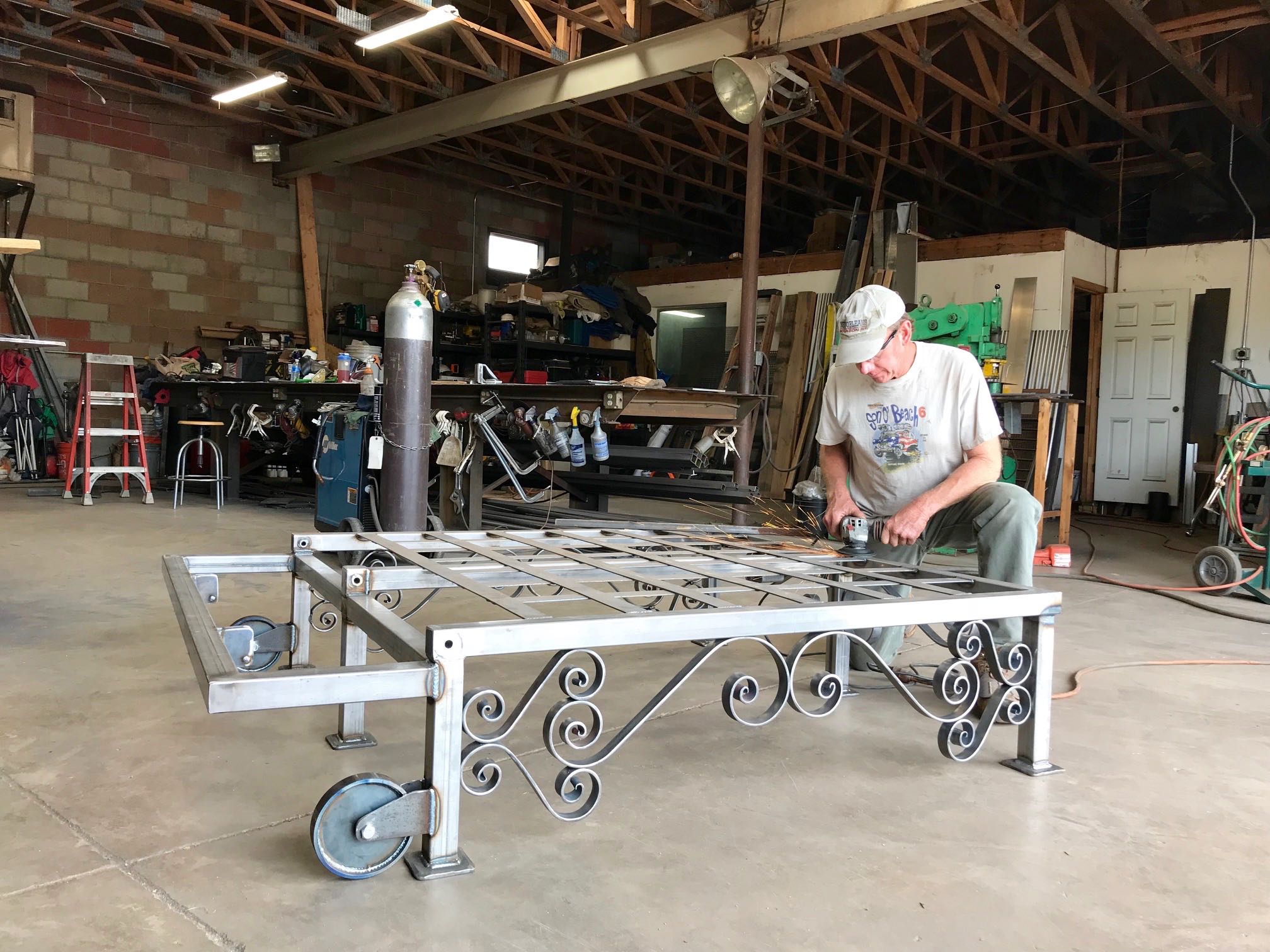
With no shortage of orders from clients, Keith works six days a week to keep up. Judging by his finished products, it’s easy to understand why he’s in high demand. Each fabrication is a work of art. Piecing together metal isn’t just an art, though, it’s a science ruled heavily by mathematics.

Keith and and his wife Deb live in Black Canyon City, Arizona, where they built their own house overlooking the canyon, including a workspace where Keith does some of his finer fabrications.

For his larger projects, Keith works out of a welding shop owned by our neighbor, Jason Hedgrick, who builds mostly industrial metal architecture.

Keith is the nicest guy you could ever meet, always ready with a smile and gentle sense of humor. He and Deb are both avid hikers, rock climbers, kayakers and cyclists, though a few years ago he was hit by a car that ran a red light at 55 mph. The accident almost put Keith out of business.

He suffered four broken ribs, a smashed nose and had to have his right shoulder replaced. Though he was only in the hospital for three days, it took Keith a year and a half to recover.

“We visited a client after I got out of the hospital,” Keith said. “I was barely walking, had to use a cane, and she told me she had some jobs waiting for me. That’s the only thing that saved me.”

Fully recovered now and busier than ever, Keith continues to create metal architectural features, mostly for his clients’ homes.

One of Keith’s most recent projects was a double lounge chair with an adjustable back. He made one for his own patio and a client who saw it insisted Keith make a lounge chair for him, too. Keith asked $3,000 and the client didn’t hesitate; that’s a remarkable price for a hand-forged, over-sized lounge chair that will most likely outlast all of us.

IMG_3144

IMG_4561

IMG_4558

Background

Born in Tucson, Keith moved to Phoenix with his family at the age of six and grew up around Greenway and 40th Street. He graduated from Shadow Mountain High School and attended vocations classes in automative and welding at Paradise Valley High School. His welding experience led Keith to a job at a machine shop where he fabricated fighter jet parts commissioned by McDonald-Douglas.

“The government gave each piece of steel a serial number and the material was tracked through the entire production process,” Keith said, “including a guard standing over us.”

For 16 years, Keith built aerospace parts for Eason & Waller before forming his own business where he and his partner built 4-wheel drive vehicles. They tricked-out jeeps to handle Sonoran desert tours by adding roll cages, seating, bumpers and heavy-duty axel shafts. 

Keith met John Gurley, a building contractor, when they both worked on commercial office space for Big Fish Advertising agency in Scottsdale. Keith built steel shelving and stairs for the customer’s space. John appreciated Keith’s work and began bringing him onto construction projects.

Eventually, Keith became the go-to metal guy for R. J. Gurley Construction, MAS Framing and other contractors. He operates two companies: Stone & Steel makes mostly residential fireplaces, fences, gates, etc., and EnviroSmith works with mostly green building products.
IMG_4176
This copper stove hood, made by Keith, was featured in the June 2007 issue of Phoenix Home & Garden magazine.

On average, Keith works on five jobs simultaneously, though he might juggle up to ten jobs at a time. Smaller projects can take two weeks. Larger projects can take years. Keith spent two years building hand railing, fences, huge planters, stairs, fireplace features, gates, etc., for two homes in the Rancho de las Cabellbos Golf Community in Wickenberg (see photos of the two Wickenberg homes and another client’s home in Scottsdale below).

Some homes use steel I-beams in framing the roof and walls, and that’s all Keith. One of the Wickenberg homes used 100-year old oak beams salvaged from the Great Lakes and the homeowners asked Keith to incorporate 100-year-old oak barn wood into gates for the property. .

Currently, Keith is working on a Desert Mountain Golf Club home, developing its structural steel frame and handrails.
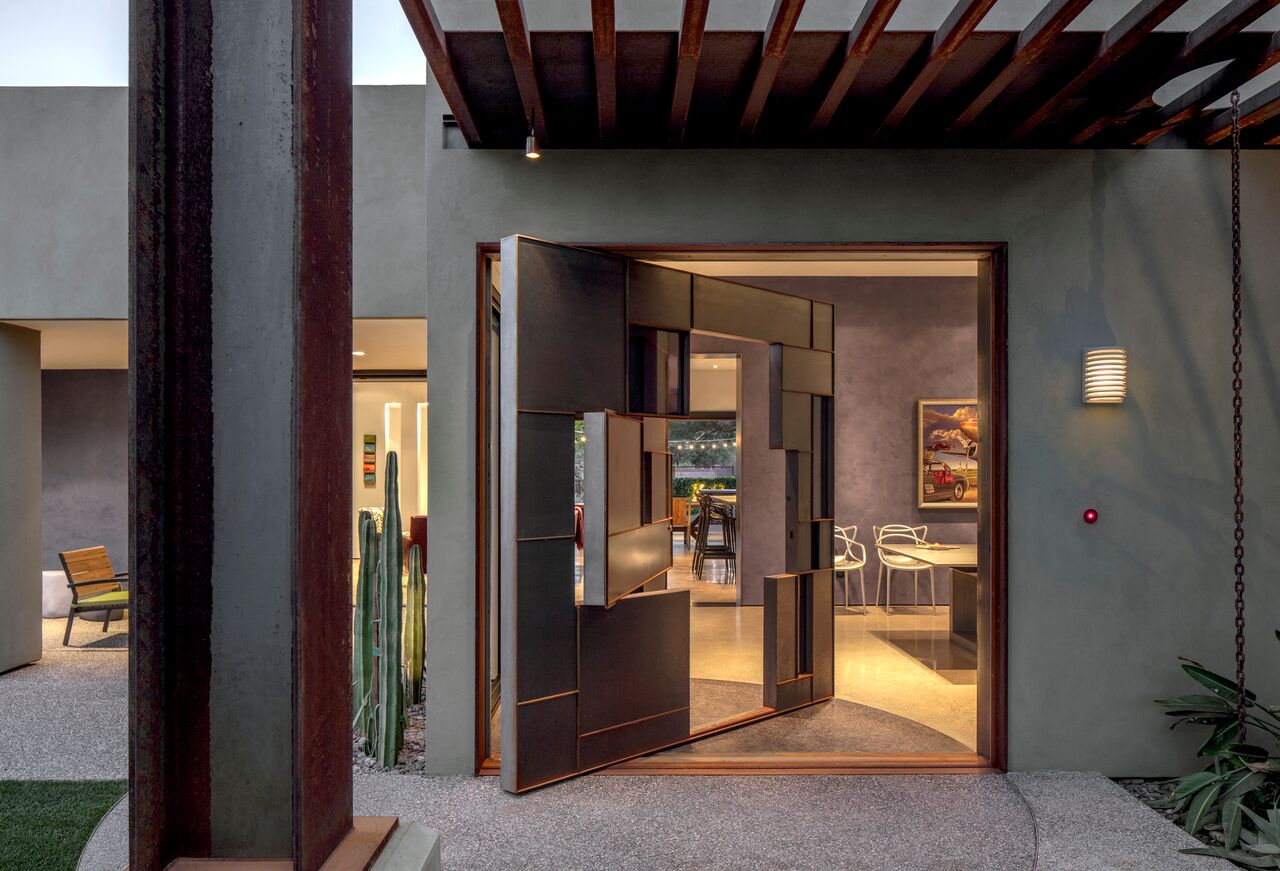
Self-taught, Keith has built his business through his artistry and his likability. Clients become friends and return again and again for another piece of functional art.

Keith’s House

As for his own home, Keith and Deb both put in $75,000 toward the building of their super efficient, solar-powered, 2,500 square foot home which they broke ground on in 2001. With their budget of $150,000, Keith acted as contractor and did most of the work himself, or he bartered for supplies or services.

He studied green building and still has a library of books about constructing environmentally friendly homes.

Their hillside lot overlooks Black Canyon, so Keith optimized the views by designing the house to nestle into the hillside. The house has five levels; the kitchen sits five feet higher than the living room. Averse to 90-degree angles, he made the main part of the house round, and rounded off all edges inside and out.

IMG_3443

Solar power means Keith and Deb pay the electric company, on average, $600 a year. And they draw off gray water to irrigate trees.

“We use a clothes detergent and soaps that won’t harm plants,” he said.

IMG_3445

Both Keith and Deb are certified blacksmiths, so their home has custom fabricated railings, stair treads with sun and moon cutouts, and unique metal bridge flooring between the kitchen and bedrooms. Deb made the kitchen cabinet handles, light switch plates and a bathroom towel bar that resembles a tree branch.

“There’s something about heating metal until it’s so hot it becomes pliable,” Keith says.

IMG_3439

In fact, metal and concrete are his favorite mediums. They poured their kitchen countertops out of concrete and inset a few polished stone pieces. Over the oven, Keith drilled half-inch holes in the concrete countertop in a spiral pattern. He then put brass pieces with rounded heads into the holes. The metal pieces act like a hot plate, conducting heat from the oven to any pot or pan placed on them.

IMG_3441

The floor is poured concrete, finished with a texture and stained. The concrete guy charged Keith half of the true fee because Keith helped him do the job and learned the skill in the process.

The walls are finished off with a clay that absorbs moisture. Accent architectural features are painted a deep rust color. Deb made the organic paint using clay and other materials she cooked on the stove.

In the kitchen, a large boulder sits on the ledge overlooking the living room and seems right at home next to a metal grid fence filled with small stones. Overhead hang hand-forged lighting fixtures Keith made from metal scrap, and a metal high-top bar made from reclaimed steel clings to a curved wall.

IMG_3442

“We try to re-use everything,” Keith says. “Instead of throwing metal pieces on the scrap heap, we built a desk out of them.” Deb salvaged old metal sheets and spent hours removing paint. Those are now desktops in the home office Keith and Deb share.

IMG_3450

Everywhere you look, artistic touches and little surprises delight, especially in the guest bathroom which sports a hand-forged copper sink, metal-framed mirror, hand-made sconces and, the piece de resistance, a hand-tooled copper shower wall.

IMG_3449

IMG_3446

IMG_3448

Keith has always been a non-conformist in his businesses, particularly in not cutting corners to ease the workload or reduce costs. He does the opposite, taking time to add eye-pleasing details and additional steps to ensure a piece is structurally sound and permanent.

In his younger days, Keith non-conformed as an adrenaline junky. His bucket list (to be completed by the time he was 23) included skydiving and flying. Learning to Powerchute allowed Keith to do both at one time. For a summer, he strapped himself into a chair and flew as high as 6,000 feet. Until the day a small plan flew under him.

“My face flushed,” Keith said “as I realized I’m 6,000 feet above the ground, higher than a plane, strapped into what is essentially a lawn chair. I panicked.” On landing, Keith was caught by a sidewind and he barely missed two cars before tumbling into the desert shrubs. That was Keith’s last Powerchute flight.

Part of that adrenaline junky still exists, though perhaps minimized. Why else would he bend steel heated to thousands of degrees while also bending the rules of design? Keith doesn’t consider himself an artist, but looking at the fine detail work he does with hard metals signifies otherwise.

Keith is a fine artisan to know if you need metal work; and he’s a fine man to know if you need a friend.

PHOTO GALLERY

Wickenberg Homes

Home #1

Keith crafted all the handrails, huge planters and fencing.

IMG_1350 (1)

IMG_1355

IMG_1360

IMG_1365

IMG_1364

IMG_1390

IMG_1382

IMG_1398

Home #2

Keith crafted all the gates using 100-year-old recovered barn wood.

IMG_1343

IMG_1304

IMG_1306

IMG_1309

IMG_1307

IMG_1327

IMG_1319

IMG_1316

IMG_1321

IMG_1311

IMG_1313

IMG_1328

Scottsdale Home (Photos courtesy of J. Gurley)

Keith built the exterior metal work (he did not craft the garage-style door or the interior aluminum door.

zth26ncA

xt_jR1nQ

rrmSAb4w

9ngORs2w

BM8_q-EQ

door

T17_2027

b3GvEWQQ

Keith’s Home Workshop

IMG_3457

IMG_3460

IMG_3454

IMG_3452

IMG_3453

Jason Hedgrick’s Workshop: Where Keith Creates

IMG_4102

IMG_4091

IMG_4088

IMG_4087

IMG_4086

IMG_4084

IMG_4083

IMG_4076

IMG_4079

Matt Simon, Chef

Giant of a Chef in a Small Town

Matt Simon is the best thing that’s ever happened to foodies in Black Canyon City (BCC), Arizona. Maybe the best thing to happen to BCC ever, which is saying a lot because many fine creative folks have happened to BCC!

IMG_4528

Nora Jean’s Koffee Kitchen Entrance

Ordinary guy Matt Simon rides his four-wheeler across BCC to his job and when he enters Nora Jean’s Koffee Kitchen, the restaurant he opened in 2014, it’s like Clark Kent entering a phone booth… he soon emerges wearing a cape… but in Matt’s case, his super power is revealed when he dons his chef garb and takes command of his kitchen.

Matt’s creative space, his kitchen, takes up nearly half of the restaurant space and diners can see everything that happens back there.

IMG_3013

While he might look like an average restaurant owner, Matt’s creds go much deeper. He knows just about everything there is to know about cooking foods from cultures the world over, and he understands the chemical reactions of ingredients when they’re mixed or heated or allowed to rest, etc., yet Matt is especially steeped in the ways of French cuisine with their sauces, breads, braised meats and unlimited varieties of cheeses and mushrooms.

Matt makes eggs Benedict look easy. He doesn’t break a sweat over making falafels from scratch. He whips us compote or roux or clarified butter or an orange meringue pie as though he’s buttering a slice of bread. Matt freely shares recipes and cooking tips with his customers. And he’s the reason Nora Jean’s is the pulsing heart of BCC, frequented by locals and out-of-towners alike.

IMG_3008

In the culinary storm that rumbles through Nora Jean’s most days of the week, Matt is the eternal calm at its center. He survived classical French cooking training so nothing can rattle him. His command of the kitchen is mesmerizing and most of his patrons want to be like Matt and cook like Matt, which is why his monthly cooking classes always sell-out.

Matt is patient with those of us who struggle with properly peeling an apple or de-skinning salmon or cranking linguine through a pasta machine.

Patient. That word perfectly describes Matt.

IMG_2987
IMG_2982

In his steady way, Matt honors his mother, Nora Jean Kay-Askew, every day. Her dream had always been to open a small breakfast and lunch cafe with her two sons. When Nora Jean passed away in 2011, the cafe dream faded until Matt moved to BCC with his wife Kelly, who had grown up there. Kelly’s mother and Matt’s mother had been best friends for years. 

Now, Matt has a four-person team of highly-trained employees who understand why each preparation step is important. Flora, Sam, Chris and May busily take, cook and deliver orders to customers they call by their first names.

“In addition to knowing our customers as friends, timing the cooking process is one of the most important aspects of serving meals,” says Matt. “Each food must be completed, plated and served at the right temperature.”

IMG_3018

Having cooked in professional kitchens for most of his adult life, Matt’s internal clock has developed into a sixth sense.

“I must be aware of my surroundings,” Matt says, “watching what other cooks are doing, what I’m cooking and listening to what customers are ordering.” Matt exudes calm at the center of his modest kitchen and his watchful eye means the swirling storm never does damage.

Although French cooking traditionally calls for lots of butter, cream and wine, Matt applies a healthy twist to his food preparation, such as offering salads with quinoa, farrow and black barley. His exposed kitchen allows customers to literally see the freshness of his produce and other ingredients.

In the winter, Nora Jean’ is closed on Mondays; in the summer, the  restaurant closes on Mondays and Tuesdays. Matt begins his day at 2 a.m. and gets to the restaurant by 2:30 or 3:00 a.m. to bake the bread and pastries and cook bacon and potatoes so they’re ready when the breakfast crowd begins arriving at 6 a.m.

IMG_3006

Matt only serves breakfast and lunch, but it takes him until 5 p.m. to get the kitchen ready for the next morning and to catch up on food orders and paperwork. He goes to bed around 8 p.m. before waking up at 2 a.m. to start all over again. 

“Nora Jean’s was going to be a grab-and-go place,” Matt says about its opening. “We only had two tables with seating and quickly learned people wanted to sit and eat.”

Matt added tables and hired more people, one of the first signs that he would adapt his restaurant to meet the needs of his customers, ensuring his success. 

“Because we thought customers would take their food with them, we started with only a few plates, most of which were disposable,” Matt says. “Soon I had to buy real plates. I started small because we only had the TurboChef.”

IMG_2987

Within three months of opening, Matt bought a stove and began to make quiches, breakfast sandwiches and eggs cooked in muffin tins. He allowed the restaurant to grow organically, investing in equipment as needed and not before.

Matt set a target revenue for his first year in business and he hit it!

Early Start

Things haven’t always been easy for Matt. He started working in 1988 at the age of 14 as a dish washer at Pinetop Country Club in Pinetop, Arizona, the first year Swiss Chef Claude Nicolet ran the club’s kitchen. Chef Nicolet had come from the Boulders in Carefree and brought along his well-trained crew. Being young and inexperienced, Matt took ribbing from the crew but he jumped at the chance to enter a seven-year apprenticeship with Nicolet.

IMG_4412

“One of my first assignments was to uniformly slice carrots,” Matt says, “and fill a huge eight-inch deep hotel-size pan. Chef inspected the carrot slices and found two that were not uniform, so he threw the entire pan out and made me start over. I didn’t like it too much, until I realized what he was teaching me.”

That hardline approach made Matt into a chef who rarely misses a beat, but who also has a sense of humor and shows kindness to staff and customers. The rigor of his training led to more rigor. Each year, Matt learned and mastered a different aspect of food and kitchen management, including pantry, lunch pantry, grill and sauté. 

Matt went to Northern Arizona University to be a physical therapist but instead majored in Hotel/Restaurant Management. During the summers, he worked at the White Mountain Country Club as Food and Beverage manager for two seasons and at Pinewood Country Club in Mund’s Park as sous chef (assistant manager to Chef) for three seasons.

IMG_3014

At 25, Matt was the executive Chef at Torreon Golf Club in Showlow, Arizona, for six years and then he worked at Hussaymampa Golf Club in Prescott, Arizona, as sous chef to be near Kelly, his girlfriend at the time (and now his wife).

Just before starting Nora Jean’s, Matt spent six years working for Compass group and managing cafeterias at American Express and American General Pharmaceuticals. Working nights, holidays and weekends got old, especially after Matt and Kelly married in 2009, and so Matt decided to start his own restaurant.

Growing the Business

Matt adds something new to the restaurant each year. In 2018 he added new tables. In 2017 he added milkshakes to the menu. In the future, he might add dinner one or two nights a week. 

Matt’s calm demeanor allows him to focus. “At Torreon Golf Cub, I was upset with the bread guy because he wouldn’t use color-coded bread tags to identify the days on which the bread was made. So I focused on learning to make all our breads that year, including rye, baguettes and ciabatta. The next year I focused on learning how to prepare chile peppers, and the next year it was grains.”

IMG_3003

This method of intense practice, practice, practice explains why Matt has perfected the dishes he serves at Nora Jean’s. And why customers walk in and ask him to fix them something special, without specifying what. They trust him and know whatever he makes will be good. 

“Some people, when I see them pull into the parking lot, I start making their meal,” Matt says. “I know what they want, if they avoid salt, and if they have a favorite food.”

IMG_2977

Over the last three years, Matt began giving his popular monthly cooking classes, which fill up fast with his die-hard fans and Nora Jean regulars. My husband Brent and I rarely miss a class. Matt and his team usually have a couple of dishes ready for tasting when we arrive, and then everyone eats again when the featured dishes are completed by the students. Amazingly, there are usually leftovers to take home for lunch the next day.

IMG_2996

We like the classes because we feel part of Matt’s extended family, which includes BCC and beyond, and we appreciate how he shares his joy of cooking. For instance, during the Southwest cooking class, we prepared pork tenderloins with a prickly pear demi-glaze and Ancho encrusted salmon with southeast rice and a pineapple salsa. A black quinoa salad with chunks of shrimp was spooned into roasted Poblano peppers and baked.

Our heads were spinning but Matt gingerly plated the food on pretty serving dishes as we students watched intently. He spooned on rice with roasted corn and black beans, topped it with salmon steaks and garnished the whole display with salsa.

As he created the food displays, Matt hummed. Surrounded by us students, who were oohing and ahhing, Matt hummed away, in the zone, appearing content. Although it was almost 8 p.m., you’d never know Matt had been in the kitchen since 2 a.m.

IMG_4317

As he was plating the food, he said, somewhat surprised, “Everything came out at the exact same time.”

Of course, it did.

Matt’s sixth sense is his internal clock.

Watching Matt navigate his kitchen that night as he danced to stir the saffron Chile sauce and the red onion confit while searing pork tenderloins, it was clear he wouldn’t want to be anywhere else.

IMG_3261

Past cooking class themes have included:

    • Appetizers
    • Spring Salads
    • Holiday Dishes
    • BBQ
    • Middle Eastern
    • Southwest
    • Mexican/Latin
    • Asian
    • French
    • Italian Part I & II
    • Pies
    • Desserts

At the end of this article, check out the list of dishes prepared in each of the classes listed above. In our most recent winter class on Comfort Foods, we cooked these dishes:

      • Pot Roast
      • Beef Stew
      • Chicken and Dumplings
      • Bacon Wrapped Smoked Meatloaf
      • Shepard’s Pie
      • Macaroni and Cheese
      • Baked Chicken with Roasted Root Vegetables

Because he’s tasting food all day, Matt doesn’t usually eat meals. Plus, his life can get hectic, not just with his work schedule but with his family’s two dogs, four cats, chickens and ducks.

“I don’t enjoy cooking at home because we don’t have a gas stove,” Matt says. “Sometimes I’ll just eat cereal for dinner.”

IMG_4417

Doesn’t seem right that this master chef would dine on Cheerios, Raisin Bran or Grape-Nuts.

But that’s just like Matt; saving his creative cooking energy for his devoted diners. 


Class Menus

Appetizers: Steak au Poivre Potatoes; Chicken Satay with Peanut Sauce; Mushroom Strudel with Goat Cheese; Seared Tuna with sweet soy and Baked Wontons; Bacon-wrapped scallops; Ancho Shrimp Stuffed Jalapeño Poppers wrapped in Bacon; Baked mini Brie; Gouda and Beer Fondue Bread Boule; Cheese Puff Tower; Eggplant Ricotta Bites; Vegetable Bundles with Herb Citrus Dip; Steamed Mussels (or Clams) with Grilled Bread.

Spring Salads: Marinated Mushroom Salad: Asian Cucumber Salad; Spring Berry Salad with Goat Cheese and Strawberry Vinaigrette; Asparagus and Red Quinoa Salad; Roasted Asparagus Salad with Toasted Almonds and Balsamic Reduction.

Breakfast: Eggs Benedict; Hollandaise Sauce; Crepes; Crepes Suzette; Buttermilk Biscuits; Sausage Gravy; Quiche; Roast Red Pepper, Asparagus and Goat Cheese Frittata.

Holiday Dishes: Roast Turkey; Roast Duck; Pork Crown Roast; Chestnut Stuffing with Chorizo; Cornbread Stuffing with Longanizo; Chipotle, Cinnamon and Honey-Glazed Sweet Potatoes; Creamy Mashed Potatoes; Carrot and Turnip Puree; Haricot Vert and Burnt Butter, Lemon and Almonds; Blood Orange/Pomegranate Demi Glaze; Cranberry Orange Sauce; Turkey Gravy.

BBQ: Vinegar BBQ Sauce; Mustard BBQ Sauce; Basic BBQ Sauce; Matt’s BBQ Sauce; BBQ Pulled Pork; BBQ Brisket; BBQ Chicken; BBQ Babyback Ribs; Coleslaw; Vinegar-Based Slaw; Roasted Potato Salad; Baked Beans; BBQ Spice Mix; Pickling Liquid for Vegetables.

Middle Eastern: Hummus; Babba Ganoush; Addas Mutabel (Lentil Salad); Jerusalem Salad; Tabouleh; Falafel; Pita; Chicken Shawarma; Tarator; Tzatziki Sauce; Beef Kefta.

Southwest: Spiced Chicken Salad; Ancho-Crusted Salmon with Pineapple Salsa; Spiced Pork Tenderloin with Prickly Pear Demi-Glace and Red Onion Confit; Rice; Grain- and Shrimp-Stuffed Poblano with Saffron Chile Sauce.

Mexican/Latin: Carne Asada; Citrus Pork Carnitas; Chicken Tinga; Yucatan Chicken Skewers; Refried Beans; Black Beans; Spanish Rice; Guacamole; Salsa Verde; Chipotle Salsa; Pico de Gallo; Enchilada Sauce; Chimichurri; Jicama Salad.

Asian: Chicken Pho; Mongolian Beef; Lo Mein Noodles; Vegetarian Stir Fry; Panang Curry; Lettuce Cups; Chilled Sesame Broccoli Salad.

French: Five mother sauces (Espagnole, Bechamel, Veloute, Tomato and Hollandaise); Boef Filet en Croute (Beef Wellington); Chicken en Croute; Fish en Papillote; Roast Rack of Lamb Persille; Pate Choux; Pastry Cream; Creme Brulee; Creme Anglaise (Vanilla Sauce).

Italian Part I: Basic Pasta; Ciabatta; Pizza Dough; Chicken Picatta; Braciole; Bechamel Sauce; Tomato Sauce; Tomato Bruschetta; Caprese Salad.

Italian Part II: Porcini Pasta; Pork Osso Buco; Lamb Shank; Ravioli; Potato Gnocchi; Ricotta Gnocchi; Risotto.

Pies: Basic Pie Dough; Chicken Pot Pie; Veloute; Shepard’s Pie; Fruit Pie; Apple Crisp; Lemon (or Orange) Meringue Pie.

Desserts: Creme Anglaise (Vanille Sauce); Creme Caramel (Flan); Creme Brûlée; Pastry Cream; Lemon Curd; Pate a choux; Raspberry Coulis.


Photo Gallery

IMG_4321
IMG_3261
IMG_3019
IMG_2999

A Writing Workshop and Then Some

What aspiring writer doesn’t want to spend mornings in various Le Marais cafes writing and noshing on pain au chocolate and cafe creme?

Paris in June with Jaime

Writing workshops are a great way to meet kindred writing spirits and exercise our writing muscles in new ways.

Monet's garden painting; writing workshops

I’m captivated by Monet’s large lily pad paintings at Musee de L’Orangerie.

My daughter Jaime and I traveled to Paris in June of 2018 to take a writing course with Patty Tennyson, owner of the Paris Cafe Writing workshop and a former Chicago Tribune writer. What aspiring writer doesn’t want to spend mornings in various Paris cafes writing and noshing on pain au chocolate and cafe creme?

While keeping my expectations in check, I planned carefully for the trip and found an apartment in Le Marais, the hip/fashion/gay area of town where our Paris Cafe Writing classes would be held at various cafes. Patty and her husband Joe have an apartment in La Marais so it makes sense we’d be in their neighborhood.

Patty and Joe live in Chicago and spend the summer in Paris. Patty is a journalist and a foodie who has authored cookbooks; Joe is a retired English teacher who loves history, food and the history of food, which he shared with our group.

Le Marais is one area of Paris that still has most of its historic buildings dating back several hundred years. When neighborhoods of historic buildings were being razed across Paris last mid-century to build large apartment and office buildings, they didn’t get around to Le Marais.

That’s one thing about Paris proper; everywhere you look, the French love of grandeur is evident… architecture, gardens, bridges, the Seine River, the Eiffel Tower. Even lamp posts and public water fountains have delicate decorative details. The city center, straddling the Seine north and south, actually isn’t that big. You could theoretically walk across town in several hours. Luckily you don’t have to; Paris has an efficient and pleasant Metro system.

Jaime at arc de Triomphe.

Patty and Joe taught our class how to ride the Metro. Jaime and I got the hang of it, zipping around town from the Eiffel Tower to the Arc de Triomphe.

We stayed in an apartment on the fifth floor of a 15th century building. Our apartment was on the back side of the building, overlooking a small garden, so no street noise. We left the tall windows open every night and enjoyed the coolness, and sometimes a gentle rain.

But here’s what made being in Paris so perfect, besides spending lots of time with Jaime: Patty is an excellent writing coach AND event planner.

Patty’s workshop fee included meals. Each morning our group would meet at a charming cafe, upstairs, and they’d take our order for a croissant or chocolate croissant or toasted baguette with jam. Jaime and I ordered cafe creme each day and fresh squeezed orange juice. All we had to do was sit back and participate in the daily writing exercise with fascinating women while sounds of pedestrians and cars floated into the open windows.

Our writing group enjoying dinner on our first night together: Jaime is on the left and I’m next to her.

Almost every day when class ended at 11:30 a.m., we’d go downstairs and eat lunch, getting to know each other better. Afternoons were free for us to explore the city and write. Jaime and I did not write in our free time… too much to do and see in Paris! Although, each night when we returned to our apartment, we would talk about our day and I’d record our activities (and impressions) in Notes on my iPhone. Those notes would later turn into a record of our time in Paris.

One evening, our writing group met up with Patty and Joe and they took us to Duc des Lombard, a jazz club, where we saw Daniel Romeo lead a jazz band. Parisians love jazz, and having been to the New Orleans Jazz Festival the month before, I could appreciate Daniel and his team of musicians.

Patty had warned us ahead of time: do not talk while the band is performing. In France it’s rude, so no whistling or yelling, just gentle clapping. No one talked or cheered during the entire hour performance.

Our writing group visits Duc des Lombard, a Parisian jazz club.

Another night, our writing group met up and took the bus to the left bank to visit the Shakespeare & Company bookstore, originally started (at a different location) by American Sylvia Beach more than a hundred years ago. Sylvia befriended Ernest Hemingway when he was a 25-year-old writer-in-practice, published James Joyces’ Ulysses and was at the center of the expat crowd who made Paris in 1920s a creative hotspot.

Small, with book-stuffed nooks and crannies and an upstairs devoted to poetry, Shakespeare & Company feels like a church or museum. The guy who checked me out was American and young, most likely a “tumbleweed” allowed to spend nights in the book store for helping out during the day. Ethan Hawk was a tumbleweed. The young man behind the counter must have been living his dream.

After we all paid for our books, which were stamped with the official “Shakespeare & Company” seal, we went next door… literally next door… to a restaurant and settled upstairs around a large oval table from which we could look out of two gabled windows and see Notre Dame across the Seine.

Notre Dame was built starting in the 10th century and they’ve added to it over time. It sits on Ile de la Cite, one of two small islands in the middle of the Seine, and Patty made sure our group had the amazing opportunity to experience the river and the cathedral. When Notre Dame caught fire on April 15, 2019, like many people around the world, I felt the devastation and grief.

Notre Dame as seen from a restaurant next to Shakespeare & Company bookstore just across the Siene.

On our final night together, our writing group ate dinner at La Coupole, a restaurant where musicians, artists and writers in the 1920s would gather. The art nouveau interior hasn’t been altered and I could imagine Hemingway, Man Ray, Picasso and Gertrude Stein sitting in a banquette, drinking champagne or cafe creme, discussing the issues of the 20s.

Our group dined at La Coupole restaurant on our final night together.

In our free time, Jaime and I visited Yves Saint Laurent’s (YSL) museum, traveled up to Giverny to visit Monet’s home and gardens, and viewed Monet’s huge water lily paintings at Musee L’Orangerie.

The only problem with Paris, which really isn’t a problem, is that in June the sun doesn’t set until after 10 p.m. Jaime and I didn’t get to bed before midnight each night, too busy to realize how late it was. But we didn’t mind losing sleep to the sights and sounds of Paris!

Taking the writer’s workshop with Patty allowed us to experience the city with a knowledgeable “guide” who was fluent in French… and who was also a resident! Patty took care of the bill at every cafe and restaurant. Our writing group was quite spoiled. We just showed up, sat down, ate, enjoyed and left.

Patty had pre-arranged every meal, concert and excursion, even escorted us all via bus, walking or the metro. She and Joe were our personal guides. If any of us had questions, they had answers. And, boy, did they have some great stories to tell! Joe taught writing and poetry in Chicago public schools and took a three-year tour in China to teach English. He knows French very well, too, and is a wordsmith like Patty.

La Marais, paris; writing workshop

Patty and Joe introduced our writing group to the best falafels in Paris at L’as du Fallafel.

Patty could be just a writing instructor, but she does so much more for the people who attend her workshop. While she’s not responsible for her students’ satisfaction with Paris, they usually come away happy with their experiences and more informed about the things they saw and heard. Patty makes the trip special and an excellent choice for anyone who wants to travel solo or with a friend.

Taking Patty’s course is the best way to experience Paris for first-timers! And for second-timers, because I’m attending Patty’s Writing Workshop for Returnees in November 2019 and am staying an extra week to explore the city and museums… and maybe take a couple of day trips on France’s excellent train system.

When you attend a writing workshop in another city, or another country, the experience becomes richer and provides not just a way to improve your writing but also lots of fodder for future writing!

If you know of a writing workshop like Paris Cafe Writing that is held by a host like Patty and who also exposes the group to the local area, please let me know! Or tell me about a writing workshop you would HIGHLY recommend to others.