A Writing Workshop and Then Some

What aspiring writer doesn’t want to spend mornings in various Le Marais cafes writing and noshing on pain au chocolate and cafe creme?

Paris in June with Jaime

Writing workshops are a great way to meet kindred writing spirits and exercise our writing muscles in new ways.
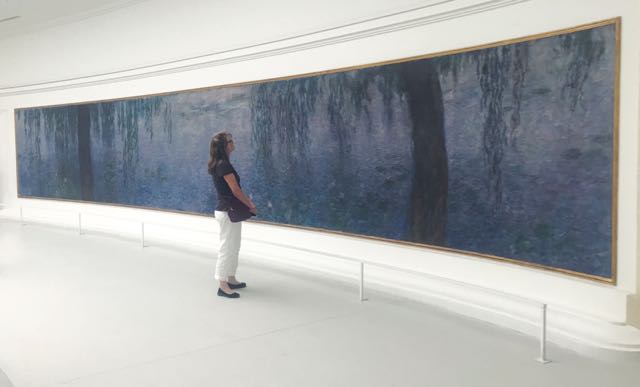
Monet's garden painting; writing workshops

I’m captivated by Monet’s large lily pad paintings at Musee de L’Orangerie.

My daughter Jaime and I traveled to Paris in June of 2018 to take a writing course with Patty Tennyson, owner of the Paris Cafe Writing workshop and a former Chicago Tribune writer. What aspiring writer doesn’t want to spend mornings in various Paris cafes writing and noshing on pain au chocolate and cafe creme?

While keeping my expectations in check, I planned carefully for the trip and found an apartment in Le Marais, the hip/fashion/gay area of town where our Paris Cafe Writing classes would be held at various cafes. Patty and her husband Joe have an apartment in La Marais so it makes sense we’d be in their neighborhood.

Patty and Joe live in Chicago and spend the summer in Paris. Patty is a journalist and a foodie who has authored cookbooks; Joe is a retired English teacher who loves history, food and the history of food, which he shared with our group.

Le Marais is one area of Paris that still has most of its historic buildings dating back several hundred years. When neighborhoods of historic buildings were being razed across Paris last mid-century to build large apartment and office buildings, they didn’t get around to Le Marais.

That’s one thing about Paris proper; everywhere you look, the French love of grandeur is evident… architecture, gardens, bridges, the Seine River, the Eiffel Tower. Even lamp posts and public water fountains have delicate decorative details. The city center, straddling the Seine north and south, actually isn’t that big. You could theoretically walk across town in several hours. Luckily you don’t have to; Paris has an efficient and pleasant Metro system.
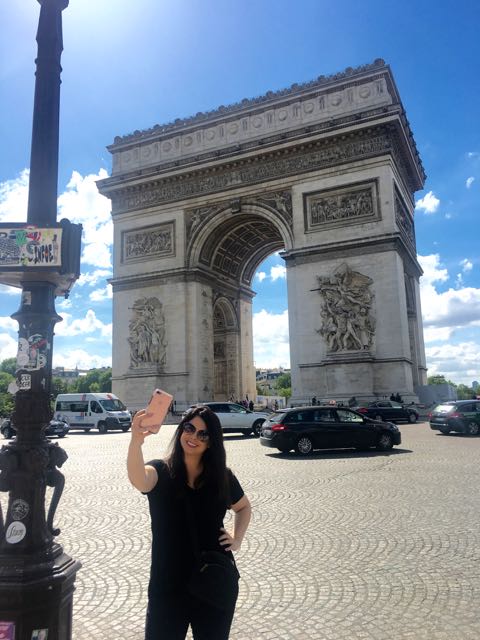
Jaime at arc de Triomphe.

Patty and Joe taught our class how to ride the Metro. Jaime and I got the hang of it, zipping around town from the Eiffel Tower to the Arc de Triomphe.

We stayed in an apartment on the fifth floor of a 15th century building. Our apartment was on the back side of the building, overlooking a small garden, so no street noise. We left the tall windows open every night and enjoyed the coolness, and sometimes a gentle rain.

But here’s what made being in Paris so perfect, besides spending lots of time with Jaime: Patty is an excellent writing coach AND event planner.

Patty’s workshop fee included meals. Each morning our group would meet at a charming cafe, upstairs, and they’d take our order for a croissant or chocolate croissant or toasted baguette with jam. Jaime and I ordered cafe creme each day and fresh squeezed orange juice. All we had to do was sit back and participate in the daily writing exercise with fascinating women while sounds of pedestrians and cars floated into the open windows.
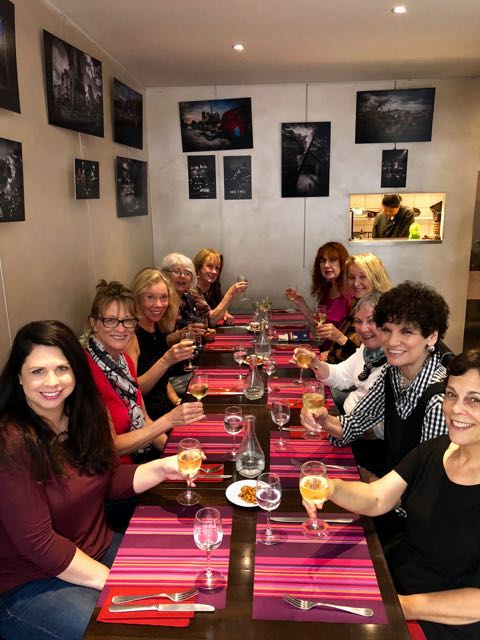
Our writing group enjoying dinner on our first night together: Jaime is on the left and I’m next to her.

Almost every day when class ended at 11:30 a.m., we’d go downstairs and eat lunch, getting to know each other better. Afternoons were free for us to explore the city and write. Jaime and I did not write in our free time… too much to do and see in Paris! Although, each night when we returned to our apartment, we would talk about our day and I’d record our activities (and impressions) in Notes on my iPhone. Those notes would later turn into a record of our time in Paris.

One evening, our writing group met up with Patty and Joe and they took us to Duc des Lombard, a jazz club, where we saw Daniel Romeo lead a jazz band. Parisians love jazz, and having been to the New Orleans Jazz Festival the month before, I could appreciate Daniel and his team of musicians.

Patty had warned us ahead of time: do not talk while the band is performing. In France it’s rude, so no whistling or yelling, just gentle clapping. No one talked or cheered during the entire hour performance.

Our writing group visits Duc des Lombard, a Parisian jazz club.

Another night, our writing group met up and took the bus to the left bank to visit the Shakespeare & Company bookstore, originally started (at a different location) by American Sylvia Beach more than a hundred years ago. Sylvia befriended Ernest Hemingway when he was a 25-year-old writer-in-practice, published James Joyces’ Ulysses and was at the center of the expat crowd who made Paris in 1920s a creative hotspot.

Small, with book-stuffed nooks and crannies and an upstairs devoted to poetry, Shakespeare & Company feels like a church or museum. The guy who checked me out was American and young, most likely a “tumbleweed” allowed to spend nights in the book store for helping out during the day. Ethan Hawk was a tumbleweed. The young man behind the counter must have been living his dream.

After we all paid for our books, which were stamped with the official “Shakespeare & Company” seal, we went next door… literally next door… to a restaurant and settled upstairs around a large oval table from which we could look out of two gabled windows and see Notre Dame across the Seine.

Notre Dame was built starting in the 10th century and they’ve added to it over time. It sits on Ile de la Cite, one of two small islands in the middle of the Seine, and Patty made sure our group had the amazing opportunity to experience the river and the cathedral. When Notre Dame caught fire on April 15, 2019, like many people around the world, I felt the devastation and grief.

Notre Dame as seen from a restaurant next to Shakespeare & Company bookstore just across the Siene.

On our final night together, our writing group ate dinner at La Coupole, a restaurant where musicians, artists and writers in the 1920s would gather. The art nouveau interior hasn’t been altered and I could imagine Hemingway, Man Ray, Picasso and Gertrude Stein sitting in a banquette, drinking champagne or cafe creme, discussing the issues of the 20s.

Our group dined at La Coupole restaurant on our final night together.

In our free time, Jaime and I visited Yves Saint Laurent’s (YSL) museum, traveled up to Giverny to visit Monet’s home and gardens, and viewed Monet’s huge water lily paintings at Musee L’Orangerie.

The only problem with Paris, which really isn’t a problem, is that in June the sun doesn’t set until after 10 p.m. Jaime and I didn’t get to bed before midnight each night, too busy to realize how late it was. But we didn’t mind losing sleep to the sights and sounds of Paris!

Taking the writer’s workshop with Patty allowed us to experience the city with a knowledgeable “guide” who was fluent in French… and who was also a resident! Patty took care of the bill at every cafe and restaurant. Our writing group was quite spoiled. We just showed up, sat down, ate, enjoyed and left.

Patty had pre-arranged every meal, concert and excursion, even escorted us all via bus, walking or the metro. She and Joe were our personal guides. If any of us had questions, they had answers. And, boy, did they have some great stories to tell! Joe taught writing and poetry in Chicago public schools and took a three-year tour in China to teach English. He knows French very well, too, and is a wordsmith like Patty.

La Marais, paris; writing workshop

Patty and Joe introduced our writing group to the best falafels in Paris at L’as du Fallafel.

Patty could be just a writing instructor, but she does so much more for the people who attend her workshop. While she’s not responsible for her students’ satisfaction with Paris, they usually come away happy with their experiences and more informed about the things they saw and heard. Patty makes the trip special and an excellent choice for anyone who wants to travel solo or with a friend.

Taking Patty’s course is the best way to experience Paris for first-timers! And for second-timers, because I’m attending Patty’s Writing Workshop for Returnees in November 2019 and am staying an extra week to explore the city and museums… and maybe take a couple of day trips on France’s excellent train system.

When you attend a writing workshop in another city, or another country, the experience becomes richer and provides not just a way to improve your writing but also lots of fodder for future writing!

If you know of a writing workshop like Paris Cafe Writing that is held by a host like Patty and who also exposes the group to the local area, please let me know! Or tell me about a writing workshop you would HIGHLY recommend to others.
Word by Word

A Writing a Day

Susan, a friend and damn good writer, agreed to attend Natalie Goldberg’s writing workshop in 2015. Susan traveled from  Portland and I flew from Phoenix to Albuquerque, where we joined eight other women in a van headed to the Upaya Zen Center in Santa Fe. That van ride with intelligent, interesting women was a precursor to what we’d experience during the upcoming writer’s retreat. Ultimately, there were more than 50 of us, mostly women, enjoying vegetarian meals, meditating, writing, being silent during daylight hours and sharing our work for four days. 

Like most people who dream of being “writers,” I’ve been a huge Natalie Goldberg fan since reading Writing Down the Bones when it was published in 1986. Then she followed up with Wild Mind: Living the Writer’s Life in 1990. I formed a writer’s group with friend’s Kate and Richard, who both happened to be from upstate New York but somehow chose Atlanta as their home in the late 80s. We’d meet weekly at each other’s houses, on a rotating basis, and perform 10- and 20-minute writing practices about any old topic. We stuck to Natalie’s writing practice rules: Keep writing, don’t stop, don’t lift your pen off the paper, don’t edit, and be specific – Cadillac, not car.


Kate and Richard are both excellent writers, but we all suffered from the typical writer’s milieu; we had no central area of interest on which to focus our writing. We’d write and write between timer bells on topics that didn’t really matter, on short stories that would never go anywhere. It was a lot of fun, though, and hopefully we honed our writer’s craft even if we weren’t churning out bestsellers. 

Writing has always been central to my life, even when I wasn’t doing it as a living. Please know, I’m writing for a living now as the Sr. Communications Specialist for an insurance company. I’m not making a living by being a published author or journalist or columnist, but writing about insurance is also not as boring as it might sound. I started a company magazine for our customers and enjoy researching and writing articles on many interesting topics, particularly people. So that’s this writer’s lemonade! 

When I say writing has always been central to my life, it’s because I’ve written for my own pleasure these many years, even when doing a good bit of writing in my marketing jobs. Writing is a compulsion. I wrote my first “chapter book” when I was 9. Putting down words is as necessary for me to live as air. When I don’t write, I become moody. Tense. Back then, I simply didn’t know what to write about, so I fooled around with essays and short stories.

I found out writing fiction isn’t my thang, though I grew up reading fiction by famous Southern women writers like Flannery O’Connor, Eudora Welty and Carson McCullers… and wanted to be just like them. McCullers The Member of the Wedding blew my young mind; O’Connor’s A Good Man is Hard to Find shocked my teenage sensibilities and yet resonated with macabre inner stirrings that felt like a birthright; and Welty’s One Writer’s Beginning was published in 1984, the time I was seeking a writer-guru… a path to self-expression.


When I went to Kenya in 2005 as a marketing advisor to the Great Lakes University of Kisumu, I found plenty to write about. Plenty of life or death topics. Topics that mattered. And after a year of posting to a blog in Kenya, I came home and compiled a portion of those blogs into Poverty & Promise: One Volunteer’s Experience of Kenya, a book that won several awards and was published by an independent press.

Since then, I’ve searched for topics that mattered as much as the lives of Kenyans (without having to move to another country). It’s not easy. 

Back at the writer’s retreat, when all of the women writers (and the four or five men who attended) were gathered in the Zendo for one of Natalie’s talks, a participant shared with the group that she and one of the guys in attendance wrote emails to each other every day. They had done if for years. Committing to write to each other made it more likely they would send something, anything, as a way to stay on track, stay in the habit, and get the writing practice they needed. Receiving guidance from another writer was a plus!! 


This struck me as an excellent idea and when I proposed it to Susan, she agreed. Of course, it was more than a year after the retreat that I asked Susan about being daily pen pals. After the retreat, we had agreed to share our writing pieces with each other for feedback, but we didn’t set deadlines. It wasn’t until March of 2017 when we began writing our daily practice emails.

Today, I set out to capture the content from all my practice-writing emails to Susan, and put them into one document. I dreaded it, even procrastinated for several weeks. As I went through the Sent folder and copied and pasted each email, I was surprised by some topics and astounded by others, both mine and Susan’s. Several were really good. And extremely interesting. And heartbreaking and funny. As I meticulously pulled my content and re-read hers, I didn’t want it to end!

We agreed no pressure about writing every single day; no reprimands, no guilt. We didn’t email every day, although we tried. We were compassionate about life happening, and days when we were exhausted, or if we were traveling. But I didn’t want to lose momentum, so I made myself write on some days even when I was brain-dead.

If I didn’t feel like writing on my computer in my studio (because it’s also where I work from home for my job and I sometimes get sick of being in front of a computer), I’d write to Susan from my iPhone while propped up in bed, very late at night, but not past midnight or I would have missed writing that day. Susan and I were both shocked at how much coherent writing can be accomplished on such a tiny keyboard. 


Although we’ve only been doing daily writing-practice emails for seven months, when placed into the word doc, my writings filled 157 pages in Arial, 11 font size, single-spaced lines with a space between paragraphs. It was nearly 100,000 words (99,944 to be precise, including this blog post). 

Just like with the Kenyan blog, words add up. And before you know it, you have a book. And a detailed record of your life and thoughts that would otherwise disappear into the ether.

Susan says, “Our partnership has inspired me to start looking at my writing as a thing of value, not simply an indulgence.” Just another bonus of this practice!

I’m so grateful to Susan for being my writing practice partner and my muse. She’s my ideal reader (something Natalie instructed us to find). She’s uncommonly wise and a knock-out voice the world needs to hear from. I’m the luckiest person on the planet to get to read Susan’s eloquent, life-affirming and charming writings (nearly) every single day!

Such an honor.

Chasing Georgia Ghosts

In Search of Flannery & Alice

It’s Labor Day and you better believe traffic headed north on I-75 toward Atlanta will be thick, possibly even crawling. So I take a trick from Mama’s playbook; avoid the interstate on my way to the Atlanta airport. I steer my rented Altima northeast toward Macon, intent on traveling 2-lane blacktop highways and taking an impromptu literary detour.

Destination: Andalusia Farm in *Milledgeville, Georgia.

Flannery O’Connor lived with her mother, Regina, at Andalusia Farm from 1951 until her death from lupus in 1964 (I was one year old). I’ve been wanting to stop by Andalusia for a few years, every time I travel back to Georgia to visit family, but it has never worked out.

Flannery is best known for her Southern Gothic tale A Good Man is Hard to Find, plus many other short stories and novels.

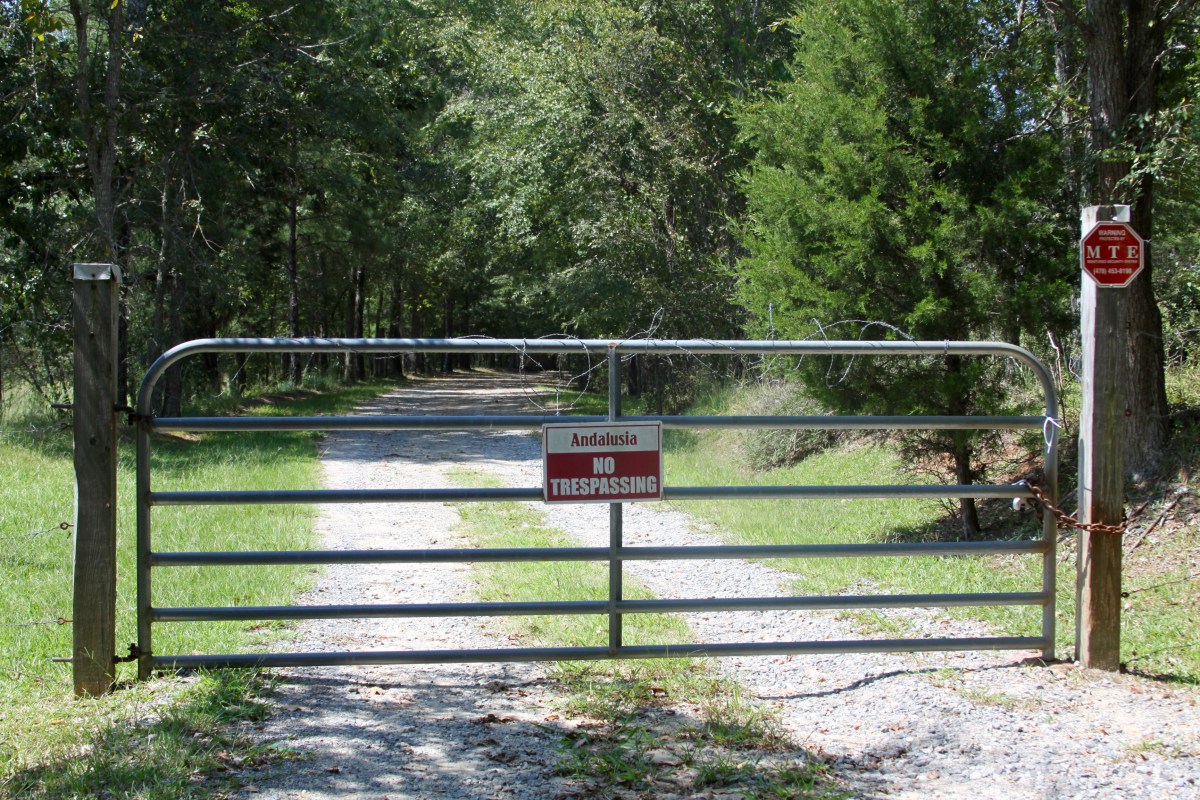
From Warner Robins, it takes an hour and 15 minutes to find the house on N. Columbia Street, a well-trafficked four-lane highway. When I turn into Andalusia’s drive at 2628 N. Columbia Street opposite Butler Ford, America’s Best Value Inn and Badcock Home Furniture, a locked gate with a “no trespassing” sign cuts my trip short. 

I had checked the website before setting out and knew the house was closed; I just couldn’t resist stopping by in case, through some miracle, it was accessible. The only content on andalusiafarm.org had read:

“We are hard at work readying Andalusia for its reopening as a historic house museum at Georgia College. During this transition, we will be temporarily closed to the public. Information on the reopening of the museum will be posted on this site, and our social media pages. Thank you for your continued support!”

I later learn that just the month before, on August 8, a small celebration was held at the house when the Flannery O’Connor Andalusia Foundation gifted the Andalusia house to Georgia College and State University, whose campus is only four miles away. Flannery is an alumni of the college. Watch a short video here.

Garden & Gun magazine published a September 22, 2017, article titled Flannery O’Connor: Under New Management about the house getting a new start with Georgia College. Here’s a photo of the house credited to the college that ran in Garden & Gun.

Andalusia
Andalusia home where Flannery O’Connor lived until her death in 1964.

At the locked gate, I think maybe I can at least see the house from the drive, perhaps spot one of the peacocks strolling through the yard, generations removed from the ones Flannery used to raise here. 

But, no. Another sign indicates the house is two miles away, too far to see beyond the trees surrounding the drive. Looking at the property on Google maps gives you a feel for how peaceful the area is. Although N. Columbia Street is also busy U.S. 441 highway, the tree-dotted land immediately surrounding Andalusia is undeveloped.

Liking Andalusia’s Facebook page is as close as I’ve gotten to seeing the house in the 21st century. While there isn’t a ton of information on the FB page, there are photos of renovations to the Hill House (called “the tenant’s farmer’s house” in the first black and white photo below) that started in 2011. 

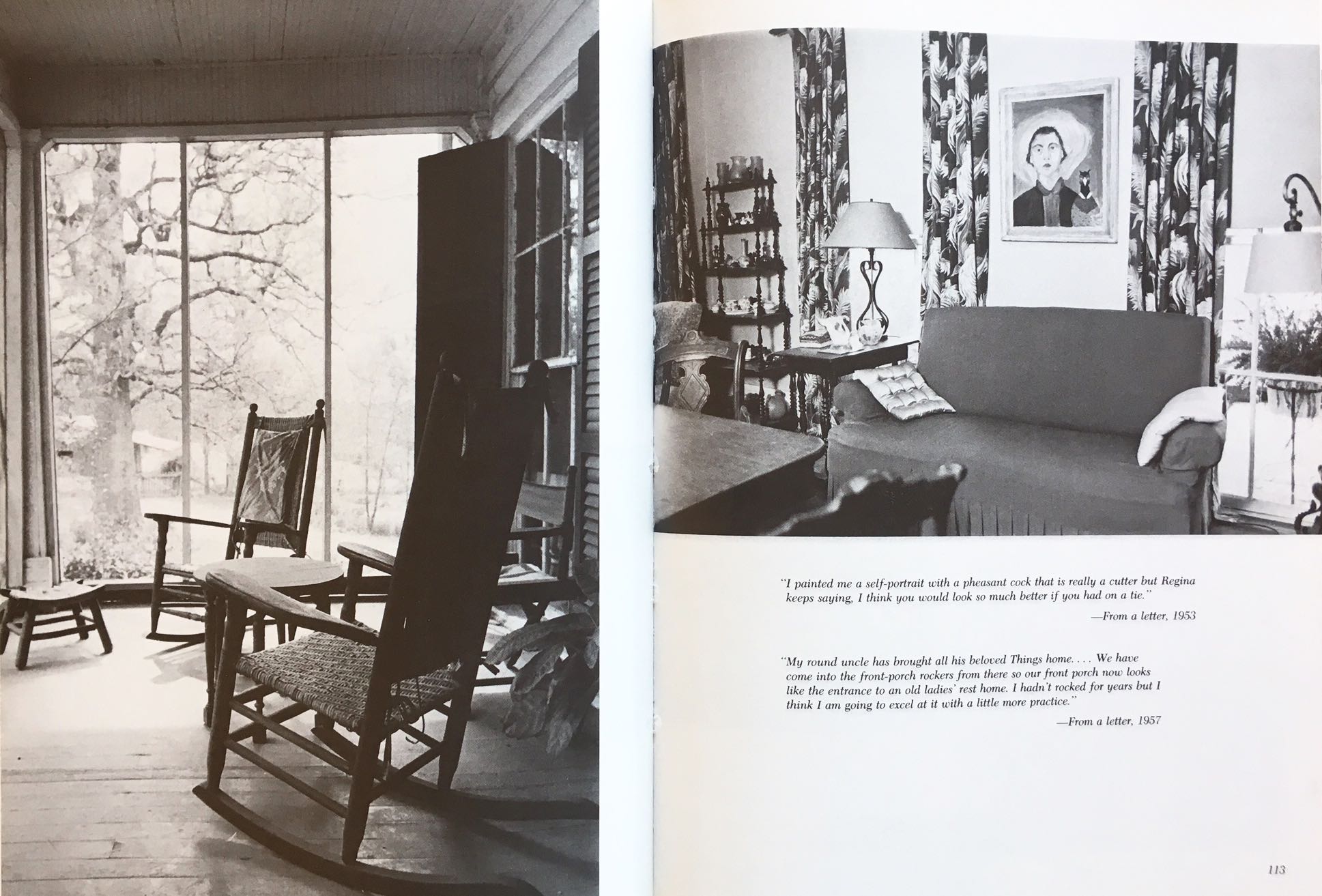
Writers in Residence: American Authors at Home, published in 1981, contains images of homes and writing spaces of writers from across the U.S.

Glynne Robinson Betts traveled widely to write the content and take the photos. Often, she was given tours by the authors themselves, but at Andalusia, Mrs. Regina O’Connor was her tour guide. Here are the resulting pages.


IMG_2727


IMG_2728


IMG_2729


It’s telling that all but one of the photos are of the exterior and the land; most people know that “place” is as much a character in Southern writing as are the people. In her book, Betts writes this about Flannery: “In her book-lined bedroom on the ground floor of the farmhouse, her desk turned away from the inviting front windows, she wrote about the country people of the Georgia Bible Belt, their strengths and peculiarities.”

When Georgia College re-opens Andalusia Farm, I’m coming back to see that bedroom and, hopefully, that writing desk!!

Alice Walker

Undeterred, I put “Wards Chapel Road” into google maps on my iPhone and drive 15-minutes to where Alice Walker grew up just outside of Eatonton, Georgia. 

Along Wards Chapel Road are: 1) the place where Alice was born on Feb. 9, 1944, to her sharecropper parents, Willie Lee Walker and Minnie Lou Tallulah Grant; 2) her family home, called Grant Plantation; 3) the Wards Chapel cemetery where her parents and other ancestors are buried; and 4) the Wards Chapel A.M.E. church which Alice attended.

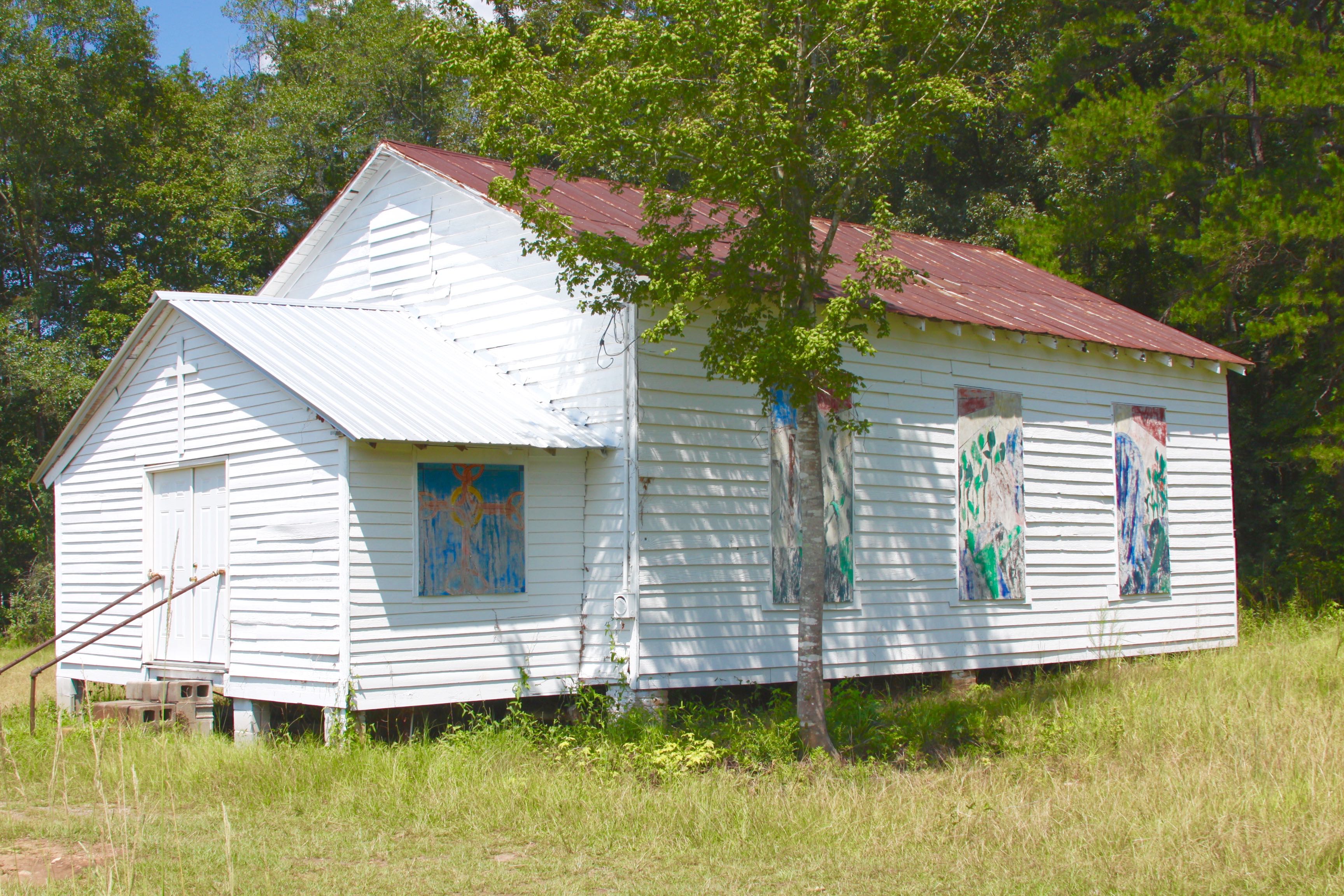
I drive up and down the road, twice, looking for signs of her birthplace and homes, but can only find the church, obviously unused now, but neatly maintained. I imagine what it was like for Alice and her family to walk to the tiny church each Sunday on a once-dirt road in the segregated South. 


IMG_0816
Wards Chapel A.M.E. Church near Eatonton, Georgia, where Alice Walker attended.       Alice wrote, “Any God I ever found in church, I brought in myself.”

IMG_0814
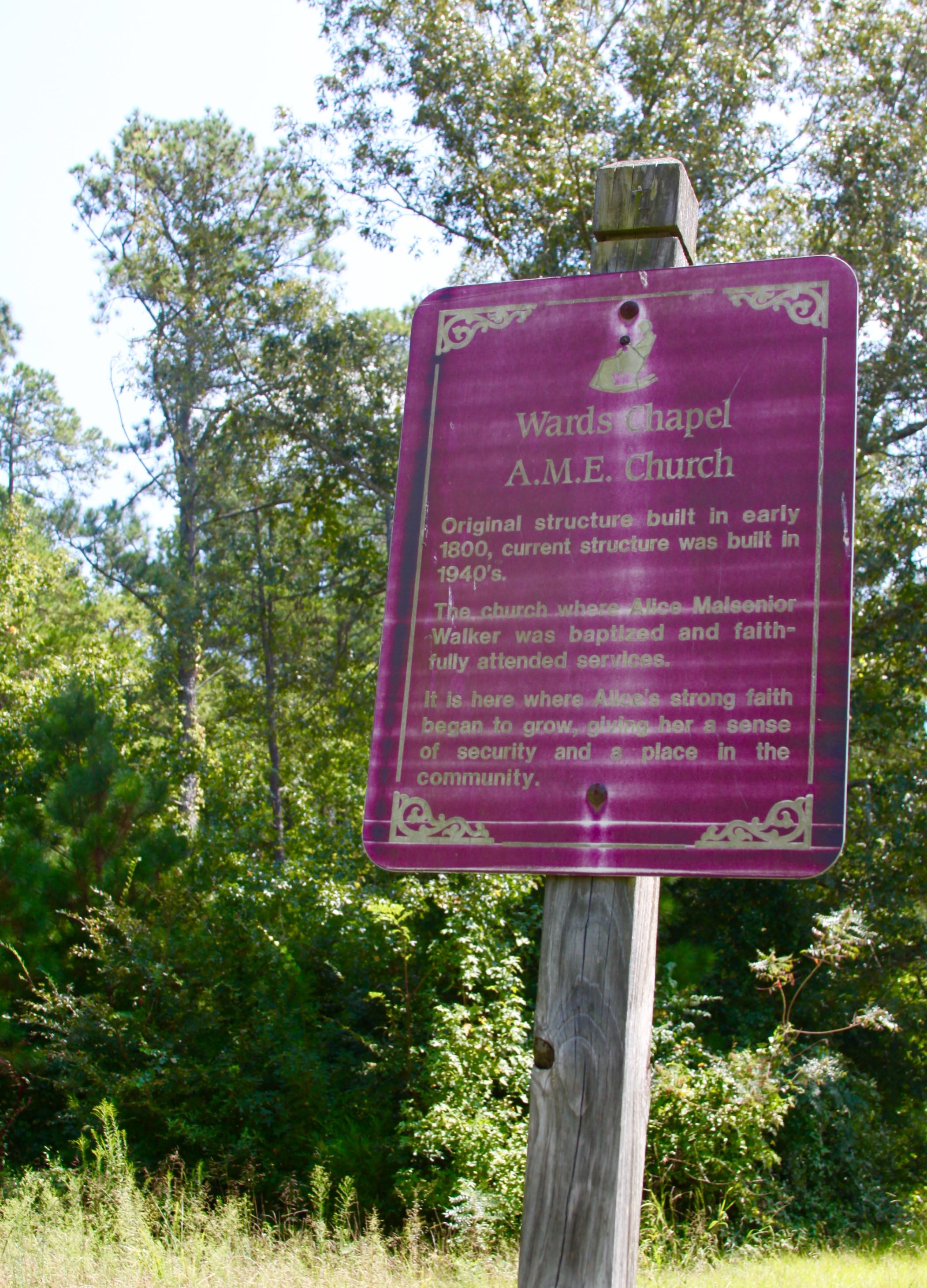
Sign in front of the Wards Chapel A.M.E. Church.


Alice is best known for writing “The Color Purple,” which won a National Book Award and the Pulitzer Prize for Fiction. While she’s a talented and award-winning writer, Alice did so many other amazing things.

She married Melvyn Leventhal, a white civil rights activist in 1967, the year the Supreme Court struck down laws banning interracial marriage on June 12. Alice and Melvyn were brave to live in Mississippi. Her book The Way Forward is with a Broken Heart, published in 2000, is a quasi-fictional portrayal of that marriage. The book “opens with a story, merging fact and fiction, of my version of our life together,” she writes, “when we lived in the racially volatile and violent Deep South state of Mississippi.”

Alice was later an editor at Ms. Magazine and went on to become a professor at Brandeis and Berkley Universities, and wrote several more novels and collections of poetry.

Alice’s mother, Minnie Lou, a well-known gardener in Eatonton, once said, “A house without flowers is like a face without a smile.” And Alice once said, “In search of my mother’s garden, I found my own.” She even wrote a book of essays, articles, and speeches entitled In Search of Our Mother’s Gardens: Womanist Prose.

In 1974, Alice and Minnie Lou visited O’Connor’s Andalusia Farm where Alice was delighted with the peacocks. The Southern Literary Trail website describes an interaction between mother and daughter. “[Alice] said the peacocks in O’Connor’s yard ‘lifted their splendid tails for our edification. One peacock is so involved in the presentation of his masterpiece he does not allow us to move the car until he finishes with his show.’ When Alice commented that the Farm’s peacocks were inspiring, even while blocking the car, Minnie Lou responded, ‘Yes, and they’ll eat up every bloom you have, if you don’t watch out.’

At age 73, Alice’s contemporary writings and poems are imminently accessible on her official website, alicewalkersgarden.com. Dig in deeply to the poems, videos, photos, complete essays and articles about plays, musicals, books, her personal past and other things impressing Alice lately. Fascinating.

Joel Chandler Harris (1848-1908), also from Eatonton, Georgia, is remembered mostly as an Atlantan because he spent much of his adult life living at the Wren’s Nest, which is now the oldest house museum in Atlanta. Harris was a journalist and editor at the Atlanta Constitution until 1900, but he’s most famous for the Br’er Rabbit stories told by Uncle Remus.

In the late nineteenth and early twentieth century, some people didn’t have a problem with Harris’ stories written in African-American dialect of the mid-1800s, and set on plantations. In fact, he was reported to be the second-most-read American writer of his day, behind Mark Twain. 

If you still remember those Br’er Rabbit stories, you can visit the Uncle Remus Museum in Eatonton, housed in a log cabin. I drive past it and remember visiting the museum as a child (45 years ago). Controversies seemed to start up around his writings after Disney released their version of the Br’er Rabbit stories in the movie Song of the South in1946.

Funnily enough, The Institute of Southern Studies published an article by Alice Walker in the Summer 1981 edition of the Southern Exposure Journal entitled, Uncle Remus, No Friend of Mine. Walker writes:

“Our whole town turned out for this movie: black children and their parents in the colored section, white children and their parents in the white section. Remus in the movie saw fit to ignore, basically, his own children and grandchildren in order to pass on our heritage–indeed, our birthright–to patronizing white children who seemed to regard him as a kind of talking teddy bear. I don’t know how old I was when I saw this film–probably eight or nine–but I experienced it as a vast alienation, not only from the likes of Uncle Remus–in whom I saw aspects of my father, my mother, in fact all black people I knew who told these stories–but also from the stories themselves, which, passed into the context of white people’s creation, I perceived as meaningless. So there I was, at an early age, separated from my own folk culture by an invention.”

Within a 30-mile radius, and in successive generations, three wordsmiths were nurtured by their surroundings of red clay roads and Pine forests. Their works would find their way out of central Georgia, and then out of Georgia and ultimately around the world. 

Leaving Eatonton, I continue on back roads through lake country — Lake Sinclair and Lake Oconee — toward the airport, hitting the expressway and remembering what it was like to call Atlanta home for 15 years, battling constant traffic. Such a contrast to driving the slower-paced back roads lined with dense trees, winding toward the home-places of great writers. 


  • Milledgeville was the capitol of Georgia from 1804 until 1868. On January 19, 1861, Georgia’s Secession Committee met in the capital building and voted to secede from the Union. On his march to the sea, Sherman and his Union Army occupied the city of Milledgeville on November 23, 1864. Wikipedia tells us, “In 1868, during Reconstruction, the legislature moved the capital to Atlanta, a city emerging as the symbol of the New South as opposed to Milledgeville, seen as being connected to the Old South.”
Yuba Gold

Art and creativity with a touch of nature

Pens and Pigment

Emma's Art and Artistic Explorations