Matt Simon, Chef

Giant of a Chef in a Small Town

Matt Simon is the best thing that’s ever happened to foodies in Black Canyon City (BCC), Arizona. Maybe the best thing to happen to BCC ever, which is saying a lot because many fine creative folks have happened to BCC!
IMG_4528

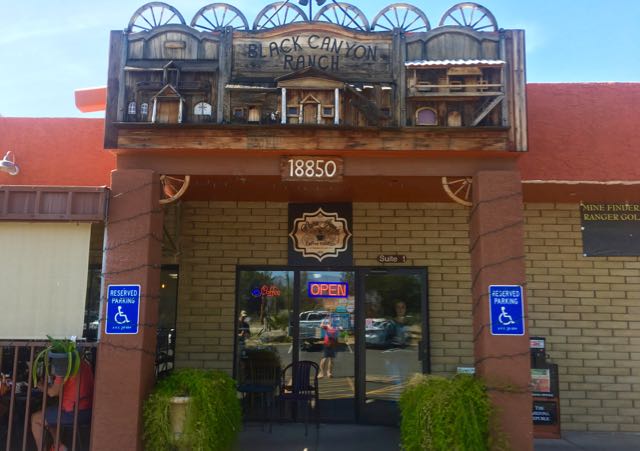
Nora Jean’s Koffee Kitchen Entrance

Ordinary guy Matt Simon rides his four-wheeler across BCC to his job and when he enters Nora Jean’s Koffee Kitchen, the restaurant he opened in 2014, it’s like Clark Kent entering a phone booth… he soon emerges wearing a cape… but in Matt’s case, his super power is revealed when he dons his chef garb and takes command of his kitchen.

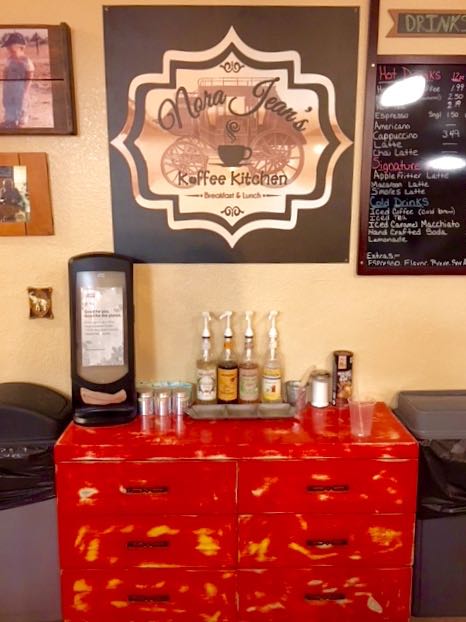
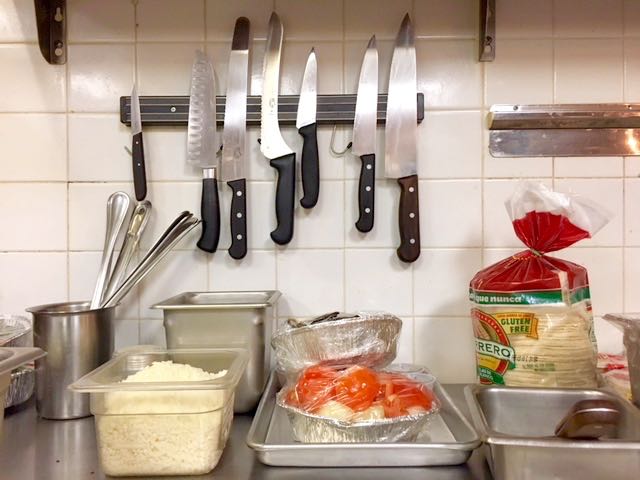
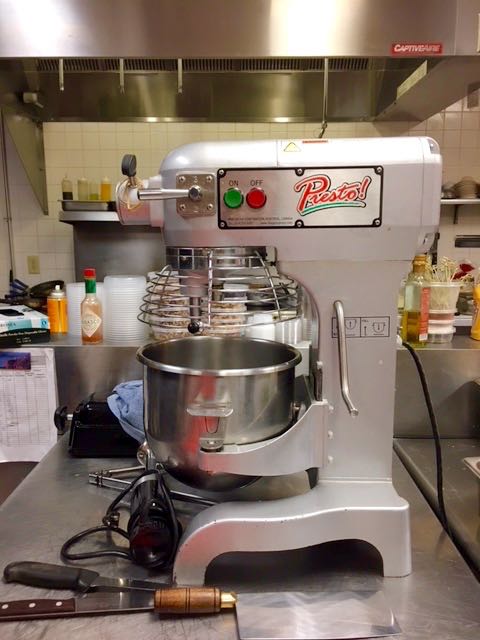
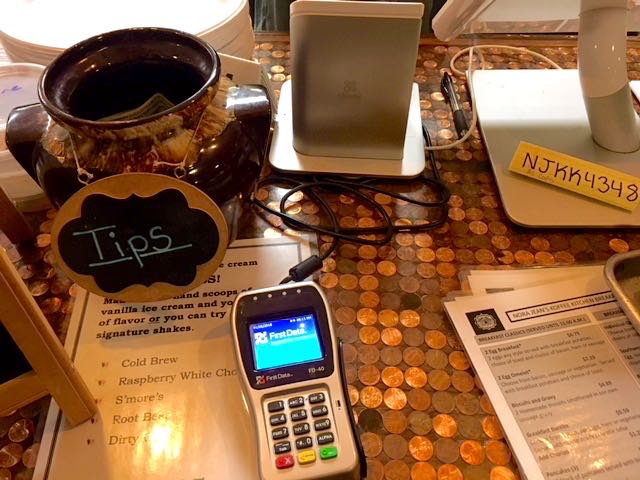
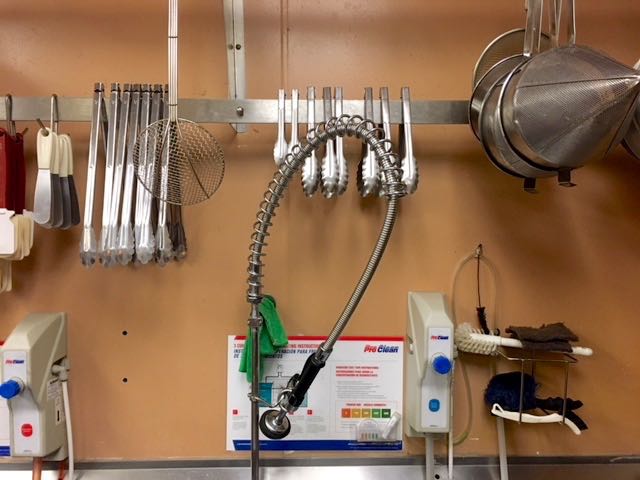
Matt’s creative space, his kitchen, takes up nearly half of the restaurant space and diners can see everything that happens back there.
IMG_3013

While he might look like an average restaurant owner, Matt’s creds go much deeper. He knows just about everything there is to know about cooking foods from cultures the world over, and he understands the chemical reactions of ingredients when they’re mixed or heated or allowed to rest, etc., yet Matt is especially steeped in the ways of French cuisine with their sauces, breads, braised meats and unlimited varieties of cheeses and mushrooms.

Matt makes eggs Benedict look easy. He doesn’t break a sweat over making falafels from scratch. He whips us compote or roux or clarified butter or an orange meringue pie as though he’s buttering a slice of bread. Matt freely shares recipes and cooking tips with his customers. And he’s the reason Nora Jean’s is the pulsing heart of BCC, frequented by locals and out-of-towners alike.

IMG_3008

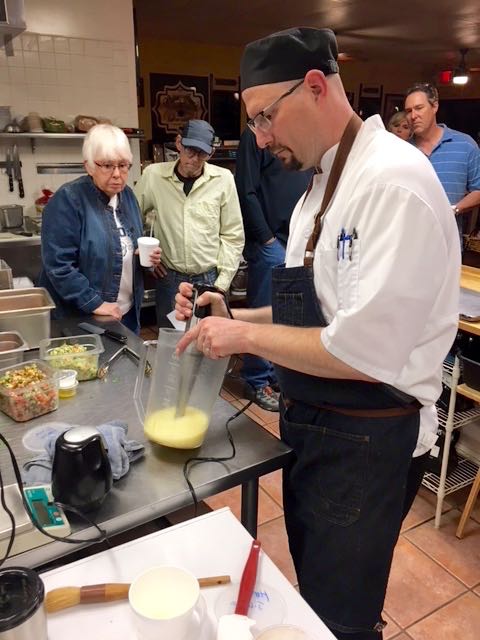
In the culinary storm that rumbles through Nora Jean’s most days of the week, Matt is the eternal calm at its center. He survived classical French cooking training so nothing can rattle him. His command of the kitchen is mesmerizing and most of his patrons want to be like Matt and cook like Matt, which is why his monthly cooking classes always sell-out.

Matt is patient with those of us who struggle with properly peeling an apple or de-skinning salmon or cranking linguine through a pasta machine.

Patient. That word perfectly describes Matt.
IMG_2987
IMG_2982

In his steady way, Matt honors his mother, Nora Jean Kay-Askew, every day. Her dream had always been to open a small breakfast and lunch cafe with her two sons. When Nora Jean passed away in 2011, the cafe dream faded until Matt moved to BCC with his wife Kelly, who had grown up there. Kelly’s mother and Matt’s mother had been best friends for years. 

Now, Matt has a four-person team of highly-trained employees who understand why each preparation step is important. Flora, Sam, Chris and May busily take, cook and deliver orders to customers they call by their first names.

“In addition to knowing our customers as friends, timing the cooking process is one of the most important aspects of serving meals,” says Matt. “Each food must be completed, plated and served at the right temperature.”
IMG_3018

Having cooked in professional kitchens for most of his adult life, Matt’s internal clock has developed into a sixth sense.

“I must be aware of my surroundings,” Matt says, “watching what other cooks are doing, what I’m cooking and listening to what customers are ordering.” Matt exudes calm at the center of his modest kitchen and his watchful eye means the swirling storm never does damage.

Although French cooking traditionally calls for lots of butter, cream and wine, Matt applies a healthy twist to his food preparation, such as offering salads with quinoa, farrow and black barley. His exposed kitchen allows customers to literally see the freshness of his produce and other ingredients.

In the winter, Nora Jean’ is closed on Mondays; in the summer, the  restaurant closes on Mondays and Tuesdays. Matt begins his day at 2 a.m. and gets to the restaurant by 2:30 or 3:00 a.m. to bake the bread and pastries and cook bacon and potatoes so they’re ready when the breakfast crowd begins arriving at 6 a.m.
IMG_3006

Matt only serves breakfast and lunch, but it takes him until 5 p.m. to get the kitchen ready for the next morning and to catch up on food orders and paperwork. He goes to bed around 8 p.m. before waking up at 2 a.m. to start all over again. 

“Nora Jean’s was going to be a grab-and-go place,” Matt says about its opening. “We only had two tables with seating and quickly learned people wanted to sit and eat.”

Matt added tables and hired more people, one of the first signs that he would adapt his restaurant to meet the needs of his customers, ensuring his success. 

“Because we thought customers would take their food with them, we started with only a few plates, most of which were disposable,” Matt says. “Soon I had to buy real plates. I started small because we only had the TurboChef.”

IMG_2987

Within three months of opening, Matt bought a stove and began to make quiches, breakfast sandwiches and eggs cooked in muffin tins. He allowed the restaurant to grow organically, investing in equipment as needed and not before.

Matt set a target revenue for his first year in business and he hit it!

Early Start

Things haven’t always been easy for Matt. He started working in 1988 at the age of 14 as a dish washer at Pinetop Country Club in Pinetop, Arizona, the first year Swiss Chef Claude Nicolet ran the club’s kitchen. Chef Nicolet had come from the Boulders in Carefree and brought along his well-trained crew. Being young and inexperienced, Matt took ribbing from the crew but he jumped at the chance to enter a seven-year apprenticeship with Nicolet.
IMG_4412

“One of my first assignments was to uniformly slice carrots,” Matt says, “and fill a huge eight-inch deep hotel-size pan. Chef inspected the carrot slices and found two that were not uniform, so he threw the entire pan out and made me start over. I didn’t like it too much, until I realized what he was teaching me.”

That hardline approach made Matt into a chef who rarely misses a beat, but who also has a sense of humor and shows kindness to staff and customers. The rigor of his training led to more rigor. Each year, Matt learned and mastered a different aspect of food and kitchen management, including pantry, lunch pantry, grill and sauté. 

Matt went to Northern Arizona University to be a physical therapist but instead majored in Hotel/Restaurant Management. During the summers, he worked at the White Mountain Country Club as Food and Beverage manager for two seasons and at Pinewood Country Club in Mund’s Park as sous chef (assistant manager to Chef) for three seasons.
IMG_3014

At 25, Matt was the executive Chef at Torreon Golf Club in Showlow, Arizona, for six years and then he worked at Hussaymampa Golf Club in Prescott, Arizona, as sous chef to be near Kelly, his girlfriend at the time (and now his wife).

Just before starting Nora Jean’s, Matt spent six years working for Compass group and managing cafeterias at American Express and American General Pharmaceuticals. Working nights, holidays and weekends got old, especially after Matt and Kelly married in 2009, and so Matt decided to start his own restaurant.

Growing the Business

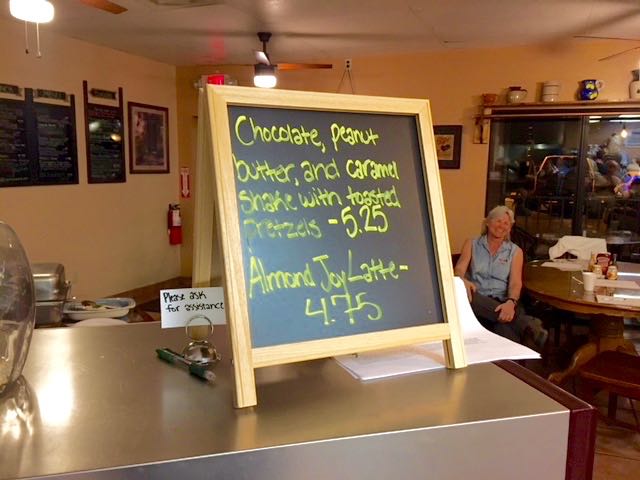
Matt adds something new to the restaurant each year. In 2018 he added new tables. In 2017 he added milkshakes to the menu. In the future, he might add dinner one or two nights a week. 

Matt’s calm demeanor allows him to focus. “At Torreon Golf Cub, I was upset with the bread guy because he wouldn’t use color-coded bread tags to identify the days on which the bread was made. So I focused on learning to make all our breads that year, including rye, baguettes and ciabatta. The next year I focused on learning how to prepare chile peppers, and the next year it was grains.”
IMG_3003

This method of intense practice, practice, practice explains why Matt has perfected the dishes he serves at Nora Jean’s. And why customers walk in and ask him to fix them something special, without specifying what. They trust him and know whatever he makes will be good. 

“Some people, when I see them pull into the parking lot, I start making their meal,” Matt says. “I know what they want, if they avoid salt, and if they have a favorite food.”
IMG_2977

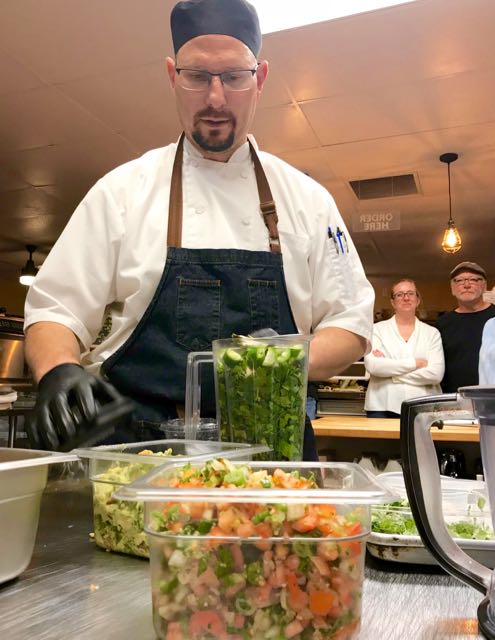
Over the last three years, Matt began giving his popular monthly cooking classes, which fill up fast with his die-hard fans and Nora Jean regulars. My husband Brent and I rarely miss a class. Matt and his team usually have a couple of dishes ready for tasting when we arrive, and then everyone eats again when the featured dishes are completed by the students. Amazingly, there are usually leftovers to take home for lunch the next day.
IMG_2996

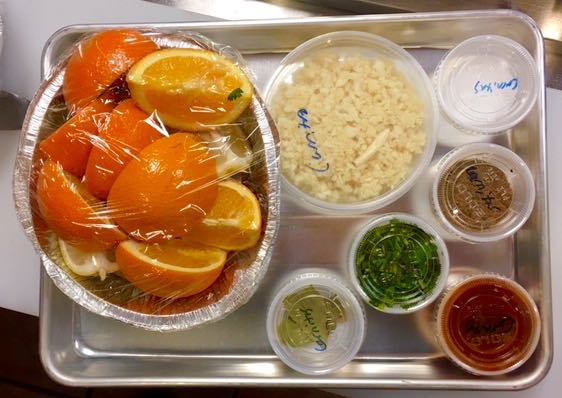
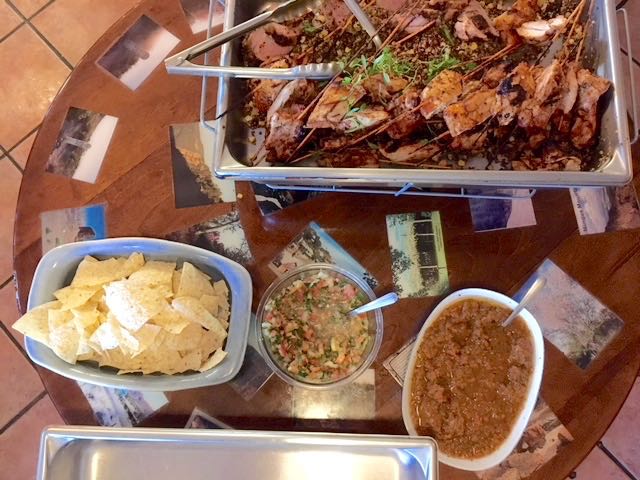
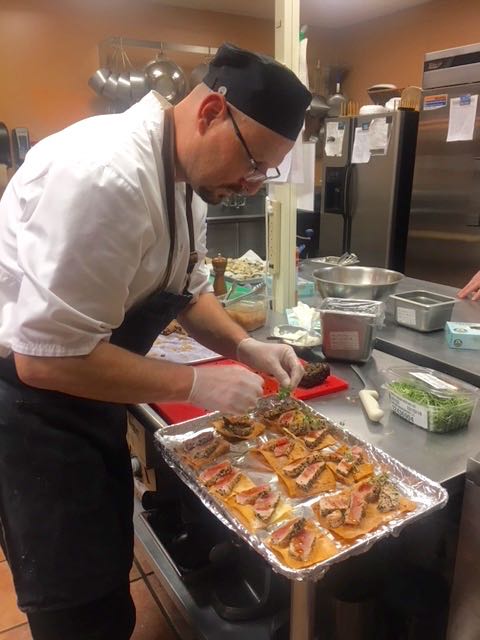
We like the classes because we feel part of Matt’s extended family, which includes BCC and beyond, and we appreciate how he shares his joy of cooking. For instance, during the Southwest cooking class, we prepared pork tenderloins with a prickly pear demi-glaze and Ancho encrusted salmon with southeast rice and a pineapple salsa. A black quinoa salad with chunks of shrimp was spooned into roasted Poblano peppers and baked.

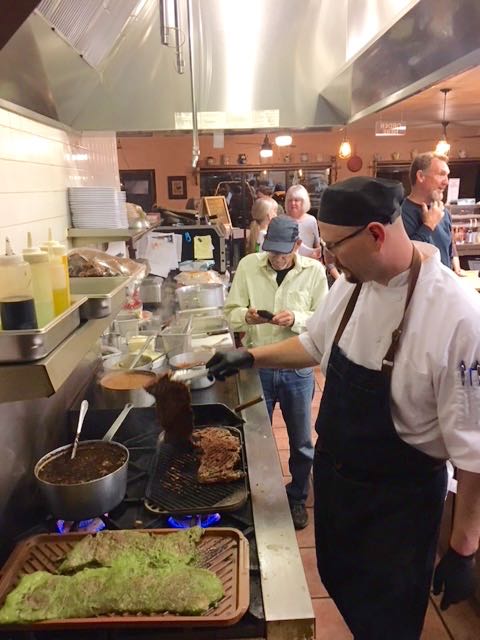
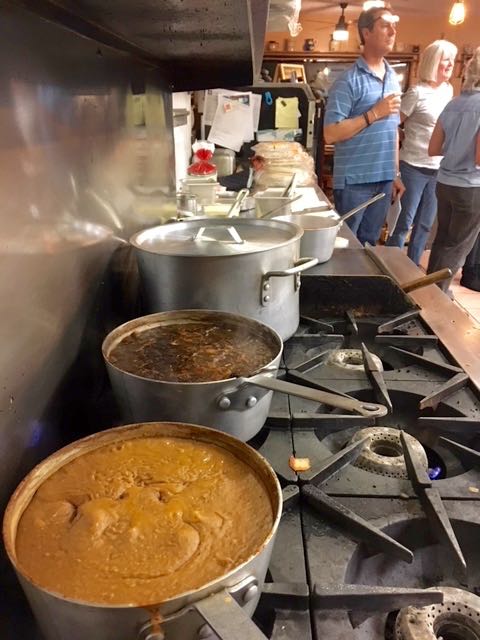
Our heads were spinning but Matt gingerly plated the food on pretty serving dishes as we students watched intently. He spooned on rice with roasted corn and black beans, topped it with salmon steaks and garnished the whole display with salsa.

As he created the food displays, Matt hummed. Surrounded by us students, who were oohing and ahhing, Matt hummed away, in the zone, appearing content. Although it was almost 8 p.m., you’d never know Matt had been in the kitchen since 2 a.m.
IMG_4317

As he was plating the food, he said, somewhat surprised, “Everything came out at the exact same time.”

Of course, it did.

Matt’s sixth sense is his internal clock.

Watching Matt navigate his kitchen that night as he danced to stir the saffron Chile sauce and the red onion confit while searing pork tenderloins, it was clear he wouldn’t want to be anywhere else.
IMG_3261

Past cooking class themes have included:

    • Appetizers
    • Spring Salads
    • Holiday Dishes
    • BBQ
    • Middle Eastern
    • Southwest
    • Mexican/Latin
    • Asian
    • French
    • Italian Part I & II
    • Pies
    • Desserts

At the end of this article, check out the list of dishes prepared in each of the classes listed above. In our most recent winter class on Comfort Foods, we cooked these dishes:

      • Pot Roast
      • Beef Stew
      • Chicken and Dumplings
      • Bacon Wrapped Smoked Meatloaf
      • Shepard’s Pie
      • Macaroni and Cheese
      • Baked Chicken with Roasted Root Vegetables

Because he’s tasting food all day, Matt doesn’t usually eat meals. Plus, his life can get hectic, not just with his work schedule but with his family’s two dogs, four cats, chickens and ducks.

“I don’t enjoy cooking at home because we don’t have a gas stove,” Matt says. “Sometimes I’ll just eat cereal for dinner.”
IMG_4417

Doesn’t seem right that this master chef would dine on Cheerios, Raisin Bran or Grape-Nuts.

But that’s just like Matt; saving his creative cooking energy for his devoted diners. 


Class Menus

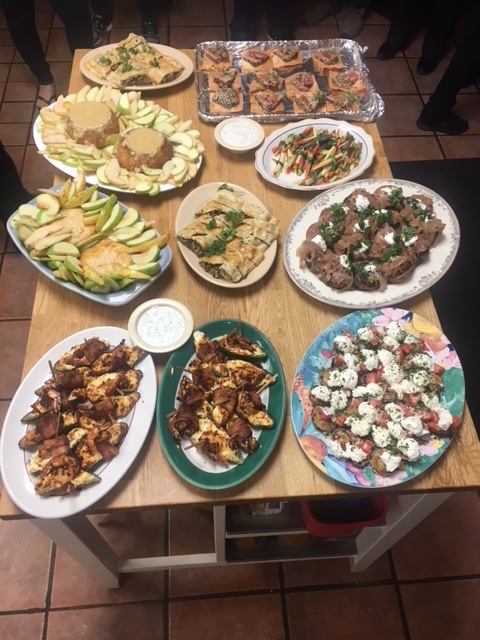
Appetizers: Steak au Poivre Potatoes; Chicken Satay with Peanut Sauce; Mushroom Strudel with Goat Cheese; Seared Tuna with sweet soy and Baked Wontons; Bacon-wrapped scallops; Ancho Shrimp Stuffed Jalapeño Poppers wrapped in Bacon; Baked mini Brie; Gouda and Beer Fondue Bread Boule; Cheese Puff Tower; Eggplant Ricotta Bites; Vegetable Bundles with Herb Citrus Dip; Steamed Mussels (or Clams) with Grilled Bread.

Spring Salads: Marinated Mushroom Salad: Asian Cucumber Salad; Spring Berry Salad with Goat Cheese and Strawberry Vinaigrette; Asparagus and Red Quinoa Salad; Roasted Asparagus Salad with Toasted Almonds and Balsamic Reduction.

Breakfast: Eggs Benedict; Hollandaise Sauce; Crepes; Crepes Suzette; Buttermilk Biscuits; Sausage Gravy; Quiche; Roast Red Pepper, Asparagus and Goat Cheese Frittata.

Holiday Dishes: Roast Turkey; Roast Duck; Pork Crown Roast; Chestnut Stuffing with Chorizo; Cornbread Stuffing with Longanizo; Chipotle, Cinnamon and Honey-Glazed Sweet Potatoes; Creamy Mashed Potatoes; Carrot and Turnip Puree; Haricot Vert and Burnt Butter, Lemon and Almonds; Blood Orange/Pomegranate Demi Glaze; Cranberry Orange Sauce; Turkey Gravy.

BBQ: Vinegar BBQ Sauce; Mustard BBQ Sauce; Basic BBQ Sauce; Matt’s BBQ Sauce; BBQ Pulled Pork; BBQ Brisket; BBQ Chicken; BBQ Babyback Ribs; Coleslaw; Vinegar-Based Slaw; Roasted Potato Salad; Baked Beans; BBQ Spice Mix; Pickling Liquid for Vegetables.

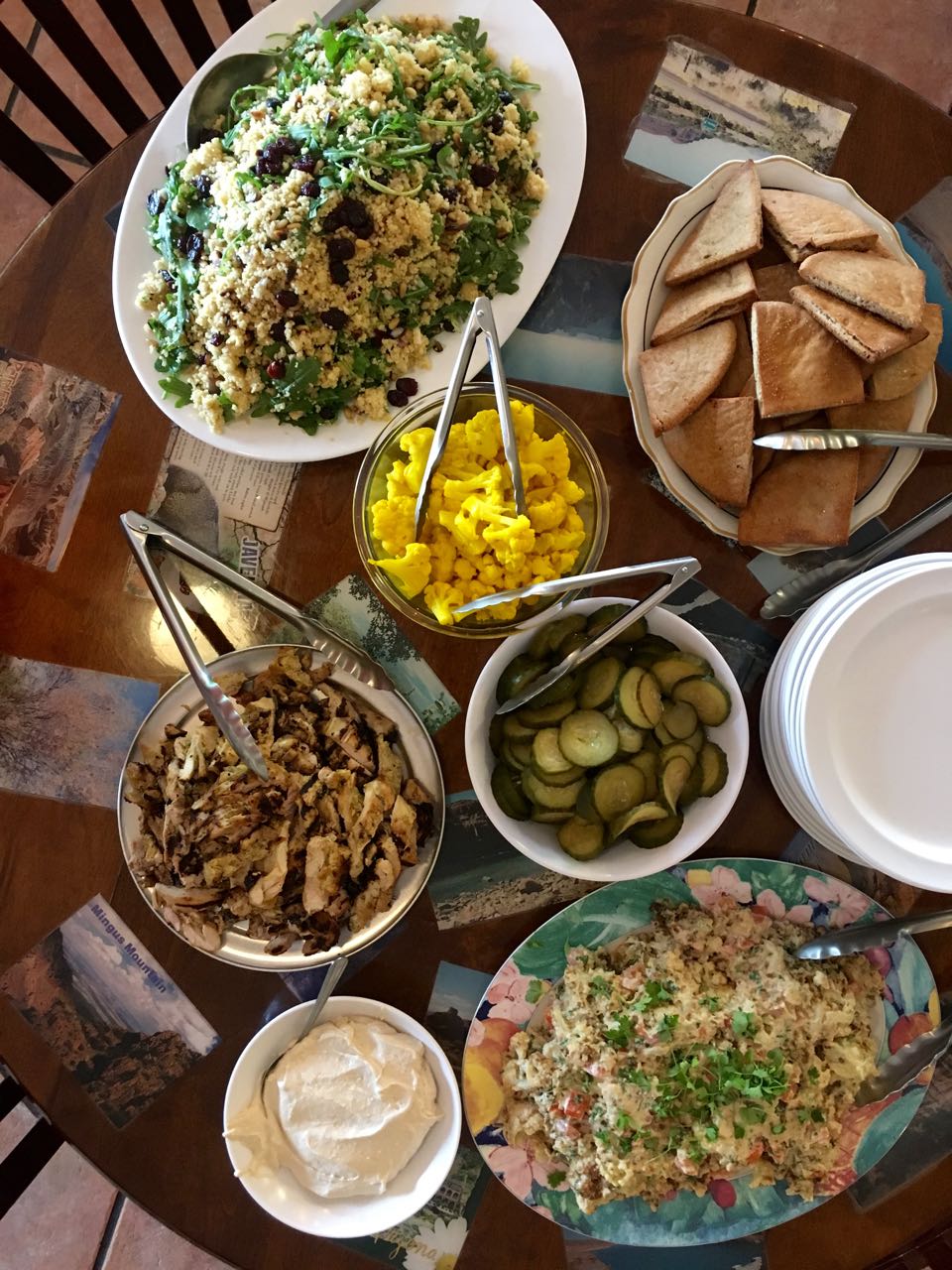
Middle Eastern: Hummus; Babba Ganoush; Addas Mutabel (Lentil Salad); Jerusalem Salad; Tabouleh; Falafel; Pita; Chicken Shawarma; Tarator; Tzatziki Sauce; Beef Kefta.

Southwest: Spiced Chicken Salad; Ancho-Crusted Salmon with Pineapple Salsa; Spiced Pork Tenderloin with Prickly Pear Demi-Glace and Red Onion Confit; Rice; Grain- and Shrimp-Stuffed Poblano with Saffron Chile Sauce.

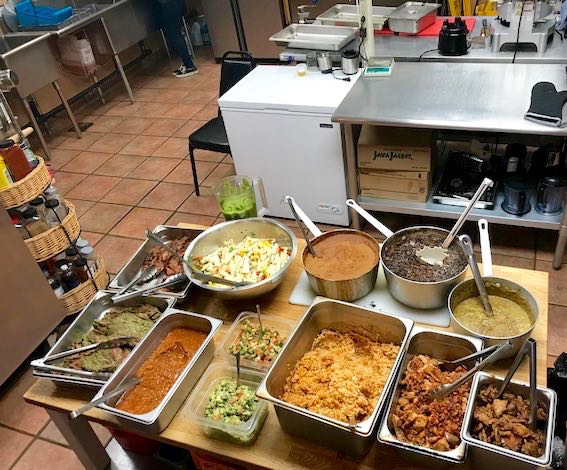
Mexican/Latin: Carne Asada; Citrus Pork Carnitas; Chicken Tinga; Yucatan Chicken Skewers; Refried Beans; Black Beans; Spanish Rice; Guacamole; Salsa Verde; Chipotle Salsa; Pico de Gallo; Enchilada Sauce; Chimichurri; Jicama Salad.

Asian: Chicken Pho; Mongolian Beef; Lo Mein Noodles; Vegetarian Stir Fry; Panang Curry; Lettuce Cups; Chilled Sesame Broccoli Salad.

French: Five mother sauces (Espagnole, Bechamel, Veloute, Tomato and Hollandaise); Boef Filet en Croute (Beef Wellington); Chicken en Croute; Fish en Papillote; Roast Rack of Lamb Persille; Pate Choux; Pastry Cream; Creme Brulee; Creme Anglaise (Vanilla Sauce).

Italian Part I: Basic Pasta; Ciabatta; Pizza Dough; Chicken Picatta; Braciole; Bechamel Sauce; Tomato Sauce; Tomato Bruschetta; Caprese Salad.

Italian Part II: Porcini Pasta; Pork Osso Buco; Lamb Shank; Ravioli; Potato Gnocchi; Ricotta Gnocchi; Risotto.

Pies: Basic Pie Dough; Chicken Pot Pie; Veloute; Shepard’s Pie; Fruit Pie; Apple Crisp; Lemon (or Orange) Meringue Pie.

Desserts: Creme Anglaise (Vanille Sauce); Creme Caramel (Flan); Creme Brûlée; Pastry Cream; Lemon Curd; Pate a choux; Raspberry Coulis.


Photo Gallery
IMG_4321
IMG_3261
IMG_3019
IMG_2999

A Writing Workshop and Then Some

What aspiring writer doesn’t want to spend mornings in various Le Marais cafes writing and noshing on pain au chocolate and cafe creme?

Paris in June with Jaime

Writing workshops are a great way to meet kindred writing spirits and exercise our writing muscles in new ways.

Monet's garden painting; writing workshops

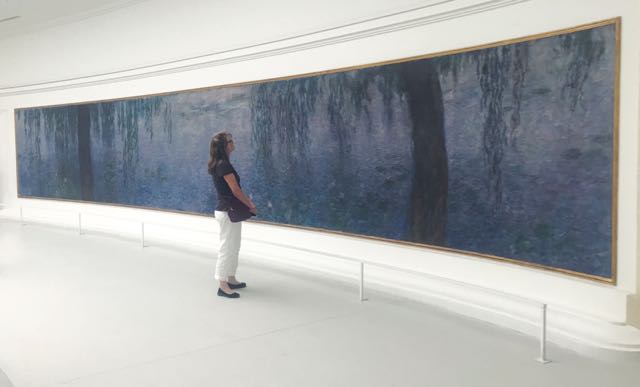
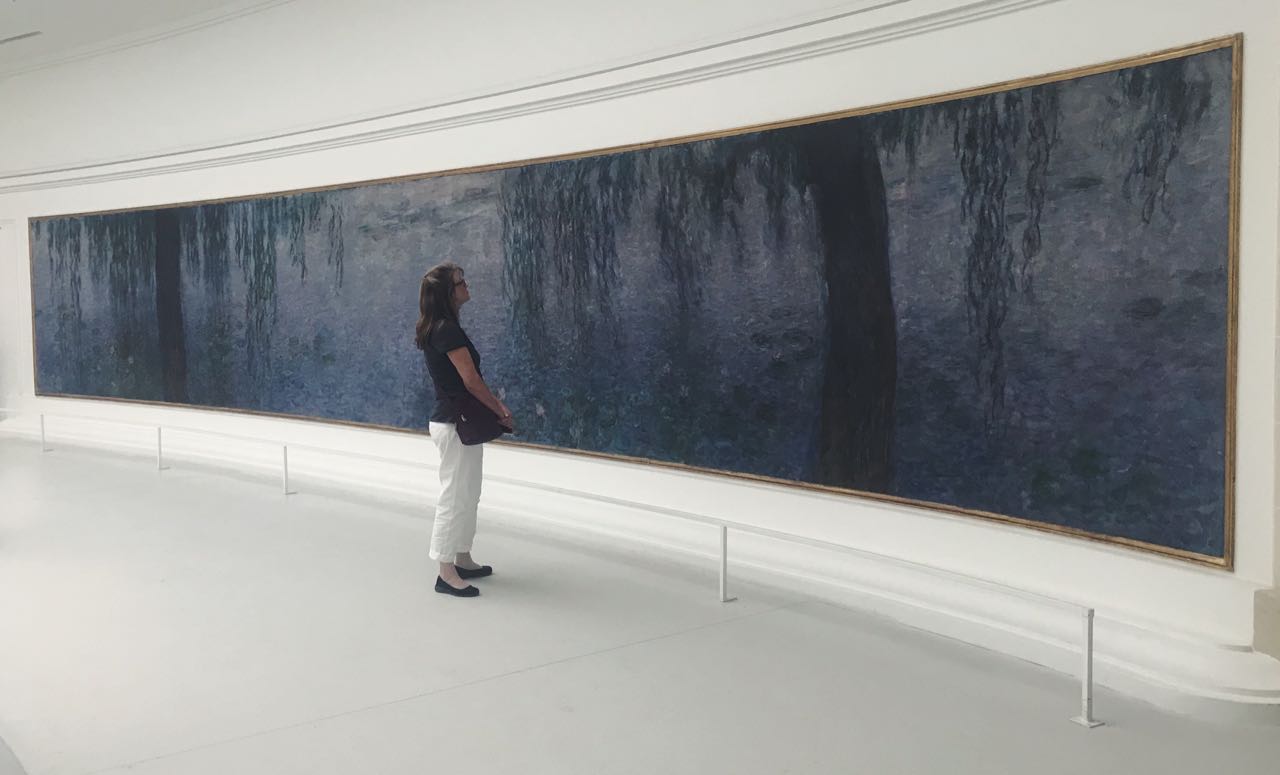
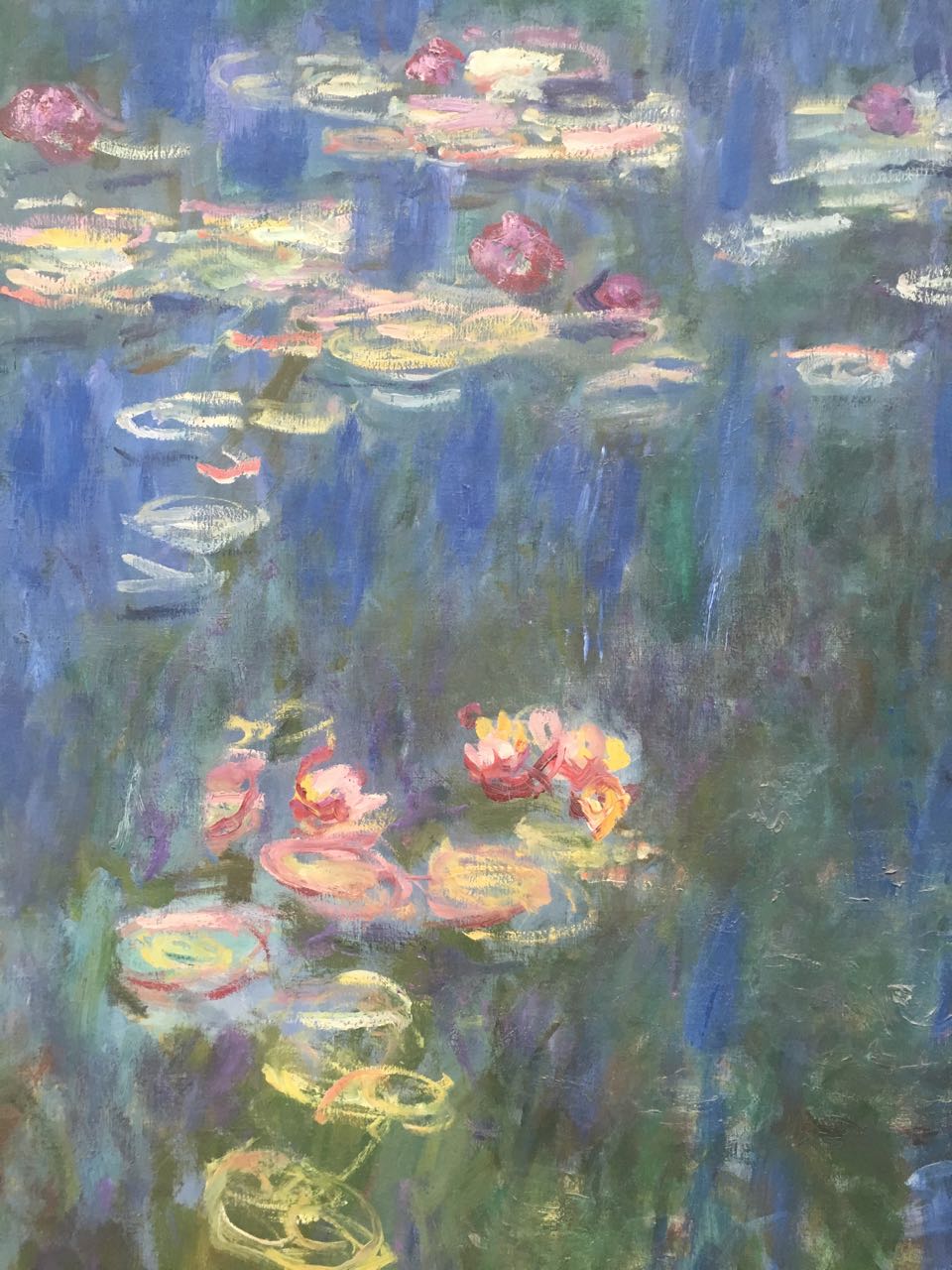
I’m captivated by Monet’s large lily pad paintings at Musee de L’Orangerie.

My daughter Jaime and I traveled to Paris in June of 2018 to take a writing course with Patty Tennyson, owner of the Paris Cafe Writing workshop and a former Chicago Tribune writer. What aspiring writer doesn’t want to spend mornings in various Paris cafes writing and noshing on pain au chocolate and cafe creme?

While keeping my expectations in check, I planned carefully for the trip and found an apartment in Le Marais, the hip/fashion/gay area of town where our Paris Cafe Writing classes would be held at various cafes. Patty and her husband Joe have an apartment in La Marais so it makes sense we’d be in their neighborhood.

Patty and Joe live in Chicago and spend the summer in Paris. Patty is a journalist and a foodie who has authored cookbooks; Joe is a retired English teacher who loves history, food and the history of food, which he shared with our group.

Le Marais is one area of Paris that still has most of its historic buildings dating back several hundred years. When neighborhoods of historic buildings were being razed across Paris last mid-century to build large apartment and office buildings, they didn’t get around to Le Marais.

That’s one thing about Paris proper; everywhere you look, the French love of grandeur is evident… architecture, gardens, bridges, the Seine River, the Eiffel Tower. Even lamp posts and public water fountains have delicate decorative details. The city center, straddling the Seine north and south, actually isn’t that big. You could theoretically walk across town in several hours. Luckily you don’t have to; Paris has an efficient and pleasant Metro system.

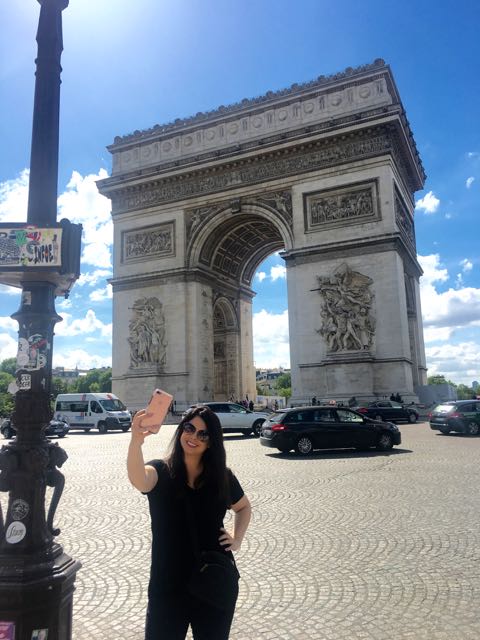
Jaime at arc de Triomphe.

Patty and Joe taught our class how to ride the Metro. Jaime and I got the hang of it, zipping around town from the Eiffel Tower to the Arc de Triomphe.

We stayed in an apartment on the fifth floor of a 15th century building. Our apartment was on the back side of the building, overlooking a small garden, so no street noise. We left the tall windows open every night and enjoyed the coolness, and sometimes a gentle rain.

But here’s what made being in Paris so perfect, besides spending lots of time with Jaime: Patty is an excellent writing coach AND event planner.

Patty’s workshop fee included meals. Each morning our group would meet at a charming cafe, upstairs, and they’d take our order for a croissant or chocolate croissant or toasted baguette with jam. Jaime and I ordered cafe creme each day and fresh squeezed orange juice. All we had to do was sit back and participate in the daily writing exercise with fascinating women while sounds of pedestrians and cars floated into the open windows.

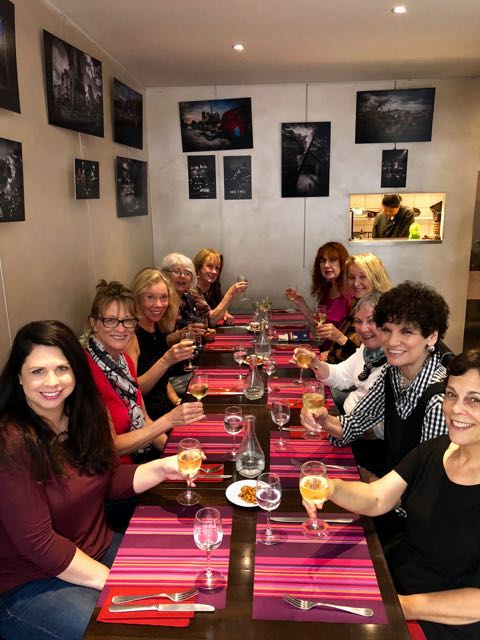
Our writing group enjoying dinner on our first night together: Jaime is on the left and I’m next to her.

Almost every day when class ended at 11:30 a.m., we’d go downstairs and eat lunch, getting to know each other better. Afternoons were free for us to explore the city and write. Jaime and I did not write in our free time… too much to do and see in Paris! Although, each night when we returned to our apartment, we would talk about our day and I’d record our activities (and impressions) in Notes on my iPhone. Those notes would later turn into a record of our time in Paris.

One evening, our writing group met up with Patty and Joe and they took us to Duc des Lombard, a jazz club, where we saw Daniel Romeo lead a jazz band. Parisians love jazz, and having been to the New Orleans Jazz Festival the month before, I could appreciate Daniel and his team of musicians.

Patty had warned us ahead of time: do not talk while the band is performing. In France it’s rude, so no whistling or yelling, just gentle clapping. No one talked or cheered during the entire hour performance.

Our writing group visits Duc des Lombard, a Parisian jazz club.

Another night, our writing group met up and took the bus to the left bank to visit the Shakespeare & Company bookstore, originally started (at a different location) by American Sylvia Beach more than a hundred years ago. Sylvia befriended Ernest Hemingway when he was a 25-year-old writer-in-practice, published James Joyces’ Ulysses and was at the center of the expat crowd who made Paris in 1920s a creative hotspot.

Small, with book-stuffed nooks and crannies and an upstairs devoted to poetry, Shakespeare & Company feels like a church or museum. The guy who checked me out was American and young, most likely a “tumbleweed” allowed to spend nights in the book store for helping out during the day. Ethan Hawk was a tumbleweed. The young man behind the counter must have been living his dream.

After we all paid for our books, which were stamped with the official “Shakespeare & Company” seal, we went next door… literally next door… to a restaurant and settled upstairs around a large oval table from which we could look out of two gabled windows and see Notre Dame across the Seine.

Notre Dame was built starting in the 10th century and they’ve added to it over time. It sits on Ile de la Cite, one of two small islands in the middle of the Seine, and Patty made sure our group had the amazing opportunity to experience the river and the cathedral. When Notre Dame caught fire on April 15, 2019, like many people around the world, I felt the devastation and grief.

Notre Dame as seen from a restaurant next to Shakespeare & Company bookstore just across the Siene.

On our final night together, our writing group ate dinner at La Coupole, a restaurant where musicians, artists and writers in the 1920s would gather. The art nouveau interior hasn’t been altered and I could imagine Hemingway, Man Ray, Picasso and Gertrude Stein sitting in a banquette, drinking champagne or cafe creme, discussing the issues of the 20s.

Our group dined at La Coupole restaurant on our final night together.

In our free time, Jaime and I visited Yves Saint Laurent’s (YSL) museum, traveled up to Giverny to visit Monet’s home and gardens, and viewed Monet’s huge water lily paintings at Musee L’Orangerie.

The only problem with Paris, which really isn’t a problem, is that in June the sun doesn’t set until after 10 p.m. Jaime and I didn’t get to bed before midnight each night, too busy to realize how late it was. But we didn’t mind losing sleep to the sights and sounds of Paris!

Taking the writer’s workshop with Patty allowed us to experience the city with a knowledgeable “guide” who was fluent in French… and who was also a resident! Patty took care of the bill at every cafe and restaurant. Our writing group was quite spoiled. We just showed up, sat down, ate, enjoyed and left.

Patty had pre-arranged every meal, concert and excursion, even escorted us all via bus, walking or the metro. She and Joe were our personal guides. If any of us had questions, they had answers. And, boy, did they have some great stories to tell! Joe taught writing and poetry in Chicago public schools and took a three-year tour in China to teach English. He knows French very well, too, and is a wordsmith like Patty.

La Marais, paris; writing workshop

Patty and Joe introduced our writing group to the best falafels in Paris at L’as du Fallafel.

Patty could be just a writing instructor, but she does so much more for the people who attend her workshop. While she’s not responsible for her students’ satisfaction with Paris, they usually come away happy with their experiences and more informed about the things they saw and heard. Patty makes the trip special and an excellent choice for anyone who wants to travel solo or with a friend.

Taking Patty’s course is the best way to experience Paris for first-timers! And for second-timers, because I’m attending Patty’s Writing Workshop for Returnees in November 2019 and am staying an extra week to explore the city and museums… and maybe take a couple of day trips on France’s excellent train system.

When you attend a writing workshop in another city, or another country, the experience becomes richer and provides not just a way to improve your writing but also lots of fodder for future writing!

If you know of a writing workshop like Paris Cafe Writing that is held by a host like Patty and who also exposes the group to the local area, please let me know! Or tell me about a writing workshop you would HIGHLY recommend to others.

Reddog, Blues Guitarist

Reddog’s soul is intact, even after decades of playing blues in clubs and bars across the South… even after 35 years of spending nights in front of tipsy party people, and true-blue music fans, never diverging from his passion to play and sing, remaining a gentle, quiet, observant man.

PensacolaBeach
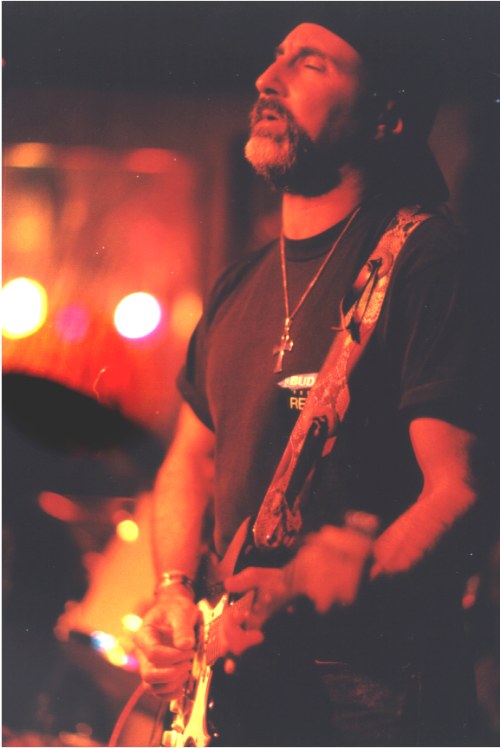
                                                Reddog playing for an appreciative Florida crowd.

Although I’ve known Reddog since the late 80s, he still appears a little fuzzy around the edges, his origins and family, even his age, are vague. But recently Reddog opened up about his love of music and how he managed to make a living heading up his Band, Reddog and Friends.

ChrisLongDonnieMacBluesHarbor
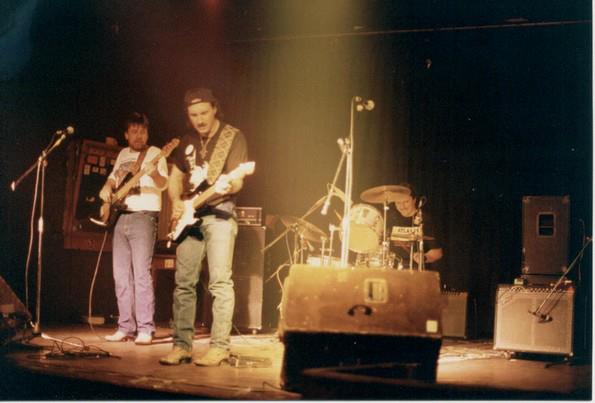
Reddog with Chris Long on bass and Donnie McCormick on drums at Blues Harbor, Underground, Atlanta (c. 1990s)

The first mystery about Reddog is the origin of his stage name. “I spotted an advertisement for a vintage clothing store named Reddog, and the ad had beautiful, long, lean, red dogs,” Reddog explains. “I thought it would be a good band name. As band personnel changed over the years, everyone just started calling me Reddog.”

The second mystery we encounter is how he was able to make a living as a musician. Having to build his own career, and lacking 401Ks and employee-sponsored pension plans, means Reddog had to be financially creative and astute. Brave souls like Reddog who attempt making a living doing what they love are investing in their self-expression and way of life, not just earning to pay for shelter and food. Sometimes saving for the future takes a backseat, but not with Reddog.

Reddog tells the story of how a very well-dressed gentleman approached him years ago between sets at Fuzzy’s Place, a bar/restaurant in Atlanta. The man had seen the joy and fun Reddog and Friends were having on stage.

“I’ve amassed a sizable fortune,” the man said to Reddog, “and I would trade my fortune with you any day to be able to do what you do.”

“The conversation made me see how fortunate I was to do what I love in life,” Reddog says. “I felt thankful. Work has always been pure pleasure.”

Flying Finn Guitar

Reddog learned to play the guitar after high school. His step Dad noticed how much time he was spending playing guitar and suggested he take lessons… or not play so much.

“Within a couple weeks,” Reddog says, “I had packed a bag and caught a bus to a guitar workshop outside of New York City that I had seen advertised in Guitar Player magazine.”

His teacher was an excellent young guitarist who recognized Reddog’s talent and interest in music and gave him special attention.

“I got off the bus in Planting Fields Arboretum, Long Island,” Reddog says, “with no place to stay, a rather broken-down guitar, a suitcase and little money. Believe me, I stood out. My fellow students arrived each day in shiny new Cadillacs carrying expensive Martin acoustics.”

Reddog originally owned an inexpensive Japanese acoustic for about a year, but he soon acquired a Gold Top Gibson Les Paul Deluxe and a Fender Twin Reverb amp.

Early on, Reddog noticed all the great British guitar players like Clapton, Beck and Page had blues roots. “Duane Allman, Freddie King, B.B. King, Ray Charles… that was what was moving me!,” Reddog says. “Duane Allman is the reason I picked up the guitar. He created a new musical style and was just a burnin’ guitar player!”

Reddog’s blues destiny was set.

Although Reddog has written, performed and recorded original songs, he has always performed blues standards in his sets.

“Many blues clubs have kept me working through the years,” Reddog says, “because they know I revere the original artists who made the music, like Howlin’ Wolf, Freddie King and Muddy Waters.”

Little Brother & Reddog Atlanta
Reddog (right) with Little Brother at Blues Harbor, Underground Atlanta (c. 1990s)

Much of Reddog’s childhood was spent in Virginia and coastal North Carolina where his mother dabbled with the piano and continues to play out of the Methodist hymnal.

“The South just makes me feel like I’m home. That’s why I headed for the great state of Georgia as soon as the time was right. ”

The Allman Brothers, headquartered in Macon, Georgia, influenced Reddog a great deal, with Duane Allman, Freddie King and Otis Rush standing out as his biggest guitar influences.

Reddog attributes his successful musical career to being in the right place at the right time.

“I moved to the vibrant big city of Atlanta, a city with a strong economy and lots of live music venues. The norm for clubs was to hire a band for one night a month. Instead, I convinced club owners to book me one day a week (like every Thursday) and if their Thursday business picked up, my band remained the Thursday night house band. If business went down, they could fire me. Business usually picked up so we had lots of steady work. My trio had four or five steady gigs; Sunday on the North side of Atlanta, Monday in Underground Atlanta, etc. Many of our Atlanta gigs lasted years.”

Reddog kept his overhead low with a simple trio of guitar, bass and drums. All three players also sang.

Chris-RedDog-Spider-Webb
Chris Long, Reddog, Spider Webb (1986)

Current Reddog and Friends band members are Michael D on bass and TJ Jackson on drums. Infamous musicians who have been a part of Reddog’s trio over the decades include the late, great Donnie McCormick on drums from the Capricorn Record band, Eric Quincy Tate and Chris Long on bass, formerly with the King Johnson Band. Steve Hawkins, a powerful, talented drummer and vocalist, performed with Reddog in the late 90s and currently plays with Daryle Singletary. Bill Stewart, session drummer from the Capricorn Rhythm Section, recorded and performed live with Reddog in the late 80’s.

Selecting the right mix of musicians is essential to a good sound and future gigs. Equally important, Reddog paid close attention to where his money went while managing the band and growing his career,

“If you are a creative soul,” Reddog advises, “it is so important to save and invest for your future. Being a creative soul means you’ll likely have less, so you have to invest! It makes me sad to see elderly musicians in need. So many classic blues artists live in poverty, it pains me. I have influenced many around me to invest, especially in well-diversified, low cost index mutual funds, Vanguard, Fidelity, etc.”

Reddog’s Creative Space

Reddog’s favorite place to create is a perch in his hallway, where he has stacks of CD’s to choose from, a good sounding CD player, an electric keyboard and a guitar close at hand. He thinks it’s nothing fancy, but finds it peaceful. Like playing in a club, Reddog has a hard time telling if it’s night or day in his hallway perch, making it easier to shut out the world and focus on his music.

020 (1)

“Music still burns in my veins,” Reddog says, “and I practice singing and playing guitar every day.”

Reddog’s discipline comes from his teenage years when he trained in Chinese Martial Arts, and he hasn’t just managed to preserve his voice, it has actually improved over the years.

In his prime, Reddog played nonstop. Reddog and Friends loved to perform and they often laughed about how many nights they were booked back-to-back. These days, in retirement, Reddog performs once every month or two at the local blues society.

“I love to sing and am so moved by that big, airy gospel sound of Reverend James Cleveland, Lee Williams and James Bignon,” Reddog says. “Practicing singing is so important to me. I practice ear training with a piano almost daily and sing along with some of my favorite gospel artists on CD. Just constantly in search of a bigger, warmer vocal tone! When you are singing, you are telling a story, trying to make every word believable and full of emotion. It takes work on my part.”

039 (1)

Reddog and I became friends in Atlanta when he was the house band at Fuzzy’s Place and Blues Harbor at Underground Atlanta. I wrote for the hudspeth report, a local entertainment newspaper, and caught Reddog and Friends as often as possible, no matter the venue. I even recall seeing him play on an outdoor stage in Buckhead one St. Patrick’s Day. Listening to live music was a passion for me and looking back, I can see how how vital Atlanta’s music scene was to the city’s culture.

I once traveled with Reddog and Friends to a music festival in Tennessee and enjoyed the backstage/insider view of what it took to build a reputation and career, and learned that active bands who perform regularly eventually see just about every kind of human behavior, whether driven by physical, mental, emotional, sexual or spiritual needs.

Nightfall Chattanooga

“The night after the Centennial Olympic Park bombing in Atlanta in 1996,” Reddog says, “we performed on a House of Blues Buckhead stage to a sea of people. There was some tension in the air, people hoping it would be a safe evening. It was hot and humid and the audience was just incredible.”

Another memorable gig was in 1991 when Reddog opened for Garth Hudson and Rick Danko from “The Band” in Stone Mountain Park. “Rick Danko could not have been any nicer! He made sure we joined him on stage.”

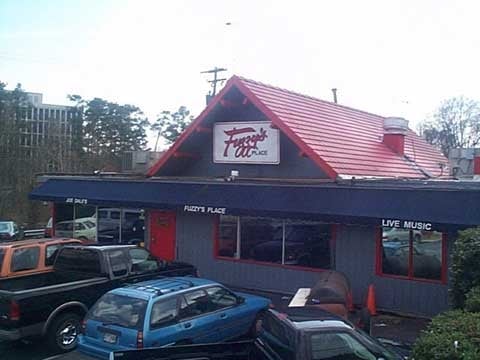
One of Reddog’s favorite gigs was at Fuzzy’s Place in Atlanta on North Druid Hills. Fuzzy’s is now closed, but it had a reputation as the place to go for live blues and jazz. Fuzzy was a nice guy who cooked up fine Southern fare (Rib eye steak with green beans and mashed potatoes) but more than a restaurant, Fuzzy’s Place was a magical music venue.

Fuzzys Place

“We were the Tuesday night house band at Fuzzy’s,” says Reddog, “and because many musicians were off that night, they would come sit in. When I saw Gatemouth Brown’s tour bus pull into the parking lot one night while we were playing, I thought, ‘We’re going to have a great night.’ Billy Preston was in the audience on another night. That was one fun gig!”

Early on, Reddog had a gig in Sandy Springs at JP’s Paradise.

“JP’s was wide open!” Reddog recalls. “We performed every Thursday, Friday and Saturday night until 3 a.m. to great crowds, including strippers, drug dealers and musicians. Warren Haynes and Allen Woody from Gov’t Mule were among the many musicians who stopped by to jam with us. Before long, though, the authorities padlocked the place.”

Many other favorite musicians would show up to perform with Reddog, including guitar greats Oliver Wood and Barry Richman. “They were both world-class musicians,” Reddog says, “and really knew when to lay back and when to step it up and be aggressive. What an honor to have them sit in with our band.”

Reddog at Fuzzys

Other gifted artists that stopped by to share the stage with Reddog include Luther “Guitar Junior” Johnson, Jimmy Thackery, Tom Principato, Tinsley Ellis, Sax Gordon Beadle, Bob Margolin, and Jai Johanny Johanson. Johnny Neel and Duke Robillard stopped by to listen. 

Now, a special note about Luther “Guitar Junior “Johnson, who jammed with Reddog on stage at Blues Harbor in Underground Atlanta and then autographed Reddog’s black Stratocaster:

“Luther is the real deal,” says Reddog. “He performed with both Magic Sam and Muddy Waters and was in the Blues Brothers Movie. Luther is still performing. A few Luther Johnsons are running around, including one from Atlanta who regularly performed at Blind Willie’s in Atlanta. Be sure to look for Luther “Guitar Junior” Johnson to avoid confusion. One night, after playing on stage at Blues Harbor with Luther, I asked if he would sign my guitar. We went into the kitchen and I handed him my guitar, which he had been playing, and went to get a marker. When I got back, Luther had carved his name into my black Fender Strat as “Luter,” misspelling “Luther.” He was a nice Cat. Anyway, that’s how you can tell the autograph is authentic, because he misspelled his name!”

Luter Johnson guitar
Luther’s carved signature shows up well in this photo

With the release of his first record in 1986, Reddog gained widespread recognition and positive press.

Music publicist Mark Pucci helped Reddog spread the word. Reddog was in good company. Pucci had worked at Capricorn records in Macon, Georgia, for most of the 70s working to promote Southern hitmakers of the day, including The Allman Brothers Band, The Marshall Tucker Band, Sea Level, Wet Willie, Delbert McClinton, Dickey Betts, Elvin Bishop, Bonnie Bramlett, Percy Sledge, Dixie Dregs and Martin Mull. In the 90s, Pucci was back with Capricorn in Nashville working with the likes of Hank Williams, Jr., Lynyrd Skynyrd and Kenny Chesney.

“The press coverage of my first album release was unexpected and earth shattering for me,” says Reddog. “Tower Pulse Magazine from Sacramento was the first publication to give me an incredibly nice write up.”

Tower Pulse wrote, “At his worst Reddog sounds like a pre-pop-star Clapton filtered through southern sensibilities. At his best, he sounds purely like himself.”

Guitar World2

“I was also honored to be featured in a cover article in Guitar World, in 1988, entitled Who’s Who of the Blues/50 Bluesmen Who Matter. Stevie Ray Vaughan was on the cover with a headline reading, Special Issue Blues Power. That was a big deal for me! It was funny, guitar players would come into Atlanta for a gig and would ask about me. You know, it’s ironic because I’ve always been a musician who pays homage, respect to the originators like Albert Collins, Muddy Waters, Elmore James, etc.”

Jim Trageser, syndicated music critic, described Reddog’s guitar works when he wrote, “His playing is impassioned; his deftness at picking quickly is matched only by the smoldering intensity of his playing. In short, Reddog is one of the absolute best blues guitarists in the country today.” 

Over the years, as his reputation grew, Reddog was featured in a 1993 Guitar School article entitled, The Next Generation of Guitar Heroes. During that time, he also worked hard to win an 18-month Anheuser-Busch corporate sponsorship which helped update his band’s equipment.

Guitar School

In 2009, Reddog and Friends won “Best Blues Band” from the Blues Society of Northwest Florida. “We went on to participate in the International Blues Challenge in Memphis, Tennessee,” Reddog says.

Reddog’s favorite song to perform is Freddie King’s Yonder Wall. “It’s a powerful groove and I love delivering the verse: ‘I hear your old man has been to Vietnam, I heard he had it kind of rough, I don’t know how many men he’s killed, but I think he’s done killed enough.’”

Watch Reddog and Friends perform Yonder Wall:

https://www.facebook.com/pg/Reddog-Friends-203906956445/videos/?ref=page_internal

Reddog’s dream is to record in the legendary Muscle Shoals area of Alabama. He came close in 1998 when he recorded for a CD produced at Johnny Sandlin’s Duck Tape Studios in Decatur, Alabama.

Guitar World

“What an honor to work with Johnny,” Reddog says. “He was so gifted and generous to work with me. He brought some of my favorite players to the session, including Bill Stewart on drums, David Hood on bass and Clayton Ivey on keyboards. Gregg Allman, Bonnie Bramlett, and Jimmy Hall are among the gifted artists to record with Johnny at his Duck Tape Studios.”

Sadly, Johnny passed away in September 2017, before the CD was finished.

Reddog recorded at other Atlanta studios, including:

  • Studio One in Doraville, Georgia (where Lynyrd Skynyrd and the Atlanta Rhythm Section recorded)
  • Web IV (also where Lynyrd Skynyrd and Irma Thomas recorded)

Memories

As a musician, Reddog has many experiences and lots of stories to tell, not all of them pretty.

“I performed in a lot of biker bars, truck stops, country music halls and some seedy Southside Atlanta bars. One night after a gig in Tennessee, I was about to walk half a mile up the road to get some late night fast food. The club owner said, “Reddog, it’s not safe to walk late at night. Here, take this 9 mm handgun with you.” I listened, but didn’t take the handgun. I walked up the road and as I approached the fast food restaurant two police cars came speeding toward me, threw me on the hood of the car and yelled, “where’s the gun?” The police told me they just received a call that someone had a gun and was going to rob the restaurant. Like I said, it’s not always pretty.”

A sweeter story:

“We performed in Gray, Georgia, quite a bit. On one of our gigs there, Derek Trucks and his band were hanging out on the front porch listening to us play between their rehearsals in another building on the property. Later, the club owner suggested I go with Derek to see where they were rehearsing. It was just Derek and me in their rehearsal hall. Derek, in his late teens at the time, strapped on his guitar and played some slide for me. Let me tell you, the world shook. Derek had a big, big tone when he played slide. He played just a few notes, but what an earth shaking, incredible tone he had, even as a teenager.”

reddog-strat

Support

Club owners gave Reddog the boost his career needed and he gives them credit for being some of his biggest supporters over the years.

“Man, I’ve had quite a few club owners who said, ‘Reddog, I own a club, the stage is yours, I got faith in you. Come play my room, do your thing, pack the house, you’re in charge!’ As I was slowing down and semi-retired, I got to meet and work with music industry people and club owners who took an interest in my music. That meant the world to me.”

Reddog may be retired, but he still has some things he’d like to accomplish musically. He performs intermittently at the Blues Society of NWFL (and an occasional wedding, when asked by friends), and hopes to complete the CD started with Sandlin in 1998. 

“During a recent set at the Society,” Reddog says, “I worked up an arrangement of Will the Circle Be Unbroken in tribute to Gregg Allman, and performed it for the first time on stage. Gregg sang it on his moving Laid Back CD. Love that song and his version. My old drummer and bass player were with me so we could just closed our eyes and let it flow. It felt so good.”

When he’s not practicing or performing, Reddog has fun tending to the grapefruit, orange and lemon trees in his yard, and harvesting his blueberry bushes. He also relishes beautiful weather, the art, people, food and, of course, live music in his Florida neighborhood!

Another pastime that kept him going was tooling around on his motorcycle.

Reddog on bike

“I’ve had the motorcycle jones forever and am so relaxed on two wheels. A late night ride in the deep South when it is hot and humid is indescribable. I had a thunderous, head-turning, black and chrome V twin for 17 years. Unfortunately, my motorcycle days ended about a year ago.”

Reddog is still a big believer in the stock market and investing to provide additional income, even something as simple as the Vanguard Total Stock Market Index Fund. His knack for investing will carry him securely through his retirement years. So will the knowledge that he’ll continue to perform and give back to his community.

“Someone once said the Blues are a Healing Power,” Reddog says. “I believe it’s true. To be creative, and get on stage with your band mates to entertain, have fun and get paid is incredible! But the music does heal. I lost count of the times someone in the audience had lost a wife or child, or was lonely, depressed, and somehow they found relief through the band and the music. It floors me. To see a listener leave a venue feeling better, even smiling, after you’ve performed makes it all worthwhile.”

Germany with Chris Long Spider Webb
Reddog playing in Germany with Chris Long and Spider Webb (c. 1990s)

References

Reddog’s Eight Guitars

  • Fender Stratocaster Black 1962 reissue: My main guitar. The strat is my instrument of choice. Sold to me as a parts guitar because a band threw it through a window and broke the neck. I had it repaired and brought back to life. It is a workhorse.
  • Fender Stratocaster 1960 White: I talked my brother into buying this guitar and he was nice enough to let me have it; he knew it should be with me. Holding a Fender Strat just feels natural and the Strat can make so many different tones.
  • Flying Finn Electric Guitar: A prototype guitar from Finland. We did a tour of Scandinavia which included a blues festival at the Arctic Circle in Finland. The Flying Finn guitar made it to me in that tour. A beautiful instrument!
  • Gibson Hummingbird 1968 acoustic: My acoustic guitar that’s been with me for years is beautiful and has a big, warm tone.
  • Sunburst Gibson 1959 ES-175: My jazz guitar. Easy to play while sitting and reading a chord chart.
  • Gibson SG Jr.: My guitar for playing electric slide.
  • Guild 12 string acoustic: Guild makes great acoustics!
  • Dobro: Old wooden body, great for acoustic slide guitar.

Reddog’s Five All-Time Favorite Albums

  • John Coltrane, A Love Supreme
  • Allman Brothers, Eat a Peach and Mountain Jam
  • Jeff Beck, Blow by Blow
  • Stevie Wonder, Songs in the Key of Life
  • Robert Johnson, The Complete Recordings

Reddog’s Albums

  • Reddog, 1986
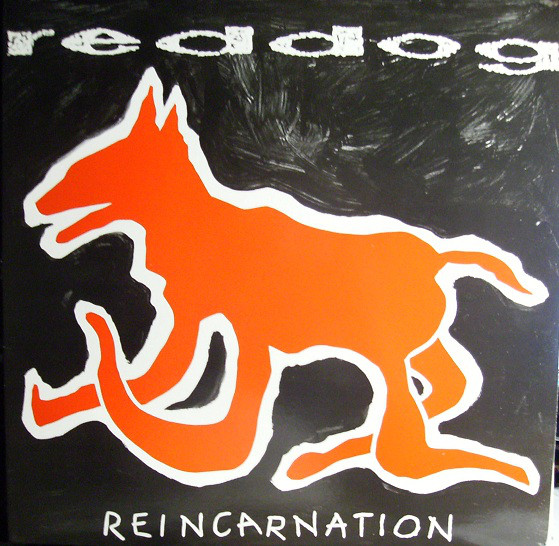
  • Reincarnation, 1988
  • Standing in the Shadows, 1989
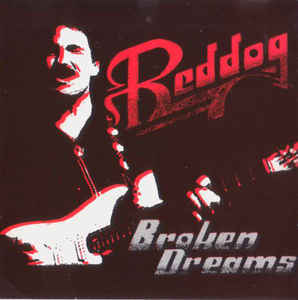
  • Broken Dreams, 1992
  • After the Rain, 1993

Album cover1

Reincarnation

IMG_3256
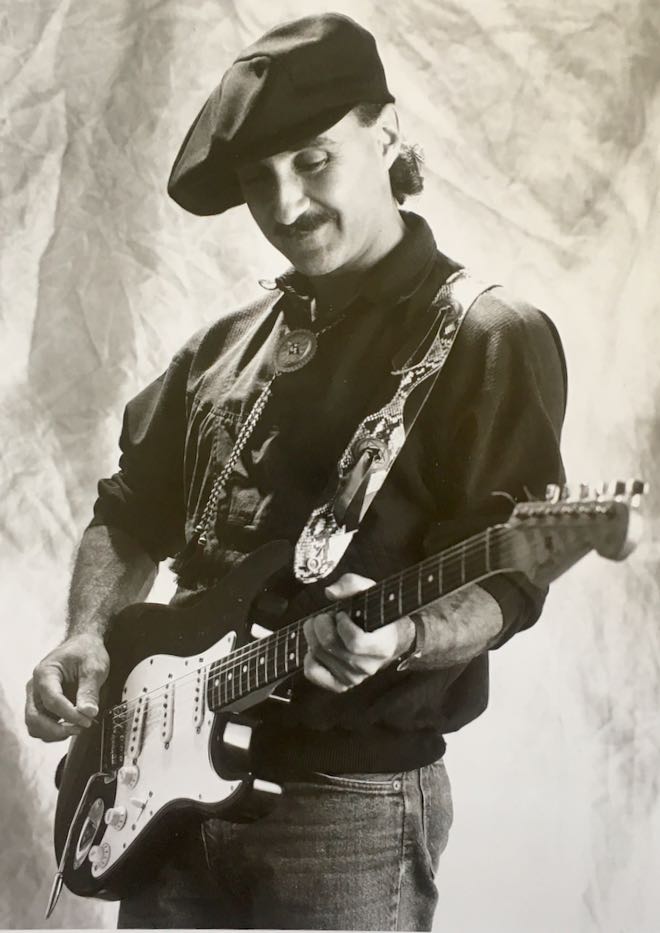
I’ve kept this publicity photo since Reddog gave it to me in the early 90s

Resources

Twitter: https://x.com/ReddogFriends/

Band Website: https://reddogandfriends.com/

Discography: https://www.discogs.com/label/256405-Survival-Records-4

One of Reddog’s favorite Duane Allman stories: http://swampland.com/articles/view/title:duane_allman_at_fame_studios_a_jd_wyker_cat_tale

Yves Saint Laurent, Fashion Designer

Well-designed clothing can be a work of art with lines so true and exquisite they make grown women and men weep.

From Exquisite to Tears

Well-designed clothing can be a work of art with lines so true and embellishments so exquisite they cause grown women and men to weep. I hope everyone has, at least once, the grand experience of being so moved by a couture gown or suit that they’re overcome with emotion, as though witnessing at Michelangelo’s Sistine Chapel masterpiece. 

IMG_4015

Even people like me who have no sense of style and never learn what cut and shape best fits their physique can be drawn to the art of fashion like they’re drawn to study a Matisse or Van Gogh. Particularly when the designer is Hubert Givenchy, Cristobal Balenciaga, Christian Dior or Yves Saint Laurent (YSL), a few of my favorites.

YSL (1936 – 2008) ran his own haute couture design house for 40 years, after being head designer at Dior in his early 20s. He was known for adapting tuxedoes to the female form and designing comfortable clothing for women. He also changed the fashion world when he used models from African countries.

IMG_3997

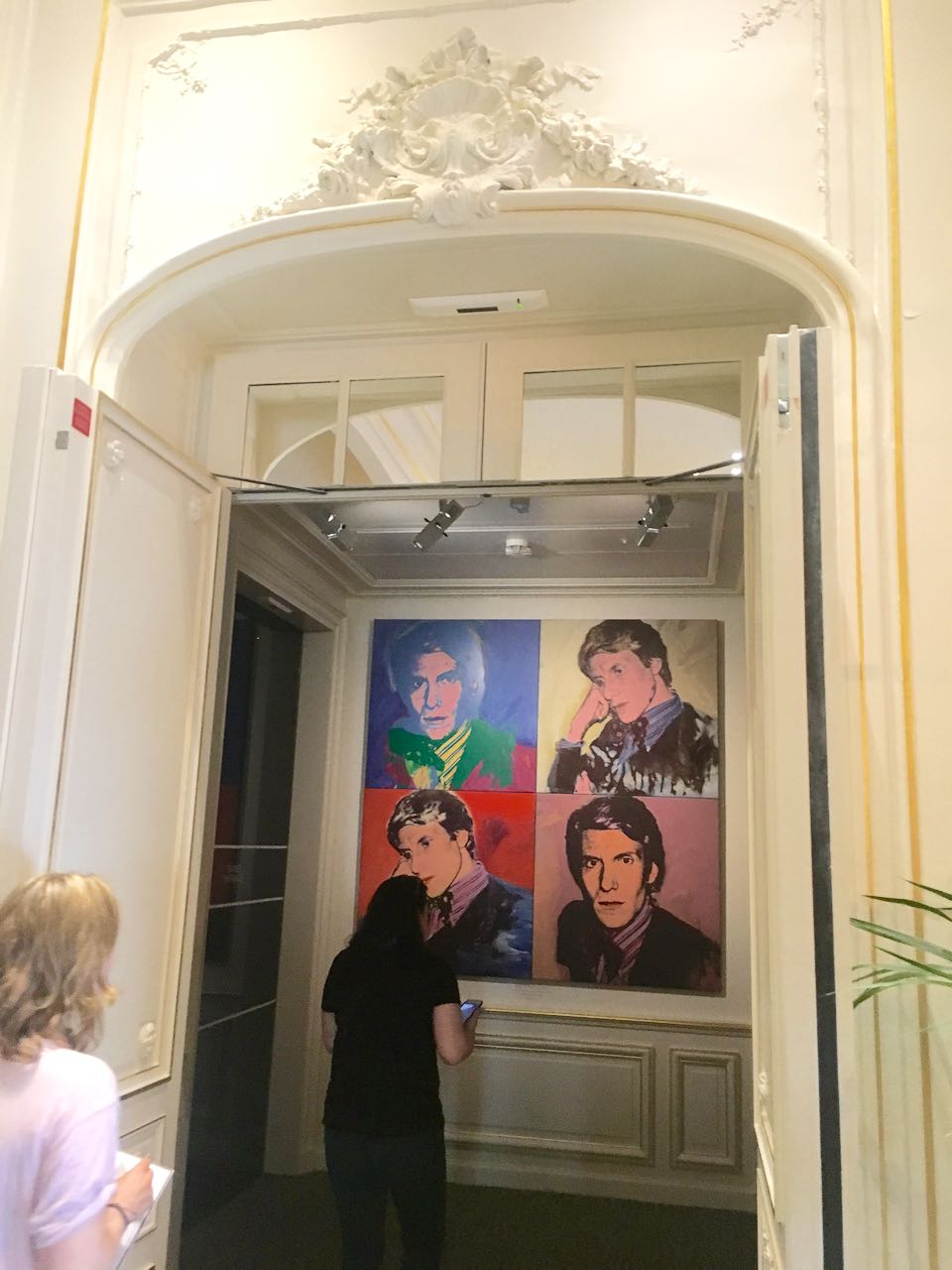
My daughter Jaime and I recently visited Musee Yves Saint Laurent Paris, housed in his former couture salon at 5 Avenue Marceau in the 11th arrondissement. Lucky for fashion fans, beginning in 1964 YSL began setting aside specific designs after each show, with an eye toward eventually building a museum. The actual garments and all documents related to their creation were stored away.

The museum officially opened in 2016.

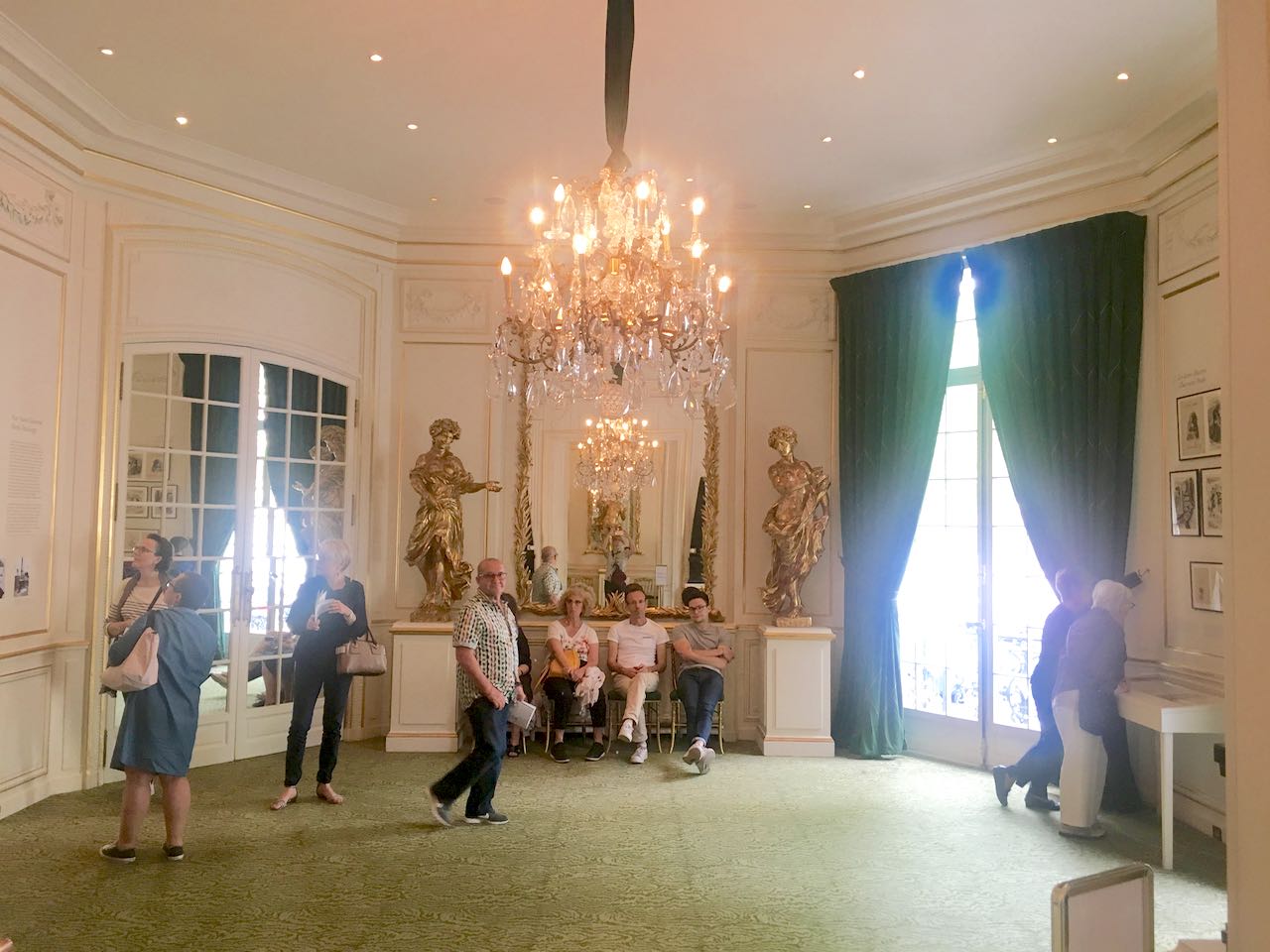
The interior of the museum is gorgeous, and how exciting to be in the unchanged salons where Yves held his fashions shows until 1976, and where patrons, including famous French actress Catherine Deneuve, were fitted for their couture pieces.

IMG_4049

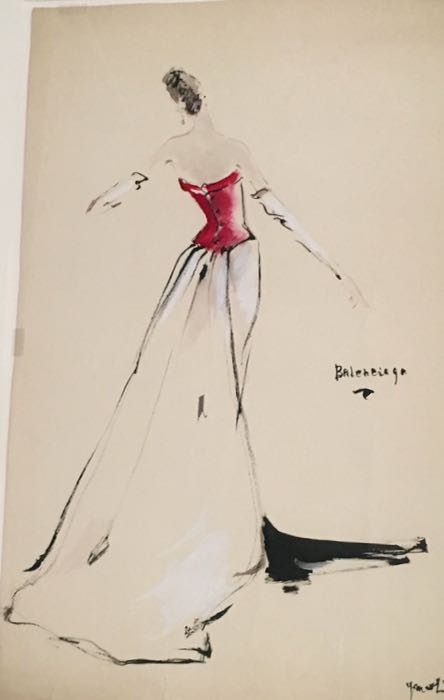
YSL’s design sketches are works of art. He could draw beautifully and was pulled toward theatre stage design and costumes, in addition to fashion. While young, he even created 11 paper dolls and more than 500 designs for them, including accessories, for two full fashion collections. He mocked up a program for each collection that listed names of the models, each piece, the location of the haute couture house and various suppliers.

IMG_3989 (1).jpg
YSL’s paper dolls

Most of YSL’s designs were sketched in his Moroccan home and their prototypes were crafted by his team working in collaboration with artisanal houses back in Paris.

Haute Couture has strict rules that could drain dry any creative person. Two collections are required each year; the spring-summer season presented in January and the autumn-winter season shown in July. Each collection contains about 100 designs, including accessories.

IMG_3998

His designs were inspired by African, Russian, Spanish and Asian cultures. He often drew upon the history of fashion and yet was adept at reflecting societal changes in his designs, such as the feminist movement in the 70s.

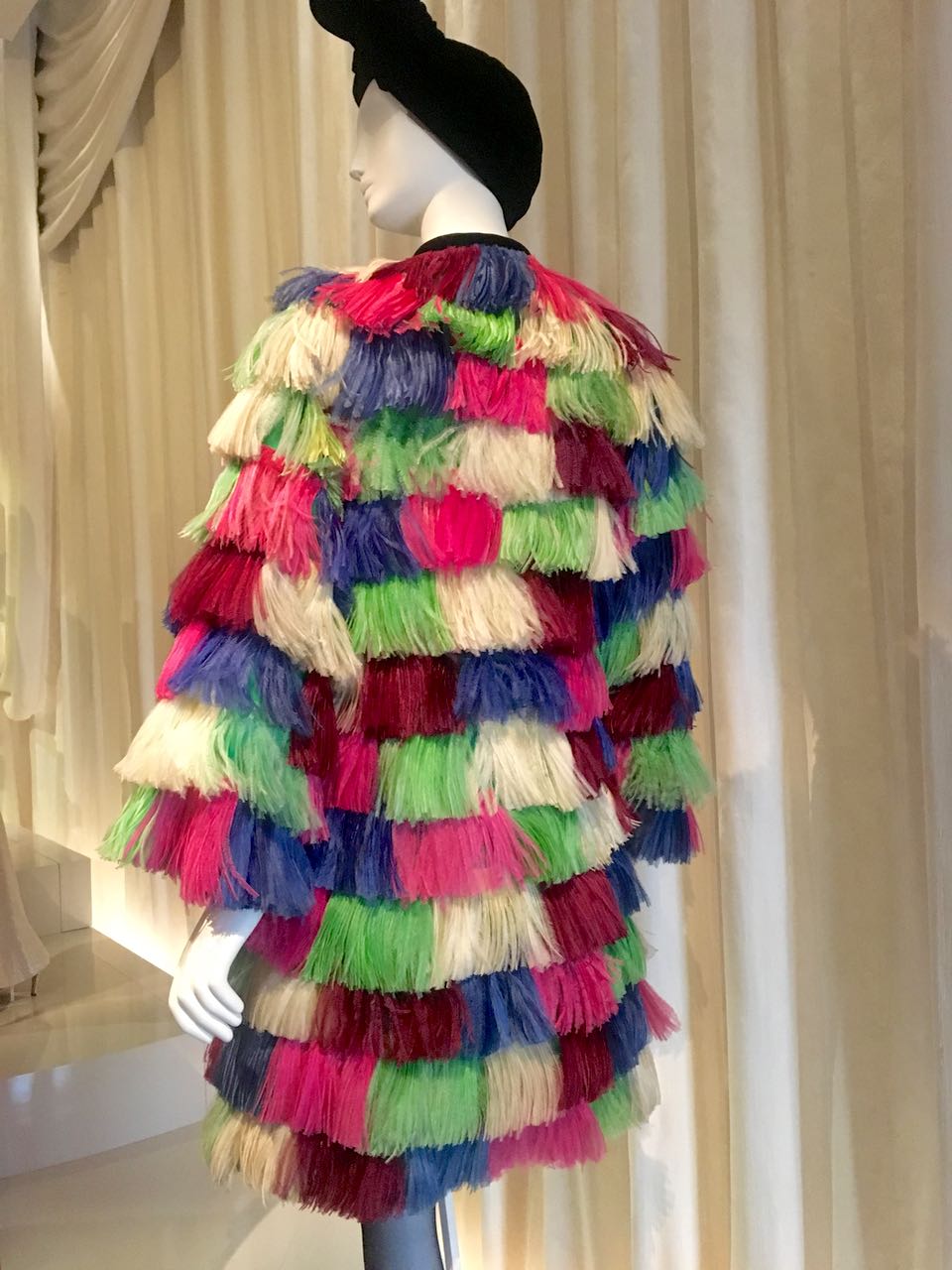
YSL’s design house employed 200 people and, like most haute couture designers, he collaborated with skilled craftspeople at French artisanal houses who used their own techniques and style to create various aspects of the clothing, including weavers, dyers, printers, embroiderers, plumassiers (deal with ornamental plumes or feathers), goldsmiths and silversmiths. One garment could take hundreds of hours to embellish. Ateliers producing high-quality commissioned work for YSL using skills handed down generation after generation included:

  • Jewelry: Goossens
  • Featherwork: Lemarie
  • Textiles & Embroidered appliqués: Brossin de Mere
  • Printed Textiles: Abraham
  • Embroidery: Rebe, Mesrine, Lesage and Lanel

IMG_4021

IMG_4022
Close-up of feather jacket above

YSL said, “I like a dress to be simple and an accessory to be crazy.” Designing costume jewelry, rather than working with gemstones and precious metals, gave him more freedom in putting together wood, metal, rhinestones, beads, feathers, ceramics and passementerie (tassels, braids, fringing) in “crazy” necklaces, earrings and bracelets.

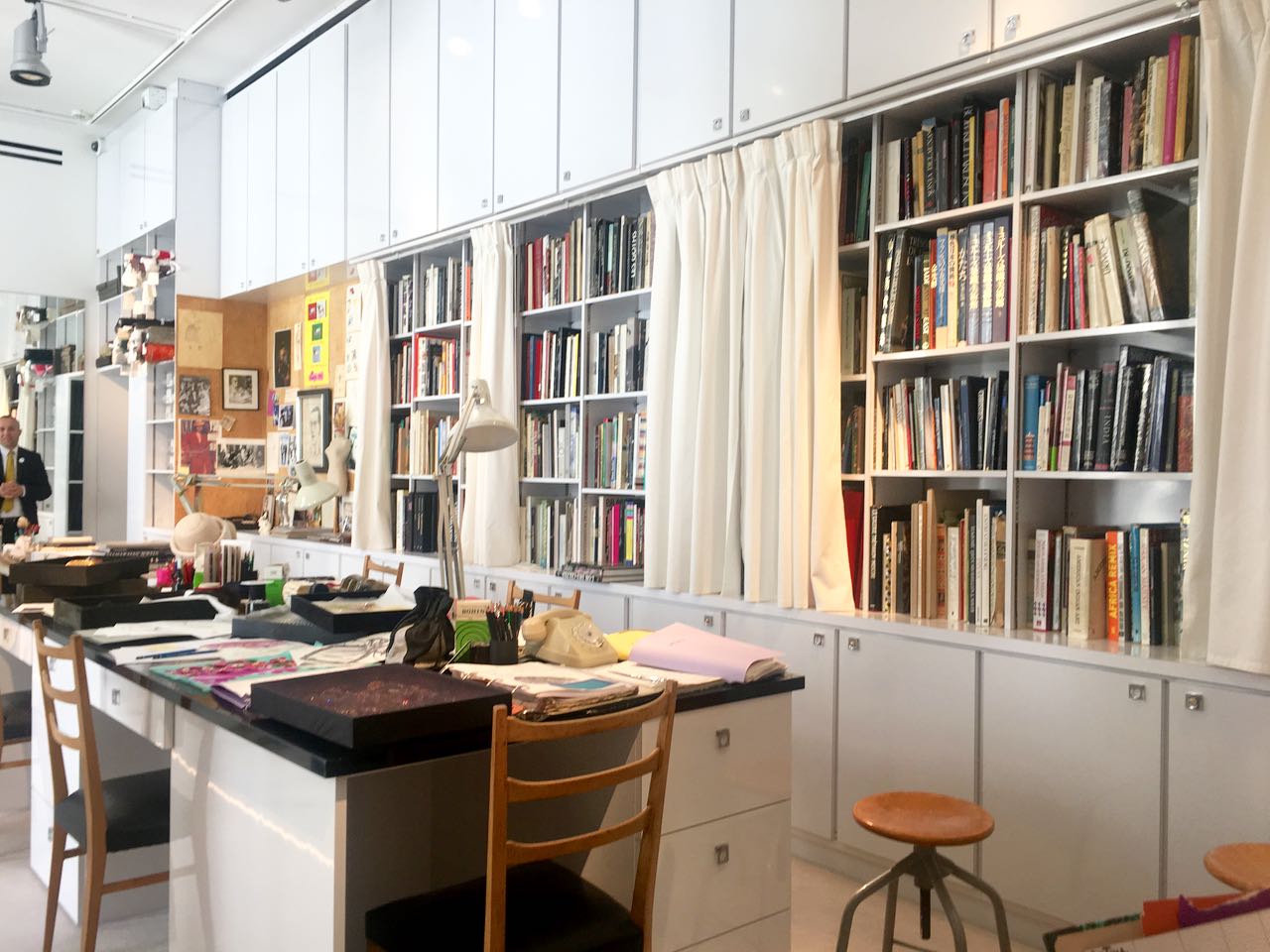
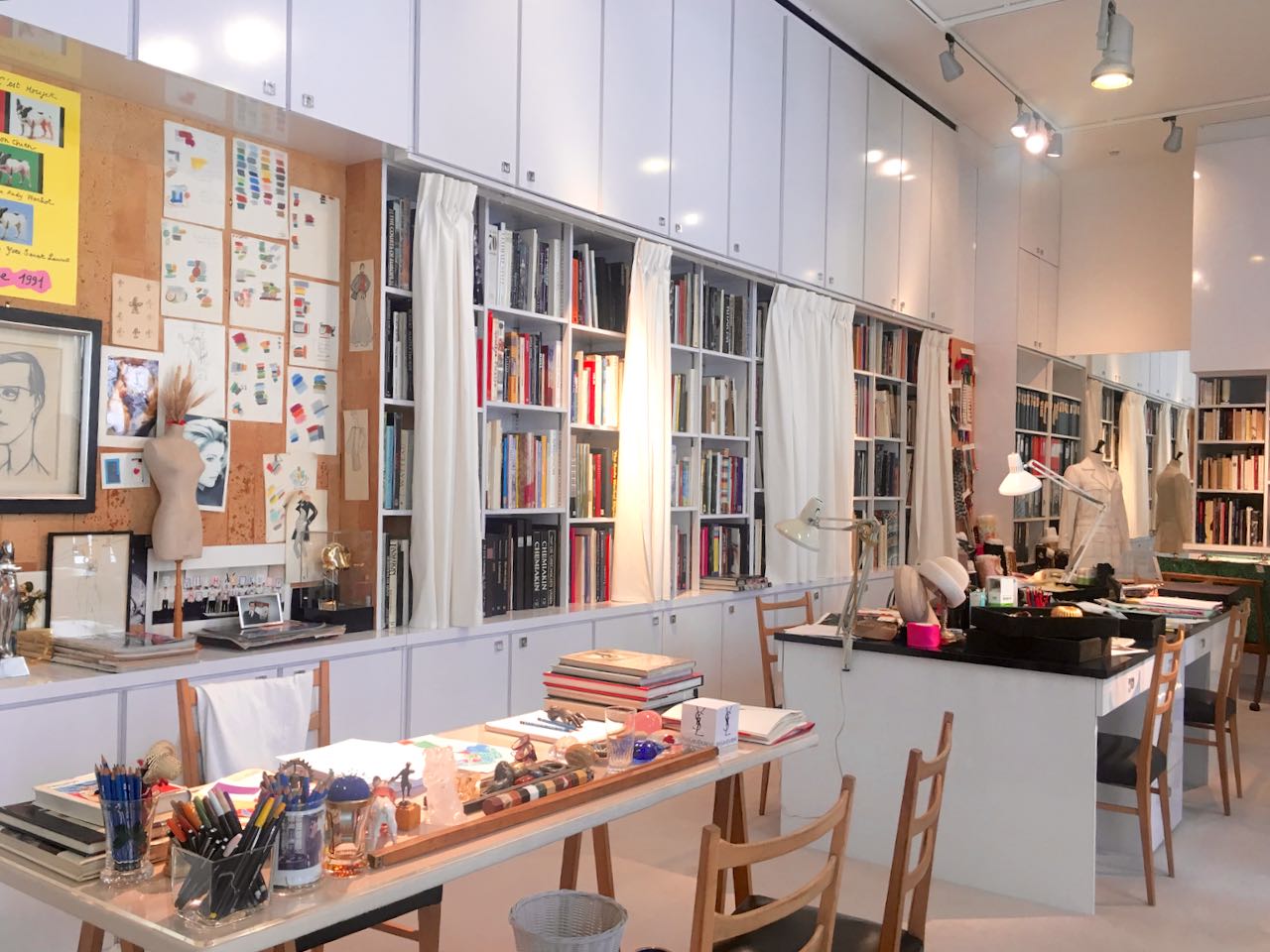
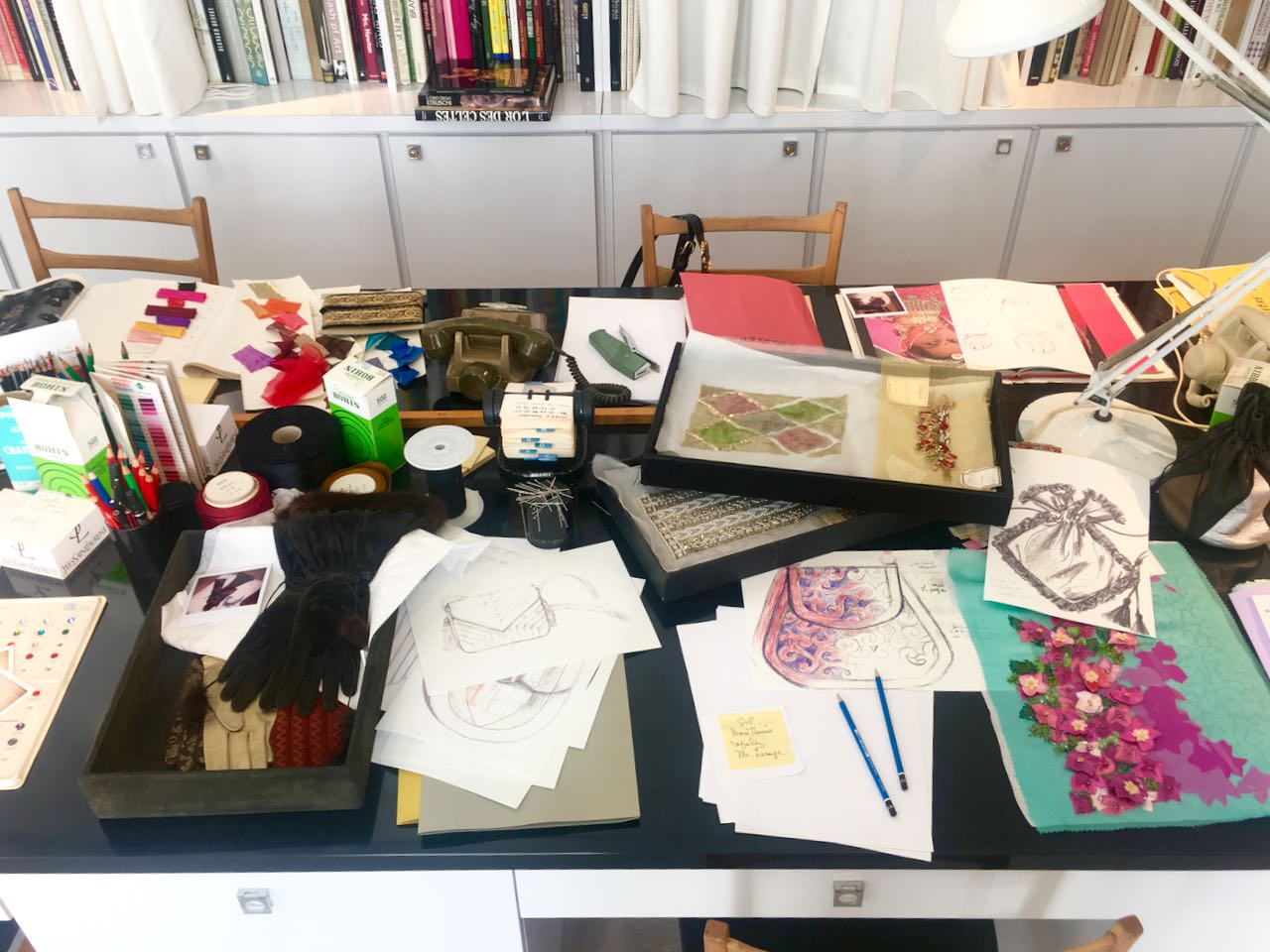
My favorite part of the museum was YSL’s studio on the top floor with windows to the ceiling, a wall of mirrors, Yves’ simple desk and work tables strewn with bobbles, sketches, embroidered pieces, Polaroid photos, feathers, etc.

IMG_4032

Different from the fancy salons downstairs, YSL’s studio was bright and quiet and the perfect place to view models in prototype garments. He found that looking at the models and garments in the mirrored wall gave him the distance needed to evaluate each piece.

Oh, and shelves of books! Fashion, art books of other topics inspired Yves. “The most beautiful trips I took were through books,” YSL said.

IMG_4029

There are six short films showing the entire couture process from sketch to purchase. Another film shows YSL’s long-term business and personal partnership with Pierre Berge, a relationship that lasted until YSL’s death from brain cancer in 2008.

The museum rotates the pieces on display, so it’s possible to visit the Musee again and again and not see the same things.

Sounds like a plan!

Photo Galleries

The Studio

IMG_4036

IMG_4035

IMG_4031

IMG_4030

IMG_4025

IMG_4023

IMG_4024

The Desktop

Version 2

Version 2

IMG_4027

IMG_4026

The Sketches

IMG_4001

IMG_4004

IMG_3995

IMG_3994
YSL sketched this Givenchy gown

IMG_3992
YSL sketched this Dior gown

IMG_3991
YSL sketched this Balenciaga gown

IMG_4007

IMG_4005

IMG_4003

IMG_4002

The Clothes

IMG_4019

IMG_4020

IMG_4016

IMG_4018

IMG_4012

IMG_4011

IMG_4008


Paris Street Art

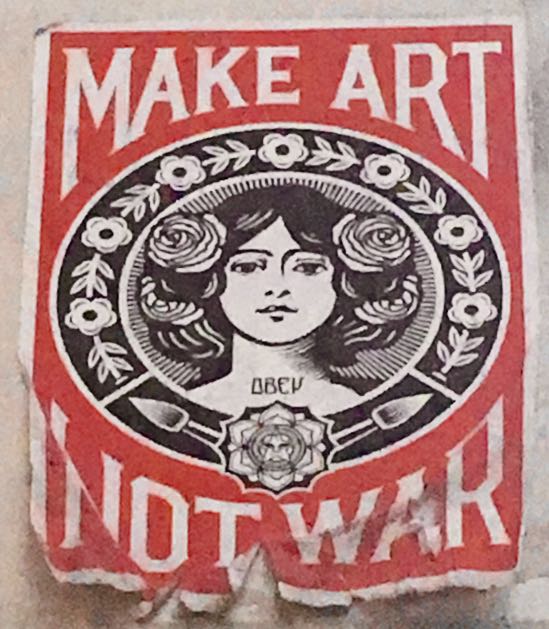
Street art ain’t just stencils anymore… but we still love stencils.

The Bright and The Beautiful

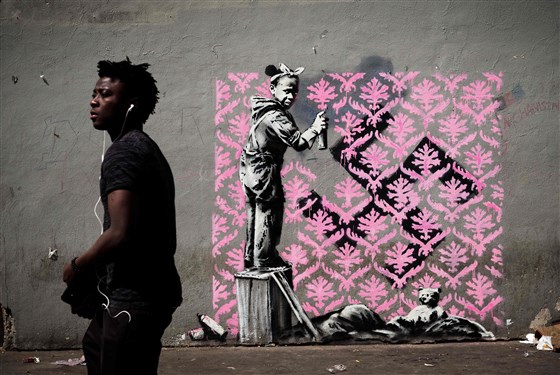
My only disappointment about Paris was missing Banksy by one day. The famous British street artist has been in the City of Love lately posting art that mostly jabs at the French government’s treatment of immigrants.

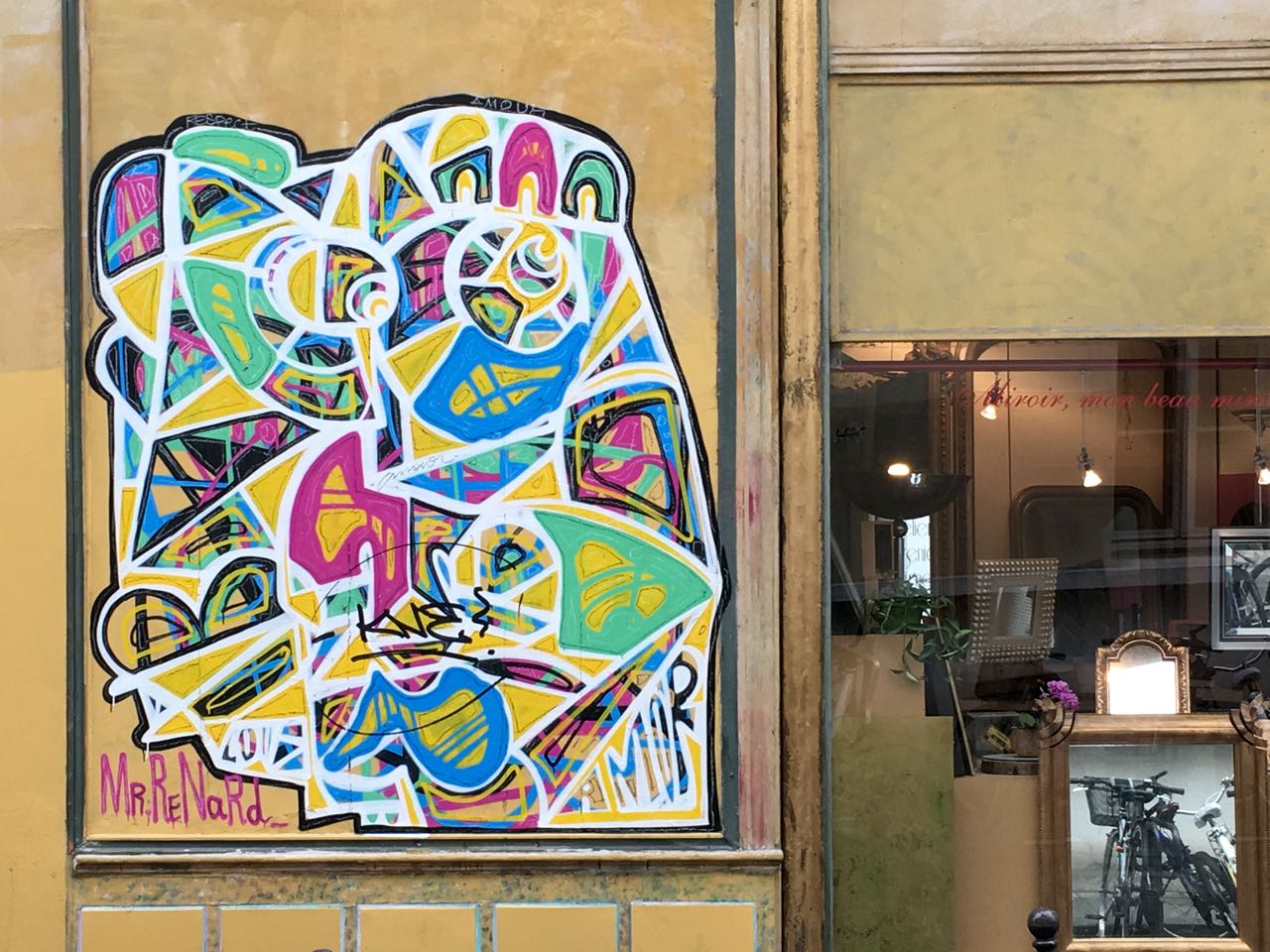
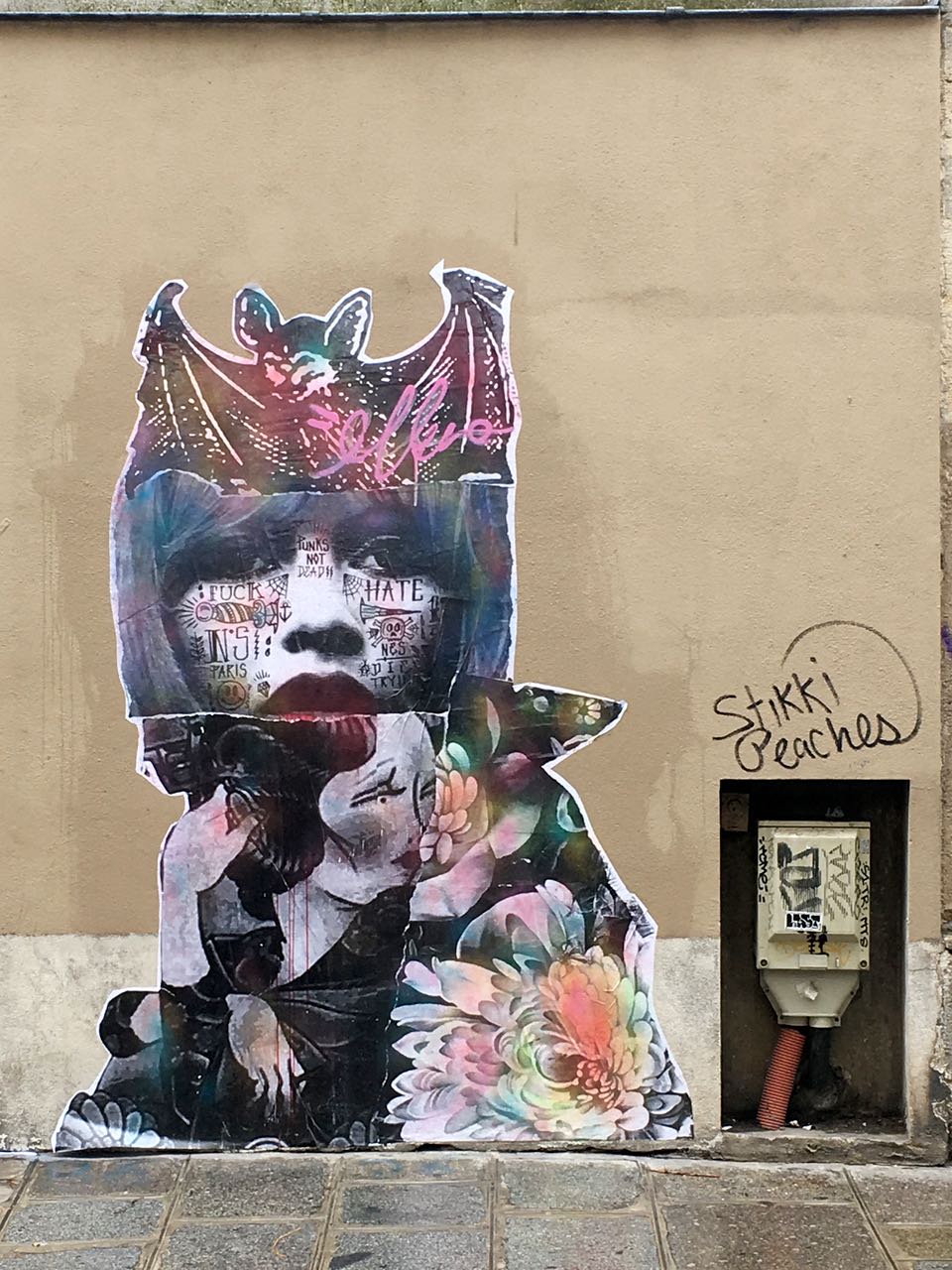
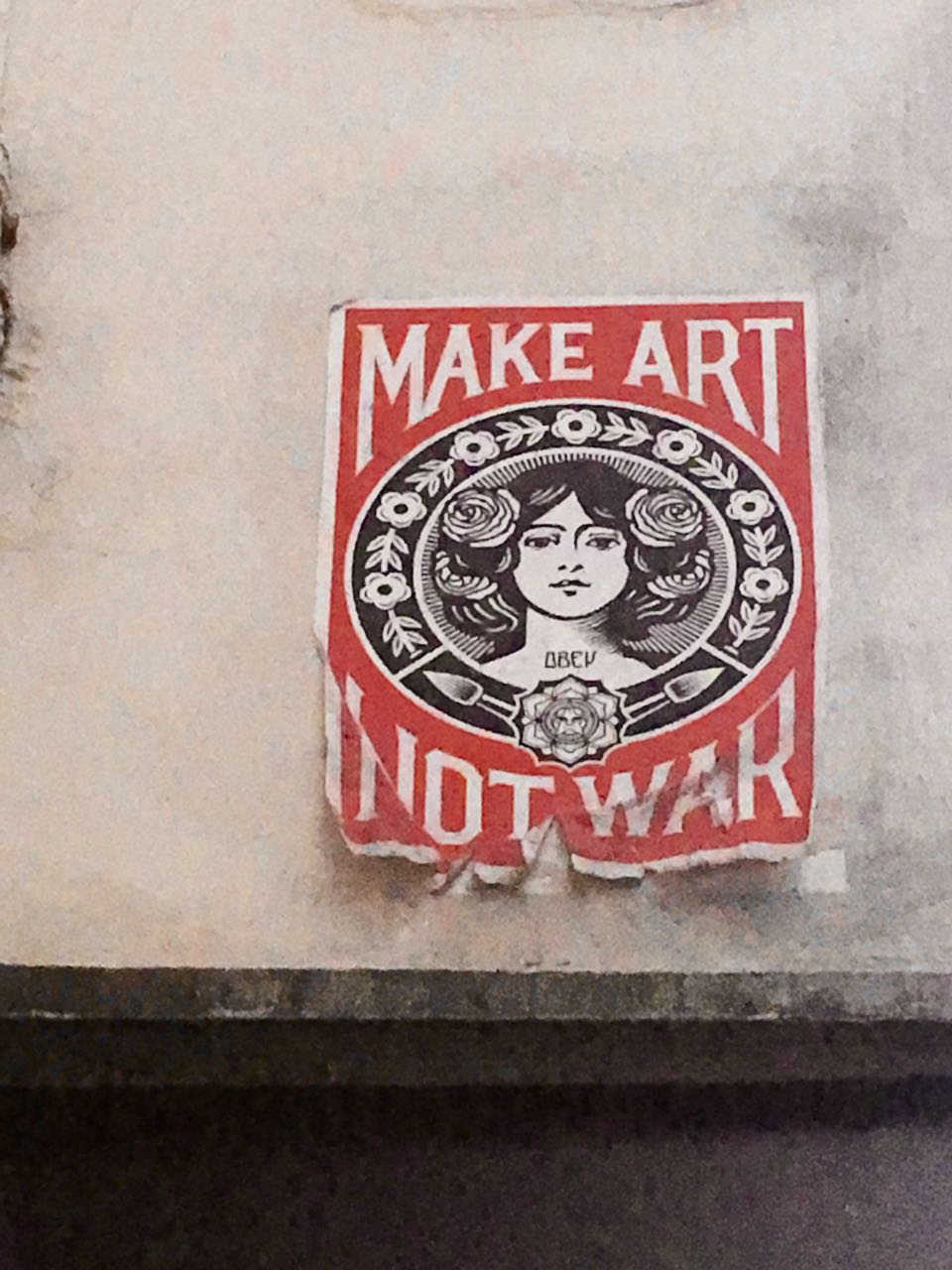
Before Banksy arrived, my daughter and I enjoyed photographing graffiti in Paris, mostly in Le Marais, and the third and fourth arrondissements.  I was intrigued to see not just paint, but also paper collages and plaques used on walls.

Here’s what we found (including a few of Banksy’s latest works captured by photojournalists).

IMG_3465

IMG_3557

IMG_3558

IMG_3560
Giant paper collage, perhaps my favorite

Do not dream, fly with your wings
Translation: Don’t dream, fly with your wings

Version 2
Close-up of plaque from previous photo

IMG_3578 (1)

IMG_3576
Okay, this isn’t street art, but it was on the bathroom door at Duc des Lombard Jazz Club and the French love American Jazz. Plus, it’s written in English

IMG_3579

IMG_3569


IMG_3841
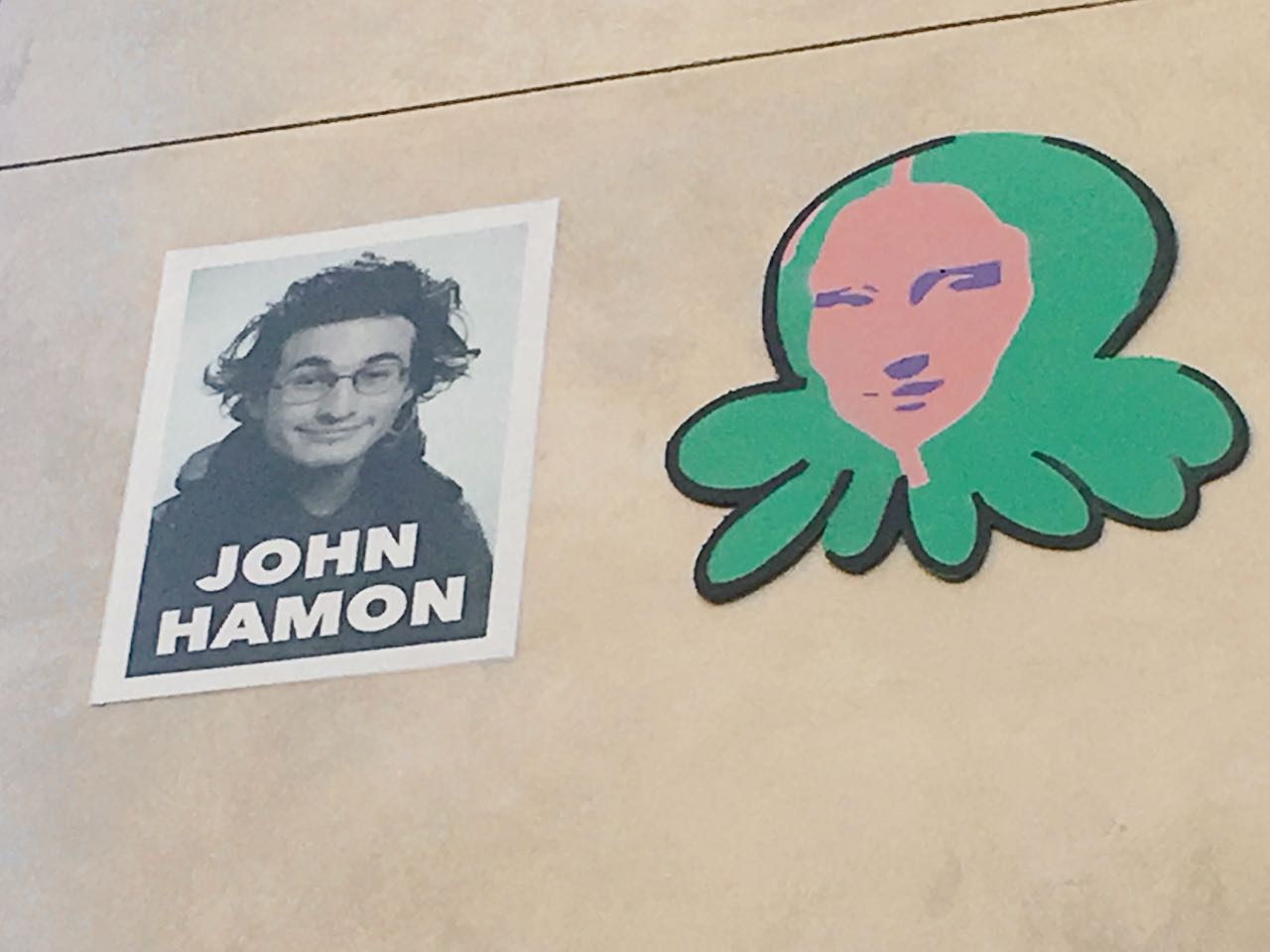
For 18 years, this portrait of John Hamon has been plastered around Paris. It’s the guy’s actual name and his actual photo, taken when he was 19. A bit of a mystery, his portrait has been projected onto the Eiffel tower, Arche de Triomphe and other famous facades. Essentially, he’s playing around with the idea of art being about promotion, rather than skill. His portrait has found its way around the world, so exposure versus talent is definitely a concept to ponder. The octopus is another common graffiti subject in Paris, but with Mona Lisa’s face, it’s irresistible. Notice any resemblance between John Hamon and Mona Lisa?

IMG_3581
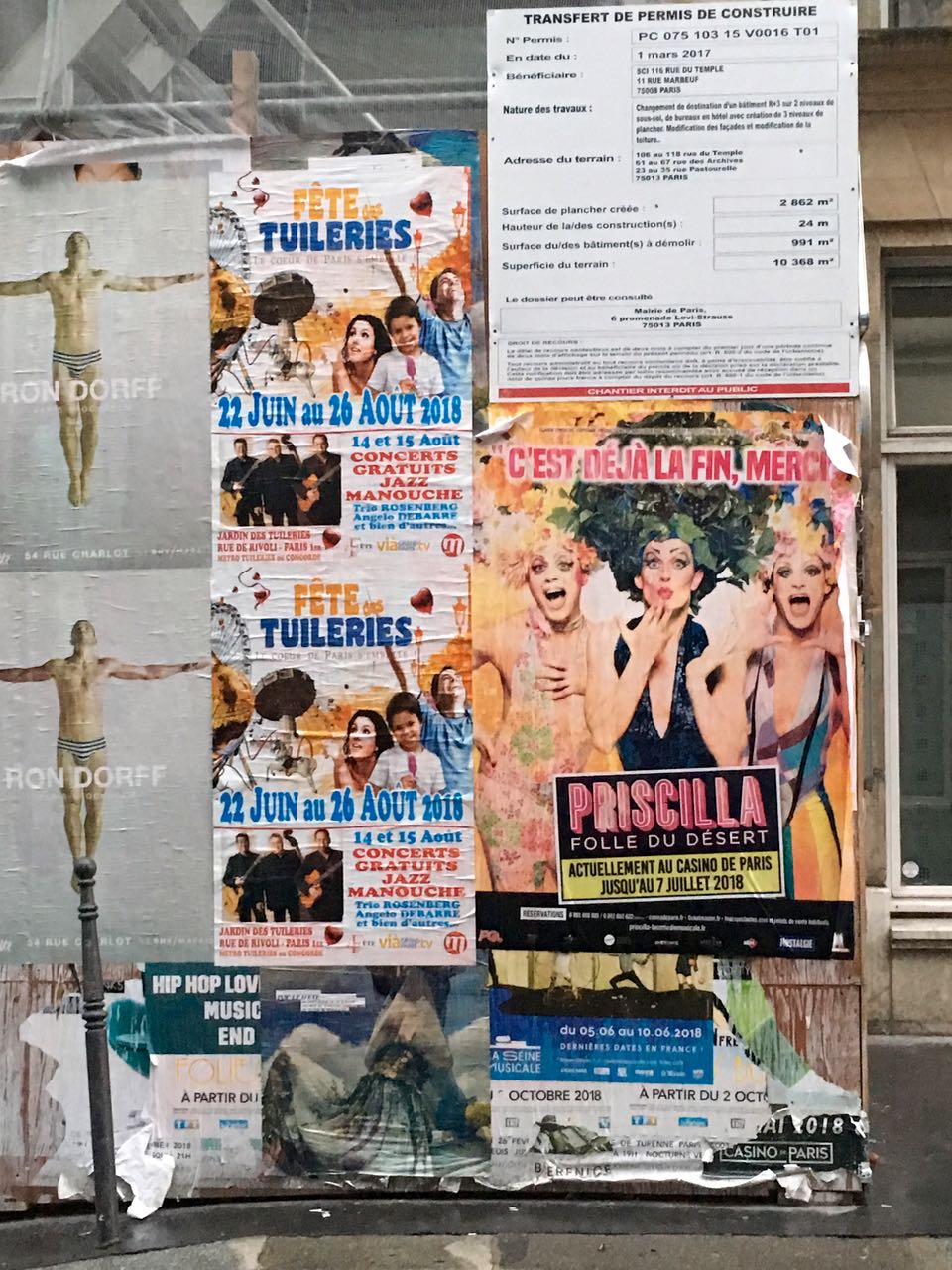
Not street art, but interesting theatrical notices

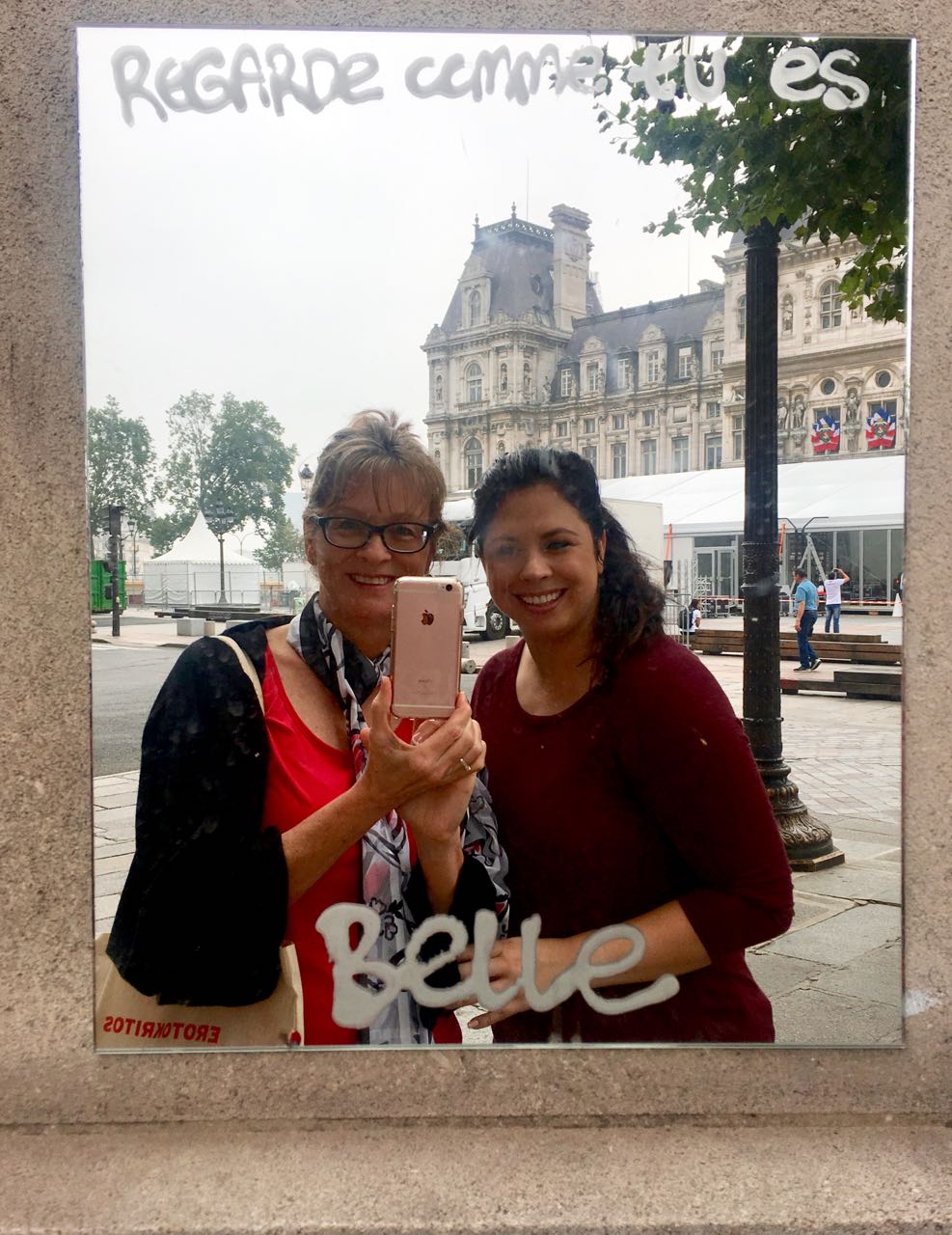
Look at you, you are beautiful
Randomly-placed mirror. Translation: Look at you, you are beautiful. Yes, I’m talking to you!

IMG_3582

Banksy Paris - Thomas Samson
Banksy’s tender reminder of last year’s terrorist bombing in Paris. Photographer: Thomas Samson/AFP

Banksy Paris - Thomas Samson 2
Whimsical Banksy. Photographer: Thomas Samson/AFP

180627-banksy-paris-mc-Philippe Lopez
Heart-breaking Banksy. Photographer: Philippe Lopez/AFP

180626-banksy-paris-Philippe Lopez-AFP
Ringing-the-alarm Banksy. Photographer: Philippe Lopez/AFP

Monet’s Garden

The Ultimate Creative Space

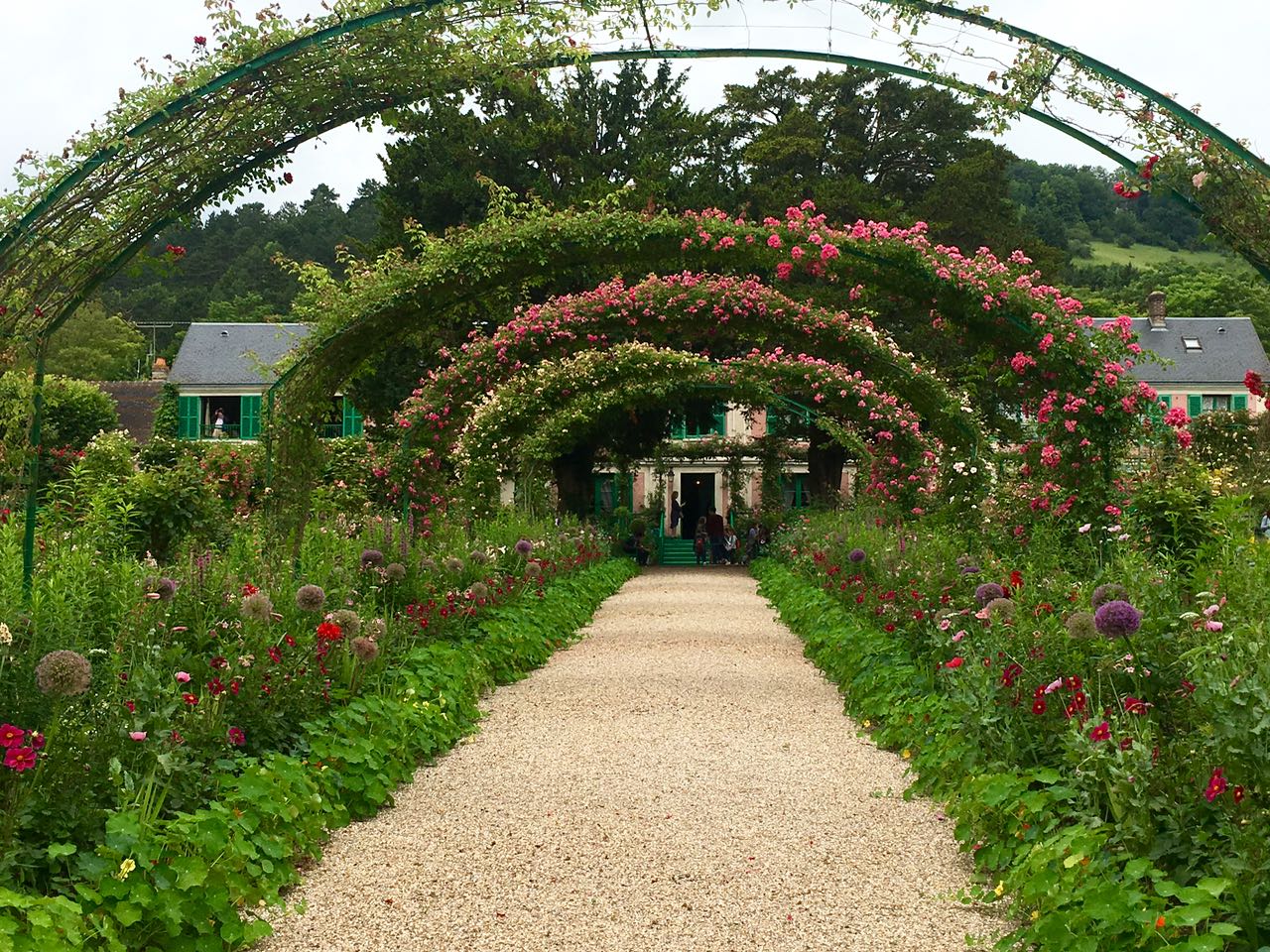
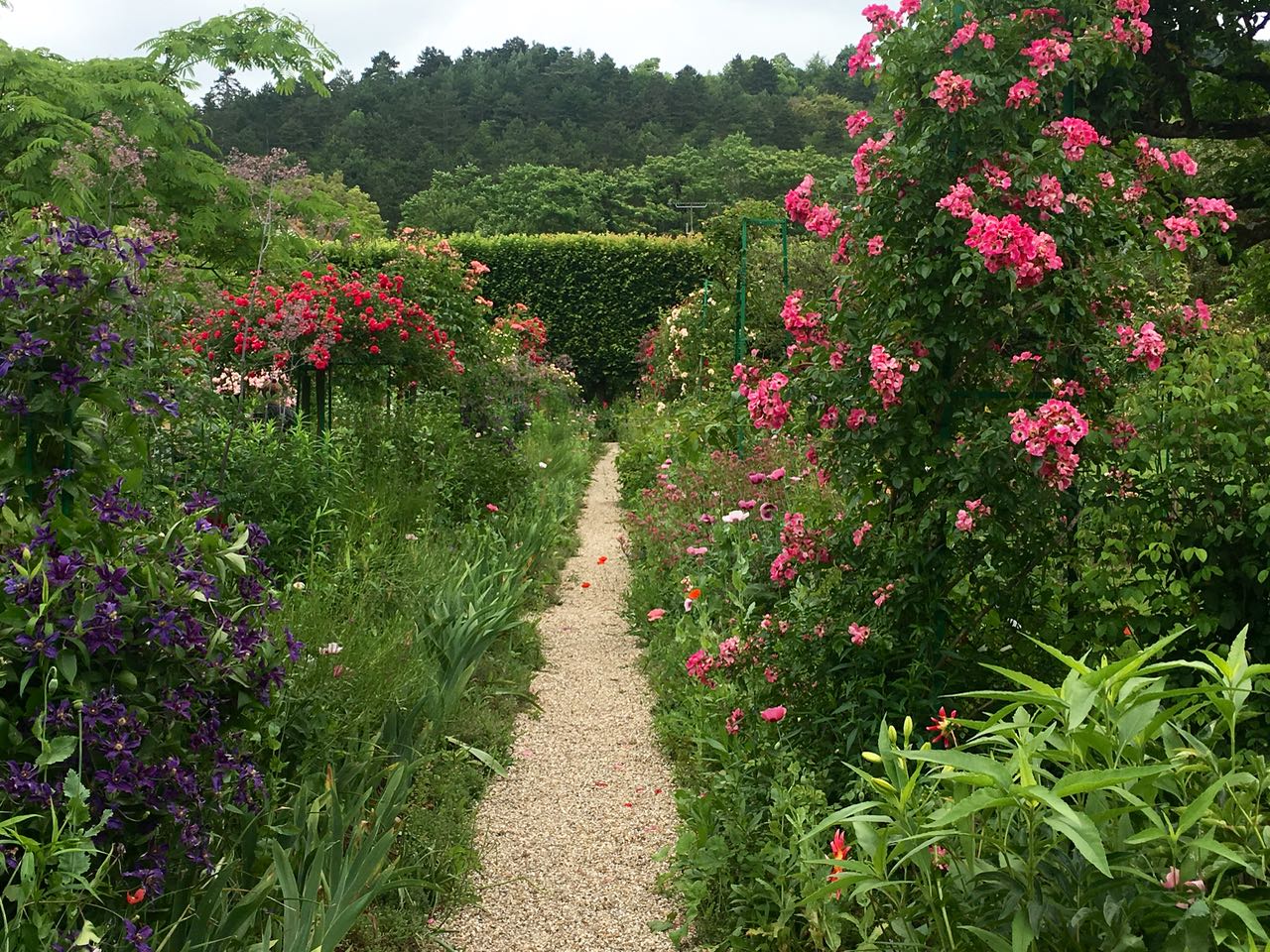
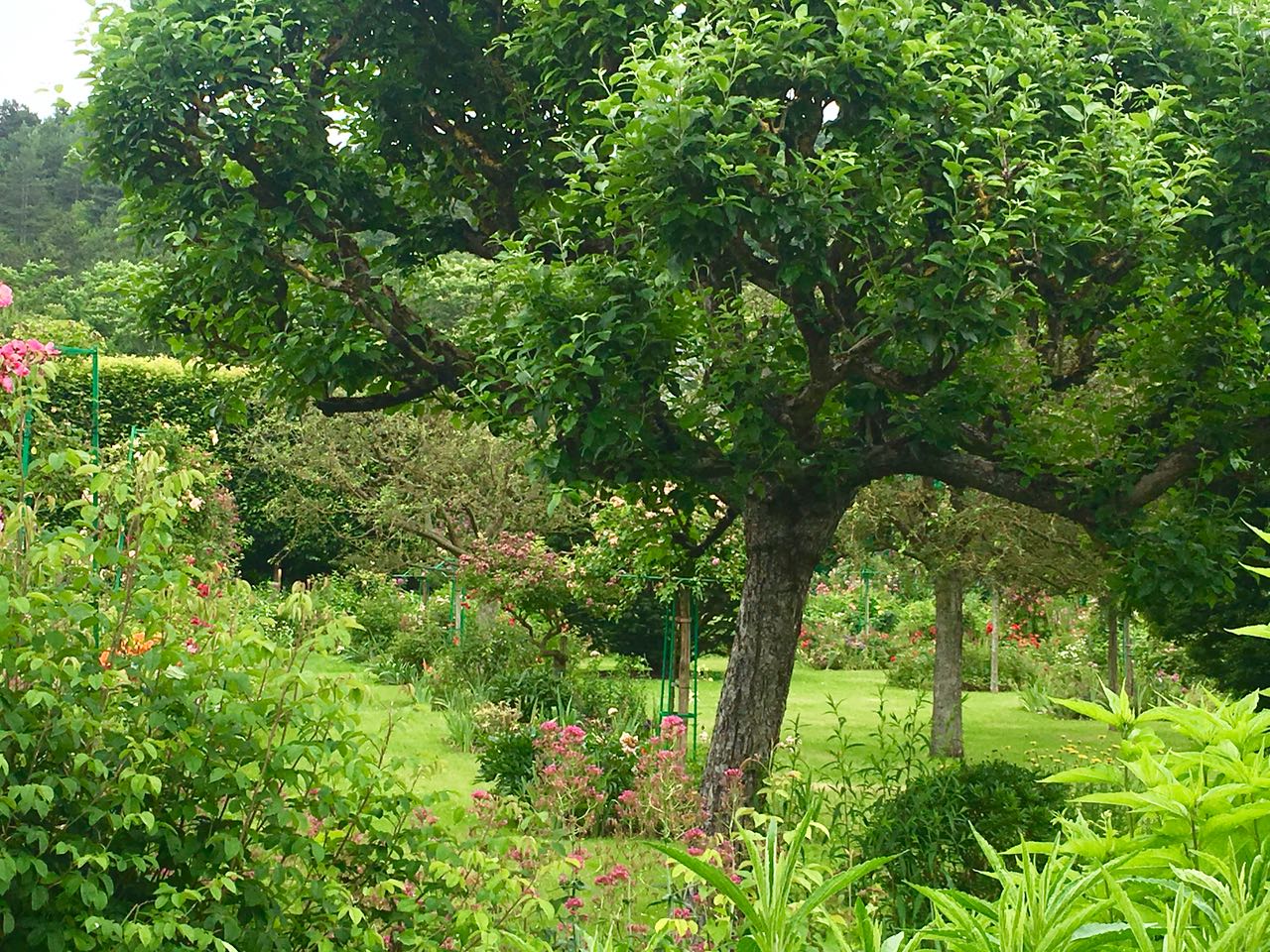
Claude Monet (1840 -1926) is known around the world for his impressionist paintings, especially of his garden and waterlily pond, but he also strategically planted specific-colored flowers in his gardens, essentially “painting” the landscape in front of his home in the tiny village of Giverny, France, about an hour’s drive northwest of Paris.

IMG_3634

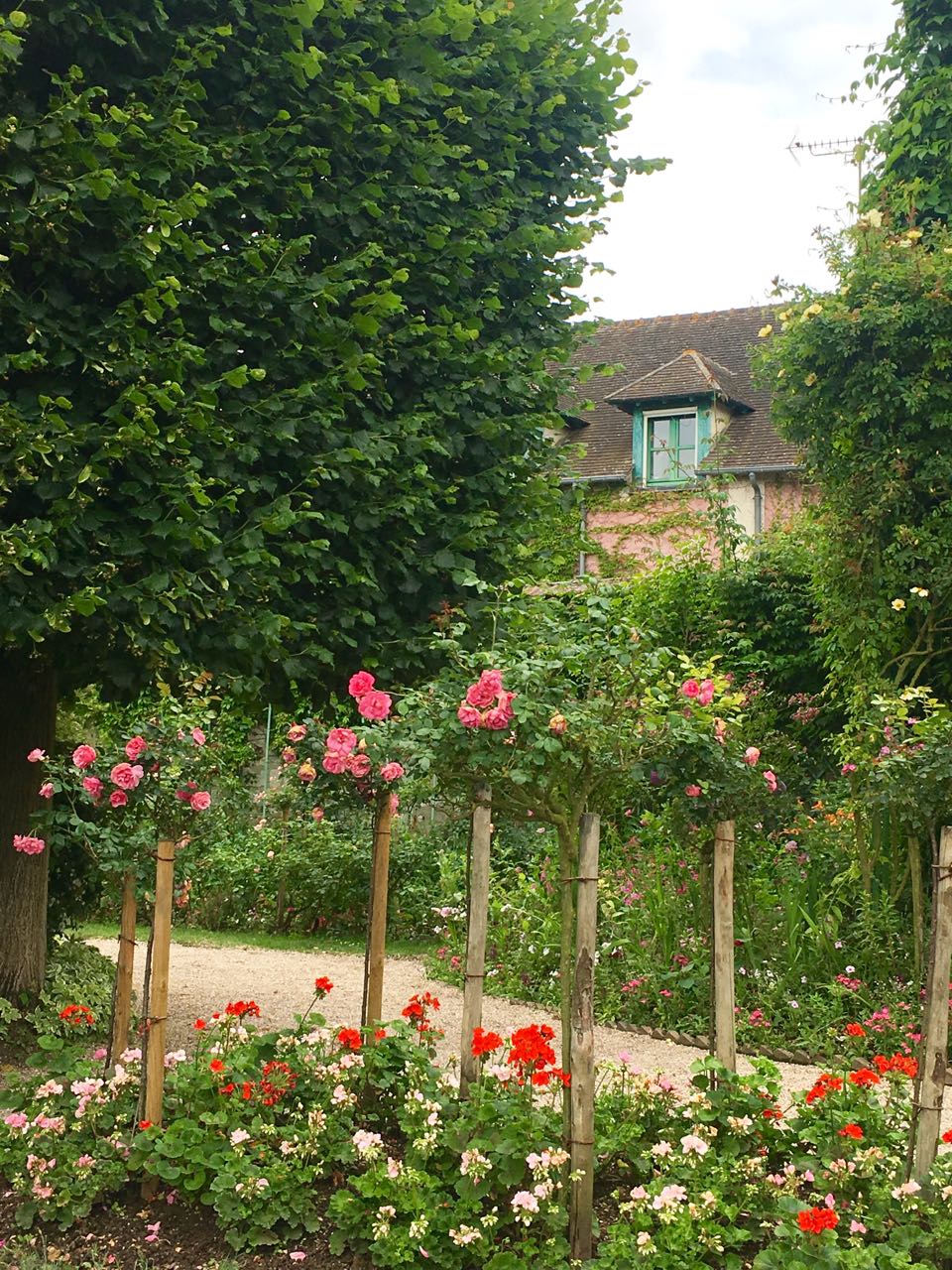
Monet grew his flower garden like a florist arranges a vase of flowers, based on colors and shapes, carefully choosing flowers for spring, summer and autumn. For winter, he got his fill of flowers by visiting  orchids in his greenhouse. 

IMG_3753
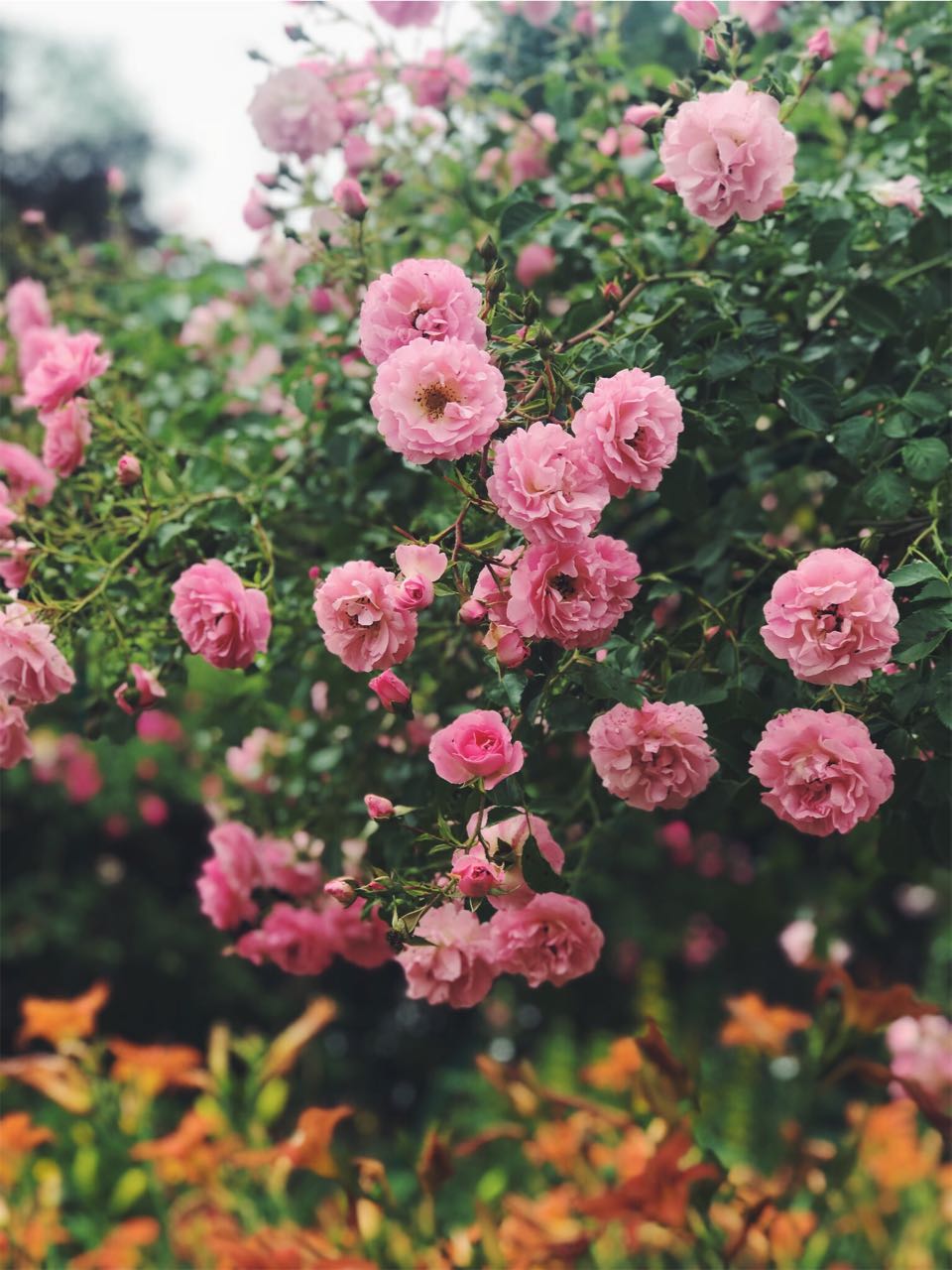
The Grande Allee flower tunnel with rambling roses

IMG_4070
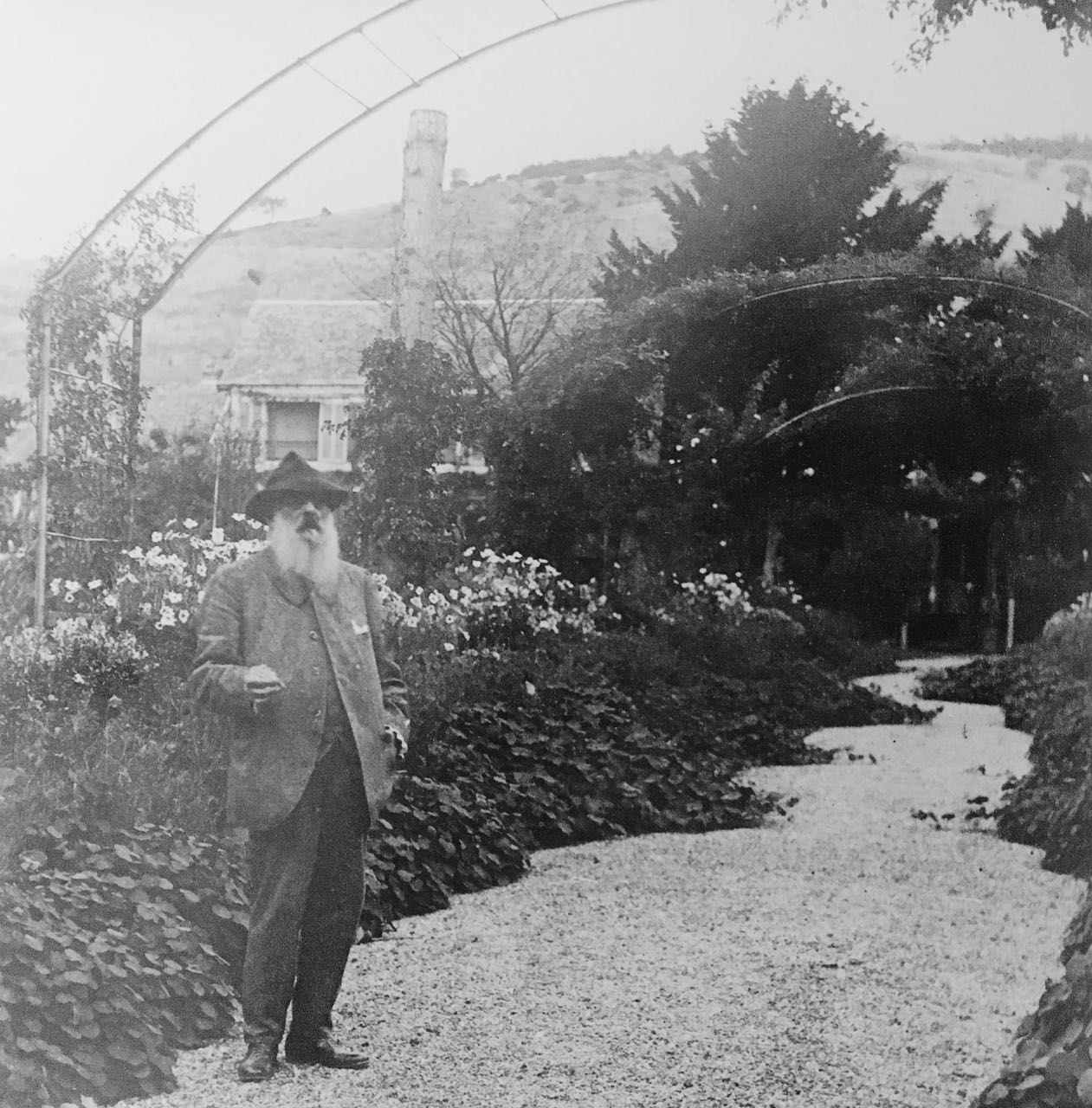
Monet in the Grande Allee

From the age of 43 until his death 40 years later, Monet obsessed over the garden and pond which, combined, comprised nearly five acres of common and exotic plants from around the world. (Monet favored single flowers and his favorite of all was the single-flowered “mermaid” rose in yellow, which he grew under his bedroom window.)

IMG_3622

Eventually six gardeners would be on hand to help Monet “paint” his landscape with flowers. His gardens became his living studio, so he no longer had to trek into the countryside to paint plein air, which is what made the Impressionist painters and their paintings unique.

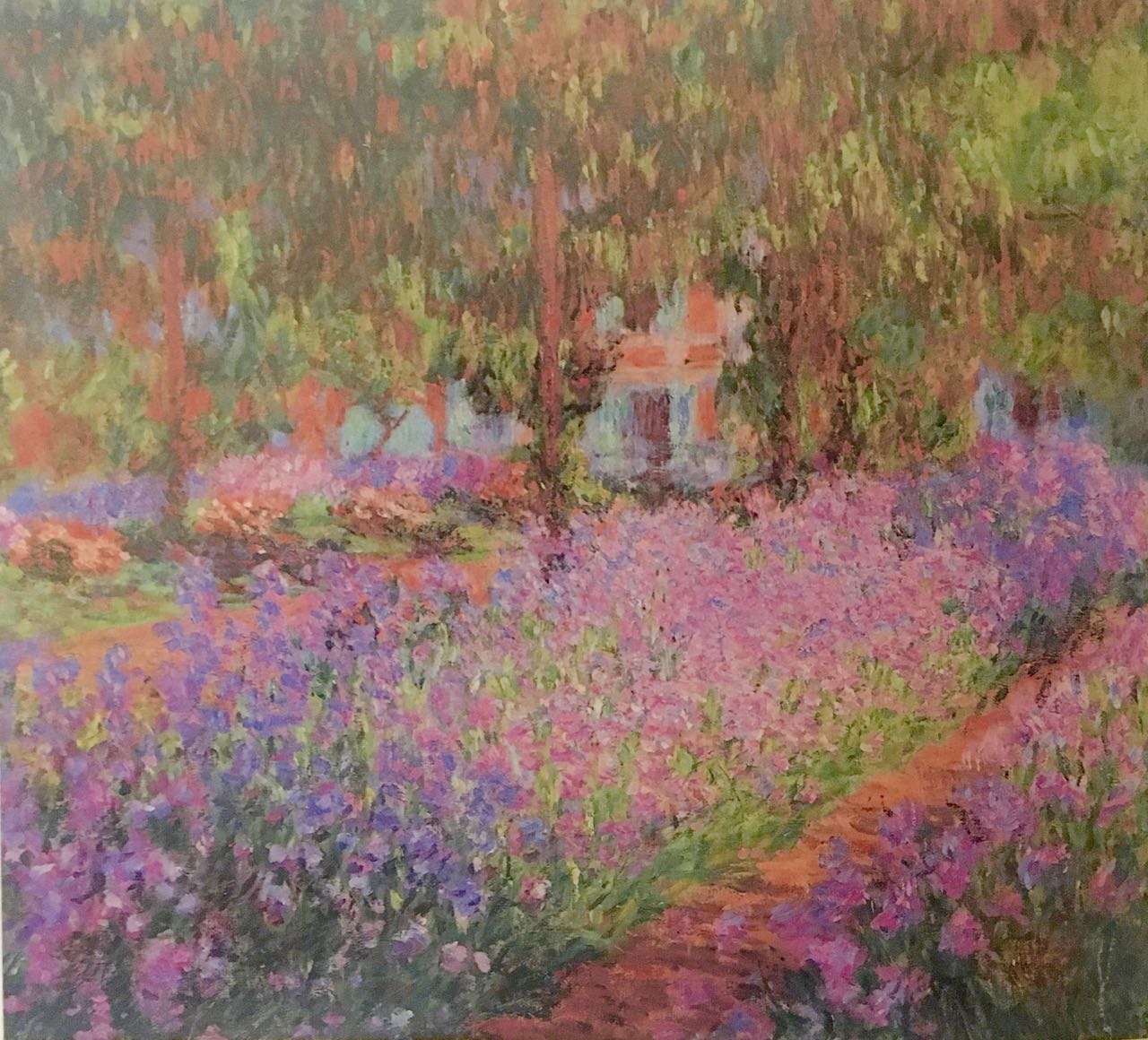
Monet's Garden at Giverny
Monet’s Garden at Giverny, 1900, oil on canvas, 31 5/8 x 35 7/8 inches; Musee d’Orsay, Paris

“Impressionist paintings take a fleeting moment and wrap it in light and mood and emotion,” writes Matt Brown in Everything You Know about Art is Wrong. The fuzzy paintings of early French Impressionists like Monet, Degas (1834-1917), Pissarro (1830-1903), Renoir (1841-1919) and Sisley (1839-99) were roundly criticized and mocked with descriptions of “intolerable monstrosities,” “ridiculous and horrible” and “victims of an unlucky disease.”

IMG_3930 (1)
A detailed close-up of one of Monet’s giant waterlily paintings at Musee de L’Orangerie

Matt Brown believes impressionist paintings are now so respected and loved “they might even be considered among the finest achievements of our species.”

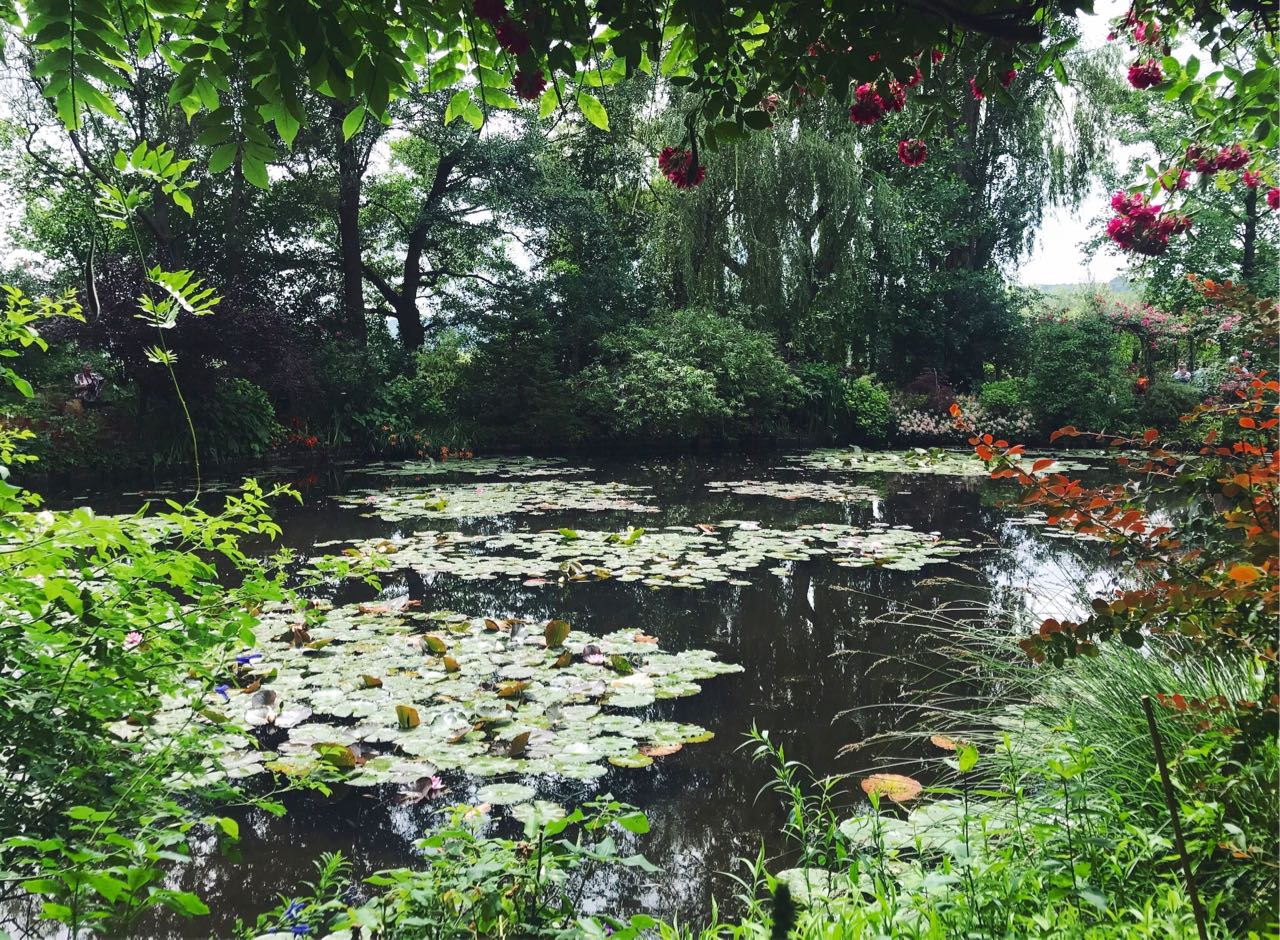
As for the pond, Monet hired a special gardener who would row a little boat around early in the morning (before Monet started painting) to clean up algae and groom the lily pads to grow in visually-pleasing circular clumps.

His waterlily paintings blew the minds of folks in his day. They were used to tranquil pastoral settings composed as seen; land and sky. Monet’s waterlily paintings had no setting, no pond’s edge or sky to compose a nature scene. He simply put his pond border to border and rocked the art world.

IMG_4060

Monet considered his gardens his greatest masterpiece. In 1907, Marcel Proust wrote:

“If I can someday see M. Claude Monet’s garden, I feel sure that I shall see something that is not so much a garden of flowers as of colors or tones, less an old-fashioned flower garden than a color garden, so to speak, one that achieves an effect not entirely nature’s, but it was planted so that only the flowers with matching colors will bloom at the same time, harmonized in an infinite stretch of blue or pink.”

That’s exactly what Proust would have seen.

IMG_3762

These days, the little country road that separates the front yard from the pond has a tunnel underneath so guests can easily and safely move between the two distinct gardens.

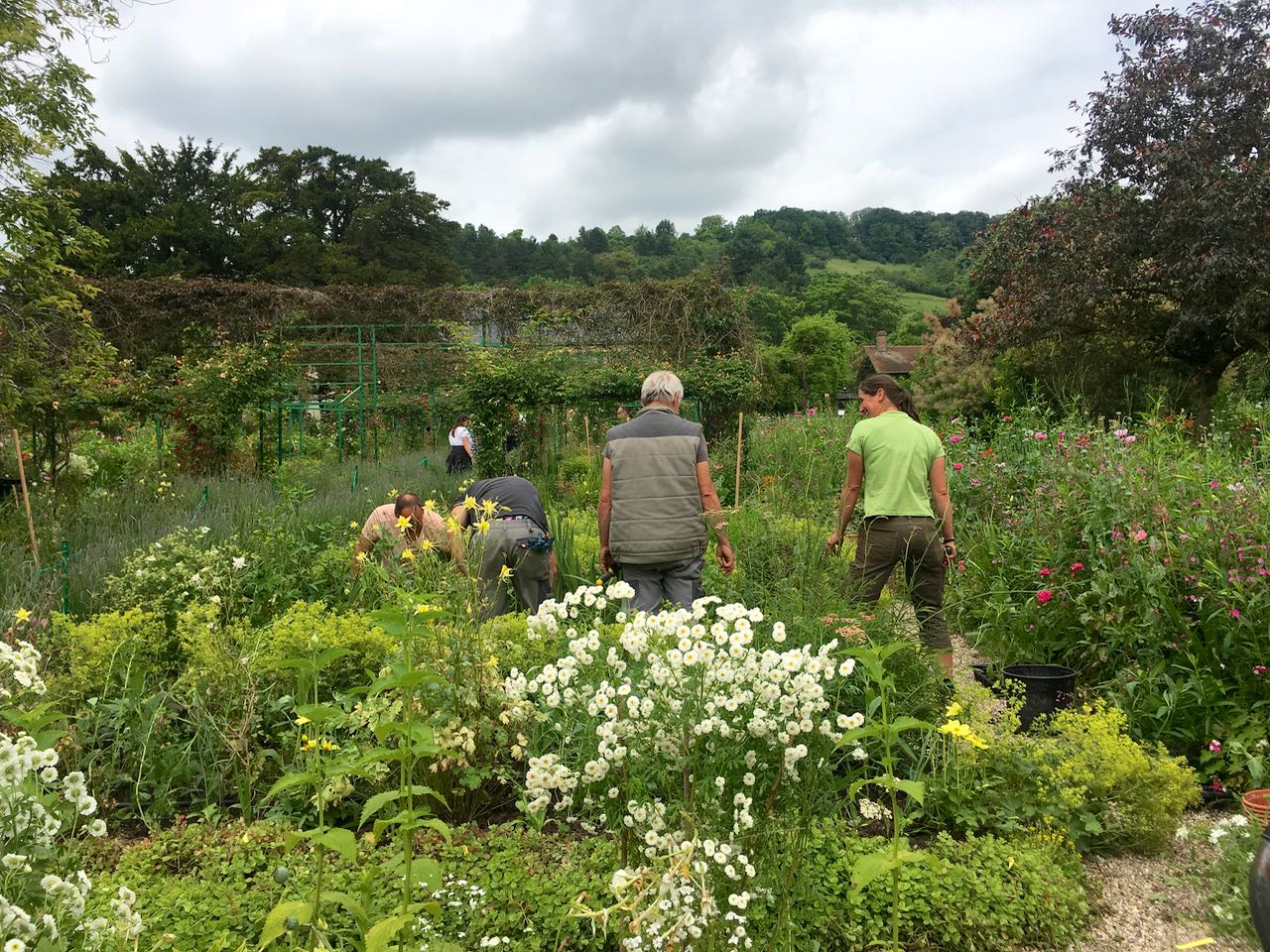
On the June 2018 day we visited, a gardener was quietly rowing around the pond, skimming debris and making the surface of the water like a mirror, just as Monet would have liked. In front of the house, men and women were putting out plants and grooming others in a never-ending homage to Monet for visitors from all over the world to enjoy.

IMG_3809


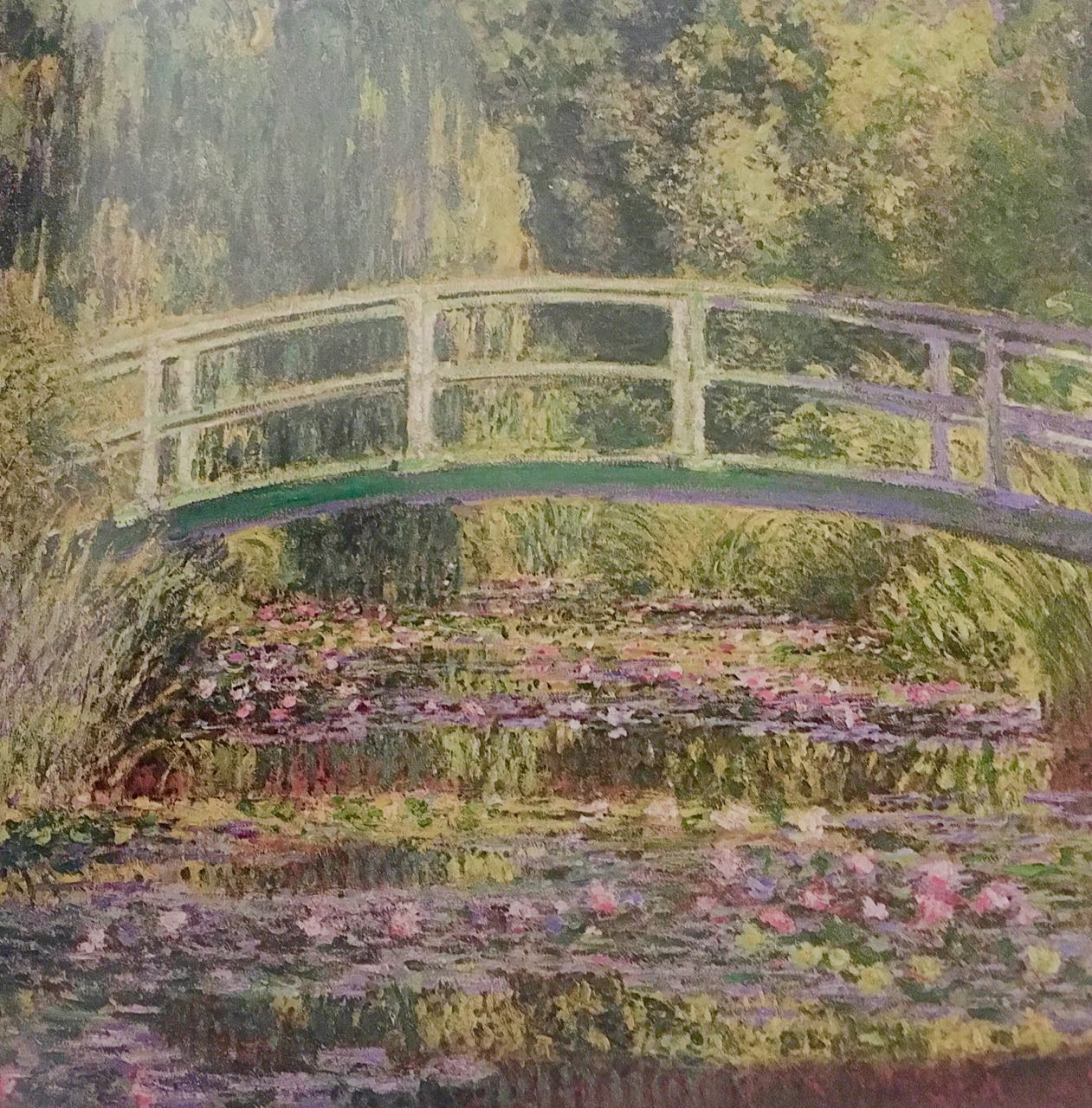
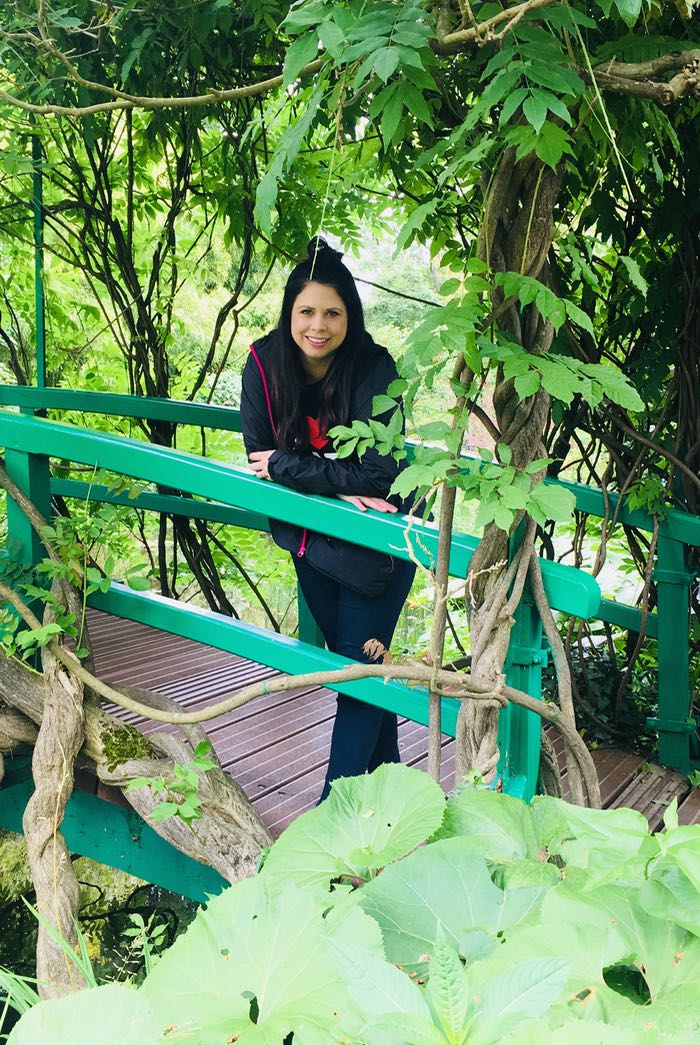
People speaking many languages mingled around the garden and pond paths, posing on the arched, green Japanese bridge. Groups of school children, some as young as four or five, were led through the house, garden and around the pond. Perhaps one day these little ones will be inspired to become gardeners, landscape architect or even artists. After all, culture and the arts are France’s most prized possessions.

IMG_3745
Gardeners at work in Monet’s garden; the house roof is in the distance

The house, with a verdant hill sloping up behind, is very wide, but only one room deep, and Monet’s use of color throughout seems whimsical, which is why photos of the home’s interior are included below.

IMG_3831 (1)
The Village of Giverny

Musee de L’Orangerie

Before his death, Monet worked with the Musee de L’Organgerie in Paris, very close to the Louvre, to create the perfect display for eight of Monet’s massive waterlily paintings. He finally decided on elliptical walls. Here are a few excellent photos taken by my daughter Jaime of the giant paintings on display in two elliptical-shaped rooms at Musee de L’Orangerie.

Processed with VSCO with f2 preset

Processed with VSCO with f2 preset

Processed with VSCO with f2 preset
That’s me, contemplating the pond we had just seen the day before

Monet in Motion

Watch Monet at age 74 painting at his lily pond. The only known footage of Monet, the film was shot in the summer of 1915 by French activist and dramatist Sacha Guitry.

Monet paints by the pond.

The Garden

IMG_4067
Photo by Jaime

IMG_4066
Photo by Jaime

IMG_4065
Photo by Jaime

IMG_3821

IMG_3626

IMG_3721

IMG_3630

IMG_3632

IMG_3754

IMG_3757

IMG_3760

IMG_3761

The Pond

Waterlilies and Japanese Bridge
Waterlilies and Japanese Bridge, Claude Monet, oil on canvas, 31 5/ x 31 5/16

IMG_3810

IMG_3807
Jaime on the Japanese bridge

IMG_3784

IMG_3790

IMG_3804

The House

IMG_3649
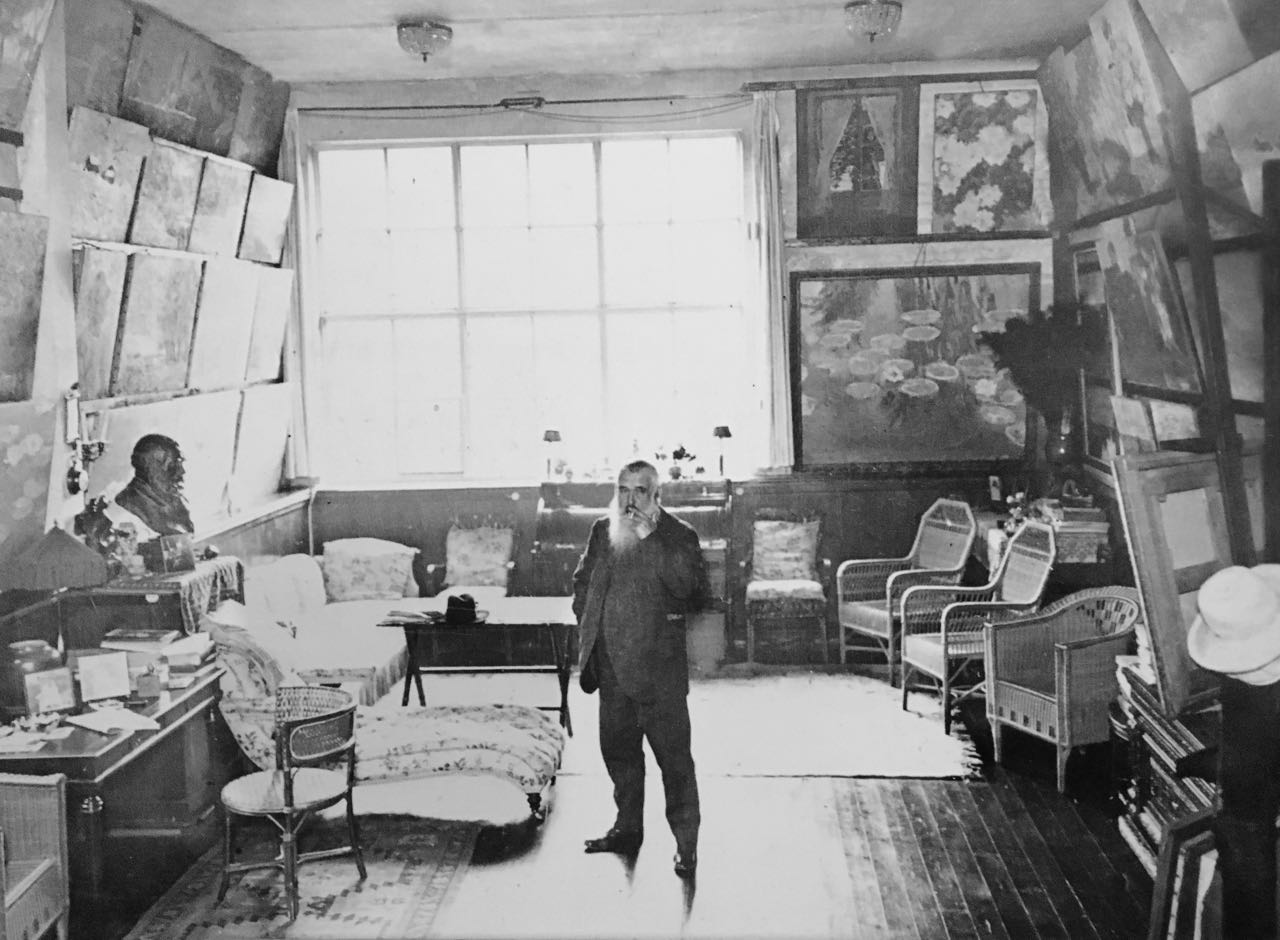
Monet’s in-home studio/office

IMG_3658
Monet in his in-home studio/office

IMG_3641

IMG_3701

IMG_3697

Claude Monet in Studio at Giverny
Monet in his third and final studio at his home in Giverny; with his large waterlily paintings

J&C
We couldn’t resist taking a photo in Monet’s bedroom

New Orleans Artistry

New Orleans is celebrating its 300th birthday this year and the entire city continues to be the ultimate creative space. Dripping with history, NOLA is often thought of as a party town, especially along Bourbon Street in the French Quarter. But there is much, much more to New Orlean’s culture than alcohol.

Foremost, it’s the birthplace of Jazz and hometown of Louis Armstrong and Fats Domino… and Harry Connick, Jr., … and many other amazing musicians from the right and left banks of the Mississippi River.

Though it’s a strong one, Jazz isn’t the only draw to the Crescent City. There’s the food, cajun and creole and stuffed with fresh seafood. And beignets anytime of the day. Yes, BEIGNETS!

Like most grown-up cities, New Orleans also appreciates visual artists. On a recent trip to NOLA, I couldn’t resist visiting the Ogden Museum of Southern Art and the New Orleans Museum of Art (NOMA), both of which allow patrons to photograph their art!

At the Ogden, I was thrilled to find a wing of “Southern Vernacular Art” featuring many oil and collage works by Benny Andrews. I can’t recall where I first saw a painting by Benny Andrews, but I liked his style and subjects and was hooked. When I researched Benny, not only did I find out Benny was from Georgia (like me), but he also attended Fort Valley State College (like me)! While I didn’t graduate from Fort Valley State College, I’m proud to have spent the academic year 1983-1984 at this remarkable historically black college in the heart of Georgia.

Benny was born in Plainview, Georgia, in 1930, and his father, George Andrews, was a sharecropper and a self-taught artist. (Both of my maternal grandparents, and their parents, were sharecroppers in South Georgia). After graduating high school, the first in his family to do so, Benny joined the service and later used his G.I. Bill to study at the the Art Institute of Chicago (the article “240 Minutes at the The Art Institute of Chicago” features a Benny Andrews painting!).

Benny was an activist and advocate for African-American artists. To my delight, the Ogden had several of his collages made using fabric and wallpaper. Some of the collage features are so 3-D, they cast shadows, as do some of the deep frames.

Following are Benny’s collages, plus other works that caught my eye at the Ogden and NOMA. Enjoy!!


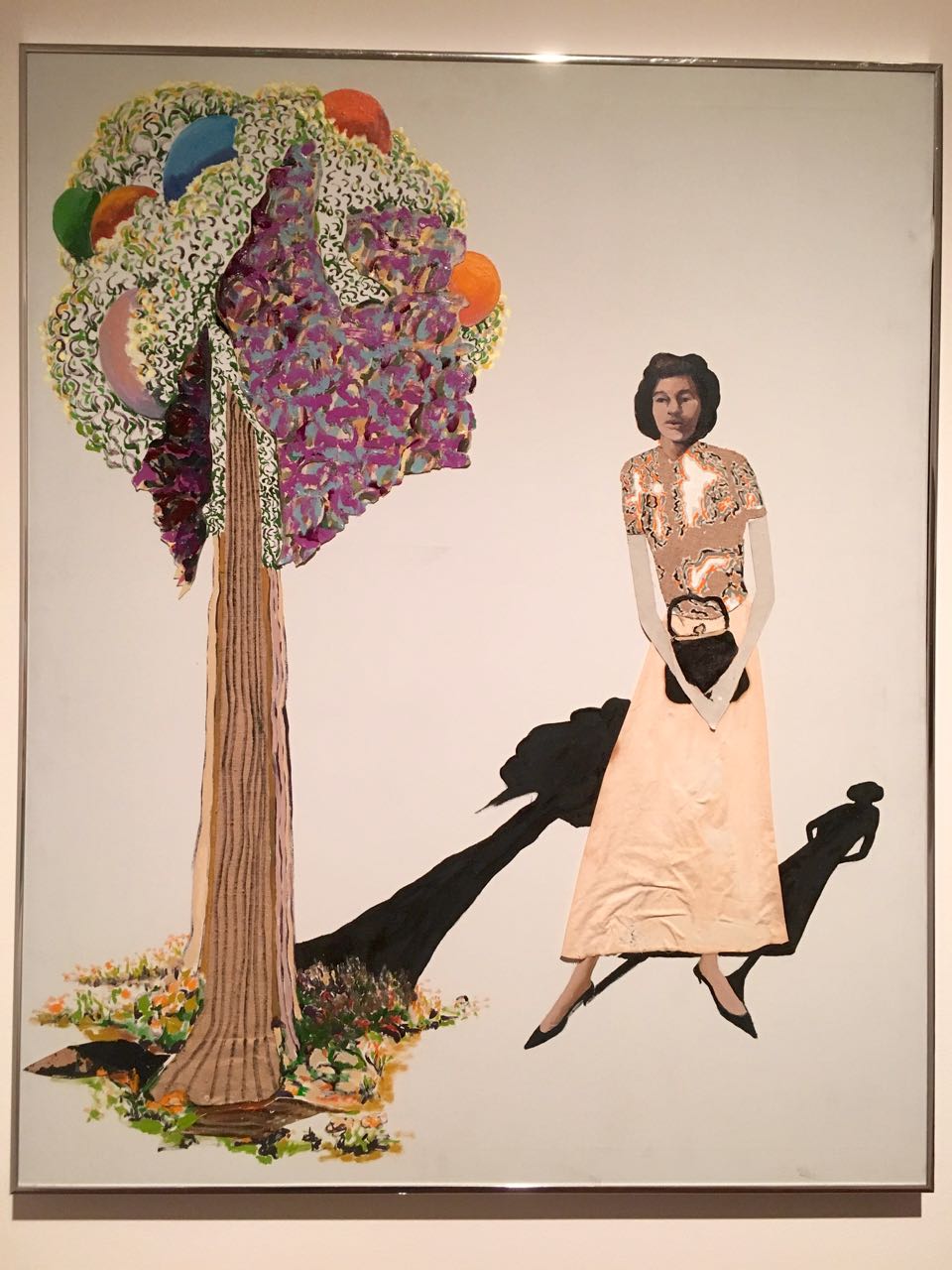
Alice, 1966
Benny Andrews, Alice, 1966, oil and collage (Ogden)

Death of the Crow, 1965
Benny Andrews, Death of the Crow, 1965, oil and collage (Ogden)

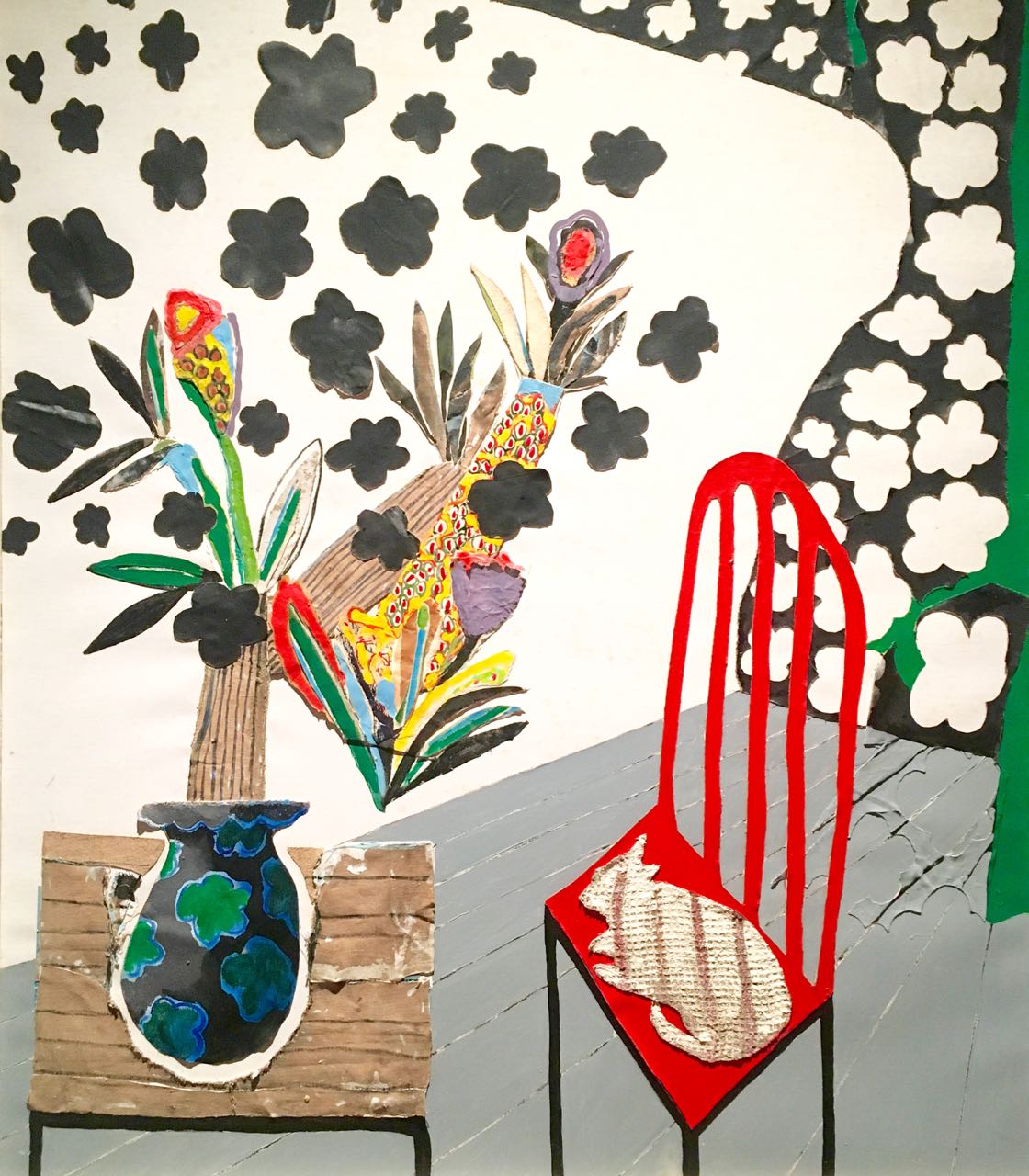
Dottie, 1981
Benny Andrews, Dottie, 1981, oil and collage (Ogden)

Eudora, 1978
Benny Andrews, Eudora, 1978, oil and collage (Ogden)

Mannerisms, 1961
Benny Andrews, Mannerisms, 1962, oil and collage (Ogden)

Mother Death, 1992
Benny Andrews, Mother Death, 1992, oil and collage (Ogden)

Plower, 1989
Benny Andrews, 1989, Plower, oil and collage (Ogden)

IMG_3301
Benny Andrews (title and date unknown), oil and collage (Ogden)

IMG_3300
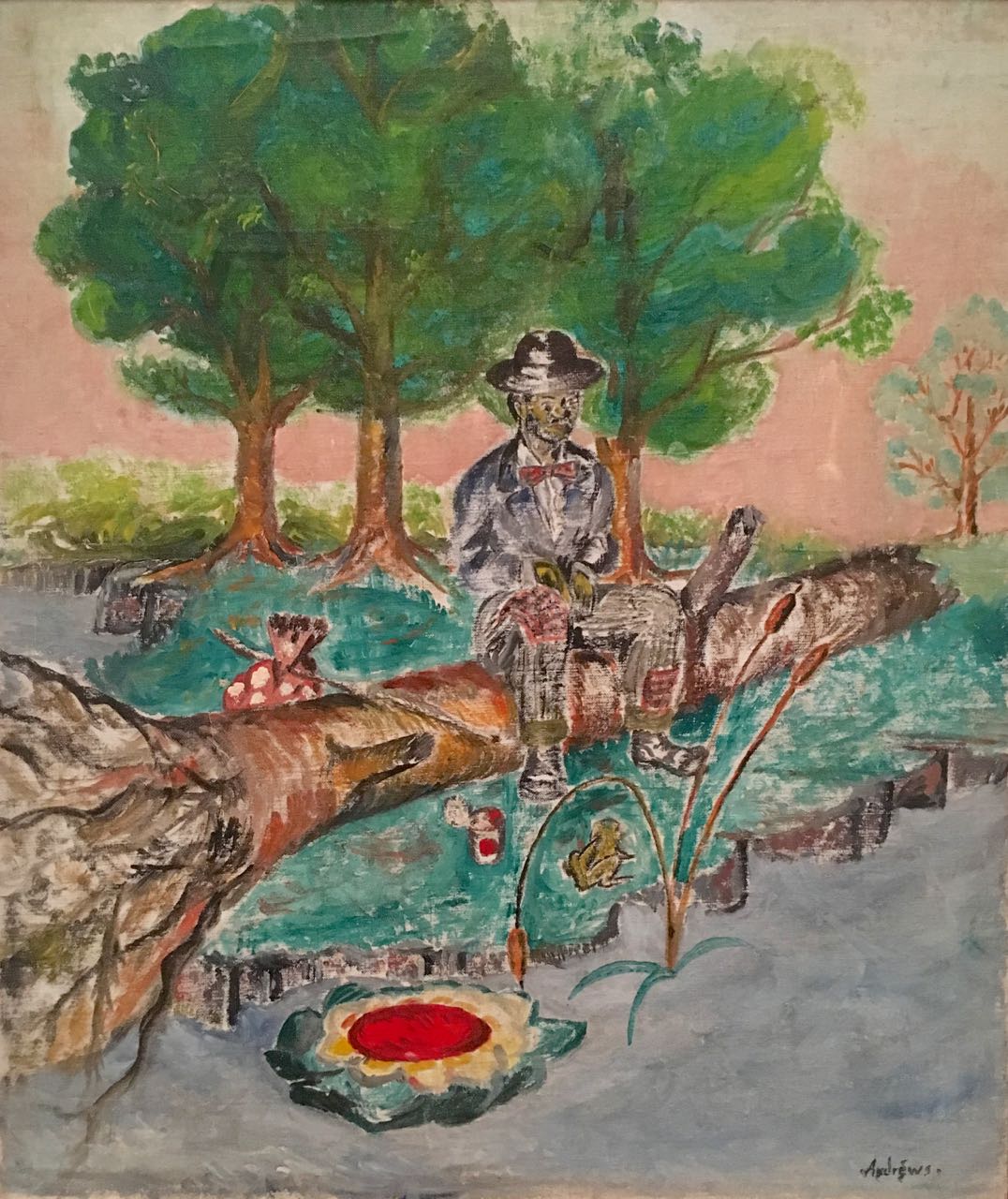
Painted by either George or Benny Andrews (title and date unknown) (Ogden)

The Old Punkey Patch
George Andrews, The Old Punkey Patch, date unknown, oil on canvas board (Ogden)

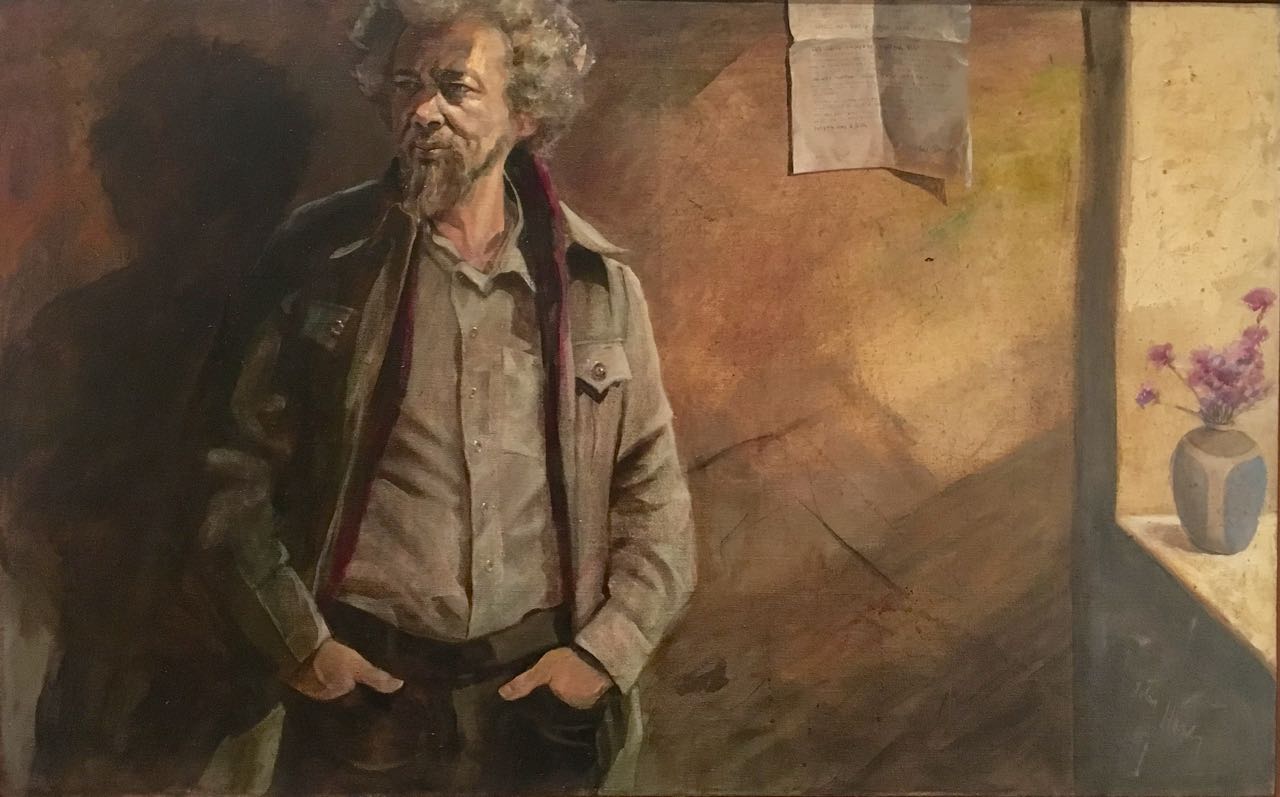
Portrait of Benny Andrews, 1976
John Hardy, Portrait of Benny Andrews, 1976, oil on canvas (Ogden)

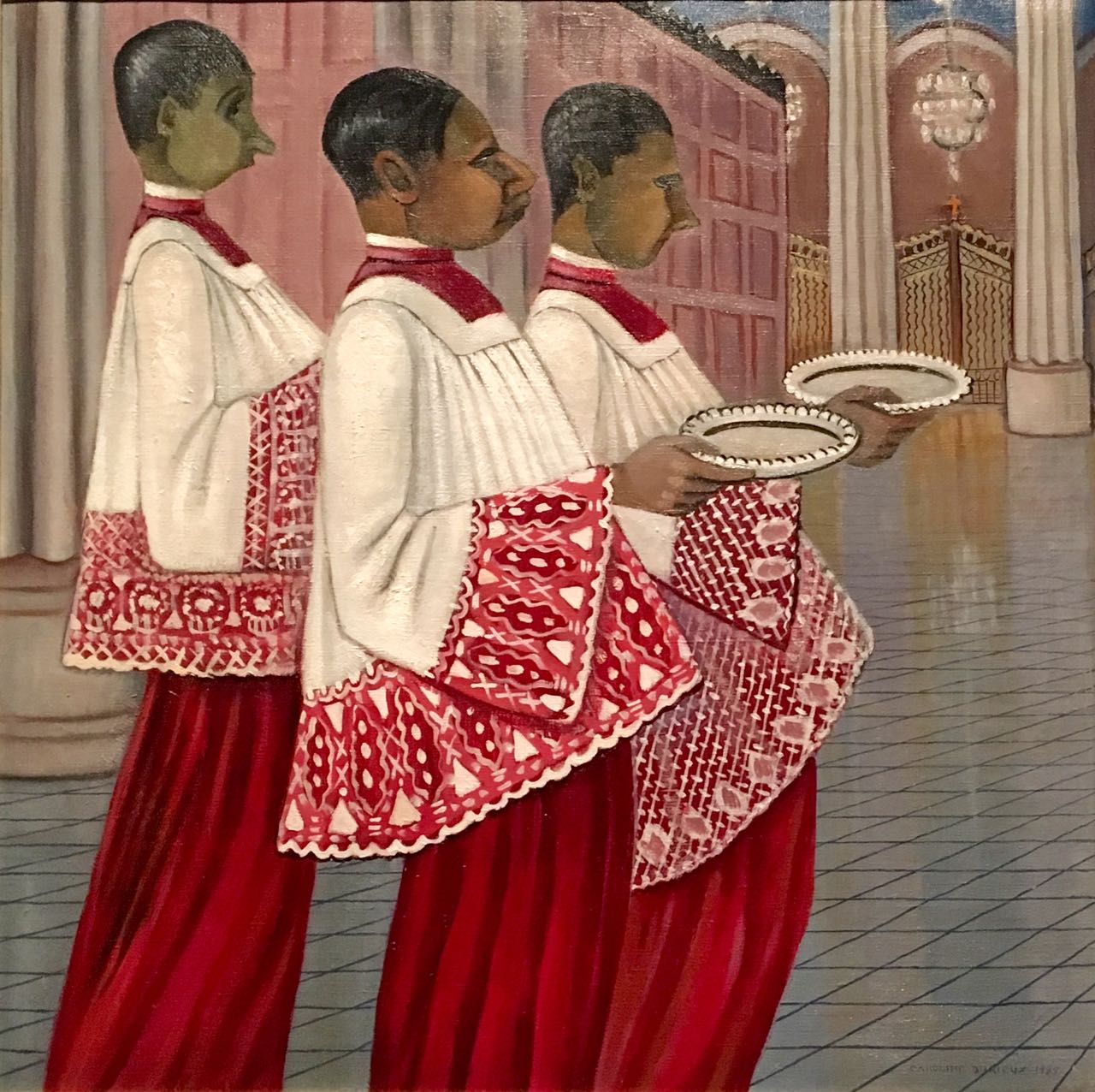
Acolytes, 1935
Caroline Durieux (1896-1989), Acolytes, 1935 (Ogden)

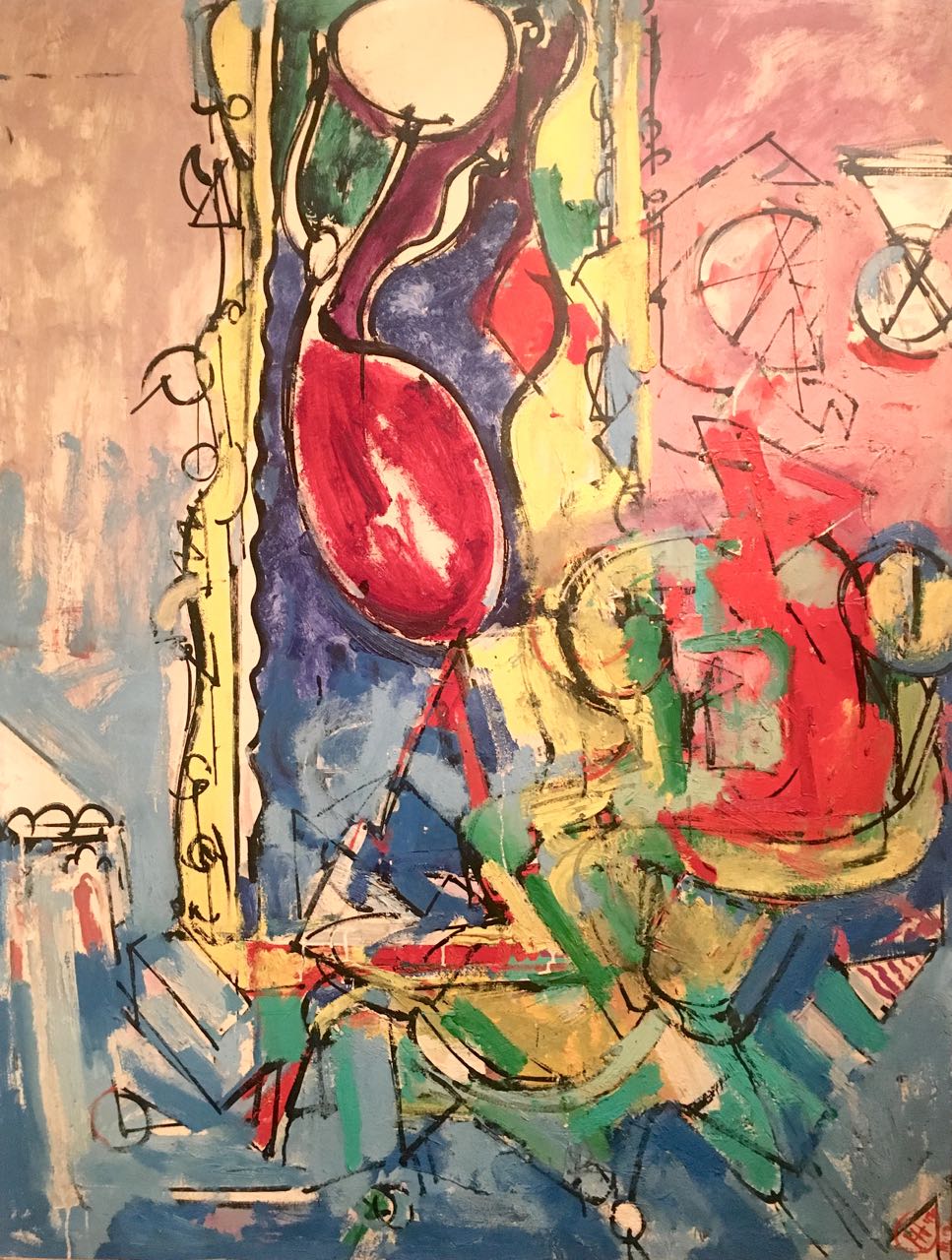
Abstraction of Chair and Mirror, 1943.
Hans Hofmann, Abstraction of Chair and Mirror, 1943, oil on canvas (NOMA)

Asleep at the Table, 1945
Robert Gwathmey, Asleep at the Table, 1945, oil on Canvas (Ogden)

Dogwood Display II, 1972
Alma Thomas, Dogwood Display II, 1972, acrylic on canvas. Alma is one of my favorites and her painting Starry Nights and the Astronauts is featured in the Chicago Institute of Art article. (NOMA)

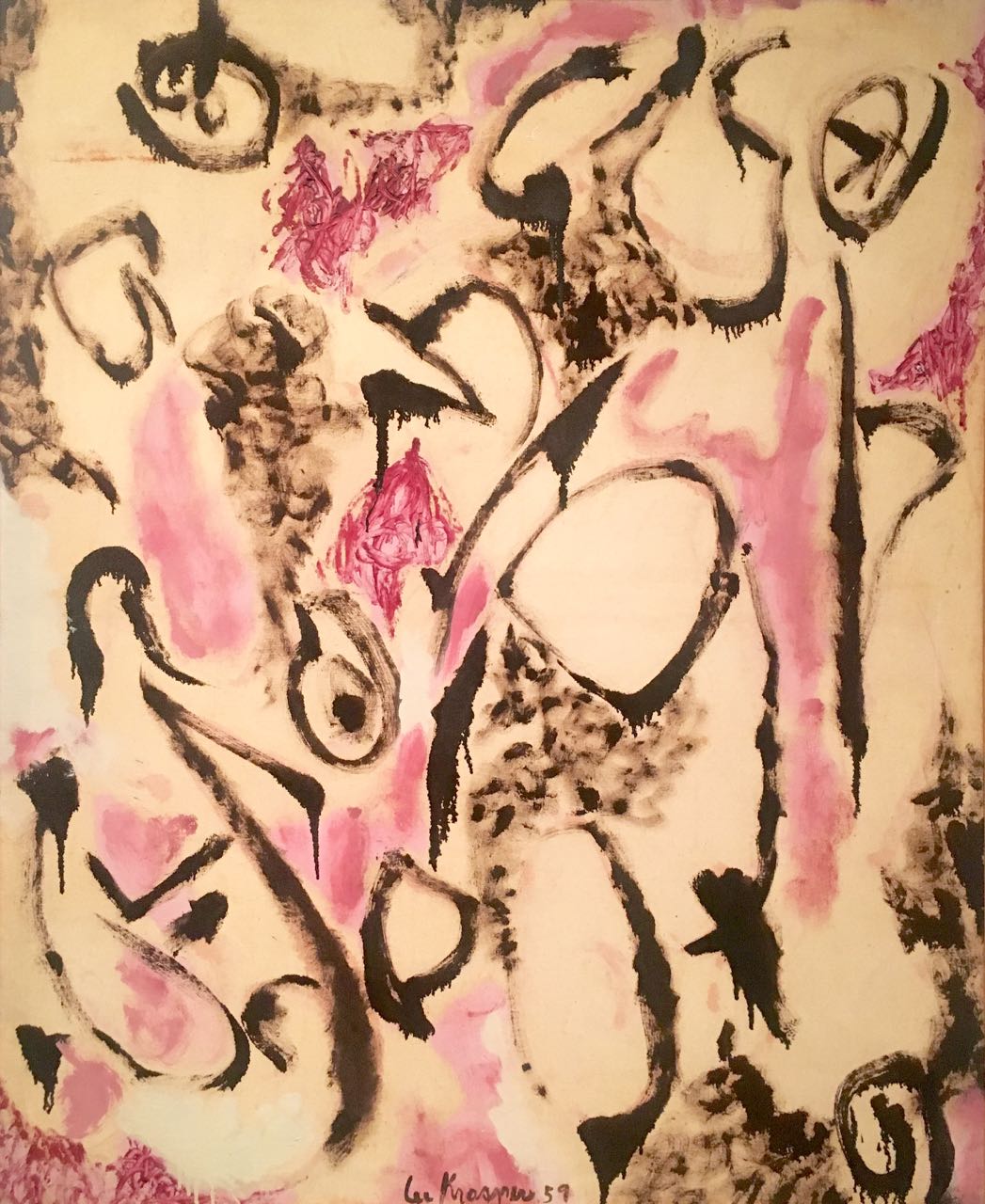
Breath, 1959
Lee Krasner, Breath, 1959, oil on Canvas. Lee, a fine artist in her own right, was married to Jackson Pollock from 1945-1956. (NOMA)

Eating Cake
Shawne Major, Eating Cake, Quilt detail (Ogden)

Far Away Thought, 1892
John William Godward, Far Away Thoughts, 1892, oil on canvas (NOMA)

French Bouquet of China Asters and Sunflowers in Vase, c. 1887
Gustavo Caillebotte, French Bouquet of China Asters and Sunflowers in Vase, c. 1887, oil on canvas (NOMA)

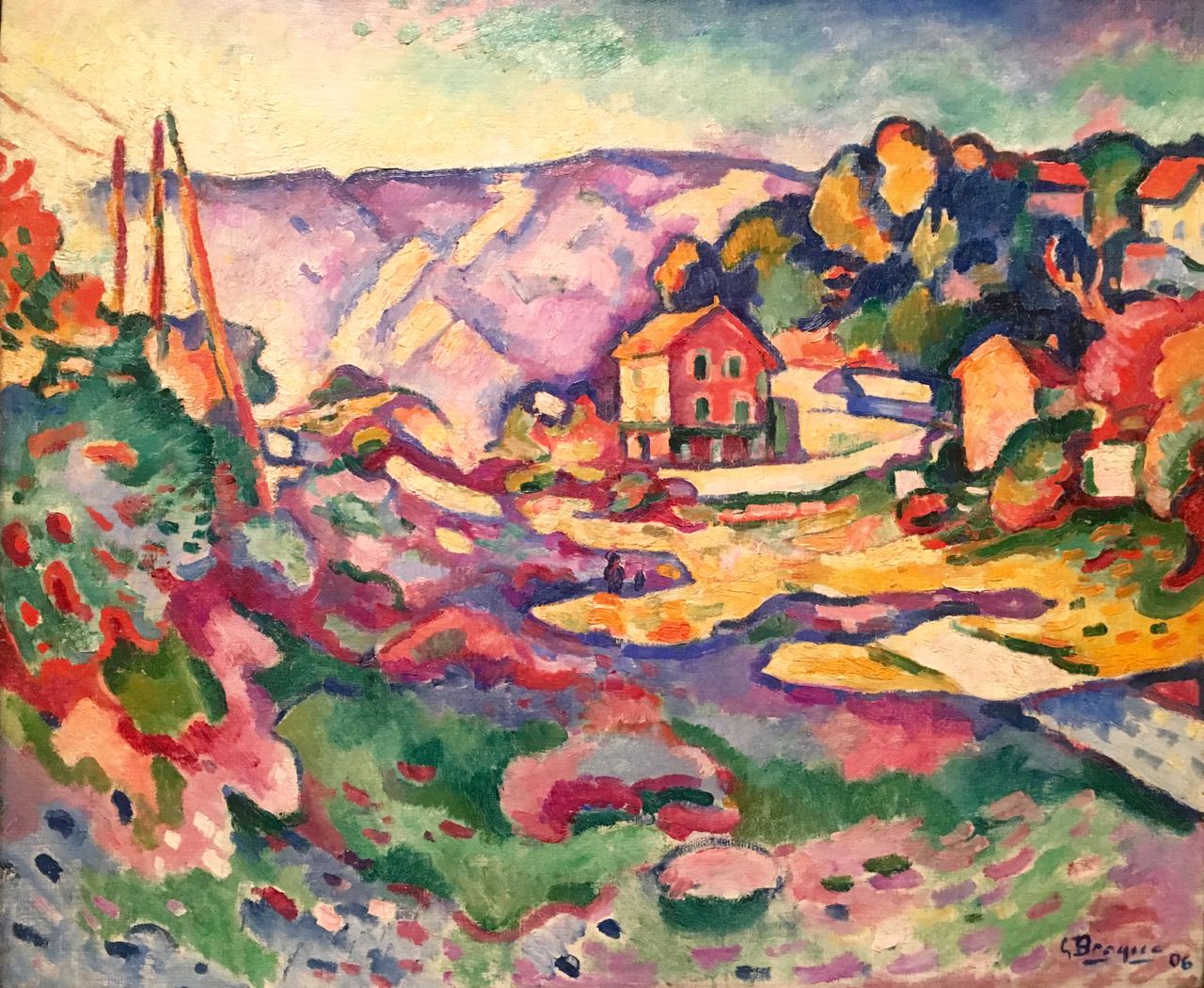
French Landscape at L'Estaque, 1906
Georges Braque, French Landscape at L’ Estaque, 1906, oil on canvas, 20 x 23 1/4 in. (NOMA)

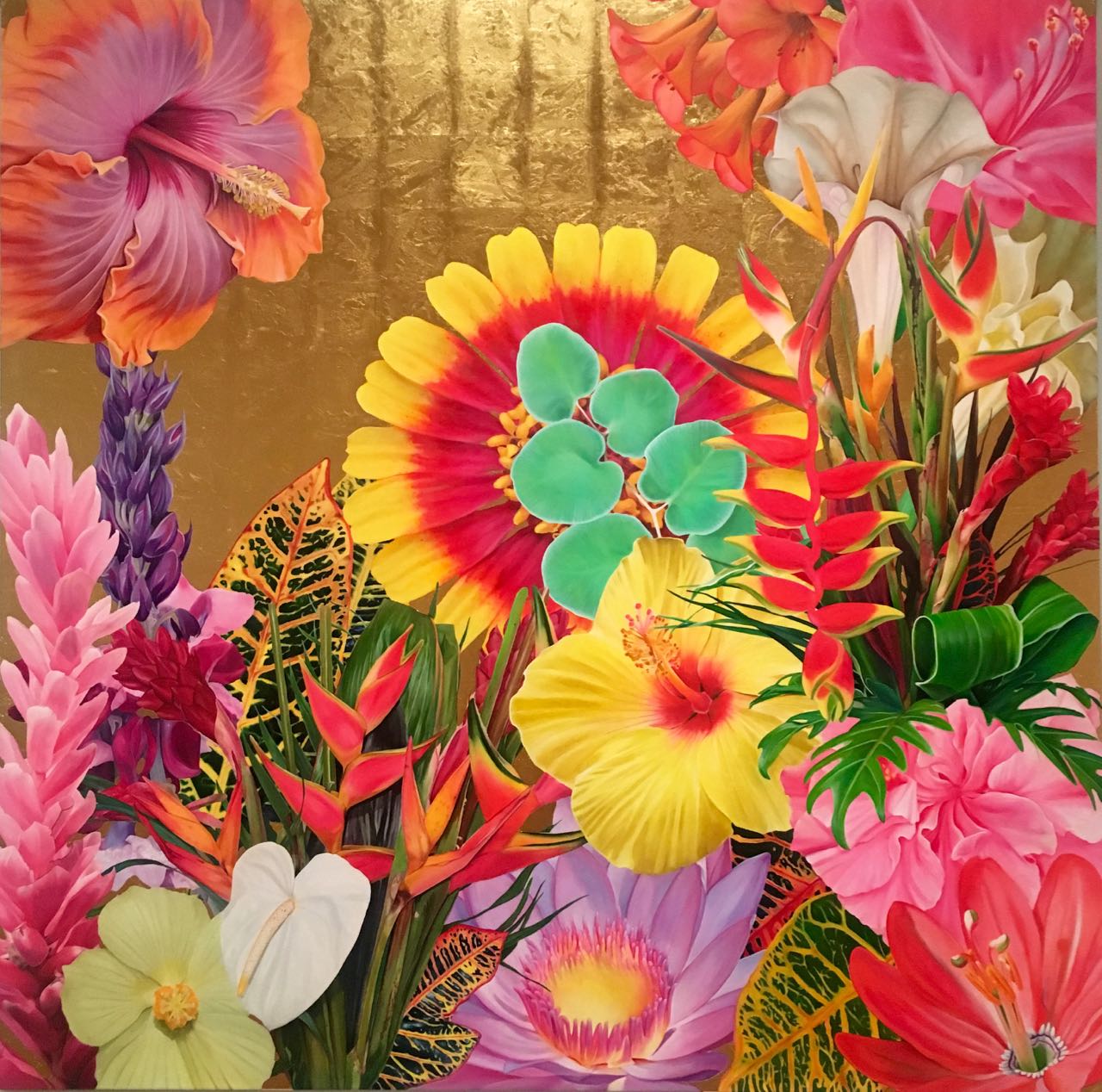
Gild the Lily (Decadence Upon Decadence IX), 2018
Carlos Rolon, Gild the Lily: Decadence Upon Decadence, oil, ink and 24-karat gold leaf on canvas (NOMA)

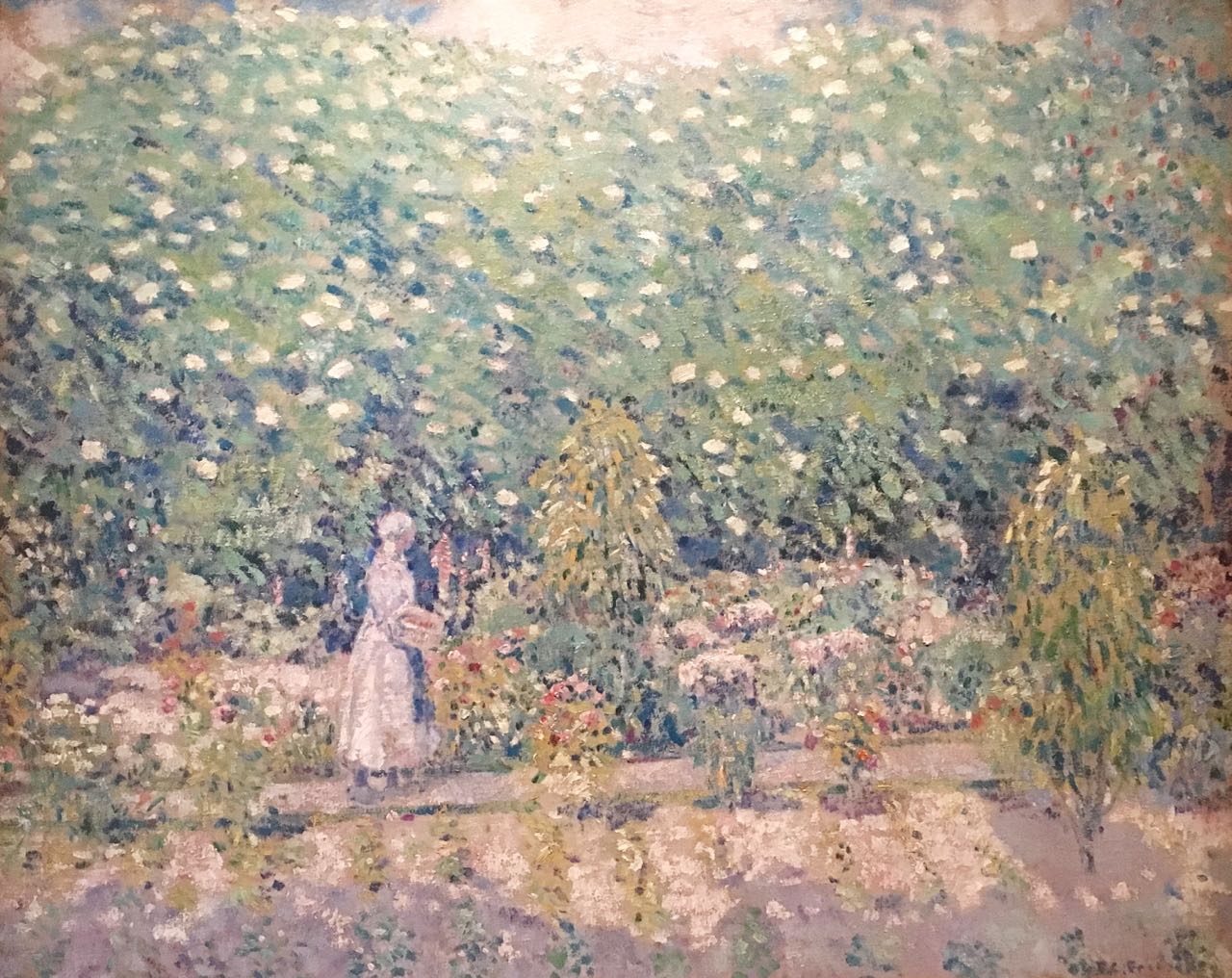
in the Garden, Giverny
Frederick Frieseke (1900-1995), In the Garden, Giverny, oil on canvas

Panarama  of baptism on Cane River, 1945
Clementine Hunter (1886-1988), Panarama of Baptistm on Cane River, oil on window shade,  36″x67″ inches (Ogden)

Persons in the presence of metamorphosis, 1963
Joan Miro, Persons in the Presence of Metamorphosis, 1963, egg tempura on masonite, 19 3/4 x 22 5/8 inches (NOMA)

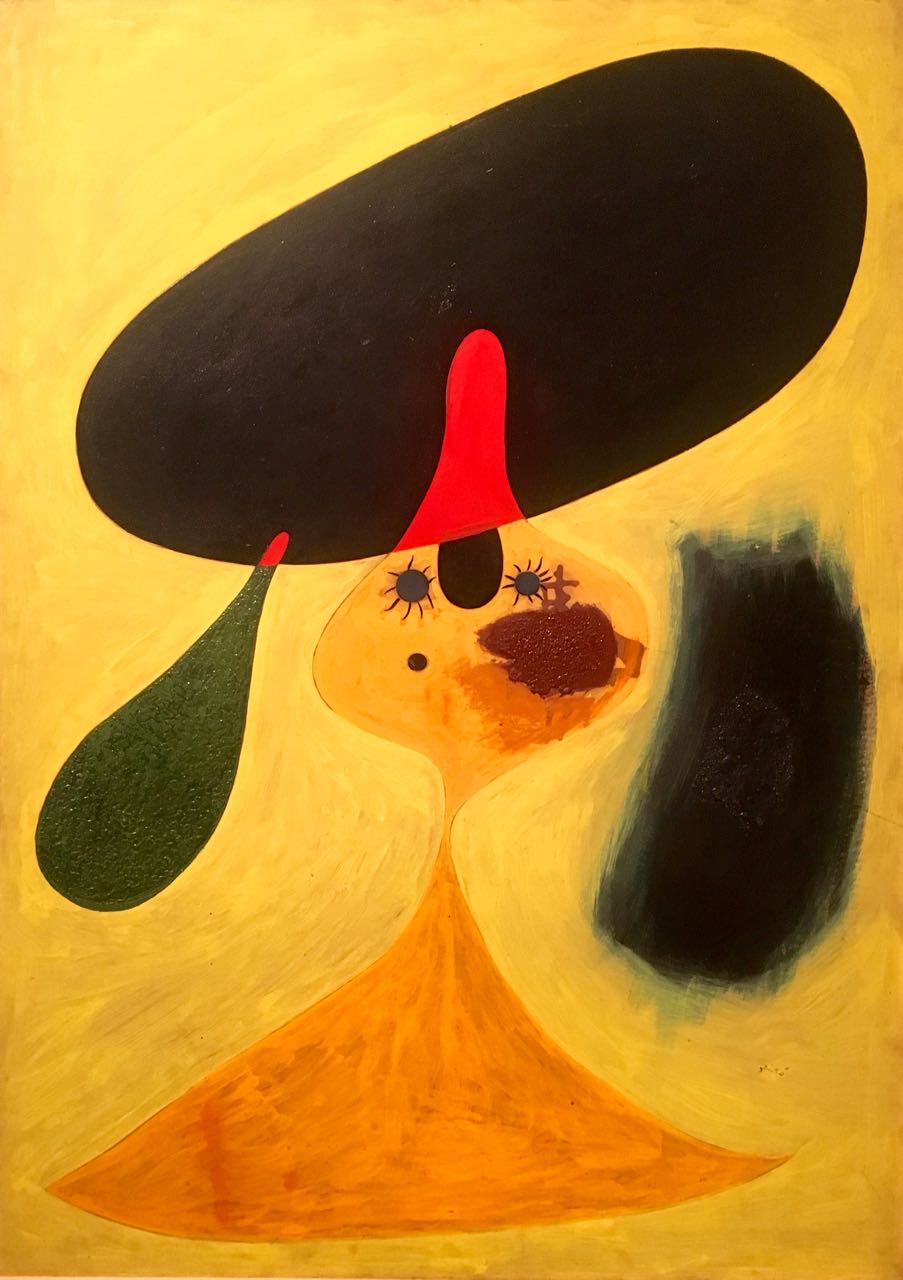
Portait of a Young Girl, 1935
Joan Miro, Portrait of a Young Girl, 1935, oil with sand on canvas, 41 3/8 x 29 3/8 inches; 49 x 37 inches (framed) (NOMA)

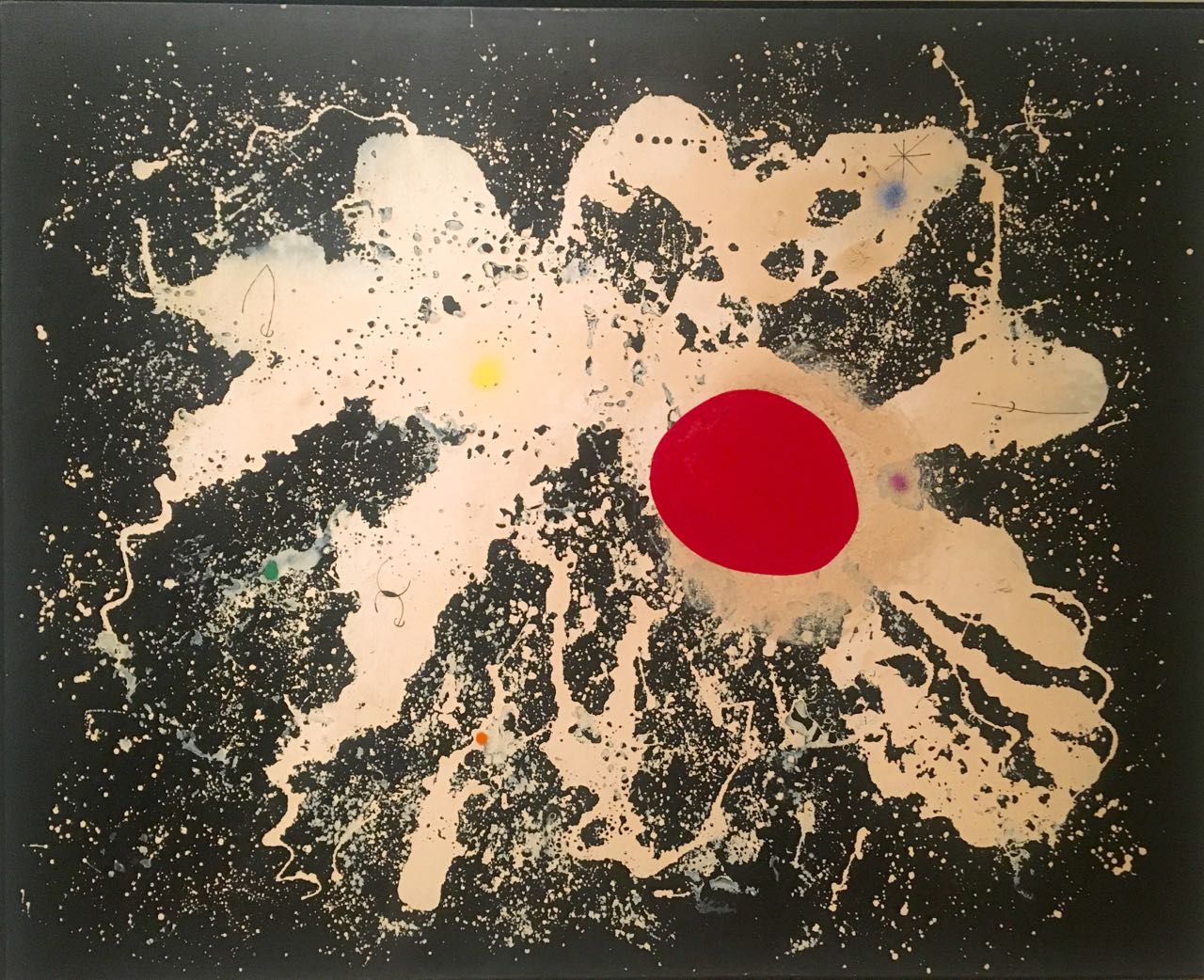
The Red Disk, 1960
Joan Miro, The Red Disk, 1960, oil on canvas (NOMA)

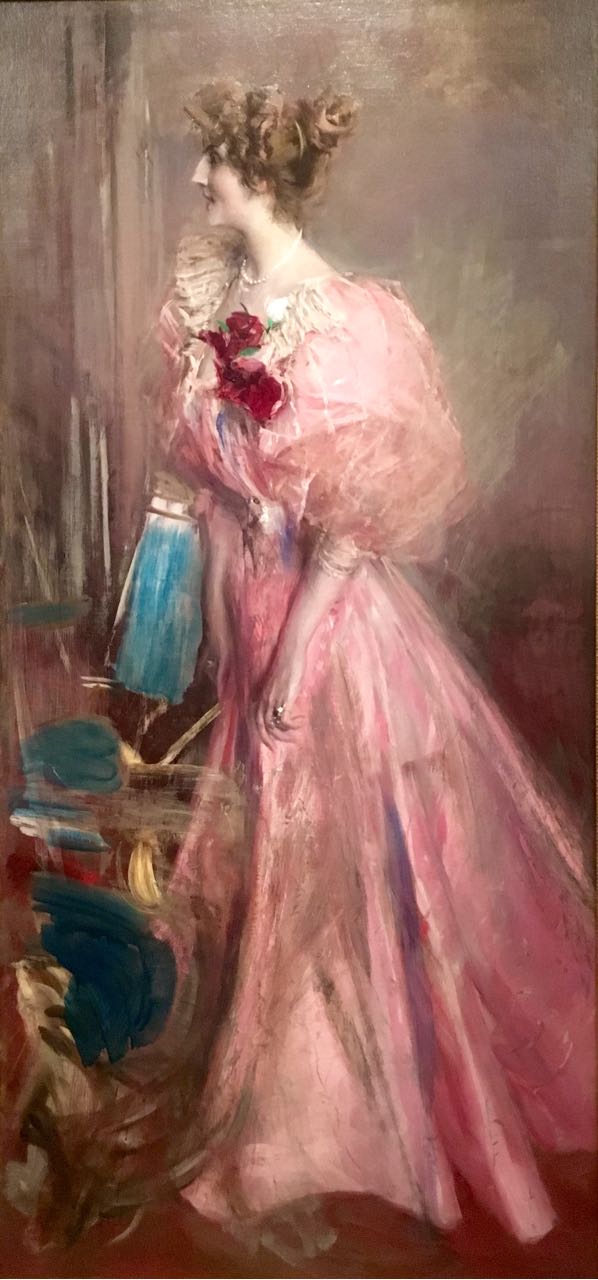
Portrait of a Young Woman in Profile, c. 1895.
Giovanni Boldini, Portrait of a Young Woman in Profile, c. 1895, oil on canvas (NOMA). The blurred brushstrokes and aqua accents in the lower left quadrant caught my eye and drew me to this large painting. 

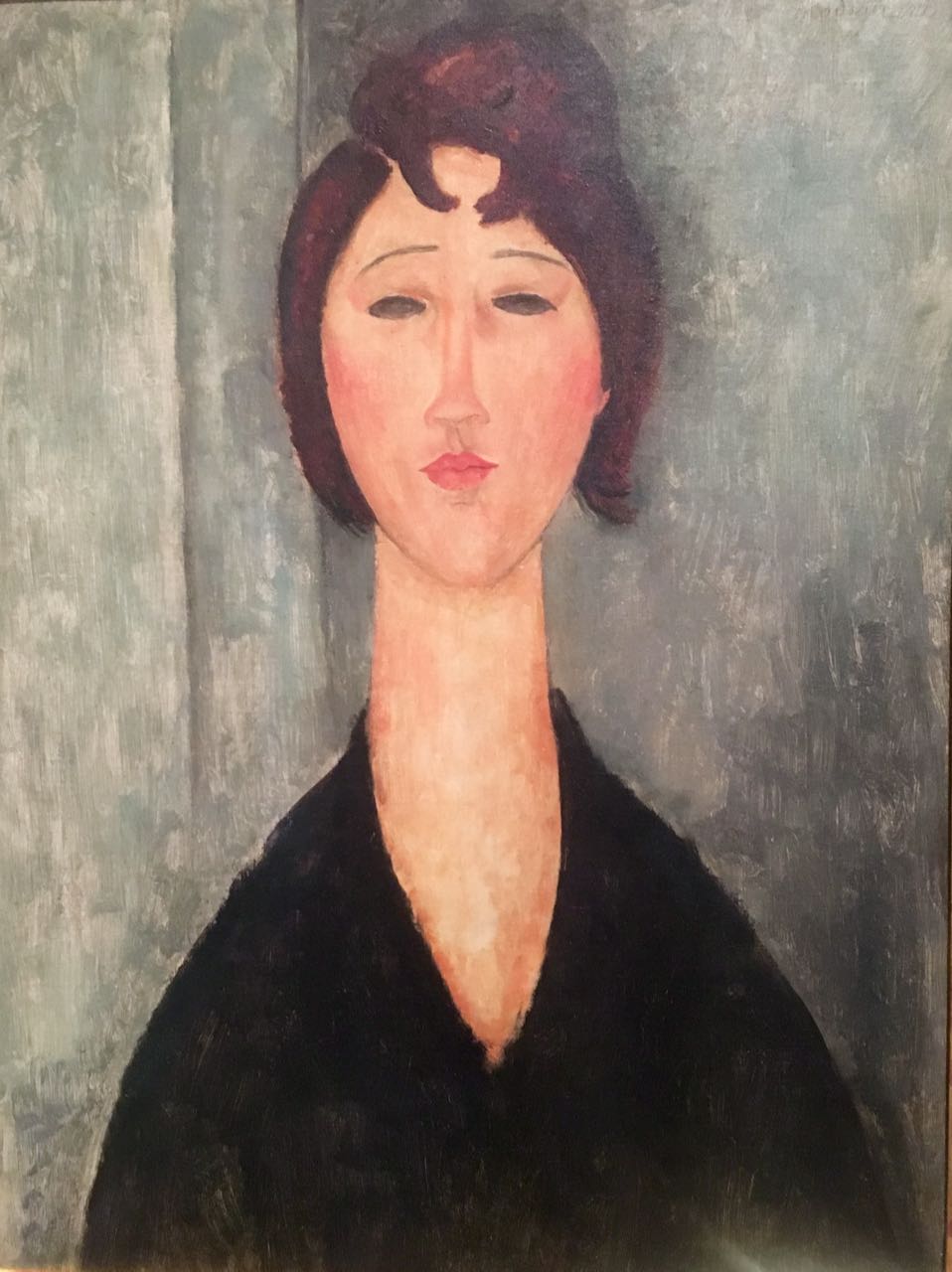
Portrait of a Young Woman, 1918
Amadeus Modigliani, Portrait of a Young Woman, 1918, oil on canvas. 24 x 18 inches; 33 x 27 x 3 inches (framed with acrylic glass) (NOMA). Modigliani is one of my all-time favorites!!

Salmon Rose, 1966
Wayne Thiebaud, Salmon Rose, 1966 (NOMA)

Steamer New York, Steaming Upriver, 1989.
Michael Frolich, Steamer New York, STeaming Upriver, 1989, oil on masonite (Ogden)

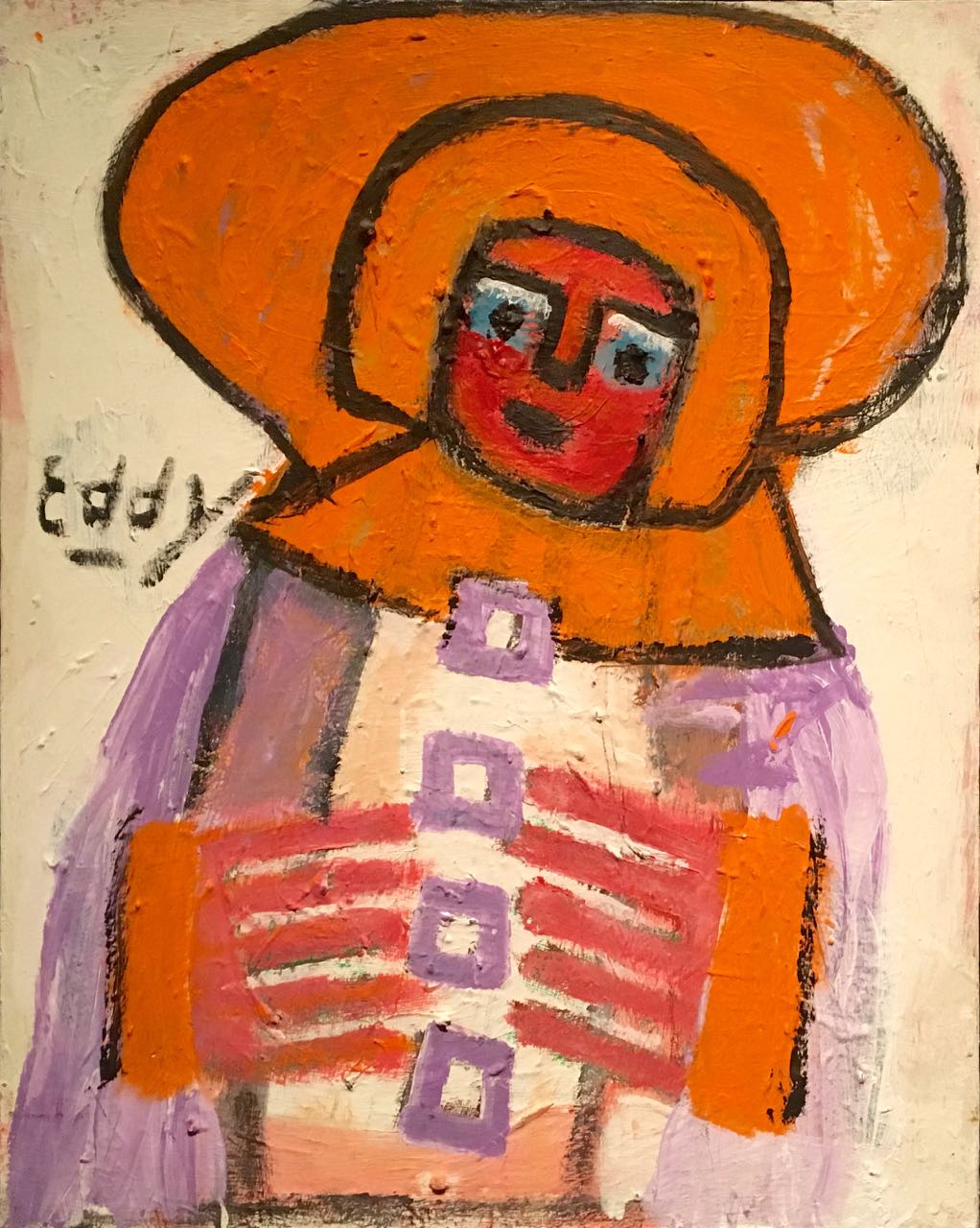
Untitled c. 1978-1986
Eddy Mumma, Untitled c. 1978-1986, oil on board (Ogden)

Struggling Tiger in Hard Times, 1991
Thornton Dial (1928-2016), Struggling Tiger in Hard Times, 1991, oil, tin, carpet and industrial sealing compound on canvas mounted on wood.

Woman on Porch, 1958
Richard Diebenkorn, Woman on Porch, 1958, oil on canvas, 72 x 72 inches (NOMA)

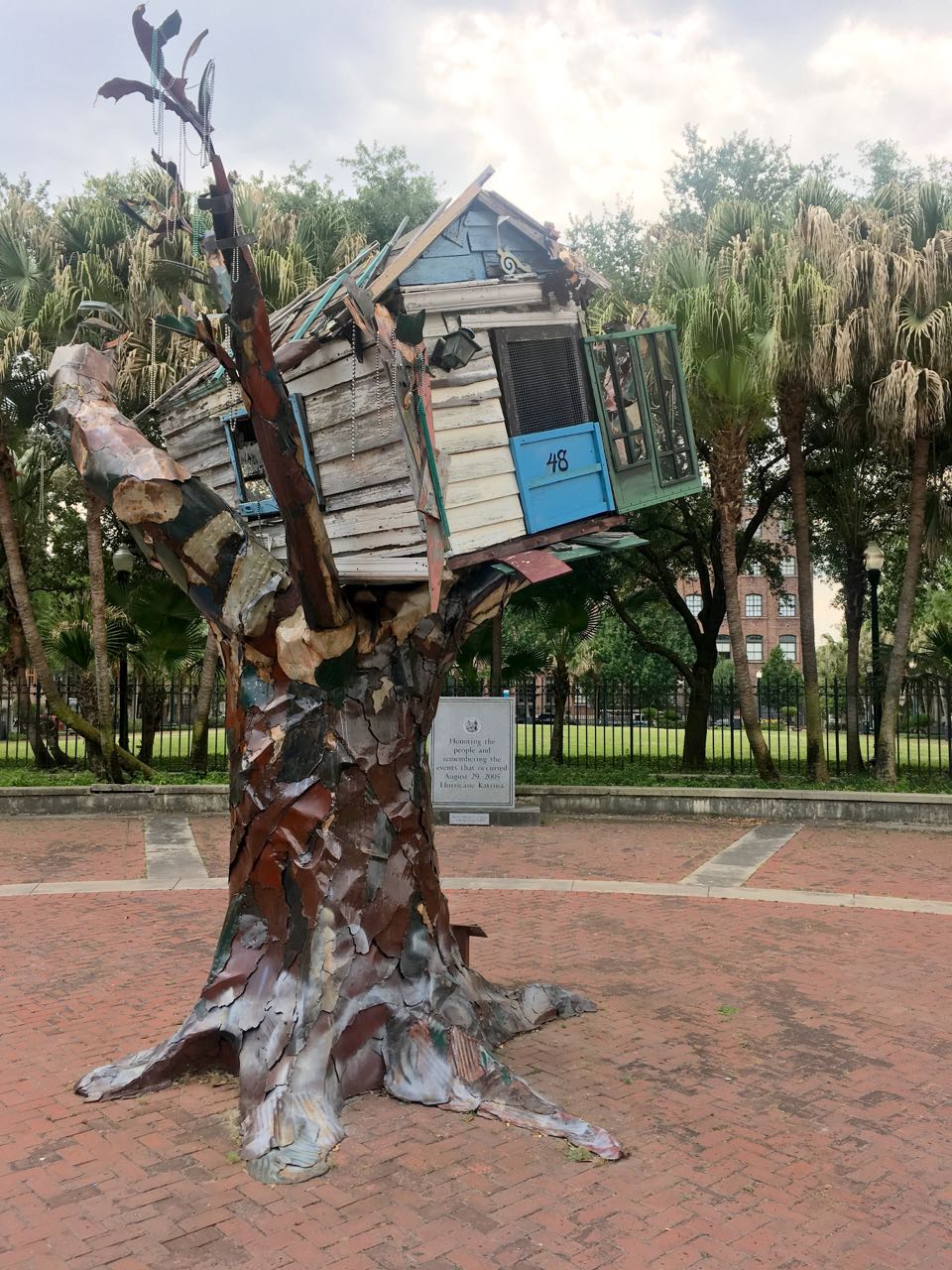
Scrap House,
I ran across this art installation on the street, not in a museum. Artist Sally Heller, Scrap House. One of 20 “Art in Public Places” commissioned by the Art Council of New Orleans. An homage to Hurricane Katrina’s damage.

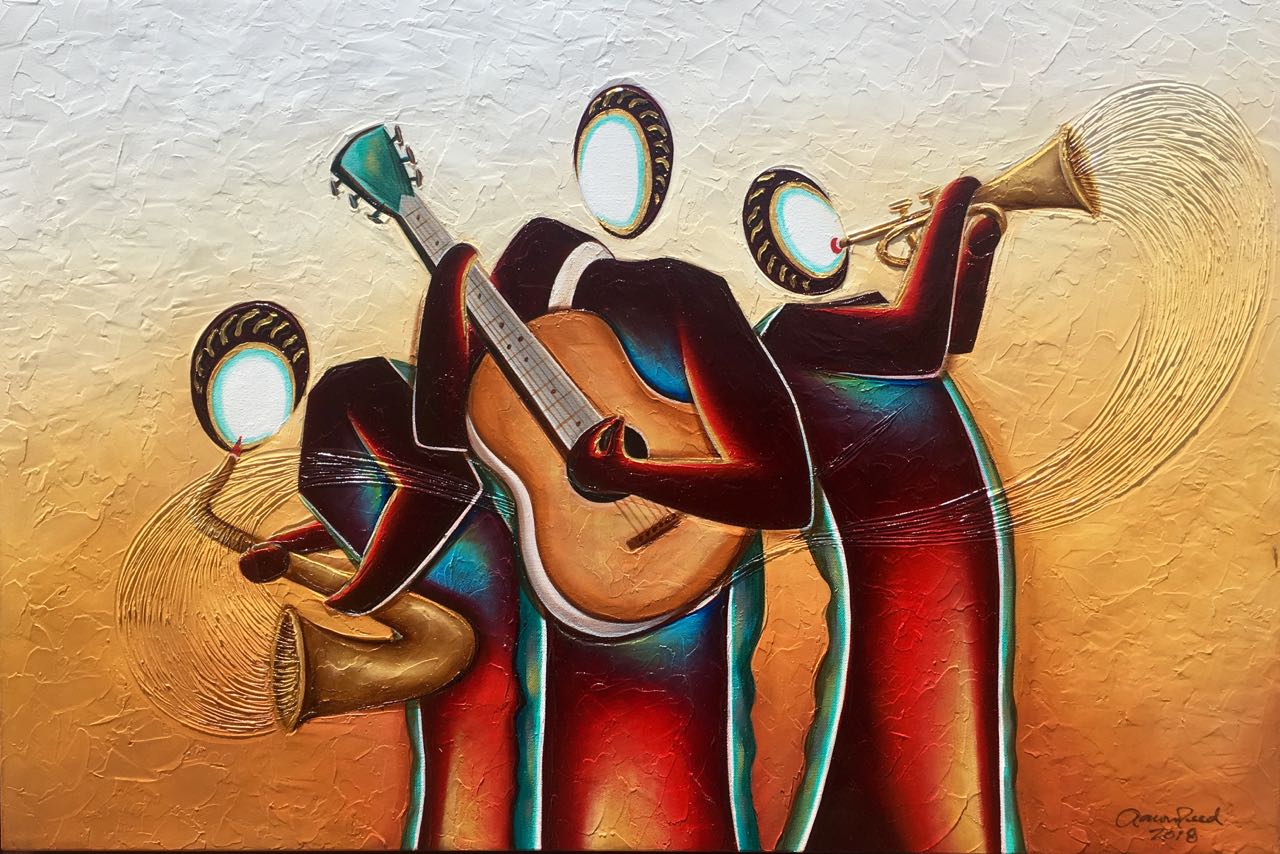
Artist Aaron Reed
Saw this artist, Aaron Reed from Albany, Georgia, at his booth at this year’s New Orleans Jazz & Heritage Festival. 


Christine Hauber, Photographer

Christine is an introvert, and it works very well for her. She’s calm. Centered. No drama. While she relishes her solitude, she doesn’t shy away from being with people. And she gets people. As a portrait photographer, she nails the core of their being in her  photographs.

Courageous Christine

Christine is an introvert, and it works very well for her. She’s calm. Centered. No drama. While she relishes her solitude, she doesn’t shy away from being with people. And she gets people. As a portrait photographer, she nails the core of their being in her  photographs.

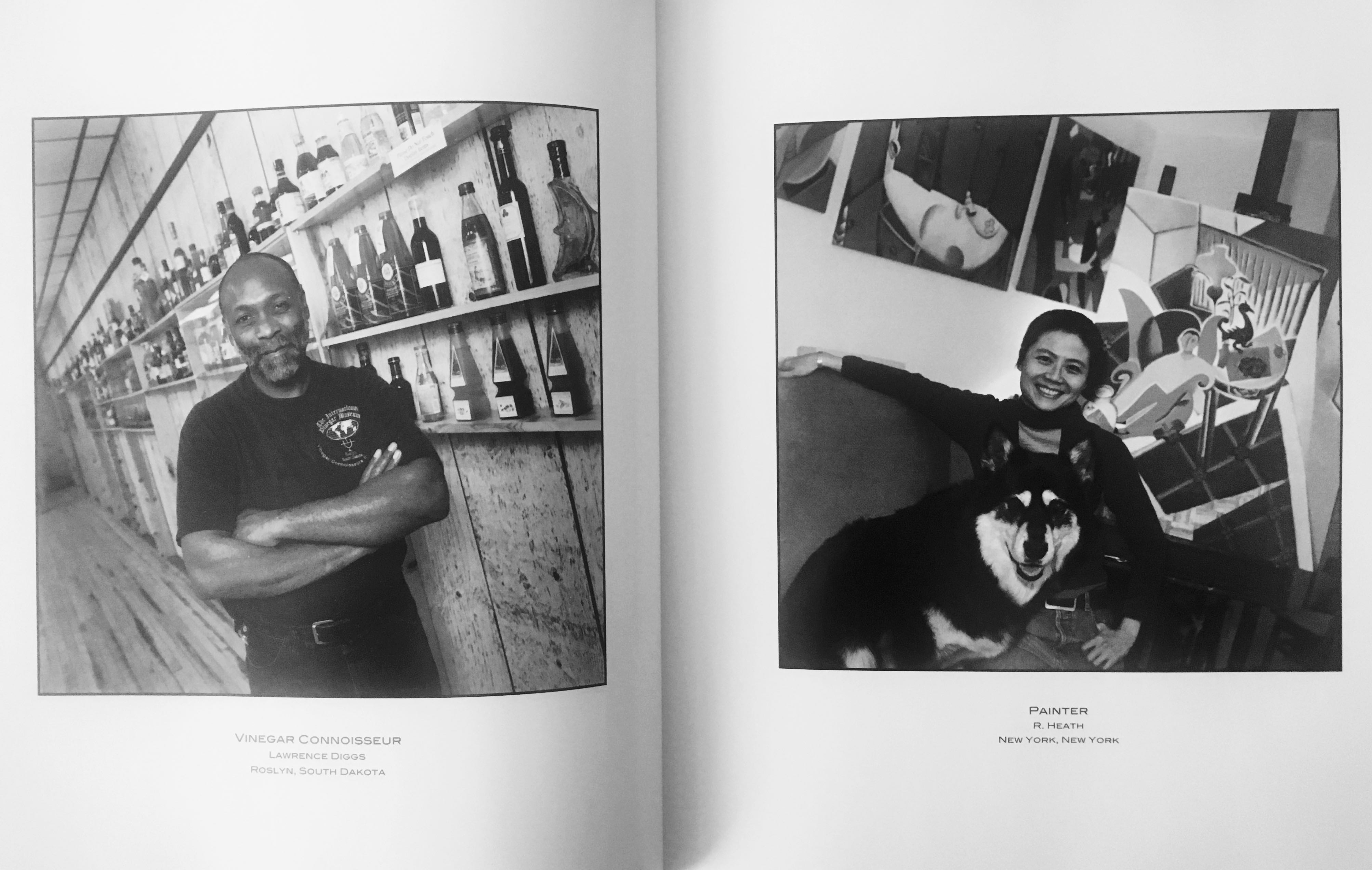
In the early 2000s, Christine traveled the byways of America meeting people in villages and communities, documenting their professions by capturing them in their work element. Her book “Working in the USA” is a love letter to working folks, a fascinating study of people ordinary and extraordinary, all the more poignant because she shot each one in black and white.

IMG_3156 (1)
A spread from Christine’s book, “Working in the USA”

I dare you to open her book and try to close it after a few pages. I sure couldn’t. Its width straddled my lap and I turned page after page, unable to stop looking at the next person — a firefighter, a Cajun accordion maker, a gold miner, a shrimper – each with their earnest face surrounded by the tools of their trade. Proud people. Humble people. Dignified.

IMG_3155 (1)
More USA workers photographed by Christine

For an introvert, Christine excelled at traveling in her RV and meeting all kinds of people along the way. She stills lives in that same RV… since 2001. These days, she winters in Scottsdale, Arizona, and summers in Santa Fe, New Mexico.

IMG_3154 (1)
Even more USA workers photographed by Christine from all lower 48 states

From Denver to Daring

Growing up in Denver, Christine enjoyed spending solitary time drawing and coloring when she wasn’t out being “one of the boys” with her two older brothers. From an early age, she was immediately attracted to pencil and charcoal drawings, which formed the basic artistic thread running through her life; producing works in black and white.

Christine also loves animals and had planned to be a veterinarian, until one summer when her mother arranged for her to work on a pig farm in South Dakota. “I realized I didn’t like seeing animals in pain,” Christine says.

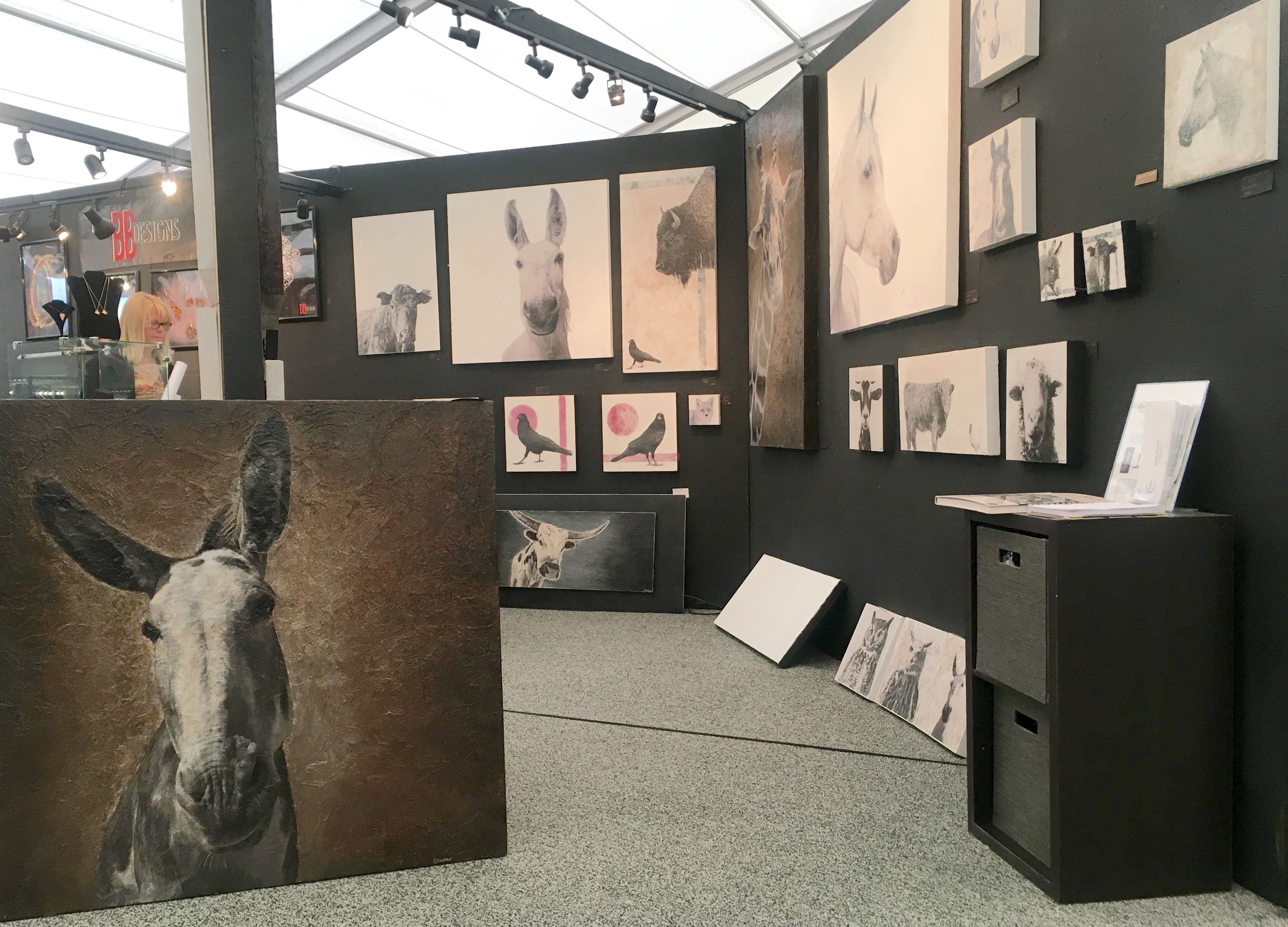
These days, she photographs portraits of rescued and protected animals, like donkeys, horses, goats and sheep, and transfers their black and white images onto wood panels that she embellishes with white tissue paper, textures and paint or encaustic.

IMG_3142
Christine in her booth at the Arizona Fine Art Expo, transferring a cow print onto canvas

Christine’s animal faces are charming. But photography and mixed media pieces aren’t her only creative outlets. She also cooks. Each winter, she exhibits at the Arizona Fine Art Expo and also runs the Expo Cafe with her assistant, Caroline Kwas, also an exhibiting artist. Together, they prepare breakfast and lunch seven days a week for visitors and resident artists.

Each summer, Christine hosts multiple Art Spas in Santa Fe. While her business partner teaches painting classes, Christine prepares their meals and demonstrates cooking. She focuses on healthy vegetarian foods while explaining the cooking process. In a recent Art Spa, she taught everyone how to create and roll their own spring rolls.

Christine’s Expo gig in Scottsdale goes beyond just showing her art and cooking wholesome foods (which keeps her busy for 80 hours each week). She is also part of the crew that erects the giant u-shaped white tents for the Expo.

IMG_2976
The entrance to the Arizona Fine Art Expo

The show launches mid-January and she arrives from Santa Fe in November to get the Expo up and running, along with the show managers and facilities team. When the Expo closed on March 25, Christine spent April leading the crew in dismantling and packing up the massive tent for storage until next year.

IMG_3133
Christine’s booth and artwork

During the Expo, Christine stays busy painting, running the cafe and then walking to her RV out back each evening where she continues to make her art.

Many people dream of pulling up roots and following their passion, living an endless summer in mild climates. Christine is doing it, though she admits it’s not as freeing as it might sound. The hours are long, the work hard and the pressure is on to make a living from her art.

“You can do anything for 10 weeks,” Christine laughs. That’s her motto for this year’s Expo.

IMG_3129
Christine with her new elk mixed media work

Though her location changes, Christine’s focus on producing art never does. She continually learns from customer feedback, what’s selling and what’s not, to try new things. “I’m always chasing that carrot,” she says, laughing. Making a living from art drives Christine each day to discover new ways to market what she does.

Working in the USA

Christine received her college degree in psychology and worked for a year counseling troubled youth for $6 an hour, which was minimum wage. Working with the kids was fine but after a year, Christine realized her co-workers were the ones with the more severe issues. To compensate for work stress, she took a class on darkroom techniques and promptly fell in love with it.

She also took a couple of pre-med courses for genetic counseling but soon determined speaking with pregnant women about potential baby problems would be too taxing. When her father pointed out how passionate she was about her hobby of photography, and encouraged her to consider turning professional, she took his advice.

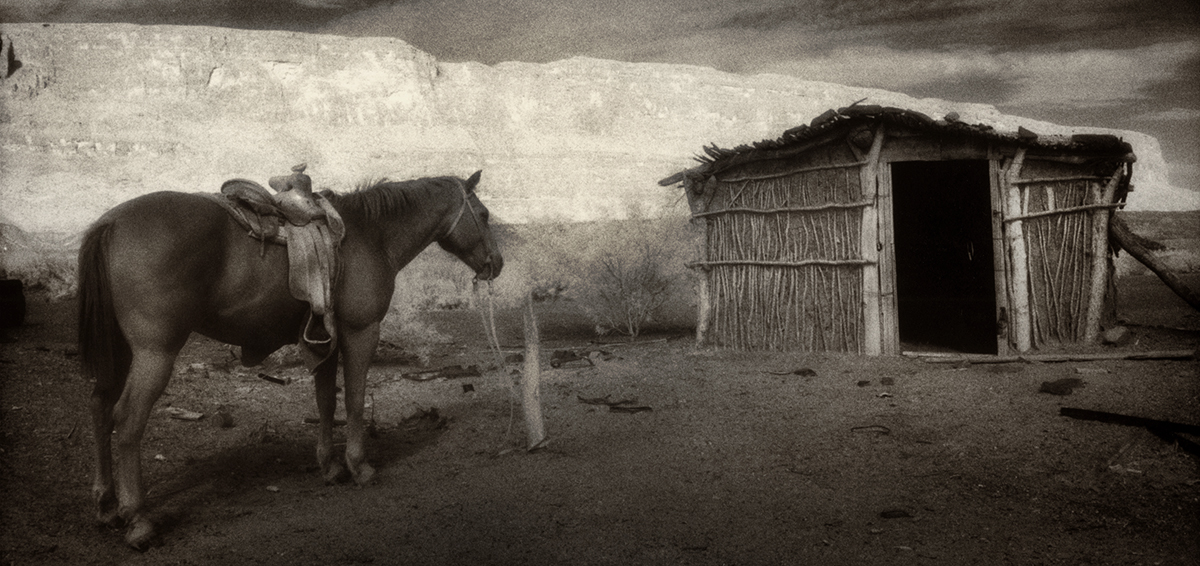
Christine chose commercial art photography over her pre-med studies and started her own Portrait studio in Denver. She liked to experiment, to stretch her creative muscles, and worked with infrared film, which plays off of the red spectrum to produce ethereal photos.

littlegirl

For six years, Christine ran her business and also spent two of those years caring for her aged grandmother. Soon, feeling stifled by traditional portraiture and her home life, she longed to follow her creative urges to travel and take pictures.

Always a traveler at heart, Christine had taken solo trips to China, Singapore and Hawaii. She knew her new dream of traveling the U.S. and taking photos was doable, with proper preparation. She talked about her project with a purpose. She dreamed about it. Finally Christine’s dad convinced here there was no time like the present to chase a dream.

Farmers2

Again, she listened to her dad and set her departure date for one year ahead.

Heeding the wanderlust call, Christine bought a 29-foot RV and converted the main bedroom into a compact custom darkroom. In April, she set out to visit all 48 lower U.S. states and photographically document workers of all professions. Her project, called Working in the USA, was a way for Christine to show people in other countries what real Americans look like, as opposed to those seen on TV shows and in movies.

DEACON

“We’re a nation of diverse people who work hard,” Christine says, “and work is a common theme all over the world. The first thing we ask when meeting someone new is ‘what do you do?’”

For three-and-a-half years, Christine traveled 70,000 miles with her cat Ansel and her dog Gracie. When her travels were over, she worked on producing her book “Working in the USA,” which was published in 2006.

Taxidermists

Christine had finally burst out of traditional portrait methods and captured people from all walks of life. Along the way, she learned to avoid tornado alley in May and June, to avoid the north in the winter, to look for free RV lots, to lay low while parking overnight at truck stops and to overcome her natural shyness to approach people and learn their stories. She was traveling before people were actively blogging and before social media provided a platform for instant sharing. She wrote about the people she met, in addition to photographing them, and she still has many stories to tell about the people in her book. I’m looking forward to hearing those stories. And to seeing what Courageous Christine does next.

montanabarnfinal16x22

“There are no excuses to not travel,” Christine says. “Don’t wait for a traveling companion. Don’t wait to pursue any dream. Get out there. You’ll survive.”

Christine should know.

The name of her RV says it all: Dream Catcher.

Photo Gallery

IMG_3106

IMG_3132

Resources:

Christine’s Blog:

http://www.christinehauber.com/photo-and-travel-journal

Christine’s Website:

www.christinehauber.com

Podcast – Keep Your Day Job: Radical Sabbatical

http://www.keepyourdaydream.com/radical-sabbatical/

Christine’s Book:

https://www.amazon.com/Working-USA-Christine-D-Hauber/dp/0976617013/ref=sr_1_1?ie=UTF8&qid=1440824407&sr=8-1&keywords=working+in+the+USA

Yuba Gold

Art and creativity with a touch of nature
Pens and Pigment

Emma's Art and Artistic Explorations