New Orleans Artistry

New Orleans is celebrating its 300th birthday this year and the entire city continues to be the ultimate creative space. Dripping with history, NOLA is often thought of as a party town, especially along Bourbon Street in the French Quarter. But there is much, much more to New Orlean’s culture than alcohol.

Foremost, it’s the birthplace of Jazz and hometown of Louis Armstrong and Fats Domino… and Harry Connick, Jr., … and many other amazing musicians from the right and left banks of the Mississippi River.

Though it’s a strong one, Jazz isn’t the only draw to the Crescent City. There’s the food, cajun and creole and stuffed with fresh seafood. And beignets anytime of the day. Yes, BEIGNETS!

Like most grown-up cities, New Orleans also appreciates visual artists. On a recent trip to NOLA, I couldn’t resist visiting the Ogden Museum of Southern Art and the New Orleans Museum of Art (NOMA), both of which allow patrons to photograph their art!

At the Ogden, I was thrilled to find a wing of “Southern Vernacular Art” featuring many oil and collage works by Benny Andrews. I can’t recall where I first saw a painting by Benny Andrews, but I liked his style and subjects and was hooked. When I researched Benny, not only did I find out Benny was from Georgia (like me), but he also attended Fort Valley State College (like me)! While I didn’t graduate from Fort Valley State College, I’m proud to have spent the academic year 1983-1984 at this remarkable historically black college in the heart of Georgia.

Benny was born in Plainview, Georgia, in 1930, and his father, George Andrews, was a sharecropper and a self-taught artist. (Both of my maternal grandparents, and their parents, were sharecroppers in South Georgia). After graduating high school, the first in his family to do so, Benny joined the service and later used his G.I. Bill to study at the the Art Institute of Chicago (the article “240 Minutes at the The Art Institute of Chicago” features a Benny Andrews painting!).

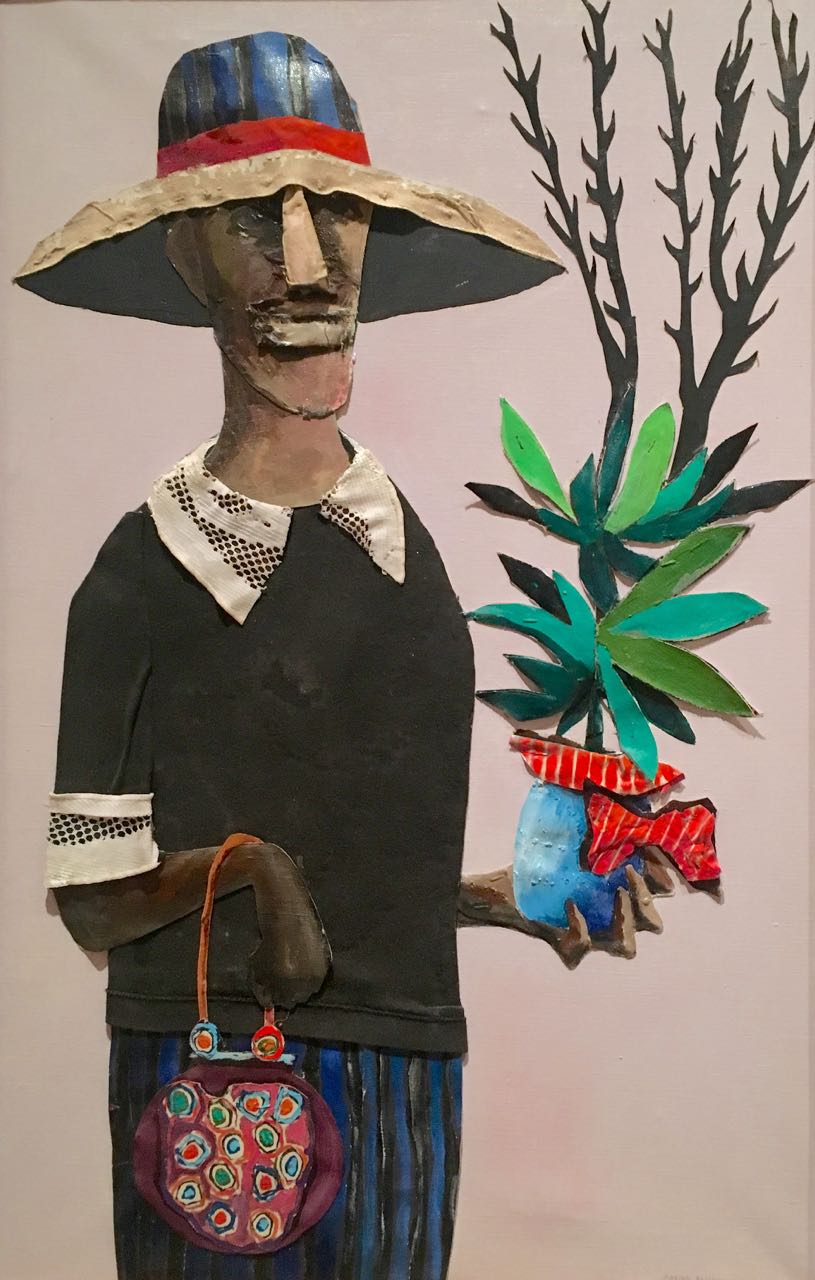
Benny was an activist and advocate for African-American artists. To my delight, the Ogden had several of his collages made using fabric and wallpaper. Some of the collage features are so 3-D, they cast shadows, as do some of the deep frames.

Following are Benny’s collages, plus other works that caught my eye at the Ogden and NOMA. Enjoy!!


Alice, 1966
Benny Andrews, Alice, 1966, oil and collage (Ogden)
Death of the Crow, 1965
Benny Andrews, Death of the Crow, 1965, oil and collage (Ogden)
Dottie, 1981
Benny Andrews, Dottie, 1981, oil and collage (Ogden)
Eudora, 1978
Benny Andrews, Eudora, 1978, oil and collage (Ogden)
Mannerisms, 1961
Benny Andrews, Mannerisms, 1962, oil and collage (Ogden)
Mother Death, 1992
Benny Andrews, Mother Death, 1992, oil and collage (Ogden)
Plower, 1989
Benny Andrews, 1989, Plower, oil and collage (Ogden)
IMG_3301
Benny Andrews (title and date unknown), oil and collage (Ogden)
IMG_3300
Painted by either George or Benny Andrews (title and date unknown) (Ogden)
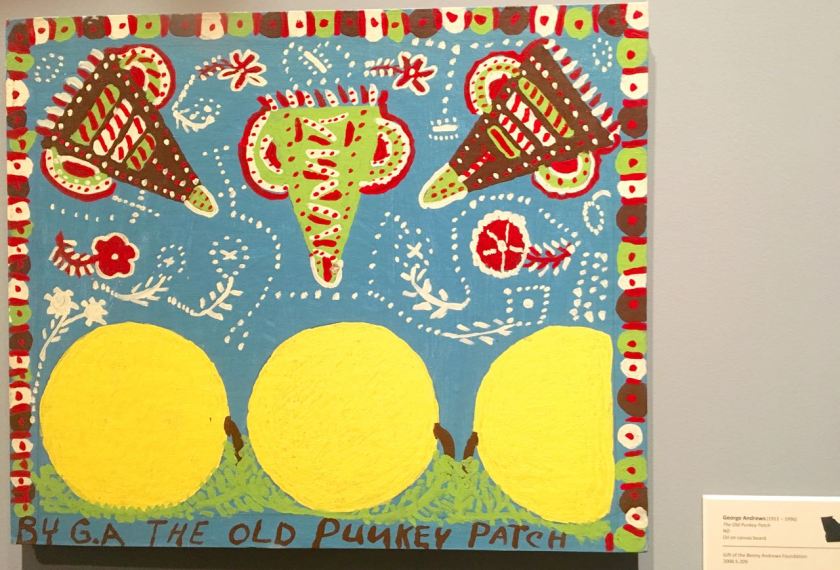
The Old Punkey Patch
George Andrews, The Old Punkey Patch, date unknown, oil on canvas board (Ogden)
Portrait of Benny Andrews, 1976
John Hardy, Portrait of Benny Andrews, 1976, oil on canvas (Ogden)
Acolytes, 1935
Caroline Durieux (1896-1989), Acolytes, 1935 (Ogden)
Abstraction of Chair and Mirror, 1943.
Hans Hofmann, Abstraction of Chair and Mirror, 1943, oil on canvas (NOMA)
Asleep at the Table, 1945
Robert Gwathmey, Asleep at the Table, 1945, oil on Canvas (Ogden)
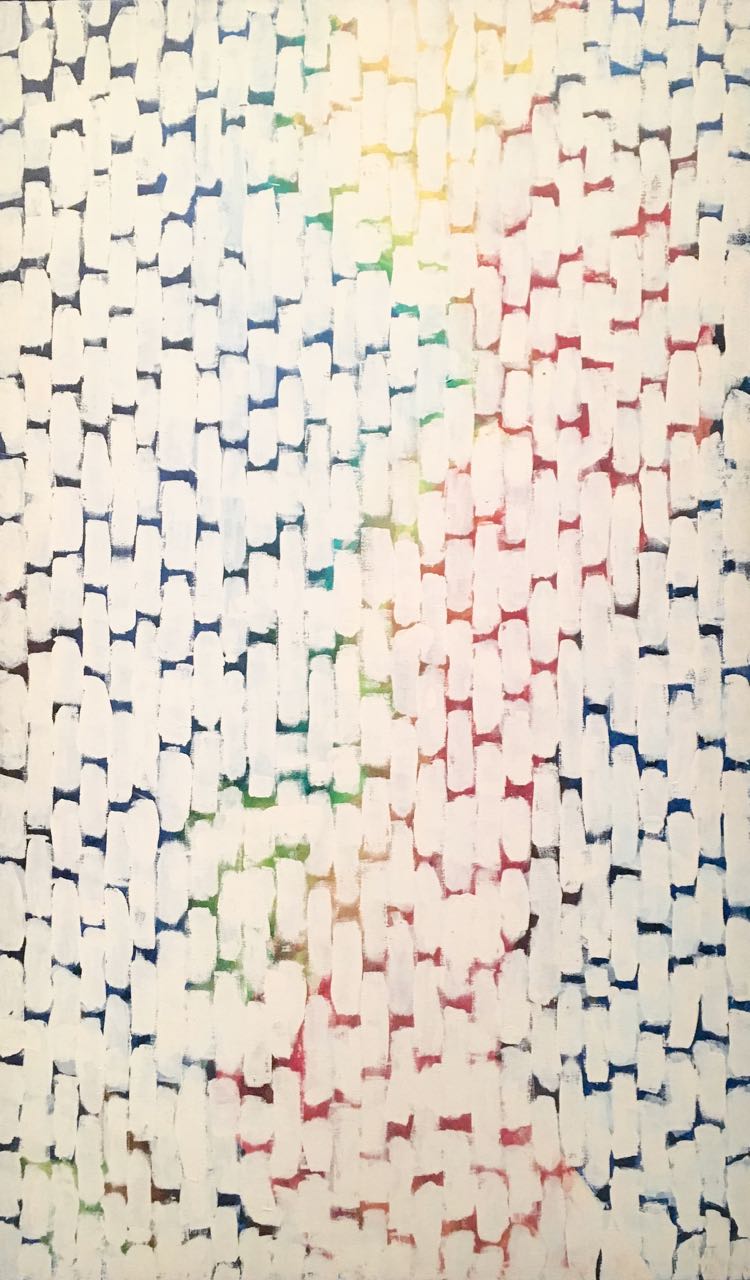
Dogwood Display II, 1972
Alma Thomas, Dogwood Display II, 1972, acrylic on canvas. Alma is one of my favorites and her painting Starry Nights and the Astronauts is featured in the Chicago Institute of Art article. (NOMA)
Breath, 1959
Lee Krasner, Breath, 1959, oil on Canvas. Lee, a fine artist in her own right, was married to Jackson Pollock from 1945-1956. (NOMA)
Eating Cake
Shawne Major, Eating Cake, Quilt detail (Ogden)
Far Away Thought, 1892
John William Godward, Far Away Thoughts, 1892, oil on canvas (NOMA)
French Bouquet of China Asters and Sunflowers in Vase, c. 1887
Gustavo Caillebotte, French Bouquet of China Asters and Sunflowers in Vase, c. 1887, oil on canvas (NOMA)
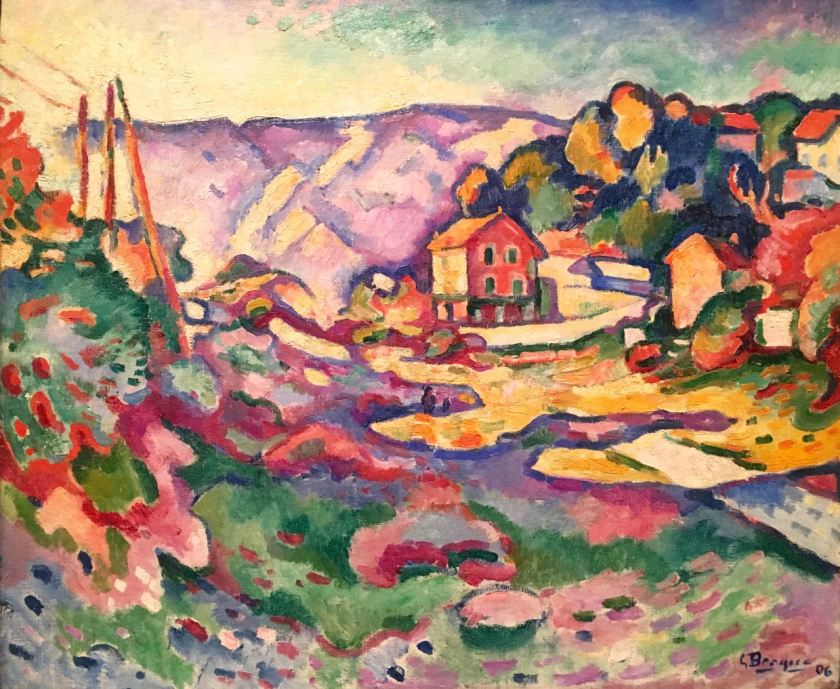
French Landscape at L'Estaque, 1906
Georges Braque, French Landscape at L’ Estaque, 1906, oil on canvas, 20 x 23 1/4 in. (NOMA)
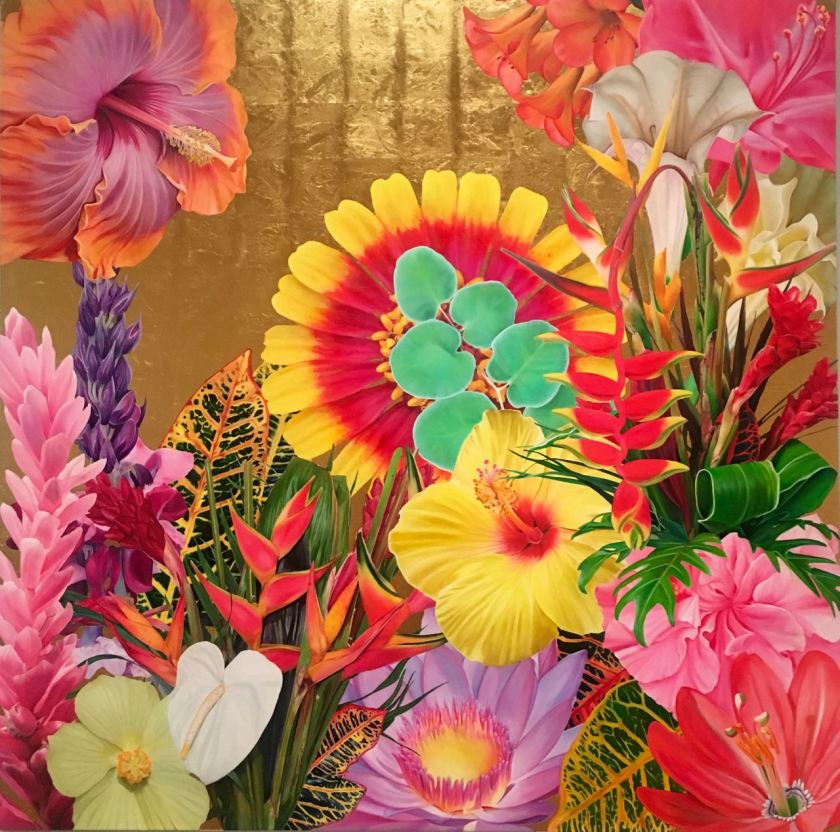
Gild the Lily (Decadence Upon Decadence IX), 2018
Carlos Rolon, Gild the Lily: Decadence Upon Decadence, oil, ink and 24-karat gold leaf on canvas (NOMA)
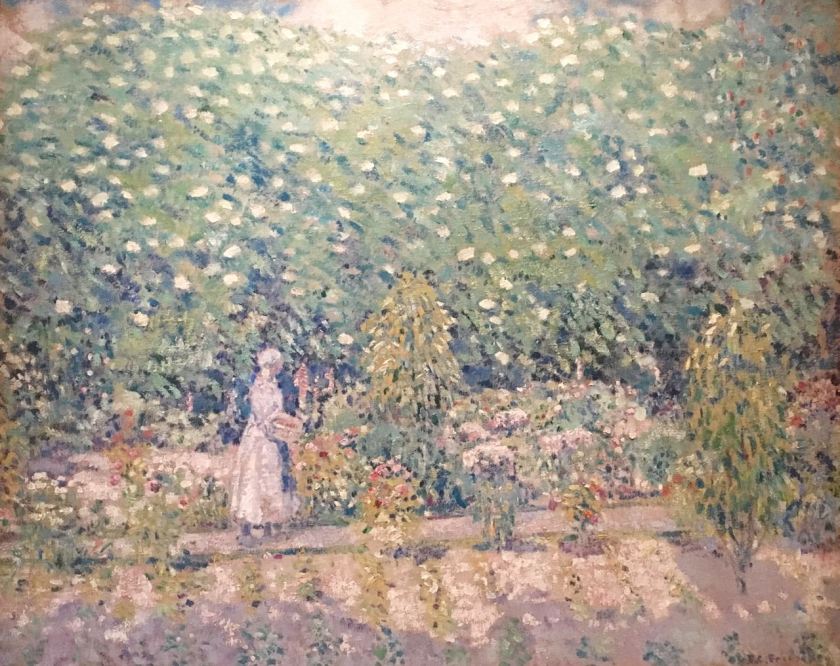
in the Garden, Giverny
Frederick Frieseke (1900-1995), In the Garden, Giverny, oil on canvas
Panarama  of baptism on Cane River, 1945
Clementine Hunter (1886-1988), Panarama of Baptistm on Cane River, oil on window shade,  36″x67″ inches (Ogden)
Persons in the presence of metamorphosis, 1963
Joan Miro, Persons in the Presence of Metamorphosis, 1963, egg tempura on masonite, 19 3/4 x 22 5/8 inches (NOMA)
Portait of a Young Girl, 1935
Joan Miro, Portrait of a Young Girl, 1935, oil with sand on canvas, 41 3/8 x 29 3/8 inches; 49 x 37 inches (framed) (NOMA)
The Red Disk, 1960
Joan Miro, The Red Disk, 1960, oil on canvas (NOMA)
Portrait of a Young Woman in Profile, c. 1895.
Giovanni Boldini, Portrait of a Young Woman in Profile, c. 1895, oil on canvas (NOMA). The blurred brushstrokes and aqua accents in the lower left quadrant caught my eye and drew me to this large painting. 
Portrait of a Young Woman, 1918
Amadeus Modigliani, Portrait of a Young Woman, 1918, oil on canvas. 24 x 18 inches; 33 x 27 x 3 inches (framed with acrylic glass) (NOMA). Modigliani is one of my all-time favorites!!
Salmon Rose, 1966
Wayne Thiebaud, Salmon Rose, 1966 (NOMA)
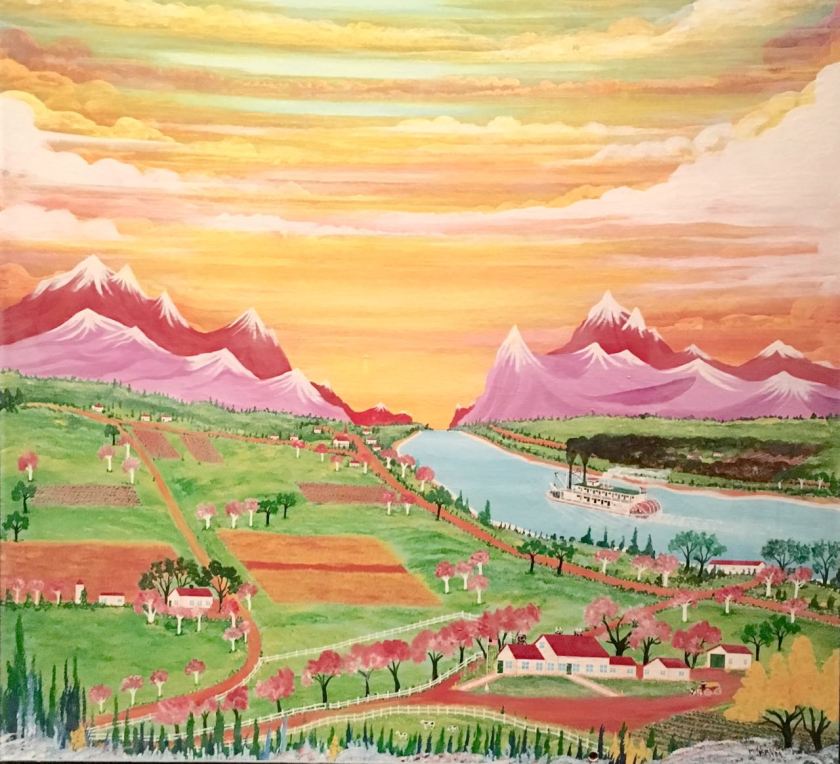
Steamer New York, Steaming Upriver, 1989.
Michael Frolich, Steamer New York, STeaming Upriver, 1989, oil on masonite (Ogden)
Untitled c. 1978-1986
Eddy Mumma, Untitled c. 1978-1986, oil on board (Ogden)
Struggling Tiger in Hard Times, 1991
Thornton Dial (1928-2016), Struggling Tiger in Hard Times, 1991, oil, tin, carpet and industrial sealing compound on canvas mounted on wood.
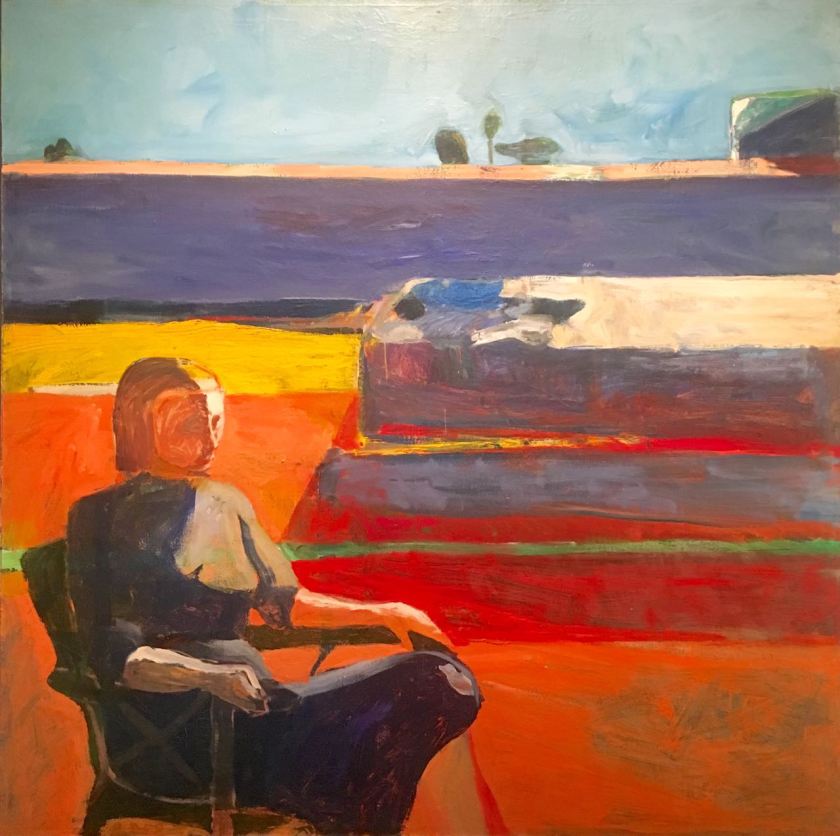
Woman on Porch, 1958
Richard Diebenkorn, Woman on Porch, 1958, oil on canvas, 72 x 72 inches (NOMA)
Scrap House,
I ran across this art installation on the street, not in a museum. Artist Sally Heller, Scrap House. One of 20 “Art in Public Places” commissioned by the Art Council of New Orleans. An homage to Hurricane Katrina’s damage.
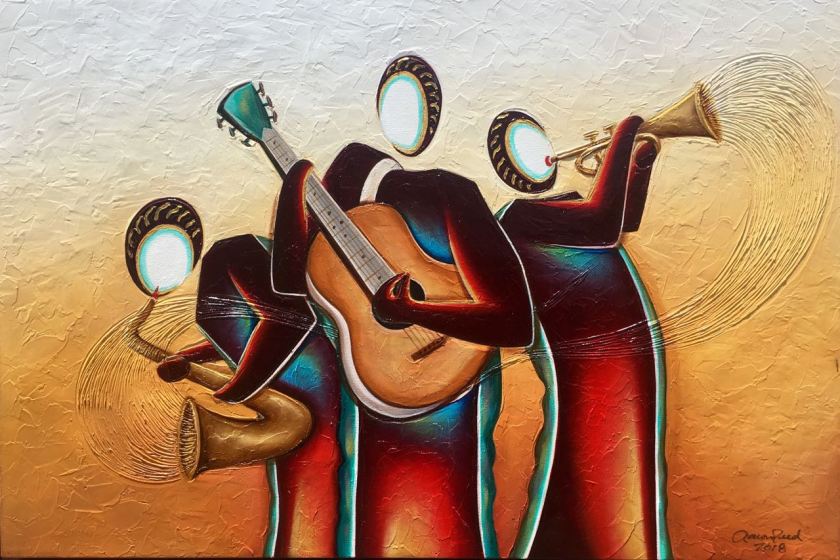
Artist Aaron Reed
Saw this artist, Aaron Reed from Albany, Georgia, at his booth at this year’s New Orleans Jazz & Heritage Festival. 


Quilters of Gee’s Bend

Deep South artisans.

From the Soul

I have an obsession with self-taught African-American artists, those from the deep South who use visuals and words and found objects in their works.

The Souls Grown Deep Foundation is dedicated to supporting many of these artists, and they provide an explanation of “The Tradition” on their website.

The following statement was once on the foundation’s website, but I can’t it find there now. Short and sweet, it overviews the genesis of the African American art forms the foundation seeks to preserve.

“In the African American South, over the course of three hundred years, there has evolved a highly sophisticated and abstract system of creative expression and cultural preservation. Operating in the woods, the cemeteries, the fields and churches, made in secrecy and privacy, this system gave rise to a cultural language that would ultimately become music such as gospel, blues, jazz, and rock n’ roll—now acknowledged to be perhaps the most popular and influential music in history. The music could be heard, recorded, and transported. But there was also a system of visual arts, made by the same population for the same purposes, and qualitatively equal to the music, that was intentionally abstracted, symbolic, and metaphorical. This secret language of visual arts stayed hidden for centuries in the woods and in the cemeteries, places of privacy and safety. It was only when the Civil Rights Movement in the 1960s began to provide African Americans with the freedom and security to express themselves publicly that the art came out into the open. It is now beginning to gain recognition as some of the most innovative and important art of modern times.”

William S. Arnett, an art historian, scholar and patron, discovered the quilters of Gee’s Bend, created the Souls Grown Deep foundation and publishes books about self-taught African-American artists.


The LA Times series written by J. R. Moehringer in 1999 won a Pulitzer Prize and masterfully captures the story of the quilters.

IMG_7237
One of several signs painted as replica quilts and posted throughout Gee’s Bend. Some are in need of repair.

After Brent and I visited Gee’s Bend in May 2014, those quilters and that landscape remain in my soul. Gee’s Bend looks much like South Georgia, where I was born, especially in the rural areas where wild brush is tamed only to build roads or homes. My Granny lived about 300 yards from the Ocmulgee River, so we’re used to seeing water and bridges everywhere.

One big difference is that in South Georgia, the river didn’t cut us off from nearby towns, it connected us. Certainly there were racists, though, who would have done (and did do) just about anything to keep blacks from voting, like the white folks in Camden, Alabama, did when they stopped the ferry between Gee’s Bend and Camden during the Civil Rights Movement, just to keep the residents in isolation and away from the voting booths.

It’s hard to separate modern-day Gee’s Bend from its beginning as a home to hundreds of slaves. And it’s hard for me personally to separate from the white guilt I grew up with. So hard, in fact, I have difficulty putting into words what I feel as a welcomed guest at the Gee’s Bend cooperative.


IMG_7242
The Alabama River from Gee’s Bend looking south toward Camden. “My soul has grown deep like the rivers.” — Langston Hughes.

IMG_7250
Inside the cooperative’s quilt showroom.
IMG_7249
Brent looks around the work space at Gee’s Bend Cooperative while Mary Ann Pettway plays with the placement of quilt pieces.
IMG_7270
Holding up a quilt with Mary Ann. If only I could afford a large quilt like this one; they’re in the $10,000 range. 
IMG_7297
Recharging on the front steps of the cooperative.
IMG_7320
A typical scene in rural south Alabma.

Amazon wish list

Souls Grown Deep: African American Vernacular Art, Vol. 1

This book explores how the African American culture of the South has produced many of the twentieth century’s most innovative art forms.

Souls Grown Deep: African American Vernacular Art, Vol. 2

Completing the two-volume set, Souls Grown Deep, Vol. 2 takes the visual and historical presentation of the first volume to a richer level, offering an even broader array of artistic styles and media.

They are each about $100. Yikes! But I’m sure they’re are worth the price.

Yuba Gold

Art and creativity with a touch of nature

Pens and Pigment

Emma's Art and Artistic Explorations