Jeff Carol Davenport, Sculptor, Part 2

Jeff has done it again! After her Pat Tillman sculpture was installed at Arizona State University in 2017, Jeff’s statue of Coach Bobby Winkles was unveiled there in April 2024. Plus, she’s been creating new art pieces every single day!

Jeff Carol Davenport looked around her studio, trying to see it through new eyes as she tidies up in anticipation of hosting VIPs from Arizona State University’s baseball program.

Keeping her studio neat is a constant challenge; pottery materials, paints and sculpting tools are scattered across various work stations. But she must get her creative space looking organized and welcoming; a big sculpting project is on the line!

Will she get the commission from ASU to sculpt a life-size likeness of beloved baseball Coach Bobby Winkles? What an opportunity that would be for Jeff!

Bobby Winkles coached ASU’s Sun Devils baseball team from 1958, when the school adopted the varsity sport, until 1971, taking the team to the national championship three times. He’s considered the architect of ASU’s baseball program… and also a legend.

When she had received an email two weeks before — asking if she was interested in the sculpting job — Jeff responded with an immediate “absolutely.”

When the three baseball reps were shown into Jeff’s detached art studio filled with colorful paintings, ceramics and sculptures, they immediately saw the maquette of Coach Winkles that Jeff had been working on. She has a gift for capturing faces in clay and she had Coach Winkles looking just like he did in a photo sent by the baseball committee.

Many artists won’t even sculpt a maquette as a prototype if they haven’t secured a contract. But Jeff does. She doesn’t mind doing a little work for a potential client without receiving money or without an upfront promise of getting the job. Not many people in any field think like that.

“They walked into my studio and seemed very happy with the maquette,” Jeff says. “They liked it, and I thought ‘this is going to be a go.’”

“Thanks so much,” one man said to Jeff. “We’re looking at two other artists and will be in touch.”

“That made me feel down,” Jeff says. “I thought, ‘maybe I won’t get the commission.’”
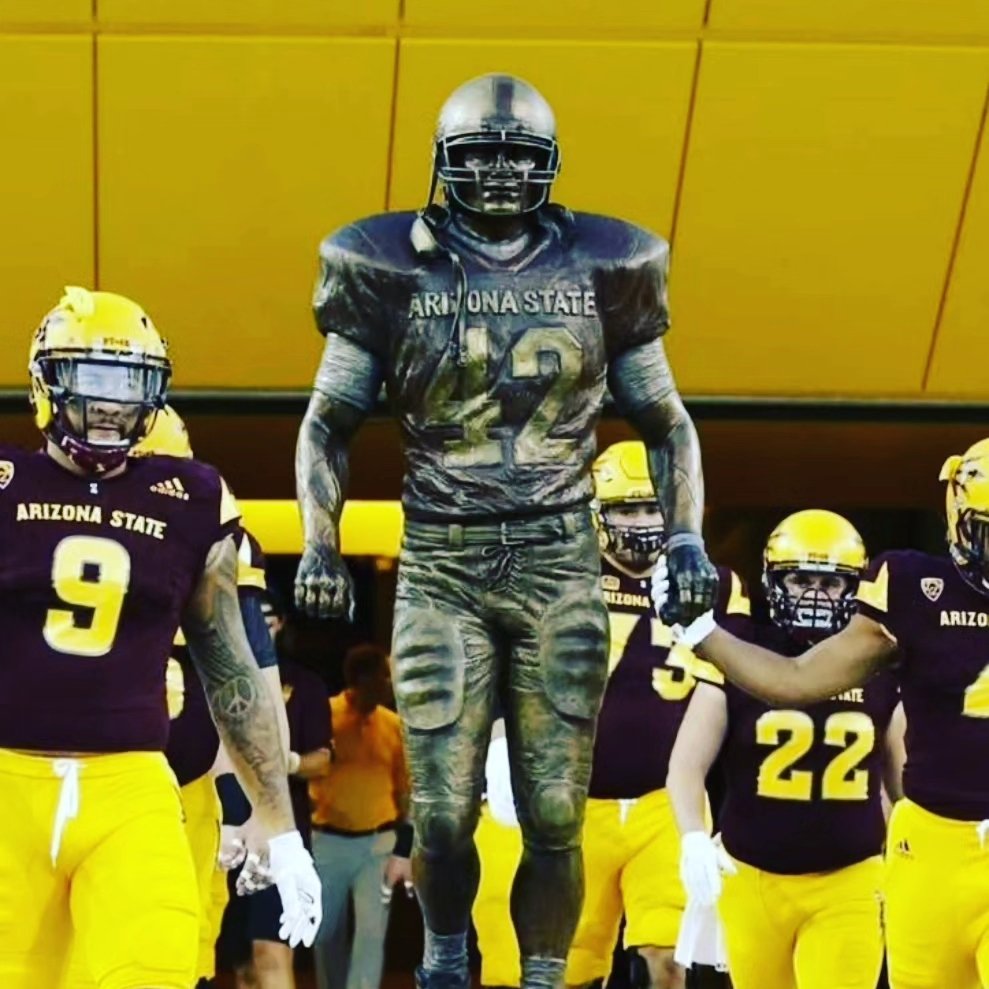
ASU players touch Jeff’s Patt Tillman sculpture before each game.

They knew that Jeff had already sculpted Pat Tillman, former ASU football star, for a life-size bronze sculpture installed at ASU, so that would hopefully help sell her to this committee. Yet, even with creating Pat Tillman’s sculpture, Jeff didn’t take the Coach Winkles prospective job for granted.

“I don’t expect these things,” she says.
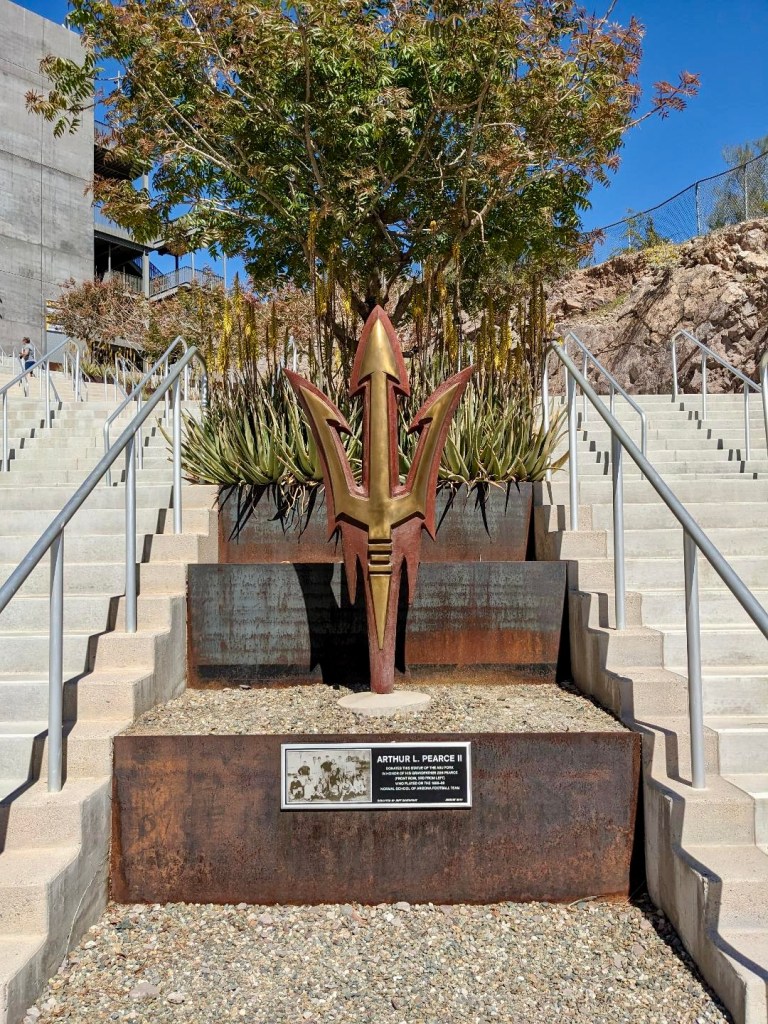
Pitchfork in ASU’s Mountain America stadium.

Jeff had also created the bronze Pitchfork sculpture placed in ASU’s Mountain America stadium.

Her mode is to keep working, no matter what, and that’s what she did until the day in early 2024 when she received word that the committee had selected her to sculpt Coach Winkles!

At the unveiling ceremony in April 2024, one of the committee members said to Jeff, “The minute we walked in and saw the maquette, we knew you were the artist for the job. We had to follow our formal selection process, though.”

“But, they knew,” Jeff says, enjoying the thought of their immediate acceptance of her skills, even if they couldn’t say anything at the time.
Those are the lows and highs for artists who put their art out into the world. The highs and lows never really stop, even for seasoned artists, but they hopefully become less intense with time and experience.
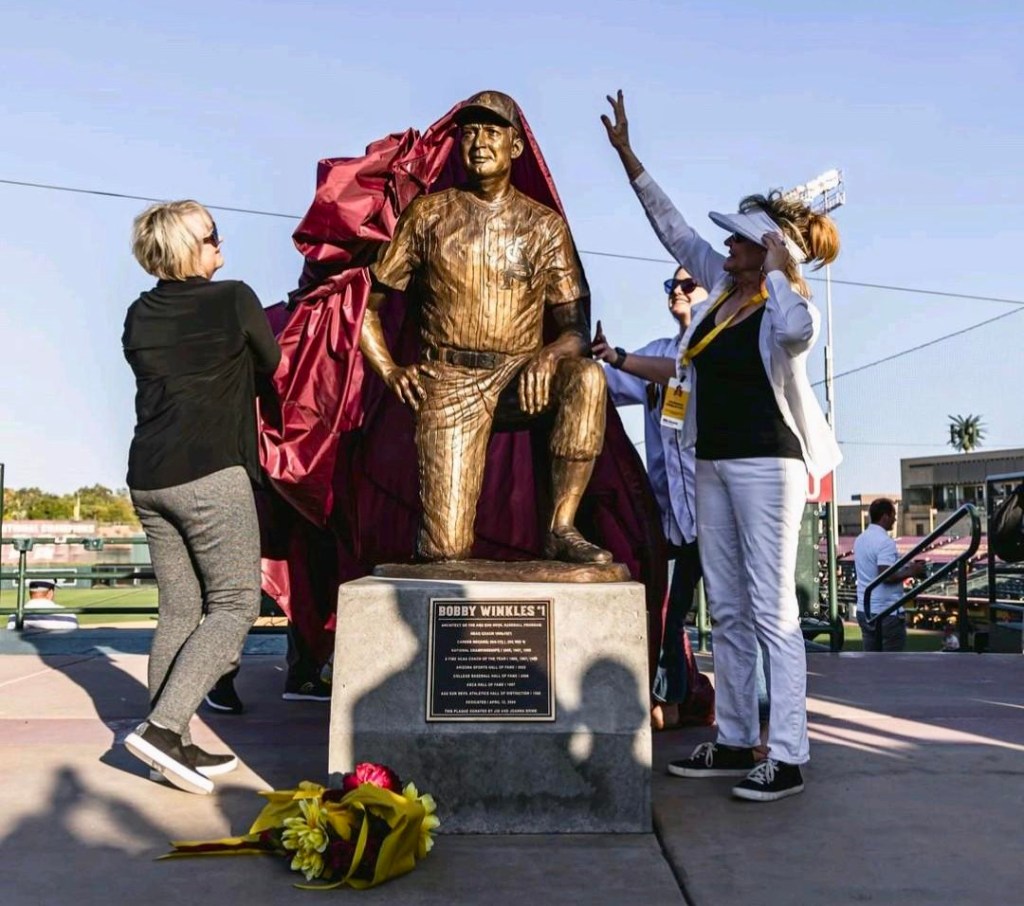
Unveiling Coach Winkles’ sculpture at entrance to Phoenix Municipal Stadium.

Jeff was on a high at the unveiling ceremony and she was honored to meet Bobby Winkles’ family, including his grandchildren.

She considers her Bobby Winkles sculpture to be her “star accomplishment.”
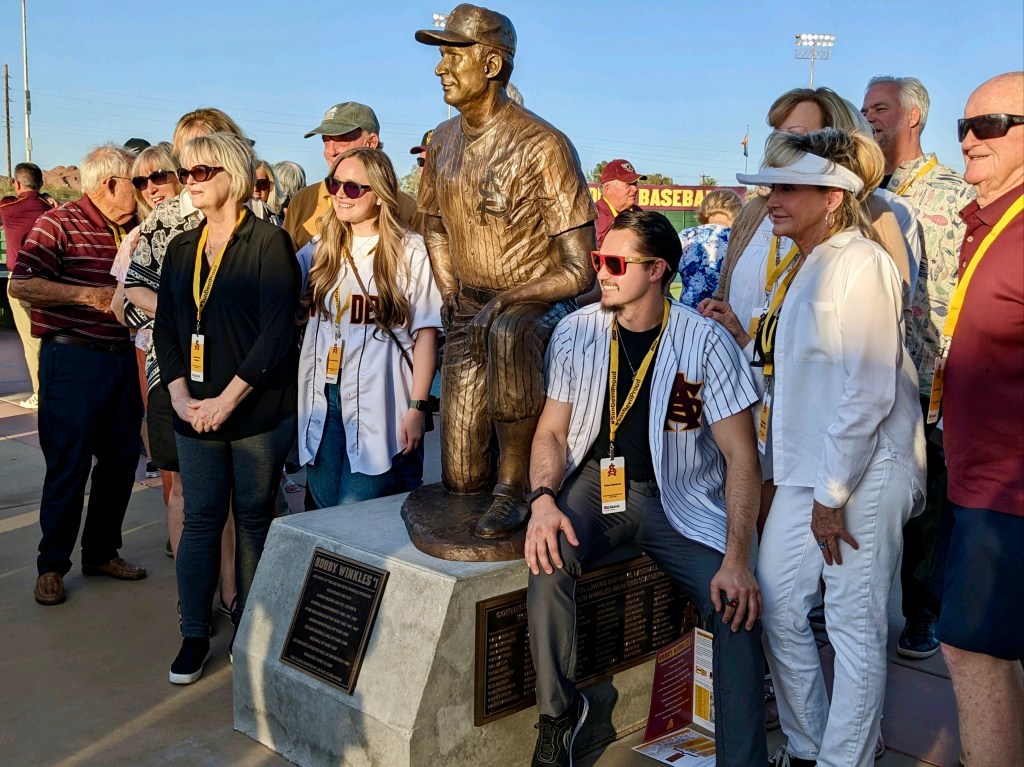
Coach Winkles family and friends celebrate unveiling.

“But what about Pat Tillman’s sculpture?,” I say. “That’s a star accomplishment, too.”

“Yes, but Pat’s sculpture is in an area of the ASU stadium where mainly the staff and team have access, so the general public doesn’t always see it. Coach Winkles’ sculpture is on the third-base concourse at the entrance of the Phoenix Municipal Stadium, ASU’s home park. Everyone attending a game will walk by Coach Winkles’ statute when entering and leaving the stadium.”

This news article from ASU gives a great overview of the sculpture and its unveiling celebration.

ASU plans to add more sculptures on the stadium’s walkway and they’ve indicated they want Jeff to be involved.

“Adding new sculptures may not happen for a while,” Jeff says. “These things don’t always happen fast, but I’m happy that more good things might be coming.”

Jeff Carol Davenport’s tireless creative force was on full display in my first spotlight of her in 2017. Back then she was still teaching ceramics at Sandra Day O’Connor High School in Phoenix, counting down the days until she could retire and throw herself completely into sculpting, both bronze and ceramics.

While teaching high schoolers during the day, Jeff’s time in her home studio was busy, busy, busy.

Now that she’s retired, she’s unstoppable!

Jeff might be your creative kindred spirit if you wake up wanting to get to work on a project and go to bed thinking about tomorrow’s projects… while art ideas pop into your mind night and day.

She’s usually working on several pieces of art in different mediums, spread out in her studio at designated work areas: the pottery wheel area, the glazing area, the jewelry-making area, the painting area.
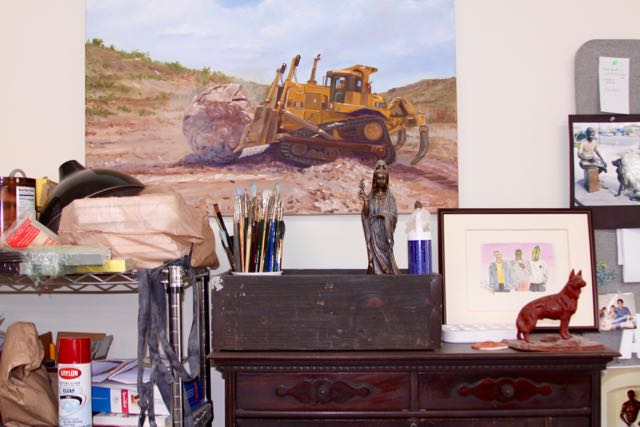
Jeff’s detached art studio filled with supplies, paintings, prototypes and inspiration.

“Making art fulfills the need that I apparently have,” Jeff says, “to always be creating and be productive. Creativity breeds creativity.”

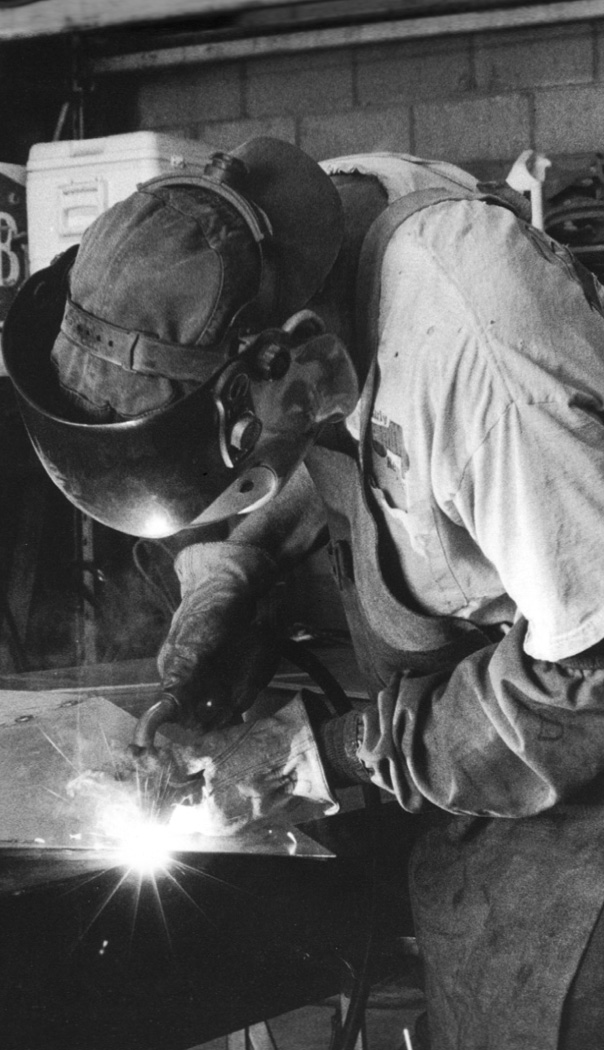
Since retiring from teaching in May 2022, her production rate has sky-rocketed, just as she had yearned for during those working years. Jeff paints, makes ceramics, creates sculptures to be cast in bronze — managing them through every step of the casting process — and now makes jewelry. She’s even learning to weld!

Yet, as productive as she is, there’s never enough time to make all the beautiful things flooding her brain.

Jeff and her husband Mike have an off-grid vacation home in New Mexico that they’re building by themselves…and they bought another nearby lot so Jeff is now hankering to build a small dwelling there, too. By hand!
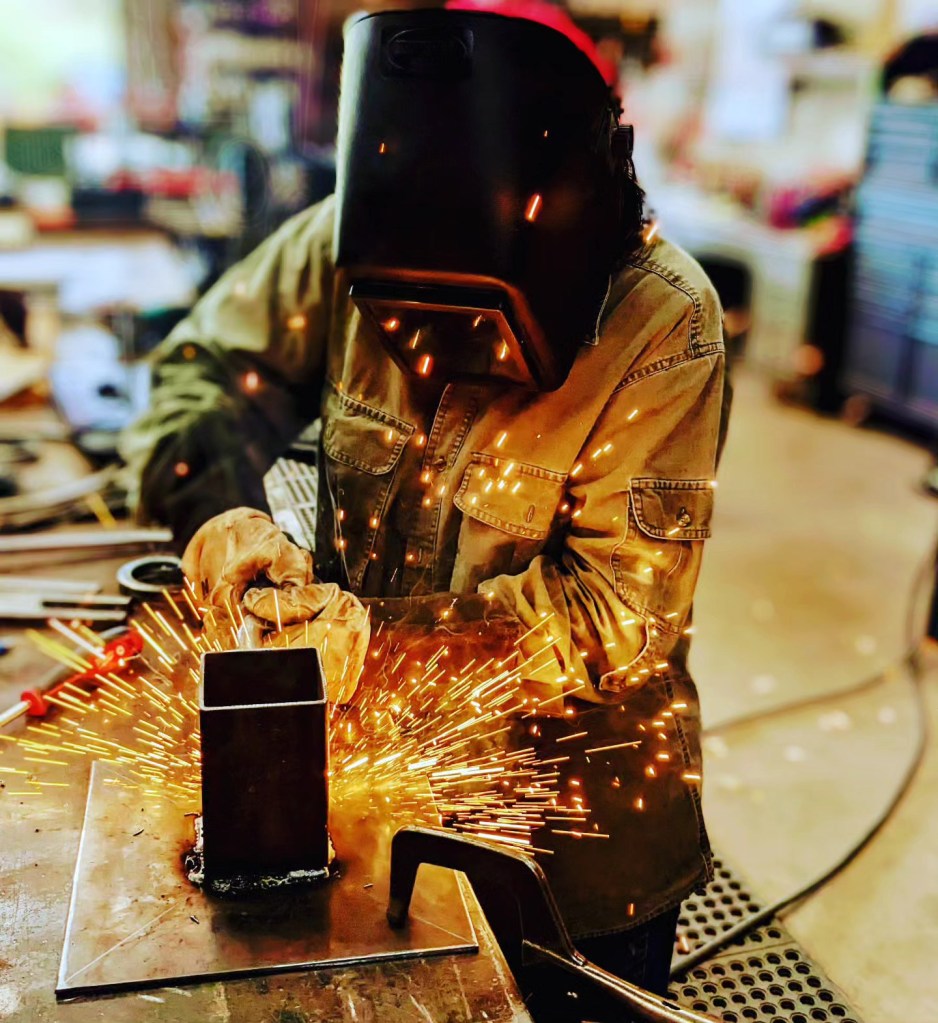
Jeff welding a base for one of her sculptures.

She somehow remains focused on her multiple art projects but one distraction she finds pleasant is her two-year-old granddaughter, Adaliya, who lives with Jeff’s son, Jeff, and his wife Aiya in Flagstaff. (Jeff, the mom, is also a hunter and for years has gone on multiple Elk and deer hunts with her son Jeff.)

When not with family, Jeff is in her studio making things like:
• Branded ceramic mugs as corporate gifts for her son Cori’s clients
• Ceramic bells
• Small branded ceramic coffee cups and bee earrings for a local boutique
• Paintings of giant saguaros that live near home in New River, AZ
• Small animals from clay to fire at her next Wood-fire Workshop in Northern Arizona
• Maquettes of commissioned statues to be enlarged and cast at the local foundry (where Jeff worked for 20 years)

Most of Jeff’s art is inspired by her Sonoran Desert surrounds, where she grew up and has lived her entire life: 66 years so far.

She has a distinct aesthetic style, able to create adorable desert animals like javelina or bunny rabbits that look soft and realistic, even in bronze.
Sure, she’d like to participate in some of the annual winter art shows in Phoenix, Scottsdale, or Wickenberg. She plans to continue applying to those shows until the organizers recognize her tenacity and invite her to exhibit.
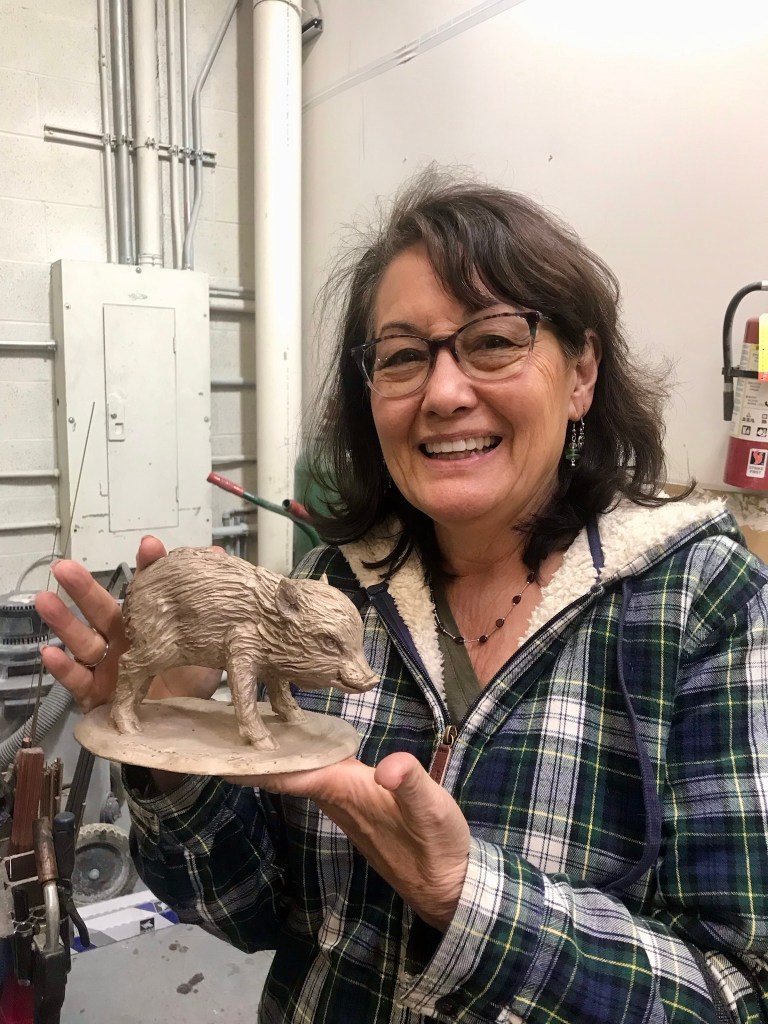
Jeff showing off her small javelina sculpture.

But Jeff doesn’t want fame and fortune at this stage in her life. She just wants to keep making all her wonderful creations and have people appreciate them… and purchase them so she can buy more supplies and make more beautiful things!

“I don’t know how to get where I’d like to be,” Jeff says. “I don’t look at rejections, though. Instead I look at what works for me. Like the Bobby Winkles sculpture. I just keep working to get those kind of jobs. In the meantime, I keep my creativity going and keep making art.”
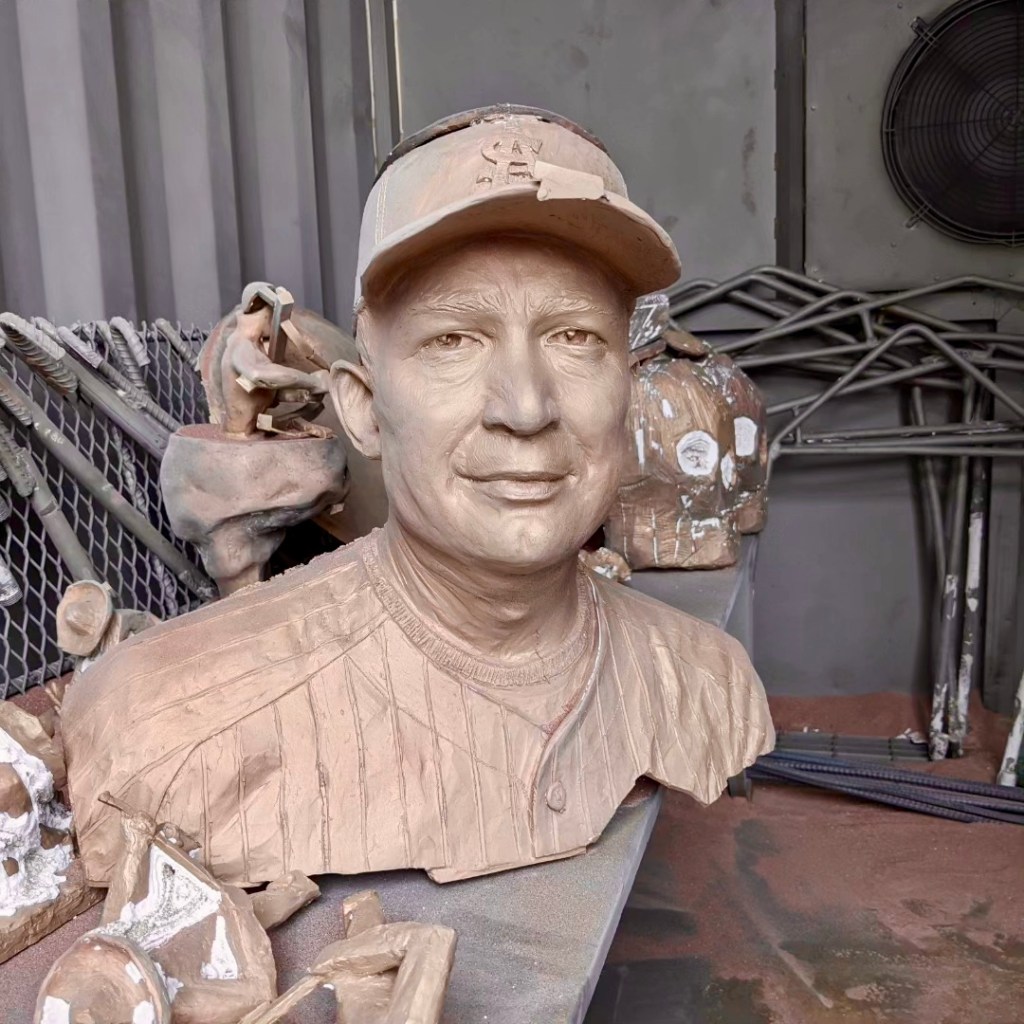
Coach Winkles in clay.

STUDIO

Jeff admits her studio isn’t organized like one might see in a magazine. Stuff is everywhere, stacked in containers, stuffed into drawers, sitting on desks and tables, all akimbo. But it works for Jeff.

“I have Dis-organizational Organization,” she says with a chuckle. Her different work areas may be cluttered but she gets lots of work done at each one.
“I’m a visual person so it helps me to see my supplies. If I were to organize them into a tidy little space, I’d probably lose everything. If my glazes are on the table, I’m more productive versus having to go search out where I put things.”
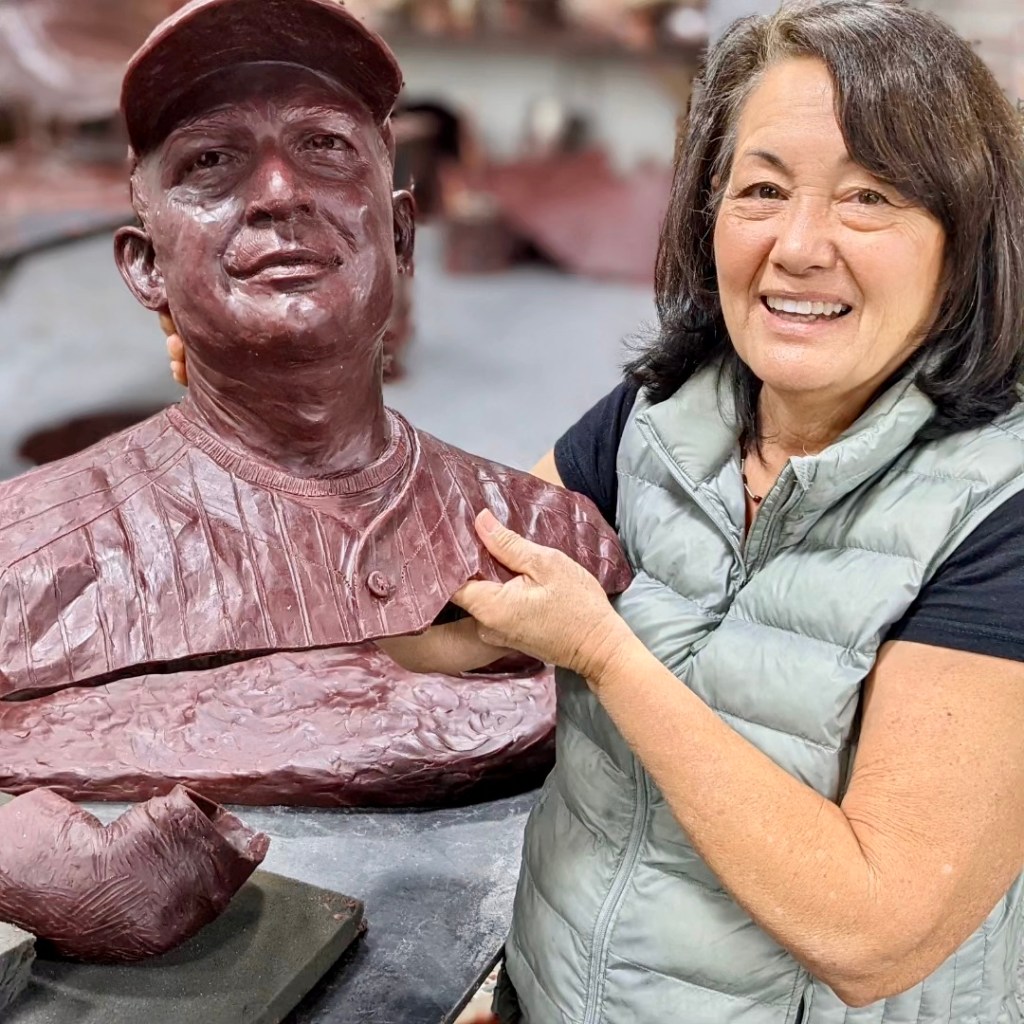
Coach Winkles in the wax stage of the lost wax method.

If she puts things away she forgets about them.

“I found a box of jewelry-making supplies at a yard sale and was going through it,” Jeff says, “when my neighbor Brent suggested I just offer them a price for the whole box, and I did. The other day I found that box and started pulling out silver solder and some cabochons, which I can use in pieces right now. But I had forgotten about the supplies in that box! What else in the studio is tucked into boxes that I’ve forgotten about?!”
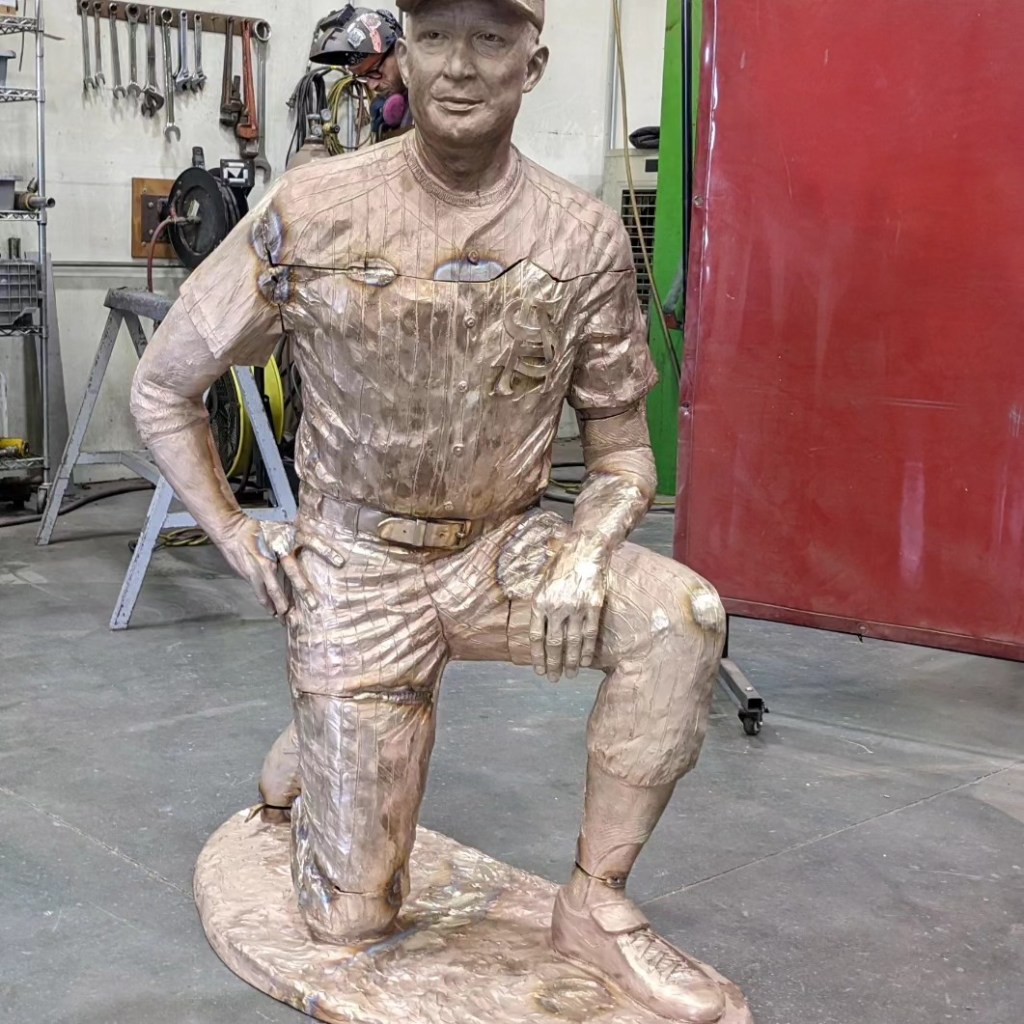
Coach Winkles bronze sculpture in process.

The cost of materials is a huge part of making art for any artist, especially when they’re trying to set prices for their work. Also included are the thousands of hours of training and dedication that an artist puts into mastering their craft. As patrons of creative people, we’re buying that skill and expertise when we purchase a piece of their art.

“It sometimes feels like I’m paying people to buy my art,” Jeff laughs, “because maybe I can never get back the money I‘ve put into all my endeavors.” She has multiple pottery wheels, mounds of clay, several kilns, and materials for jewelry that include precious gems and fine metals. The cost of building a creative space to work in must also be part of the calculation.

“For one of the ceramic bells I make, it’s not just about how much clay the bell takes, “ Jeff says, “it’s also about electricity to fire the kiln, studio space, and the time it takes to sculpt and then assemble the finished product.”

Every little expense adds up, especially when she’s working across multiple mediums. Luckily Jeff and Mike love to shop at yard sales and thrift stores and that helps in financing her art.

STAND-OUT SCULPTOR

Of course more good things, and more great sculpture commissions, are coming to Jeff.

No other sculptor can produce what she does for what she charges.

“I provide a great product for the cost,” Jeff says. “No one else would do what I do, like making prototypes without an agreement in place. My prices are reasonable. I come highly recommended and know how to manage my time and meet any client’s deadline. I always do things on time.”
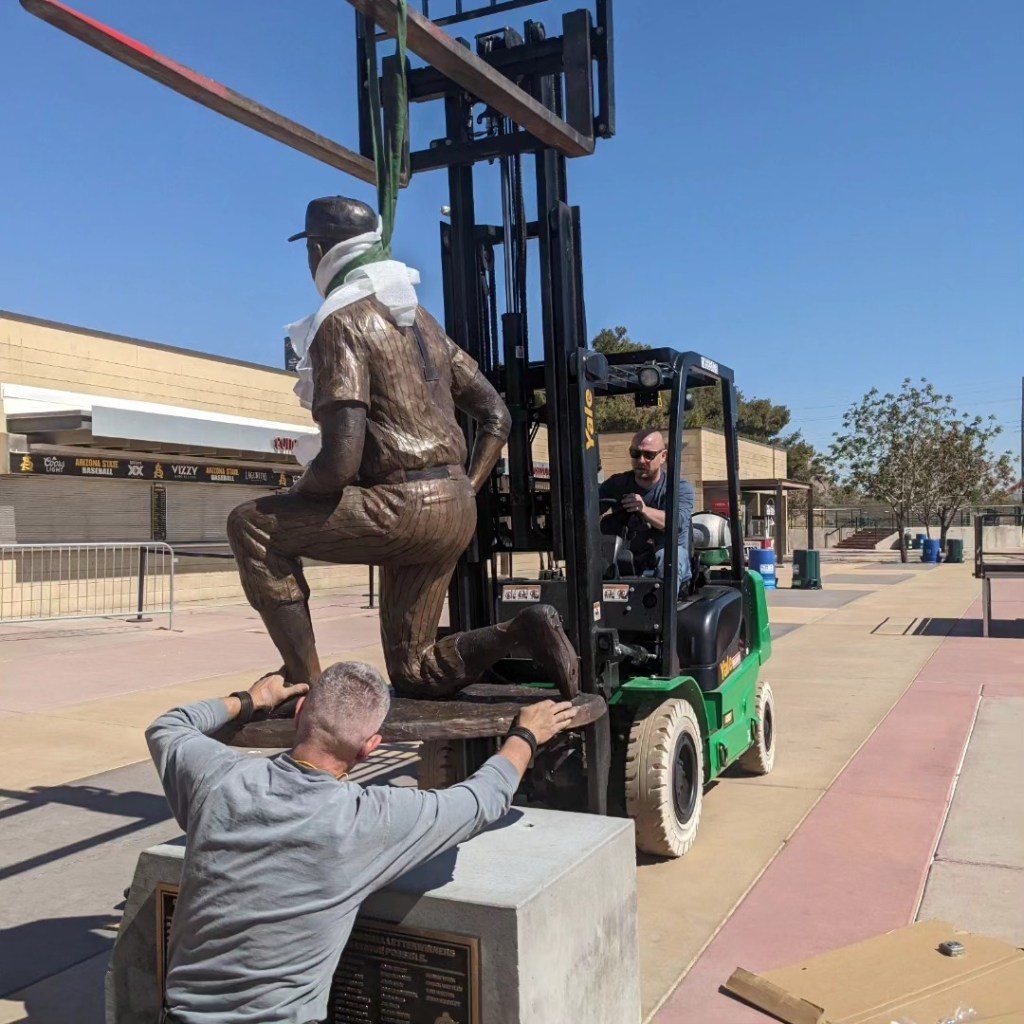
Coach Winkles sculpture going into place at ASU’s stadium.

Jeff has been building a reputation for doing these public projects for decades. After working at the local foundry for 20 years, she knows every process of casting bronze. She can do the physical work of mold making and cleaning seams, etc. Being local, she can meet her clients at the foundry at any time during the process and explain each stage. For local clients, delivery fees are not as expensive as delivery costs would be from an out-of-state artist.
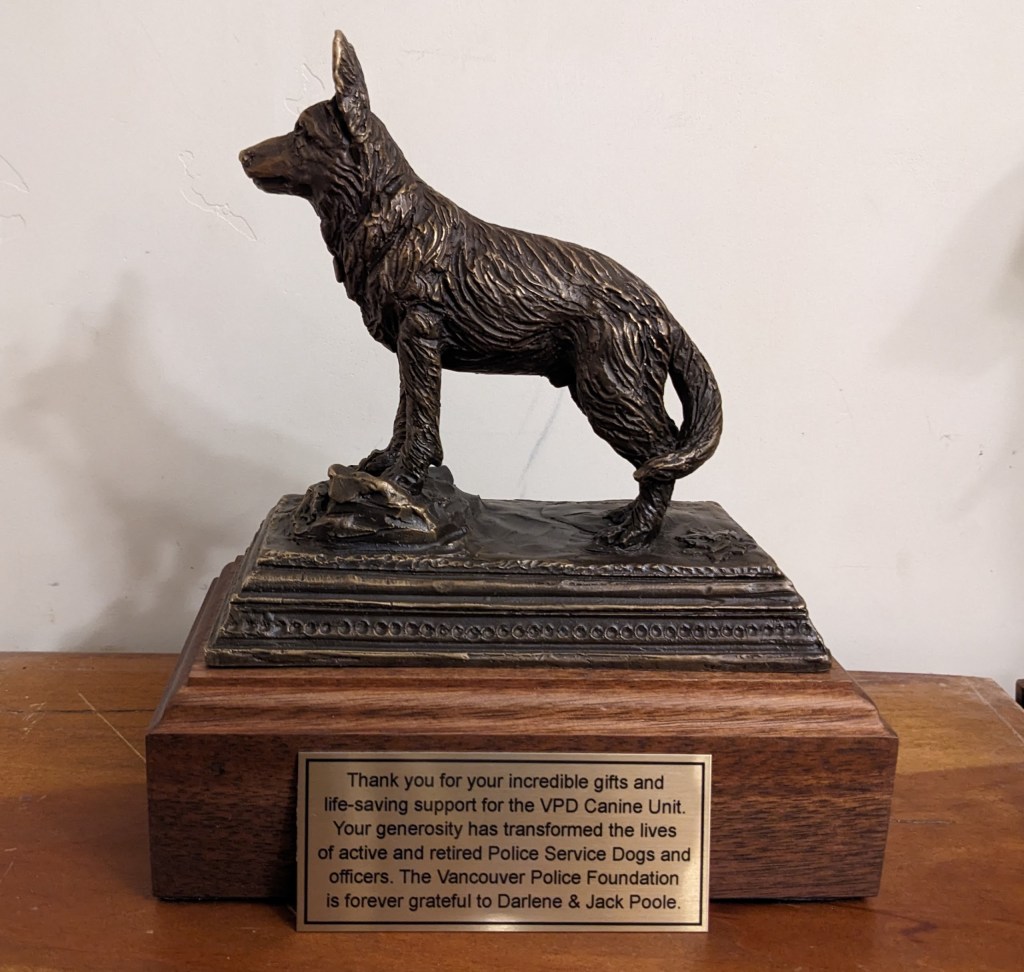
Gift from the Vancouver K9 PD to a donor, sculpted by Jeff from her prior life-sized memorial.

“People respond to my style,” Jeff says. “My work is realistic but I have a really nice style. Plus my large body of work with sculptures installed around the state and elsewhere demonstrate my expertise and talent. I can stand up with the best of artists.”

What Jeff doesn’t mention is her positive attitude and sunny outlook. Or her kindness. She is a pleasure to be around and a complete sweetheart for her clients to deal with.

Jeff is a sculptor who can design in a short period of time with minimal input from clients and nail their concept from the start. It’s rare that a client asks her to redo her original design. Jeff’s relationship with the folks at the foundry make it easy to process any statue from start to finish. She knows the foundry, its people and equipment. They know her and trust her.
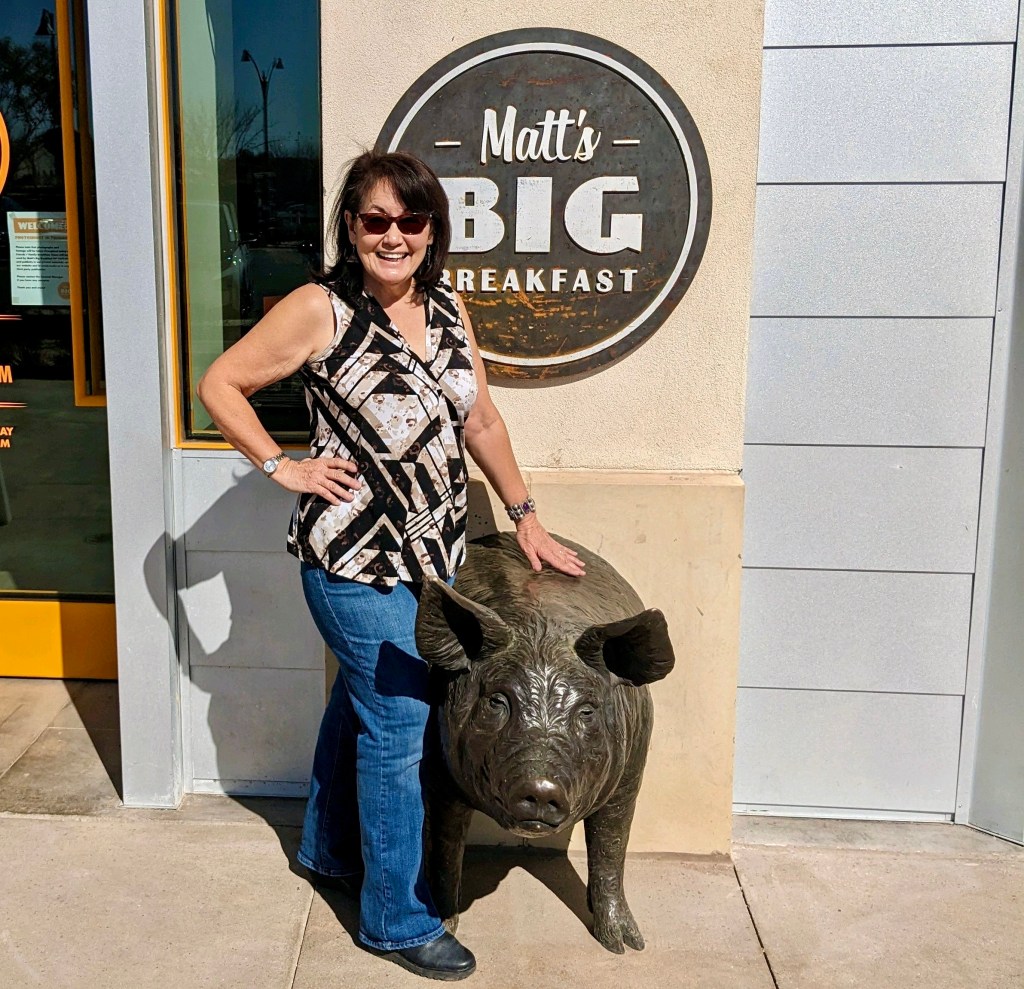
Jeff’s pig sculpture for a popular breakfast spot.

Jeff does all of this with a smile, offering great ideas and delivering more than she promised.
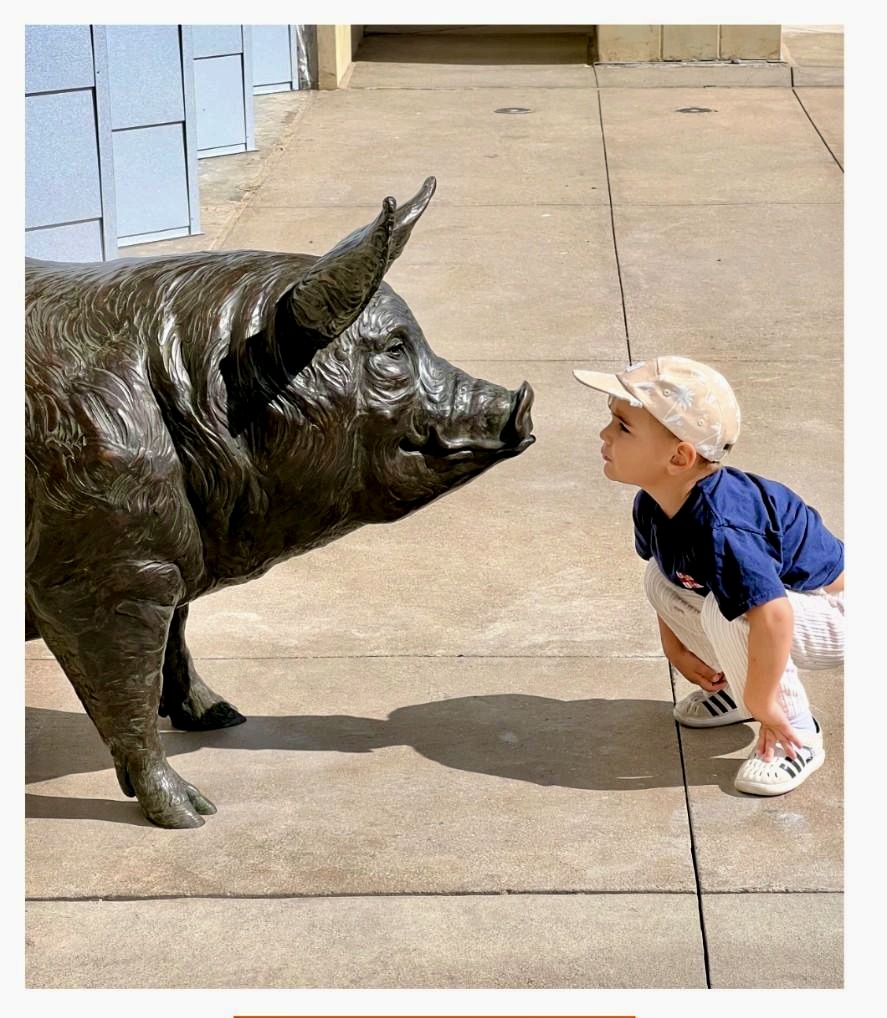
Everyone enjoys Jeff’s sculptures!

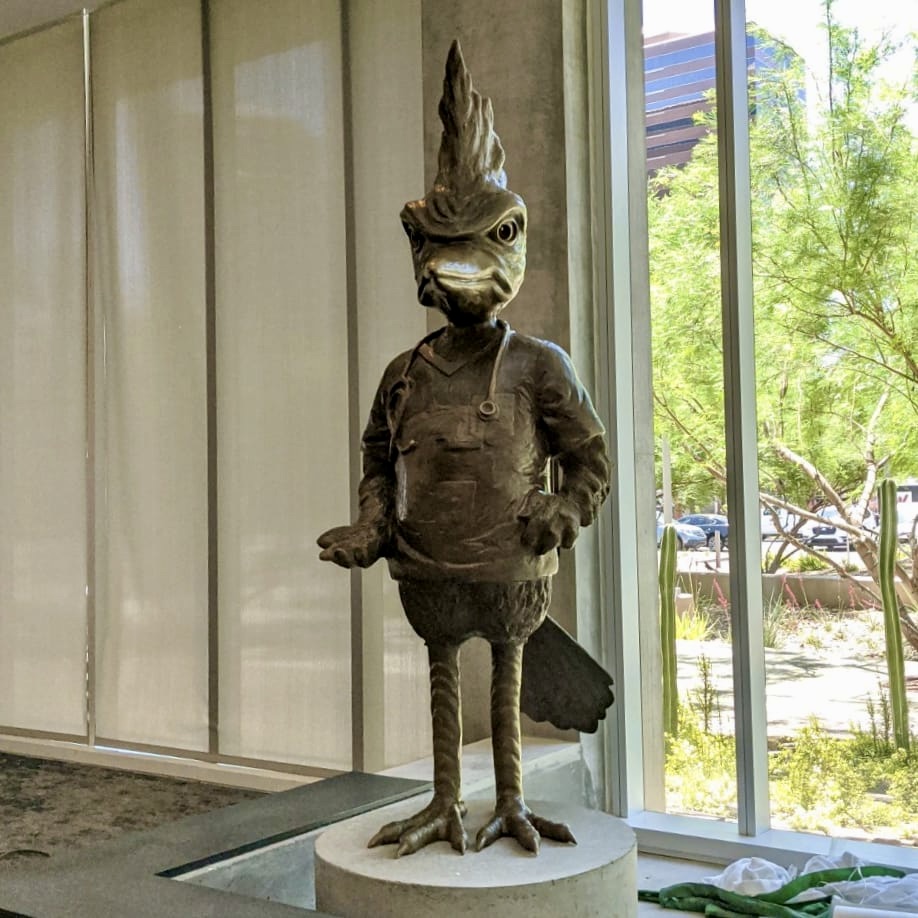
Jeff has created two sculptures for Creighton University, a Jesuit Catholic institution in Phoenix with a large focus on their nursing program. St. Ignatius was the founder of the Jesuits and his sculpture stands at the university’s entrance. 
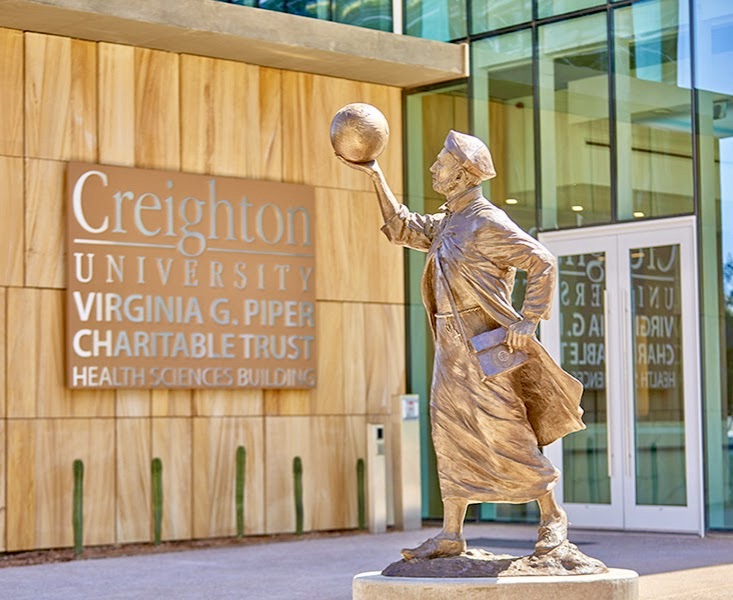
Jeff’s sculpture of St. Ignatius at Creighton University in Phoenix.
Jeff Sculpture of Billy, Creighton’s mascot, on their campus in Phoenix.

As a sculptor, Jeff has much to recommend her for any size projects. And that’s just her sculpting. She is as talented in her other artistic pursuits.
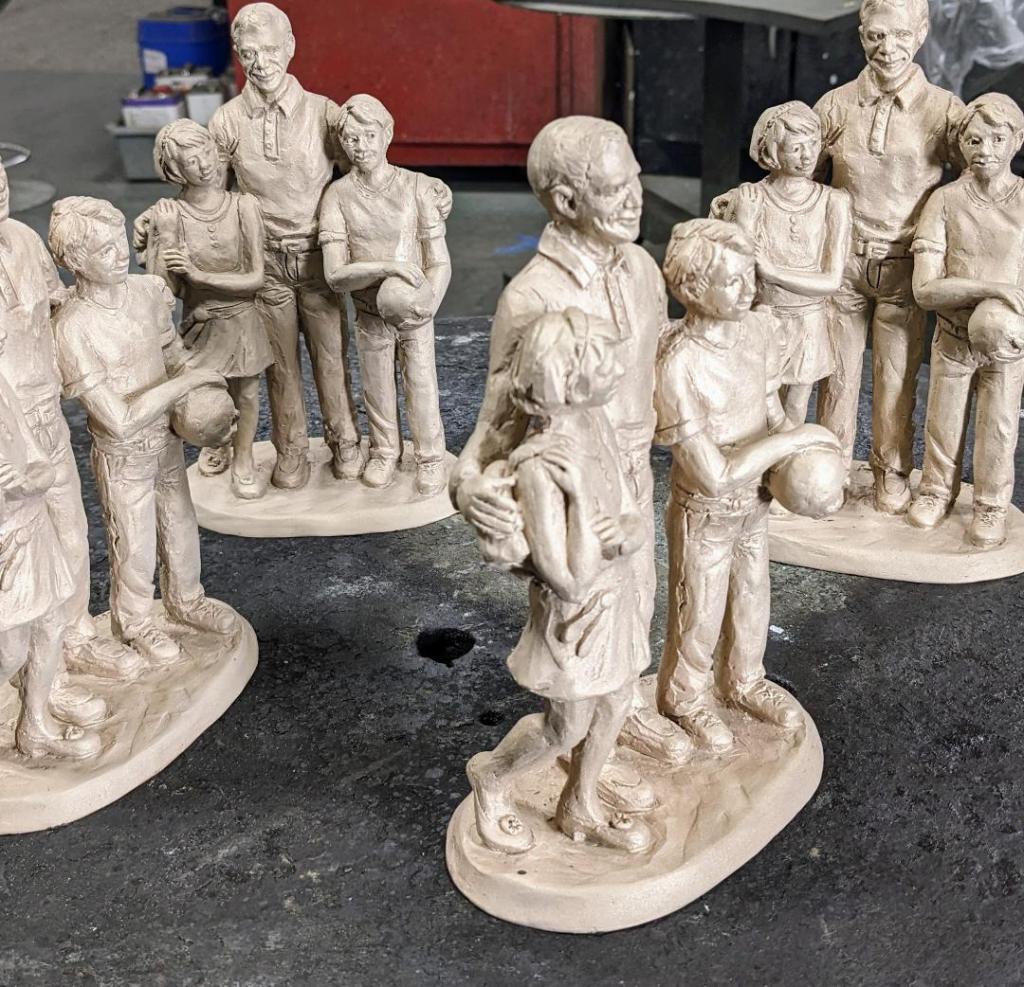
The Boys and Girls Club of Flagstaff commissioned Jeff to
create this sculpture as an award. 

Popular by Vote

Jeff’s sculptures often capture the public’s imagine and take on a life of their own. For instance, she created Learning Together, a sculpture of a boy and his dog, modeling the figures off of her son, Jeff, and their family pet, Cisco.
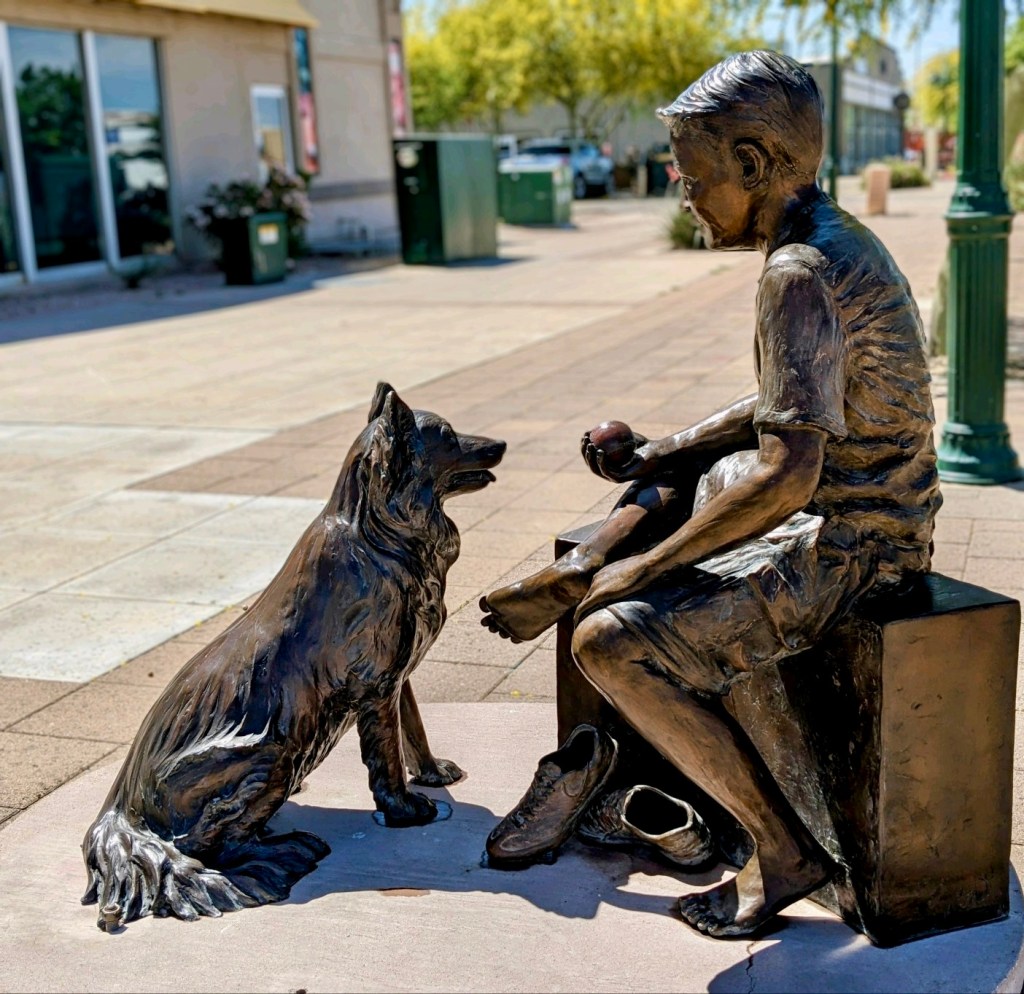
Jeff’s sculpture Learning Together was modeled on her son, Jeff, and pet Cisco.

“We got Cisco as a rescue,” Jeff says, “and in the sculpture you can feel his anticipation of Jeff throwing the ball. My son was known for taking his shoes off wherever he went, so to add to the story I placed his shoes at the base of the sculpture. Also, if you look in the eyes of the dog, you can see the reflection of the boy.”

Three of these sculptures stand in Arizona; in Oro Valley, Prescott Valley and Mesa.

“The Learning Together sculpture in Prescott Valley at the Civic Center overwhelmingly won the Public Choice Award with the purchase agreement for the city,” Jeff says. “The one in Mesa also won the public choice award.”

So add “award-winning sculptor” to Jeff’s resume!

WOODFIRE WORKSHOP

For the last five summers, Jeff has made her way up I-17 to Flagstaff and the Northern Arizona’s ceramic workshop comprised of a series of wood-fired kilns set beneath towering Ponderosa pines. She attends the two-week class, working from sunup to sundown every day, ready to fire as many pieces as possible in the large kilns.

All workshop participants pull together, taking turns to load and unload the various brick kilns day in and day out to ensure everyone’s complete collection is fired by closing day. Participants create all types of pieces, from dish ware to vases and everything in between, when they’re not tending to the kiln.

Jeff made a promise to herself that she would sculpt one small animal every day of the year to take to Flagstaff.

“I’m known for my animals in the kiln,” Jeff says. “I started out just wanting to make a quick clay sketch but then started spending an hour a day on each one, so I’ve slowed down on them and plan to pick out my top 50 to take to Flagstaff in the summer.”

Those small sculptures could be the start of something bigger. “I can scan each one and enlarge it to make something big, like a bronze statue,” Jeff says.
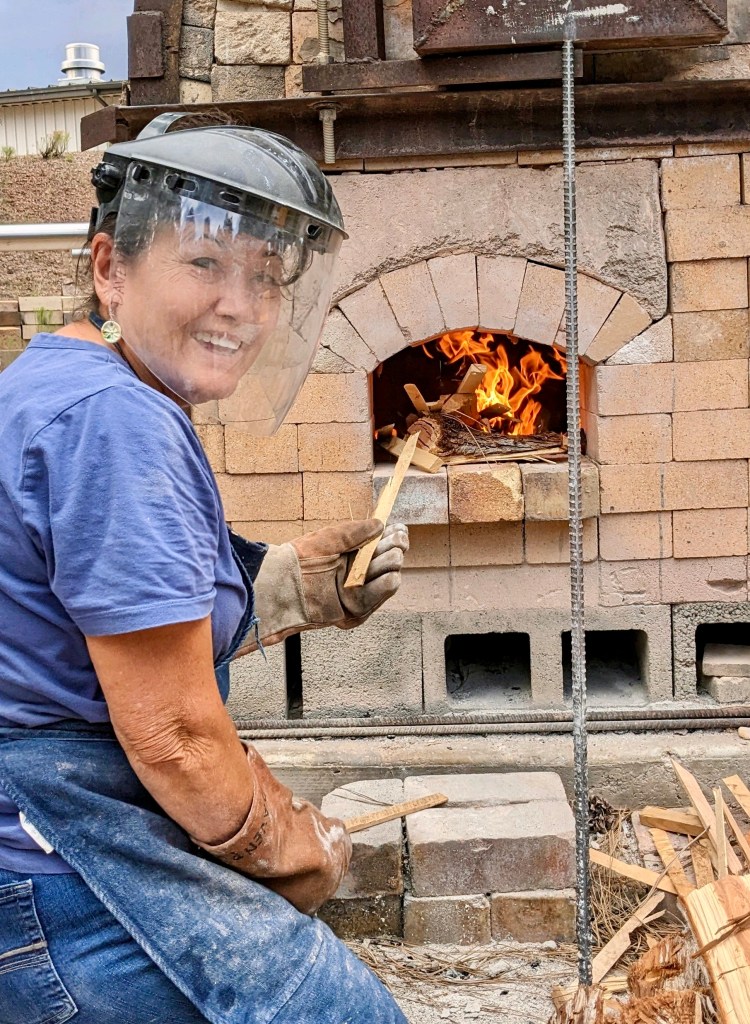
Jeff keeps the “living” wood-fired kiln breathing.

Often it seems like the older people put in the most effort, but maybe that’s just because inexperienced students are surprised by the amount of physical work it takes to fire a piece in a wood-fired kiln, which is much different than using an electric kiln.

People have to physically load the kilns, crawling inside to stack pieces just right, and folks must also stay throughout the night to keep the temperature up.

“Working with a wood-fired kiln is enormous work,” Jeff says. “A kiln is a living thing. It must have oxygen and wood. A kiln might stall in the middle of the night and you have to get it back to breathing.”

Many workshop participants have been attending for years, some longer than Jeff, and this group of returnees have the process down. They know what needs to be done and they make it happen.
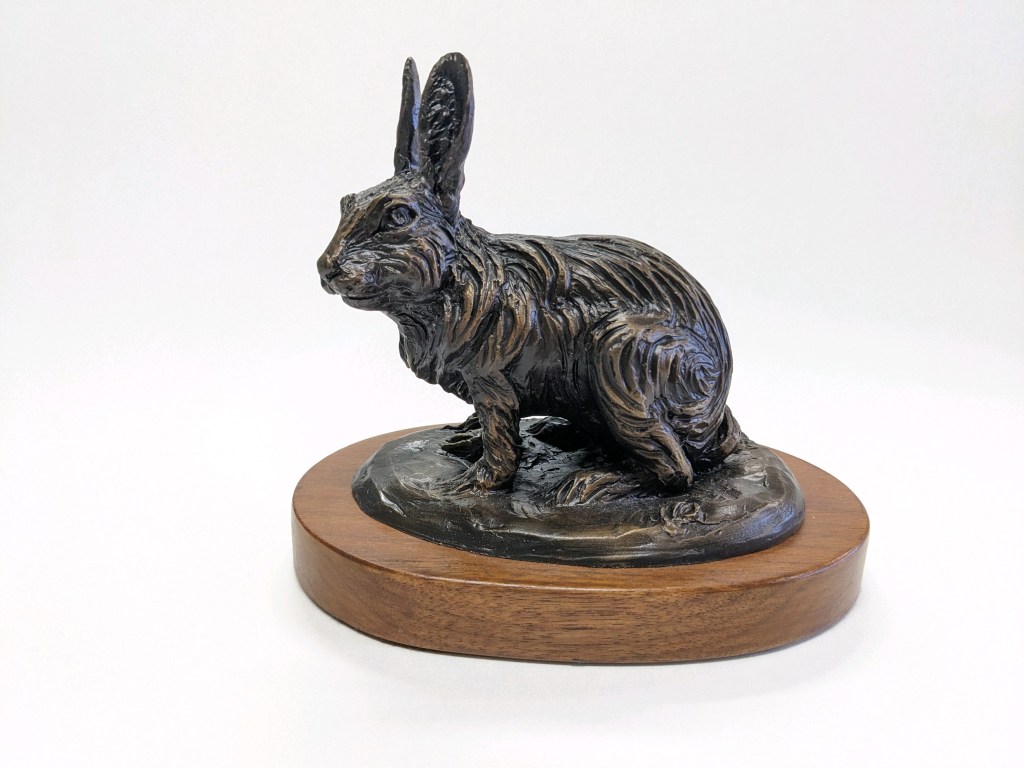
Jeff’s small rabbit as sculpture.

“We have a big chart on the wall of what we need to load, unload, bisque fire, etc.,” Jeff says. “There’s nothing worse than someone not having fired all their pieces by the end.”

Jeff prepares ceramic items for months in advance to take to the workshop, and she brings home a good many beautiful pieces, but she’s also simultaneously making other items in other mediums.

BOUTIQUE WARES

Bee earrings sculpted by Jeff.

Sharron Brenning, an artist friend of Jeff’s known for her lovely paintings of Native American children, opened a boutique in Verde Valley, taking over space in her son’s adjacent gun shop, “Deuces & Aces.”

Sharron’s little shop is cleverly called “On the Softer Side” and has a flower-and-bee theme. Sharron asked Jeff to make tiny coffee cups with a Bee motif to use as necklace pendants. And little bee medallions for earrings. Sharron offers handmade soaps in her shop and asked Jeff to make ceramic soap dishes to pair with the soaps. To complement the gun shop’s theme, Jeff makes a ring holder with a large-gauge bullet as the center post.
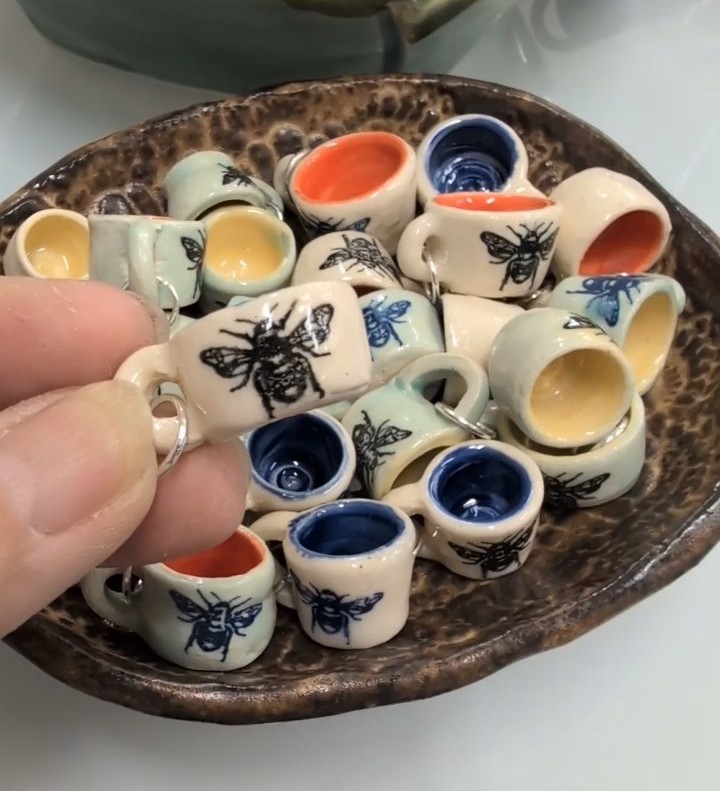
Tiny ceramic coffee cups.

“Sharron and I are just starting out with this collaboration,” Jeff says, “and we’re learning what sells and what prices to charge. She’s trying to make a go by offering unique handmade products as a draw for customers.”
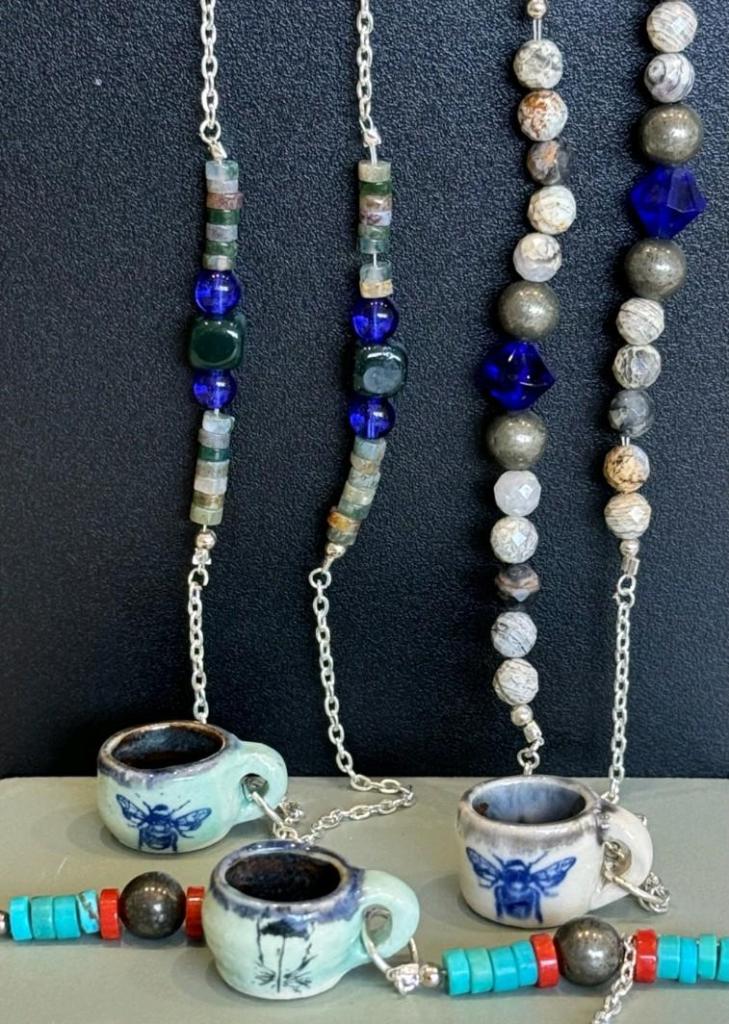
Display of Jeff’s coffee cups made into pendants.

the PAINTed desert

Jeff has been painting for years, though it sometimes takes a backseat to ceramics and sculpting. There are only 24 hours in a day, after all.

Sadly, one massive Saguaro on Carefree Highway in Cave Creek went down a few months after Jeff painted it. It can takes hundreds of years for a cactus to grow to that size. Saguaro cacti are only found in the Sonoran Desert, nowhere else in the world, and they are a protected species. In this case, the cactus’ demise is even more sad because Jeff suspects it was possibly removed to make room for power lines.
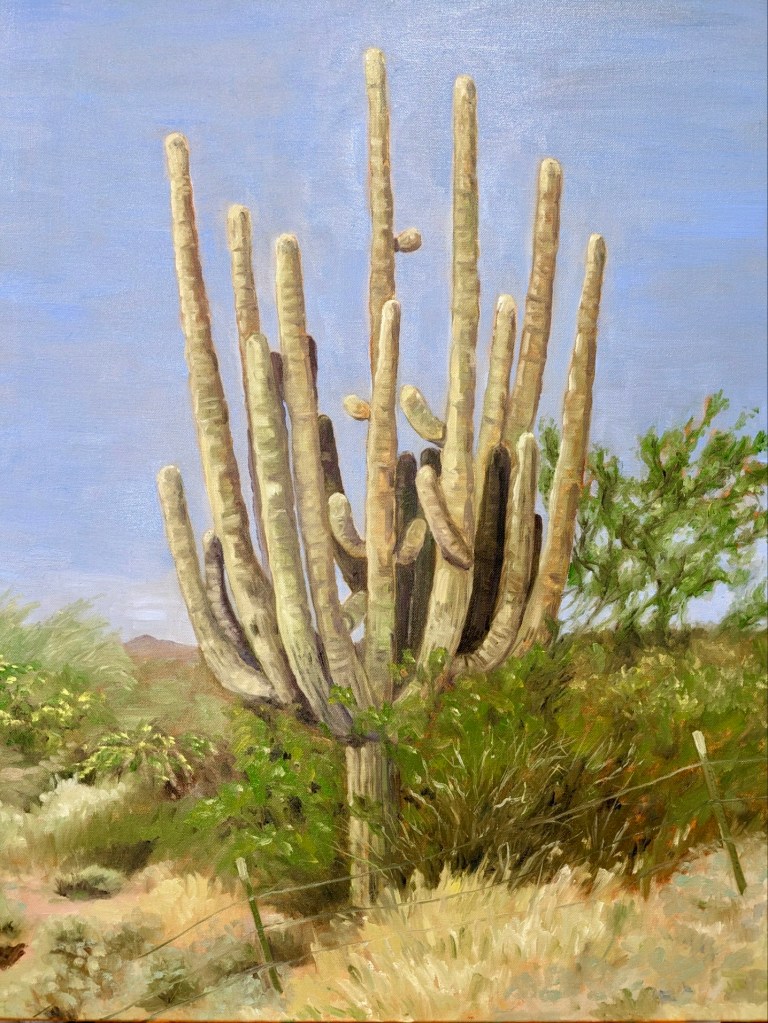
Jeff painted/captured this beauty’s image before it sadly went down after 100s of years.

If a Saguaro must be removed, it is usually carefully uprooted, gently transported and then planted elsewhere, as part of the laws to protect them, but moving a cactus as large as this one must be impossible, hence its treatment.

“All the arms were cut off,” Jeff says, “and were left piled up next to the road.”

Thank goodness Jeff preserved the cactus’ image before it went down.
“I feel by painting the cactus, I’ve documented it in history, in a way. To think of all the years and progress that saguaro had lived through. It’s sad.”
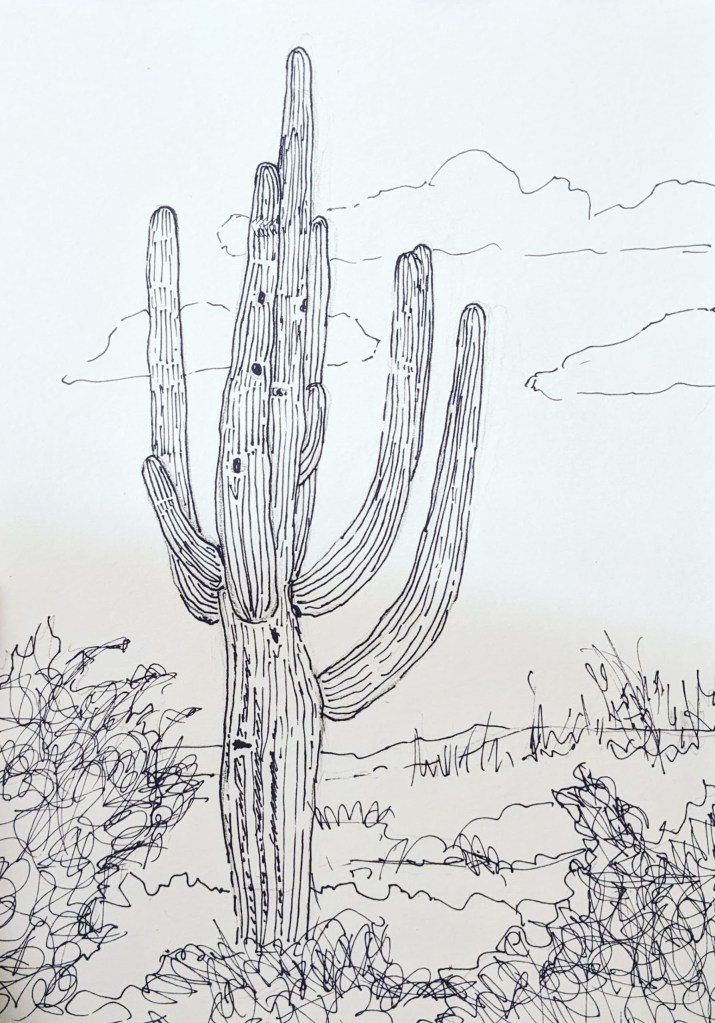
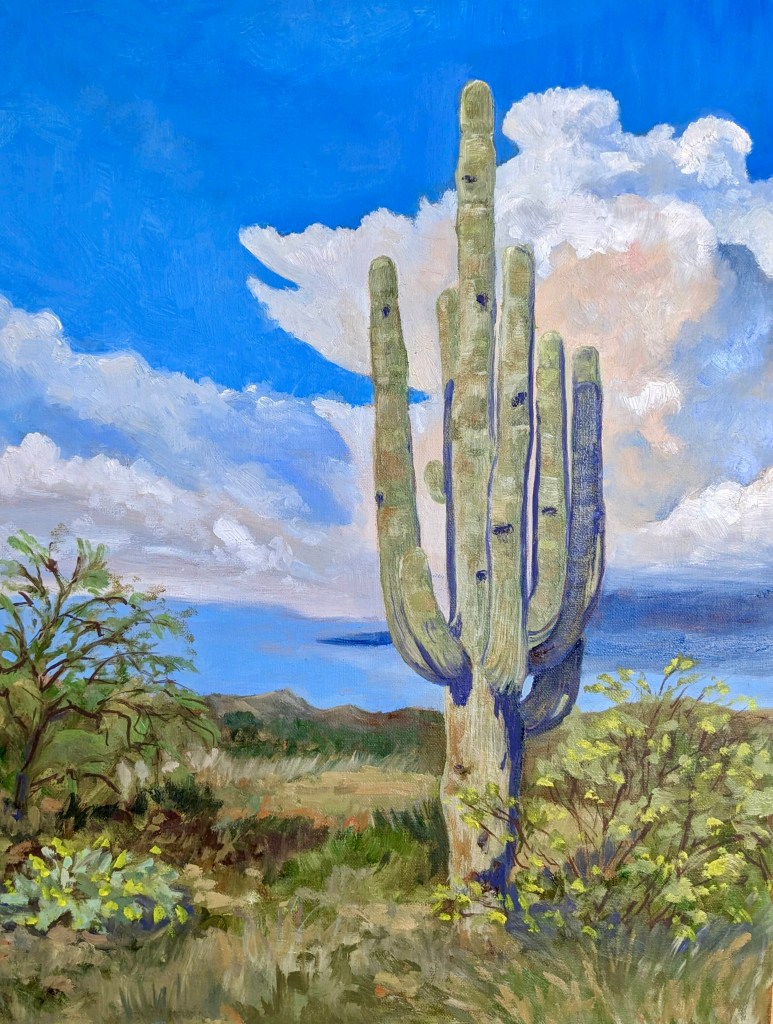
This cactus lives on 16th Street just north of carefree highway.
And here’s the painting from the sketch.

BELLS atolling

How did Jeff come up with the idea of making the ceramic bells, one of her more recent and popular inventions? She received a wedding invitation from two former students who had met in her class. After much thought, Jeff decided the bell would be a perfect ceramic gift to represent how the couple had met.

“We’re going to their wedding next month so I made the bell and inscribed their names and wedding date on it. I also made one for my son Cori who married Rachel in July. People love these bells, and every time I post them on social media, they’re bought up quickly.”
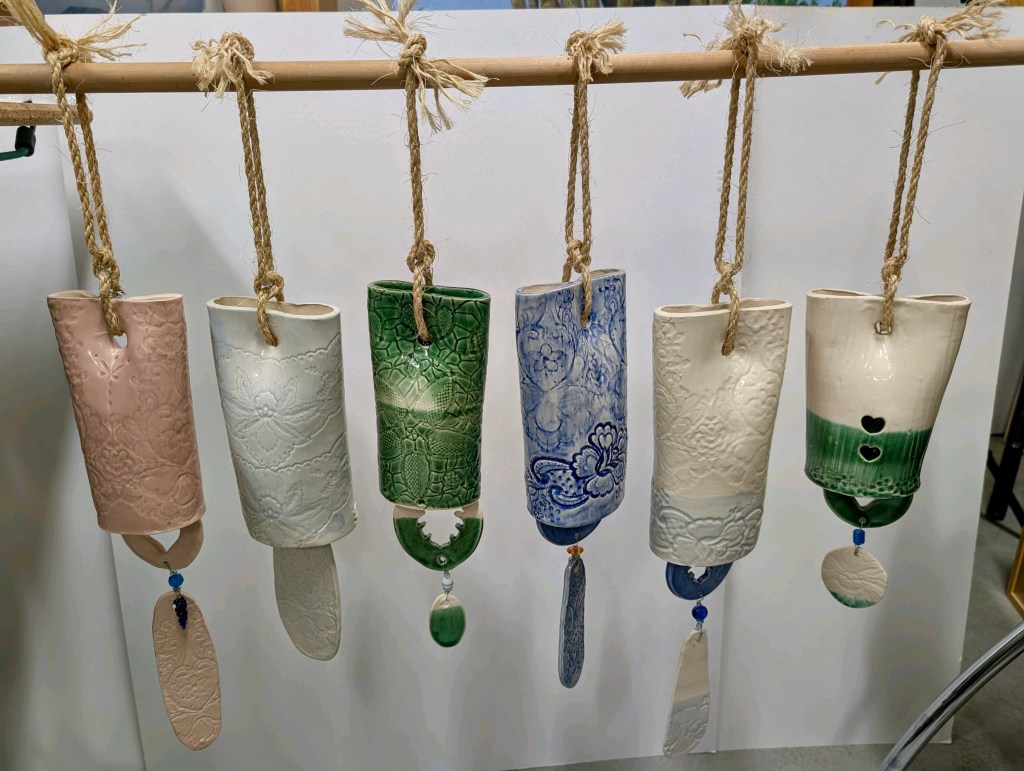
Perhaps people want a piece of affordable art made by the great sculptor Jeff Carol Davenport, who is making a name for herself through her public sculpture commissions. Plus, Jeff prices her work so reasonably, charging only $40 for one of her handmade bells; a true bargain for a handmade piece of art.

OFF-GRID VACATION HOME

Several years ago, Jeff and Mike bought a lot in a remote neighborhood near Ramah, New Mexico. Regulations allow only “sheds” on-sight; a “shed” is a building of 200-square-feet or less. Jeff and Mike have made trips to the lot and built an off-grid 12 x 16-foot shed/cabin/bungalow from scratch, and they love how it’s cozy enough for them plus their dogs Eli and Maya.

“It’s like a hunter’s cabin,” Jeff says of the little space outfitted in blue pine walls and rustic flooring, and made comfortable with a large bed and pretty decor. “We bought another property up there and will build another little place so friends and family can come visit.”

When Jeff says they’ll build another hunter’s cabin, she’s gleefully saying that she can’t wait to get up there and cut boards, build the walls, put on a roof, outfit a porch, etc. She’s eager to build the new shed/cabin with her own hands.

DAD, WADE HOFFMAN
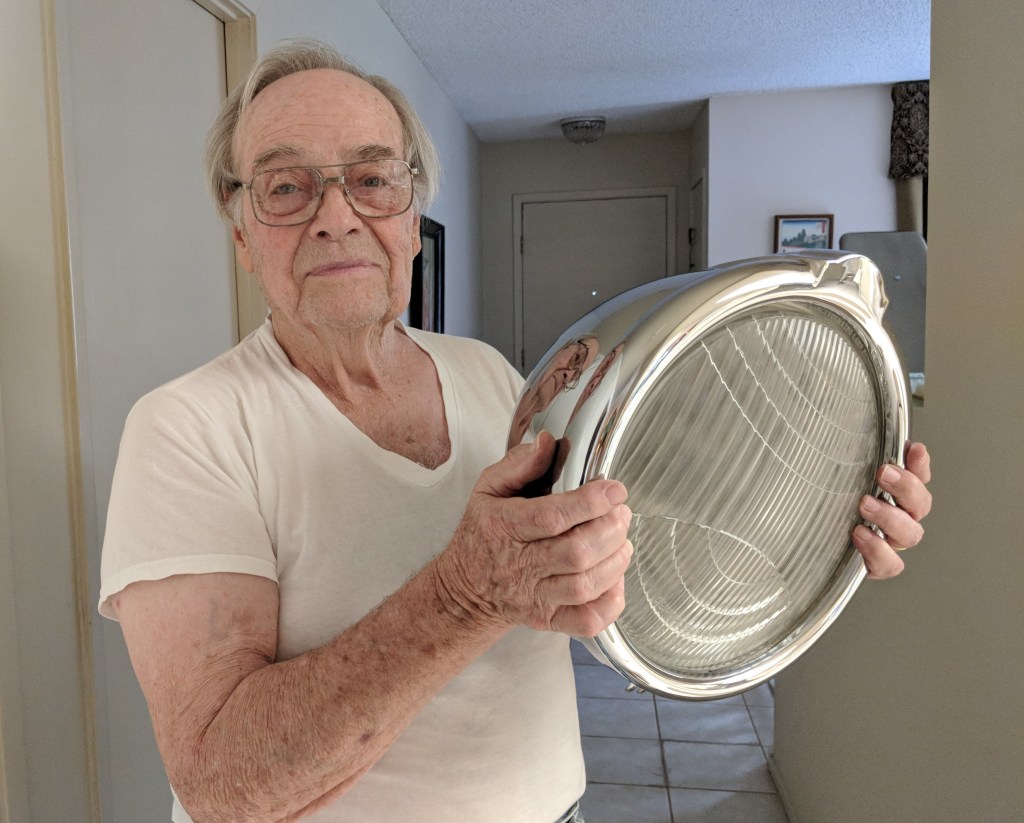
Jeff’s Dad, Wade Hoffman, holding a headlight from his 1930 Packard.

If Jeff’s dad, Wade Hoffman, is any indication of her potential longevity, she could have many more years of good health in which to create things. Born in 1932 in North Carolina, Jeff’s dad is 92 years old and still working two days a week as a security guard.
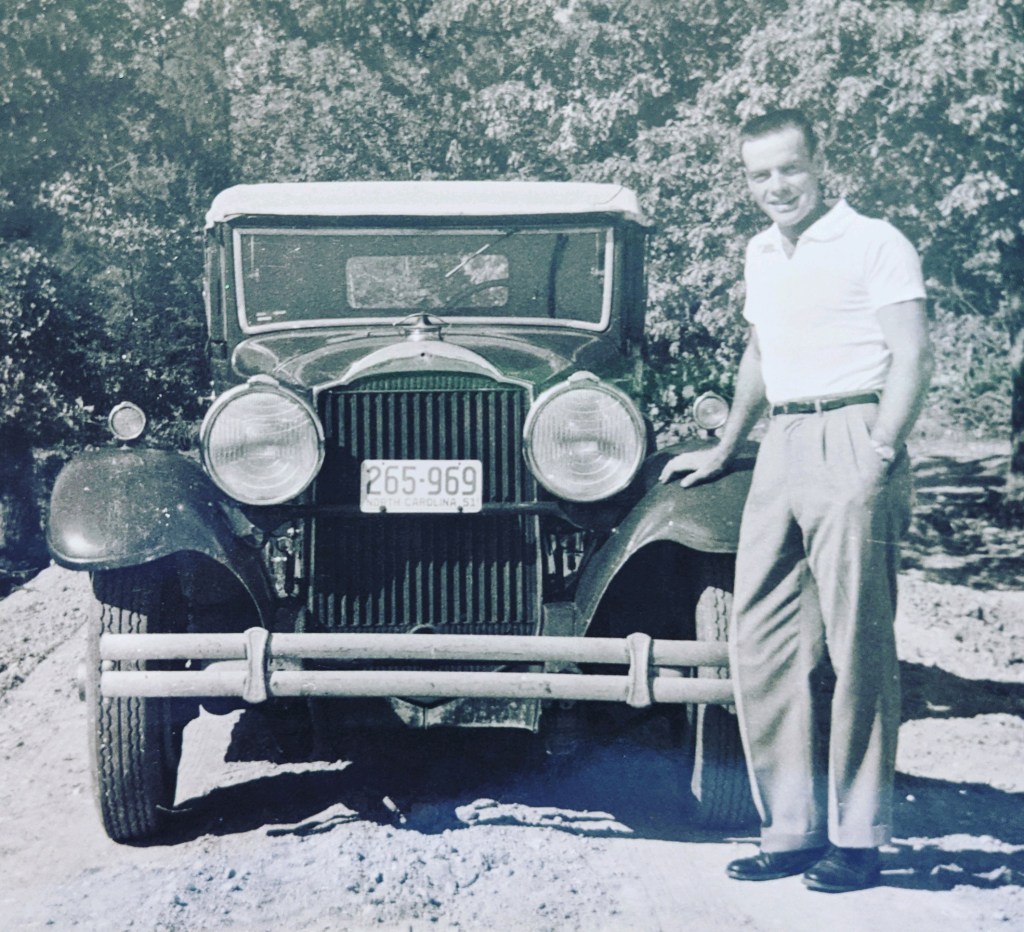
Mr. Hoffman and the 1930 Packard he’ll restore with Jeff.

“We want to put a 35 x 40-foot building in our backyard,” Jeff says, “to act as an apartment for my dad and a garage where we can restore his 1930 740 Roadster Packard, which he’s owned since he was 17 years old. I’m looking for a civil engineer to get the building started.”

Mr. Hoffman, a veteran of the Korean war, has all the parts for the Packard and has restored individual pieces over the years. Eventually they’ll transport the car and its parts to Jeff’s house so she and her father can restore it.
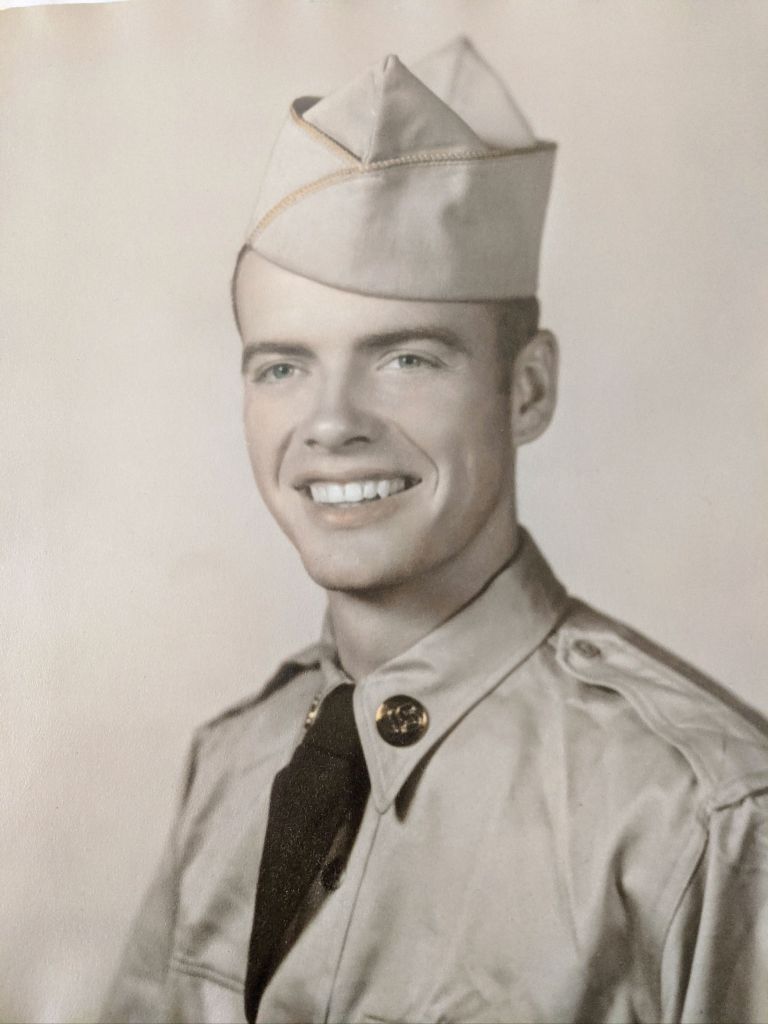
Mr. Hoffman as a serviceman.

“My dad bought a travel trailer to live in as we’re building his apartment and garage,” Jeff laughs. “Parked in our yard, he says he’ll be our onsite security guard.”

PETS aplenty

Also onsite at Jeff and Mike’s house, in addition to their dogs Maya and Eli, are chickens in a coop and their two aged turtles, Indi and Tony, who live under a Paolo Verde tree in the front yard. Indi and Tony love a lettuce snack and an occasional spraying with the water hose.

Jeff has had chickens for years and one of her hens recently hatched two rooster chicks.

“I felt badly that only two of her eggs hatched,” Jeff says, “so I ordered four baby chickens and snuck them under her in the middle of the night. When she woke up she thought she had six babies.”
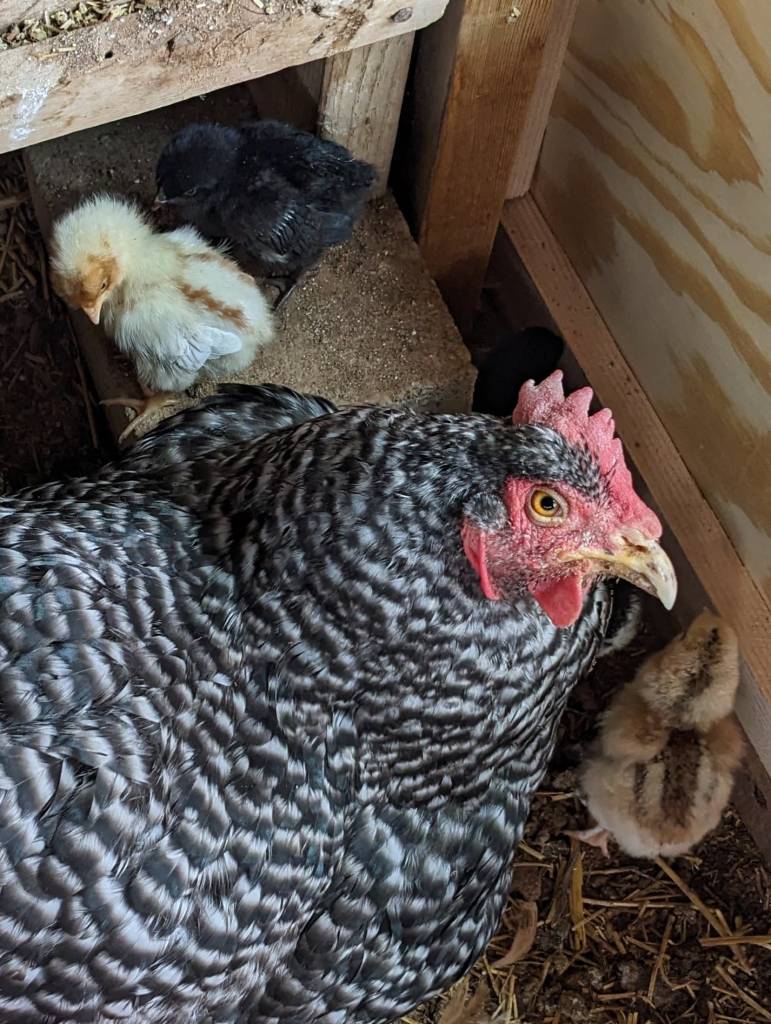
Mama and chicks.

Jeff manages to care for her husband, her grown children and grandchild, her turtles, dogs, and chickens, all while producing great amounts of great art. And enjoying life with a big laugh throughout it all.

the FUTURE’s so bright

In between sculpting, painting, ceramic projects, building “sheds,” assisting her father, encouraging other artists, tending to her animals with lots of love and caring for her extended family, Jeff has begun experimenting with making jewelry. She took a course in college and has now taken a local refresher course.
“I made four silver rings, one with a cabochon, and then came home and made turquoise rings,” she says of her refresher course experience.

Jeff plans to grow her jewelry-making skills while also pursuing participation in local art shows and maybe getting her work into a gallery in Cave Creek, a popular western-themed town near Jeff’s home.

“At this stage of my life,” Jeff says, “I’m comfortable because I don’t need the money. If money comes, that’s good. But I don’t make art for the money. If I was doing it just for the money, I simply would not be doing it. There’s something deeper than financial gain for me.”

Hear, hear!

And there’s something deeper for the folks lucky enough to experience Jeff and her art… in all its many forms.


RESOURCES

Website: jeffcaroldavenport.com
Instagram: @jeffcaroldavenport
Keith Jones, Metalist

Keith Jones, metal fabricator and Nice Guy, works six days a week to keep up with client orders.

Crafting Functional Art

Keith Jones is wiry. At 58, he has the long, lean physique of a much younger man, a Bus Card Back Picmusculature forged by his daily work of welding and turning iron and steel into gates, railings, stairs and doors.

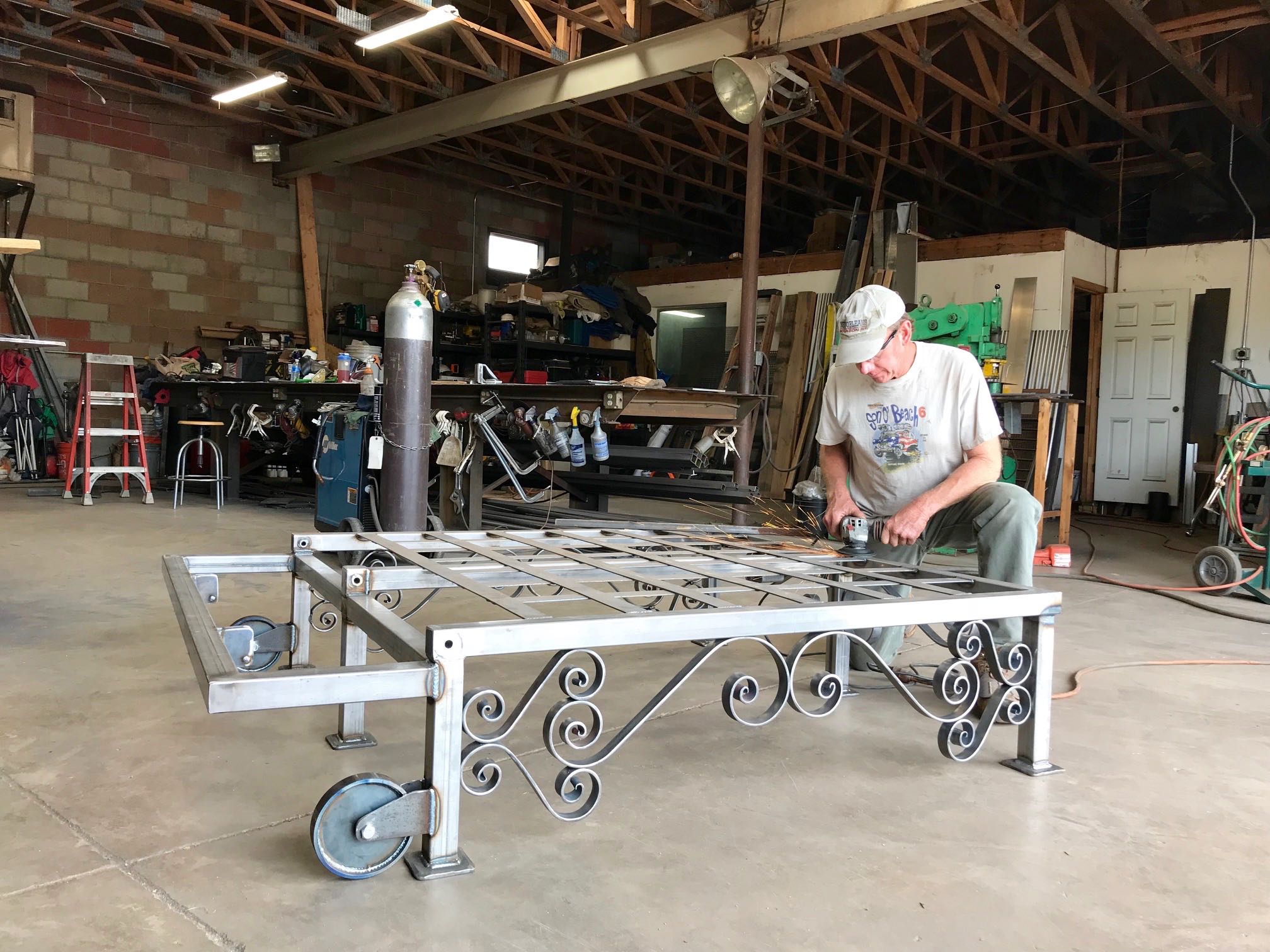
With no shortage of orders from clients, Keith works six days a week to keep up. Judging by his finished products, it’s easy to understand why he’s in high demand. Each fabrication is a work of art. Piecing together metal isn’t just an art, though, it’s a science ruled heavily by mathematics.

Keith and and his wife Deb live in Black Canyon City, Arizona, where they built their own house overlooking the canyon, including a workspace where Keith does some of his finer fabrications.

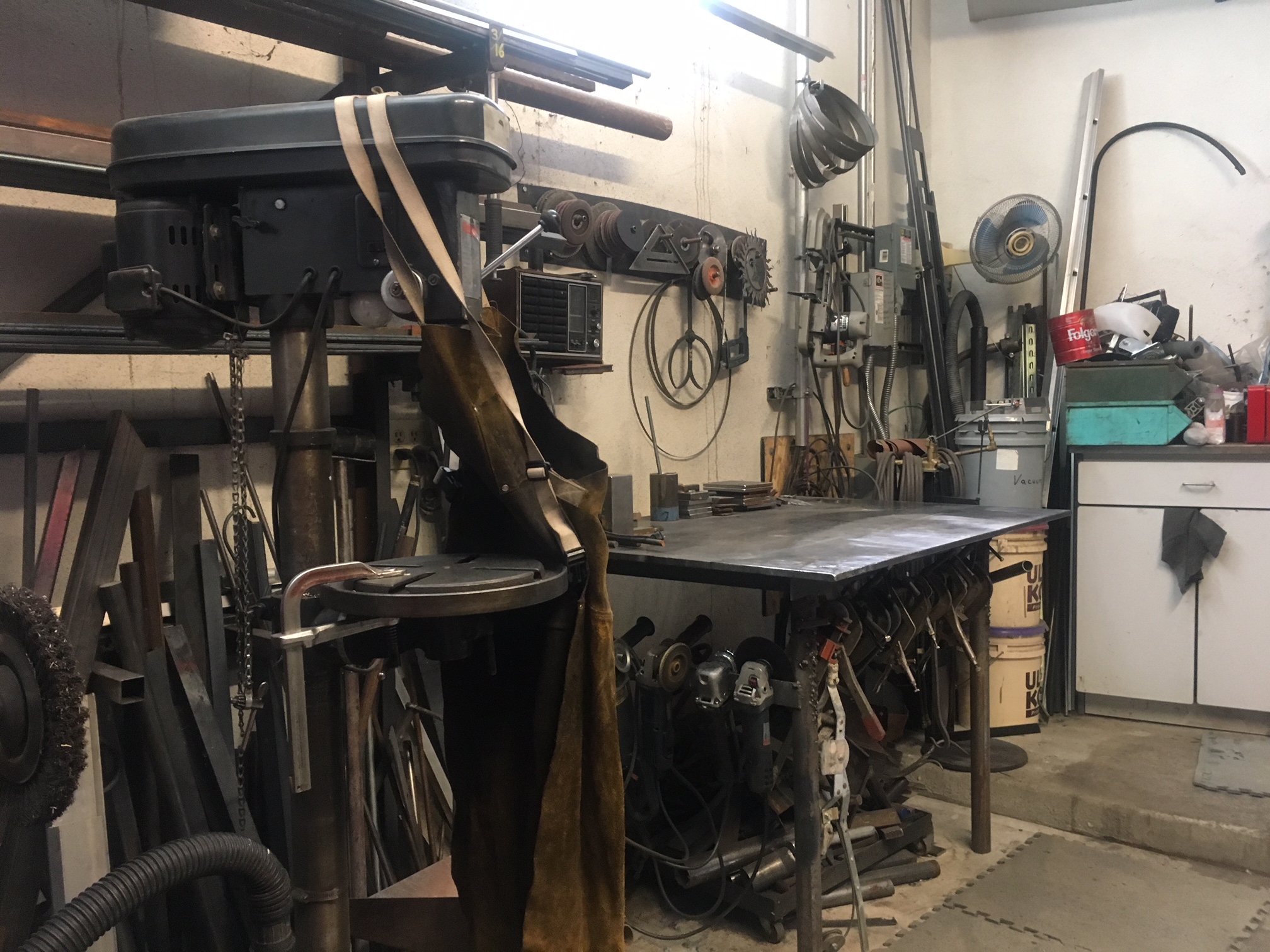
For his larger projects, Keith works out of a welding shop owned by our neighbor, Jason Hedgrick, who builds mostly industrial metal architecture.

Keith is the nicest guy you could ever meet, always ready with a smile and gentle sense of humor. He and Deb are both avid hikers, rock climbers, kayakers and cyclists, though a few years ago he was hit by a car that ran a red light at 55 mph. The accident almost put Keith out of business.

He suffered four broken ribs, a smashed nose and had to have his right shoulder replaced. Though he was only in the hospital for three days, it took Keith a year and a half to recover.

“We visited a client after I got out of the hospital,” Keith said. “I was barely walking, had to use a cane, and she told me she had some jobs waiting for me. That’s the only thing that saved me.”

Fully recovered now and busier than ever, Keith continues to create metal architectural features, mostly for his clients’ homes.

One of Keith’s most recent projects was a double lounge chair with an adjustable back. He made one for his own patio and a client who saw it insisted Keith make a lounge chair for him, too. Keith asked $3,000 and the client didn’t hesitate; that’s a remarkable price for a hand-forged, over-sized lounge chair that will most likely outlast all of us.

IMG_3144

IMG_4561

IMG_4558

Background

Born in Tucson, Keith moved to Phoenix with his family at the age of six and grew up around Greenway and 40th Street. He graduated from Shadow Mountain High School and attended vocations classes in automative and welding at Paradise Valley High School. His welding experience led Keith to a job at a machine shop where he fabricated fighter jet parts commissioned by McDonald-Douglas.

“The government gave each piece of steel a serial number and the material was tracked through the entire production process,” Keith said, “including a guard standing over us.”

For 16 years, Keith built aerospace parts for Eason & Waller before forming his own business where he and his partner built 4-wheel drive vehicles. They tricked-out jeeps to handle Sonoran desert tours by adding roll cages, seating, bumpers and heavy-duty axel shafts. 

Keith met John Gurley, a building contractor, when they both worked on commercial office space for Big Fish Advertising agency in Scottsdale. Keith built steel shelving and stairs for the customer’s space. John appreciated Keith’s work and began bringing him onto construction projects.

Eventually, Keith became the go-to metal guy for R. J. Gurley Construction, MAS Framing and other contractors. He operates two companies: Stone & Steel makes mostly residential fireplaces, fences, gates, etc., and EnviroSmith works with mostly green building products.
IMG_4176
This copper stove hood, made by Keith, was featured in the June 2007 issue of Phoenix Home & Garden magazine.

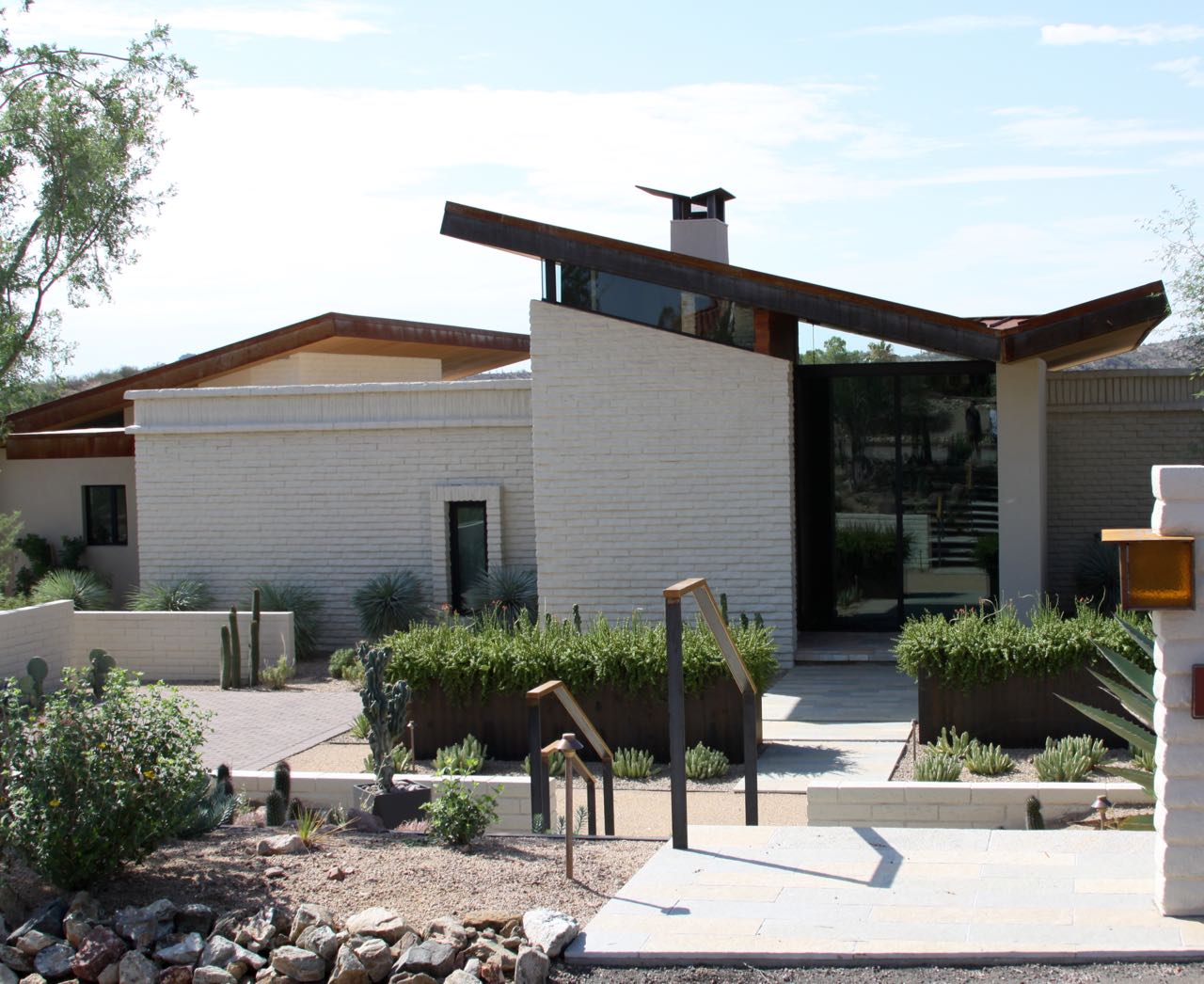
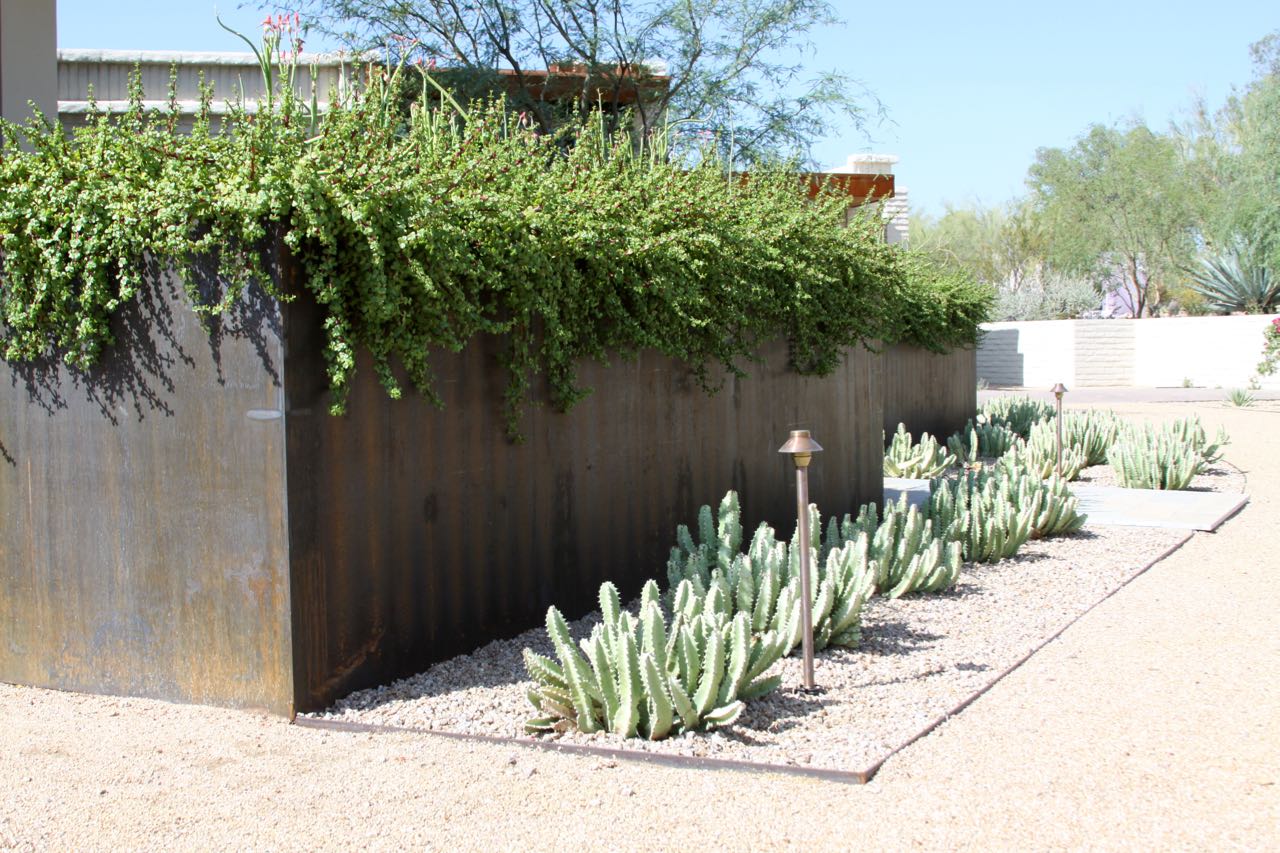
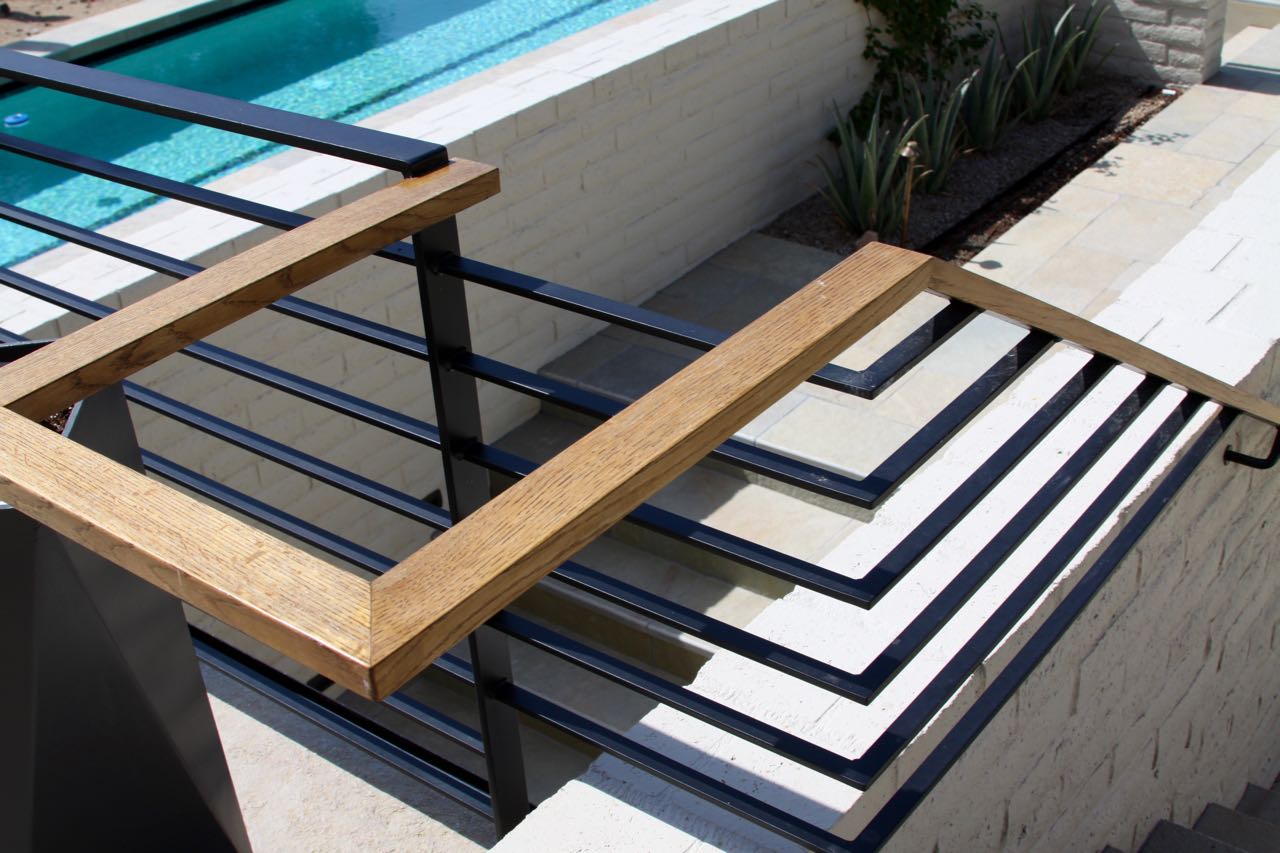
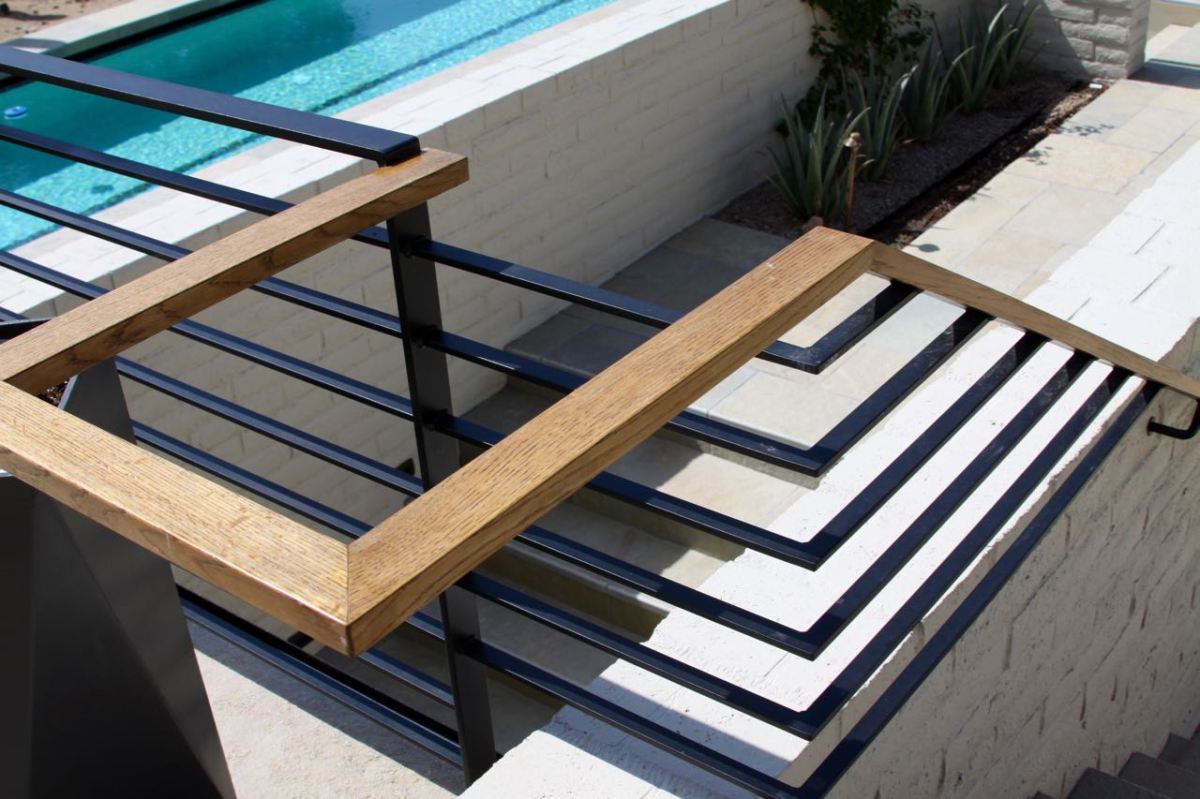
On average, Keith works on five jobs simultaneously, though he might juggle up to ten jobs at a time. Smaller projects can take two weeks. Larger projects can take years. Keith spent two years building hand railing, fences, huge planters, stairs, fireplace features, gates, etc., for two homes in the Rancho de las Cabellbos Golf Community in Wickenberg (see photos of the two Wickenberg homes and another client’s home in Scottsdale below).

Some homes use steel I-beams in framing the roof and walls, and that’s all Keith. One of the Wickenberg homes used 100-year old oak beams salvaged from the Great Lakes and the homeowners asked Keith to incorporate 100-year-old oak barn wood into gates for the property. .

Currently, Keith is working on a Desert Mountain Golf Club home, developing its structural steel frame and handrails.
Self-taught, Keith has built his business through his artistry and his likability. Clients become friends and return again and again for another piece of functional art.

Keith’s House

As for his own home, Keith and Deb both put in $75,000 toward the building of their super efficient, solar-powered, 2,500 square foot home which they broke ground on in 2001. With their budget of $150,000, Keith acted as contractor and did most of the work himself, or he bartered for supplies or services.

He studied green building and still has a library of books about constructing environmentally friendly homes.

Their hillside lot overlooks Black Canyon, so Keith optimized the views by designing the house to nestle into the hillside. The house has five levels; the kitchen sits five feet higher than the living room. Averse to 90-degree angles, he made the main part of the house round, and rounded off all edges inside and out.

IMG_3443

Solar power means Keith and Deb pay the electric company, on average, $600 a year. And they draw off gray water to irrigate trees.

“We use a clothes detergent and soaps that won’t harm plants,” he said.

IMG_3445

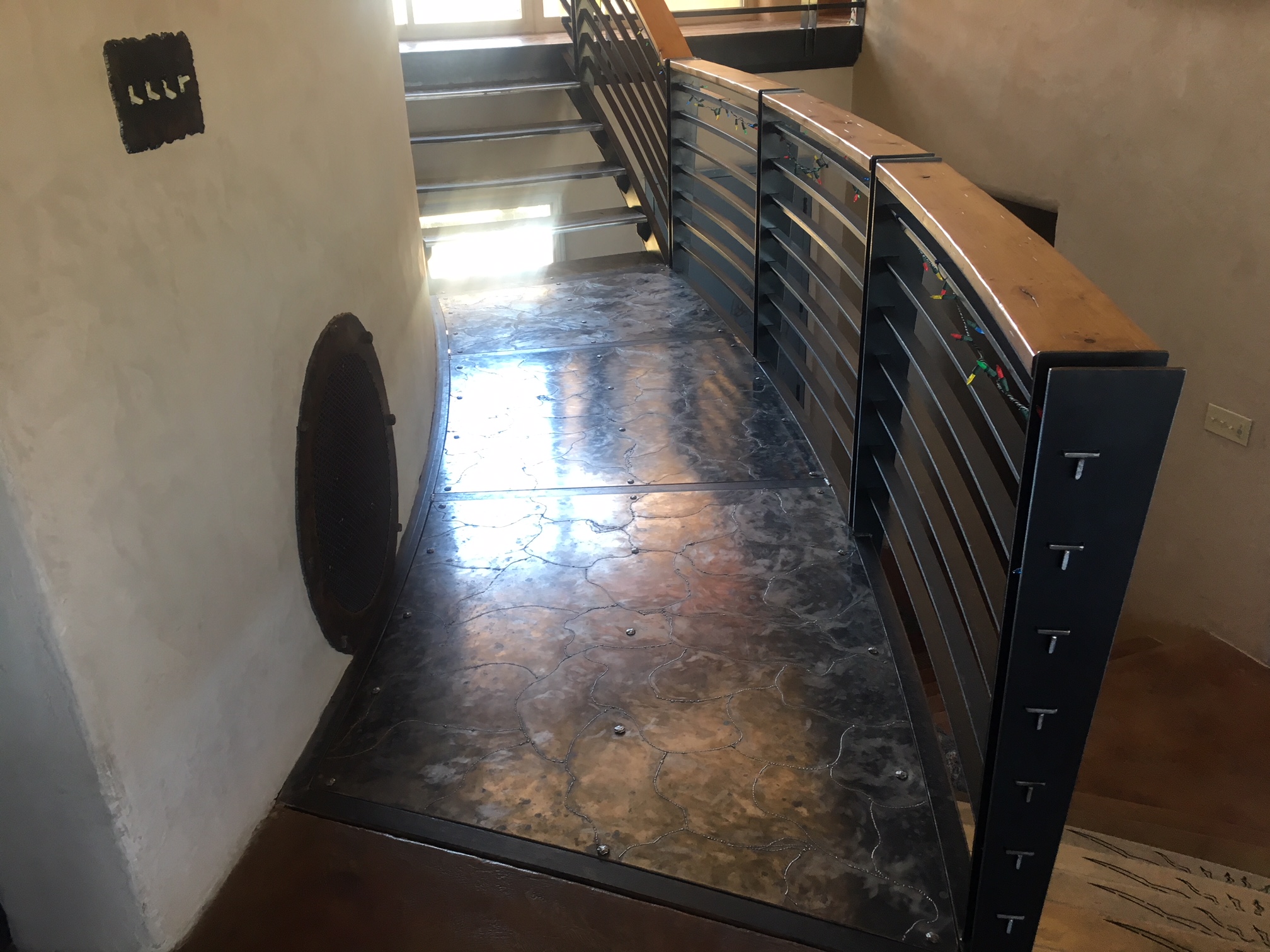
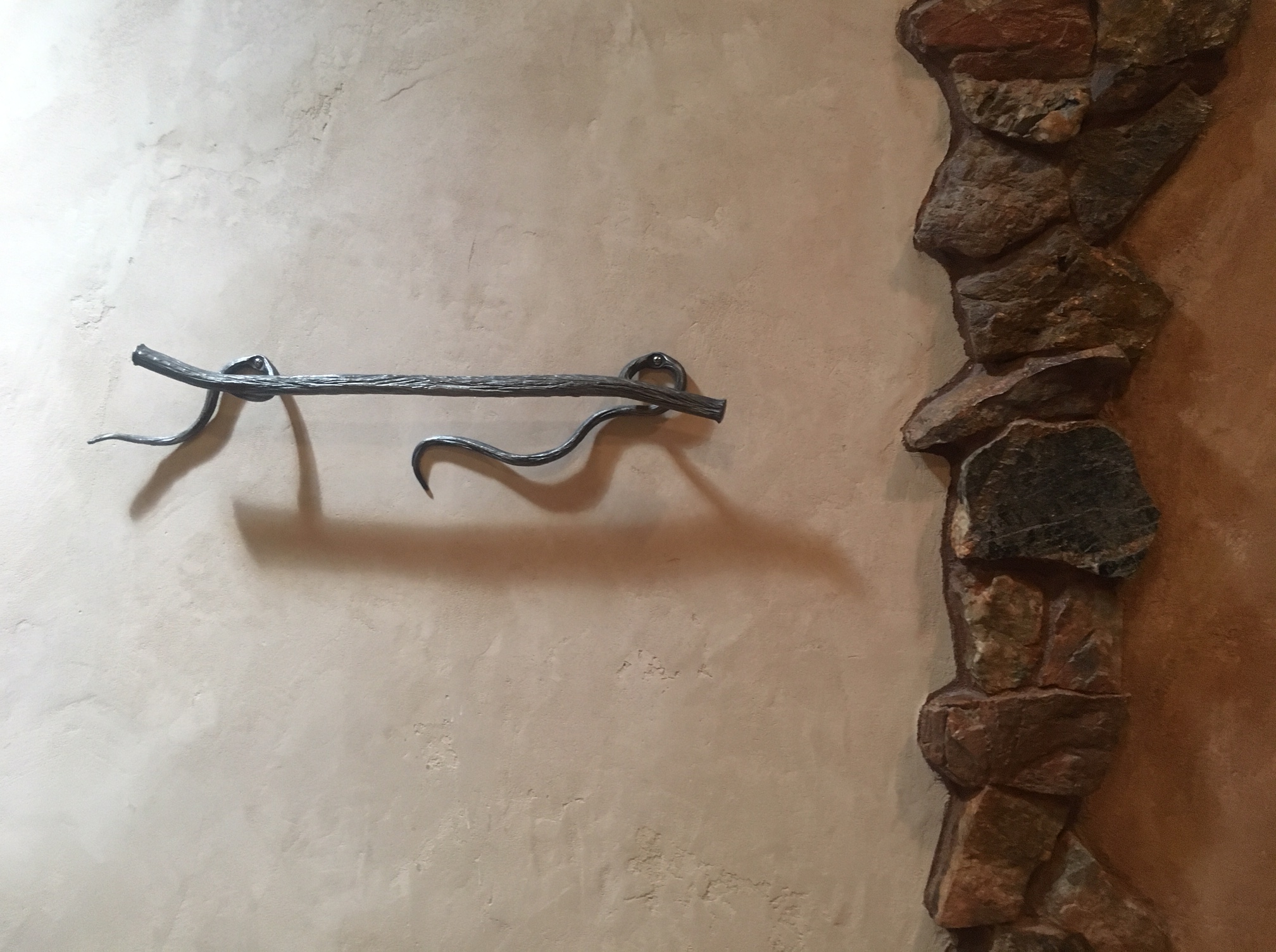
Both Keith and Deb are certified blacksmiths, so their home has custom fabricated railings, stair treads with sun and moon cutouts, and unique metal bridge flooring between the kitchen and bedrooms. Deb made the kitchen cabinet handles, light switch plates and a bathroom towel bar that resembles a tree branch.

“There’s something about heating metal until it’s so hot it becomes pliable,” Keith says.

IMG_3439

In fact, metal and concrete are his favorite mediums. They poured their kitchen countertops out of concrete and inset a few polished stone pieces. Over the oven, Keith drilled half-inch holes in the concrete countertop in a spiral pattern. He then put brass pieces with rounded heads into the holes. The metal pieces act like a hot plate, conducting heat from the oven to any pot or pan placed on them.

IMG_3441

The floor is poured concrete, finished with a texture and stained. The concrete guy charged Keith half of the true fee because Keith helped him do the job and learned the skill in the process.

The walls are finished off with a clay that absorbs moisture. Accent architectural features are painted a deep rust color. Deb made the organic paint using clay and other materials she cooked on the stove.

In the kitchen, a large boulder sits on the ledge overlooking the living room and seems right at home next to a metal grid fence filled with small stones. Overhead hang hand-forged lighting fixtures Keith made from metal scrap, and a metal high-top bar made from reclaimed steel clings to a curved wall.

IMG_3442

“We try to re-use everything,” Keith says. “Instead of throwing metal pieces on the scrap heap, we built a desk out of them.” Deb salvaged old metal sheets and spent hours removing paint. Those are now desktops in the home office Keith and Deb share.

IMG_3450

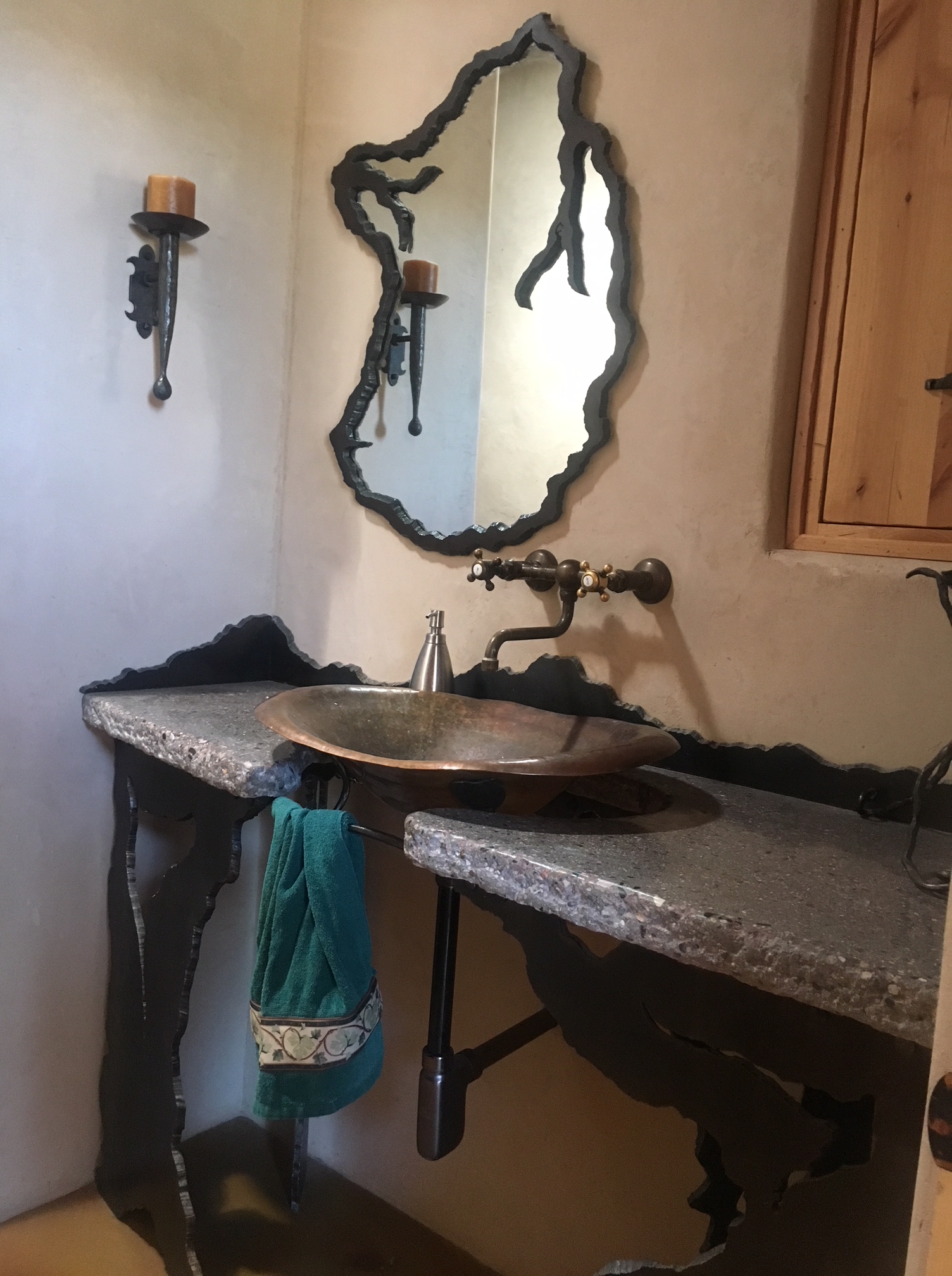
Everywhere you look, artistic touches and little surprises delight, especially in the guest bathroom which sports a hand-forged copper sink, metal-framed mirror, hand-made sconces and, the piece de resistance, a hand-tooled copper shower wall.

IMG_3449

IMG_3446

IMG_3448

Keith has always been a non-conformist in his businesses, particularly in not cutting corners to ease the workload or reduce costs. He does the opposite, taking time to add eye-pleasing details and additional steps to ensure a piece is structurally sound and permanent.

In his younger days, Keith non-conformed as an adrenaline junky. His bucket list (to be completed by the time he was 23) included skydiving and flying. Learning to Powerchute allowed Keith to do both at one time. For a summer, he strapped himself into a chair and flew as high as 6,000 feet. Until the day a small plan flew under him.

“My face flushed,” Keith said “as I realized I’m 6,000 feet above the ground, higher than a plane, strapped into what is essentially a lawn chair. I panicked.” On landing, Keith was caught by a sidewind and he barely missed two cars before tumbling into the desert shrubs. That was Keith’s last Powerchute flight.

Part of that adrenaline junky still exists, though perhaps minimized. Why else would he bend steel heated to thousands of degrees while also bending the rules of design? Keith doesn’t consider himself an artist, but looking at the fine detail work he does with hard metals signifies otherwise.

Keith is a fine artisan to know if you need metal work; and he’s a fine man to know if you need a friend.

PHOTO GALLERY

Wickenberg Homes

Home #1

Keith crafted all the handrails, huge planters and fencing.

IMG_1350 (1)

IMG_1355

IMG_1360

IMG_1365

IMG_1364

IMG_1390

IMG_1382

IMG_1398

Home #2

Keith crafted all the gates using 100-year-old recovered barn wood.

IMG_1343

IMG_1304

IMG_1306

IMG_1309

IMG_1307

IMG_1327

IMG_1319

IMG_1316

IMG_1321

IMG_1311

IMG_1313

IMG_1328

Scottsdale Home (Photos courtesy of J. Gurley)

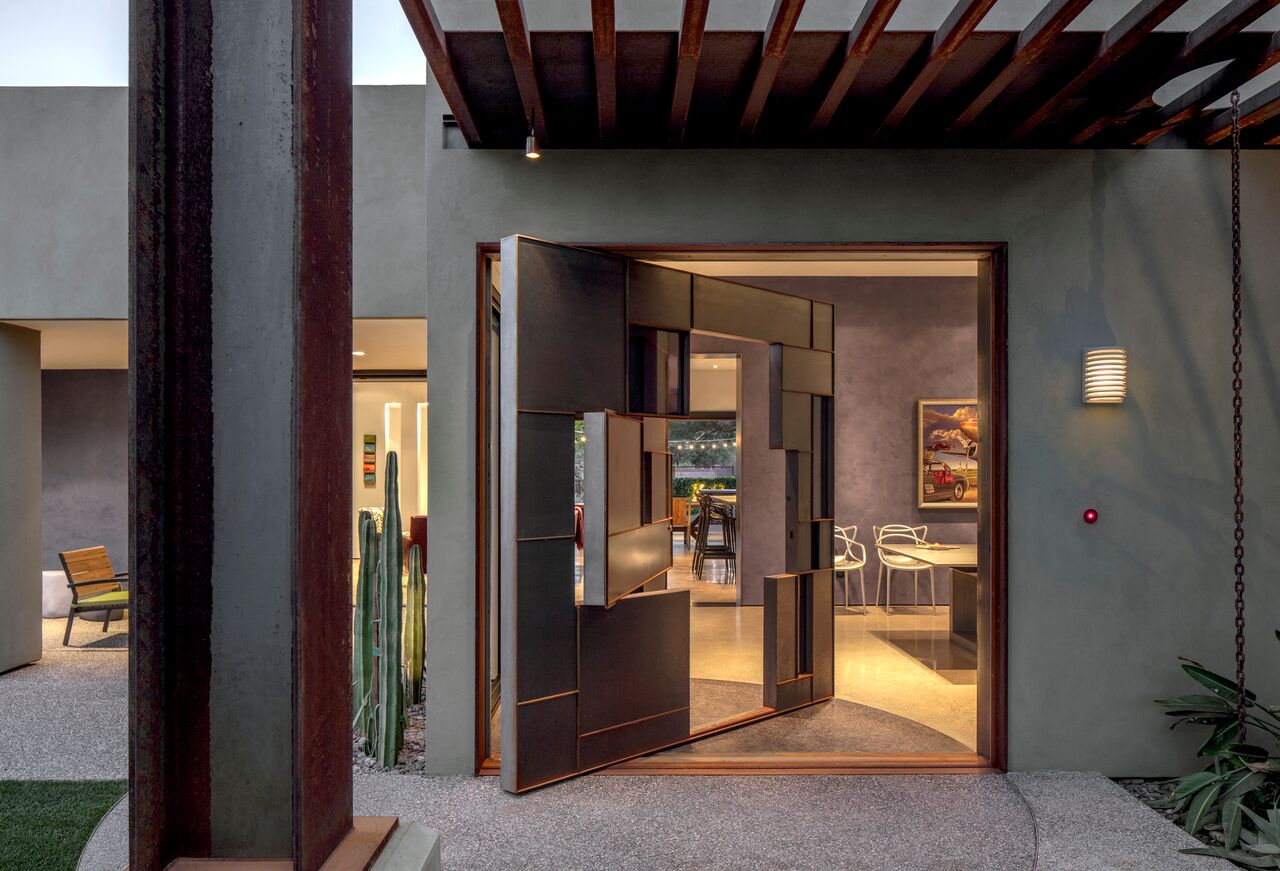
Keith built the exterior metal work (he did not craft the garage-style door or the interior aluminum door.

zth26ncA

xt_jR1nQ

rrmSAb4w

9ngORs2w

BM8_q-EQ

door

T17_2027

b3GvEWQQ

Keith’s Home Workshop

IMG_3457

IMG_3460

IMG_3454

IMG_3452

IMG_3453

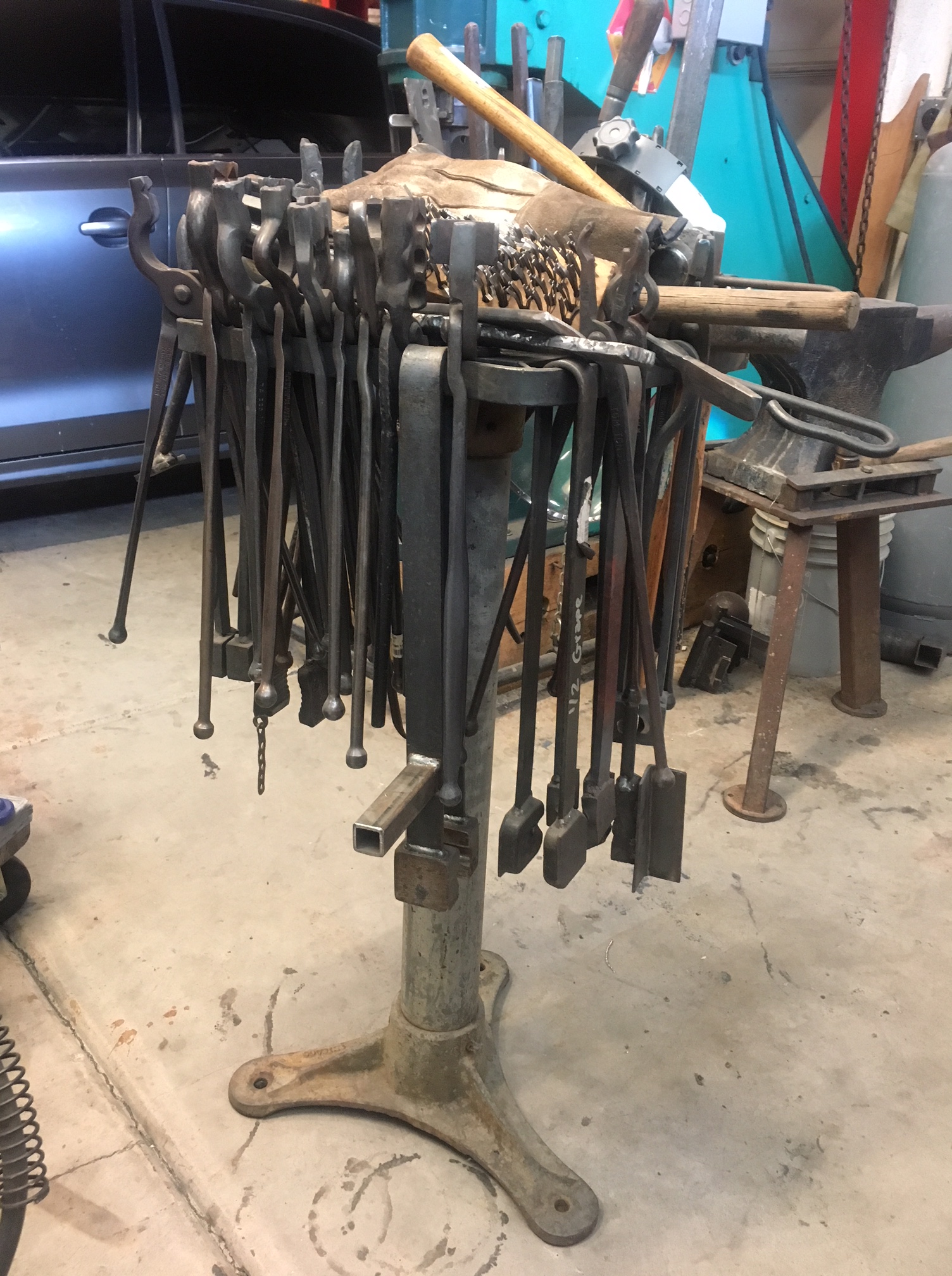
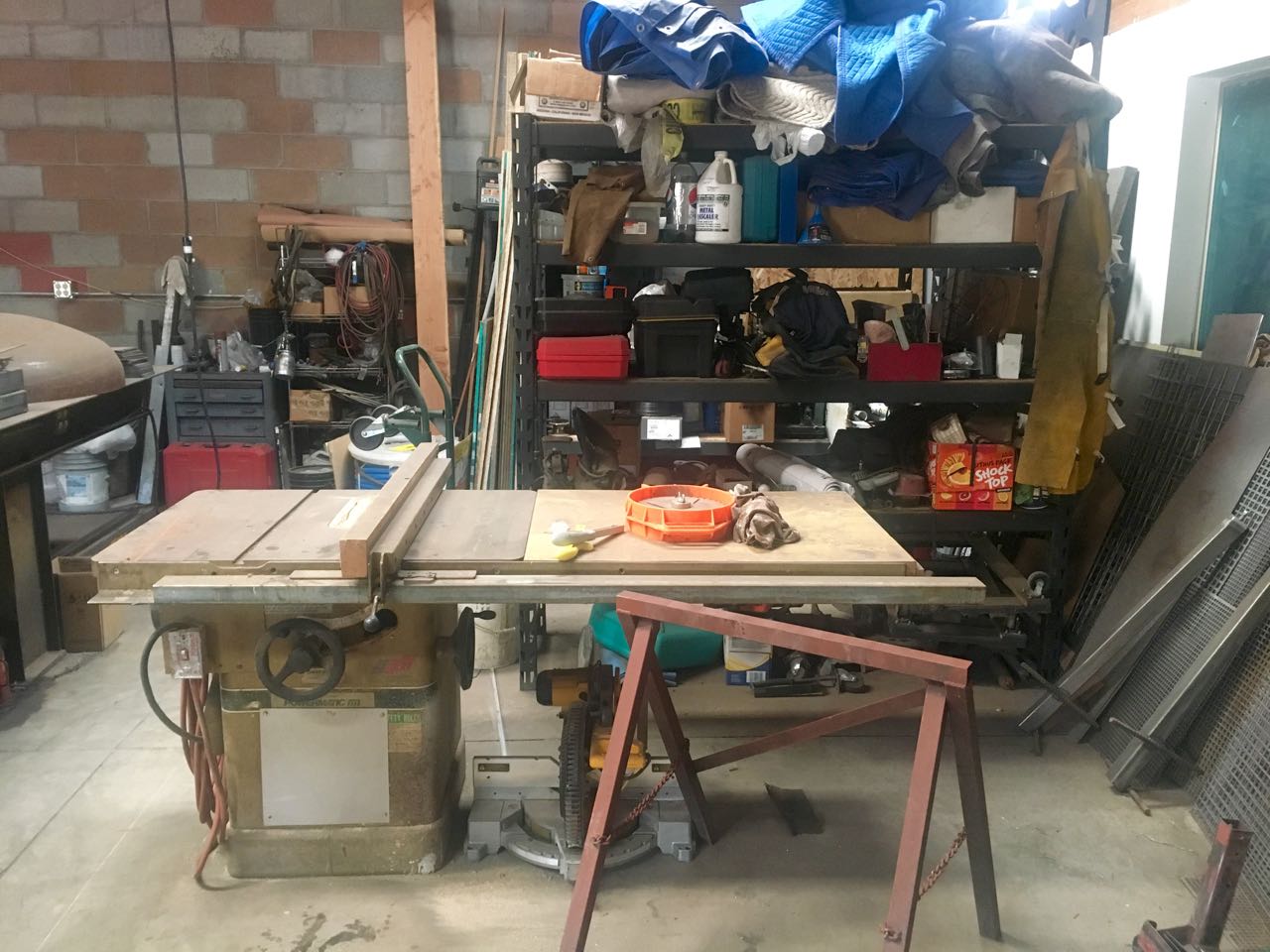
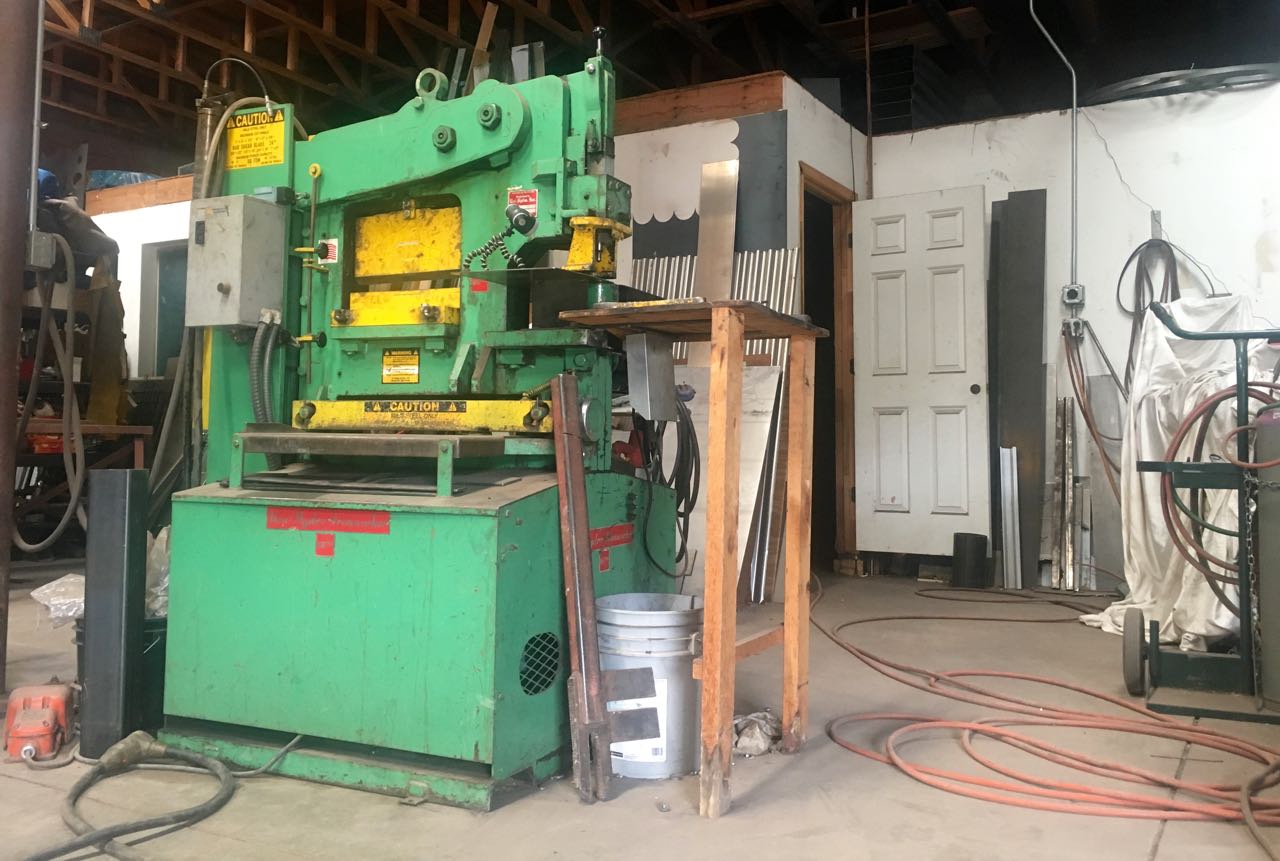
Jason Hedgrick’s Workshop: Where Keith Creates

IMG_4102

IMG_4091

IMG_4088

IMG_4087

IMG_4086

IMG_4084

IMG_4083

IMG_4076

IMG_4079

Kit Carson: In-Between

Kit Carson built Camp Cactus, his stone-cottage house in New River, Arizona, in 1993, and created there until 2016. He is now living in a rental house in Prescott, Arizona, while his new home, Cortez Camp, is being built on a lot just four blocks from downtown Prescott. I wanted to see Kit’s temporary creative space in his rental home, so I visited him on Super Bowl Sunday 2018, and wrote the update below. When Cortez Camp is completed later this year, and Kit’s new workshop is outfitted, I’ll return to Prescott and will share here all the delightful artistic touches to be found in his new home and creative space.

A Moveable Menagerie 

Kit Carson built Camp Cactus, his stone-cottage house in New River, Arizona, in 1993, and sold it in 2016. He is temporarily renting a house in Prescott, Arizona, while his new home, Cortez Camp, is being built on a lot just four blocks from downtown Prescott. I wanted to see Kit’s temporary creative space in his rental home, so I visited him on Super Bowl Sunday 2018. When Cortez Camp is completed later this year, and Kit’s new workshop is outfitted, I’ll return to Prescott and will share here all the delightful artistic touches to be found in his new home and creative space.


IMG_1068


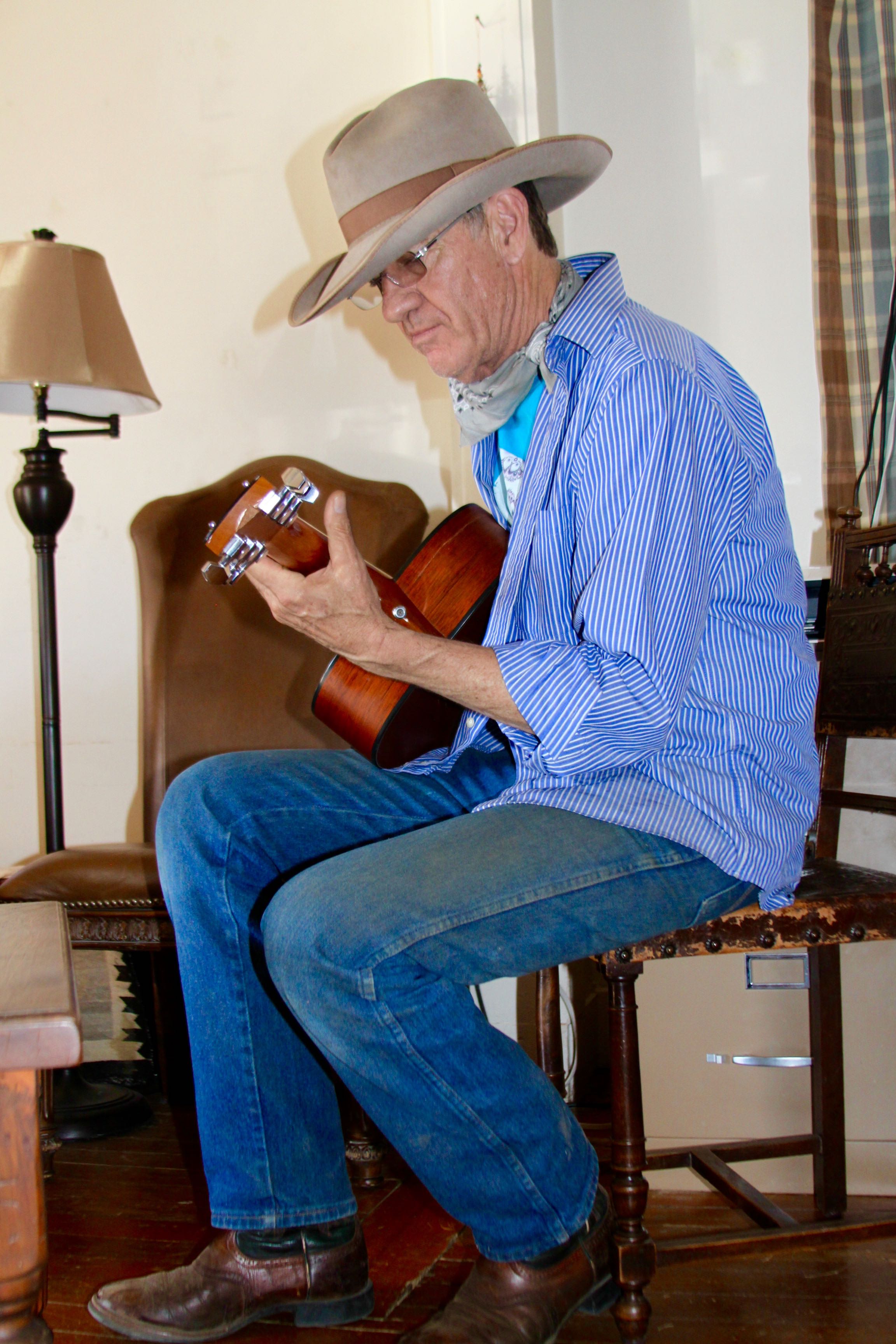
Kit spends day and night focusing his creativity on making jewelry and sculptures. He appears laid-back in his faux leather jacket, cowboy hat and boots, but at 68, Kit hasn’t lost his energetic drive to always be producing… something. A true cowboy at heart, when Kit has ventured from his roots, he always returns to the Arizona desert.

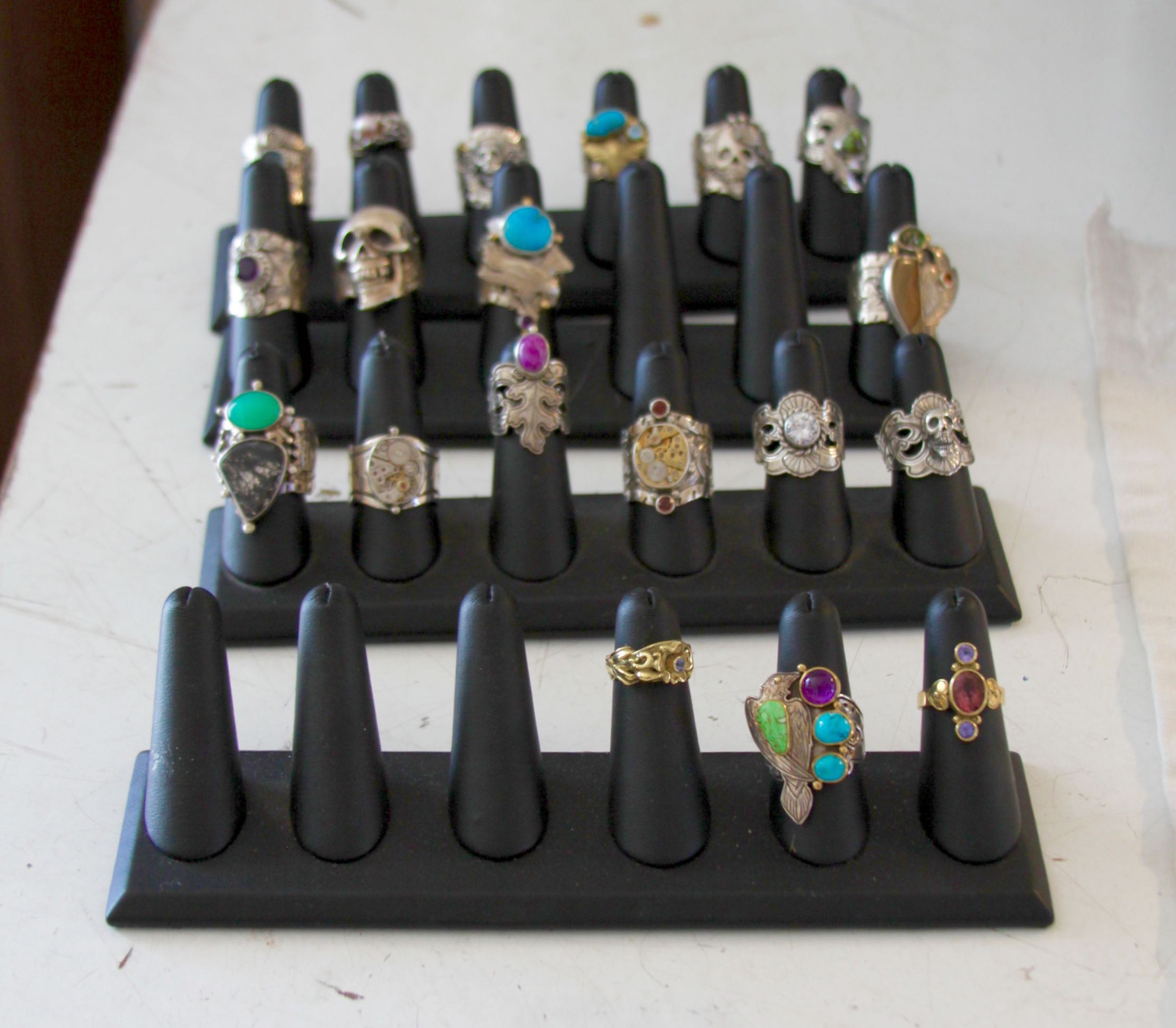
At the age of 16, Kit was deeply influenced by reading The Prophet, which led him to read Thoreau and Whitman. As Kit aged, his Philosopher-Artist sensibilities were honed ever sharper; his wisdom now seeps out in aphorisms, a hobby of his, and he often puts them on his  jewelry. For instance, the inside of a bracelet might read, “Don’t fence me in,” or “Life is good.”

Kit likes to say, “Every good artist has a sketchy past.” Ba-dum-bump. His past may be sketchy, but Kit still has his youthful, lanky physique and mischievous eyes.

“Age is an attitude,” Kit says. “The older I get, the younger I am.”

Kit’s Temporary Cre8-Space

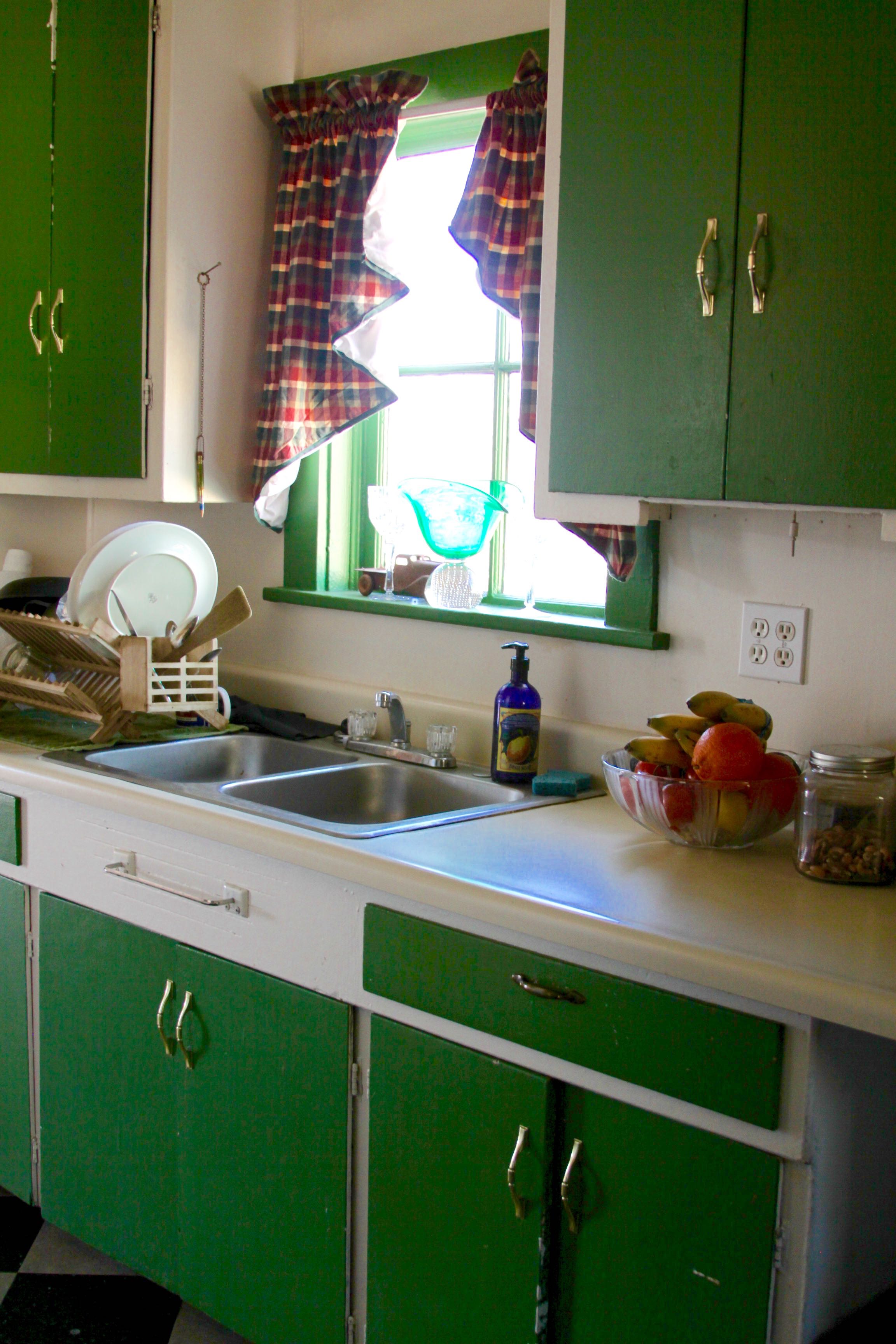
Kit’s quaint, aged, 900-square foot rental house is white with brown trim. A white picket fence encloses a charming, tiny front yard. Inside the living room, honey-colored wood floors creak comfortingly as we walk. Metal art hangs on every wall, and antique wooden chairs with tooled leather look as though they’ve been in place for 50 years. His well-loved furnishings fit the house perfectly as vintage suitcases sit under tables and atop shelves.


IMG_1078


An acoustic guitar is propped on his desk. “I’ll pick up my guitar at any time and sing a song. Singing makes me stop thinking,” Kit says. Otherwise, his mind is always working (or more like playing), envisioning jewelry pieces or metal sculptures.

IMG_1072

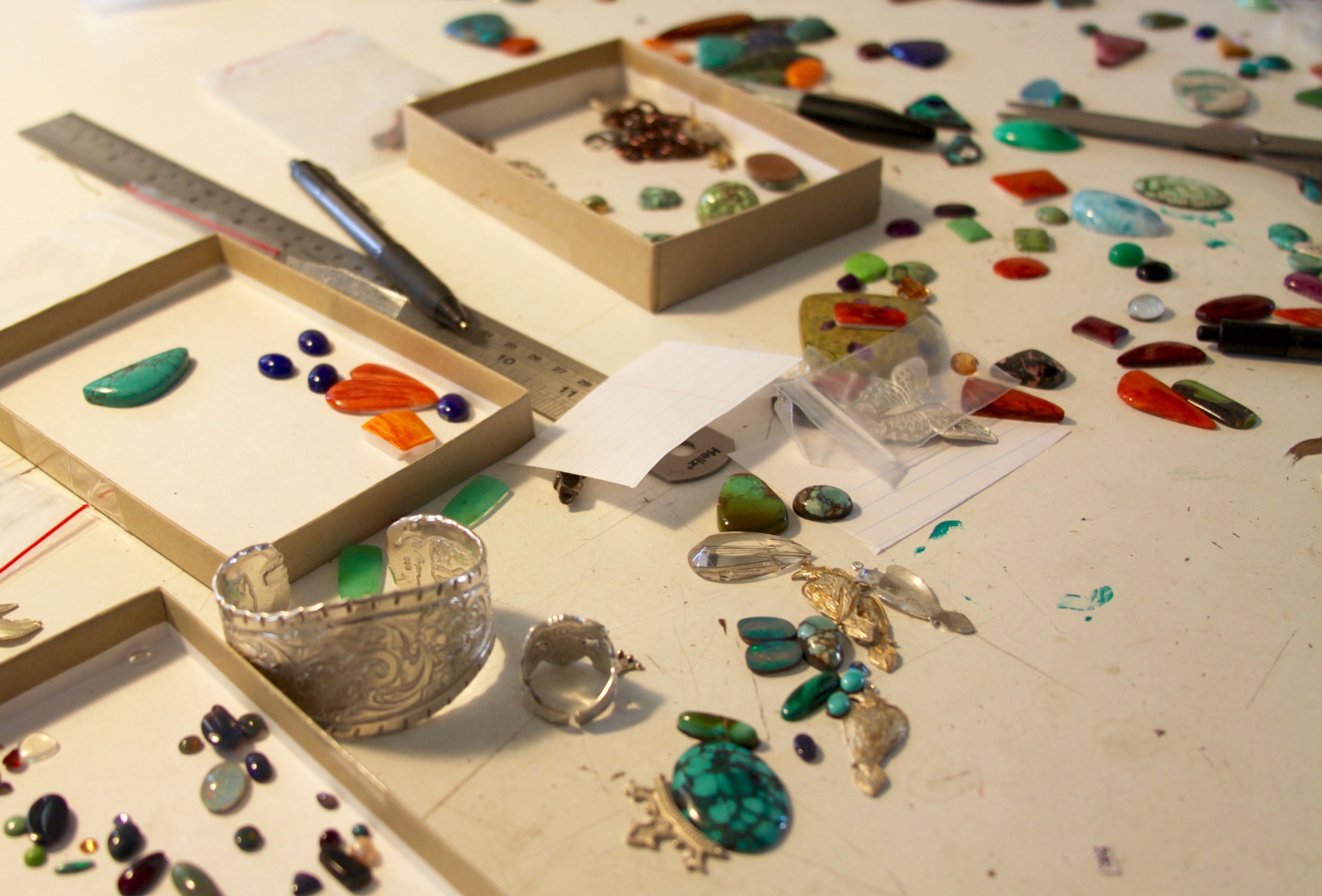
Kit’s temporary workshop just off his living room looks like it’s been there since the house was built. He gives me a tour and allows me to video him while he’s engraving a metal bracelet cut from an old can with orange paint on it.

“I make these bracelets, part of my Romantic Rust line, out of old, red tool boxes and license plates, too,” Kit says. “Painted metal from the 70s, or earlier, is best for these pieces. When I use a raw-hide hammer to shape bracelets made from newer painted metal, the paint will chip off.”

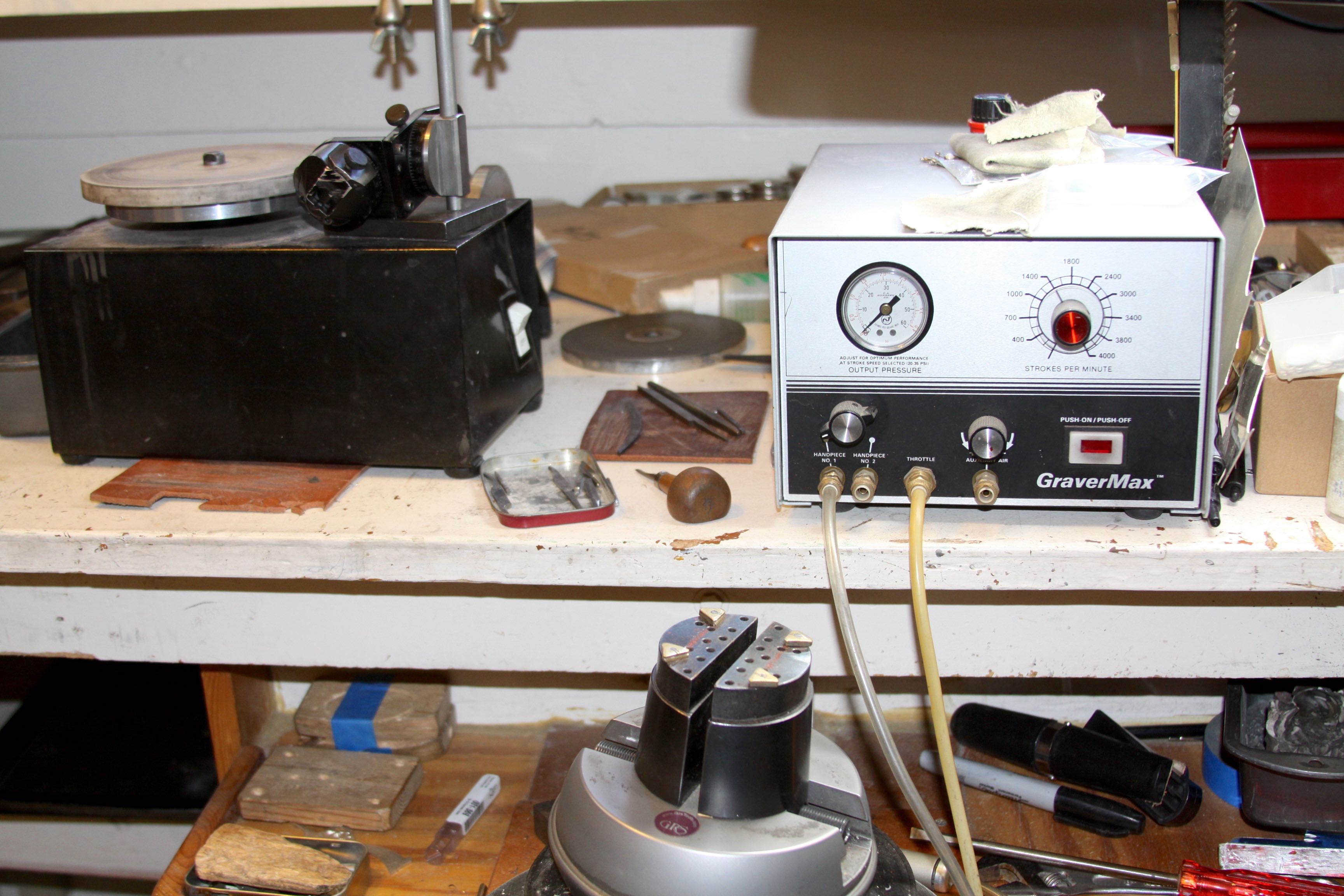
Kit’s two essential engraving tools are his vice and nematic engraver. Watch the video below to see how his sophisticated rotating vice and the electric engraver make engraving look easy. It’s not easy. Not at all. Especially creating the intricate scrolls and desert scenes, trademarks of his art. Kit has clearly mastered his engraving technique.


IMG_1051


IMG_1053


IMG_1059


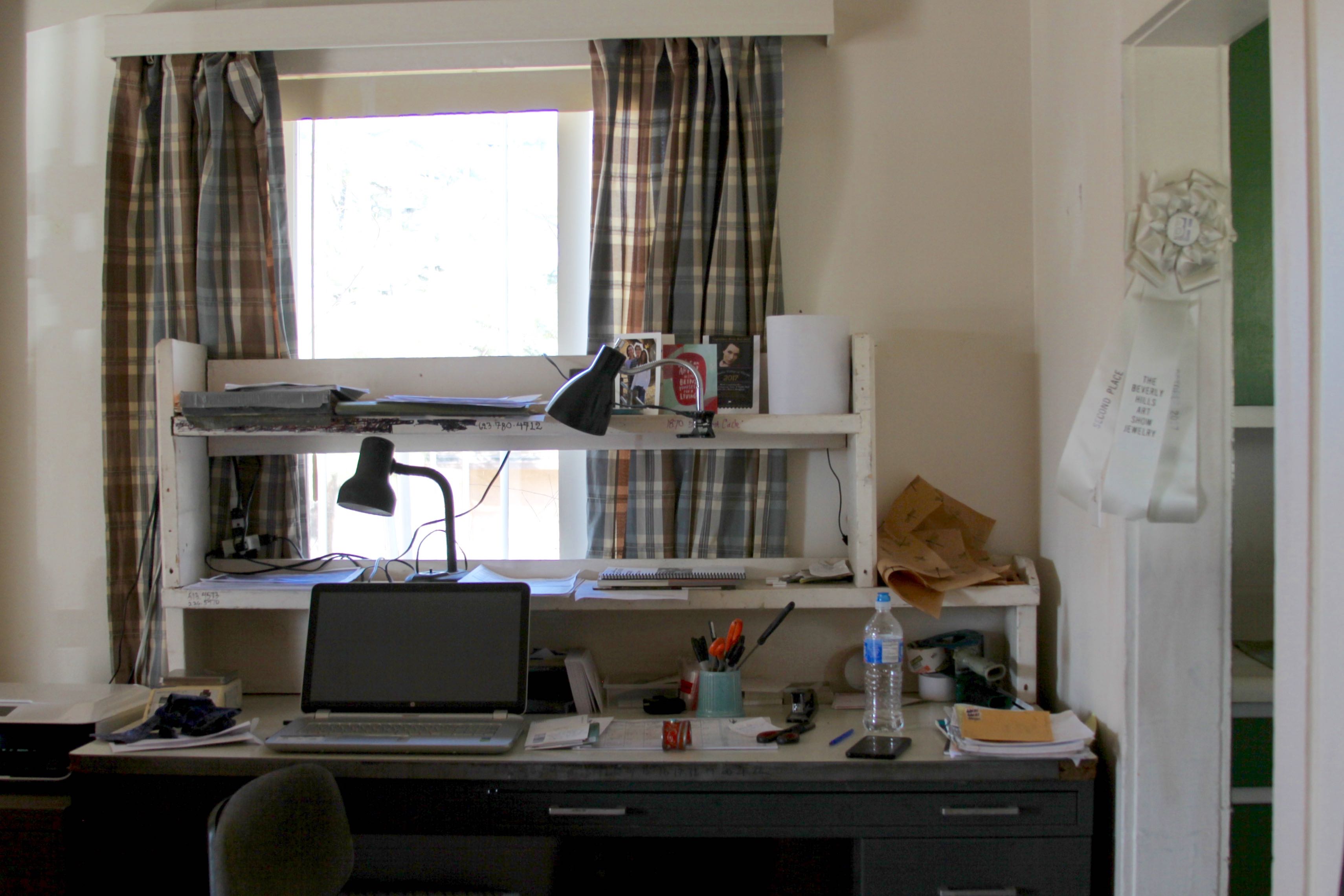
Kit’s workspace is about six feet wide and 11 feet long. Stations for engraving, cutting, assembling and soldering face one wall while on shelves case after case of tiny drawers hold teeny tool pieces and jewelry parts. A window over his main counter provides lots of natural light, but he also has multiple lamps clamped to every work station. The workshop is comfortable and efficient.


IMG_1050


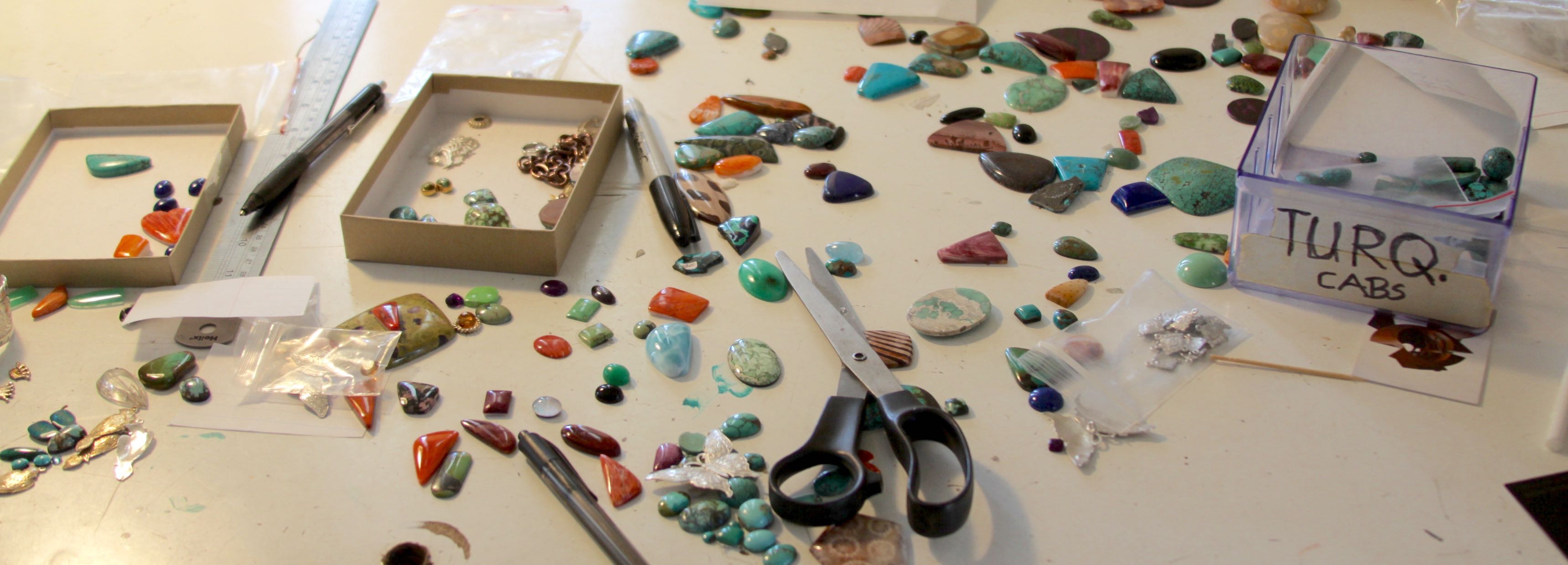
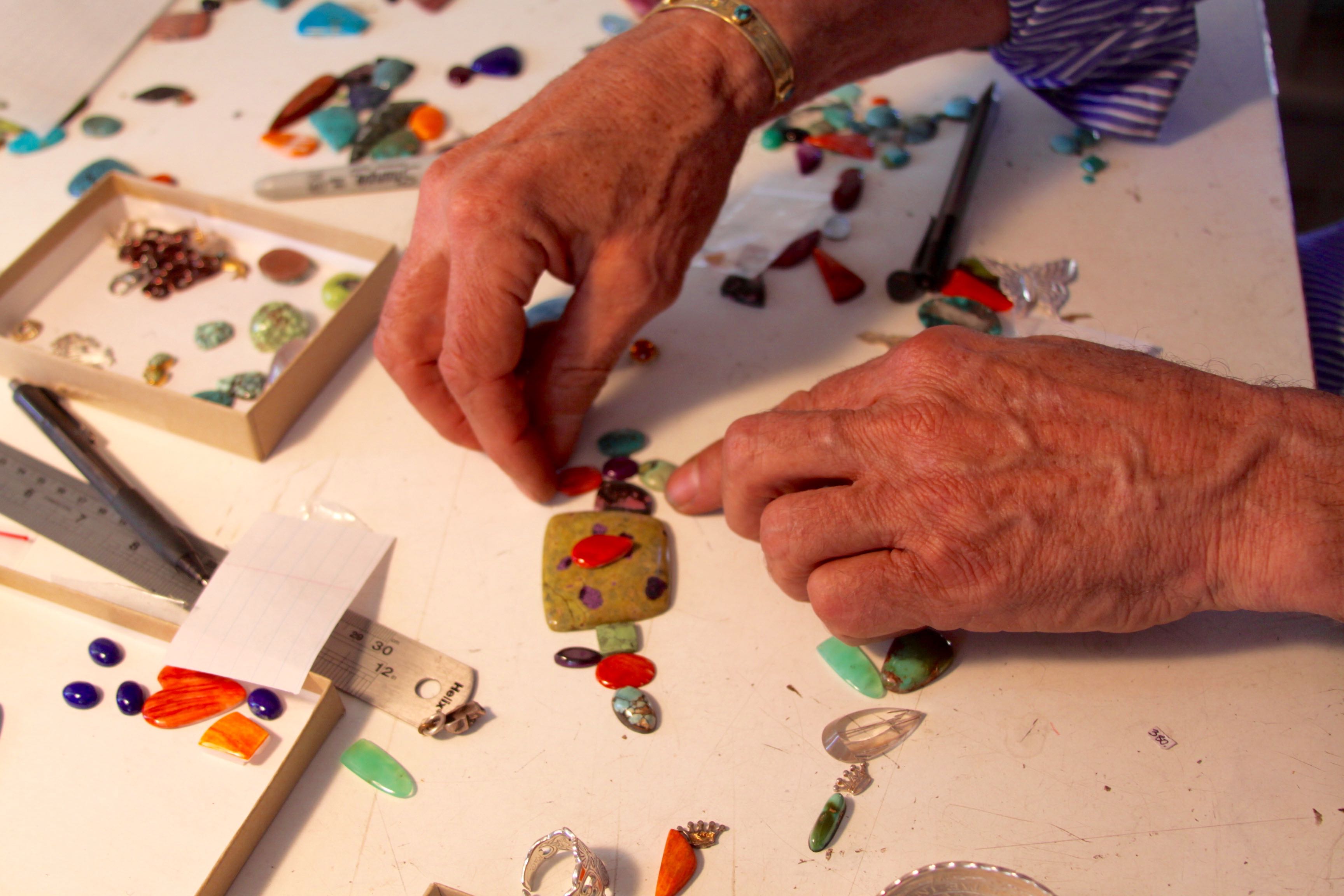
A large table in his living room along the front wall holds stones and gems, allowing Kit space to play around with composition of the jewels’ placement on earrings, pendants or bracelets.

IMG_1086

Starting Out

When Kit decided to pursue art, his mother, Paula Carson, gave him good advise. “From day one,” she told Kit, “run your art like a business. Know how much you pay for supplies, add in labor costs and never sell for less than what you have in a piece.”

Kit has lived by that guidance and under his means, which meant he was able to produce art and support himself, sometimes barely being able to pay his $60-a-month rent in the early years. But he kept at it, worked on a rickety stool pumping out his handmade, unique designs, growing his business and then shrinking his business to a perfectly manageable size. To this day, Kit continues to reinvent himself and how he markets his art.

In the beginning, he branched out from just making jewelry, which has always been his core, to working with drawings, sign painting, calligraphy on signs and wedding invitations, watercolors, wood and rock sculptures, and engraving for local jewelry stores. “I couldn’t make a living and make art while working for $3 an hour at the bronze factory,” Kit says. “I needed a steady income and I knew I could have constant business by offering several artistic services.”IMG_1064

Kit didn’t know anything about running a business.

“Early on, I sent my jewelry to a gallery and didn’t include anything in the package. No list of items. No pricing,” Kit says. The gallery tracked him down from his return address and called him, asking, “What is this?”

“It’s my jewelry,” Kit replied.

“How much are you selling it for?,” they asked.

“What do you think it’d sell for,” Kit laughs, recalling the conversation.

“I didn’t know. They suggested how much each piece might sell for and I learned a lot by them walking me through the process.”

That gallery, the first one he approached, sold his jewelry.


IMG_1069


Jumping into the commercial art world without any guidance meant Kit did some things wrong, and other things right. But he had courage and belief in his art. For 43 consecutive years, he has made a living from his art.

“One job leads to another job,” Kit says, “and I always make time for jobs.” Like when Fender saw his his skull jewelry on his website and contacted him about designing a “DIA DE LOS MUERTOS,” or Day of the Dead, Telecaster guitar for them. Naturally, Kit said yes. Fender collaborated with Kit, and other artists Dan Lawrence, Ron Thorn, Tom Arndt and Chris Flemming to create the most expensive customer guitar Fender ever produced. While some folks wondered if the guitar would sell, Fender ended up making and selling three of them.

muertos-large

Kit lived in Santa Fe, New Mexico, for 12 years. He got his career going by having the courage to jump smack dab into the middle of the Santa Fe art community where he knew no one. His business took off so well, it eventually earned $250,000 a year. Kit opened an office in Santa Fe and sold his art to 270 stores and galleries across the U.S. He was able to hire several employees to assist in producing his jewelry.


IMG_1067


“One day I was in Boston and passed a store,” Kit says. “A bunny pin in the window caught my eye. It was a knock-off of mine. I went inside and told the clerk the pin was a poor-quality knock-off and I wanted them to remove it. The clerk said, ‘Oh, Hi, Mr. Carson. So nice to meet you. That is your pin.’ I was so disappointed in the quality of the work, that it had my name on it, and I hadn’t stopped it from going out the door. I went back to Santa Fe and closed my business. I wanted to be an artist in his studio knowing every piece that goes out is the best I can do.”

Kit firmly believes the two best things he ever did was to go into business big time and to get out of business big time. He had jumped into making art with both feet and little business know-how, yet he managed to have more successes than failures. Luckily, he’s happy to share the following lessons learned with aspiring artists of all mediums:

Quit your job. “Working a job will only take a new artist away from building their skills and their business.”

IMG_1095
Kit’s sketch book

Don’t get married. “I knew two friends who wanted to work in art at the same time I was starting out and they got their girlfriends pregnant. They married and took other jobs to support their families. Of course, I got married later, too, so I didn’t listen to my own advice.”

Study an artist. Kit says find an artist whose work is of interest and then take weekend workshops with them. “You can learn more in a weekend with an artist than you can in an entire college course,” Kit says. “I’m an open book and will share my techniques with anybody.” Kit learned some jewelry-making techniques in the jewelry program at University of Oregon, Eugene. He also took night classes and weekend workshops.

Believe in yourself. “Artists must believe in themselves. I believed in myself,” Kit says. “That’s why I was able to build a business and stay self-employed. You have to discipline yourself to make a product, and another one. When you have bills to pay, that’s incentive enough to sit down and create.”

Find your voice. “An artist must find the core of their voice and they must have the ability to resolve abstract composition,” Kit says. He developed a voice early on and started engraving his drawings of bunnies, horses and desert scenes onto jewelry. “My jewelry stood out because not many people engraved their sketches into jewelry,” Kit says.

IMG_1090After 10 years in business, Kit was able to hire an assistant and has had several over the years. He trusts his employees and looks for enthusiasm when hiring. “I can teach them skills, but not enthusiasm,” Kit says. “They must also be able to tolerate failing and pushing through. Failures happen all the time, pieces don’t turn out the way we expect, but we keep creating.”

Currently, Sandy operates his website and Etsy shop; Halle in Denver constructs his jewelry from parts he sends her; and Louis, a glass artist from Prescott, works with Kit in his studio.

Growing Up

Kit was born and raised on Champie Ranch, a dude ranch, near Castle Hot Springs and Lake Pleasant, northwest of Phoenix, Arizona. His dad had given flying lessons during WWII and had spotted the ranch from the air. Growing up, Kit’s family didn’t have a phone, but they did have electricity and a radio, on which Kit as a six-year-old first heard Elvis Presley.

At the height of Gunsmoke’s popularity on TV, James Arnez, who played Sheriff Matt Dillon, brought his family to stay at Champie Ranch for a couple of weeks. Kit and his three brothers enjoyed swimming with “Matt Dillon,” and when James Arnez showed them his six-shooter, Kit was more interested in the gun’s engraving than he was the gun. Admiring the scroll work was a precursor to Kit’s fascination with the Arts & Crafts Movement and his love of Art Nouveau design lines.


IMG_1069


When the Carsons divorced, 10-year-old Kit and his brothers moved from Champie Ranch to Prescott with their mother. To ease the transition after his parents’ divorce, Kit would retreat to his room and paint model cars and sketch. By the age of 12, Kit knew he wanted to be an artist.

“My mother taught us self-discipline,” Kit says. “If we wore out our jeans, she wouldn’t replace them. She would tell us to get a paper route and buy our own jeans. I had two paper routes delivering in the morning and afternoon. It was 1963 and I was the only Seventh grader with $20 in his pocket.”

Kit’s mother was also creative. Although she worked full-time, she took up weaving as a hobby and made quite a few rugs, some of which Kit sill owns. To this day, the local college manages the Paula Carson Scholarship Fund for Weavers.


IMG_1066


Kit’s brothers still live in Prescott. His twin, Steve, uses large earth-moving equipment to coax nature back to its natural setting after man has messed things up. Steve is a cowboy. His other brother Tom is a building contractor, one of the best in Prescott, of course, and his other brother Johnny is a cowboy.

Sculpting

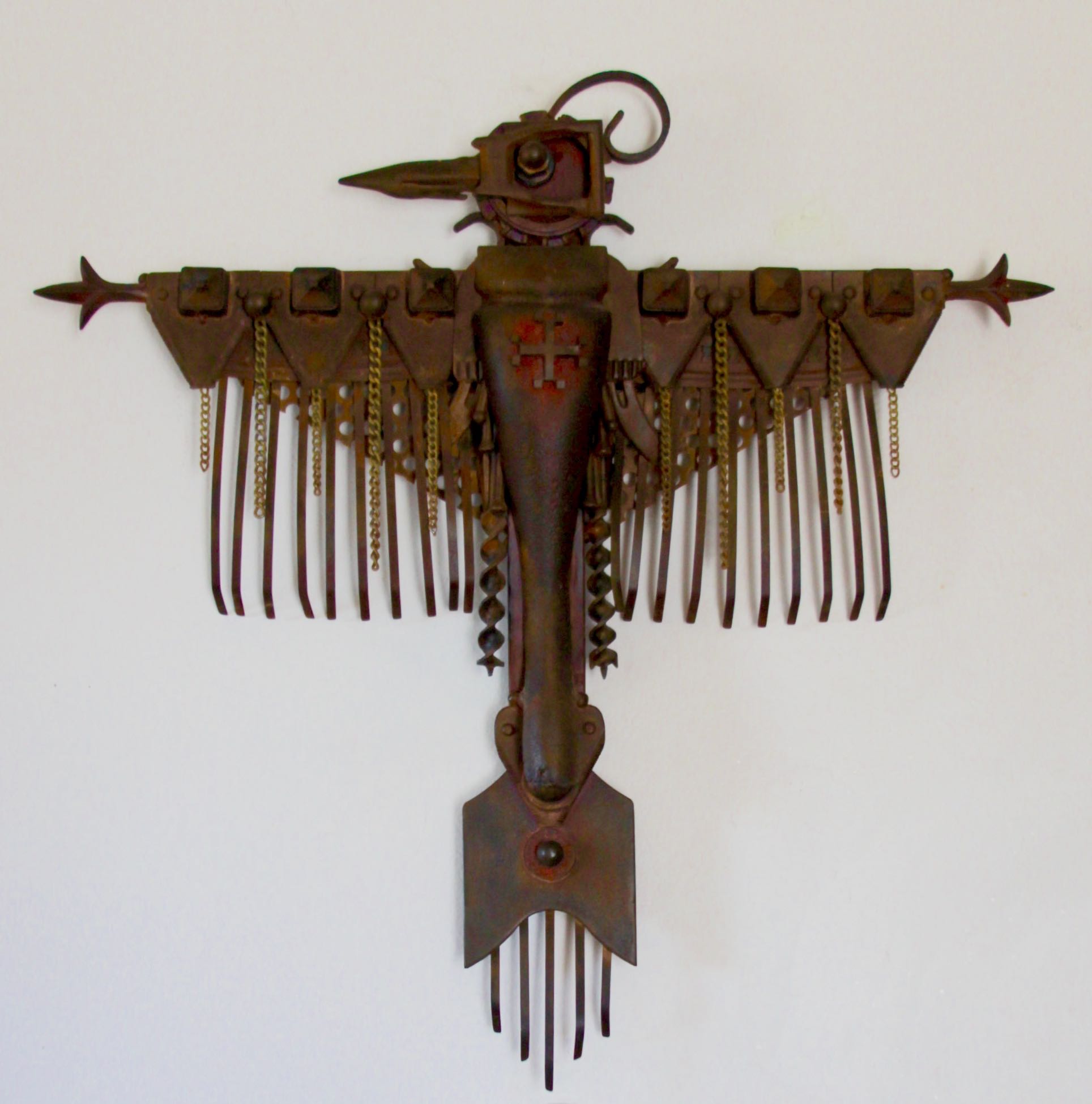
For his sculpture, Kit uses found objects, mostly rusted metal parts of all descriptions which make up his Library of Visual Solutions. Kit brought 10 tons of his metal “Library” to Prescott and sold about 40 tons before moving from Camp Cactus in New River.


LibraryofVisualSolutions
Library of Visual Solutions at Camp Cactus in New River, Arizona

IMG_1032
Cortez Camp Library of Visual Solutions at Kit’s new home now under construction

When sculpting metal, he will search through his “library” and select pieces that complement each other, welding them together to create a pleasing composition of angles and geometrics. As an artist who has learned to focus intensely, Kit honed his ability to quickly select and arrange pieces. His eye is trained and his mind revels in moving pieces around and around until he lands on the perfect composition.


IMG_1098
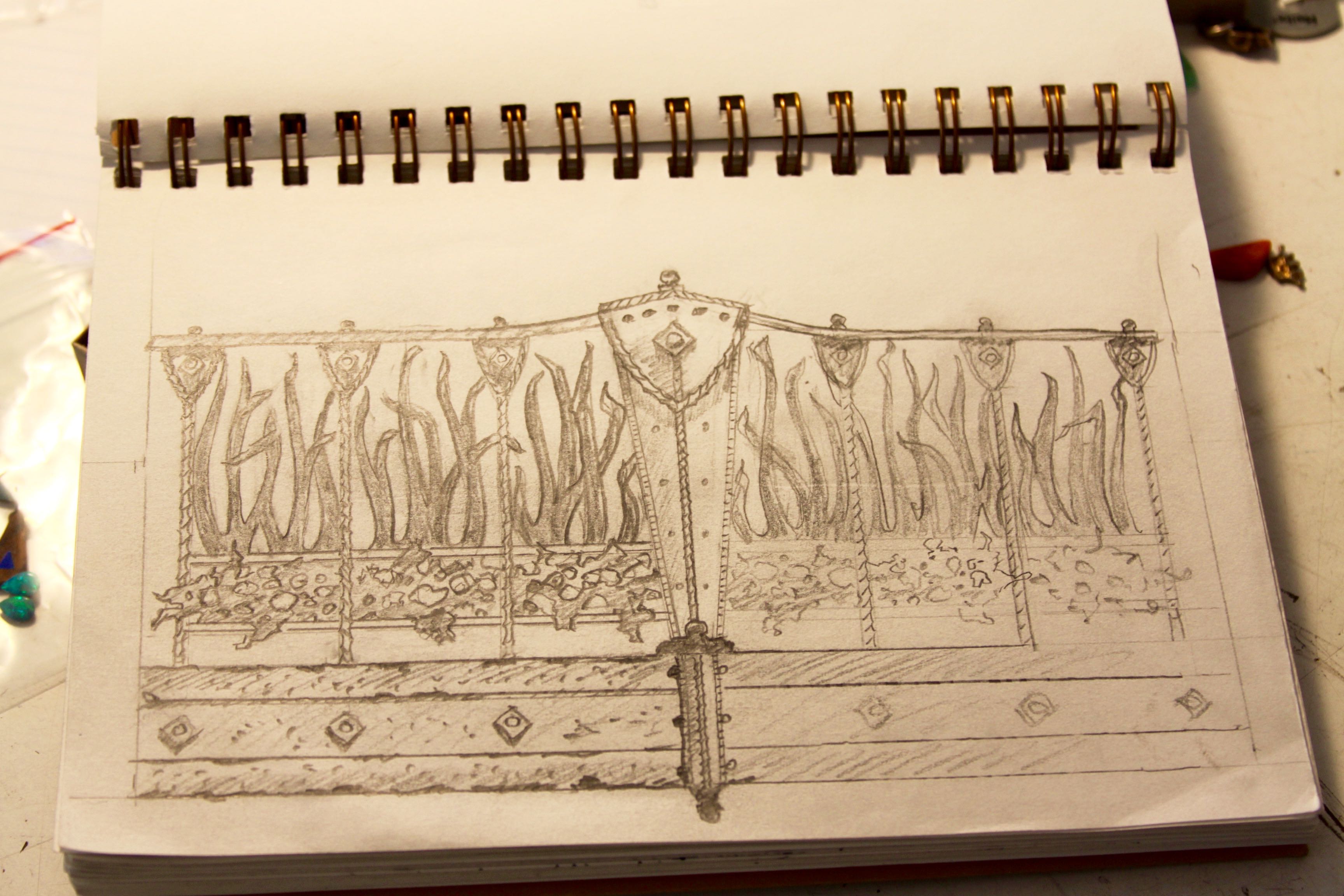
Sketch of an iron gate for a client

Two smaller sculptures pictured below hang in the rental’s living room and illustrate his use of repeated angles or other design motifs. 


IMG_1041


IMG_1039

Before moving from Camp Cactus, Kit constructed a massive metal sculpture that looked like a giant earth-moving machine. It was about 30 feet long, 10 feet wide and 8 feet high. He sold it to one of his collectors. Not all of his sculptures are gigantic, however, and not all are completely metal. They come in all shapes and sizes.

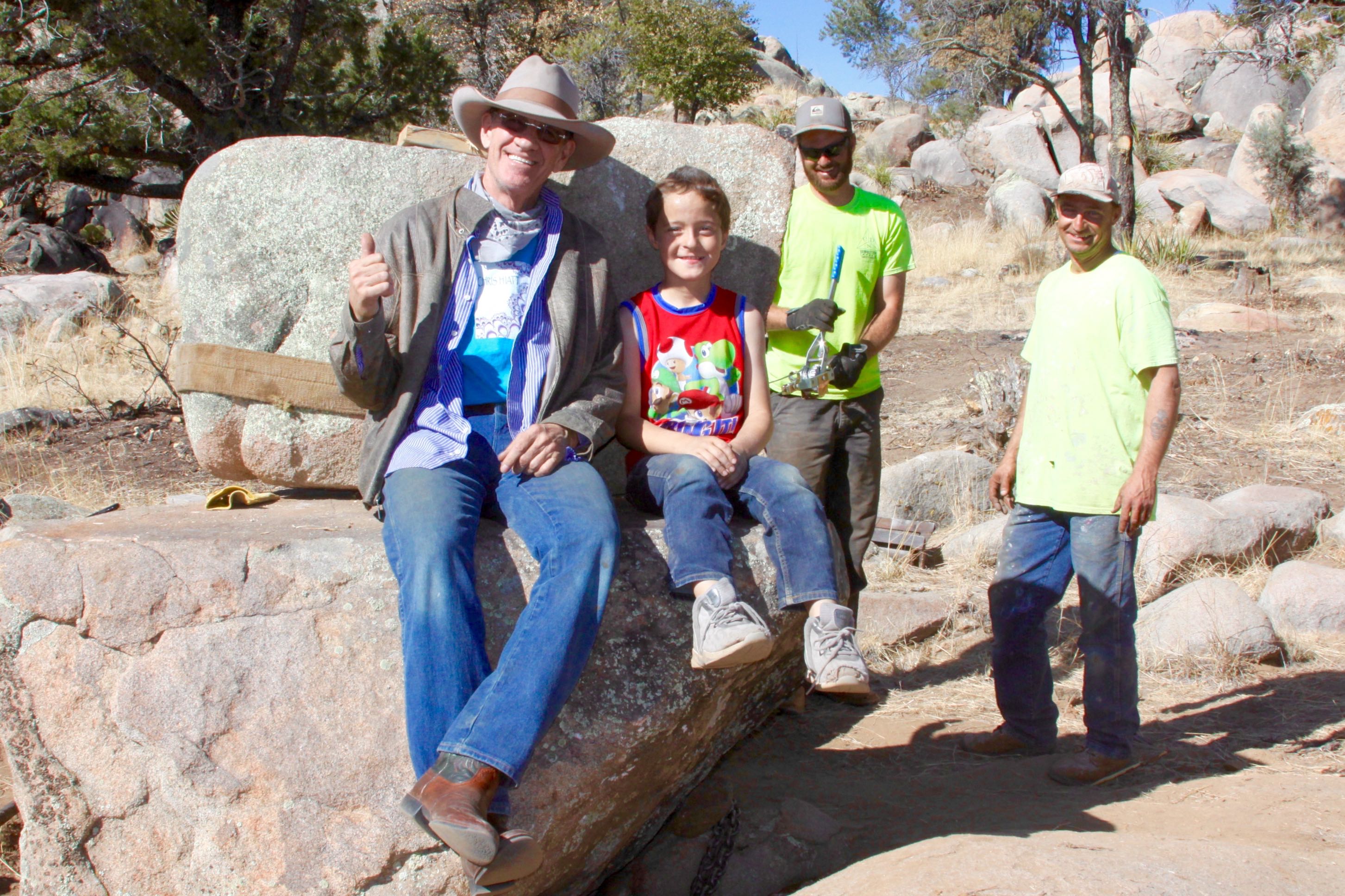
The day of my visit, Kit is monitoring the construction of a rock sculpture, a bench commissioned by a client and constructed from rocks on the client’s land. Kit selected two large stones, one for the base and one to sit atop it as a back, and directed the crew on where to place them. Because big machinery wouldn’t fit on the rocky hilltop, the rock bench crew manually moved two massive rocks with levers, straps and cable.


IMG_1021


As we’re photographing his workspace in the rental home, Kit receives a call; the rocks are in place and ready for his review. We jump into my MINI and drive over. “Everything in Prescott is only a 5-minute minute drive away,” Kit says.

We promptly arrive and Kit sits on the bench, posing with the happy men who built the bench using their brute strength and power provided by Red Bull. Kit approves the rock placement.

IMG_6900“I’ll add stones around the bottom,” Kit says, “and place soil, pine needles and sticks to make it look as though the bench has been here a million years.”

We drive back to town for lunch and Kit says, “I’m glad to see those guys so happy about the rock bench. They figured it out as they went along.”

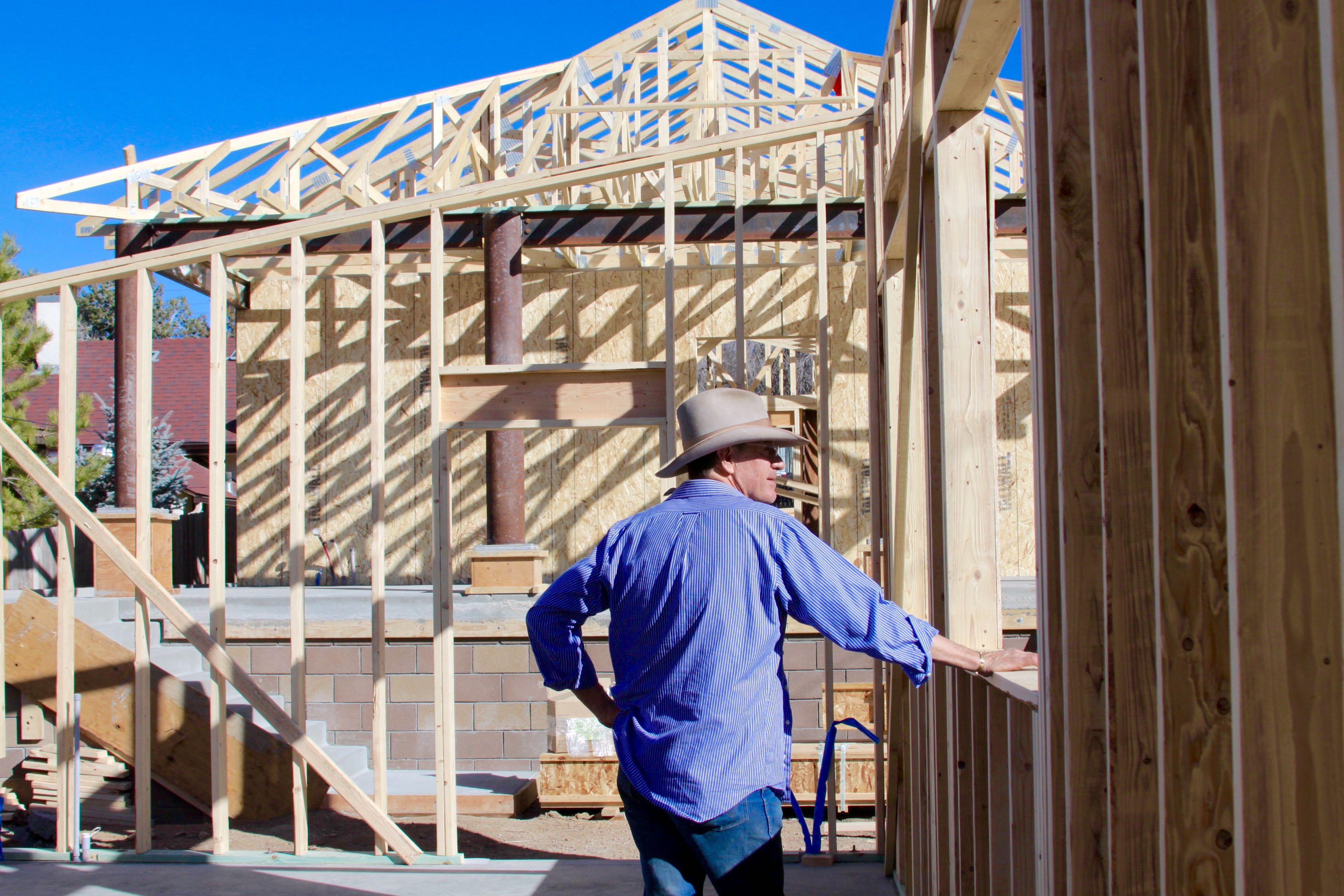
These are the same men who moved the 1914 house off of Kit’s Prescott lot on Cortez Street, clearing the way for him to build his new home, Cortez Camp, which will be much like Camp Cactus back in New River; about 1,300 square feet of artistic touches, including metal pieces here and there, inside and out, and a big shop in the back.

Kit lived at Camp Cactus in New River on the edge of Tonto National Forest for 25 years and when he stood on his front porch looking out, all he saw were mountains and Saguaros, nothing man-made.

“I became a bit too isolated there,” Kit says, part of the reason he decided to sell Camp Cactus and move to Prescott where his three brothers live.

Kit-House
Camp Cactus in New River, Arizona

“Camp Cactus is my largest piece of art yet,” Kit says. Thinking of it as an art piece is the only way Kit could bring himself to sell the home he crafted with his own hands. As with every other piece of art he’s made, Kit signed Camp Cactus by engraving a silver plate with the following words and attaching it to a wall inside the house:

“This home was conceived in my heart, designed in my mind, and built with my hands as a work of art. It remains my masterpiece. Kit Carson.”

“I’ll always miss the house, and the view, but I’ve integrated those memories and only want to remember how good it was,” Kit says.

Cortez Camp is his newest work of art/future living space. Strict building codes in Prescott mean Kit has to hire certified welders to put up his rusted porch poles instead of doing it himself. That’s a bummer for someone who welds all the time. Luckily, Kit’s brother Tom lives next door and is the building contractor for Cortez Camp.

IMG_1037
Cortez Camp under construction as seen from Cortez Street

IMG_1034
Kit walks through his future bedroom at Cortez Camp

IMG_1028
Kit stands in his future workshop; his house is in the background

Tips and Tricks

Making a living at art isn’t just about making art. It requires adapting to customers’ changing tastes and active marketing. Over the years, Kit incorporated a few sensible tactics into his marketing repertoire.

“I was in Neiman’s one day and saw a consultant advising a customer on what colors worked best with her skin and hair. It occurred to me that I needed to know those things so I can advise my clients. And that’s what I do. I make the jewelry about them.”

Kit has attracted a number of serious collectors who buy his jewelry and home decor items. But he can no longer depend on his collectors to show up at art shows and buy enough jewelry to make it worth his while. Lately, he’s hit on a mutually-beneficial arrangement where he visits his collectors in their homes as they host a lunch or breakfast for friends. Kit enjoys spending time with his clients and hearing what works and doesn’t work with his jewelry, and they enjoy having an artist in their home, as a friend.

After 43 years of ups and downs, Kit is still the artist who branches out and takes jobs when offered. He still makes art from his heart, lives below his means and has an uncommon piece-of-mind.

Kit crafts his life like he crafts a well-designed piece of jewelry. And it sparkles.


Video Gallery


Photo Gallery

IMG_1084

IMG_1085

IMG_1083

IMG_1079

IMG_1061

IMG_1052

IMG_1049

IMG_1048

IMG_1045

IMG_1044

IMG_1043


References

Kit’s jewelry websitehttps://www.kitcarsonjewelry.com/store/c1/Featured_Products.html

Kit’s Etsy Store: https://www.etsy.com/market/kit_carson_jewelry

For an in-depth look at how Kit created his stone home in New River, be sure to read Candy Moulton’s online article, Camp Cactus: Kit Carson’s artist retreat near Cave Creek, Arizonahttps://truewestmagazine.com/cactus-camp/

To hear Kit’s own explanation of the design and building materials/elements used in creating Camp Cactus, watch his Sotheby’s video: https://privateclientgroupagents.com/videos/cactus-camp/

PBS’ Craft in America featuring Kit: http://www.craftinamerica.org/artists/kit-carson/. Kit’s page on the Craft in America website has several videos explaining his work and philosophy.

Yuba Gold

Art and creativity with a touch of nature

Pens and Pigment

Emma's Art and Artistic Explorations