Yves Saint Laurent, Fashion Designer

Well-designed clothing can be a work of art with lines so true and exquisite they make grown women and men weep.

From Exquisite to Tears

Well-designed clothing can be a work of art with lines so true and embellishments so exquisite they cause grown women and men to weep. I hope everyone has, at least once, the grand experience of being so moved by a couture gown or suit that they’re overcome with emotion, as though witnessing at Michelangelo’s Sistine Chapel masterpiece. 
IMG_4015

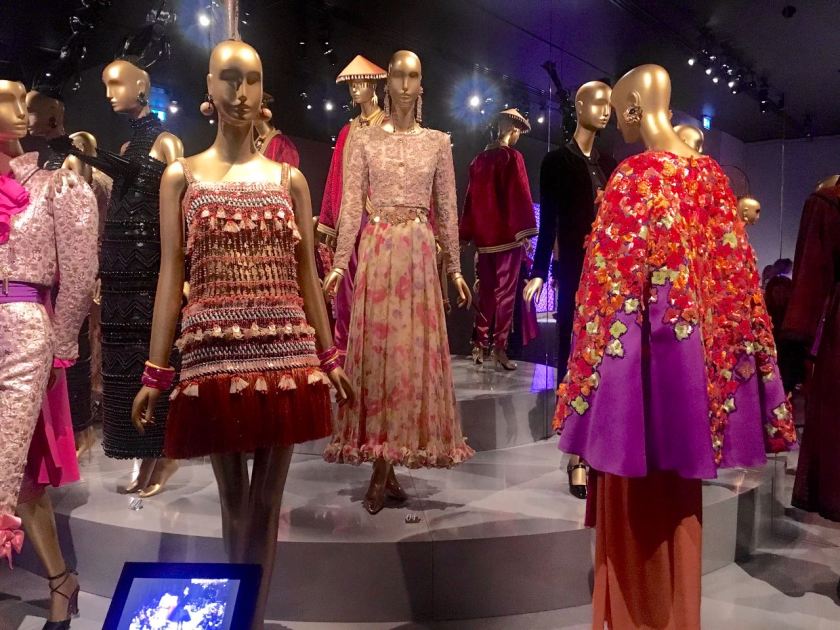
Even people like me who have no sense of style and never learn what cut and shape best fits their physique can be drawn to the art of fashion like they’re drawn to study a Matisse or Van Gogh. Particularly when the designer is Hubert Givenchy, Cristobal Balenciaga, Christian Dior or Yves Saint Laurent (YSL), a few of my favorites.

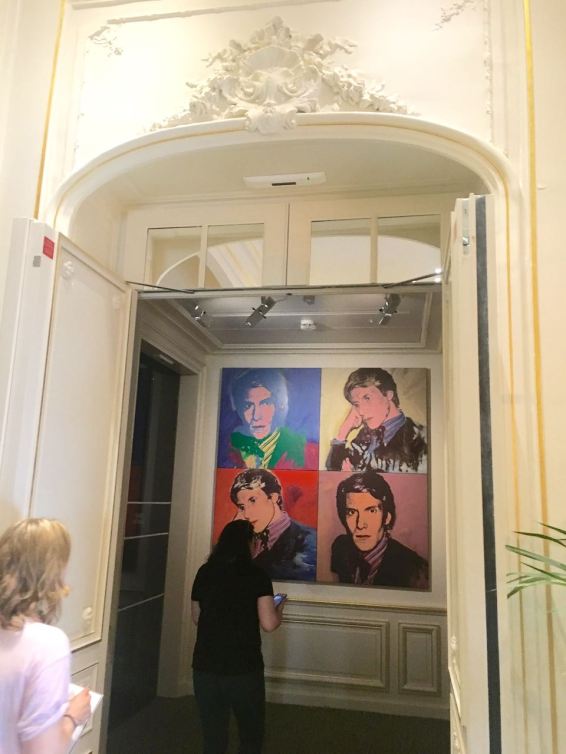
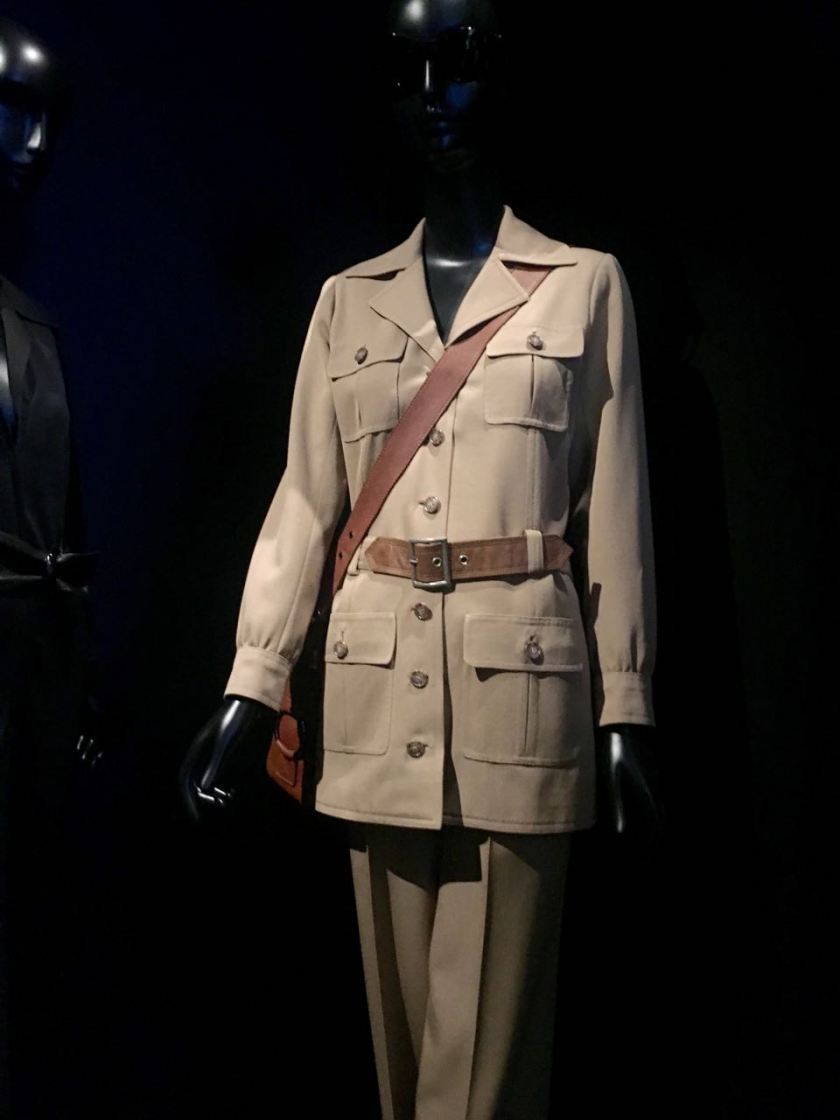
YSL (1936 – 2008) ran his own haute couture design house for 40 years, after being head designer at Dior in his early 20s. He was known for adapting tuxedoes to the female form and designing comfortable clothing for women. He also changed the fashion world when he used models from African countries.
IMG_3997

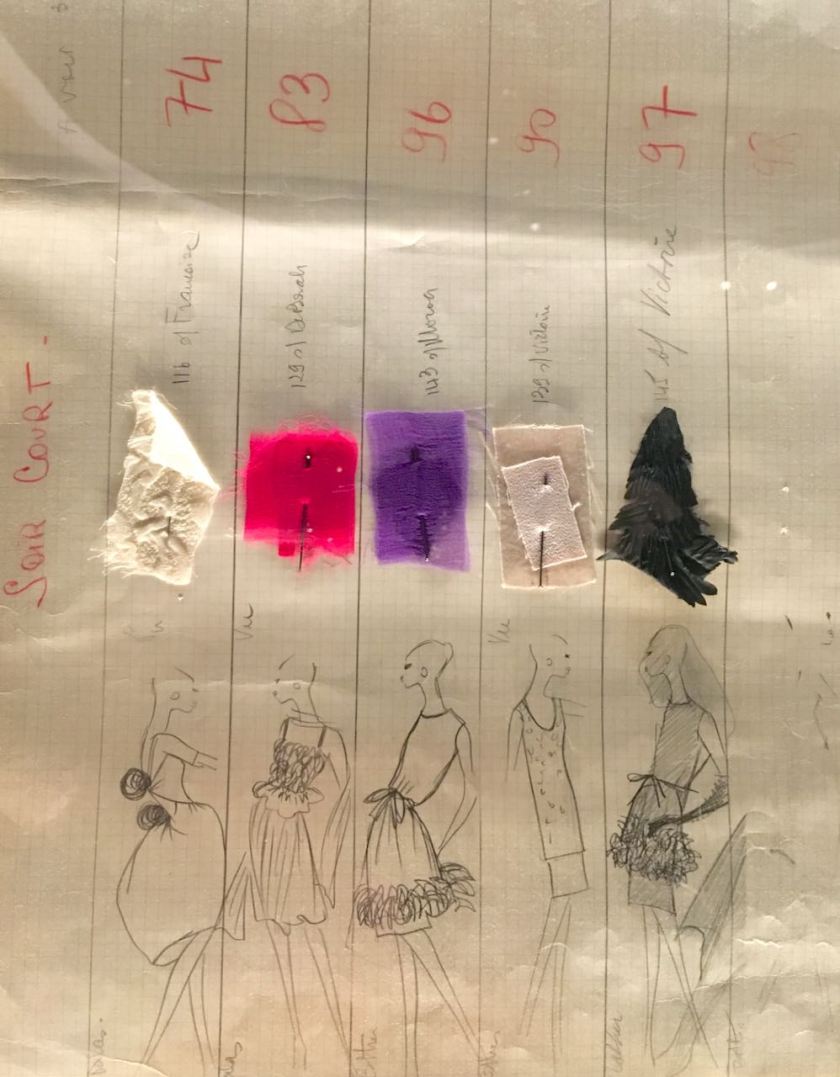
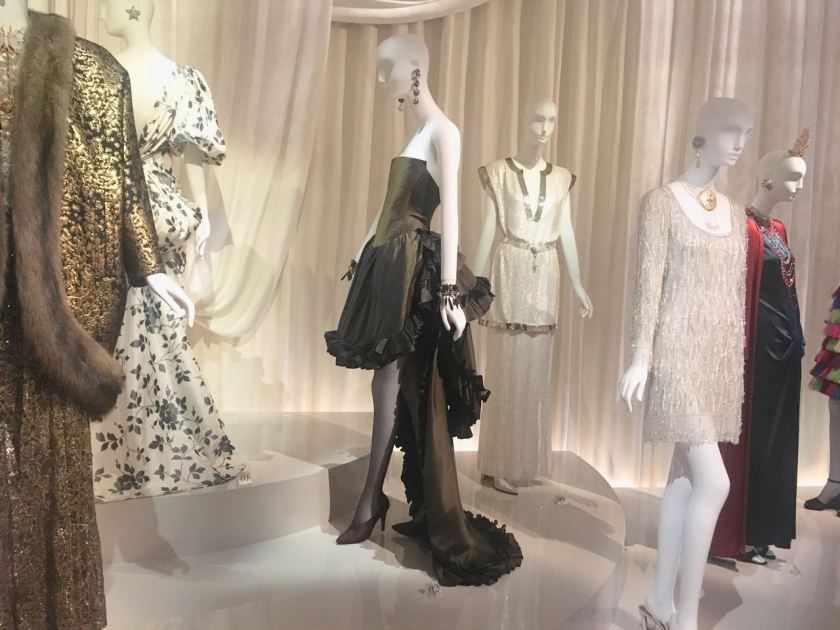
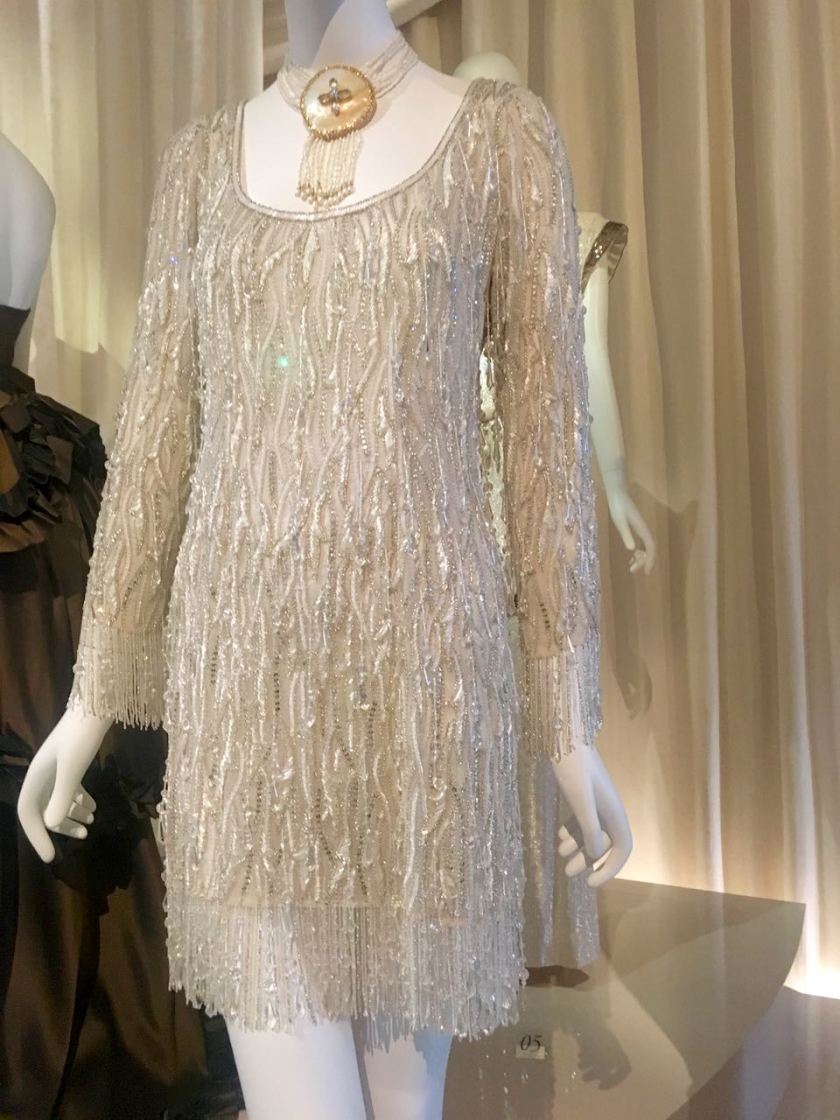
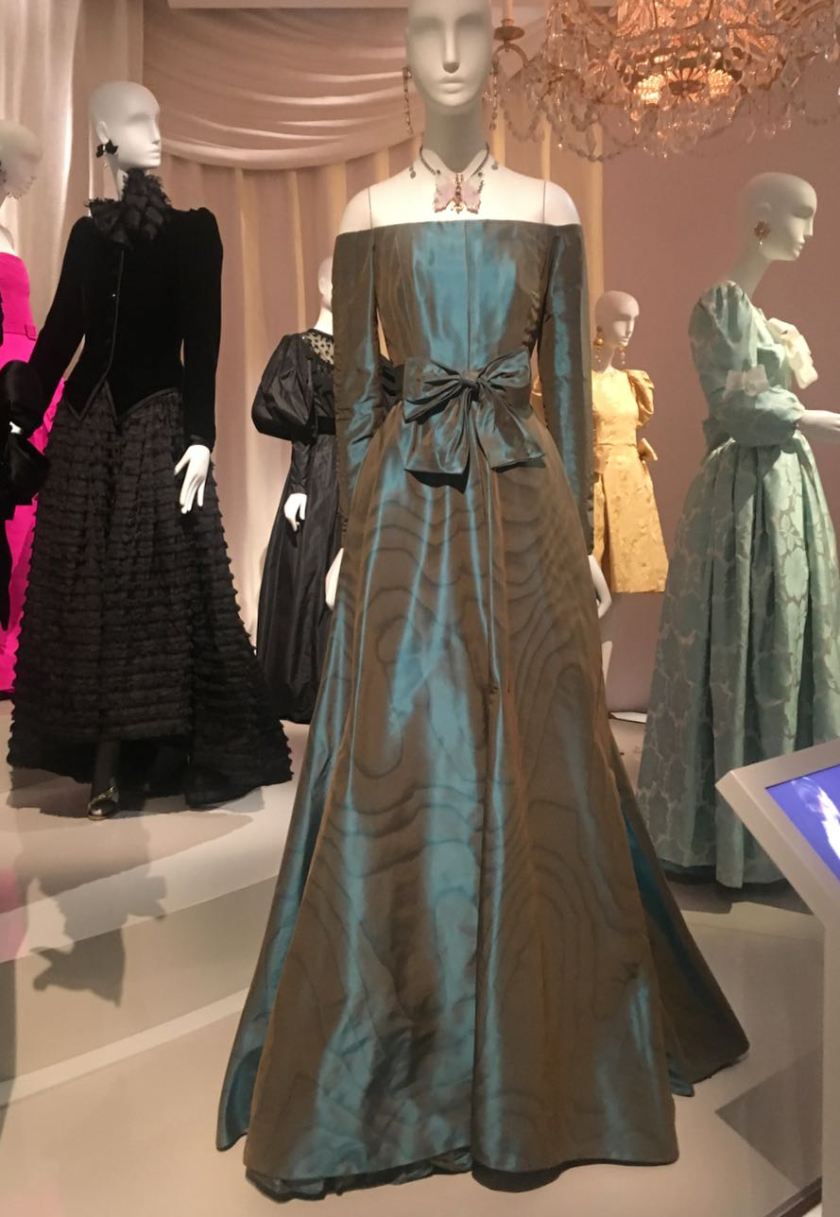
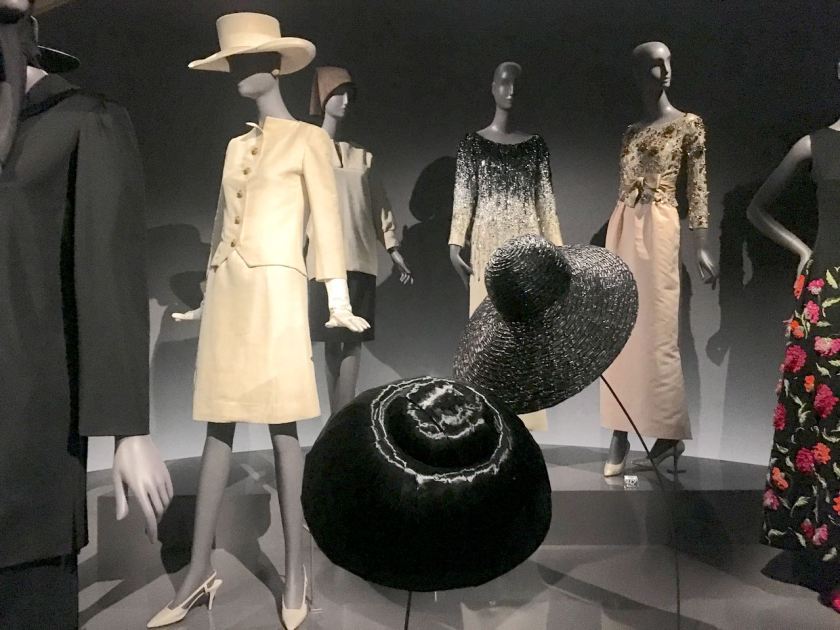
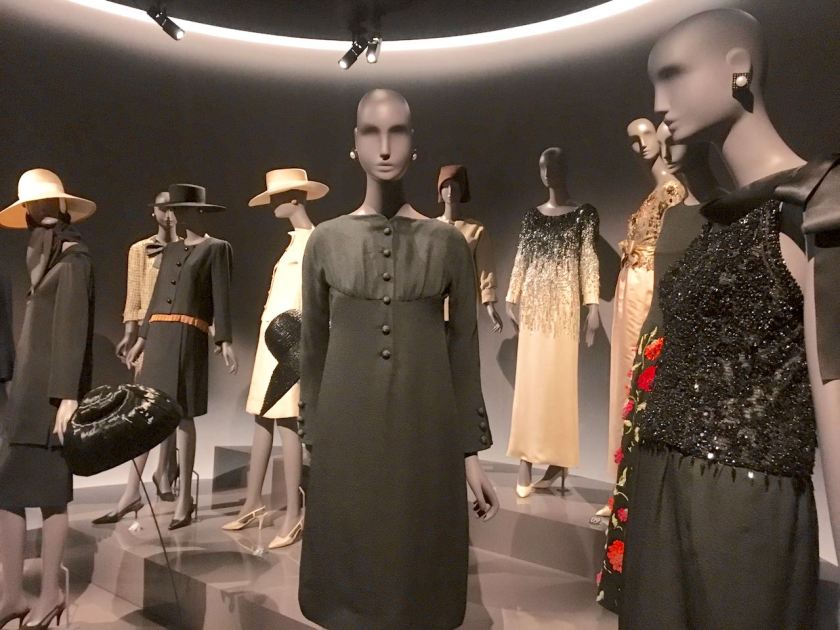
My daughter Jaime and I recently visited Musee Yves Saint Laurent Paris, housed in his former couture salon at 5 Avenue Marceau in the 11th arrondissement. Lucky for fashion fans, beginning in 1964 YSL began setting aside specific designs after each show, with an eye toward eventually building a museum. The actual garments and all documents related to their creation were stored away.

The museum officially opened in 2016.

The interior of the museum is gorgeous, and how exciting to be in the unchanged salons where Yves held his fashions shows until 1976, and where patrons, including famous French actress Catherine Deneuve, were fitted for their couture pieces.

IMG_4049

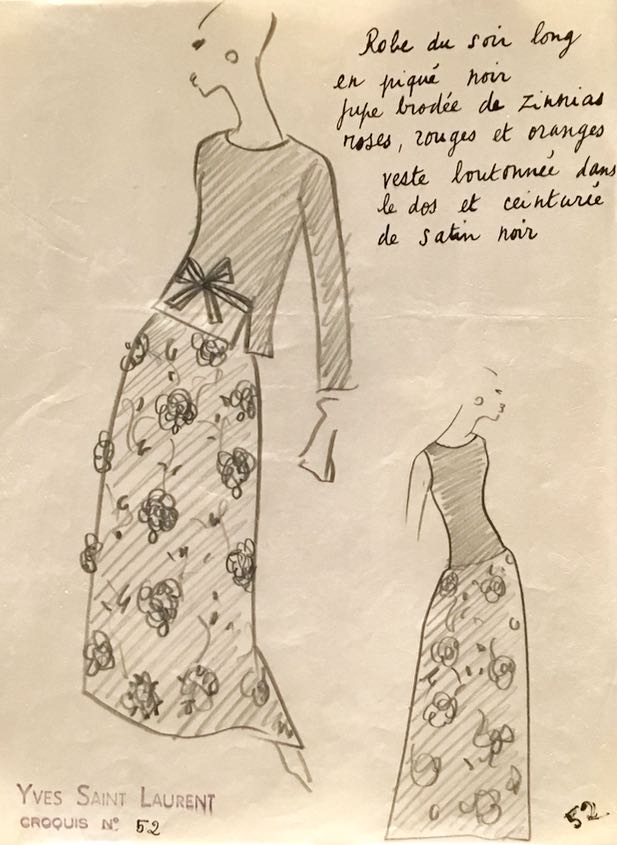
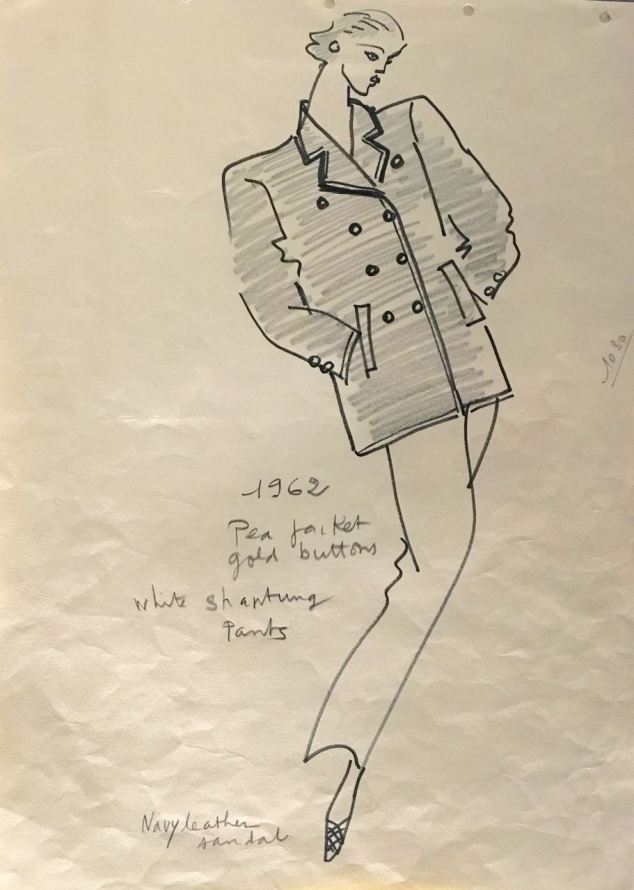
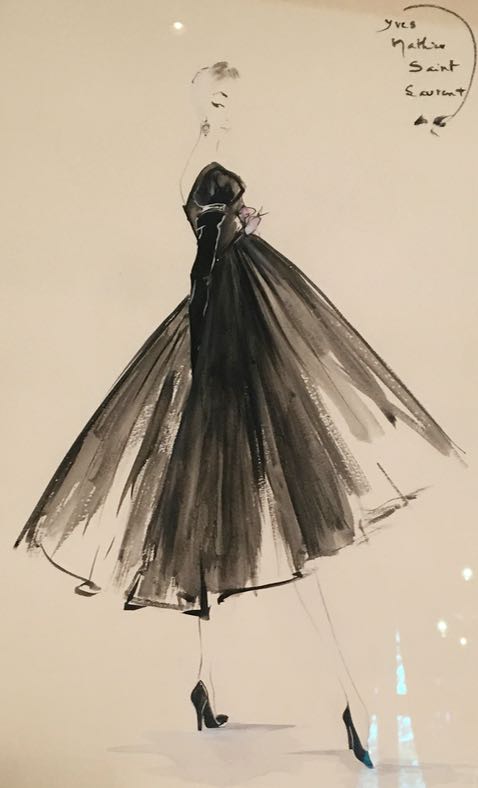
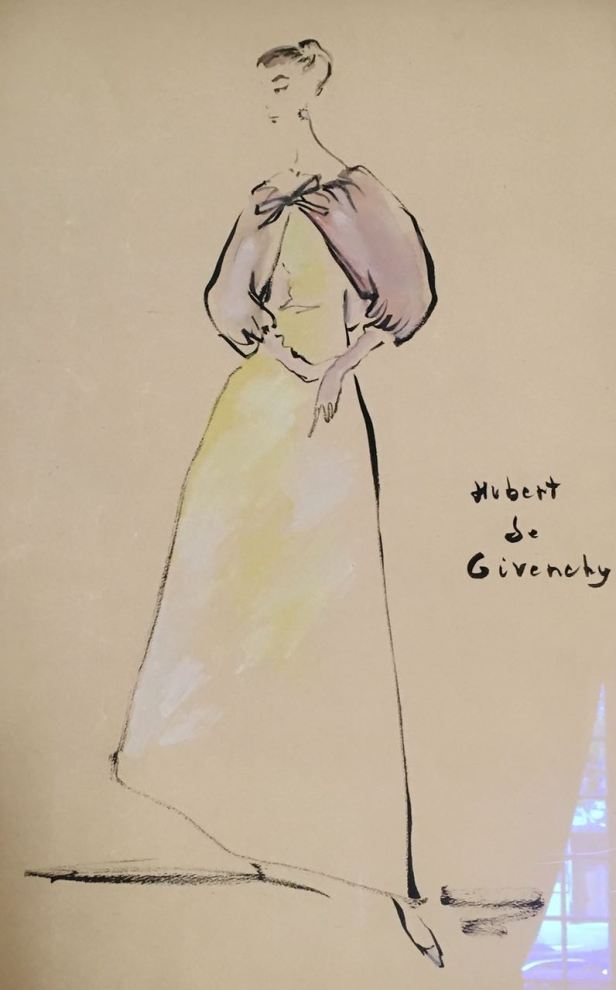
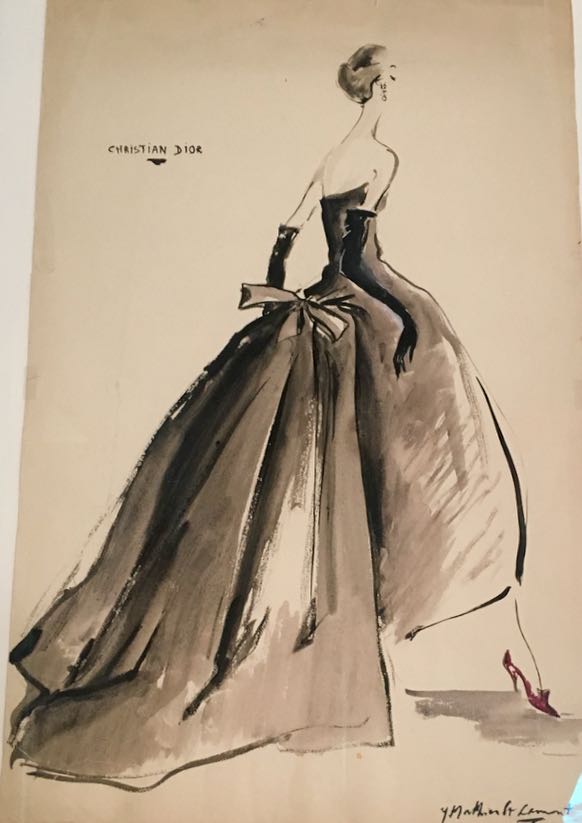
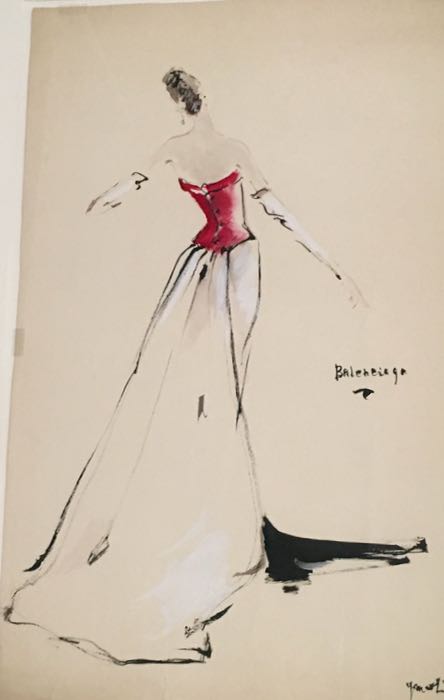
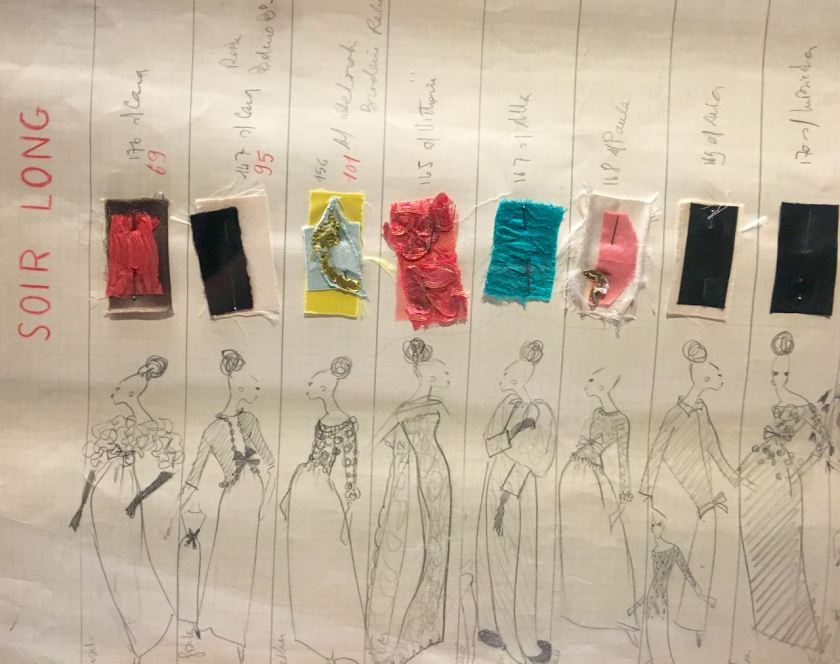
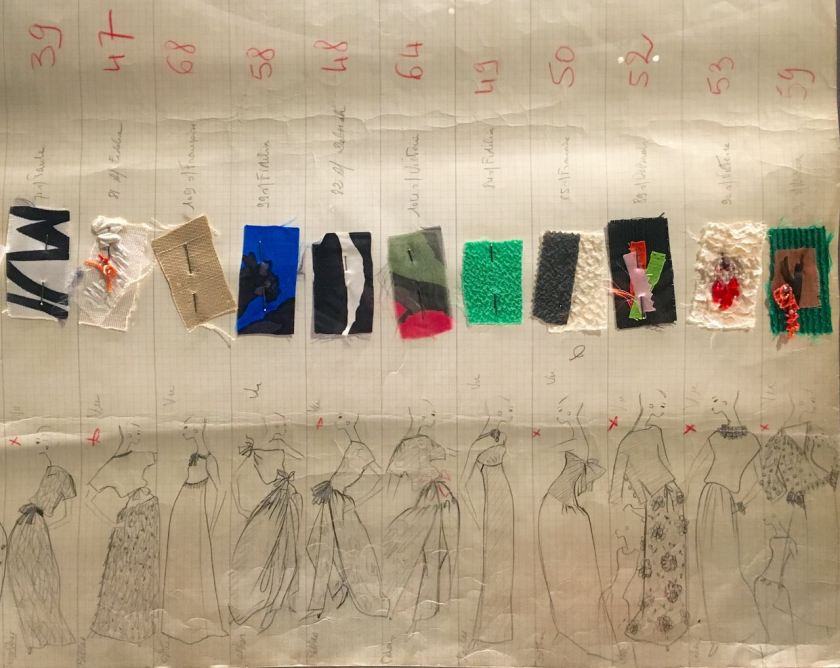
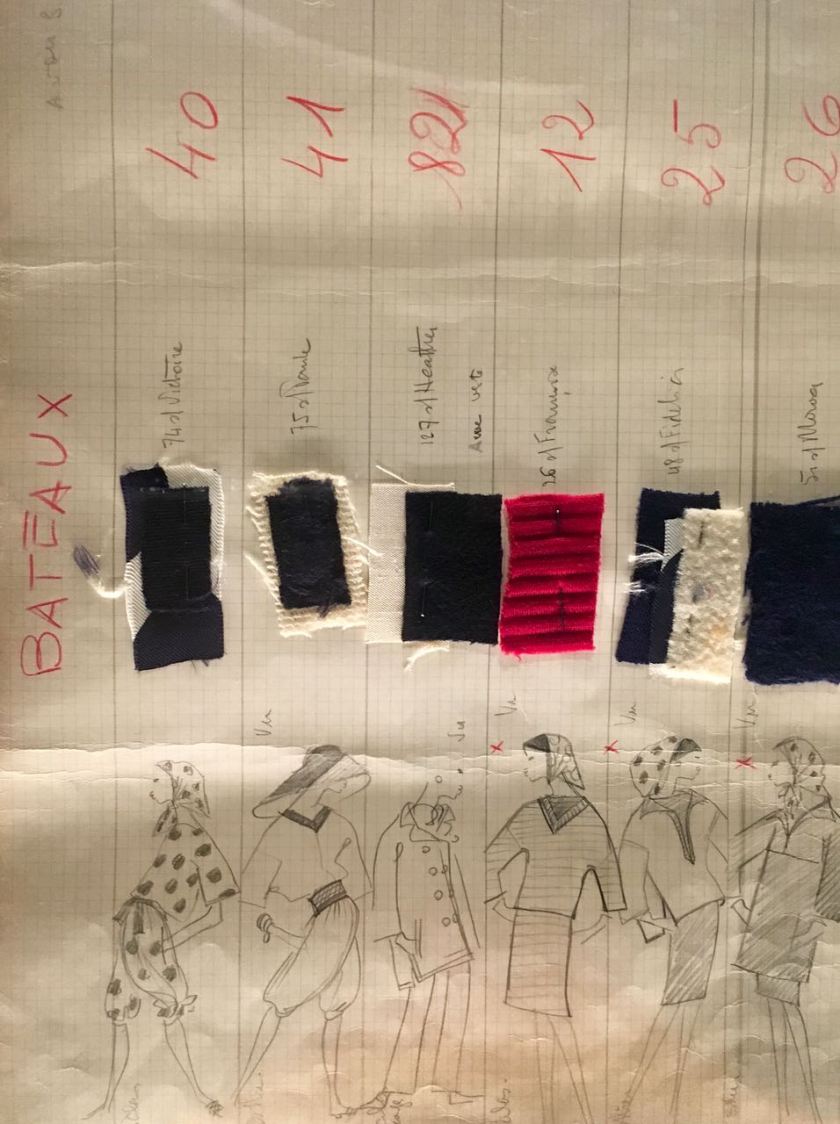
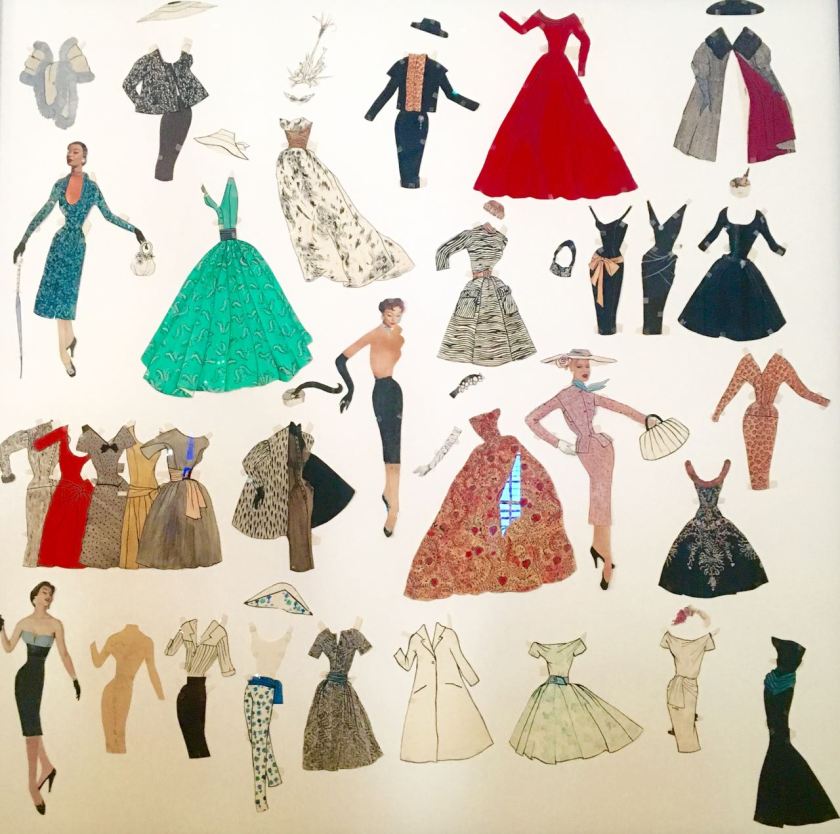
YSL’s design sketches are works of art. He could draw beautifully and was pulled toward theatre stage design and costumes, in addition to fashion. While young, he even created 11 paper dolls and more than 500 designs for them, including accessories, for two full fashion collections. He mocked up a program for each collection that listed names of the models, each piece, the location of the haute couture house and various suppliers.
IMG_3989 (1).jpg
YSL’s paper dolls

Most of YSL’s designs were sketched in his Moroccan home and their prototypes were crafted by his team working in collaboration with artisanal houses back in Paris.

Haute Couture has strict rules that could drain dry any creative person. Two collections are required each year; the spring-summer season presented in January and the autumn-winter season shown in July. Each collection contains about 100 designs, including accessories.
IMG_3998

His designs were inspired by African, Russian, Spanish and Asian cultures. He often drew upon the history of fashion and yet was adept at reflecting societal changes in his designs, such as the feminist movement in the 70s.

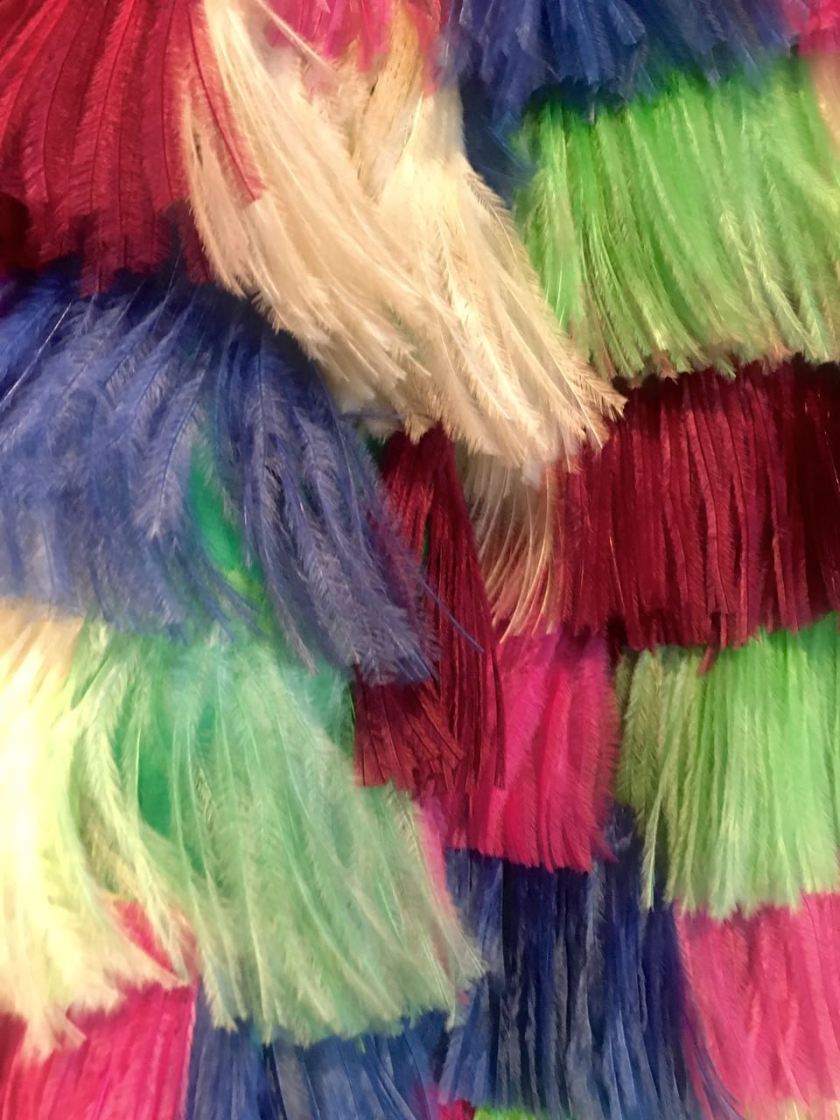
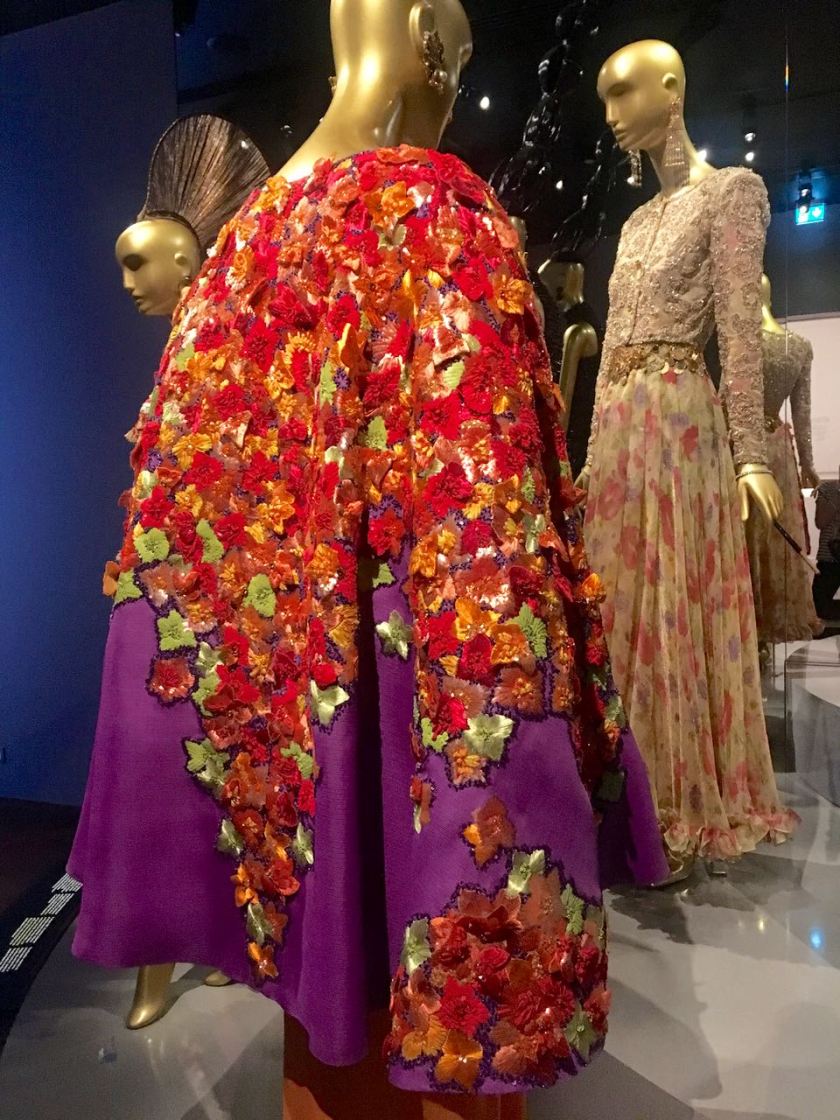
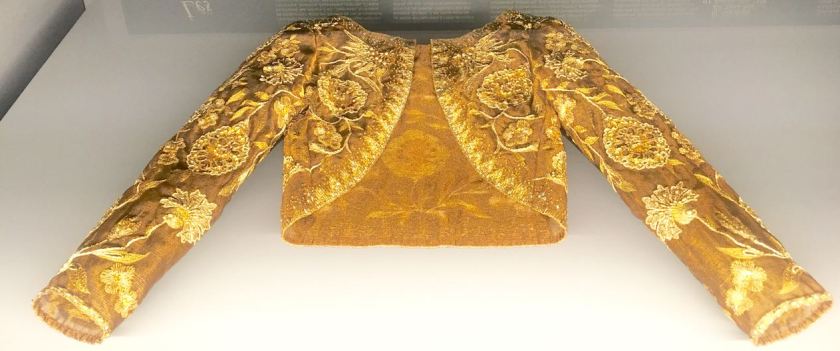
YSL’s design house employed 200 people and, like most haute couture designers, he collaborated with skilled craftspeople at French artisanal houses who used their own techniques and style to create various aspects of the clothing, including weavers, dyers, printers, embroiderers, plumassiers (deal with ornamental plumes or feathers), goldsmiths and silversmiths. One garment could take hundreds of hours to embellish. Ateliers producing high-quality commissioned work for YSL using skills handed down generation after generation included:

  • Jewelry: Goossens
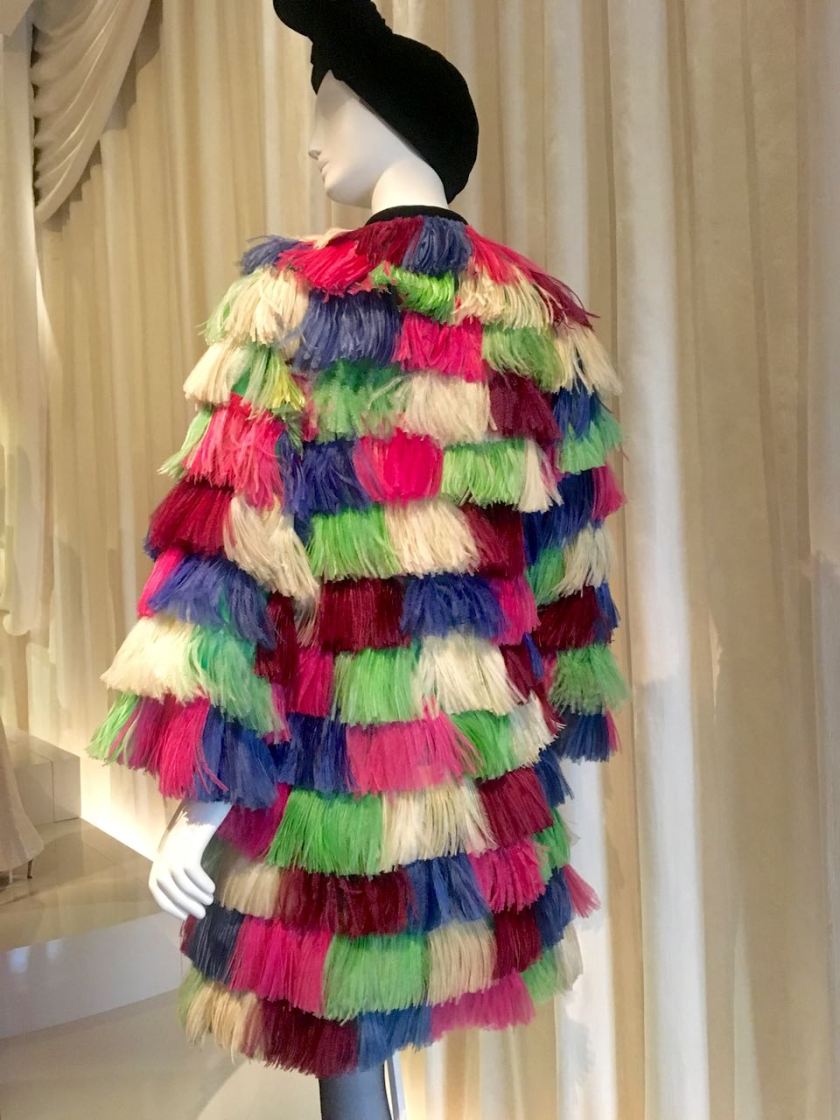
  • Featherwork: Lemarie
  • Textiles & Embroidered appliqués: Brossin de Mere
  • Printed Textiles: Abraham
  • Embroidery: Rebe, Mesrine, Lesage and Lanel
IMG_4021

IMG_4022
Close-up of feather jacket above

YSL said, “I like a dress to be simple and an accessory to be crazy.” Designing costume jewelry, rather than working with gemstones and precious metals, gave him more freedom in putting together wood, metal, rhinestones, beads, feathers, ceramics and passementerie (tassels, braids, fringing) in “crazy” necklaces, earrings and bracelets.

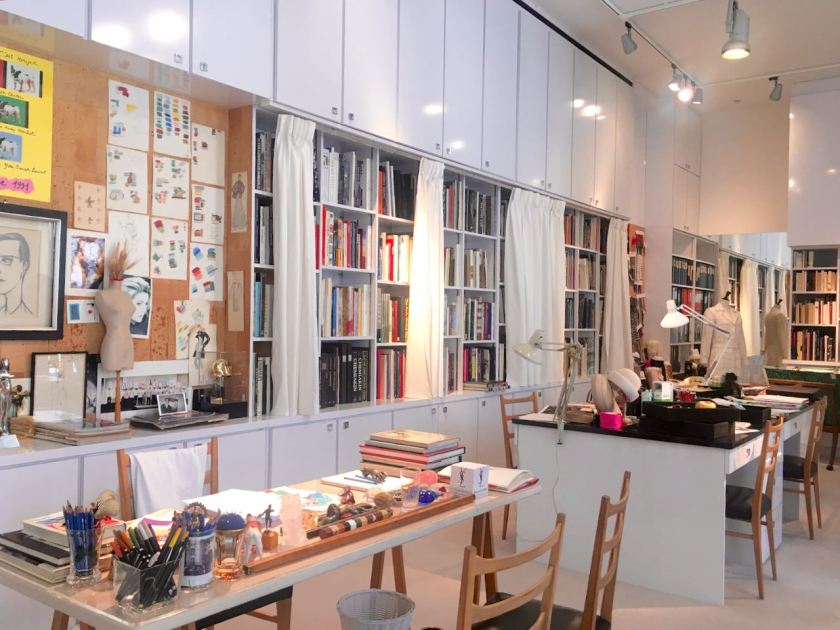
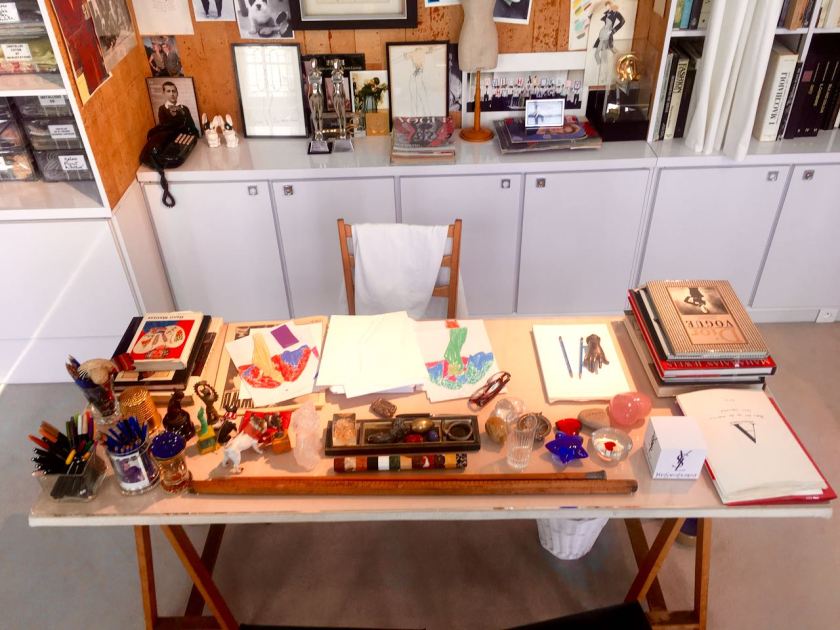
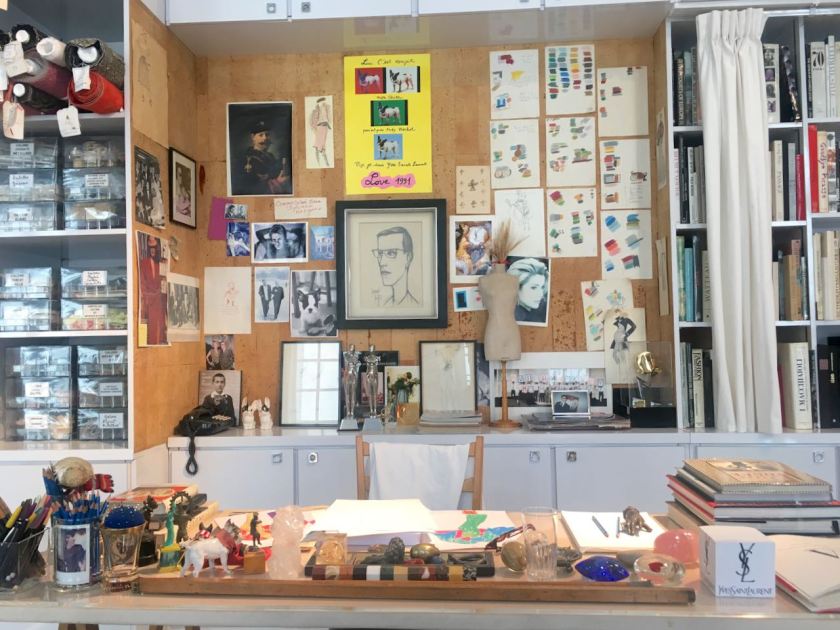
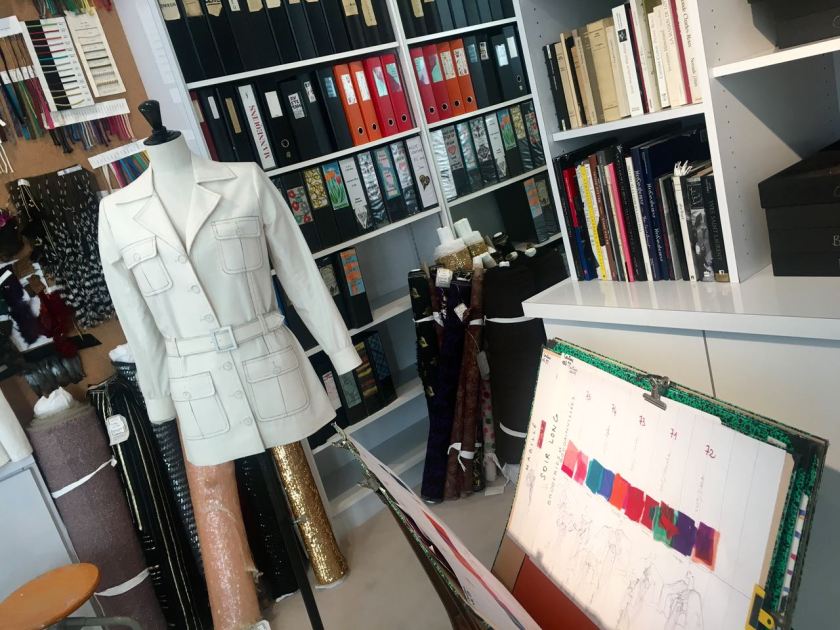
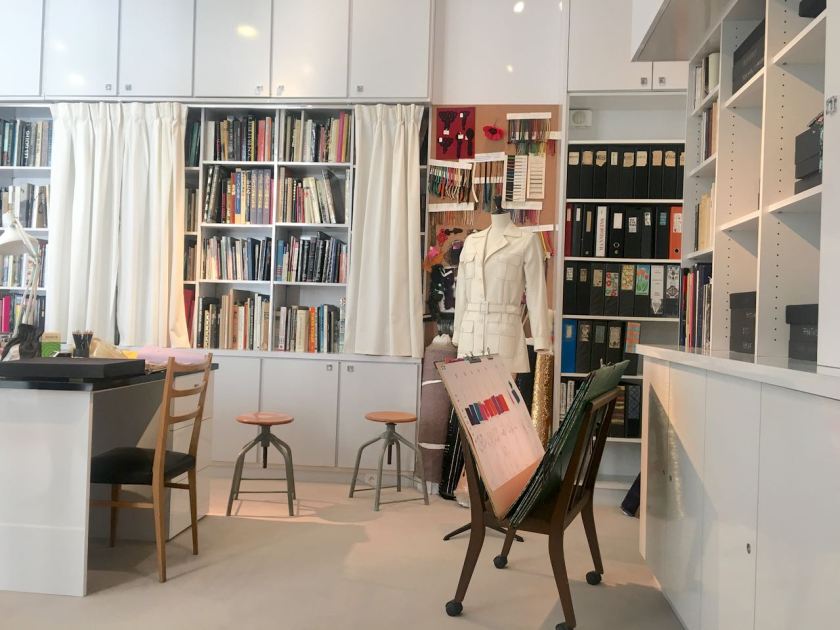
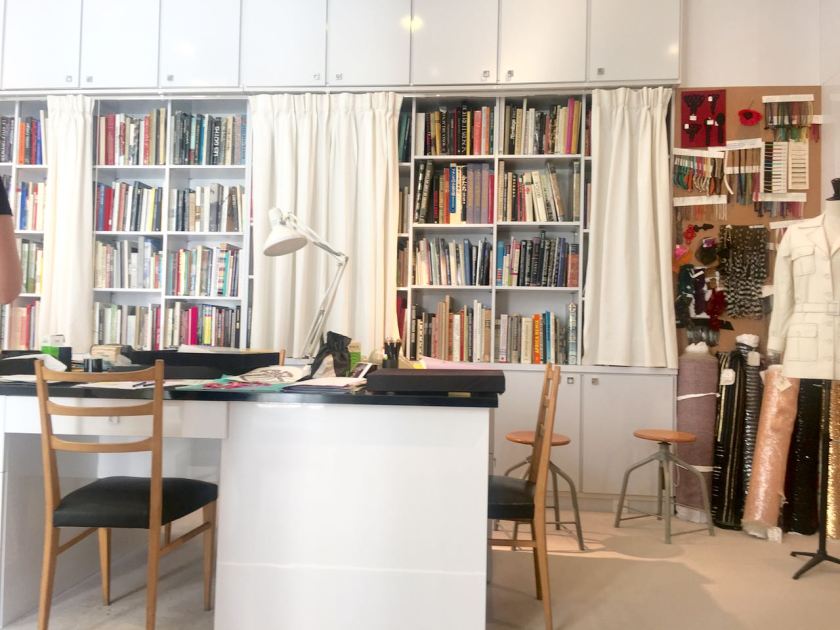
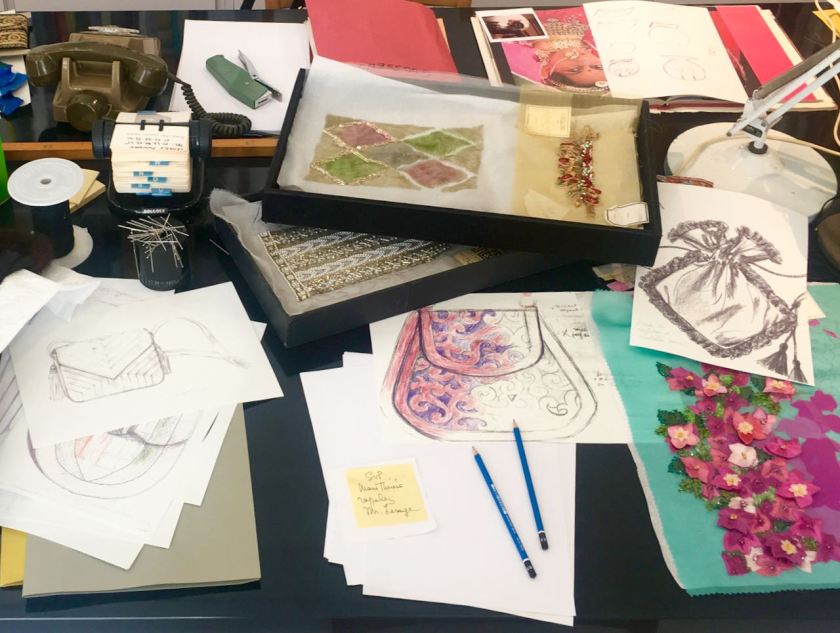
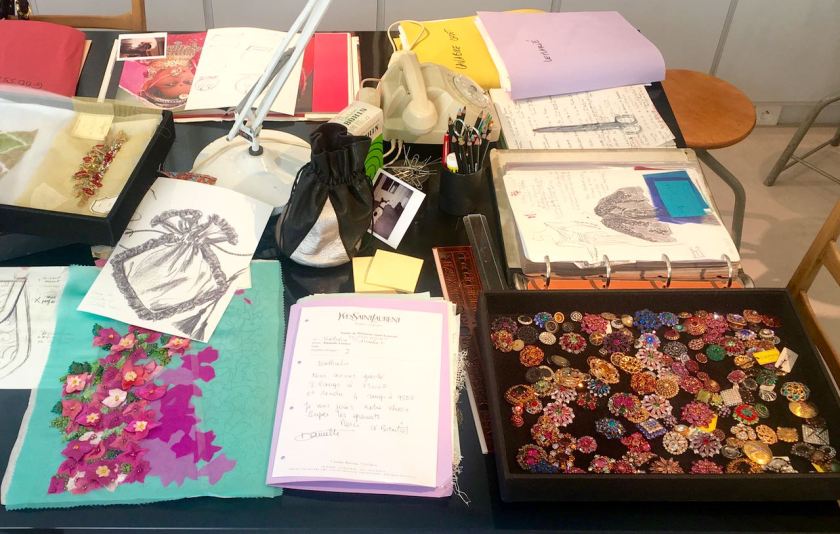
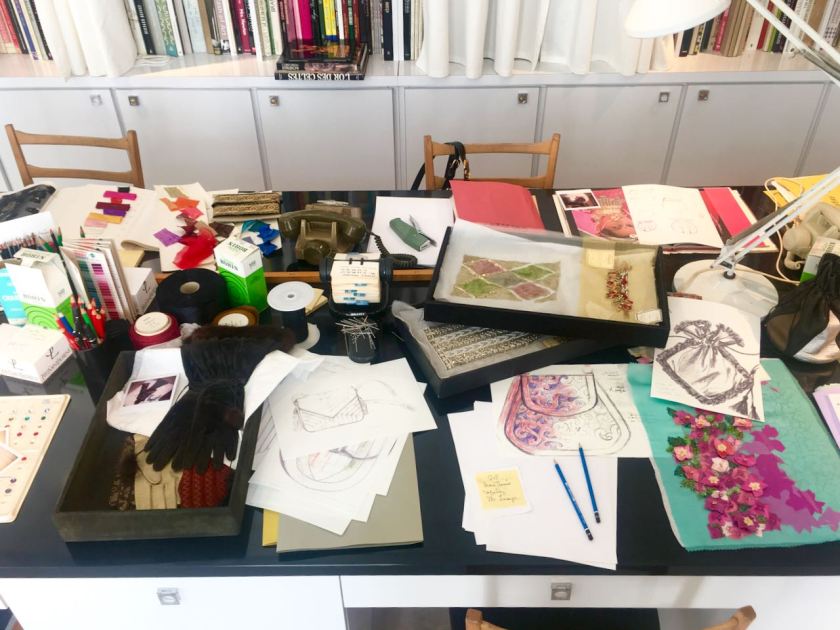
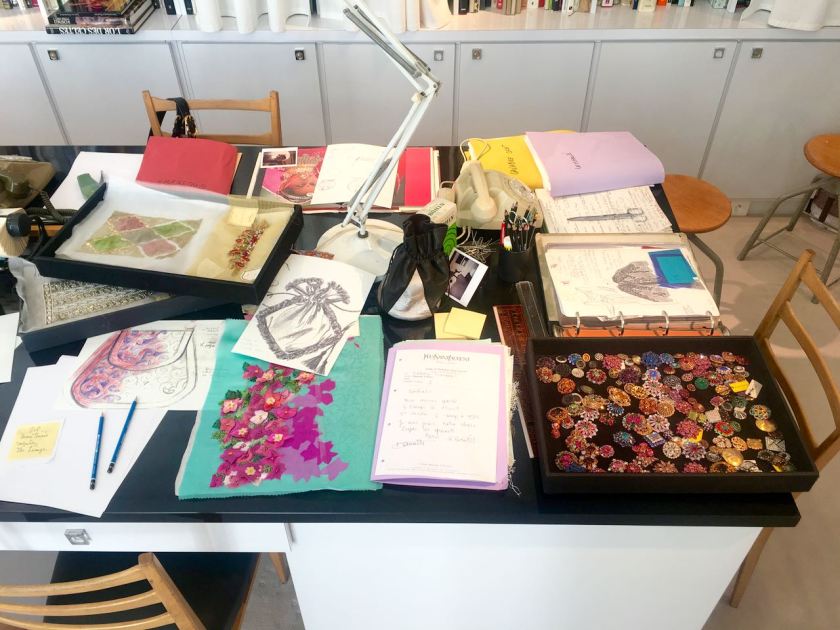
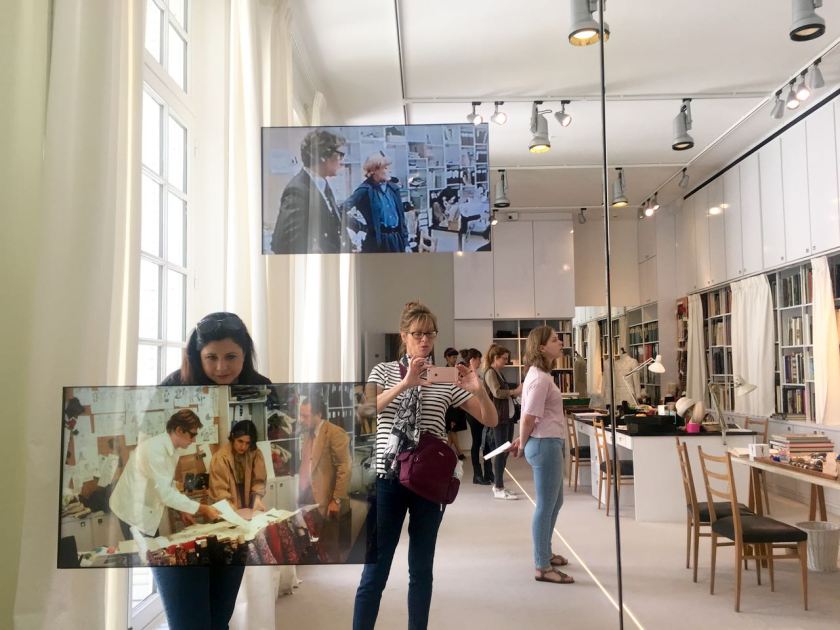
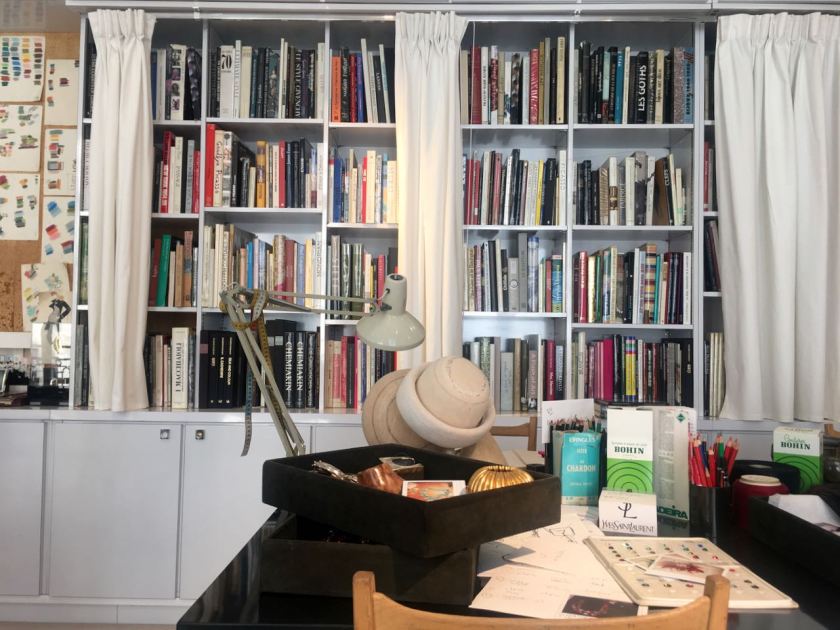
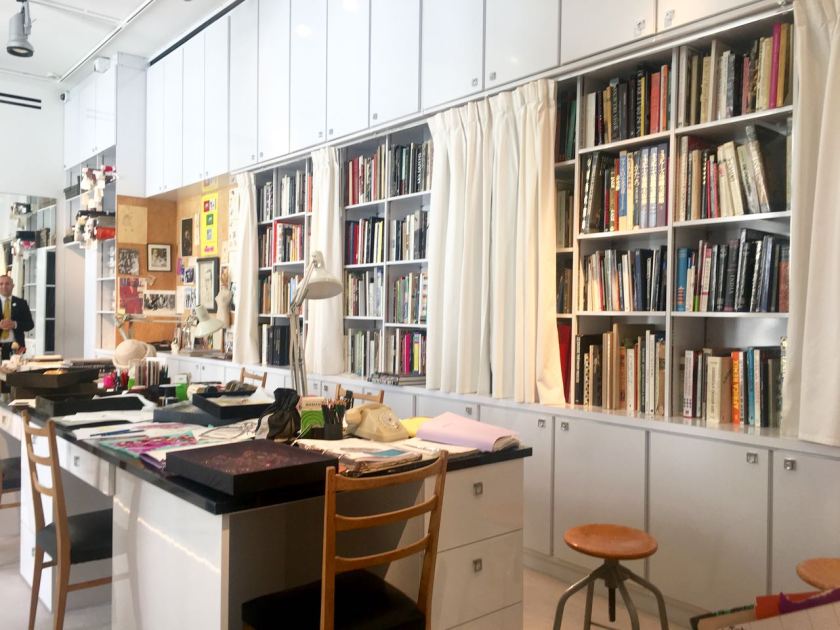
My favorite part of the museum was YSL’s studio on the top floor with windows to the ceiling, a wall of mirrors, Yves’ simple desk and work tables strewn with bobbles, sketches, embroidered pieces, Polaroid photos, feathers, etc.
IMG_4032

Different from the fancy salons downstairs, YSL’s studio was bright and quiet and the perfect place to view models in prototype garments. He found that looking at the models and garments in the mirrored wall gave him the distance needed to evaluate each piece.

Oh, and shelves of books! Fashion, art books of other topics inspired Yves. “The most beautiful trips I took were through books,” YSL said.
IMG_4029

There are six short films showing the entire couture process from sketch to purchase. Another film shows YSL’s long-term business and personal partnership with Pierre Berge, a relationship that lasted until YSL’s death from brain cancer in 2008.

The museum rotates the pieces on display, so it’s possible to visit the Musee again and again and not see the same things.

Sounds like a plan!

Photo Galleries

The Studio
IMG_4036

IMG_4035

IMG_4031

IMG_4030

IMG_4025

IMG_4023

IMG_4024

The Desktop

Version 2

Version 2

IMG_4027

IMG_4026

The Sketches

IMG_4001

IMG_4004

IMG_3995

IMG_3994
YSL sketched this Givenchy gown
IMG_3992
YSL sketched this Dior gown
IMG_3991
YSL sketched this Balenciaga gown

IMG_4007

IMG_4005

IMG_4003

IMG_4002

The Clothes

IMG_4019

IMG_4020

IMG_4016

IMG_4018

IMG_4012

IMG_4011

IMG_4008


Paris Street Art

Street art ain’t just stencils anymore… but we still love stencils.

The Bright and The Beautiful

My only disappointment about Paris was missing Banksy by one day. The famous British street artist has been in the City of Love lately posting art that mostly jabs at the French government’s treatment of immigrants.

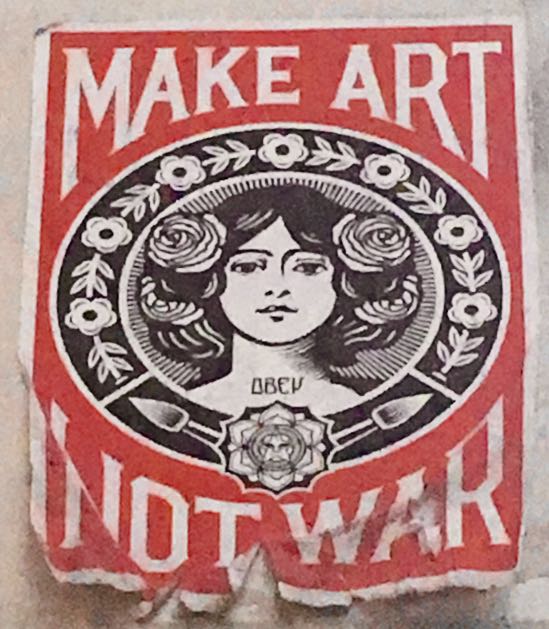
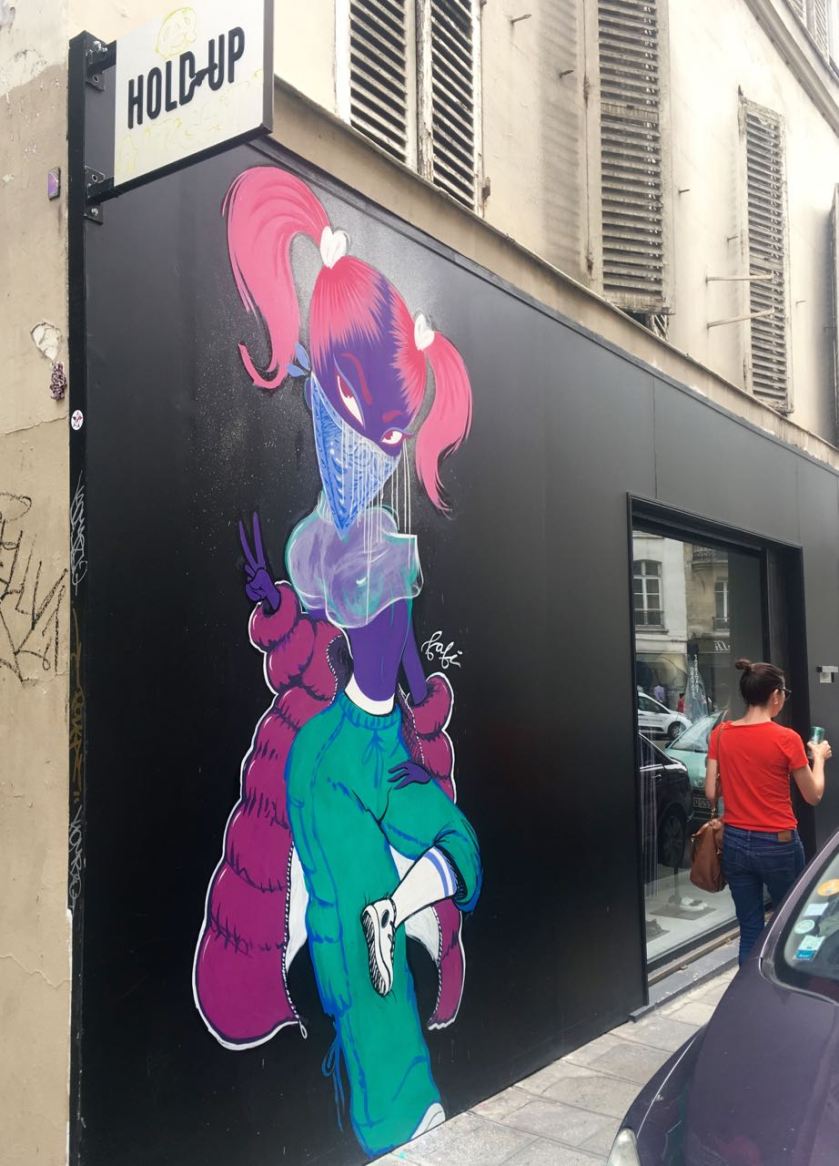
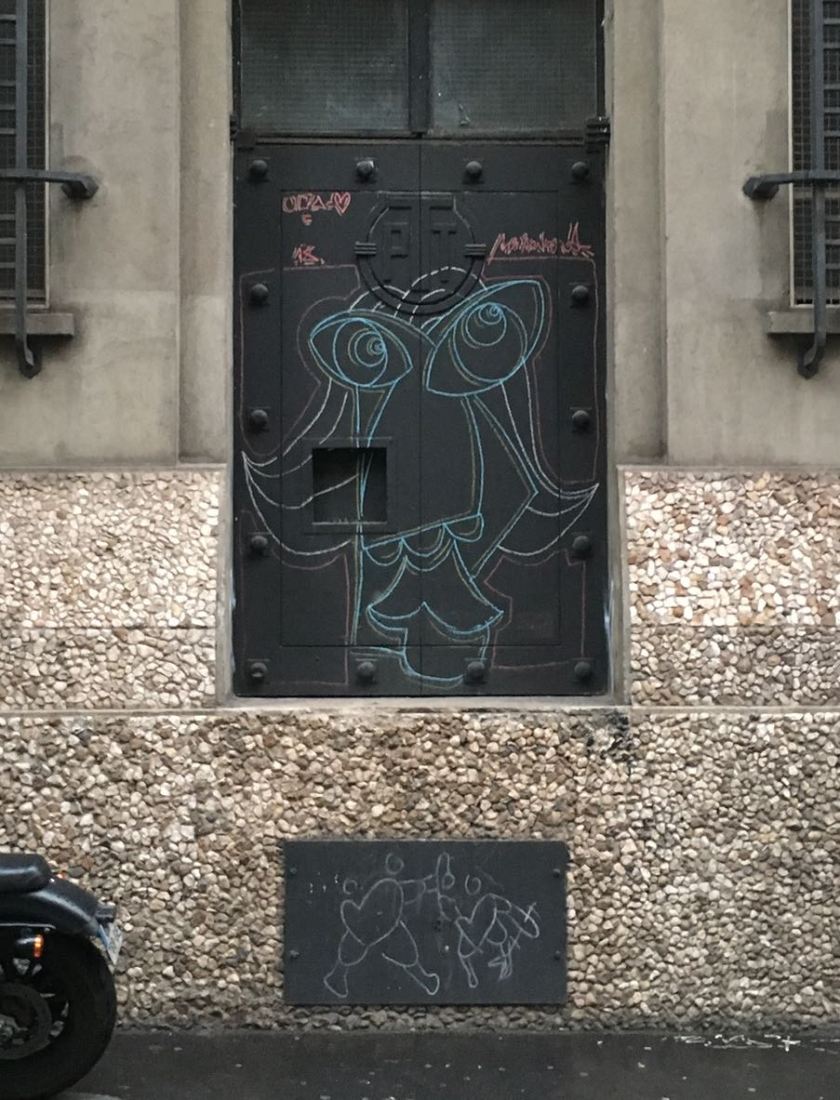
Before Banksy arrived, my daughter and I enjoyed photographing graffiti in Paris, mostly in Le Marais, and the third and fourth arrondissements.  I was intrigued to see not just paint, but also paper collages and plaques used on walls.

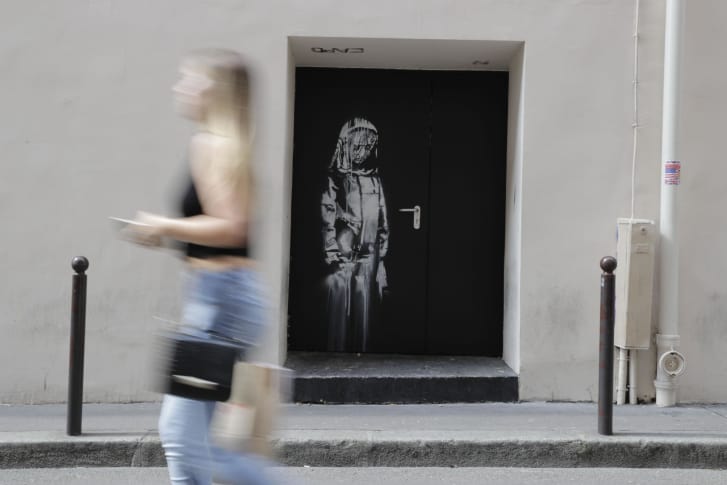
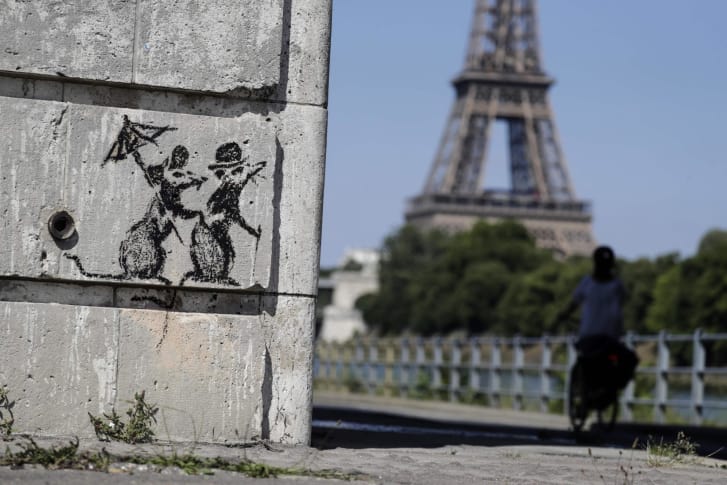
Here’s what we found (including a few of Banksy’s latest works captured by photojournalists).

IMG_3465

IMG_3557

IMG_3558

IMG_3560
Giant paper collage, perhaps my favorite
Do not dream, fly with your wings
Translation: Don’t dream, fly with your wings
Version 2
Close-up of plaque from previous photo

IMG_3578 (1)

IMG_3576
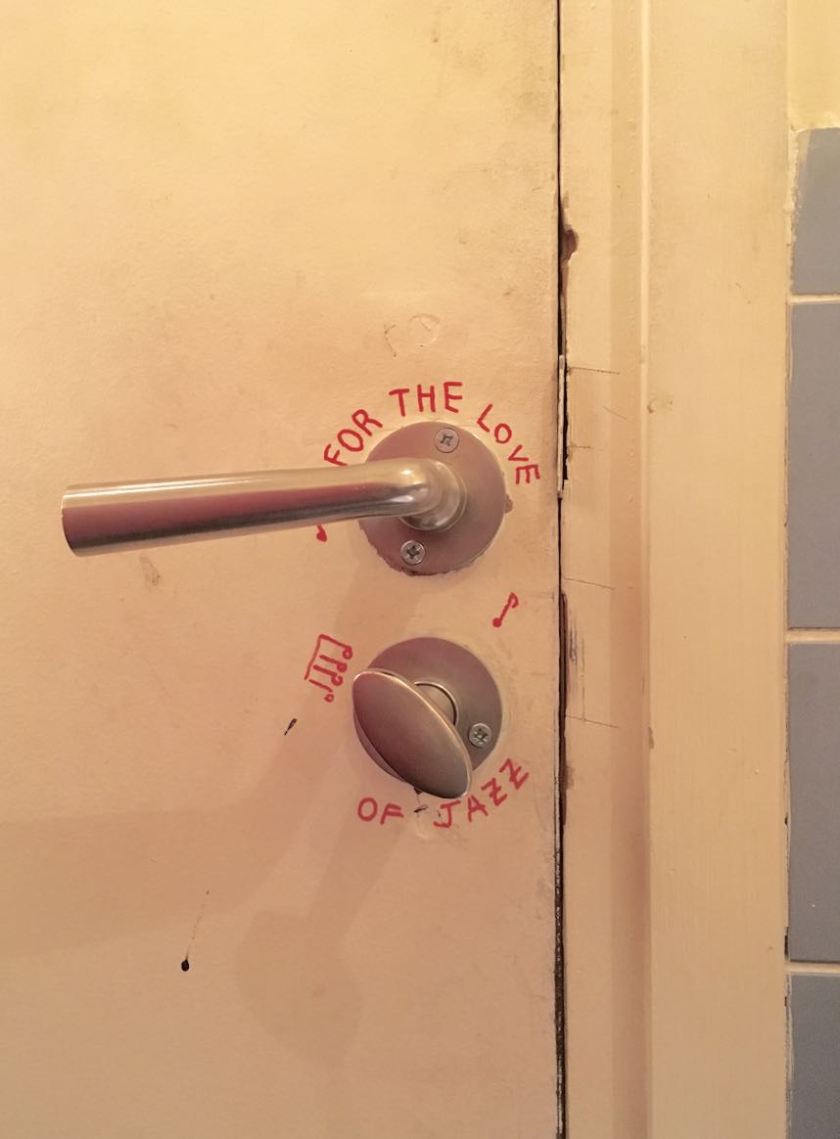
Okay, this isn’t street art, but it was on the bathroom door at Duc des Lombard Jazz Club and the French love American Jazz. Plus, it’s written in English

IMG_3579

IMG_3569


IMG_3841
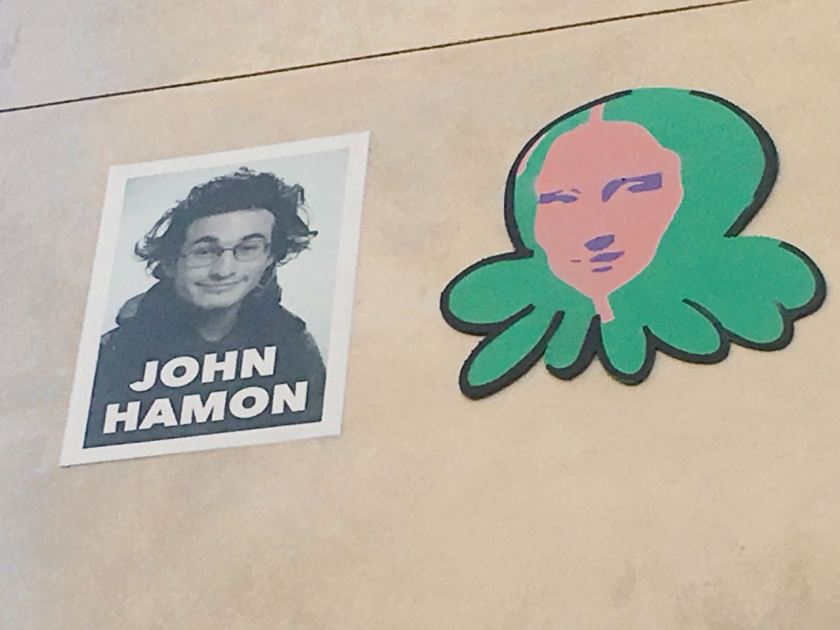
For 18 years, this portrait of John Hamon has been plastered around Paris. It’s the guy’s actual name and his actual photo, taken when he was 19. A bit of a mystery, his portrait has been projected onto the Eiffel tower, Arche de Triomphe and other famous facades. Essentially, he’s playing around with the idea of art being about promotion, rather than skill. His portrait has found its way around the world, so exposure versus talent is definitely a concept to ponder. The octopus is another common graffiti subject in Paris, but with Mona Lisa’s face, it’s irresistible. Notice any resemblance between John Hamon and Mona Lisa?
IMG_3581
Not street art, but interesting theatrical notices
Look at you, you are beautiful
Randomly-placed mirror. Translation: Look at you, you are beautiful. Yes, I’m talking to you!

IMG_3582

Banksy Paris - Thomas Samson
Banksy’s tender reminder of last year’s terrorist bombing in Paris. Photographer: Thomas Samson/AFP
Banksy Paris - Thomas Samson 2
Whimsical Banksy. Photographer: Thomas Samson/AFP
180627-banksy-paris-mc-Philippe Lopez
Heart-breaking Banksy. Photographer: Philippe Lopez/AFP
180626-banksy-paris-Philippe Lopez-AFP
Ringing-the-alarm Banksy. Photographer: Philippe Lopez/AFP

Monet’s Garden

The Ultimate Creative Space

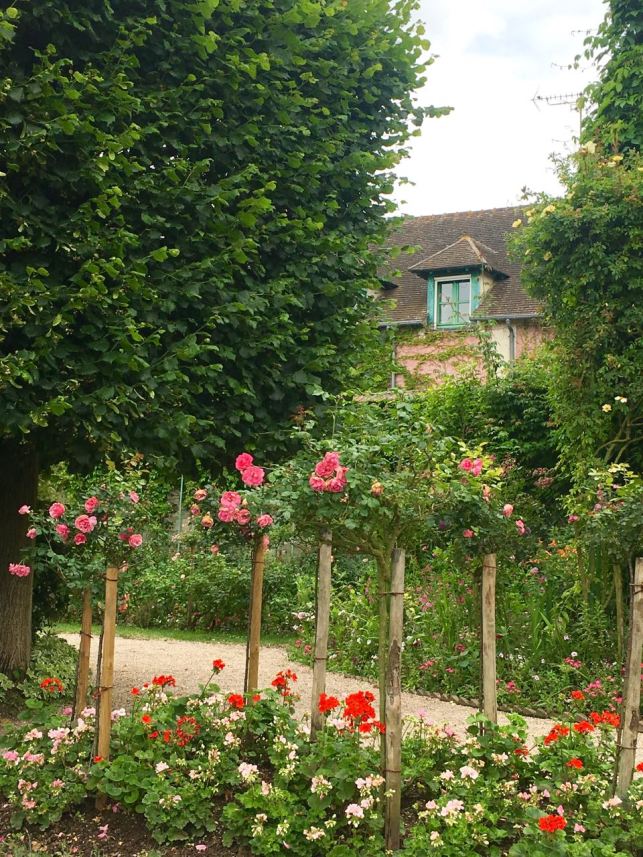
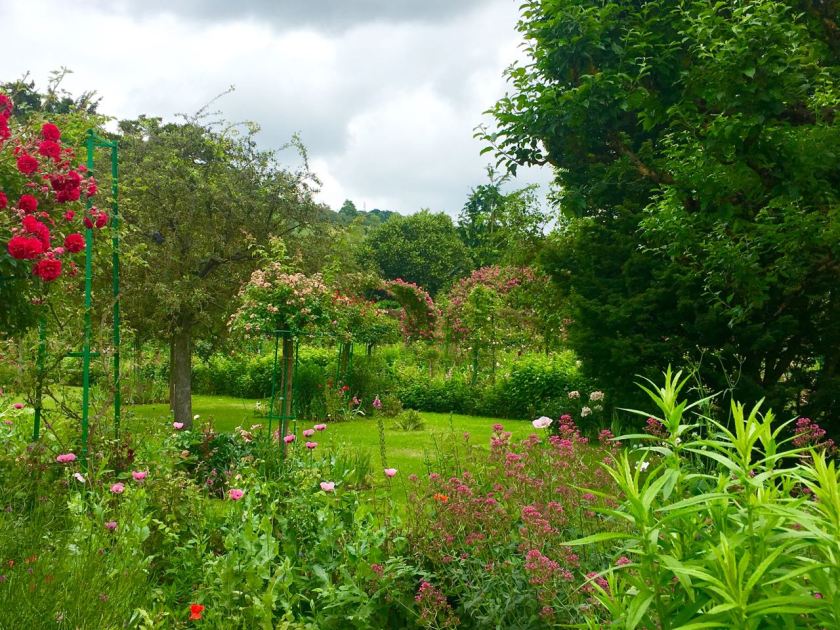
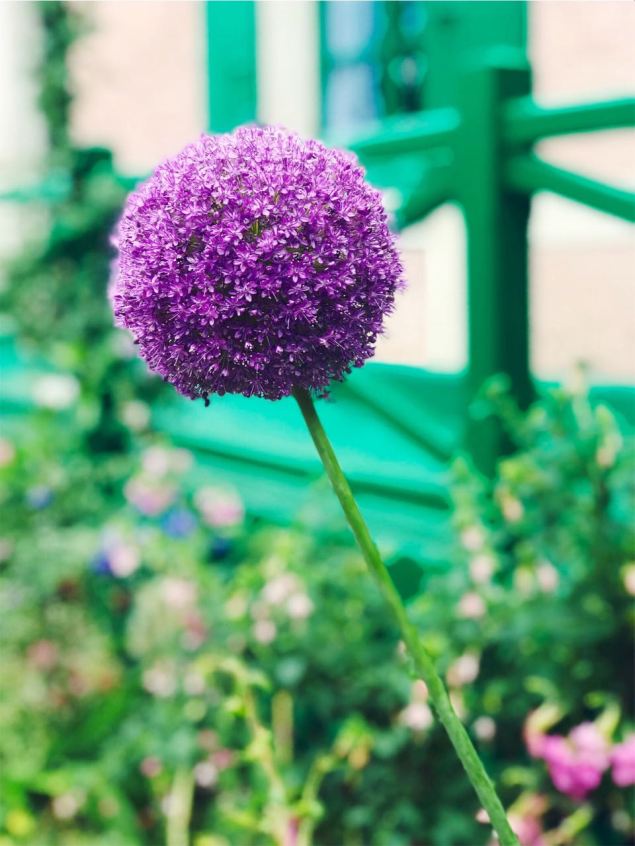
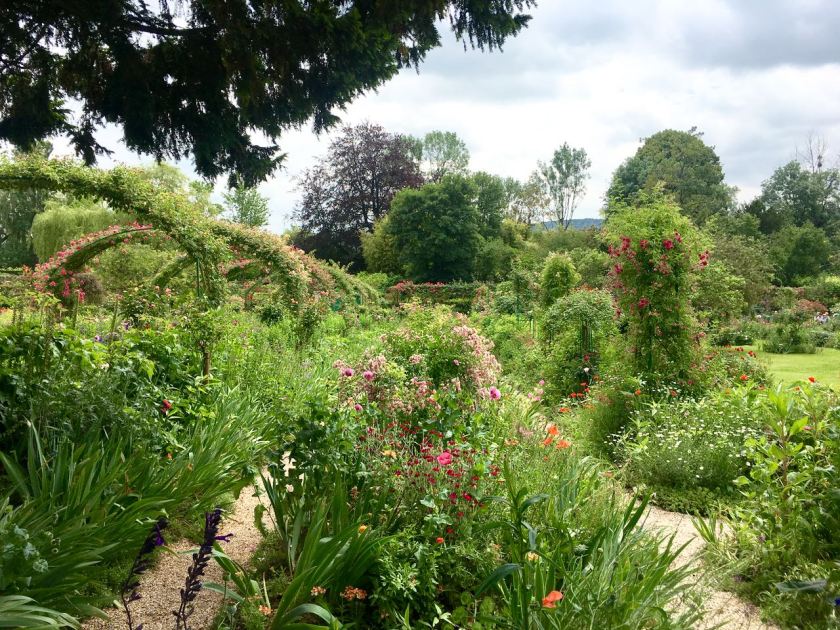
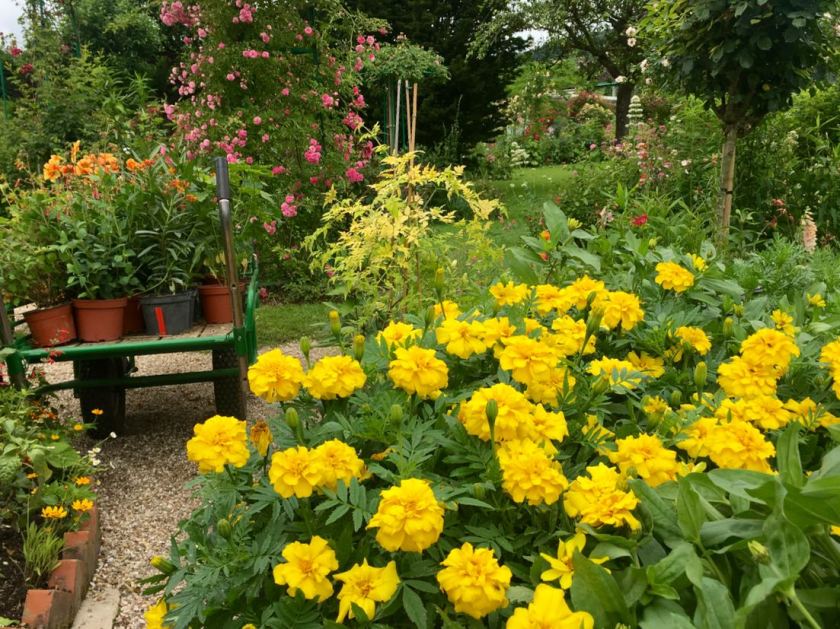
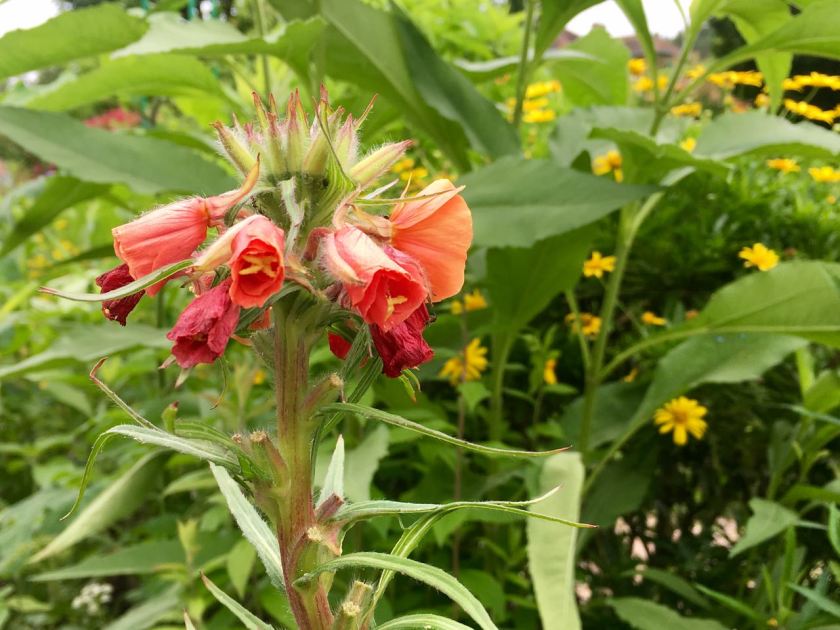
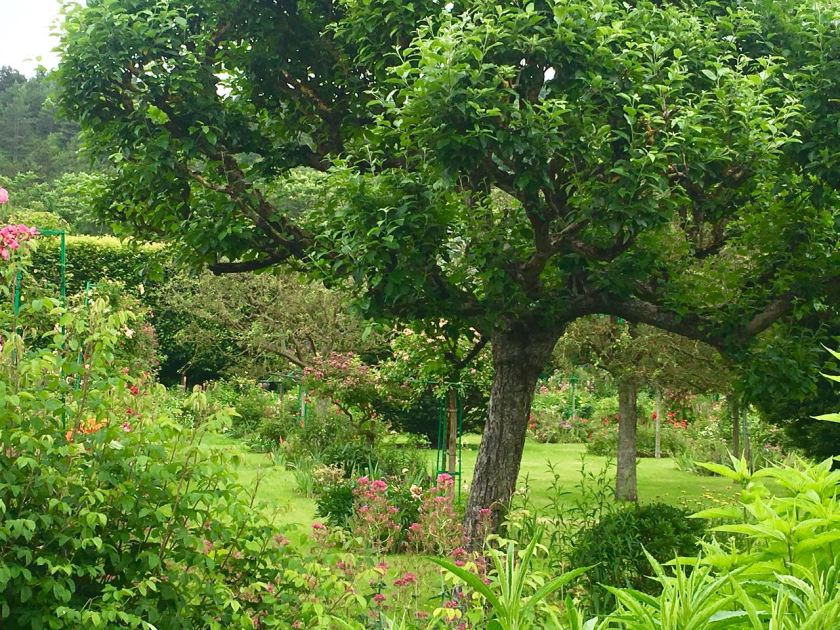
Claude Monet (1840 -1926) is known around the world for his impressionist paintings, especially of his garden and waterlily pond, but he also strategically planted specific-colored flowers in his gardens, essentially “painting” the landscape in front of his home in the tiny village of Giverny, France, about an hour’s drive northwest of Paris.

IMG_3634

Monet grew his flower garden like a florist arranges a vase of flowers, based on colors and shapes, carefully choosing flowers for spring, summer and autumn. For winter, he got his fill of flowers by visiting  orchids in his greenhouse. 

IMG_3753
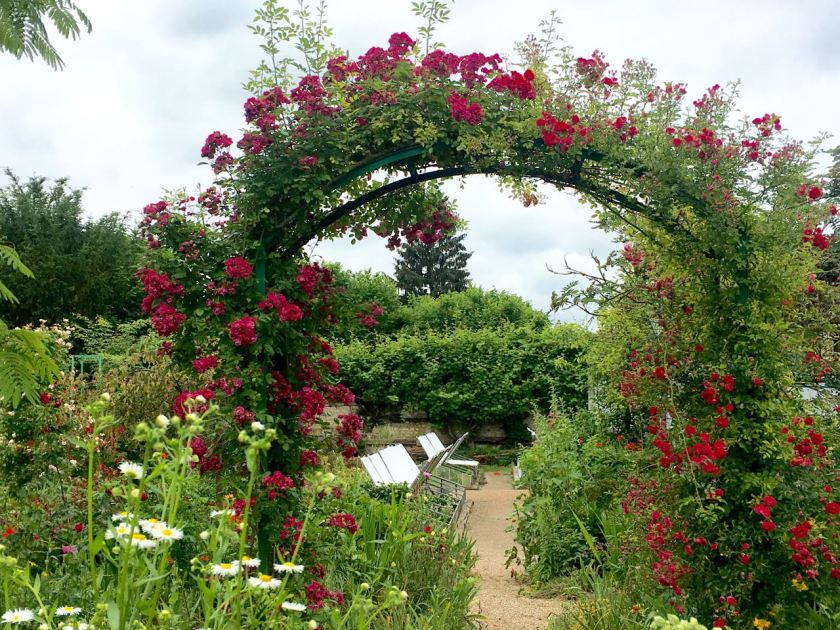
The Grande Allee flower tunnel with rambling roses
IMG_4070
Monet in the Grande Allee

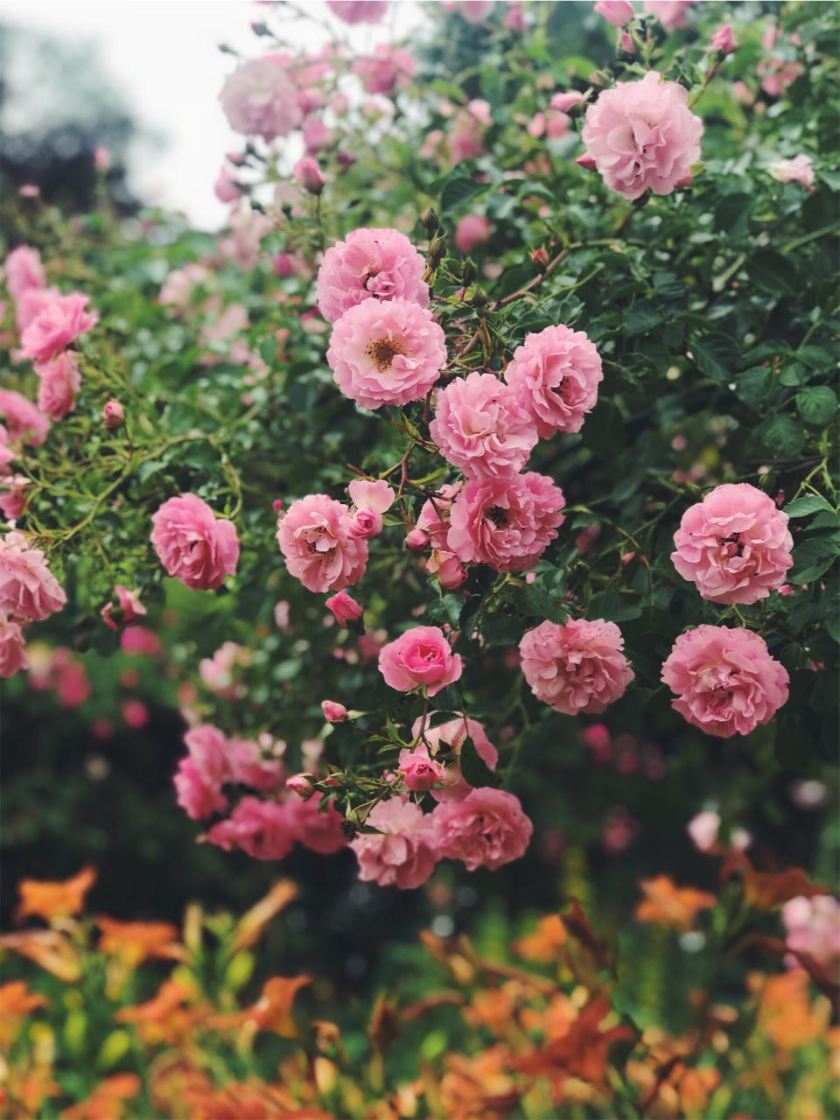
From the age of 43 until his death 40 years later, Monet obsessed over the garden and pond which, combined, comprised nearly five acres of common and exotic plants from around the world. (Monet favored single flowers and his favorite of all was the single-flowered “mermaid” rose in yellow, which he grew under his bedroom window.)

IMG_3622

Eventually six gardeners would be on hand to help Monet “paint” his landscape with flowers. His gardens became his living studio, so he no longer had to trek into the countryside to paint plein air, which is what made the Impressionist painters and their paintings unique.

Monet's Garden at Giverny
Monet’s Garden at Giverny, 1900, oil on canvas, 31 5/8 x 35 7/8 inches; Musee d’Orsay, Paris

“Impressionist paintings take a fleeting moment and wrap it in light and mood and emotion,” writes Matt Brown in Everything You Know about Art is Wrong. The fuzzy paintings of early French Impressionists like Monet, Degas (1834-1917), Pissarro (1830-1903), Renoir (1841-1919) and Sisley (1839-99) were roundly criticized and mocked with descriptions of “intolerable monstrosities,” “ridiculous and horrible” and “victims of an unlucky disease.”

IMG_3930 (1)
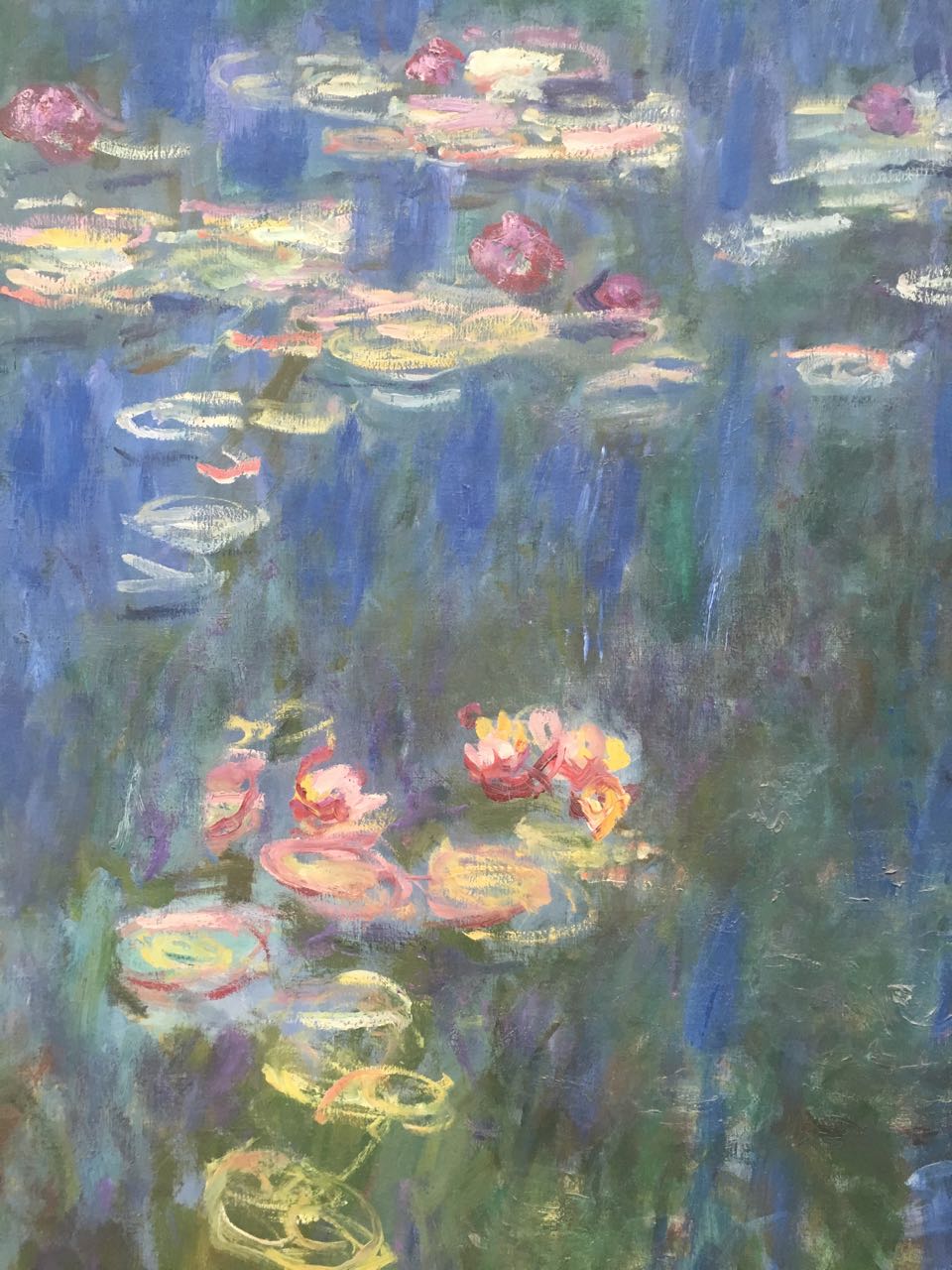
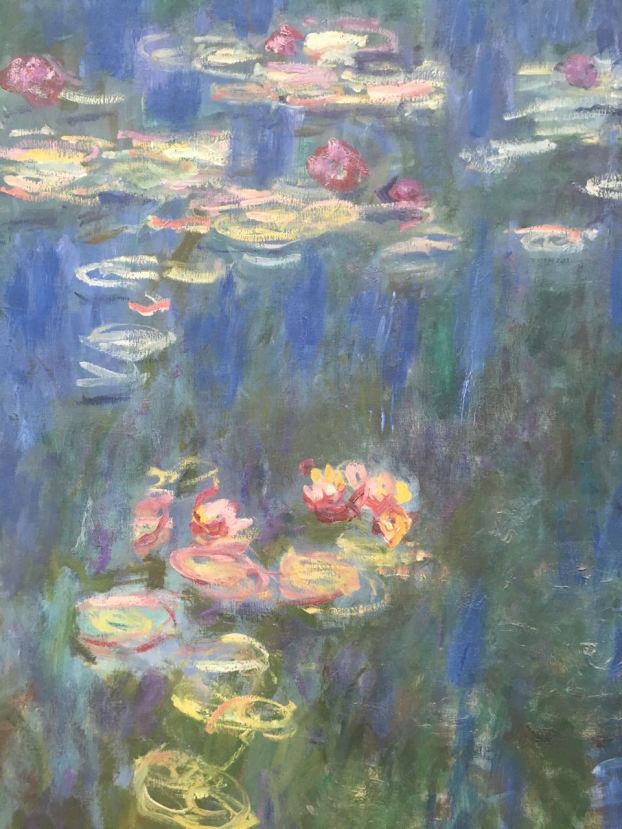
A detailed close-up of one of Monet’s giant waterlily paintings at Musee de L’Orangerie

Matt Brown believes impressionist paintings are now so respected and loved “they might even be considered among the finest achievements of our species.”

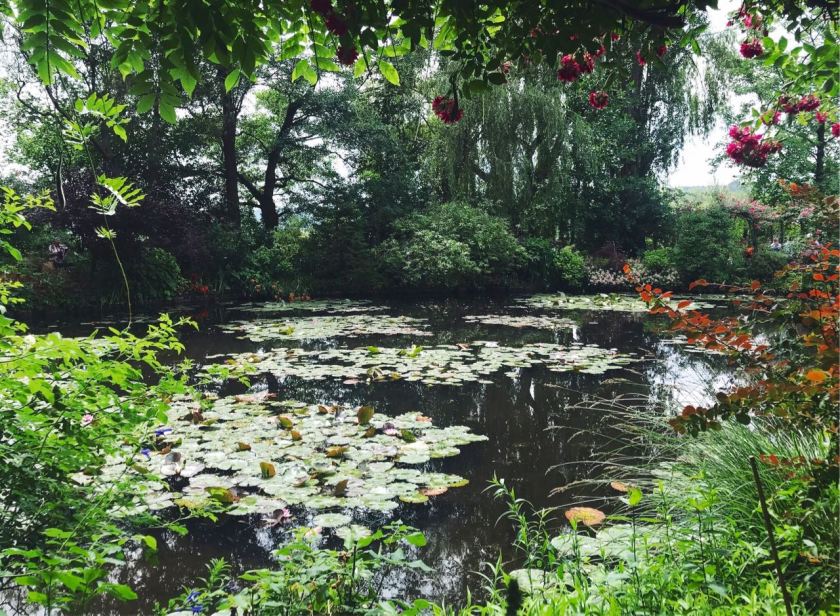
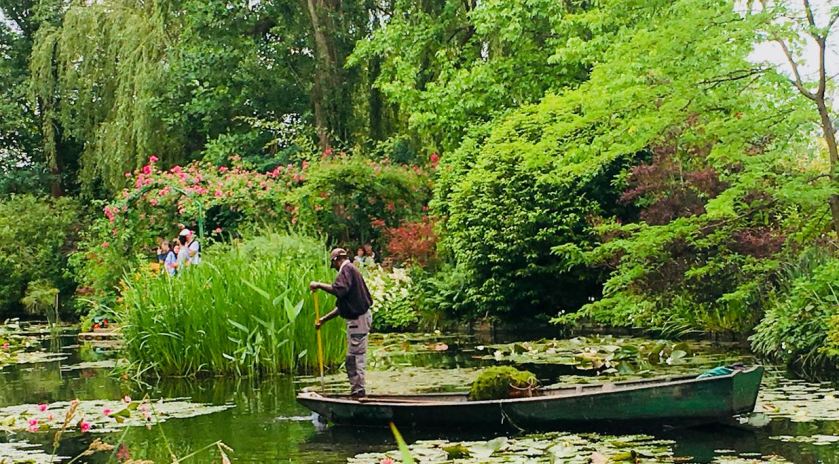
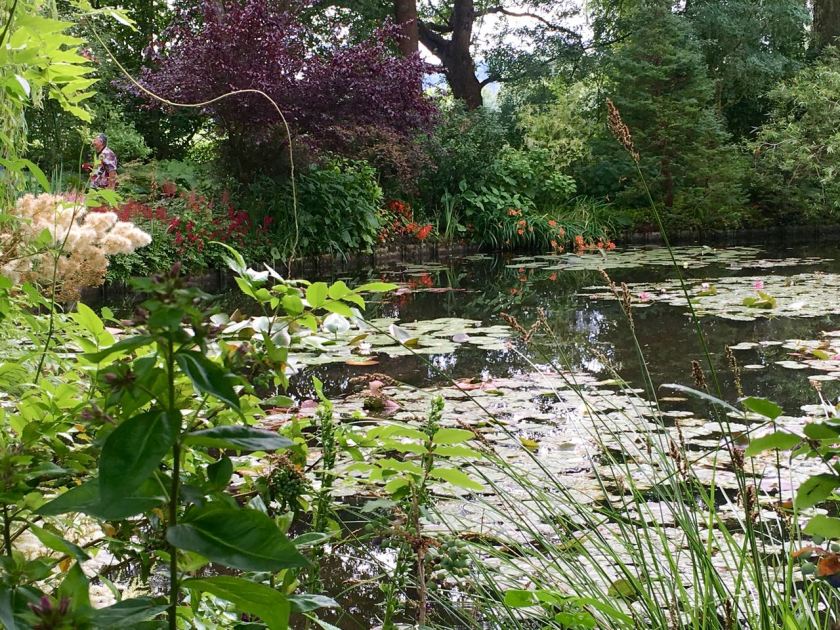
As for the pond, Monet hired a special gardener who would row a little boat around early in the morning (before Monet started painting) to clean up algae and groom the lily pads to grow in visually-pleasing circular clumps.

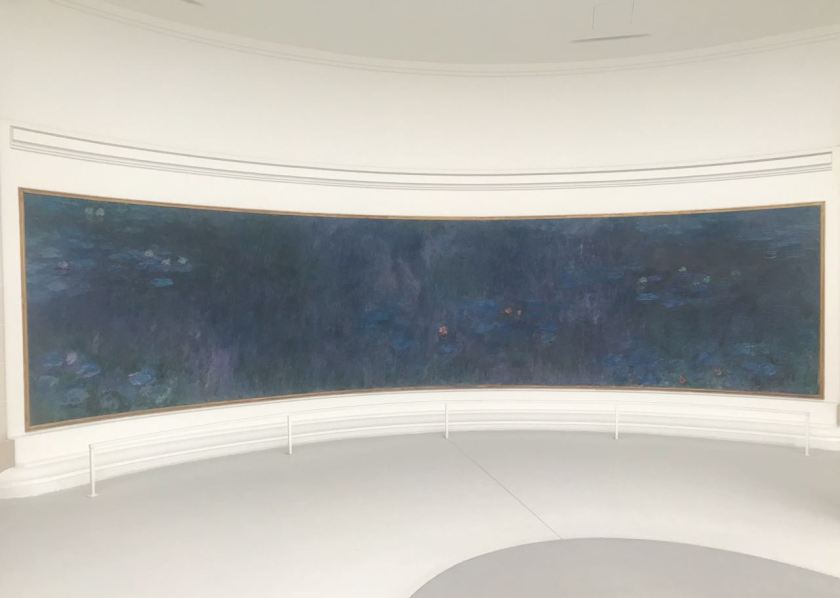
His waterlily paintings blew the minds of folks in his day. They were used to tranquil pastoral settings composed as seen; land and sky. Monet’s waterlily paintings had no setting, no pond’s edge or sky to compose a nature scene. He simply put his pond border to border and rocked the art world.

IMG_4060

Monet considered his gardens his greatest masterpiece. In 1907, Marcel Proust wrote:

“If I can someday see M. Claude Monet’s garden, I feel sure that I shall see something that is not so much a garden of flowers as of colors or tones, less an old-fashioned flower garden than a color garden, so to speak, one that achieves an effect not entirely nature’s, but it was planted so that only the flowers with matching colors will bloom at the same time, harmonized in an infinite stretch of blue or pink.”

That’s exactly what Proust would have seen.

IMG_3762

These days, the little country road that separates the front yard from the pond has a tunnel underneath so guests can easily and safely move between the two distinct gardens.

On the June 2018 day we visited, a gardener was quietly rowing around the pond, skimming debris and making the surface of the water like a mirror, just as Monet would have liked. In front of the house, men and women were putting out plants and grooming others in a never-ending homage to Monet for visitors from all over the world to enjoy.

IMG_3809


People speaking many languages mingled around the garden and pond paths, posing on the arched, green Japanese bridge. Groups of school children, some as young as four or five, were led through the house, garden and around the pond. Perhaps one day these little ones will be inspired to become gardeners, landscape architect or even artists. After all, culture and the arts are France’s most prized possessions.

IMG_3745
Gardeners at work in Monet’s garden; the house roof is in the distance

The house, with a verdant hill sloping up behind, is very wide, but only one room deep, and Monet’s use of color throughout seems whimsical, which is why photos of the home’s interior are included below.

IMG_3831 (1)
The Village of Giverny

Musee de L’Orangerie

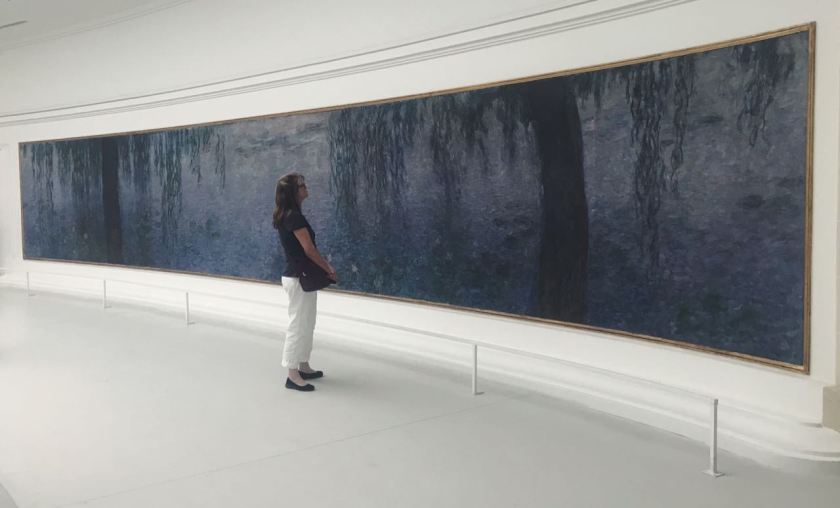
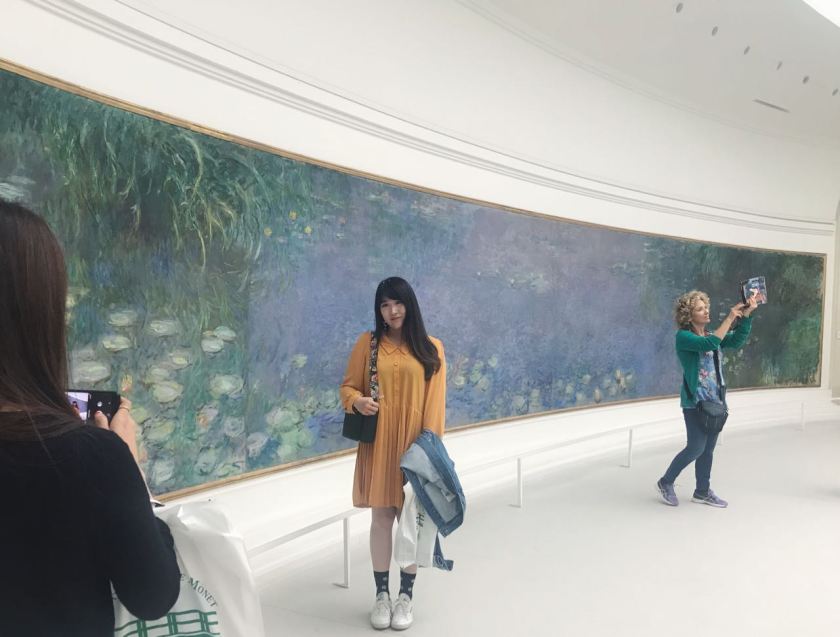
Before his death, Monet worked with the Musee de L’Organgerie in Paris, very close to the Louvre, to create the perfect display for eight of Monet’s massive waterlily paintings. He finally decided on elliptical walls. Here are a few excellent photos taken by my daughter Jaime of the giant paintings on display in two elliptical-shaped rooms at Musee de L’Orangerie.

Processed with VSCO with f2 preset

Processed with VSCO with f2 preset

Processed with VSCO with f2 preset
That’s me, contemplating the pond we had just seen the day before

Monet in Motion

Watch Monet at age 74 painting at his lily pond. The only known footage of Monet, the film was shot in the summer of 1915 by French activist and dramatist Sacha Guitry.

Monet paints by the pond.

The Garden

IMG_4067
Photo by Jaime
IMG_4066
Photo by Jaime
IMG_4065
Photo by Jaime

IMG_3821

IMG_3626

IMG_3721

IMG_3630

IMG_3632

IMG_3754

IMG_3757

IMG_3760

IMG_3761

The Pond

Waterlilies and Japanese Bridge
Waterlilies and Japanese Bridge, Claude Monet, oil on canvas, 31 5/ x 31 5/16

IMG_3810

IMG_3807
Jaime on the Japanese bridge

IMG_3784

IMG_3790

IMG_3804

The House

IMG_3649
Monet’s in-home studio/office
IMG_3658
Monet in his in-home studio/office

IMG_3641

IMG_3701

IMG_3697

Claude Monet in Studio at Giverny
Monet in his third and final studio at his home in Giverny; with his large waterlily paintings
J&C
We couldn’t resist taking a photo in Monet’s bedroom

JoAnne Meeker, Painter

JoAnne Meeker returns to painting 50 years later!

From Painter to Illustrator to Photographer and back to Painter

JoAnne Meeker, at 60, has the fresh-scrubbed face of a teenager, complete with a freckle-splashed nose and enough youthful ambition to take on oil painting after a professional career as a photographer and advertising agency owner.

IMG_3141

JoAnne proves we can reinvent ourselves at any time, as long as we’re willing to study, work hard and make mistakes. She began her training as a painter at the age of 11 in Destin, Florida, with private lessons and her mother’s encouragement.

“I always knew I’d be an artist,” JoAnne says. “And more specifically, a painter.”

Now, she’s picked up brushes again and is seeking her groove.

arizona-tags 9 x 12
Arizona Tags, 9 x 12 inches, oil on canvas

“Learning to paint is like learning a new language,” JoAnne says. “I’m trying different techniques, which often feel awkward, just like learning new words and pronouncing them wrong. People might laugh, but I keep going.”

After attending the University of Kansas School of Fine Art, the Kansas City Art Institute and the Art Institute of Southern California, JoAnne started her career in advertising as an illustrator in her 20s. She moved to California to be in the movie business. When that didn’t pan out, she started her own design agency at the age of 26 and called it “Kaos & Harmony.” Her firm specialized in marketing for the retirement industry.

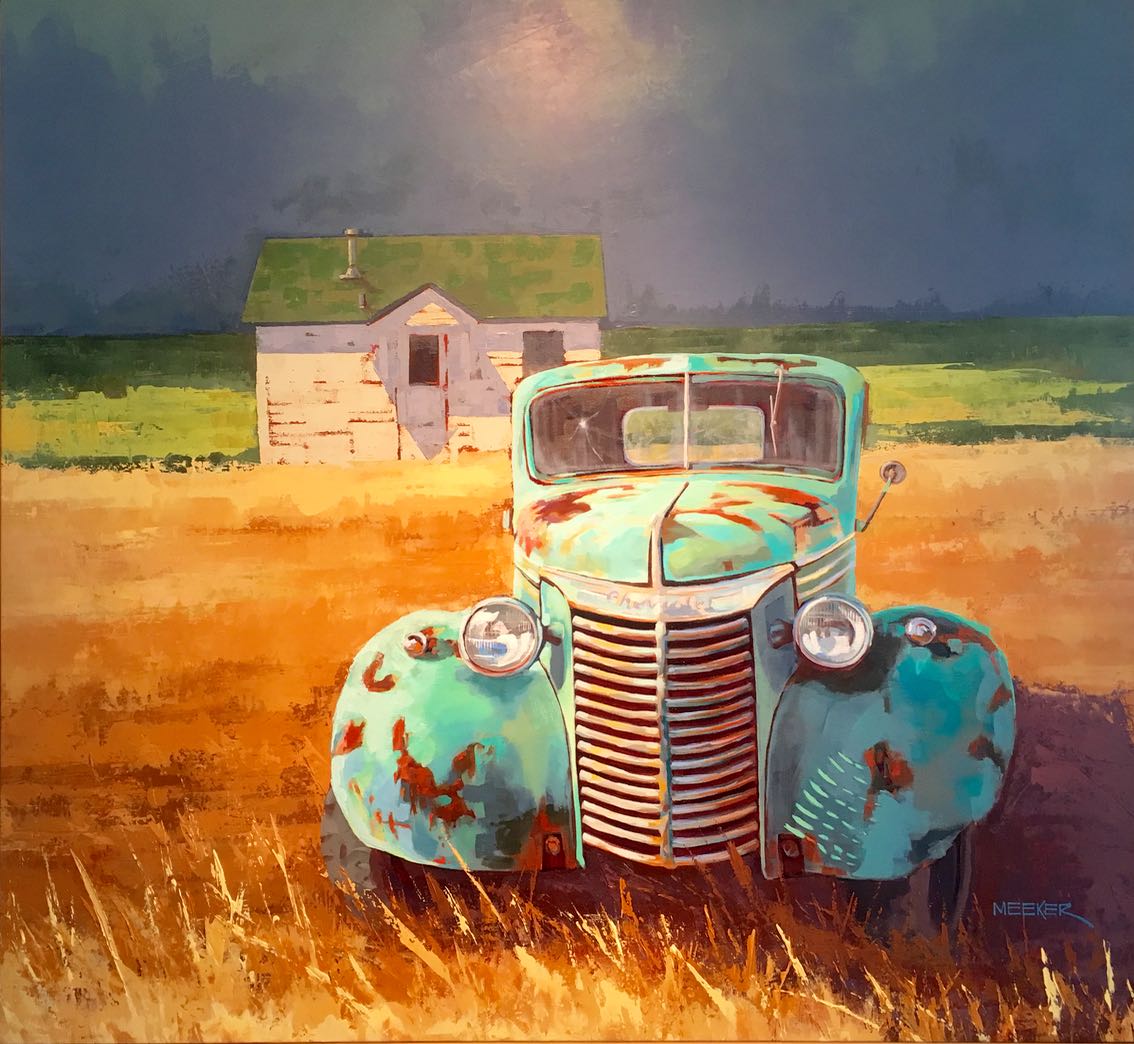
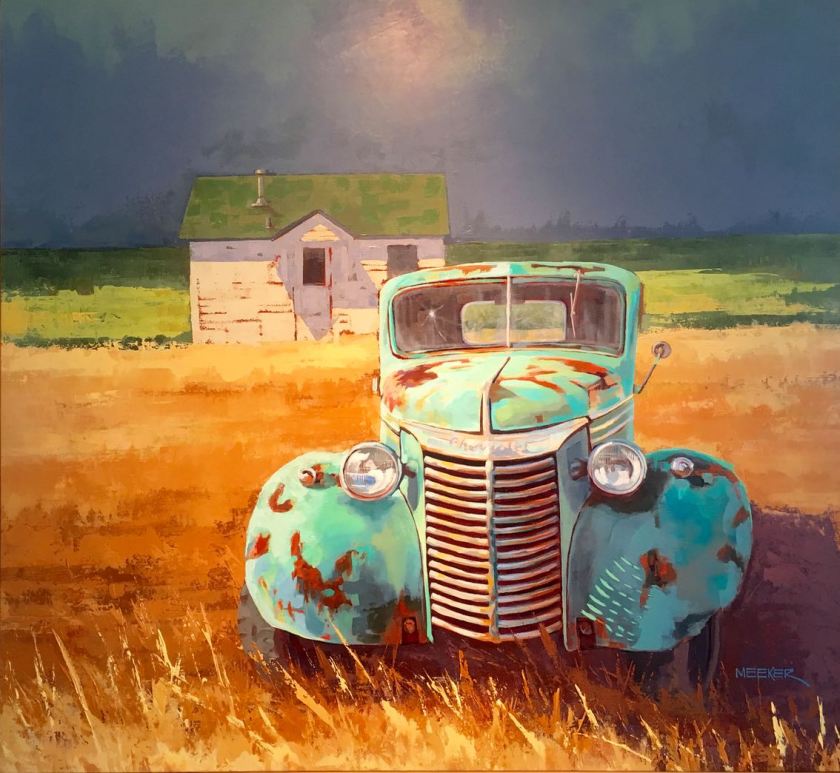
Turquoise Beauty
Turquoise Beauty, 35 x 38 inches, oil on canvas

As Art Director, JoAnne would visit retirement communities and scout out photographic locations and angles in advance, so the real photographer could step right in and get to work. Her photographs, shot as prototypes, were actually good enough to be the real thing, so she began photographing more projects for her clients.
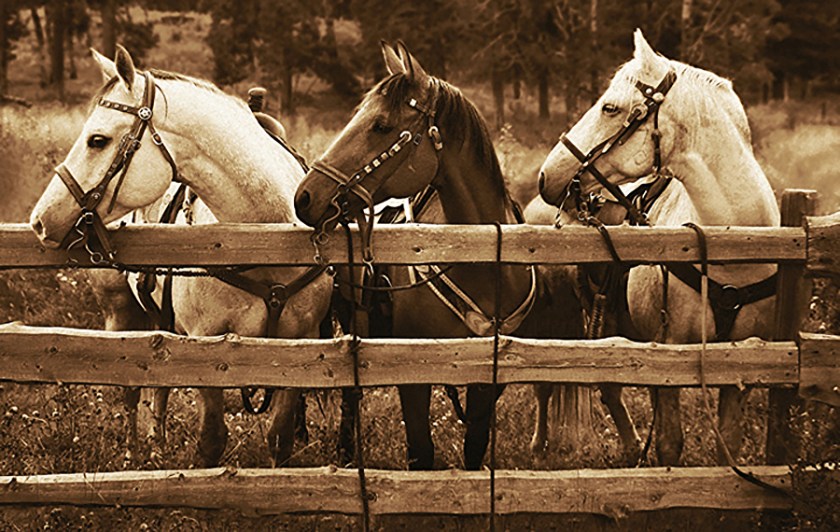
In 2001, JoAnne transitioned back into the arts as a fine art photographer. For 15 years, her cutting-edge photography broke new ground in capturing the western lifestyle… because she saw the world through the “eye of a painter.”

Established Western photographers began copying her style!

sparky
Sparky

In 2015, JoAnne transitioned back to her roots as a full-time oil painter. She is studying with renowned Wildlife painter Greg Beecham, Landscape painter Phil Starke and Equine painter Adeline Halvorson.

“When I wanted to get back into painting,” JoAnne says, “an old man told me I’d be miserable and frustrated. He was right. When I started painting again two years ago, it was frustrating. I tried to draw and it was awful. I had to regain eye-hand coordination after doing illustrations with a mouse on a computer my entire career. During my first workshop, I was embarrassed. It’s taken a lot of work and time to find my own style.”

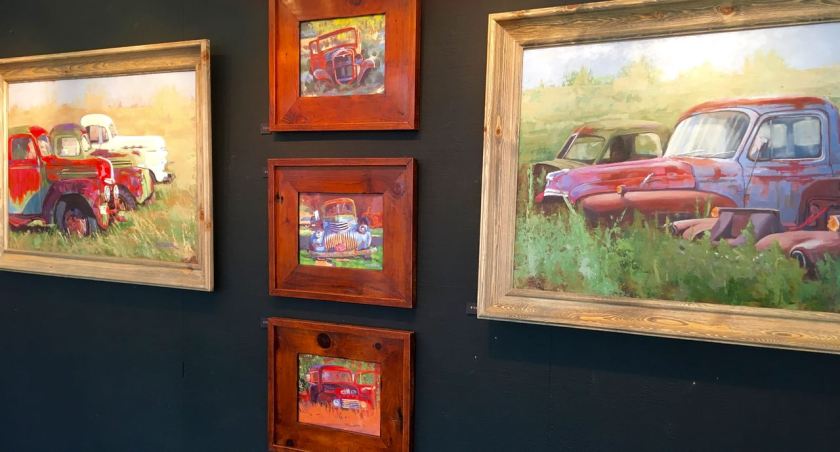
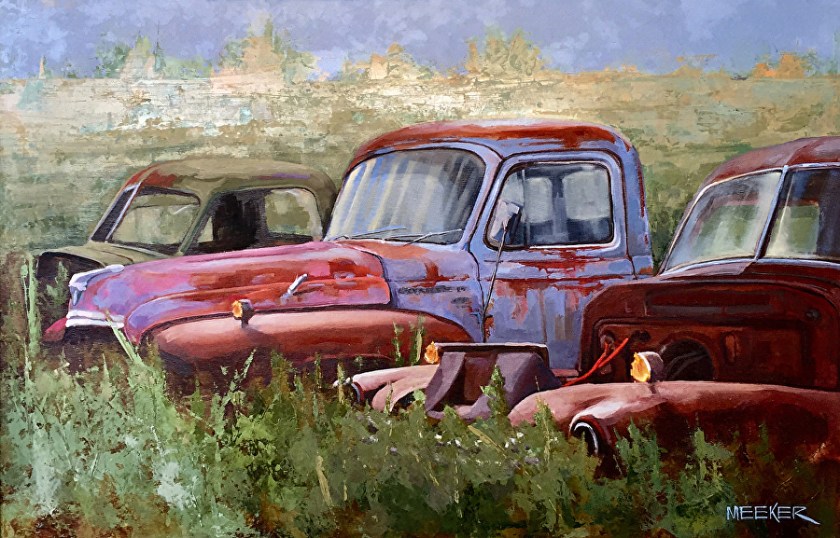
As a natural cartoonist and animator, JoAnne loves to create characters. Her favorite subjects these days, however, are dilapidated trucks left rusting in fields all across the west.

stolen-car 8 x 10
Stolen Car, 8 x 10 inches, oil on canvas

“I used to paint portraits of people and animals,” JoAnne says. “Now I paint portraits of trucks. They’re classics with a life of their own and a unique story to tell. I like to imagine who owned each truck, where they lived and how they ended up abandoning the truck.”

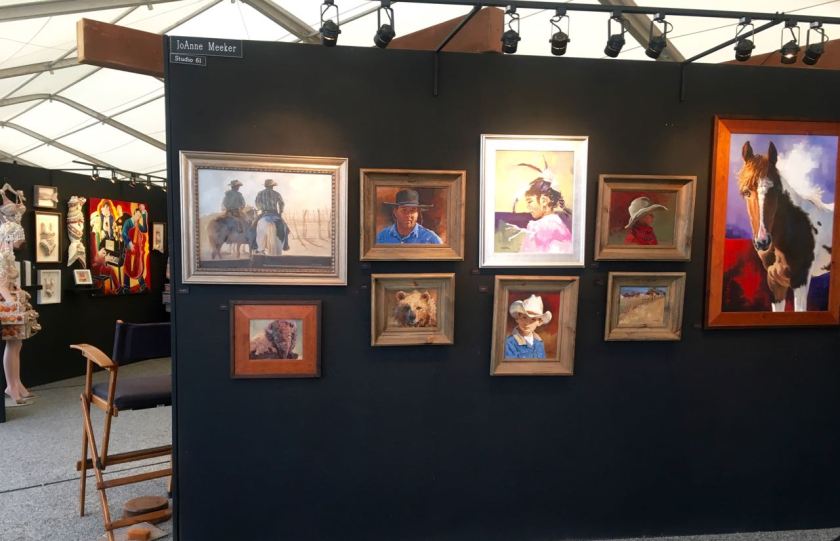
JoAnne finds most of the trucks she paints on the road. She divides her time between Dubois, Wyoming, near Yellowstone, and Scottsdale, Arizona. She spent the winter of 2018 in Scottsdale, Arizona, as an artist exhibiting at the Arizona Fine Arts Expo, which runs from mid-January to the end of March every year. This was JoAnne’s first year at the Expo and she hopes to return next year.


IMG_3134

IMG_3136


In Wyoming, JoAnne’s art studio is on the second floor of her house with north-facing windows. She also has a workspace downstairs and a Giclee printer that produces works up to 44 x 90 inches.

When JoAnne retired in the late 90s from her design agency at the age of 40, she went to Europe. In Italy, she rode a horse through a marble mine, the first time she had ever ridden a horse and she was instantly hooked, though her love of horses actually started when she was a child.

simon-says
Simon Says

A Cape Cod city girl with an air force pilot as a father, JoAnne wanted to be a country girl living on a ranch. Every Christmas she asked for a horse but it just wasn’t practical to own a horse and move so regularly; JoAnne attended 15 elementary schools between the first and sixth grades.

“After riding the horse in Italy, I began wondering how I could make a living riding a horse,” JoAnne laughs.

She eventually owned a horse and bought her own house in the wild country of Wyoming.

On a trip to a ranch in New Mexico, JoAnne spent a day photographing the branding of the ranch’s cattle. She printed the photos on really big canvases, when folks weren’t doing that yet. Her printed photographs sold well.

blue-bonnet-longhorn
Blue Bonnet Longhorn

That’s when she knew the Western lifestyle would be her photographic genre. At art shows in Calgary and Texas, where the oil industry was strong, her work was in high demand. Between 2012 and 2014, oil was doing so great, overnight millionaires were building big houses with lots of wall space to fill with original artwork.

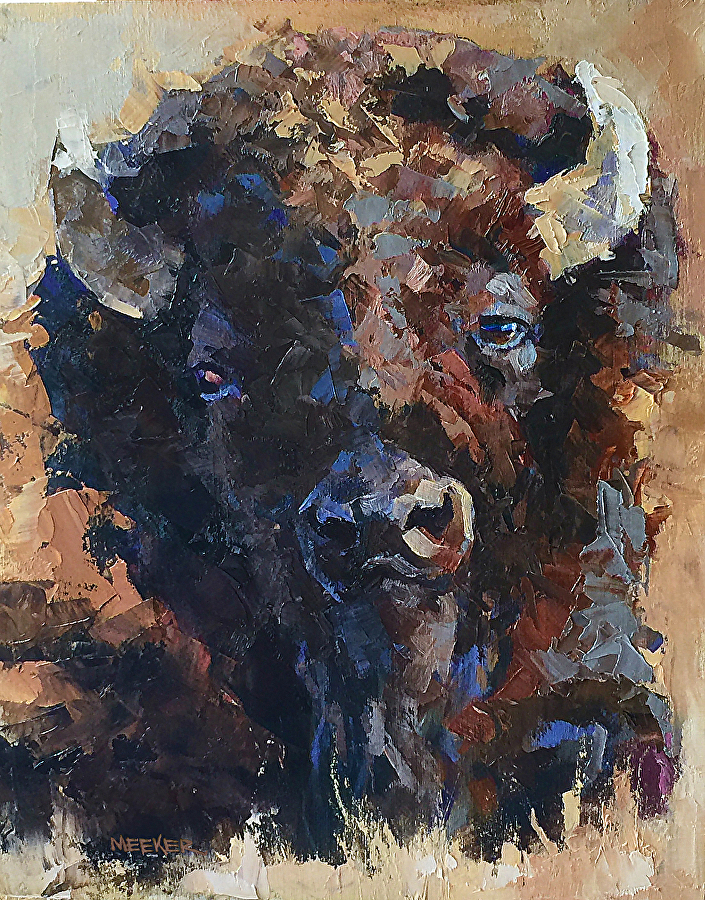
bison 8 x 10
Bison, 8 x 10 inches, oil on canvas

FORMAL ART STUDIES

JoAnne received a scholarship at 16 to attend art school. Back then, they used live models, and on her first day, a live male model was on display. She could barely look at him. Later, when she went to art school in 1976-77, she learned about the Law of Chance, as depicted in Jackson Pollack’s method of slinging paint.

“The instructors had students shredding brown paper for two weeks. It was monotonous and didn’t teach us art. When the shredding was done, the fragments were dropped from a high spot and left where they randomly fell. That wasn’t art! I wish they had taught me to paint instead.”

in-the-pen 18 x 24
In the Pen, 18 x 24 inches, oil on canvas

JoAnne believes painting can be taught. Some people may have a natural ability, but it takes practice for everyone.

For aspiring artists in the Phoenix, Arizona, area, JoAnne recommends the Scottsdale Artist School. Students can study with specific artists, according to their preferred genre. Additionally, twice a week they hold an open studio with a hired model and students can sit in and paint or draw.

JoAnne has successfully reinvented her art persona several times. But she also learned that reinvention doesn’t mean reinventing techniques. Learning from others is key.

“During the Expo, I was inspired by the creative environment, and being surrounded by artists of every medium. I welcomed their coaching. And painting every single day helped me advance my skills. Anyone wanting to improve as an artist can’t go wrong by painting every day, being open to suggestions from other artists and actually seeking out the company of other artists.”

reliable - 11 x 14
Reliable, 11 x 14 inches, oil on canvas

JoAnne’s next reinvention of herself? She wants to get into plein air painting, and in a big way. She wants to go to France and Italy and paint plein air like the impressionists.

“I love it when I try to do something and it turns out exactly like I wanted,” JoAnne says.

Awards & Recognition

  • 2016 Feature Poster Artist, San Antonio Stock Show and Rodeo
  • 2015 Feature Poster Artist, San Antonio Stock Show and Rodeo
  • 2014 Feature Poster Artist, San Antonio Stock Show and Rodeo
  • 2014 Best of Show, San Antonio Stock Show and Rodeo
  • 2013 Feature Poster Artist, San Antonio Stock Show and Rodeo
  • 2013 Commission, 100-page book “The Life is Art – A Photographic Journey of Ranching in Western Alberta”
  • 2012 Feature Poster Artist, San Antonio Stock Show and Rodeo
  • 2010 Feature Artist, Rodeo Austin, Texas
  • 2009 Best of Show Artisan, Western Showcase – Calgary Stampede, Alberta Canada

Resources

Website: http://jmeeker.com/

Photo Gallery

IMG_3159

sadie-commission 9 x 12
Commission, 9 x 12 inches, oil on canvas
OLYMPUS DIGITAL CAMERA
Classical Gas
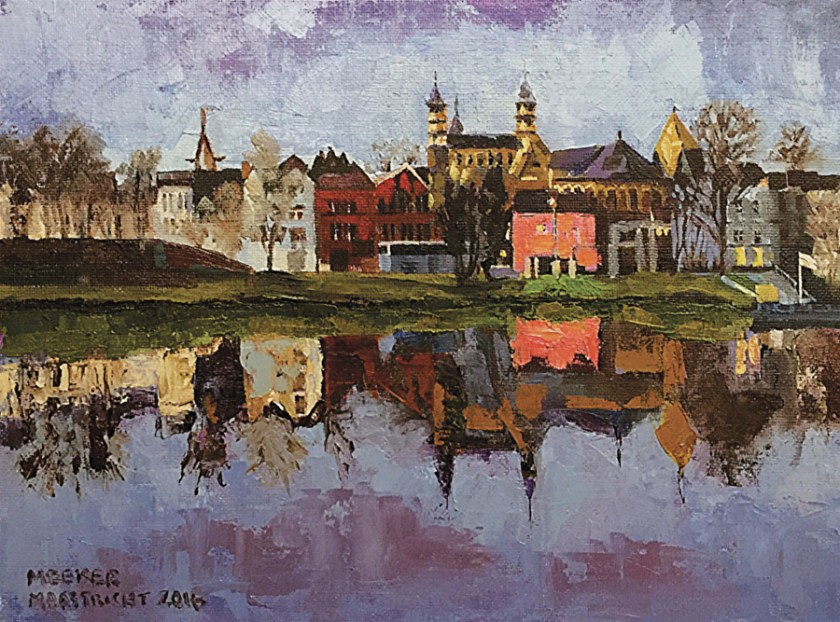
maastricht 9 x 12
Maastricht, 9 x 12 inches, oil on canvas
brownie-hawkeye 8 x 8
Brownie Hawkeye, 8 x 8 inches, oil on canvas
prickly-pear 8 x 10
Prickly Pear, 8 x 10 inches, oil on canvas
moving-cows 8 x 10
Moving Cows, 8 x 10, oil on canvas
domesticated 24 x 36
Domesticated, 24 x 26 inches, oil on canvas