James Coleman, Skateboarder

Skateboarding is his Passion

Ever had a passion in your life that was a constant? Even if you become distracted by life’s happenings, you somehow find your way back to it, every time… as though it’s your obsession? Maybe a loss or a gain, or a quiet day of contemplation brings it all back to you, and once again you tear out the walls of your life to make room for your obsession. 

For my son James, skateboarding has been his constant.
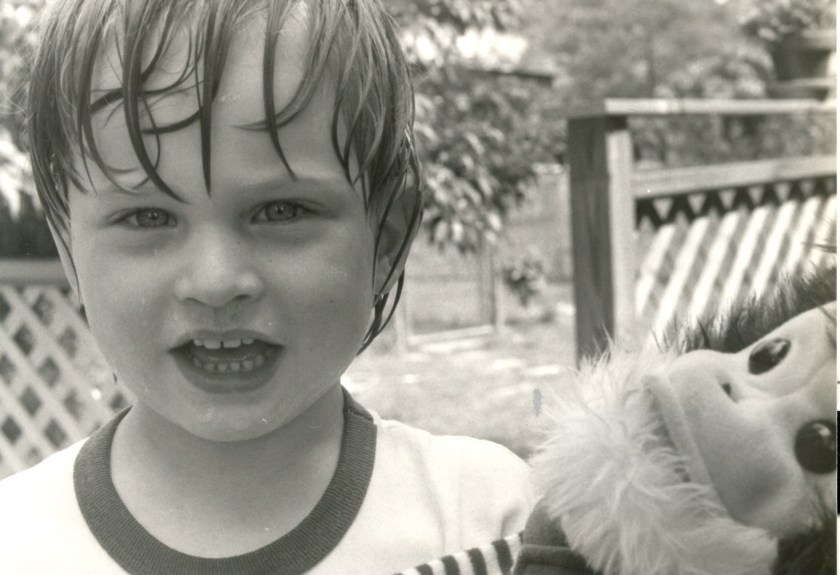
BWJamesMonkey
James Coleman, age 2.

I had a big, Ninja Turtles 80s-style board when I was really little,” James says, “like age 5 or 6 years old, but I’d only sit on my butt and roll. Later, I put together a “Frankenstein” from old boards, trucks and wheels my friends gave me.”

James remembers the weekend at Southlake Mall when he was in an arcade playing Mortal Kombat or Street Fighter II, and his sister Jaime tapped him on the shoulder.

“I turned around and y’all surprised me with a K-B Toys skateboard with plastic trucks, and although it didn’t roll very fast, it was perfect for learning beginner tricks. I learned a few tricks and developed more board control and started going down big hills and driveways and stuff. I’ve been hooked ever since.” 

Jai&JaOnWheels
James’ first set of wheels; riding with his sister Jaime.

James is turning 33 in November and has yet to let go of his dream. 

But why?

“I love everything about skateboarding,” James says. “It feels so free, it keeps me in shape, allows me to interact with our environment, and doesn’t have coaches or rules like other sports. I can learn as many tricks as my body will allow, and skating keeps me disciplined.”


JamesSkates
James, age 11.

James says I always told him to follow his dreams (for years I had a bumper sticker on the back of my forest green Caprice Classic that said “Follow Your Bliss”), so he took my advice grew up wanting to do what he loves and getting paid for it. 

Like most people pursuing a passion, James has had plenty of reasons to give up. It’s hard. Staying focused can be difficult. Friends drop out of the skateboarding world and move on. Making a living to pay the bills is paramount to pursuing dreams. Oh, but wait, James eschews a traditional career so he can remain free to skate. That means he goes without a lot of things, which most people go to work everyday to afford; a place of his own and/or a new car. He rents a bedroom from a friend and drives a 2007 Prius. He doesn’t get paid for skateboarding… but he does receive boards, clothes, shoes, etc., from his sponsors.
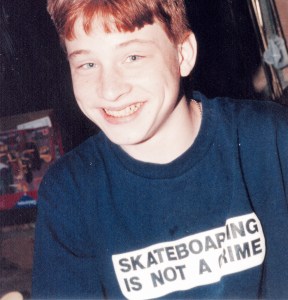
JamesSmallCap
His favorite saying.

Even though money is tight, James won’t skimp on healthy food; keeping his body perfectly tuned is his main aim. And he drinks lots and lots of water (I’m his mother, I have to stay on him about something other than reminding him to not destroy public or personal property in his pursuit of skateboarding perfection!). 

“I’m a human before I’m a skateboarder,” James says, “and I respect my body, mind and soul so they can take me to my highest potential/calling. I feel as healthy and talented as ever, like a seasoned veteran, but with a youthful approach.”

He pushed himself as a teenager and into his 20s, and allowed his skating career to evolve organically, letting things happen naturally. While in middle school, James became sponsored by Ruin, a new skate shop in Sandy Springs. He spent a lot of time with his friends hanging out at the shop, learning from others and skating in the shopping center. He has remained friends with Ian, the shop owner, ever since.


“I have so many sponsors now,” James says, “sponsors I used to wish for. They came through because I never gave up on working hard… with a smile.“

As a kid, James was always on his skateboard, even in the house. He stood on the board while watching TV and would work on flipping the board. Sometimes I tolerated it, sometimes the thought of oil from the trucks getting on the carpet was a bit too much.

If James wasn’t physically on his board, he would pull out his finger board and ride his two fingers on the miniature replica, mimicking all types of flips. If we were in the car, his fingers would ride the board all over the dash, languidly, which is James’ style. On the dinner table, he’d stack up a few books to resemble a skate park and he’d ride the fingerboard over the books.

IMG_3351
Nosejam, Tampa, Florida, 2017.

From the age of 10 onward, James would sketch out his tricks in cells, like a storyboard for a movie. He would watch tapes (before everything went digital) and write out the sequence of his tricks. He hung out with skate fanatics like himself, guys from his schools who were good at photography or video, and they’d find locations all over Atlanta (and later cities up and down the east coast, and then San Francisco) to shoot “footy.” Again, James would detail out the sequence of his moves in sketches. He ate, slept and drank skating; the definite of obsession.

Inspired by originality, James is drawn to people whose spirit shines true in what they do, those who express themselves from the heart, with positivity.

Often influenced by people who have nothing to do with skateboarding, James wonders if that’s why he still has a fresh outlook and approach to skateboarding. He’s inspired by anyone who makes sacrifices to be true to themselves and humanity, because he believes we’re all one.
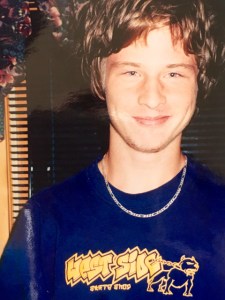
IMG_2745
Riding for Westside.

“I’m a fan of expansion and seeing the big picture, of people who push the boundaries of thoughts and feelings, who bring everyone with them to the next dimension and beyond. Bruce Lee. Salvador Dali. Helen Keller. Anne Frank. Malcolm X. Gandhi. And so many more, including fictional characters like Sonic the Hedgehog and characters from X-Men.”

IMG_8650
Crooked Grind, Chattanooga, TN, 2016. Printed in Thrasher Magazine and featured on Thrasher Instagram.

James spent September of this year in Bordeaux, France, filming with Minuit and hanging with his good friend Yoan Taillandier, a renaissance man whose talents and skills reach beyond the norm. Yoan is the mastermind behind Minuit (French for “Midnight”), which has a distinct aesthetic of skateboard audio/visuals shot mainly at night. Minuit offers clothing and accessories under the Magenta brand.


IMG_5455
Wallie Up, Crook Tap Down; Miami, Florida.

As for his skate style, James may be a little ahead of his time. He strives for street-skate art. Don’t talk to him about half-pipes or Tony Hawke. Now, Chad Muska, a pro who rode for Shorty’s skateboard company in the 90s, was one of James’ favorites to watch. Muska is the reason James wore everything “Shorty’s” as a teenager.

JamesBlu

“I feel like a meteor that’s going to crash into the skateboard world and change the chemistry of it all,” James says. “All I have to do is keep being me, staying true and working hard.”

Am I super proud of James? Absolutely. Do I get scared when I hear him talking about sleeping in his Prius as part of his super thrifty take on the world? You bet. And then I remember what a good soul he is, wise from trying and making things happen, and I don’t worry so much.

Currently, James is working on a video sponsored by Adidas and being filmed in Tennessee. 

“I feel blessed to be able to still skate at my age and have supporters I respect. My best is yet to come, I love staying productive and always having skate videos, footage or magazine/web articles ready for release.”
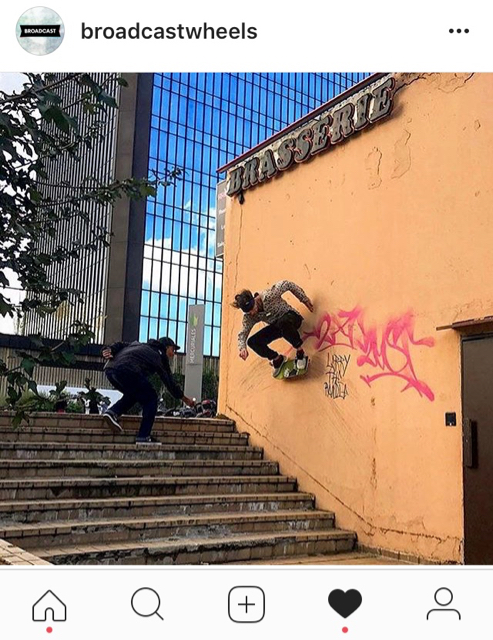
IMG_8810
Wallride, Paris, France, 2017.

I’m writing this blogpost as though James is just another subject of an article, rather than my own flesh and blood. The truth is, I sensed James before he was born. His face came to me in a dream when I was pregnant with him; I can still see his white hair and blue, blue eyes from the dream. I’m not a woo-woo kind of person, but when James was about 2, I had a premonition the doctor would find a medical condition in his tiny little body, and when the doctor shared his diagnosis, I wasn’t caught blind-sided (and James is fine). I’ve always felt that connection with James on a visceral level, and when we  drum with our fingers on countertops or tabletops, we get into a groove of perfect timing on a physical level. It’s uncanny, like playing an instrument with yourself. 


My sense of James started before he was born and continues to this day. I can feel him, who he is. I admire his tenacity in pursuing skateboarding as his all-out passion. I worry that I didn’t push him in other directions that might have brought him more life satisfaction. Like many mothers, I worry I did mostly wrong, and very little right, by my children.

I’m proud of James, the man he’s become, and I’ll always be proud of him, whether he hits the skateboard world like a meteor or not. 

Spotlight interviews with James:
James’ Current Sponsors
  • Theories brand clothing, and Theories of Atlantis.  
  • Magenta skateboards.
  • Reality Grip; hand-painted grip by Eric Staniford, my florida skate friend from way back who now lives in LA. He supplies me with Entitled Reality Grip, which features images of iconic and inspiring people. 
  • Broadcast wheels.
  • Harvest roots ferments; a locally-produced kombucha company from the southeast. 
  • Westside Skateshop (Jon Montesi’s skateshop in Florida. I’ve ridden for them since I was a teenager. Jon still helps me out so much to this day. Thanks Jon!)
  • Shaqueefa O.G.; Tampa squad/shirt company. (You’ve seen Ishod, Koston, and Grant Taylor wearing them for years.)
  • Minuit audio visual-primo global nigh skating vids/clothing from the mind of my good friend and frenchman Yoan Taillandier.  
  • Supra Footwear-flow.

Jolly Greek Carver

Touring Paros in the Orange Screamer

Brent and I are tearing down a two-lane road on Paros island, Greece, in a small quad Brent has dubbed the Orange Screamer. We left Parikia, the port city, and are headed to villages on the opposite coast. 

I see a brown sign announcing an ancient marble quarry near the village of Marathi. 

“There’s an ancient marble quarry ahead,” I yell to Brent. He pulls the screamer over when we see the place, and parks next to two other cars crowded just off the roadway, at the beginning of a 15-foot-wide pathway laid with marble brick. We walk the path and find the quarry. 


IMG_0252
The view from the top of the quarry road.

I later learn the Parian marble found here is one of the finest varieties and was the favorite of renowned Greek sculptors because of it’s transparency, which allows light to penetrate the marble and produce a distinct radiance. Parian marble can have a transparency as high as 7 centimeters, while other marbles, such as Penteli, have only 1.5 centimeters transparency. 

The marble was so sought-after, supply outstripped demand and it became expensive. Archaeologists estimate that 75% of all sculptures created in the Aegean islands were made out of marble from Paros. The acclaimed Venus de Milo and Hermes statues were sculpted from Parian marble. Structures believed to be made from the marble include the treasury of the temple of Athena at Delphi, the temple of Apollo and the magnificent temple of Solomon.

A nearby deserted building was once a French mining company believed to supply the marble for Napoleon’s tomb in 1844. 

On the downside, at the height of the Roman empire, it’s believed the quarry employed 150,000 slaves as miners. The quarry operated from the 3rd century B.C. to the 7th century (and then by the French company for a short period in the 19th century).

Near the quarry, I’m drawn to a little shelter surrounded by blooming and colorful plants. Is it a nursery? A marble carving studio? 


IMG_0253
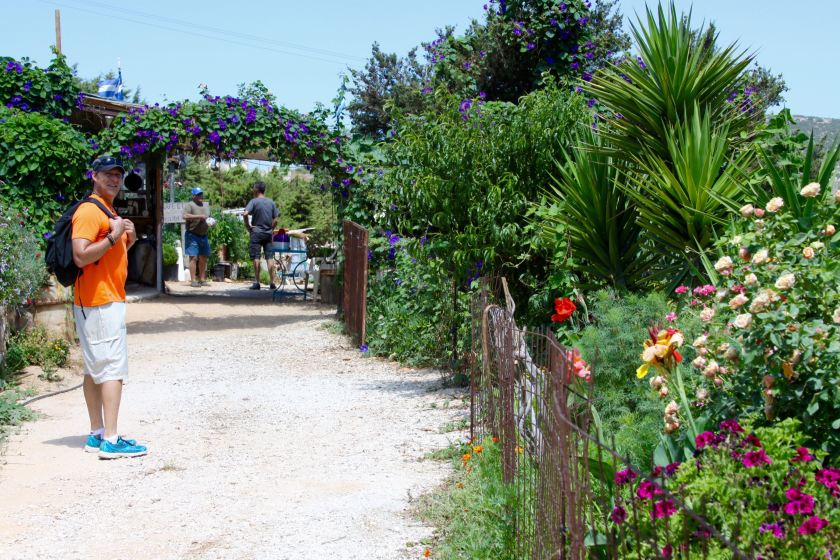
Brent at the entrance to the Greek Carver’s home.

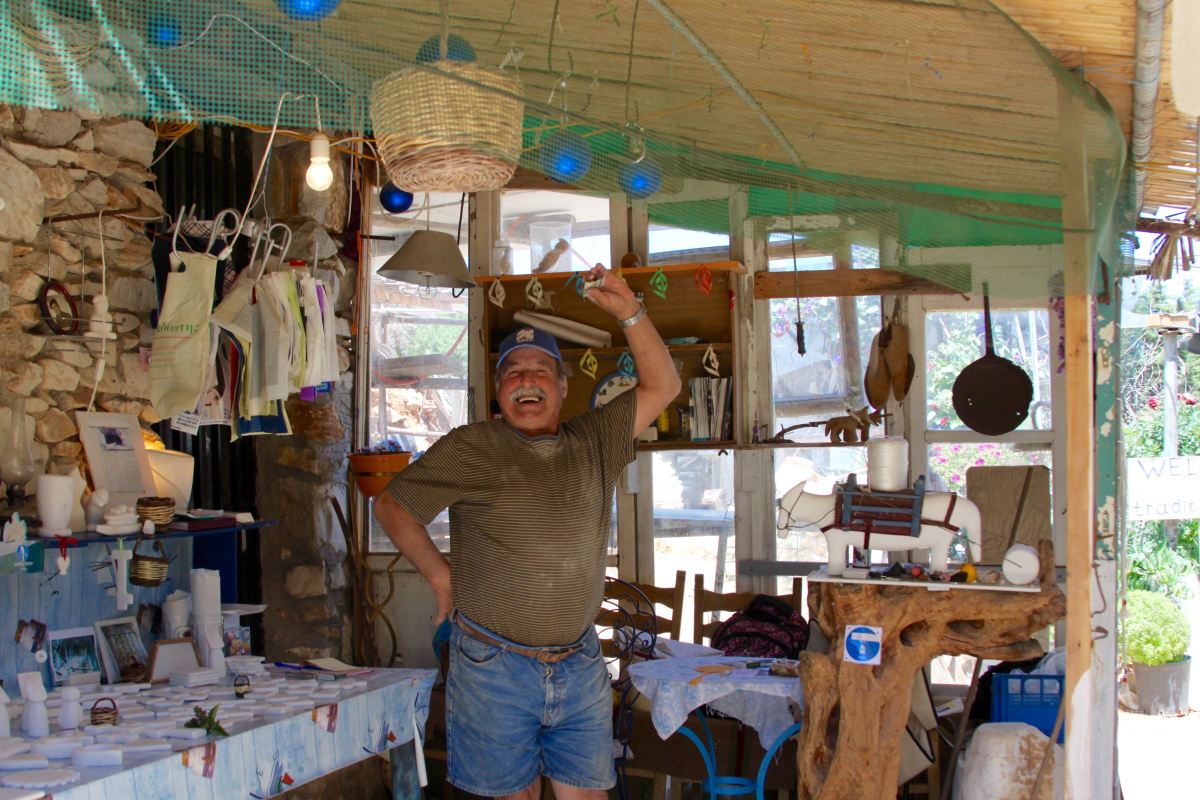
An older man is speaking Greek to other visitors who appear to not speak Greek. He gesticulates and points to framed photos on the wall. He’s a happy man, spreading cheer as Brent and I walk through. He has groomed plants in large, square cheese tins and other playful planters. A peddle sewing machine sits nearby. On a table are hand carved marble ornaments.

He pinches off pieces of Basil and gives them to me and Brent, gesturing for us to smell and taste and enjoy.


IMG_0257
The Greek Carver’s garden of cheese tins and marble spires.

His has a set-up that demonstrates how marble was manually carved. He even has a little model made of marble, a building next to a slope that goes underground. From the building extends a rope with equipment suited to haul out marble; a tiny marble replica of how they mined marble. 


IMG_0256
This tiny building made of marble is a replica of a mining building, complete with the equipment attached to the rope to recover marble from the mine.

I’m enchanted by his green thumb, and the interesting “used” items on display. 

“Mama. Papa,” he says to me, pointing to a framed portrait of a couple. Mama, mama, mama, he says, pointing at another photo, to indicate his great-grandmother. He points to the sewing machine and says Mama.

He’s smiling broadly and saying other things in Greek. We listen and watch his hands dance and nod yes, smiling. He is so adorable. 

Behind his table of wares is a wall; solid on the bottom and windows on the top. The window panes are grimy but we can make out a chair and a blanket. Brent thinks he lives here. 


IMG_0255
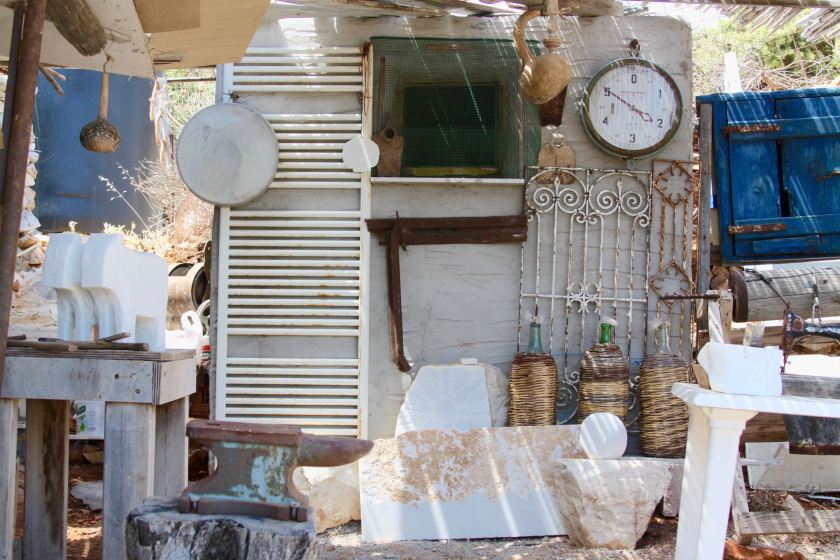
Marble, an anvil and antiques provide decor outside the Carver’s home.

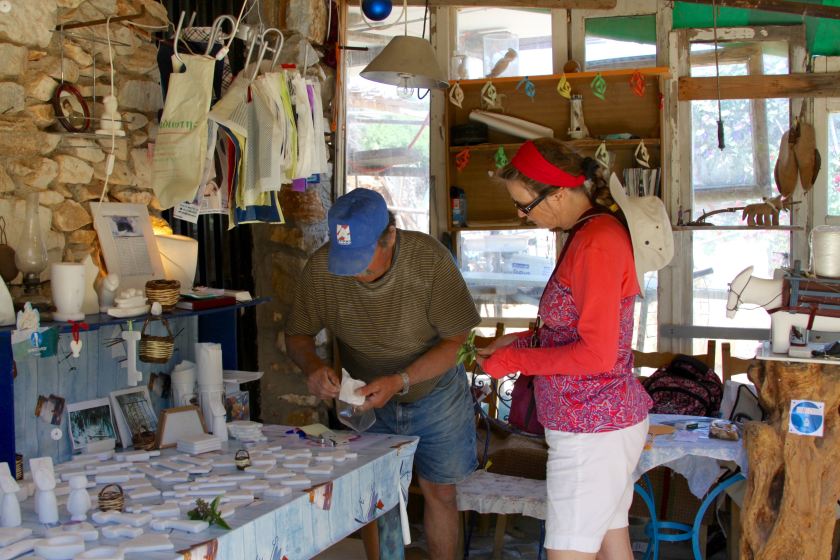
I must buy something from him. Other folks look around and leave, but I want to support his good cheer and his hand-carving of marble, so I select a perfect heart, about 3 inches at the widest, for 6 Euros. He very carefully wraps the heart in paper, then tapes it closed. All merchants throughout Greece wrap every item and then place them into gift bags. They’ll staple the gift bag closed, or will tape it closed, and always attach their business card. 


IMG_0258
The Greek Carver very carefully wraps up my small purchase. His table is full of his carved pieces.

But I don’t need a gift bag and show him I’ll simply put it in my purse. Brent and I plan to create mosaics from the goodies we find in Greece (rocks from the beach, sea glass, pottery pieces, etc.) and this heart will be a charming addition. He offers to write a receipt and I say no. I should have let him, though, because then I would have his name. 

Brent takes photos as I transact with the gentlemen. He is so joyful, I can’t resist giving him a hug. Then he poses in his all joyousness for Brent, with his arm over his head. 

We get back into the Orange Screamer and head for the next village, Lefkes.

IMG_0376
Brent color-coordinates with the Orange Screamer.

Often, I think of this happy marble carver in his garden on the edge of a quarry, sharing his family portraits and his love for life. 

I regret not knowing his name. 

Word by Word

A Writing a Day

Susan, a friend and damn good writer, agreed to attend Natalie Goldberg’s writing workshop in 2015. Susan traveled from  Portland and I flew from Phoenix to Albuquerque, where we joined eight other women in a van headed to the Upaya Zen Center in Santa Fe. That van ride with intelligent, interesting women was a precursor to what we’d experience during the upcoming writer’s retreat. Ultimately, there were more than 50 of us, mostly women, enjoying vegetarian meals, meditating, writing, being silent during daylight hours and sharing our work for four days. 

Like most people who dream of being “writers,” I’ve been a huge Natalie Goldberg fan since reading Writing Down the Bones when it was published in 1986. Then she followed up with Wild Mind: Living the Writer’s Life in 1990. I formed a writer’s group with friend’s Kate and Richard, who both happened to be from upstate New York but somehow chose Atlanta as their home in the late 80s. We’d meet weekly at each other’s houses, on a rotating basis, and perform 10- and 20-minute writing practices about any old topic. We stuck to Natalie’s writing practice rules: Keep writing, don’t stop, don’t lift your pen off the paper, don’t edit, and be specific – Cadillac, not car.


Kate and Richard are both excellent writers, but we all suffered from the typical writer’s milieu; we had no central area of interest on which to focus our writing. We’d write and write between timer bells on topics that didn’t really matter, on short stories that would never go anywhere. It was a lot of fun, though, and hopefully we honed our writer’s craft even if we weren’t churning out bestsellers. 

Writing has always been central to my life, even when I wasn’t doing it as a living. Please know, I’m writing for a living now as the Sr. Communications Specialist for an insurance company. I’m not making a living by being a published author or journalist or columnist, but writing about insurance is also not as boring as it might sound. I started a company magazine for our customers and enjoy researching and writing articles on many interesting topics, particularly people. So that’s this writer’s lemonade! 

When I say writing has always been central to my life, it’s because I’ve written for my own pleasure these many years, even when doing a good bit of writing in my marketing jobs. Writing is a compulsion. I wrote my first “chapter book” when I was 9. Putting down words is as necessary for me to live as air. When I don’t write, I become moody. Tense. Back then, I simply didn’t know what to write about, so I fooled around with essays and short stories.

I found out writing fiction isn’t my thang, though I grew up reading fiction by famous Southern women writers like Flannery O’Connor, Eudora Welty and Carson McCullers… and wanted to be just like them. McCullers The Member of the Wedding blew my young mind; O’Connor’s A Good Man is Hard to Find shocked my teenage sensibilities and yet resonated with macabre inner stirrings that felt like a birthright; and Welty’s One Writer’s Beginning was published in 1984, the time I was seeking a writer-guru… a path to self-expression.


When I went to Kenya in 2005 as a marketing advisor to the Great Lakes University of Kisumu, I found plenty to write about. Plenty of life or death topics. Topics that mattered. And after a year of posting to a blog in Kenya, I came home and compiled a portion of those blogs into Poverty & Promise: One Volunteer’s Experience of Kenya, a book that won several awards and was published by an independent press.

Since then, I’ve searched for topics that mattered as much as the lives of Kenyans (without having to move to another country). It’s not easy. 

Back at the writer’s retreat, when all of the women writers (and the four or five men who attended) were gathered in the Zendo for one of Natalie’s talks, a participant shared with the group that she and one of the guys in attendance wrote emails to each other every day. They had done if for years. Committing to write to each other made it more likely they would send something, anything, as a way to stay on track, stay in the habit, and get the writing practice they needed. Receiving guidance from another writer was a plus!! 


This struck me as an excellent idea and when I proposed it to Susan, she agreed. Of course, it was more than a year after the retreat that I asked Susan about being daily pen pals. After the retreat, we had agreed to share our writing pieces with each other for feedback, but we didn’t set deadlines. It wasn’t until March of 2017 when we began writing our daily practice emails.

Today, I set out to capture the content from all my practice-writing emails to Susan, and put them into one document. I dreaded it, even procrastinated for several weeks. As I went through the Sent folder and copied and pasted each email, I was surprised by some topics and astounded by others, both mine and Susan’s. Several were really good. And extremely interesting. And heartbreaking and funny. As I meticulously pulled my content and re-read hers, I didn’t want it to end!

We agreed no pressure about writing every single day; no reprimands, no guilt. We didn’t email every day, although we tried. We were compassionate about life happening, and days when we were exhausted, or if we were traveling. But I didn’t want to lose momentum, so I made myself write on some days even when I was brain-dead.

If I didn’t feel like writing on my computer in my studio (because it’s also where I work from home for my job and I sometimes get sick of being in front of a computer), I’d write to Susan from my iPhone while propped up in bed, very late at night, but not past midnight or I would have missed writing that day. Susan and I were both shocked at how much coherent writing can be accomplished on such a tiny keyboard. 


Although we’ve only been doing daily writing-practice emails for seven months, when placed into the word doc, my writings filled 157 pages in Arial, 11 font size, single-spaced lines with a space between paragraphs. It was nearly 100,000 words (99,944 to be precise, including this blog post). 

Just like with the Kenyan blog, words add up. And before you know it, you have a book. And a detailed record of your life and thoughts that would otherwise disappear into the ether.

Susan says, “Our partnership has inspired me to start looking at my writing as a thing of value, not simply an indulgence.” Just another bonus of this practice!

I’m so grateful to Susan for being my writing practice partner and my muse. She’s my ideal reader (something Natalie instructed us to find). She’s uncommonly wise and a knock-out voice the world needs to hear from. I’m the luckiest person on the planet to get to read Susan’s eloquent, life-affirming and charming writings (nearly) every single day!

Such an honor.

Needles and Canvas

Exploring needlepoint artists such as Janet Haigh and Kaffe Fassett as I dive into needlepointing with no training.

Art and the Importance of Trying

Wanting a lap project to work on while watching TV, I pulled a needlepoint canvas out of my closet and studied it. Not knowing anything about needlepoint, I watched a few how-to YouTube videos, found an embroidery needle, calculated that the six-strand embroidery floss already in my studio would work with the gauge of the canvas, and started needlepointing! 

Needlepointing seemed so mysterious; I thought I’d need an expert to tell me what thread to use, what size and how much, etc. But the need to create won out over more careful planning and without even sewing frames to the canvas to keep it square, I started running that needle in and out on the diagonal, fascinated with the smooth yet textured result.

I bought the canvas several years ago from artist Linda Holman Carter (carterholman.com) at the Litchfield Arts Festival. I love her colorful style of painting women and farm animals. The hand-painted canvas, at $50, seemed reasonably priced, even if I didn’t know how to needlepoint. It felt like a “retirement” project, one I’d be able to dive into and learn about when I had time. 

I also bought a 12 x 5.5 inch signed and numbered print of Holman Carter’s “Corn Maiden” painting. It’s framed and hanging in my art studio. Linda always sketches a little chicken next to her signature.


thecornmaiden
Linda Carter Holman’s print “The Corn Maiden” hangs in my studio.

I’ve searched Holman Carter’s website and am unable to find the name of the painting-turned-needlepoint-canvas shown at the top of this blog. The illustration of a woman at a garden table is 12 x 12 inches. You can see areas of open mesh that still need to be filled in, like the fish bowl, white lines on the tablecloth and the book she’s reading. I’ve made plenty of mistakes (using wrong colors, not keeping it 100% square, handling and mushing some of the completed areas) but that’s how we learn new things, right? 

While searching for another Carter Holman needlepoint canvas to work on, I came across some YouTube videos of artists who design needlepoints for Ehrman Tapestries.

What a glorious few hours have been spent viewing videos of these artists and dreaming over their offerings on Ehrman Tapestries website.

My favorite video is about artist Janet Haigh and her glorious Cre8-space, a fun workshop in Somerset, England! I watch Janet’s video over and over to hear about her creative process and see all the goodies she has created in many mediums, not just needlepoint designs. The video’s production quality is superb.


Janet Haigh Studio

Janet’s blog is also a treasure. She’s fascinated with textiles and started Heart Spaces Studio, “a place for all things textile,” where workshops are held and artists lease Cre8-space. On her blog, Janet shares works by other artists as well as photos showing her own pieces in progress.

Wanting to see artists in their personal Cre8-space, I quickly viewed the other perfectly-produced videos of Ehrman designers, like Margaret Murton, who is quite proper, Candace Bahouth, who is a little boho, Kaffe Fassett, who is a color-inspirationist, and Raymond Honeyman, who you just want to move in with and feel the calming and perfect blend of his masculine/feminine home decor. 

Here are samples of each artists’ work featured on Ehrman Tapestries website. Janet’s pieces are on sale now! I have a wish list going.


Janet’s Cre8-space video of her lovingly-crafted art remains my favorite. If you only have time to watch one, make it hers, and I hope you forget the rest of the world as you view it! (If you find a little more time, watch Raymond and then next Kaffe!)

Needlepoint isn’t hard and I encourage anyone with a passion for textile and needlework to give it a try. Kits can be expensive, though, so shop around… and wait for sales. I have so much more to learn about Needlepoint, Learn from my mistakes with these tips:

  1. Stretch your canvas before beginning. You can easily see how my Carter Holman canvas is skewed because I didn’t have the patience to stretch it before I started working on it.
  2. Cover your canvas when you’re not working on it to keep dust and other things (pet hair) from settling on the fibers.
  3. Wash your hands frequently when working and avoid touching stitches already in place, to eliminate soiled or worn-looking threads.
  4. Unless you have a stash of threads, I recommend buying kits that come with yarns, then you know the colors are exactly what the designer had in mind.

Below is my most recent project, purchased from Got Needlepoint?. I follow them on Pinterest and receive Brenda Stimpson’s e-newsletter via email, but you can do either/or because the same information is shared in both places (though it’s fun to see Brenda’s latest travel adventures and her needlepoint finds).


IMG_2741
My current incomplete project: a 10 x 8-inch printed design.

Chasing Georgia Ghosts

In Search of Flannery & Alice

It’s Labor Day and you better believe traffic headed north on I-75 toward Atlanta will be thick, possibly even crawling. So I take a trick from Mama’s playbook; avoid the interstate on my way to the Atlanta airport. I steer my rented Altima northeast toward Macon, intent on traveling 2-lane blacktop highways and taking an impromptu literary detour.

Destination: Andalusia Farm in *Milledgeville, Georgia.

Flannery O’Connor lived with her mother, Regina, at Andalusia Farm from 1951 until her death from lupus in 1964 (I was one year old). I’ve been wanting to stop by Andalusia for a few years, every time I travel back to Georgia to visit family, but it has never worked out.

Flannery is best known for her Southern Gothic tale A Good Man is Hard to Find, plus many other short stories and novels.

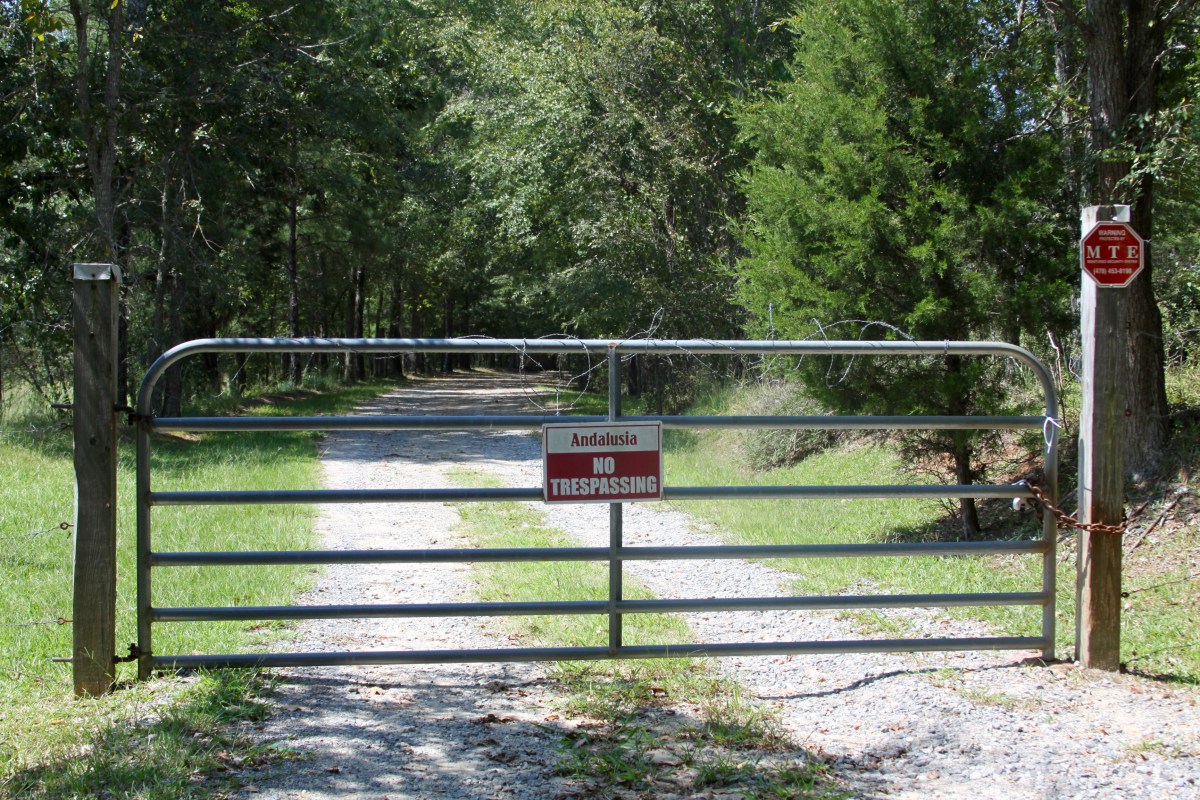
From Warner Robins, it takes an hour and 15 minutes to find the house on N. Columbia Street, a well-trafficked four-lane highway. When I turn into Andalusia’s drive at 2628 N. Columbia Street opposite Butler Ford, America’s Best Value Inn and Badcock Home Furniture, a locked gate with a “no trespassing” sign cuts my trip short. 

I had checked the website before setting out and knew the house was closed; I just couldn’t resist stopping by in case, through some miracle, it was accessible. The only content on andalusiafarm.org had read:

“We are hard at work readying Andalusia for its reopening as a historic house museum at Georgia College. During this transition, we will be temporarily closed to the public. Information on the reopening of the museum will be posted on this site, and our social media pages. Thank you for your continued support!”

I later learn that just the month before, on August 8, a small celebration was held at the house when the Flannery O’Connor Andalusia Foundation gifted the Andalusia house to Georgia College and State University, whose campus is only four miles away. Flannery is an alumni of the college. Watch a short video here.

Garden & Gun magazine published a September 22, 2017, article titled Flannery O’Connor: Under New Management about the house getting a new start with Georgia College. Here’s a photo of the house credited to the college that ran in Garden & Gun.

Andalusia
Andalusia home where Flannery O’Connor lived until her death in 1964.

At the locked gate, I think maybe I can at least see the house from the drive, perhaps spot one of the peacocks strolling through the yard, generations removed from the ones Flannery used to raise here. 

But, no. Another sign indicates the house is two miles away, too far to see beyond the trees surrounding the drive. Looking at the property on Google maps gives you a feel for how peaceful the area is. Although N. Columbia Street is also busy U.S. 441 highway, the tree-dotted land immediately surrounding Andalusia is undeveloped.

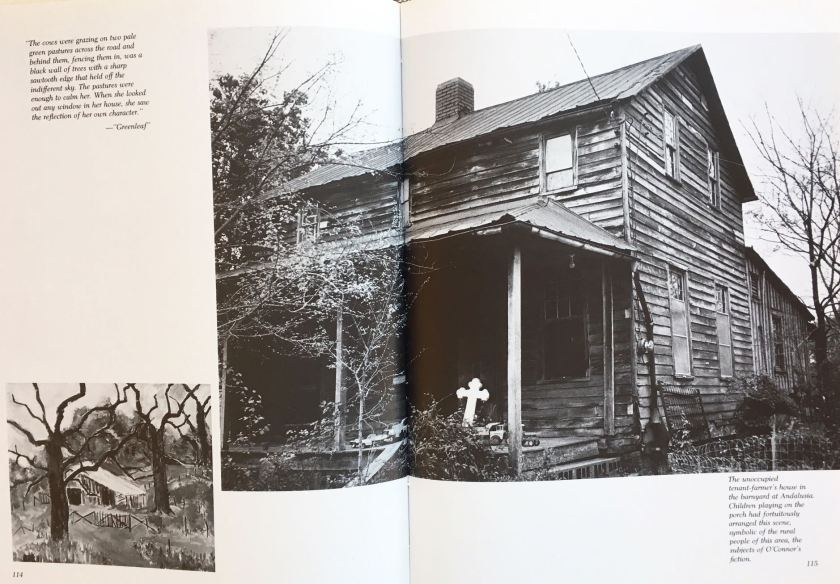
Liking Andalusia’s Facebook page is as close as I’ve gotten to seeing the house in the 21st century. While there isn’t a ton of information on the FB page, there are photos of renovations to the Hill House (called “the tenant’s farmer’s house” in the first black and white photo below) that started in 2011. 

Writers in Residence: American Authors at Home, published in 1981, contains images of homes and writing spaces of writers from across the U.S.

Glynne Robinson Betts traveled widely to write the content and take the photos. Often, she was given tours by the authors themselves, but at Andalusia, Mrs. Regina O’Connor was her tour guide. Here are the resulting pages.


IMG_2727


IMG_2728


IMG_2729


It’s telling that all but one of the photos are of the exterior and the land; most people know that “place” is as much a character in Southern writing as are the people. In her book, Betts writes this about Flannery: “In her book-lined bedroom on the ground floor of the farmhouse, her desk turned away from the inviting front windows, she wrote about the country people of the Georgia Bible Belt, their strengths and peculiarities.”

When Georgia College re-opens Andalusia Farm, I’m coming back to see that bedroom and, hopefully, that writing desk!!

Alice Walker

Undeterred, I put “Wards Chapel Road” into google maps on my iPhone and drive 15-minutes to where Alice Walker grew up just outside of Eatonton, Georgia. 

Along Wards Chapel Road are: 1) the place where Alice was born on Feb. 9, 1944, to her sharecropper parents, Willie Lee Walker and Minnie Lou Tallulah Grant; 2) her family home, called Grant Plantation; 3) the Wards Chapel cemetery where her parents and other ancestors are buried; and 4) the Wards Chapel A.M.E. church which Alice attended.

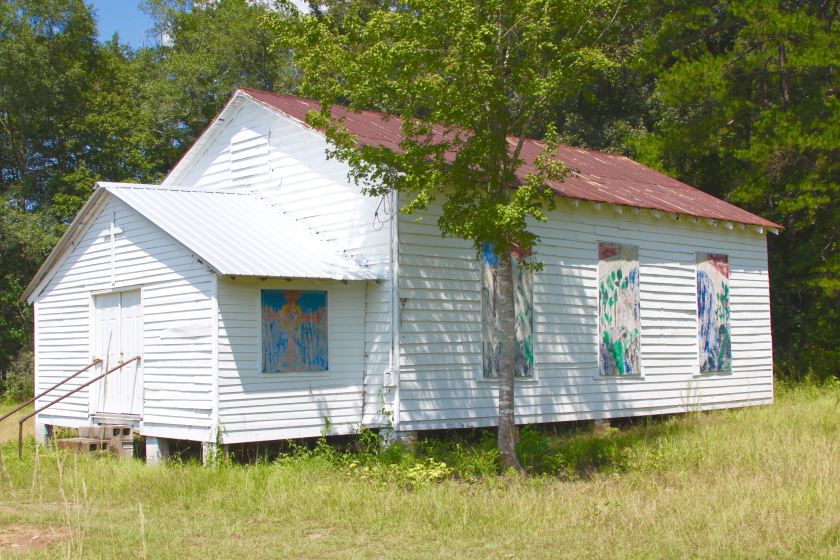
I drive up and down the road, twice, looking for signs of her birthplace and homes, but can only find the church, obviously unused now, but neatly maintained. I imagine what it was like for Alice and her family to walk to the tiny church each Sunday on a once-dirt road in the segregated South. 


IMG_0816
Wards Chapel A.M.E. Church near Eatonton, Georgia, where Alice Walker attended.       Alice wrote, “Any God I ever found in church, I brought in myself.”
IMG_0814
Sign in front of the Wards Chapel A.M.E. Church.

Alice is best known for writing “The Color Purple,” which won a National Book Award and the Pulitzer Prize for Fiction. While she’s a talented and award-winning writer, Alice did so many other amazing things.

She married Melvyn Leventhal, a white civil rights activist in 1967, the year the Supreme Court struck down laws banning interracial marriage on June 12. Alice and Melvyn were brave to live in Mississippi. Her book The Way Forward is with a Broken Heart, published in 2000, is a quasi-fictional portrayal of that marriage. The book “opens with a story, merging fact and fiction, of my version of our life together,” she writes, “when we lived in the racially volatile and violent Deep South state of Mississippi.”

Alice was later an editor at Ms. Magazine and went on to become a professor at Brandeis and Berkley Universities, and wrote several more novels and collections of poetry.

Alice’s mother, Minnie Lou, a well-known gardener in Eatonton, once said, “A house without flowers is like a face without a smile.” And Alice once said, “In search of my mother’s garden, I found my own.” She even wrote a book of essays, articles, and speeches entitled In Search of Our Mother’s Gardens: Womanist Prose.

In 1974, Alice and Minnie Lou visited O’Connor’s Andalusia Farm where Alice was delighted with the peacocks. The Southern Literary Trail website describes an interaction between mother and daughter. “[Alice] said the peacocks in O’Connor’s yard ‘lifted their splendid tails for our edification. One peacock is so involved in the presentation of his masterpiece he does not allow us to move the car until he finishes with his show.’ When Alice commented that the Farm’s peacocks were inspiring, even while blocking the car, Minnie Lou responded, ‘Yes, and they’ll eat up every bloom you have, if you don’t watch out.’

At age 73, Alice’s contemporary writings and poems are imminently accessible on her official website, alicewalkersgarden.com. Dig in deeply to the poems, videos, photos, complete essays and articles about plays, musicals, books, her personal past and other things impressing Alice lately. Fascinating.

Joel Chandler Harris (1848-1908), also from Eatonton, Georgia, is remembered mostly as an Atlantan because he spent much of his adult life living at the Wren’s Nest, which is now the oldest house museum in Atlanta. Harris was a journalist and editor at the Atlanta Constitution until 1900, but he’s most famous for the Br’er Rabbit stories told by Uncle Remus.

In the late nineteenth and early twentieth century, some people didn’t have a problem with Harris’ stories written in African-American dialect of the mid-1800s, and set on plantations. In fact, he was reported to be the second-most-read American writer of his day, behind Mark Twain. 

If you still remember those Br’er Rabbit stories, you can visit the Uncle Remus Museum in Eatonton, housed in a log cabin. I drive past it and remember visiting the museum as a child (45 years ago). Controversies seemed to start up around his writings after Disney released their version of the Br’er Rabbit stories in the movie Song of the South in1946.

Funnily enough, The Institute of Southern Studies published an article by Alice Walker in the Summer 1981 edition of the Southern Exposure Journal entitled, Uncle Remus, No Friend of Mine. Walker writes:

“Our whole town turned out for this movie: black children and their parents in the colored section, white children and their parents in the white section. Remus in the movie saw fit to ignore, basically, his own children and grandchildren in order to pass on our heritage–indeed, our birthright–to patronizing white children who seemed to regard him as a kind of talking teddy bear. I don’t know how old I was when I saw this film–probably eight or nine–but I experienced it as a vast alienation, not only from the likes of Uncle Remus–in whom I saw aspects of my father, my mother, in fact all black people I knew who told these stories–but also from the stories themselves, which, passed into the context of white people’s creation, I perceived as meaningless. So there I was, at an early age, separated from my own folk culture by an invention.”

Within a 30-mile radius, and in successive generations, three wordsmiths were nurtured by their surroundings of red clay roads and Pine forests. Their works would find their way out of central Georgia, and then out of Georgia and ultimately around the world. 

Leaving Eatonton, I continue on back roads through lake country — Lake Sinclair and Lake Oconee — toward the airport, hitting the expressway and remembering what it was like to call Atlanta home for 15 years, battling constant traffic. Such a contrast to driving the slower-paced back roads lined with dense trees, winding toward the home-places of great writers. 


  • Milledgeville was the capitol of Georgia from 1804 until 1868. On January 19, 1861, Georgia’s Secession Committee met in the capital building and voted to secede from the Union. On his march to the sea, Sherman and his Union Army occupied the city of Milledgeville on November 23, 1864. Wikipedia tells us, “In 1868, during Reconstruction, the legislature moved the capital to Atlanta, a city emerging as the symbol of the New South as opposed to Milledgeville, seen as being connected to the Old South.”